
Series Resistive Circuits Total Resistance Current in a
- Slides: 30
Series Resistive Circuits Total Resistance Current in a Series Circuit Voltage Division
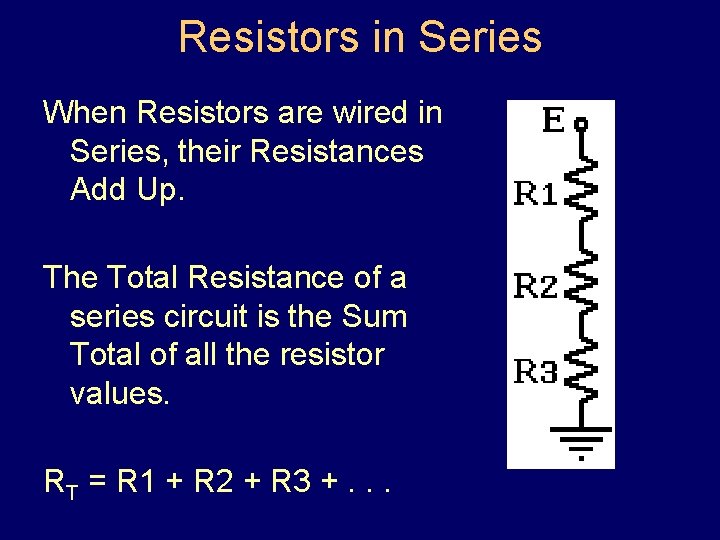
Resistors in Series When Resistors are wired in Series, their Resistances Add Up. The Total Resistance of a series circuit is the Sum Total of all the resistor values. RT = R 1 + R 2 + R 3 +. . .
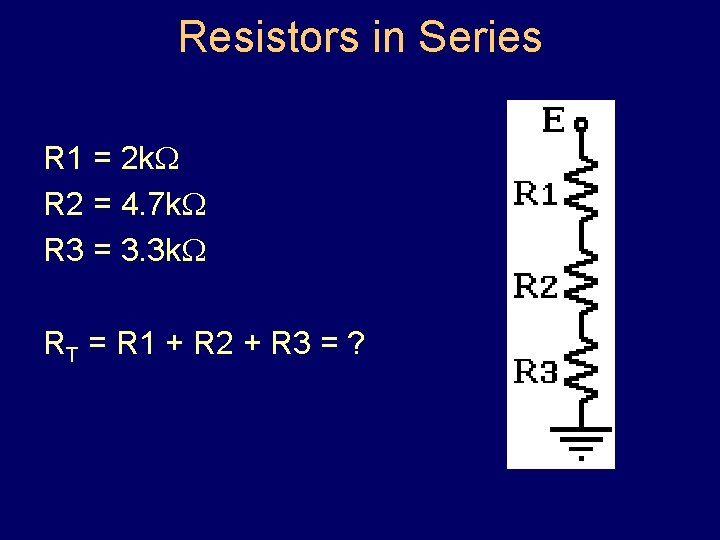
Resistors in Series R 1 = 2 k R 2 = 4. 7 k R 3 = 3. 3 k RT = R 1 + R 2 + R 3 = ?
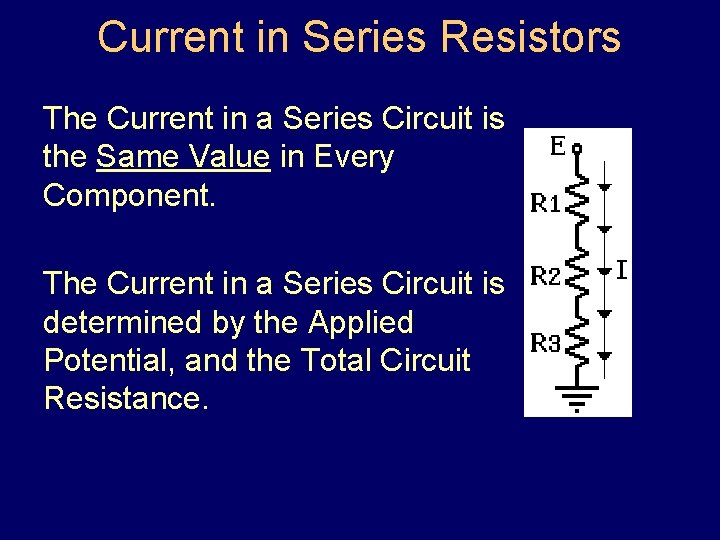
Current in Series Resistors The Current in a Series Circuit is the Same Value in Every Component. The Current in a Series Circuit is determined by the Applied Potential, and the Total Circuit Resistance.
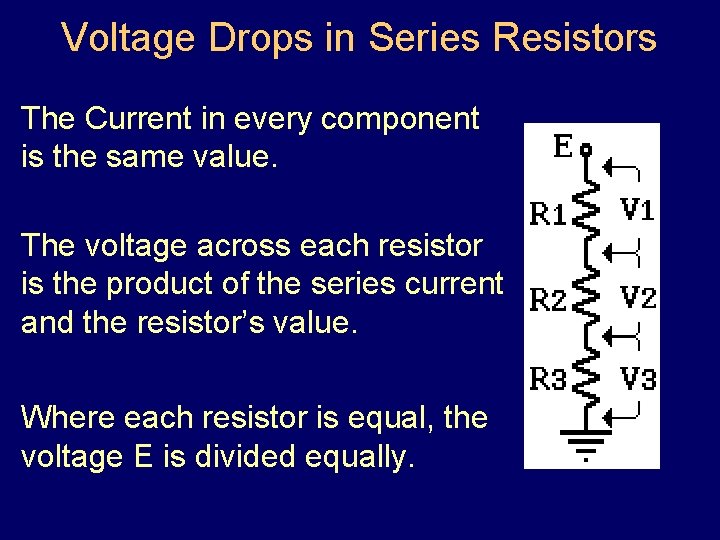
Voltage Drops in Series Resistors The Current in every component is the same value. The voltage across each resistor is the product of the series current and the resistor’s value. Where each resistor is equal, the voltage E is divided equally.
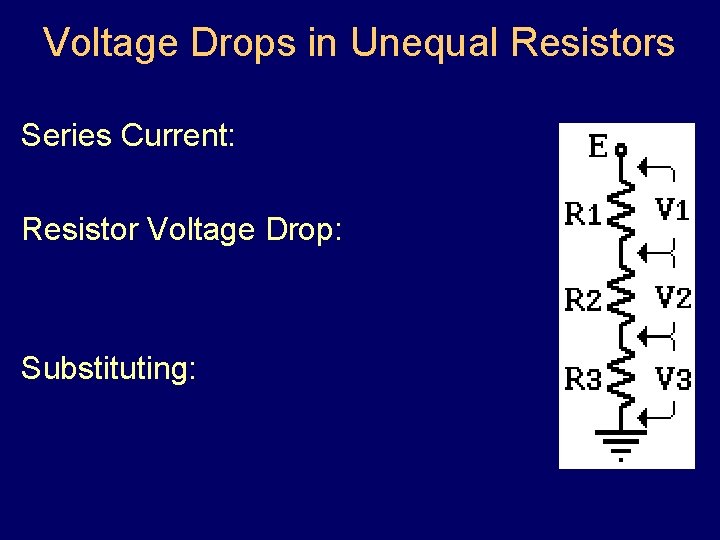
Voltage Drops in Unequal Resistors Series Current: Resistor Voltage Drop: Substituting:
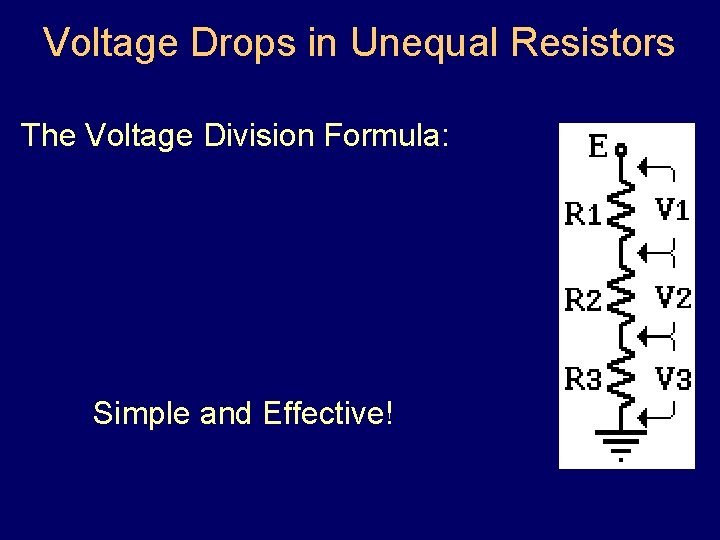
Voltage Drops in Unequal Resistors The Voltage Division Formula: Simple and Effective!
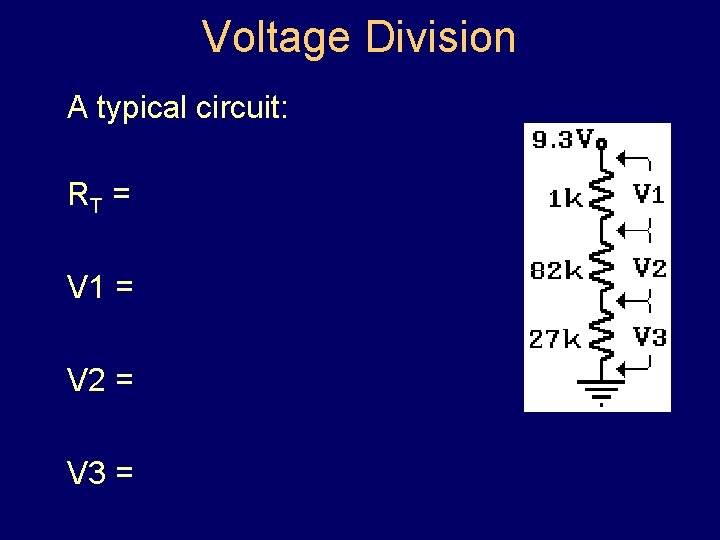
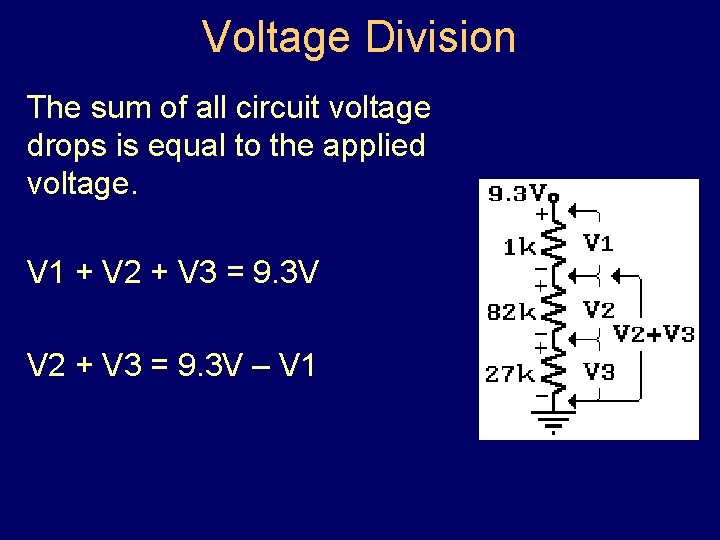
Voltage Division A typical circuit: RT = V 1 = V 2 = V 3 =
Voltage Division The sum of all circuit voltage drops is equal to the applied voltage. V 1 + V 2 + V 3 = 9. 3 V – V 1
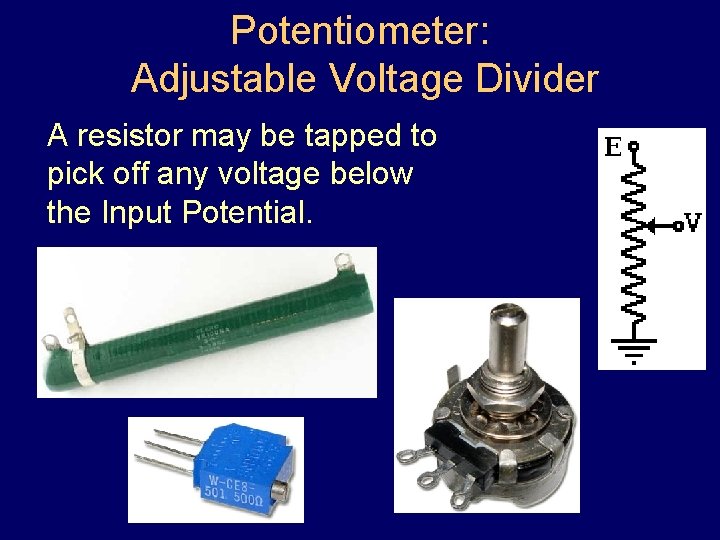
Potentiometer: Adjustable Voltage Divider A resistor may be tapped to pick off any voltage below the Input Potential.
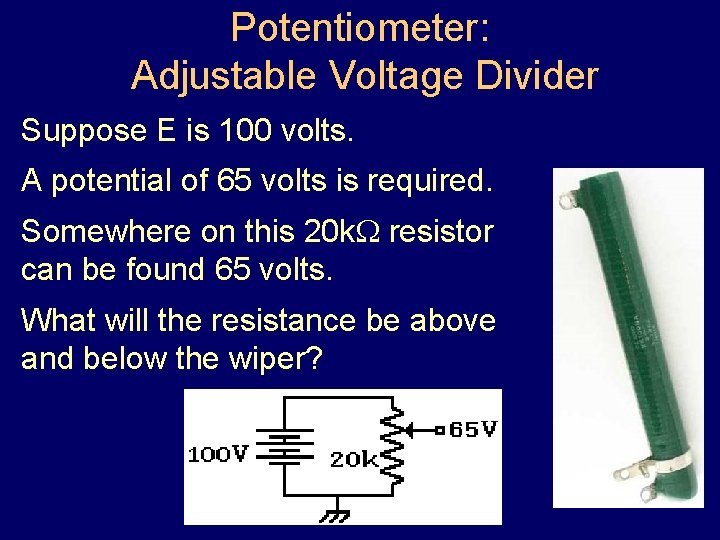
Potentiometer: Adjustable Voltage Divider Suppose E is 100 volts. A potential of 65 volts is required. Somewhere on this 20 k resistor can be found 65 volts. What will the resistance be above and below the wiper?
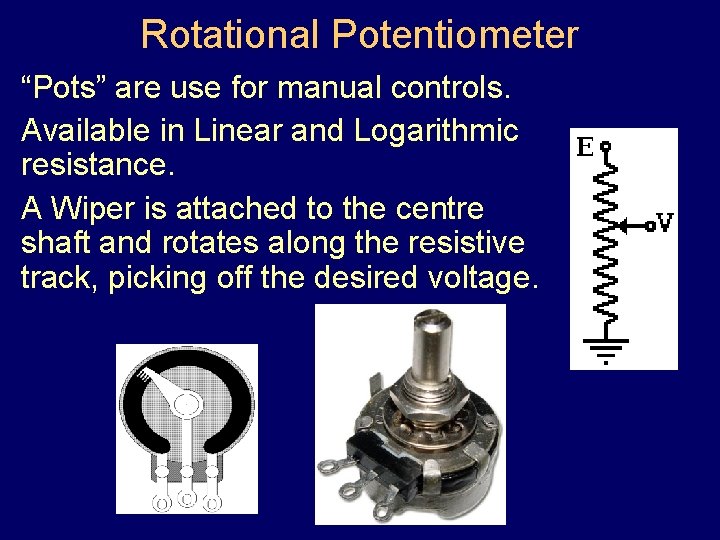
Rotational Potentiometer “Pots” are use for manual controls. Available in Linear and Logarithmic resistance. A Wiper is attached to the centre shaft and rotates along the resistive track, picking off the desired voltage.
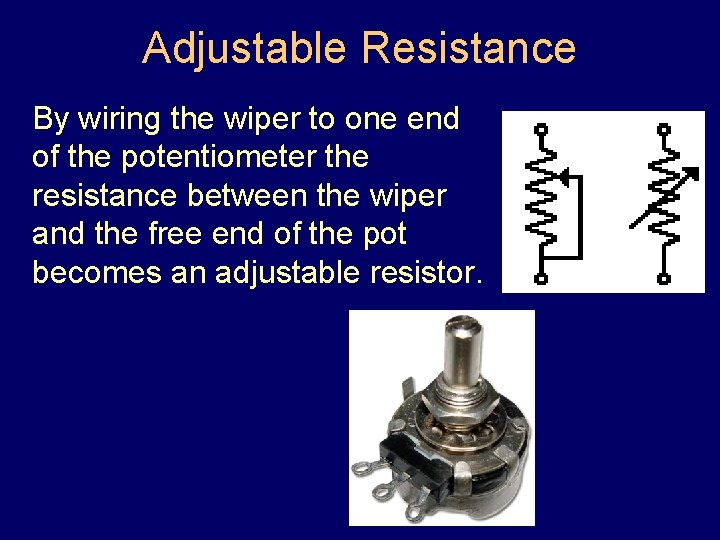
Adjustable Resistance By wiring the wiper to one end of the potentiometer the resistance between the wiper and the free end of the pot becomes an adjustable resistor.
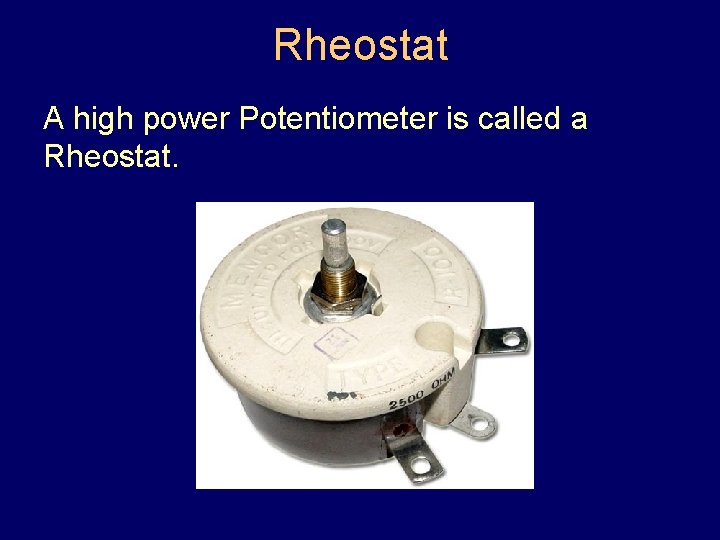
Rheostat A high power Potentiometer is called a Rheostat.
Kirchhoff’s Voltage Law The sum of all voltage rises and all voltage drops around a closed loop circuit is equal to zero. The sum of all voltage rises is equal to the sum of all the voltage drops around a closed loop.
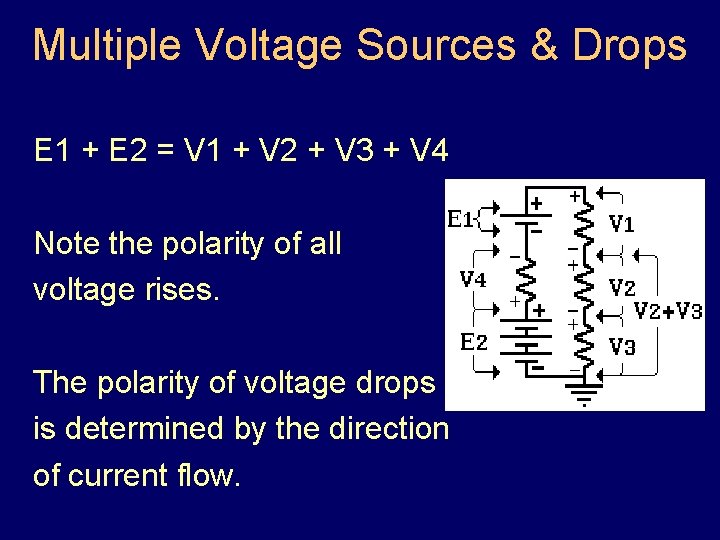
Multiple Voltage Sources & Drops E 1 + E 2 = V 1 + V 2 + V 3 + V 4 Note the polarity of all voltage rises. The polarity of voltage drops is determined by the direction of current flow.
Parallel Resistive Circuits Parallel Resistors Conductance Siemens
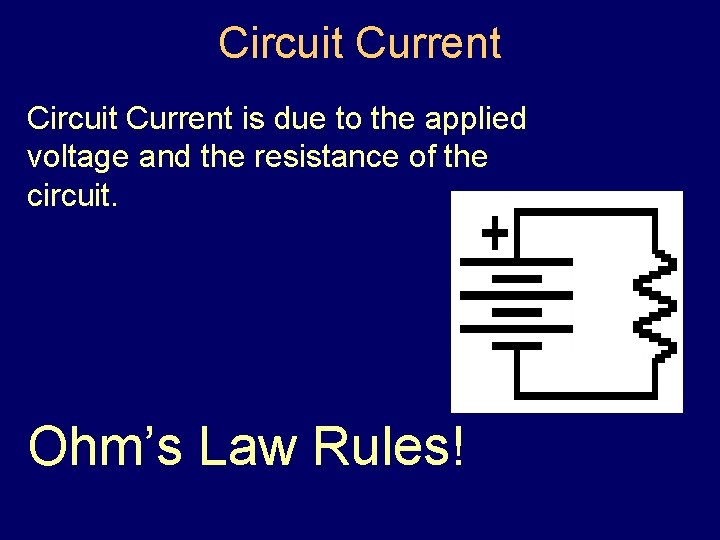
Circuit Current is due to the applied voltage and the resistance of the circuit. Ohm’s Law Rules!
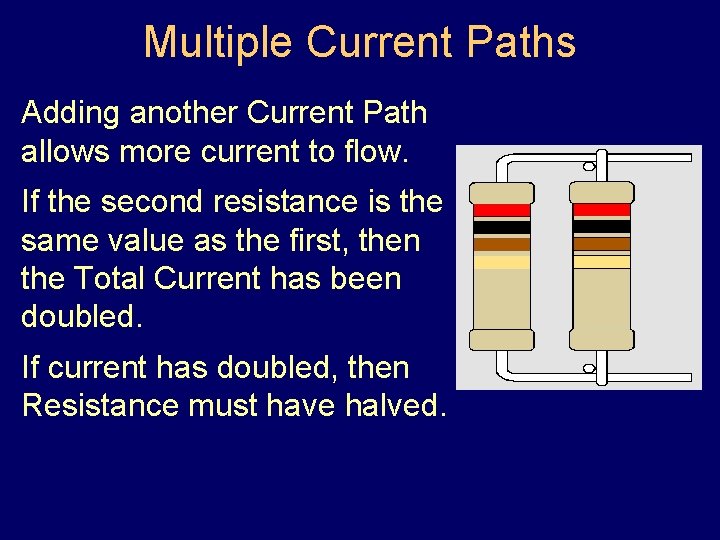
Multiple Current Paths Adding another Current Path allows more current to flow. If the second resistance is the same value as the first, then the Total Current has been doubled. If current has doubled, then Resistance must have halved.
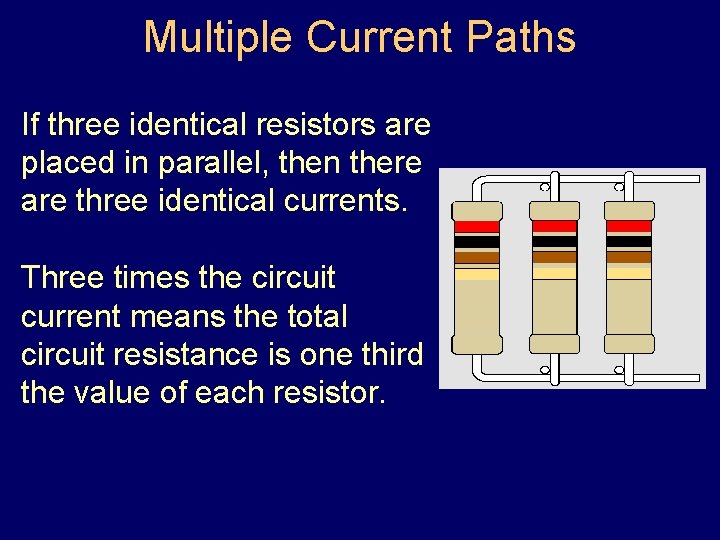
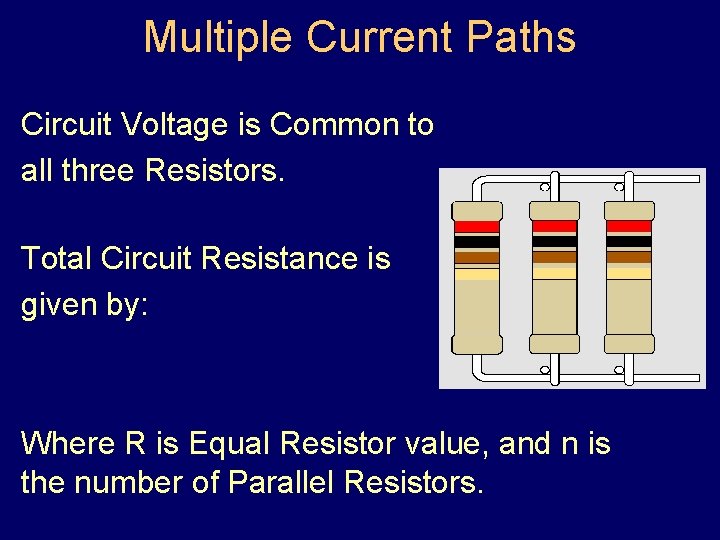
Multiple Current Paths If three identical resistors are placed in parallel, then there are three identical currents. Three times the circuit current means the total circuit resistance is one third the value of each resistor.
Multiple Current Paths Circuit Voltage is Common to all three Resistors. Total Circuit Resistance is given by: Where R is Equal Resistor value, and n is the number of Parallel Resistors.
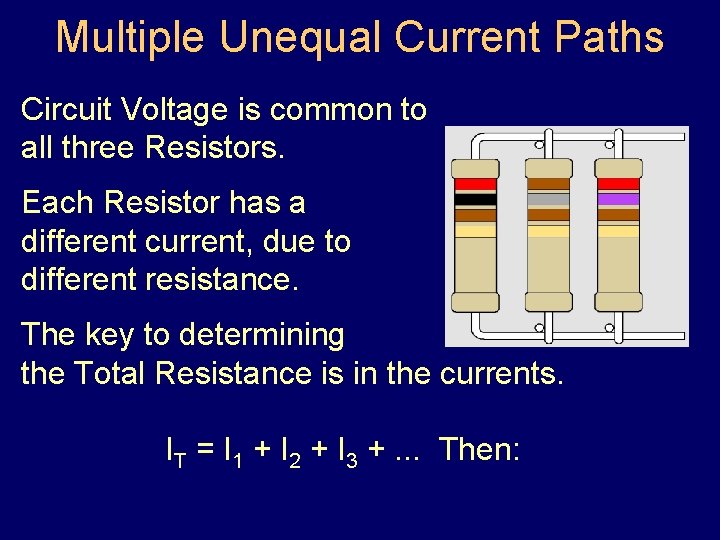
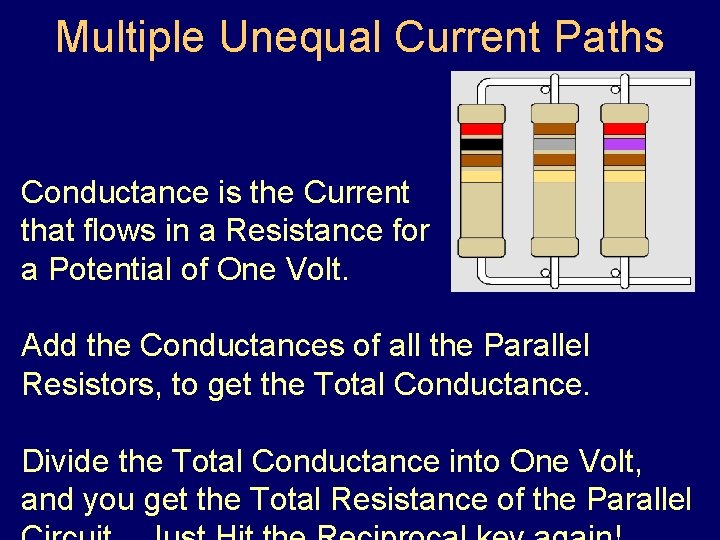
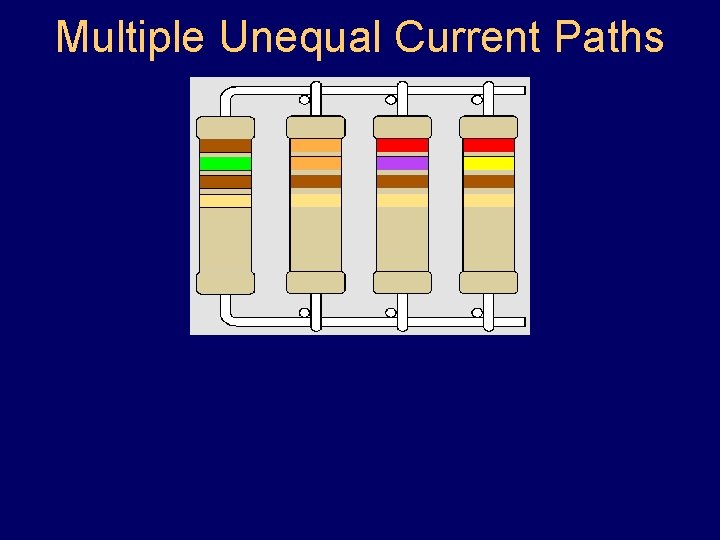
Multiple Unequal Current Paths Circuit Voltage is common to all three Resistors. Each Resistor has a different current, due to different resistance. The key to determining the Total Resistance is in the currents. IT = I 1 + I 2 + I 3 +. . . Then:
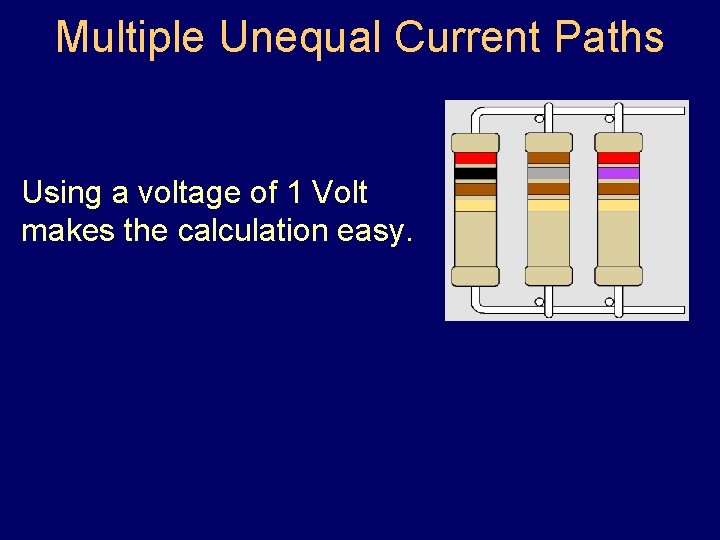
Multiple Unequal Current Paths Using a voltage of 1 Volt makes the calculation easy.
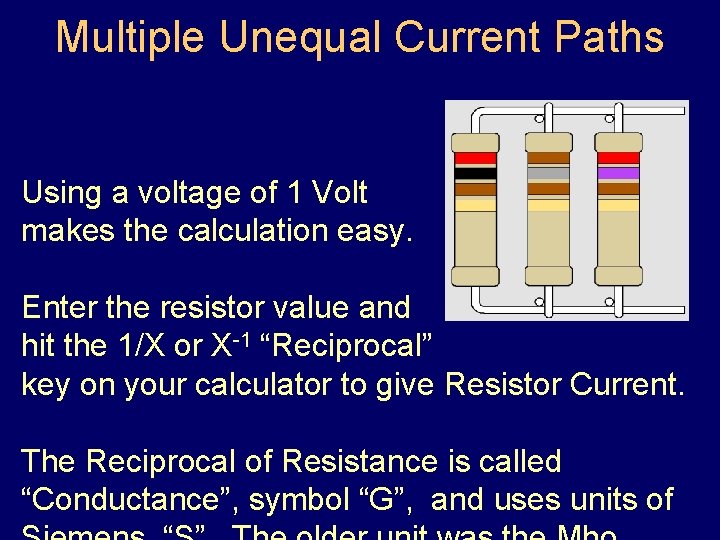
Multiple Unequal Current Paths Using a voltage of 1 Volt makes the calculation easy. Enter the resistor value and hit the 1/X or X-1 “Reciprocal” key on your calculator to give Resistor Current. The Reciprocal of Resistance is called “Conductance”, symbol “G”, and uses units of
Multiple Unequal Current Paths Conductance is the Current that flows in a Resistance for a Potential of One Volt. Add the Conductances of all the Parallel Resistors, to get the Total Conductance. Divide the Total Conductance into One Volt, and you get the Total Resistance of the Parallel
Multiple Unequal Current Paths
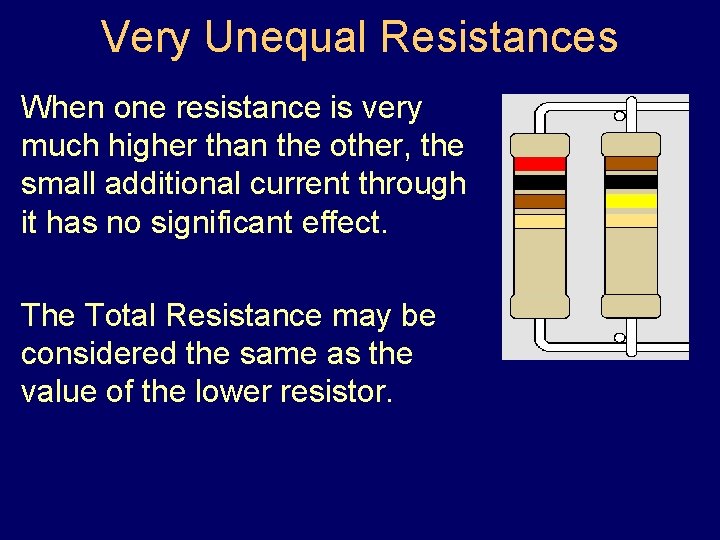
Very Unequal Resistances When one resistance is very much higher than the other, the small additional current through it has no significant effect. The Total Resistance may be considered the same as the value of the lower resistor.
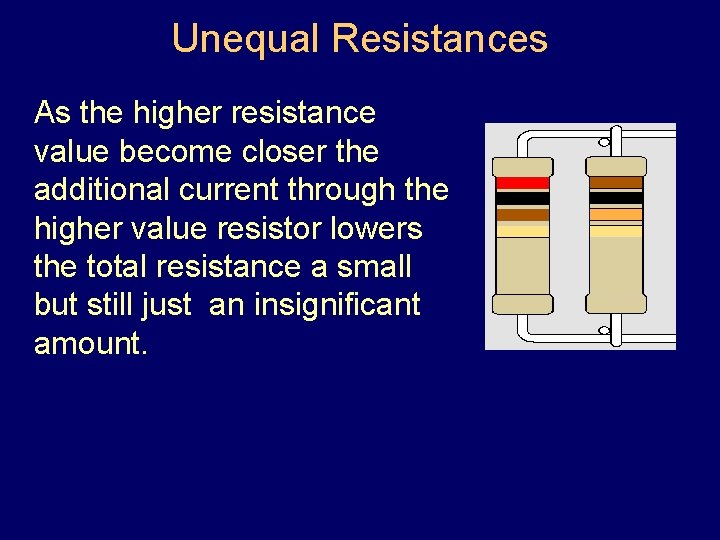
Unequal Resistances As the higher resistance value become closer the additional current through the higher value resistor lowers the total resistance a small but still just an insignificant amount.
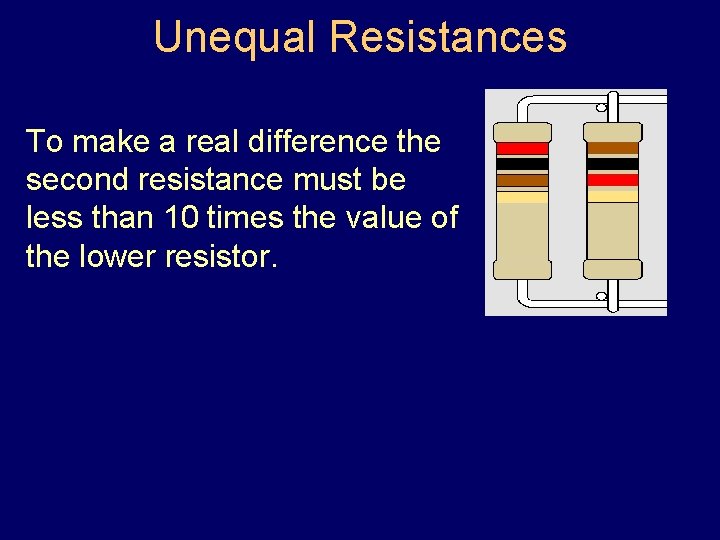
Unequal Resistances To make a real difference the second resistance must be less than 10 times the value of the lower resistor.
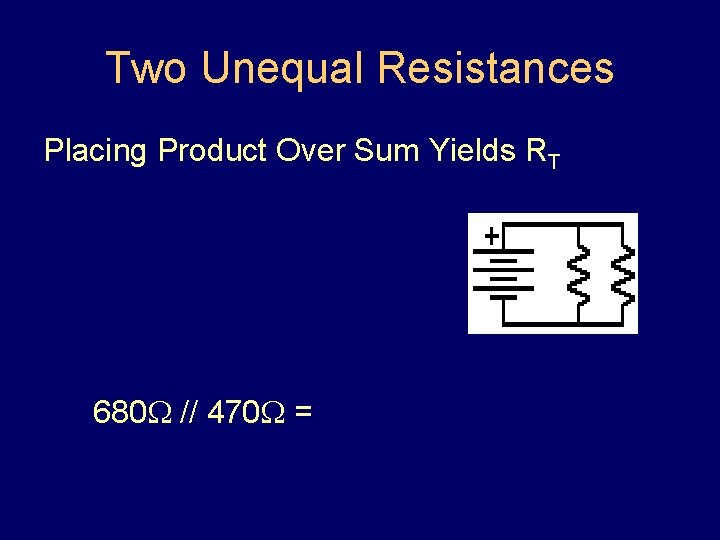
Two Unequal Resistances Placing Product Over Sum Yields RT 680 // 470 =