
Series and Parallel Circuits What is a Circuit
- Slides: 10
Series and Parallel Circuits
What is a Circuit?
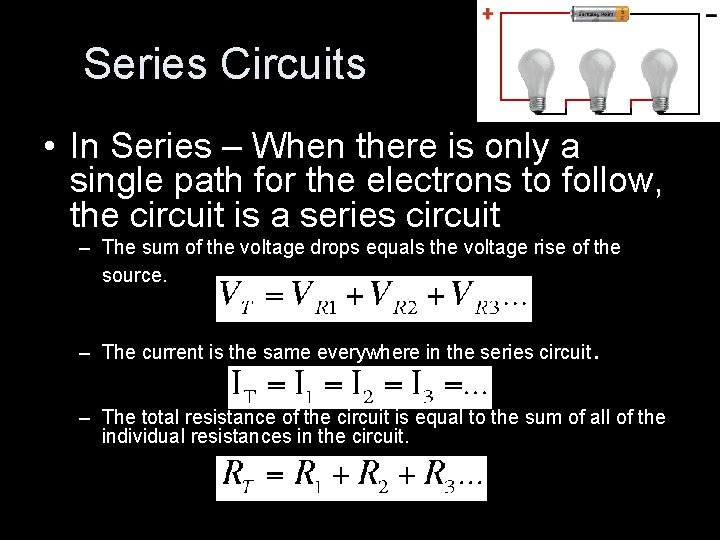
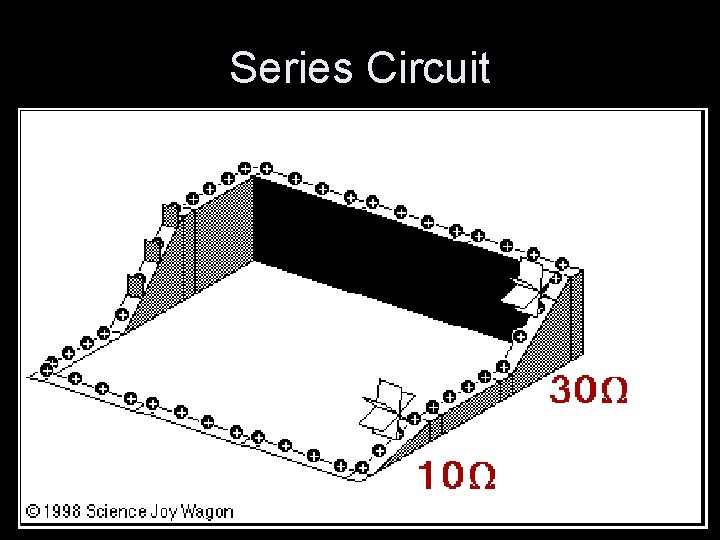
Series Circuits • In Series – When there is only a single path for the electrons to follow, the circuit is a series circuit – The sum of the voltage drops equals the voltage rise of the source. – The current is the same everywhere in the series circuit. – The total resistance of the circuit is equal to the sum of all of the individual resistances in the circuit.
Series Circuit
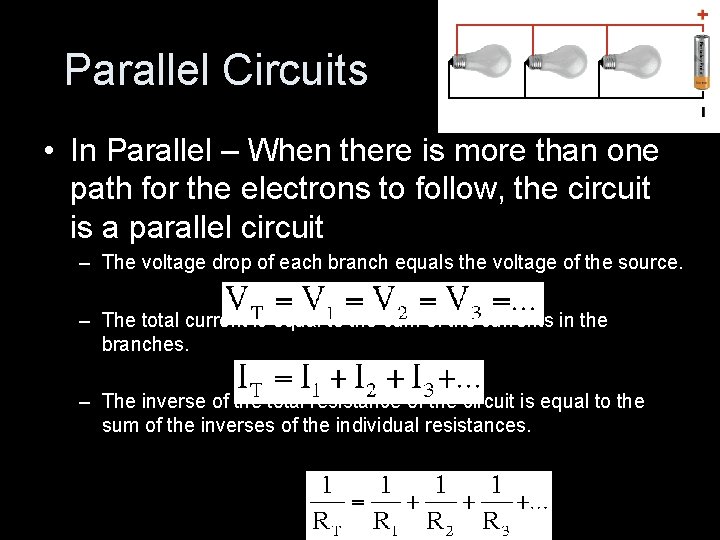
Parallel Circuits • In Parallel – When there is more than one path for the electrons to follow, the circuit is a parallel circuit – The voltage drop of each branch equals the voltage of the source. – The total current is equal to the sum of the currents in the branches. – The inverse of the total resistance of the circuit is equal to the sum of the inverses of the individual resistances.
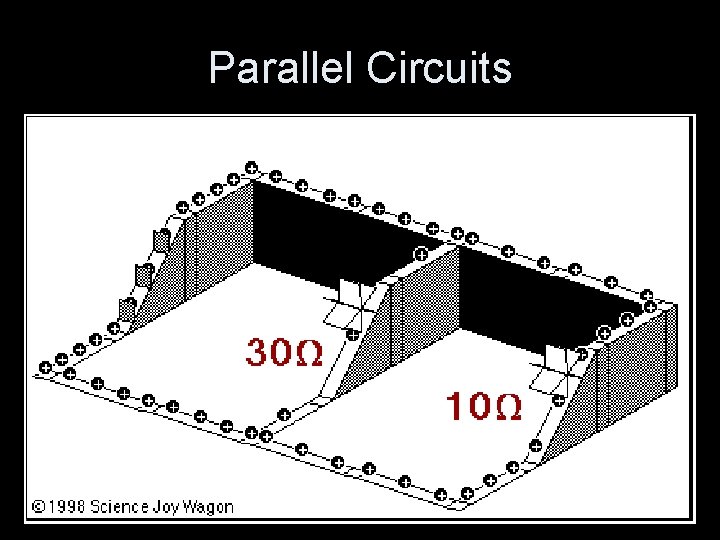
Parallel Circuits
Parallel Circuits • One important thing to notice – the more branches you add to a parallel circuit (the more things you plug in) the lower the total resistance becomes. – Remember that as the total resistance decreases, the total current increases. – So, the more things you plug in, the more current has to flow through the wiring in the wall. – That's why plugging too many things in to one electrical outlet can create a real fire hazard
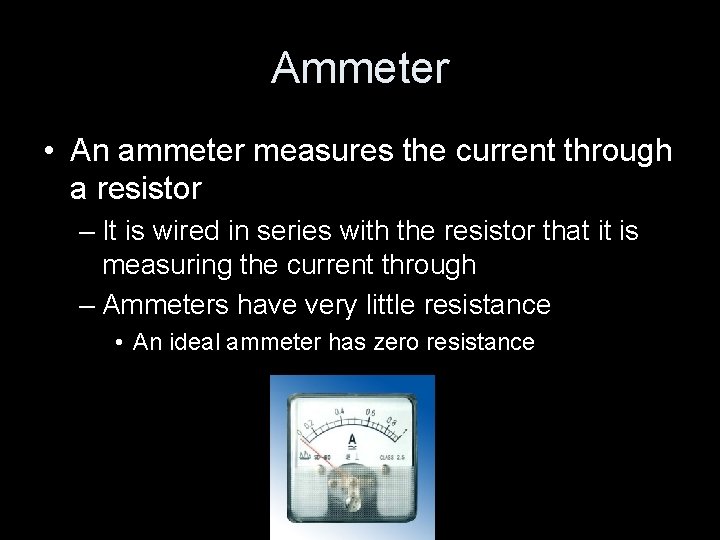
Ammeter • An ammeter measures the current through a resistor – It is wired in series with the resistor that it is measuring the current through – Ammeters have very little resistance • An ideal ammeter has zero resistance
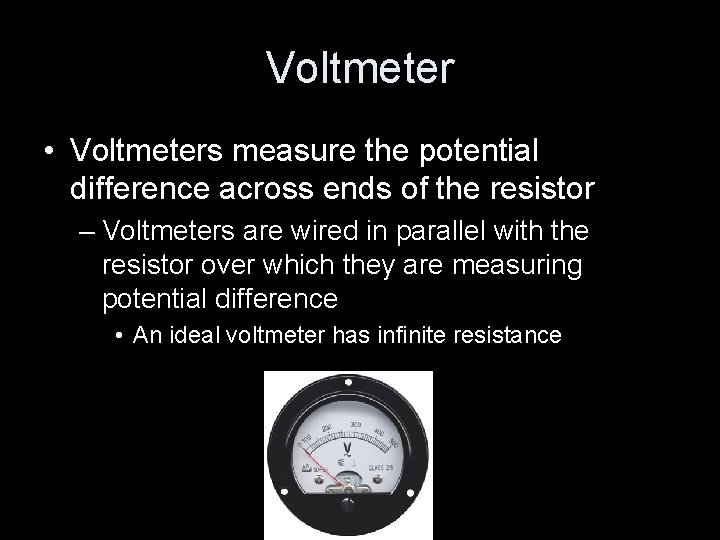
Voltmeter • Voltmeters measure the potential difference across ends of the resistor – Voltmeters are wired in parallel with the resistor over which they are measuring potential difference • An ideal voltmeter has infinite resistance
Let’s Draw Some Circuits! • Proper circuit diagramming symbols • Practice drawing series/parallel