
SERIES AND PARALLEL CIRCUITS SERIES AND PARALLEL CIRCUITS


- Slides: 10
SERIES AND PARALLEL CIRCUITS
SERIES AND PARALLEL CIRCUITS LEARNING OBJECTIVES 1. DISTINGUISH BETWEEN SERIES AND PARALLEL CIRCUITS 2. 3. STATE THAT AMMETERS ARE PLACED IN SERIES PREDICT THE CURRENT AT DIFFERENT POINTS IN A CIRCUIT
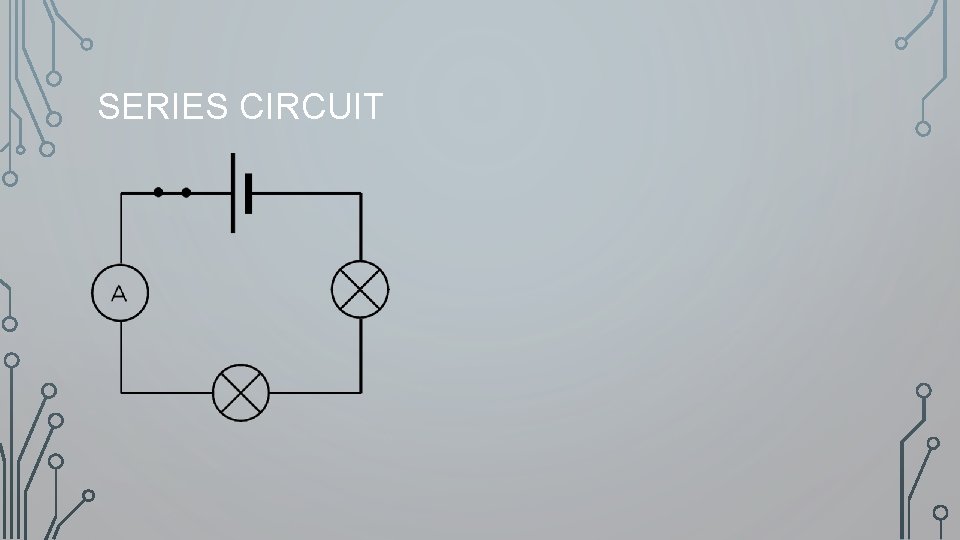
SERIES CIRCUIT
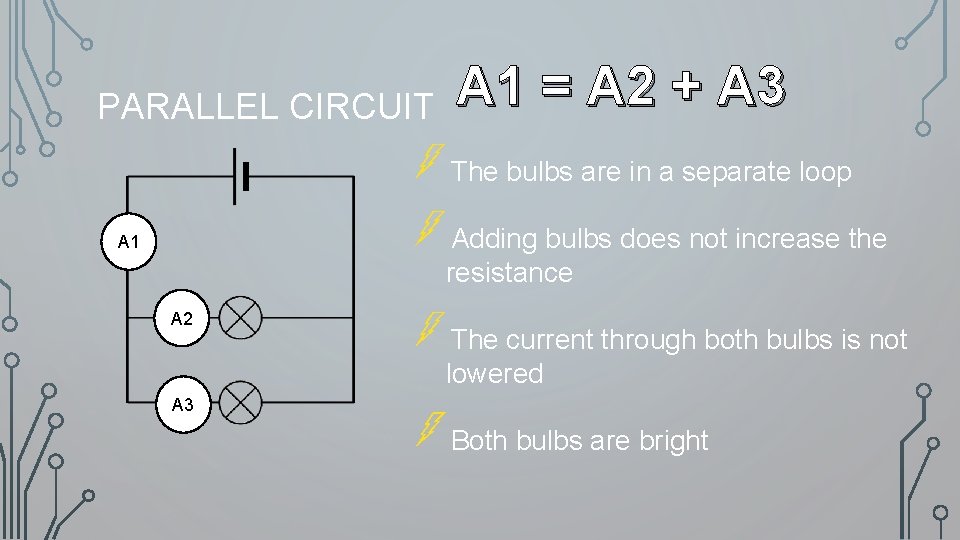
PARALLEL CIRCUIT A 1 = A 2 + A 3 The bulbs are in a separate loop Adding bulbs does not increase the resistance A 1 A 2 The current through both bulbs is not lowered A 3 Both bulbs are bright
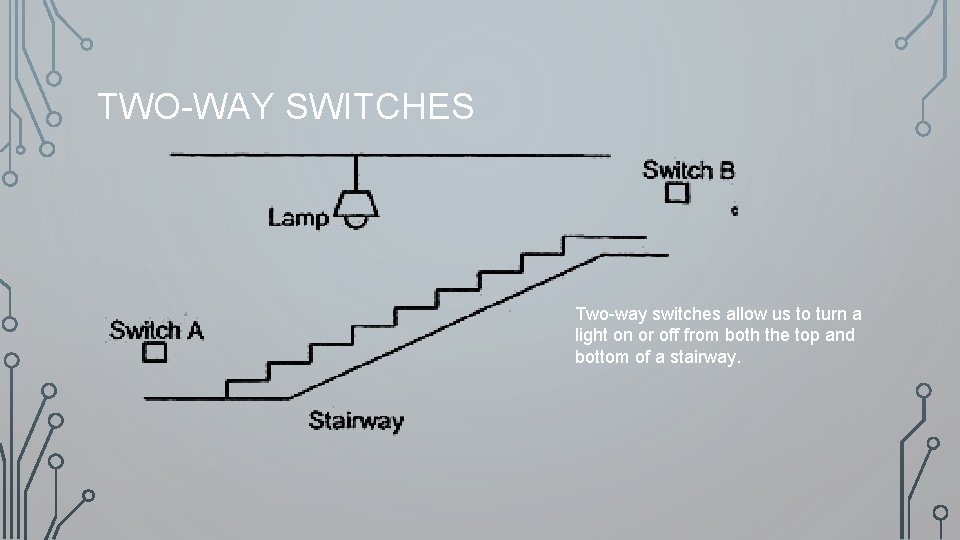
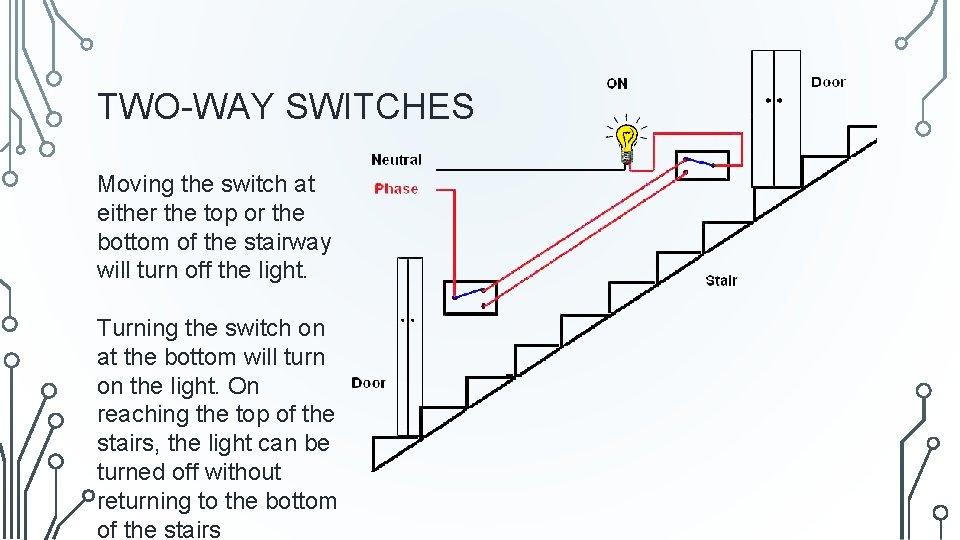
TWO-WAY SWITCHES Two-way switches allow us to turn a light on or off from both the top and bottom of a stairway.
TWO-WAY SWITCHES Moving the switch at either the top or the bottom of the stairway will turn off the light. Turning the switch on at the bottom will turn on the light. On reaching the top of the stairs, the light can be turned off without returning to the bottom of the stairs
VOLTAGE AND RESISTANCE
VOLTAGE AND RESISTANCE LEARNING OBJECTIVES 1. USE VOLTMETERS TO DETERMINE THE VOLTAGE ACROSS COMPONENTS IN A CIRCUIT 2. CONTROL THE BRIGHTNESS OF A BULB USING A VARIABLE RESISTOR (RHEOSTAT)
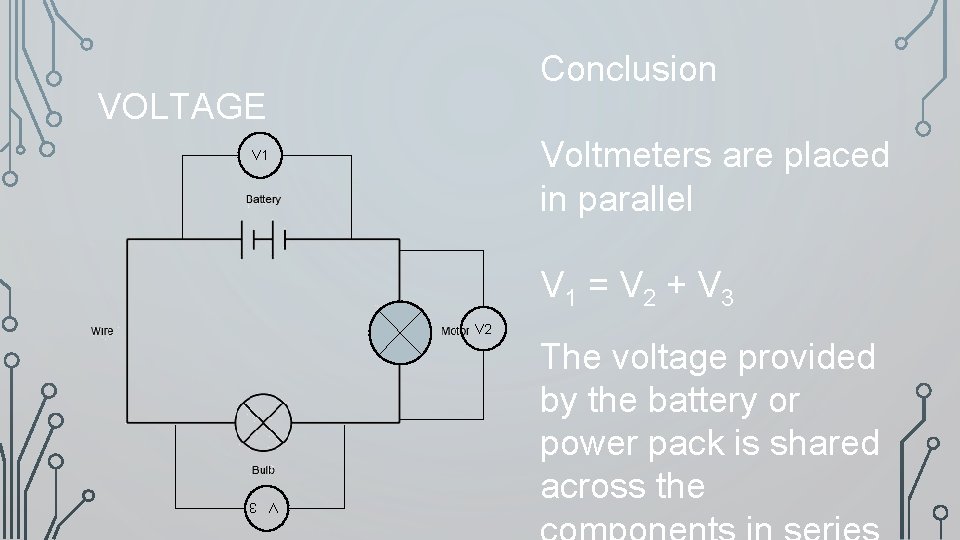
Conclusion VOLTAGE Voltmeters are placed in parallel V 1 = V 2 + V 3 V 2 The voltage provided by the battery or power pack is shared across the V 3
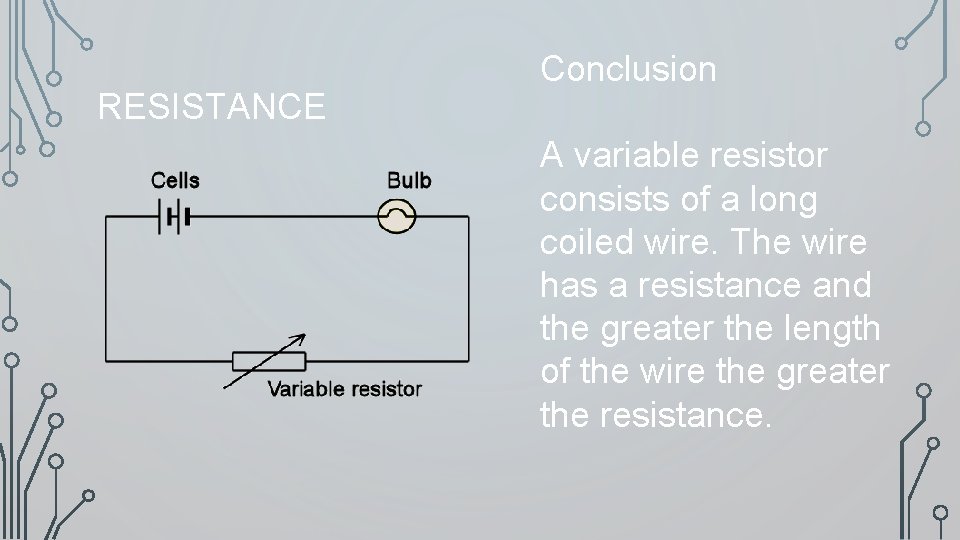
RESISTANCE Conclusion A variable resistor consists of a long coiled wire. The wire has a resistance and the greater the length of the wire the greater the resistance.