
SERIES AND PARALLEL CIRCUITS REMINDER Voltage V electrical

- Slides: 11
SERIES AND PARALLEL CIRCUITS
REMINDER • Voltage (V): • electrical potential difference • Electrical potential energy a single unit of charge gains as it passes through a source (battery) • Current (I): • Flow of electrical charge • Measured in Amperes • Load: • Resists the flow of electrons • As electrons pass through a load, they lose energy as electrical energy is transformed to another type of energy (sound, heat, light, mechanical, etc. ) • Resistance (R): • Describes the amount that current is hindered by a load • Measured in Ohms (Ω)
FIRST WE NEED TO KNOW WHAT WE ARE LOOKING AT!
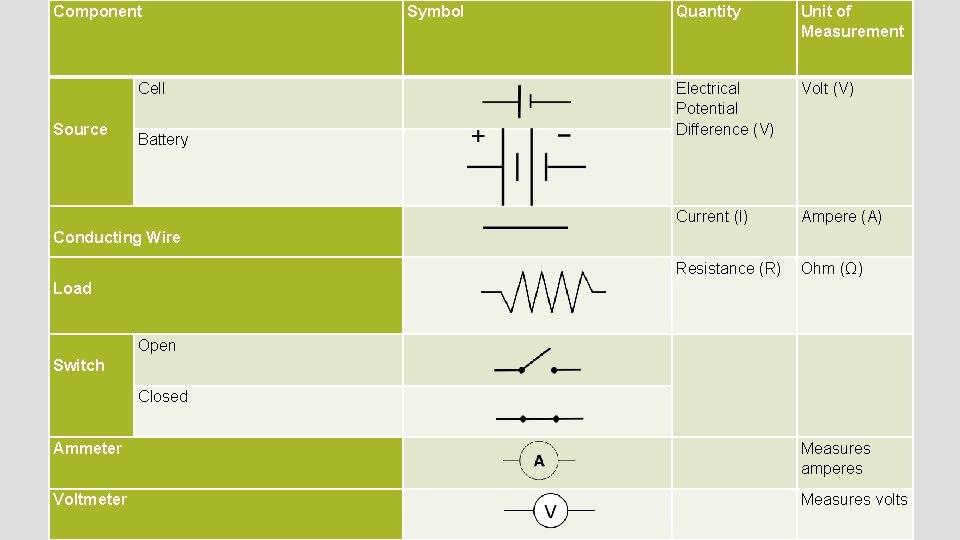
Component Cell Source Battery Symbol Quantity Unit of Measurement Electrical Potential Difference (V) Volt (V) Current (I) Ampere (A) Resistance (R) Ohm (Ω) Conducting Wire Load Open Switch Closed Ammeter Measures amperes Voltmeter Measures volts
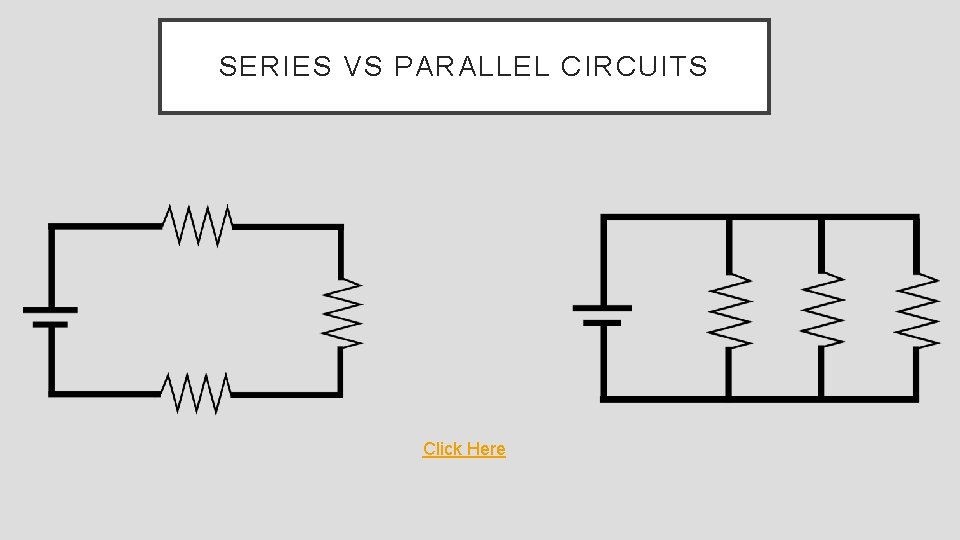
SERIES VS PARALLEL CIRCUITS Click Here
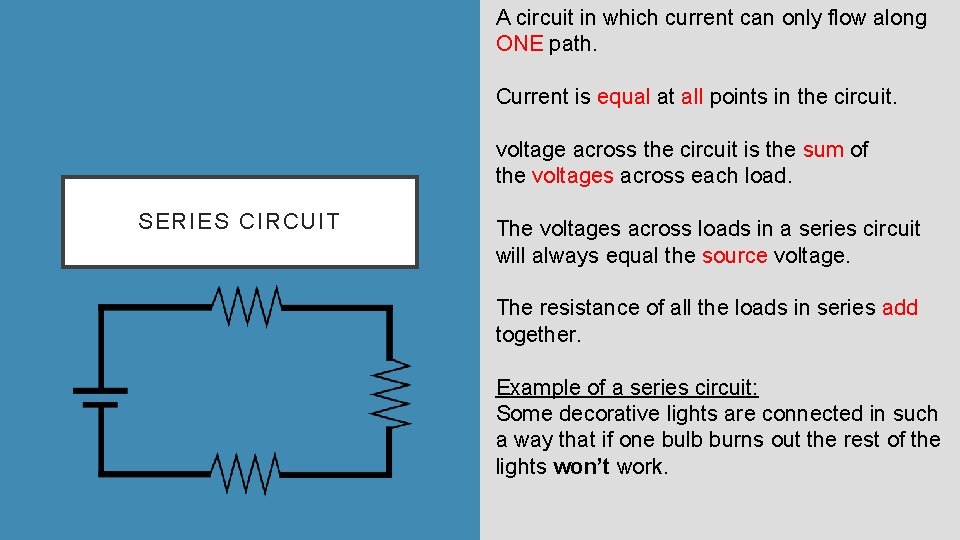
A circuit in which current can only flow along ONE path. Current is equal at all points in the circuit. voltage across the circuit is the sum of the voltages across each load. SERIES CIRCUIT The voltages across loads in a series circuit will always equal the source voltage. The resistance of all the loads in series add together. Example of a series circuit: Some decorative lights are connected in such a way that if one bulb burns out the rest of the lights won’t work.
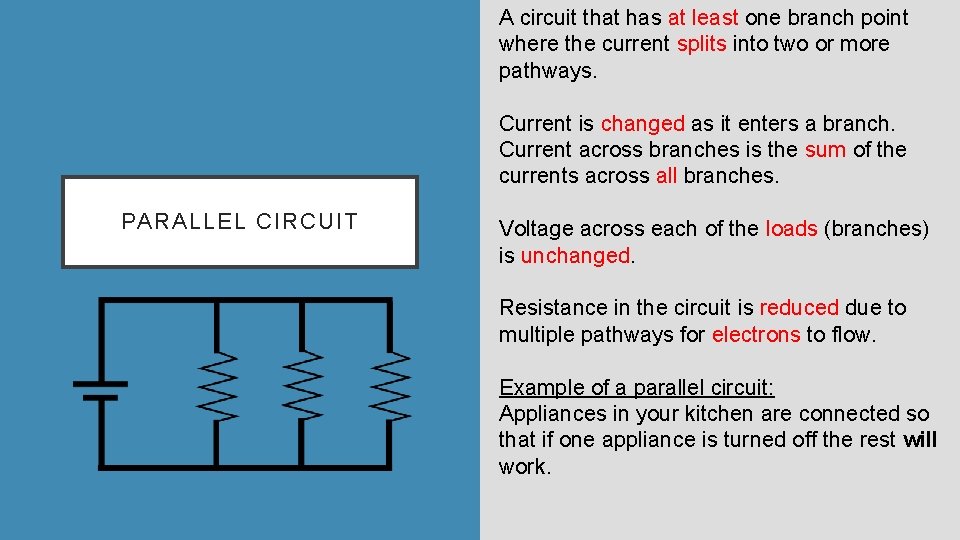
A circuit that has at least one branch point where the current splits into two or more pathways. Current is changed as it enters a branch. Current across branches is the sum of the currents across all branches. PARALLEL CIRCUIT Voltage across each of the loads (branches) is unchanged. Resistance in the circuit is reduced due to multiple pathways for electrons to flow. Example of a parallel circuit: Appliances in your kitchen are connected so that if one appliance is turned off the rest will work.
THINK ABOUT IT • Where would you see a SERIES CIRCUIT in every day life? • Where would you see a PARALLEL CIRCUIT in every day life?
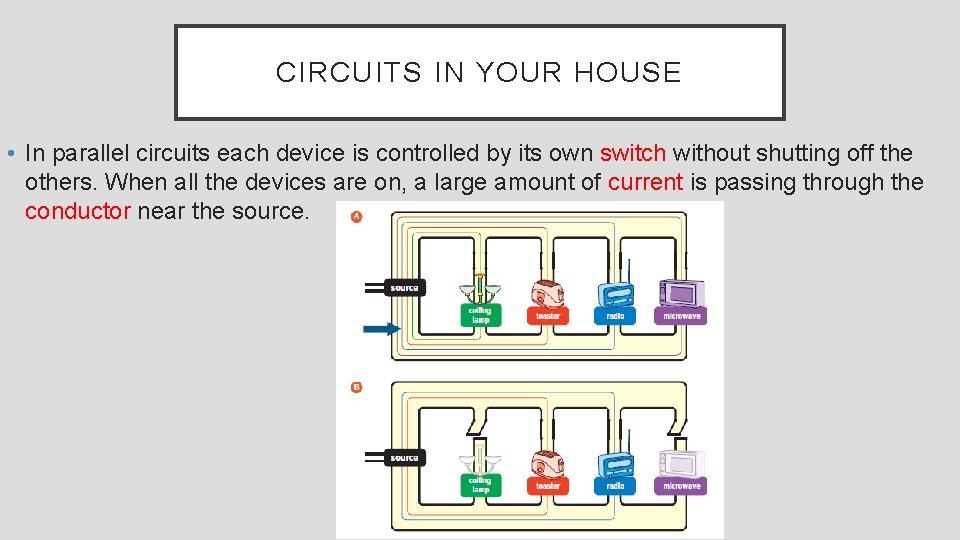
CIRCUITS IN YOUR HOUSE • In parallel circuits each device is controlled by its own switch without shutting off the others. When all the devices are on, a large amount of current is passing through the conductor near the source.
THINK ABOUT YOUR HOME. WOULD HAVING ONLY ONE PARALLEL CIRCUIT BE CONVENIENT?
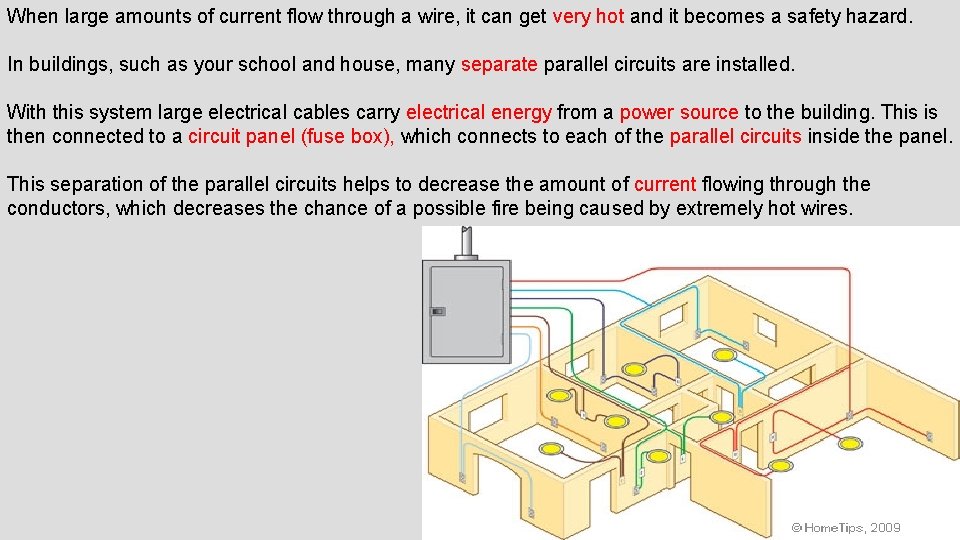
When large amounts of current flow through a wire, it can get very hot and it becomes a safety hazard. In buildings, such as your school and house, many separate parallel circuits are installed. With this system large electrical cables carry electrical energy from a power source to the building. This is then connected to a circuit panel (fuse box), which connects to each of the parallel circuits inside the panel. This separation of the parallel circuits helps to decrease the amount of current flowing through the conductors, which decreases the chance of a possible fire being caused by extremely hot wires.