
Sequence Alignment Slides courtesy of Serafim Batzoglou Stanford

Sequence Alignment Slides courtesy of Serafim Batzoglou, Stanford Univ.
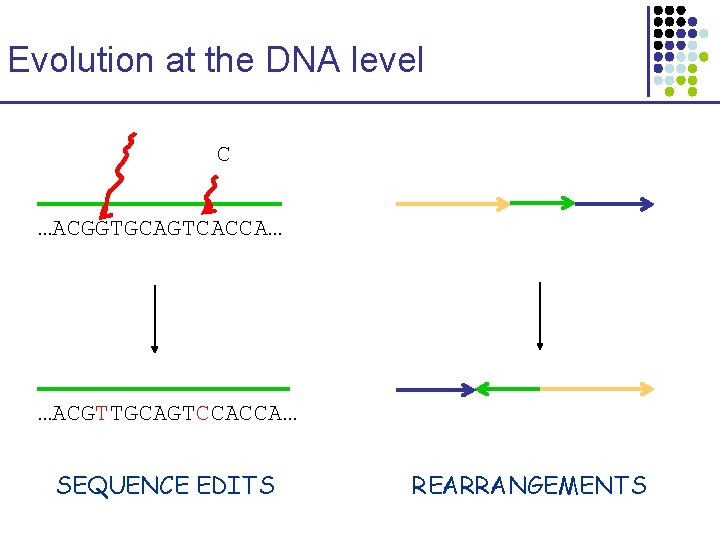
Evolution at the DNA level C …ACGGTGCAGTCACCA… …ACGTTGCAGTCCACCA… SEQUENCE EDITS REARRANGEMENTS
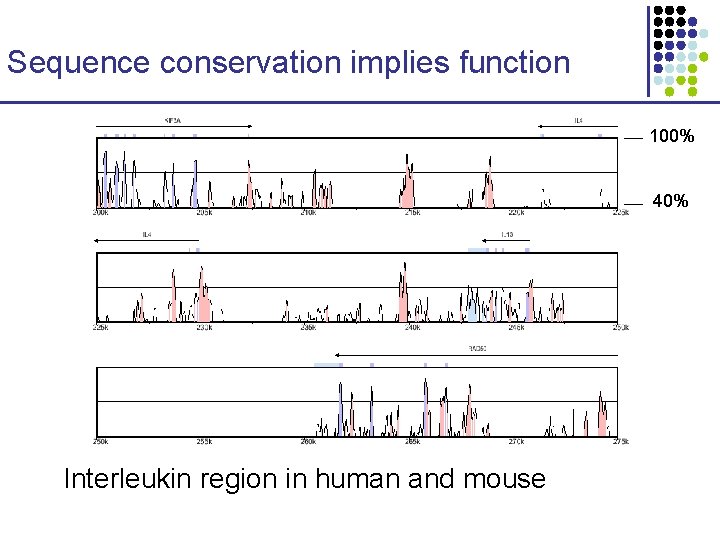
Sequence conservation implies function 100% 40% Interleukin region in human and mouse
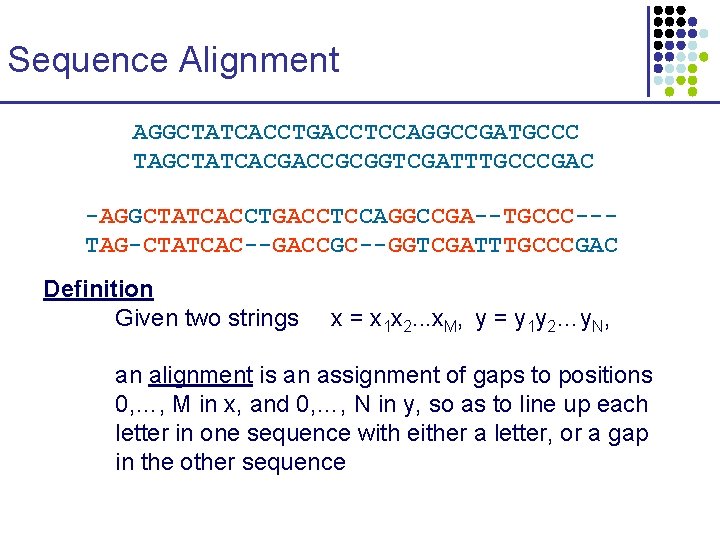
Sequence Alignment AGGCTATCACCTGACCTCCAGGCCGATGCCC TAGCTATCACGACCGCGGTCGATTTGCCCGAC -AGGCTATCACCTGACCTCCAGGCCGA--TGCCC--TAG-CTATCAC--GACCGC--GGTCGATTTGCCCGAC Definition Given two strings x = x 1 x 2. . . x. M, y = y 1 y 2…y. N, an alignment is an assignment of gaps to positions 0, …, M in x, and 0, …, N in y, so as to line up each letter in one sequence with either a letter, or a gap in the other sequence
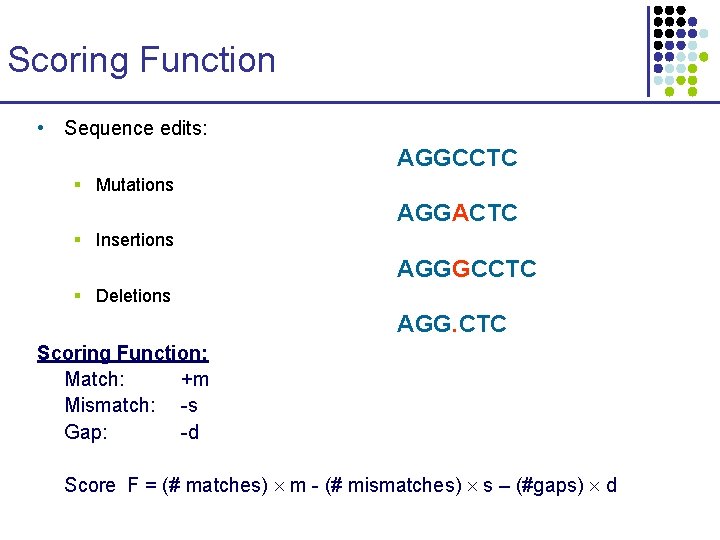
Scoring Function • Sequence edits: AGGCCTC § Mutations AGGACTC § Insertions AGGGCCTC § Deletions AGG. CTC Scoring Function: Match: +m Mismatch: -s Gap: -d Score F = (# matches) m - (# mismatches) s – (#gaps) d
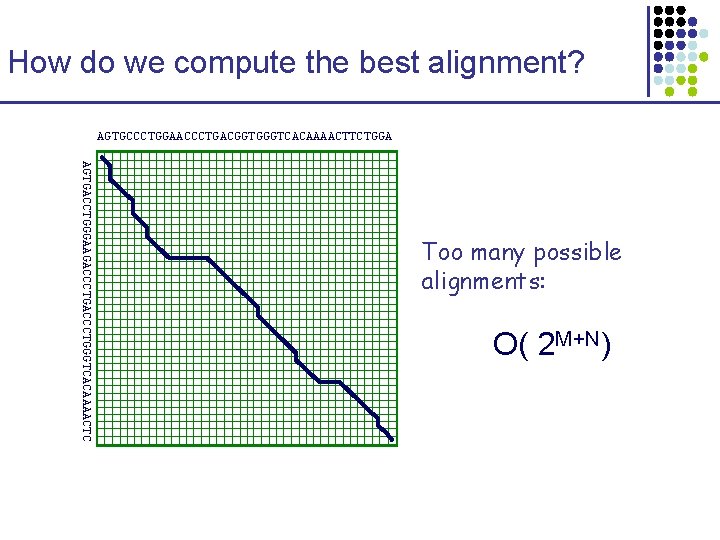
How do we compute the best alignment? AGTGCCCTGGAACCCTGACGGTGGGTCACAAAACTTCTGGA AGTGACCTGGGAAGACCCTGGGTCACAAAACTC Too many possible alignments: O( 2 M+N)
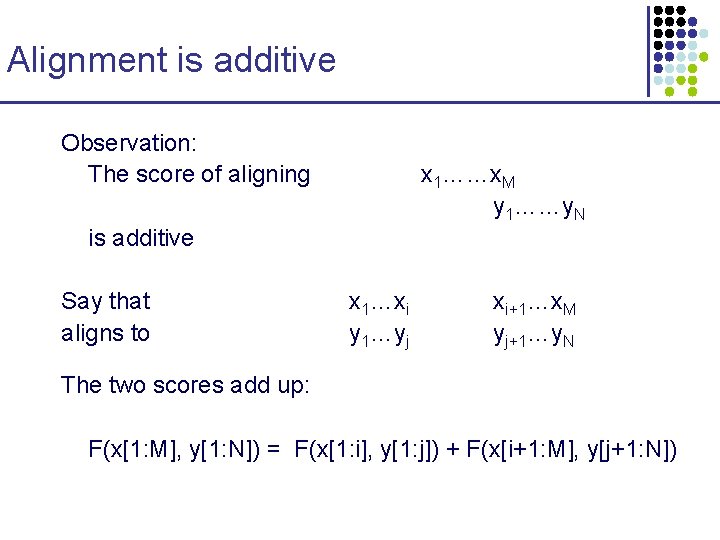
Alignment is additive Observation: The score of aligning x 1……x. M y 1……y. N is additive Say that aligns to x 1…xi y 1…yj xi+1…x. M yj+1…y. N The two scores add up: F(x[1: M], y[1: N]) = F(x[1: i], y[1: j]) + F(x[i+1: M], y[j+1: N])
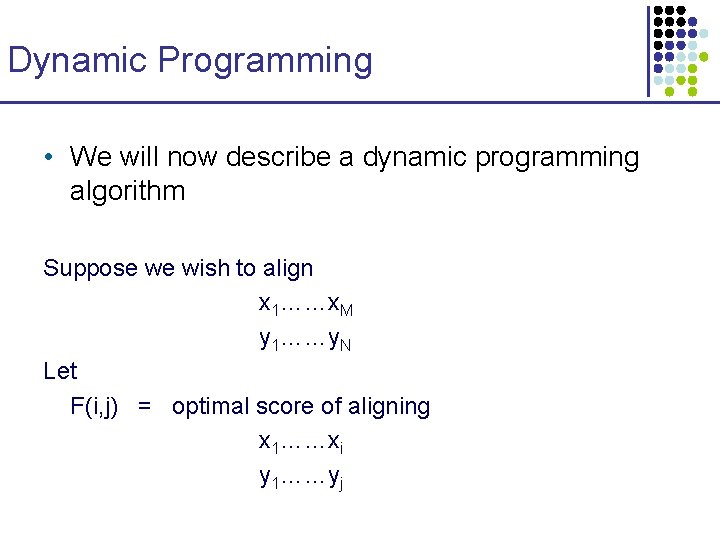
Dynamic Programming • We will now describe a dynamic programming algorithm Suppose we wish to align x 1……x. M y 1……y. N Let F(i, j) = optimal score of aligning x 1……xi y 1……yj
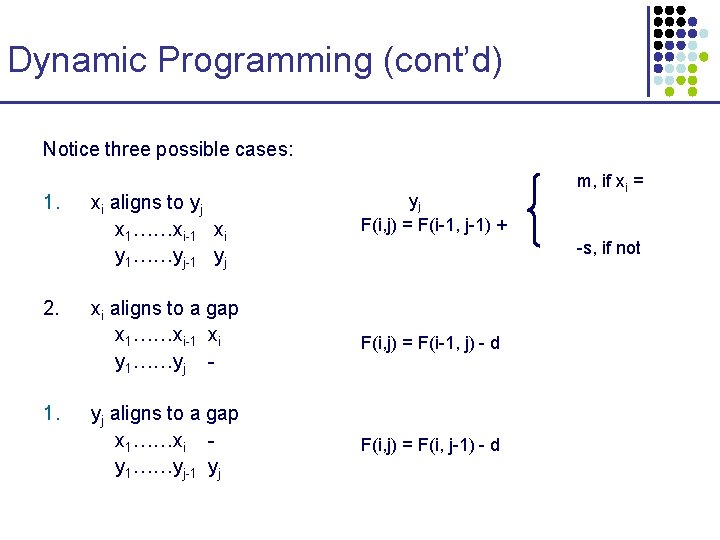
Dynamic Programming (cont’d) Notice three possible cases: 1. 2. 1. xi aligns to yj x 1……xi-1 xi y 1……yj-1 yj yj F(i, j) = F(i-1, j-1) + m, if xi = -s, if not xi aligns to a gap x 1……xi-1 xi y 1……yj - F(i, j) = F(i-1, j) - d yj aligns to a gap x 1……xi y 1……yj-1 yj F(i, j) = F(i, j-1) - d
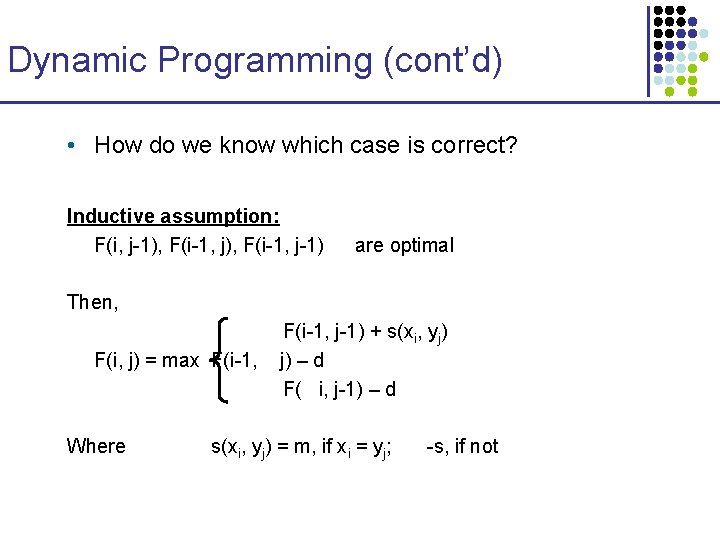
Dynamic Programming (cont’d) • How do we know which case is correct? Inductive assumption: F(i, j-1), F(i-1, j-1) are optimal Then, F(i, j) = max F(i-1, Where F(i-1, j-1) + s(xi, yj) j) – d F( i, j-1) – d s(xi, yj) = m, if xi = yj; -s, if not
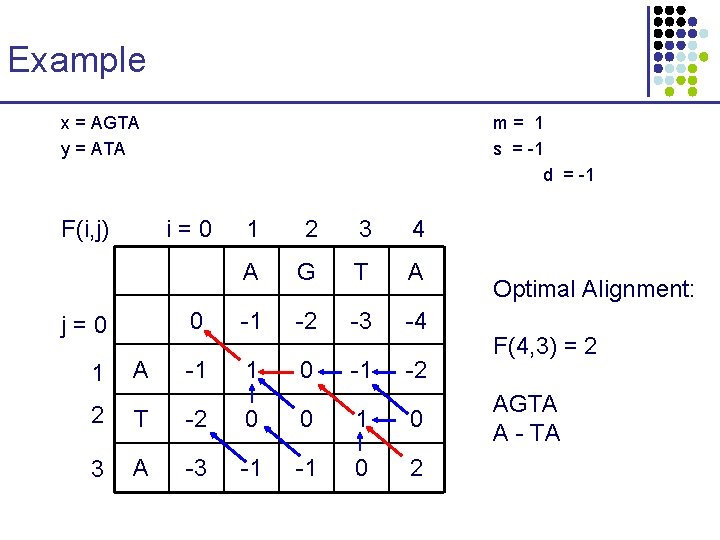
Example x = AGTA y = ATA F(i, j) m= 1 s = -1 d = -1 i=0 j=0 1 2 3 4 A G T A 0 -1 -2 -3 -4 1 A -1 1 0 -1 -2 2 T -2 0 0 1 0 3 A -3 -1 -1 0 2 Optimal Alignment: F(4, 3) = 2 AGTA A - TA
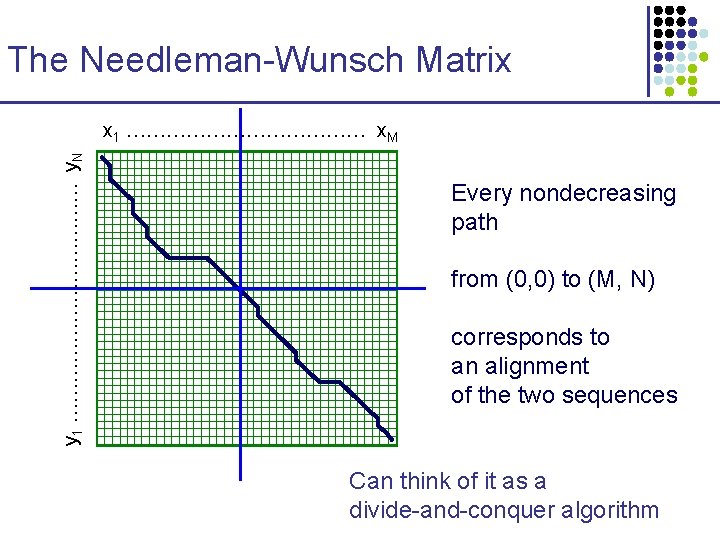
The Needleman-Wunsch Matrix y 1 ……………… y. N x 1 ……………… x. M Every nondecreasing path from (0, 0) to (M, N) corresponds to an alignment of the two sequences Can think of it as a divide-and-conquer algorithm
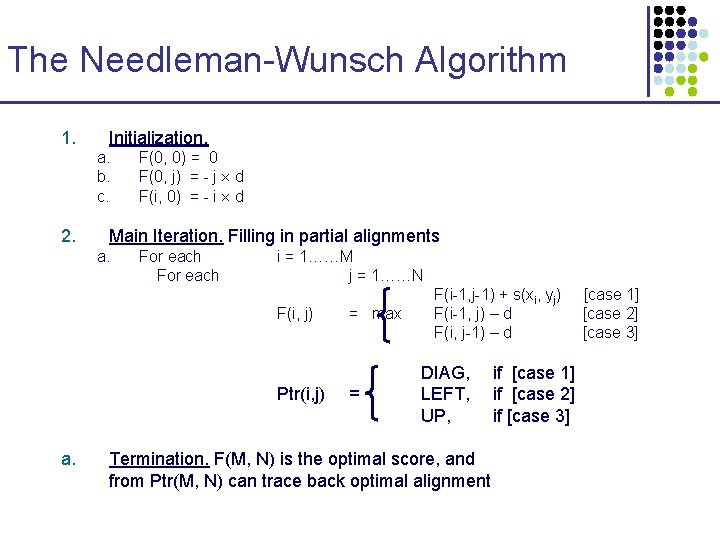
The Needleman-Wunsch Algorithm 1. Initialization. a. b. c. 2. F(0, 0) = 0 F(0, j) = - j d F(i, 0) = - i d Main Iteration. Filling in partial alignments a. For each i = 1……M j = 1……N F(i, j) Ptr(i, j) a. = max = F(i-1, j-1) + s(xi, yj) F(i-1, j) – d F(i, j-1) – d DIAG, LEFT, UP, Termination. F(M, N) is the optimal score, and from Ptr(M, N) can trace back optimal alignment if [case 1] if [case 2] if [case 3] [case 1] [case 2] [case 3]
Performance • Time: O(NM) • Space: O(NM) • More efficient methods are available
A variant of the basic algorithm: • Maybe it is OK to have an unlimited # of gaps in the beginning and end: -----CTATCACCTGACCTCCAGGCCGATGCCCCTTCCGGC GCGAGTTCATCTATCAC--GACCGC--GGTCG------- • Then, we don’t want to penalize gaps in the ends
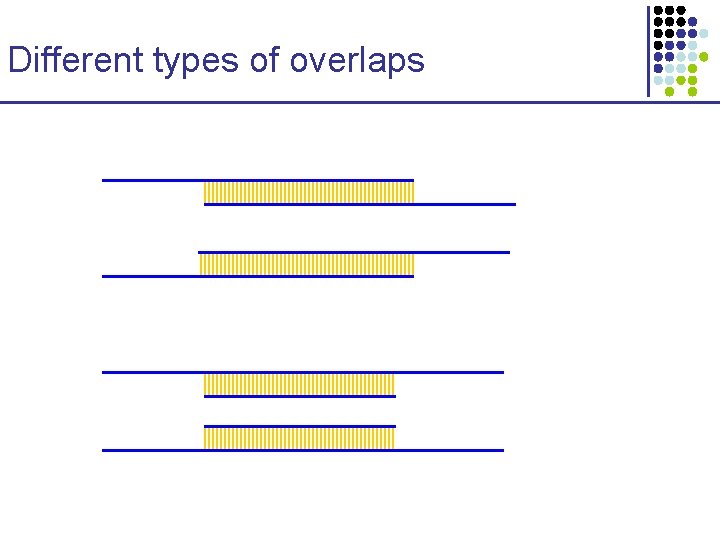
Different types of overlaps
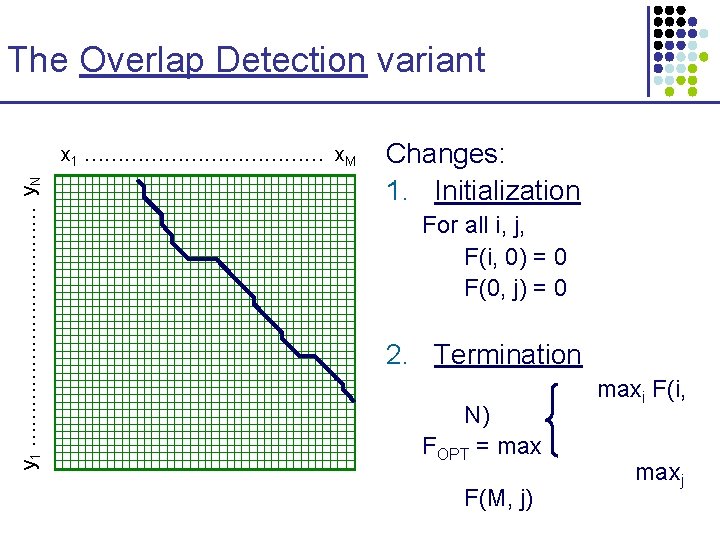
The Overlap Detection variant y 1 ……………… y. N x 1 ……………… x. M Changes: 1. Initialization For all i, j, F(i, 0) = 0 F(0, j) = 0 2. Termination N) FOPT = max F(M, j) maxi F(i, maxj
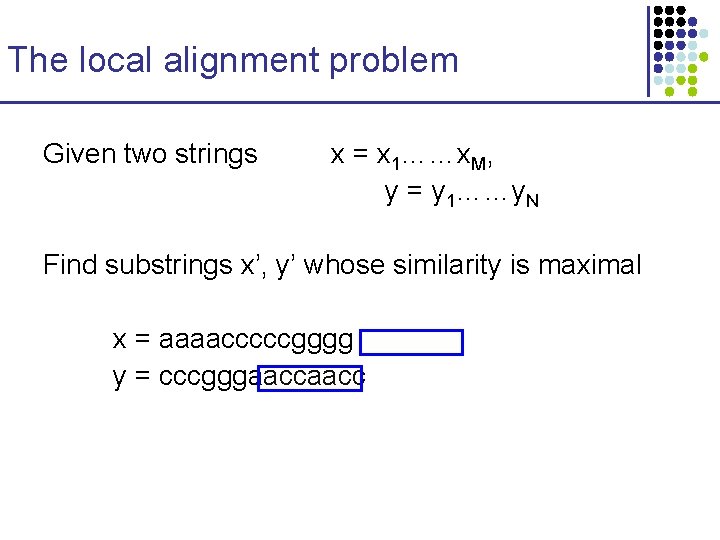
The local alignment problem Given two strings x = x 1……x. M, y = y 1……y. N Find substrings x’, y’ whose similarity is maximal x = aaaacccccgggg y = cccgggaacc
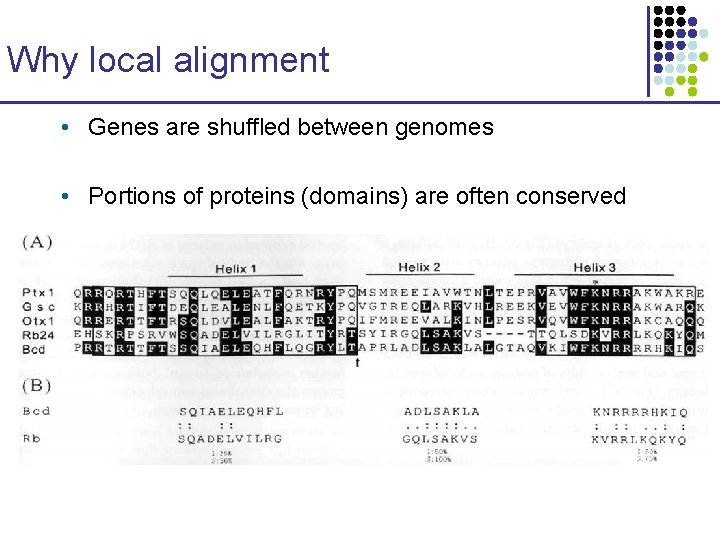
Why local alignment • Genes are shuffled between genomes • Portions of proteins (domains) are often conserved
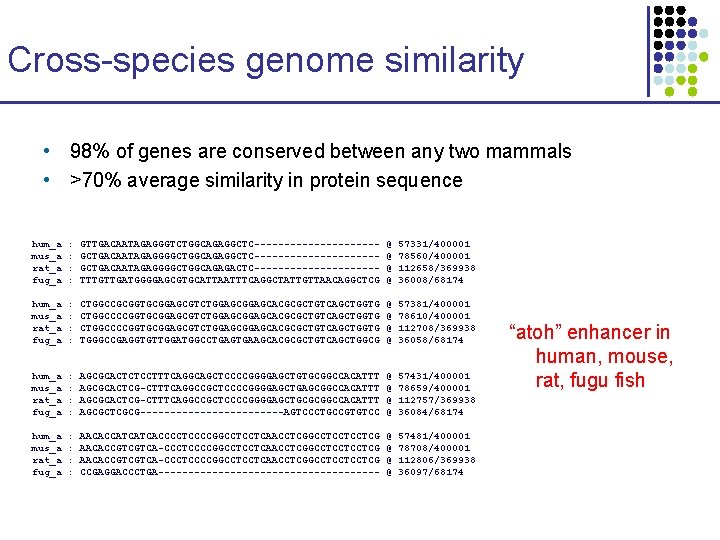
Cross-species genome similarity • 98% of genes are conserved between any two mammals • >70% average similarity in protein sequence hum_a mus_a rat_a fug_a : : GTTGACAATAGAGGGTCTGGCAGAGGCTC--------------------GCTGACAATAGAGGGGCTGGCAGAGACTC----------TTTGTTGATGGGGAGCGTGCATTAATTTCAGGCTATTGTTAACAGGCTCG @ @ 57331/400001 78560/400001 112658/369938 36008/68174 hum_a mus_a rat_a fug_a : : CTGGCCGCGGTGCGGAGCGTCTGGAGCGGAGCACGCGCTGTCAGCTGGTG CTGGCCCCGGTGCGGAGCGTCTGGAGCACGCGCTGTCAGCTGGTG TGGGCCGAGGTGTTGGATGGCCTGAGTGAAGCACGCGCTGTCAGCTGGCG @ @ 57381/400001 78610/400001 112708/369938 36058/68174 hum_a mus_a rat_a fug_a : : AGCGCACTCTCCTTTCAGGCAGCTCCCCGGGGAGCTGTGCGGCCACATTT AGCGCACTCG-CTTTCAGGCCGCTCCCCGGGGAGCTGAGCGGCCACATTT AGCGCACTCG-CTTTCAGGCCGCTCCCCGGGGAGCTGCGCGGCCACATTT AGCGCTCGCG------------AGTCCCTGCCGTGTCC @ @ 57431/400001 78659/400001 112757/369938 36084/68174 hum_a mus_a rat_a fug_a : : AACACCATCATCACCCCTCCCCGGCCTCCTCAACCTCGGCCTCCTCCTCG AACACCGTCGTCA-CCCTCCCCGGCCTCCTCAACCTCGGCCTCCTCCTCG CCGAGGACCCTGA------------------- @ @ 57481/400001 78708/400001 112806/369938 36097/68174 “atoh” enhancer in human, mouse, rat, fugu fish
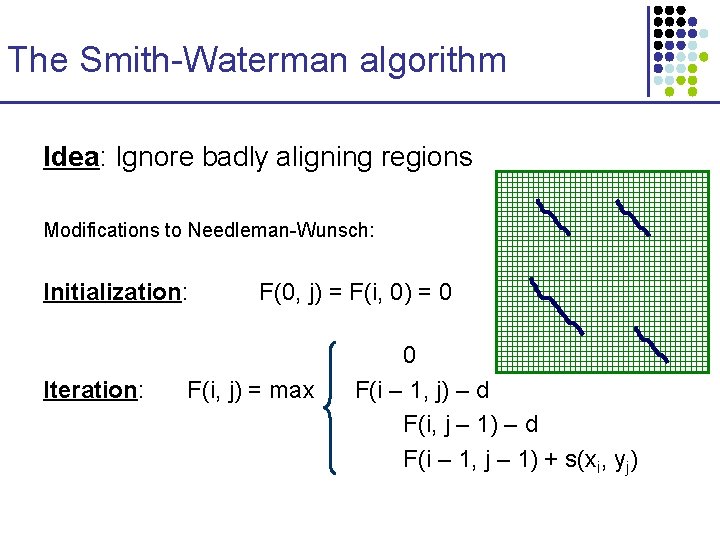
The Smith-Waterman algorithm Idea: Ignore badly aligning regions Modifications to Needleman-Wunsch: Initialization: Iteration: F(0, j) = F(i, 0) = 0 F(i, j) = max 0 F(i – 1, j) – d F(i, j – 1) – d F(i – 1, j – 1) + s(xi, yj)
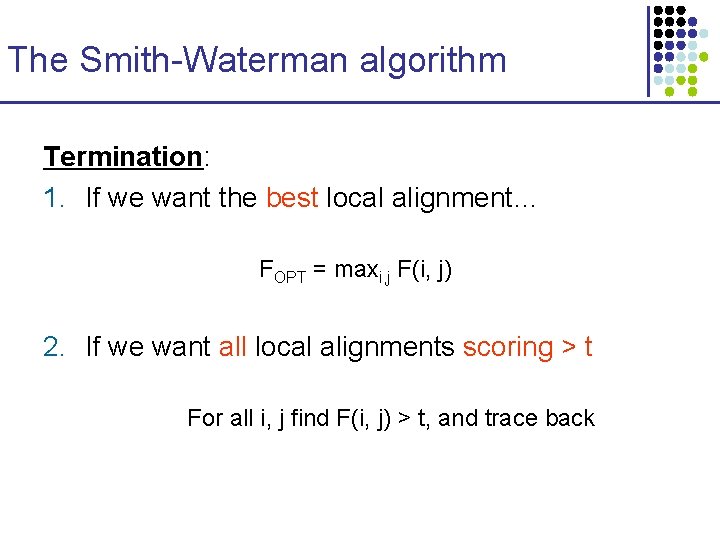
The Smith-Waterman algorithm Termination: 1. If we want the best local alignment… FOPT = maxi, j F(i, j) 2. If we want all local alignments scoring > t For all i, j find F(i, j) > t, and trace back
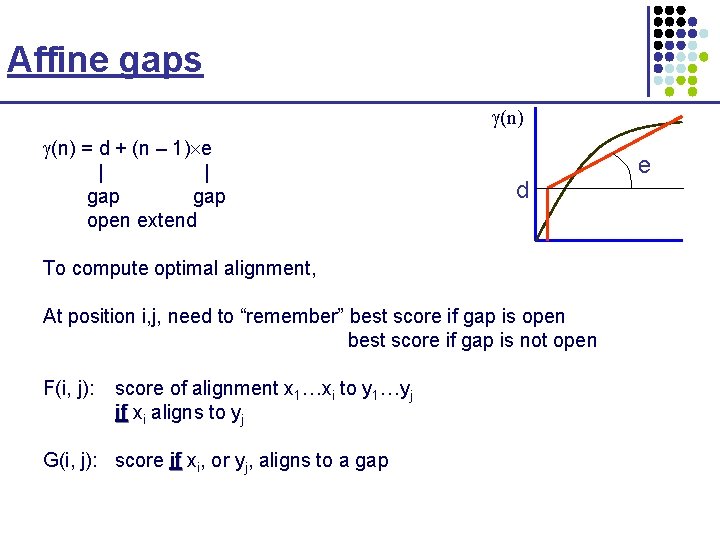
Affine gaps (n) = d + (n – 1) e | | gap open extend d To compute optimal alignment, At position i, j, need to “remember” best score if gap is open best score if gap is not open F(i, j): score of alignment x 1…xi to y 1…yj if xi aligns to yj G(i, j): score if xi, or yj, aligns to a gap e
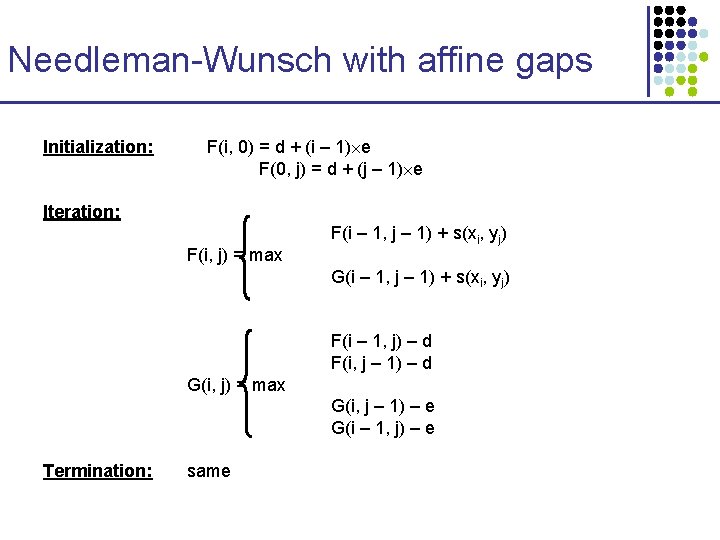
Needleman-Wunsch with affine gaps Initialization: F(i, 0) = d + (i – 1) e F(0, j) = d + (j – 1) e Iteration: F(i, j) = max F(i – 1, j – 1) + s(xi, yj) G(i – 1, j – 1) + s(xi, yj) F(i – 1, j) – d F(i, j – 1) – d G(i, j) = max G(i, j – 1) – e G(i – 1, j) – e Termination: same
- Slides: 24