
SEPTIC SHOCK and MODS Chapter 23 Progression of

- Slides: 27
SEPTIC SHOCK and MODS Chapter 23
Progression of Bacteremia Infection Bacteremia Systemic Inflammatory Response System (SIRS) Sepsis Severe Sepsis Septic Shock Multiple Organ Dysfunction Syndrome (MODS)
Bacteremia and Septicemia Bacteremia: presence of bacteria in the blood. Septicemia: If the body’s defense mechanisms fail, bacteremia becomes septicemia (growth/replication of bacteria in the blood). Exotoxins Proteins released during bacterial growth Enzymatic action towards cells (neurotoxins, pneumotoxins, enterotoxins, hemolysins) Produce antibodies (antitoxins) Endotoxins Contained within the cell wall of gram-negative bacteria Released when these bacteria are destroyed and/or during bacterial growth Pyrogenic: pro-inflammatory and fever inducing Increase vascular permeability Cause vasodilation Activate coagulation cascade
Systemic Inflammatory Response Syndrome Criterion: 1) Temperature: >38 C (100. 4 F) or <36 C (96. 8 F) 2) Heart Rate: > 90 beats/min 3) Respiratory Rate: > 20 breaths per minute or Ca. O 2 levels < 32 mm. Hg 4) White Blood Cell Count: > 12, 000, <4, 000, or Normal with >10% bands
SEPSIS (2) or more SIRS criterion present accompanying septicemia (bacterial, viral, or fungal) Systemic response to infection Additional Laboratory Abnormalities may be present: Elevated C-reactive protein Elevated serum procalcitonin Hyperlactatemia Hypoxemia Elevated INR Thrombocytopenia
SEVERE SEPSIS Sepsis associated organ dysfunction Most commonly expressed by Hypotension SBP < 90 mm. Hg MAP < 70 SBP decreased > 40 mm. Hg
SEPTIC SHOCK Severe Sepsis associated with persistent hypotension Persistent hypotension (SBP <90 mm. Hg) despite early fluid resuscitation efforts
MULTIPLE ORGAN DYSFUNCTION Clinical Manifestations: Pulmonary: dyspnea, refractory hypoxemia, crackles, diminished breath sounds, respiratory acidosis. Renal: increased creatinine and BUN levels, oliguria (<0. 5 ml/kg/hr), anuria. Hepatic: increased bilirubin, AST, ALT levels, Increased ammonia levels, jaundice, abdominal distention, muscle wasting, abdominal tenderness Gastrointestinal: paralytic ileus, hemorrhage, decreased bowel sounds, abdominal pain, constipation, diarrhea, anorexia, vomiting. Hematological: thrombocytopenia, disseminated intravascular coagulation. Cardiac: tachycardia, decreased SVR, increased oxygen consumption, decreased cardiac output. Neurological: lethargy, disorientation, agitation, restlessness, coma. Metabolic: muscle wasting, weight loss, hyperglycemia.
Inflammatory Mediators Interleukin-1 B Released by macrophages and lymphocytes Cause fever, vasodilation, hypotension, edema, myocardial depression, leukocytosis Tumor Necrosis Factor Released by macrophages, natural killer cells and mast cells as a response to interleukins Platelet-Activating Factor Released by phagocytes, platelets and endothelial cells Cause increased clotting Impedes tissue perfusion and oxygen extraction
Secondary Mediators Cytokines Prostaglandins Nitric oxide I NOS NO release Vasodilation Increased vascular permeability Decreased cardiac contractility Proteolytic enzymes
SEPTIC SHOCK What’s going on? 1) Inflammation 2) Hypoperfusion 3) Decreased SVR 4) Decreased oxygen extraction by cells/tissues
Clinical Manifestations: Tachycardia (compensatory mechanism) Temperature instability (fever or low body temperature) Tachypnea Dyspnea Confusion Persistent hypotension Cyanosis Oliguria
Risk Factors: Age Pregnancy Suppressed immune system HIV, autoimmune diseases, cancer treatments Major surgery Long-term hospitalization DM Malnutrition External devices Urinary catheters, endotracheal tubes, intravenous catheters
Treatment: identification of cause mechanical ventilation central venous catheter broad spectrum antibiotics fluid resuscitation vasopressors nutritional support insulin therapy to stabilize glucose levels corticosteroids DVT prevention stress ulcer prevention
Empiric Antibiotic Regimen Vancomycin + Piperacillin/tazobactam (Zosyn) - Community Acquired Vancomycin + Aztreonam Tobramycin + Metronidazole Vancomycin + Meropenum + Tobramycin - Hospital Acquired Vancomycin + Aztreonam + Tobramycin + Metronidazole
Vancomycin IV: treats systemic infections (MRSA infections of skin, bloodstream, endocarditis) Oral: treats intestinal infections (c diff) For sepsis treatment: 15 mg/kg IV every 12 hours x 10 -14 days Drug class: Glycopeptide Antibiotic Gram Positive Bacteria are susceptible Side effects: ototoxic nephrotoxic
Piperacillin/Tazobactam Penicillin Antibiotic For Sepsis: 3. 375 g IV every 8 hours, slow infusion over 4 hours Gram positive and gram negative aerobic and anaerobic organisms Side effects: GI upset Anxiety Insomnia Headache Thrush/vaginal yeast infections
Aztreonam Monobactam Antibiotic Gram Negative Bacteria (UTIs, Pneumonia, Septicemia, Peritonitis) IV administration, IM injection, Nubulized For Sepsis: 2 g IV every 8 hours Side effects: GI distress eosinophilia
Tobramycin Aminoglycoside Antibiotic Gram Negative (pseudomonas) For Sepsis: 7 mg/kg IV Side effects: Ototoxic Nephrotoxic
Metronidazole Anaerobic bacteria (positive and negative) and protozoans Nitroimidazole For Sepsis: 500 mg IV every 8 hours Side effects: Paresthesias GI distress Visual disturbances Behavioral changes
Meropenum Drug Class: Carbapenum Gram positive and negative bacterium (febrile neutropenia, severe intraabdominal infections, meningitis) For Sepsis: 1 g IV every 8 hours Side effects: Chills Confusion Fainting Tachycardia Blurred vision convulsions
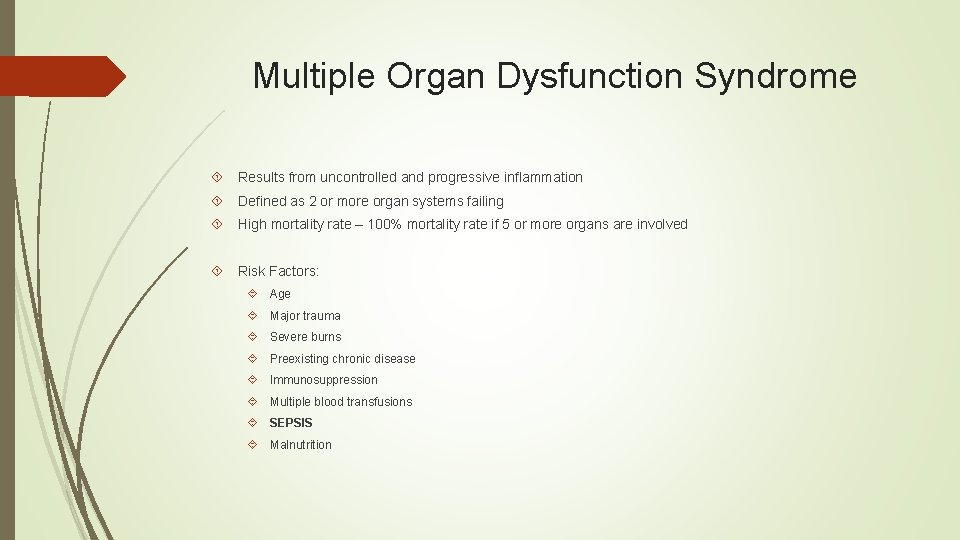
Multiple Organ Dysfunction Syndrome Results from uncontrolled and progressive inflammation Defined as 2 or more organ systems failing High mortality rate – 100% mortality rate if 5 or more organs are involved Risk Factors: Age Major trauma Severe burns Preexisting chronic disease Immunosuppression Multiple blood transfusions SEPSIS Malnutrition
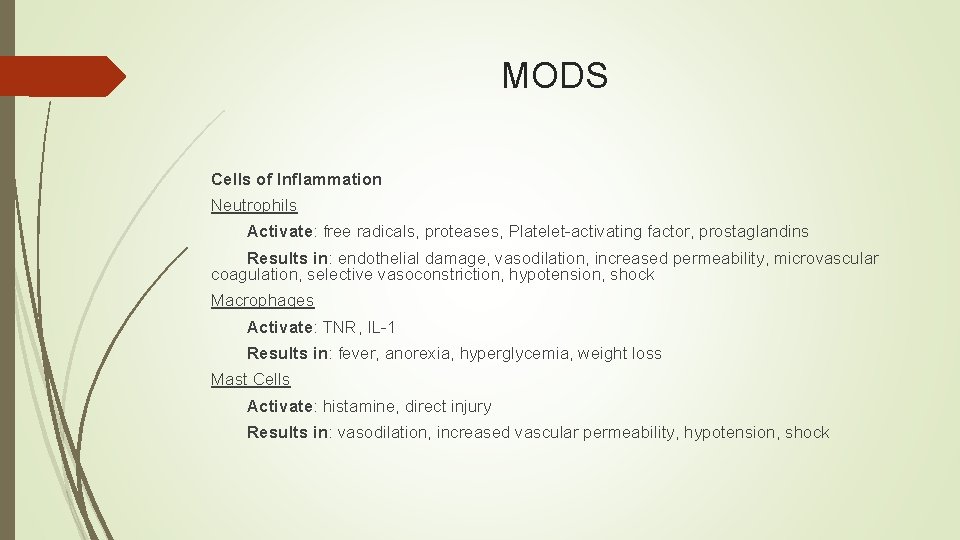
MODS Cells of Inflammation Neutrophils Activate: free radicals, proteases, Platelet-activating factor, prostaglandins Results in: endothelial damage, vasodilation, increased permeability, microvascular coagulation, selective vasoconstriction, hypotension, shock Macrophages Activate: TNR, IL-1 Results in: fever, anorexia, hyperglycemia, weight loss Mast Cells Activate: histamine, direct injury Results in: vasodilation, increased vascular permeability, hypotension, shock
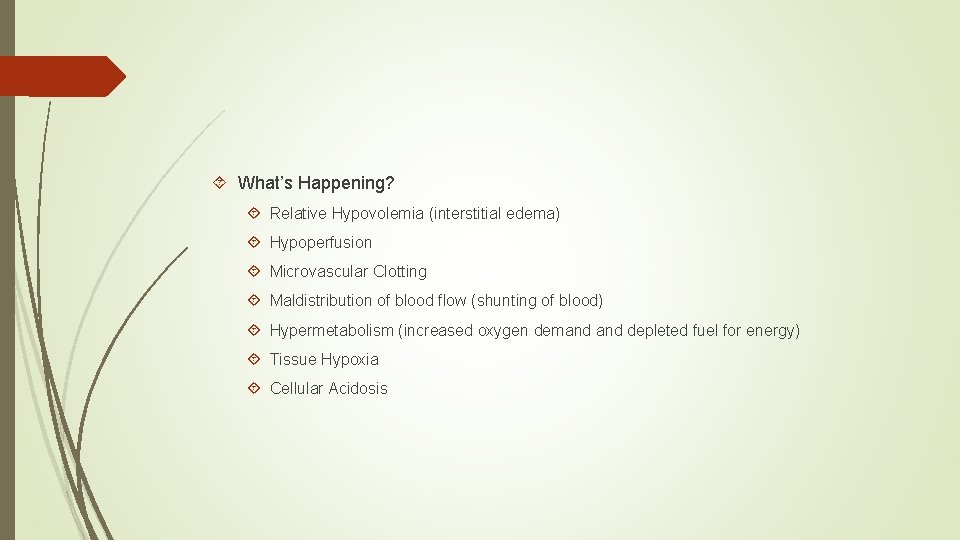
What’s Happening? Relative Hypovolemia (interstitial edema) Hypoperfusion Microvascular Clotting Maldistribution of blood flow (shunting of blood) Hypermetabolism (increased oxygen demand depleted fuel for energy) Tissue Hypoxia Cellular Acidosis
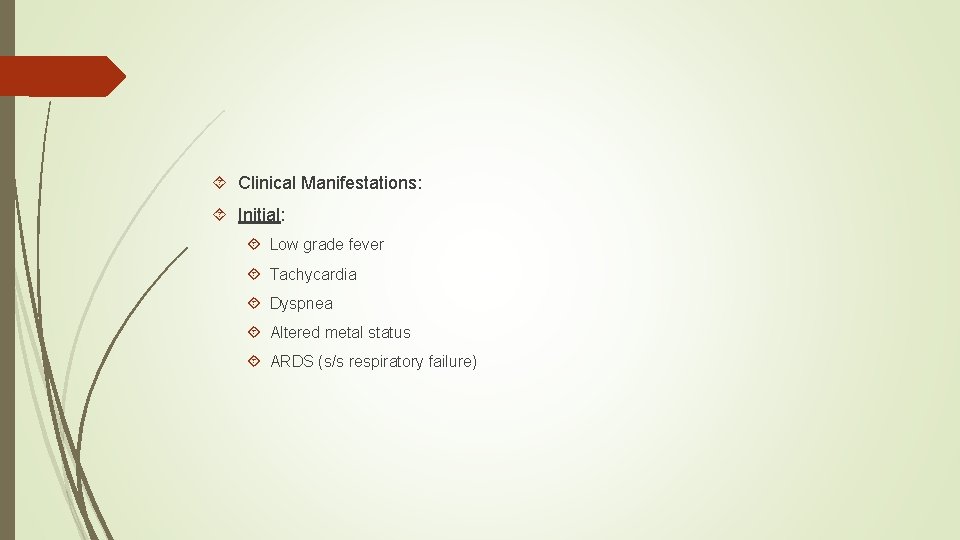
Clinical Manifestations: Initial: Low grade fever Tachycardia Dyspnea Altered metal status ARDS (s/s respiratory failure)
Days 7 -10: Liver Failure Kidney Failure Hepatic Encephalopathy
Days 14 -24: GI dysfunction Bacterial translocation Hematological failure Cardiac Failure Progressive Initial: tachycardia, increased output Late: bradycardia, profound hypotension, ventricular dysrhythmias Worsening encephalopathy