
September 2016 The Many Facets of Endoscopy Endoscope
September 2016 The Many Facets of Endoscopy
Endoscope definition a slender, tubular optical instrument used as a viewing system for examining an inner part of the body and, with an attached instrument, for biopsy or surgery

Endoscope history An instrument considered a prototype of endoscopes was evidenced and discovered in the ruins of Pompeii o Philip Bozzini developed a tube called the Lichtleiter in 1805 to observe the urinary tract, rectum and pharynx o In 1853, Antoine Jean Desormeaux of France developed an instrument to view the bladder and urinary tract and coined it an “endoscope” o

Gastrocameras (1950)
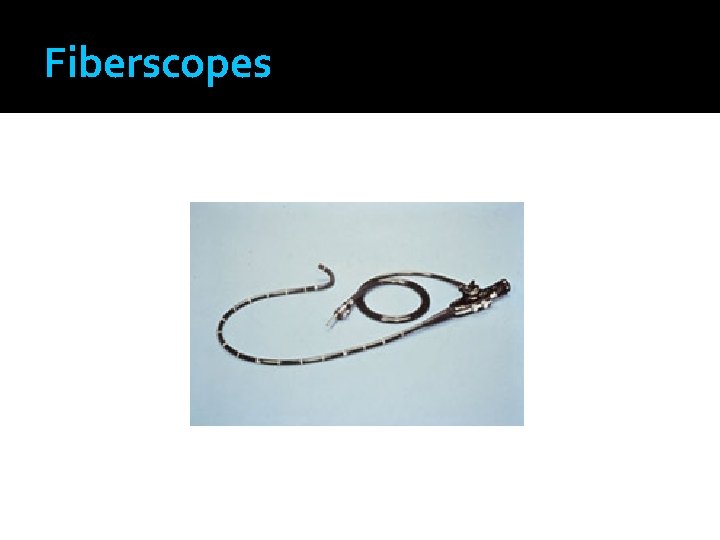
Fiberscopes
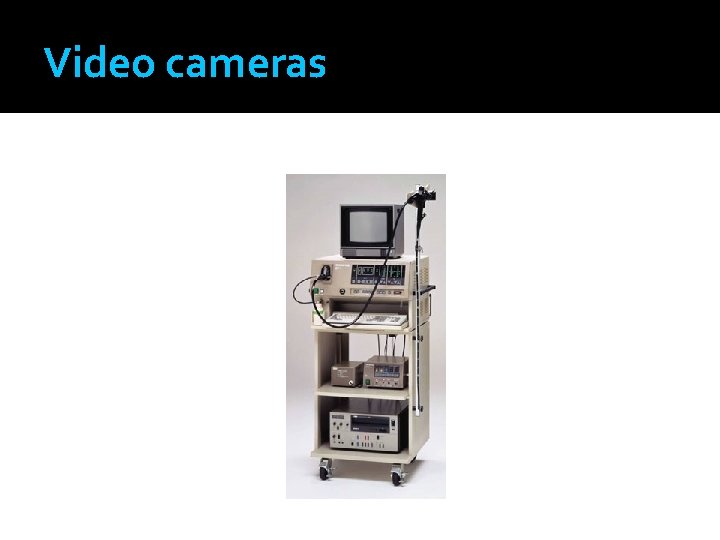
Video cameras
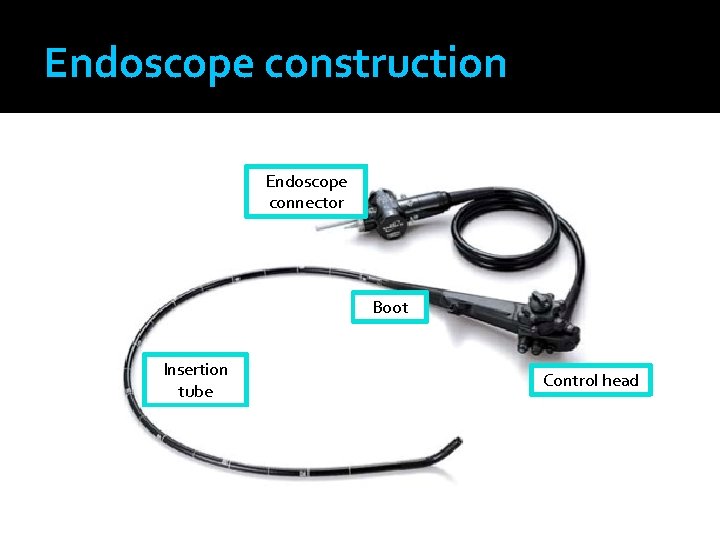
Endoscope construction Endoscope connector Boot Insertion tube Control head
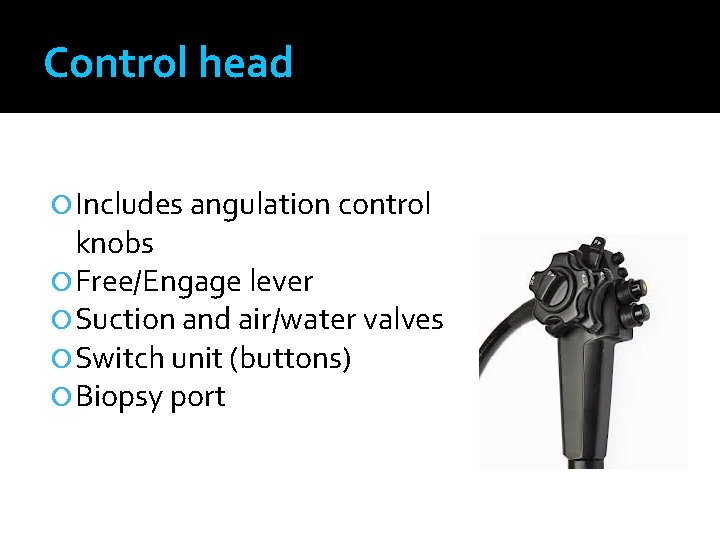
Control head Includes angulation control knobs Free/Engage lever Suction and air/water valves Switch unit (buttons) Biopsy port
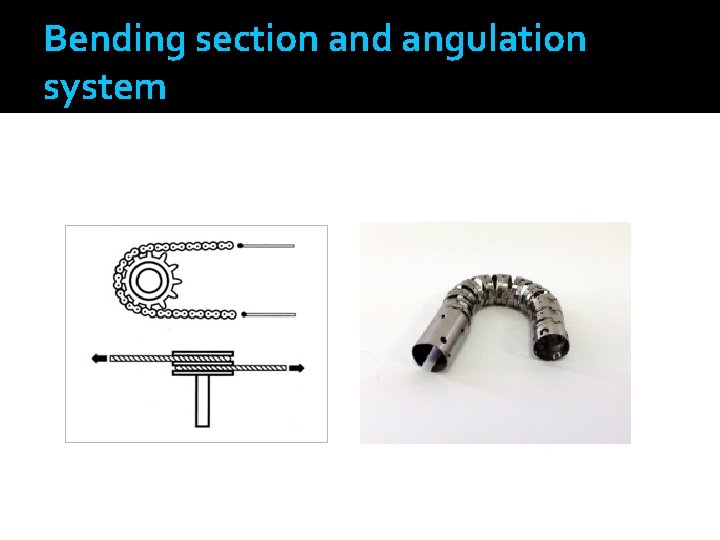
Bending section and angulation system
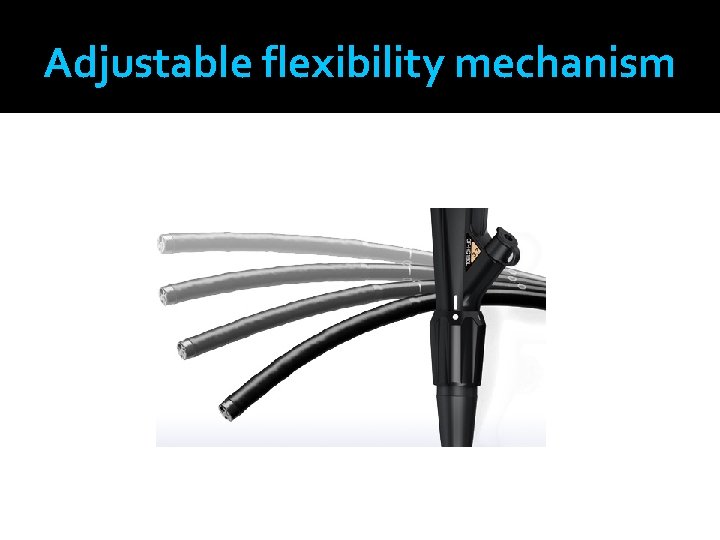
Adjustable flexibility mechanism
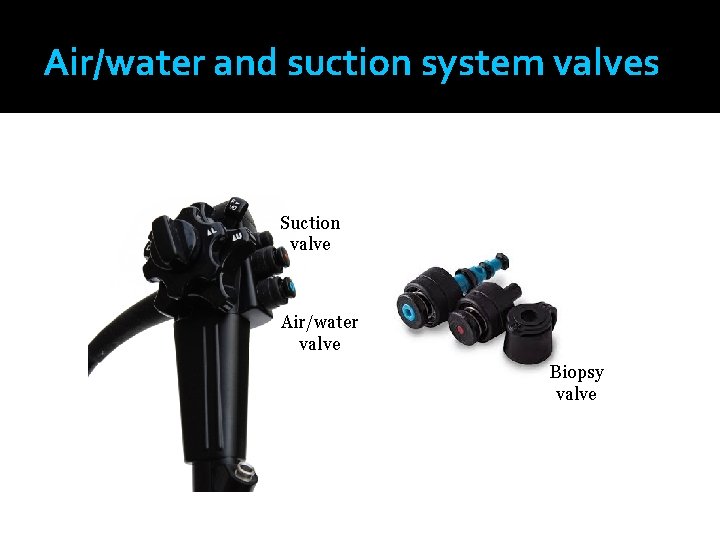
Air/water and suction system valves Suction valve Air/water valve Biopsy valve
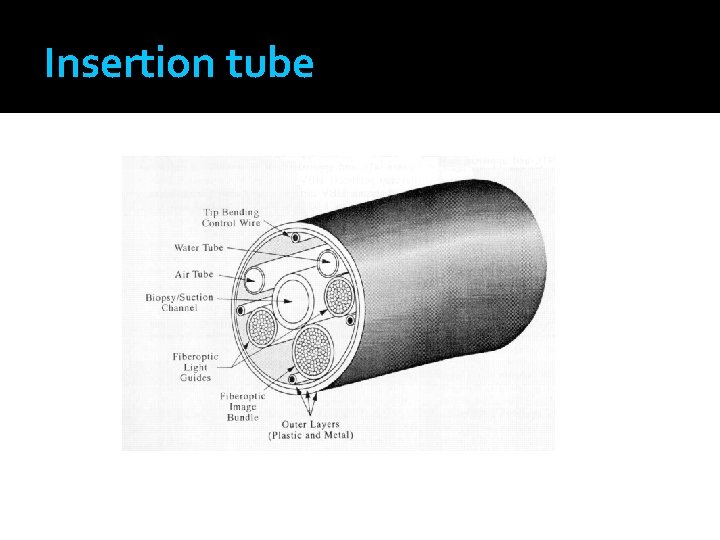
Insertion tube
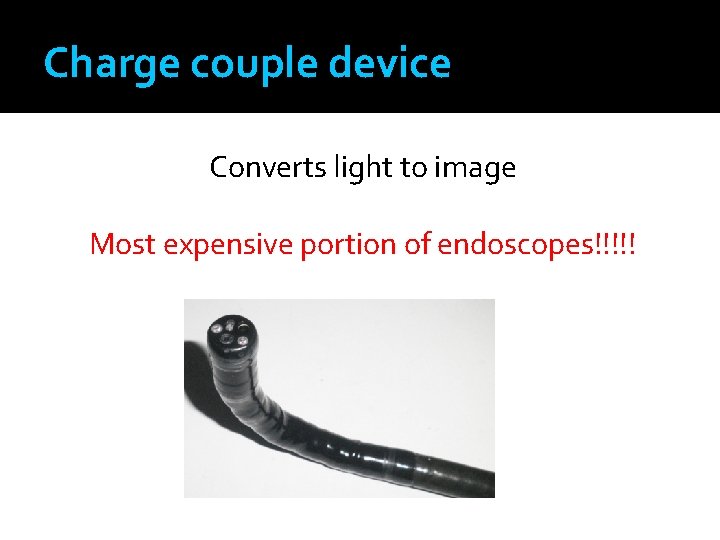
Charge couple device Converts light to image Most expensive portion of endoscopes!!!!!
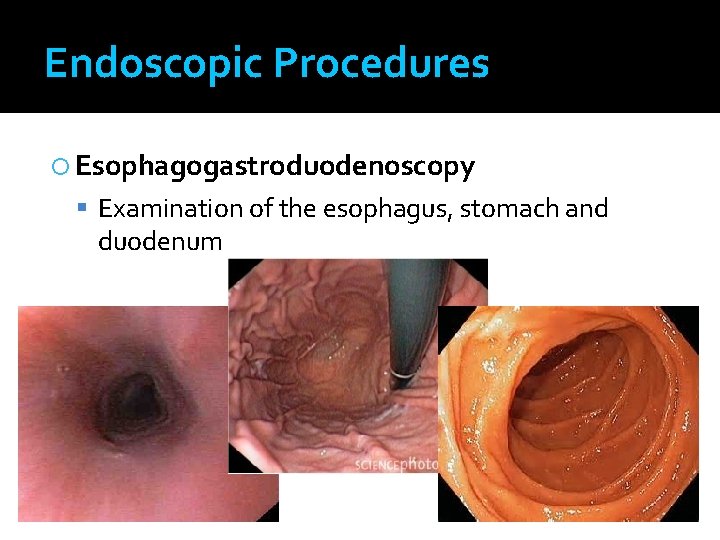
Endoscopic Procedures Esophagogastroduodenoscopy Examination of the esophagus, stomach and duodenum
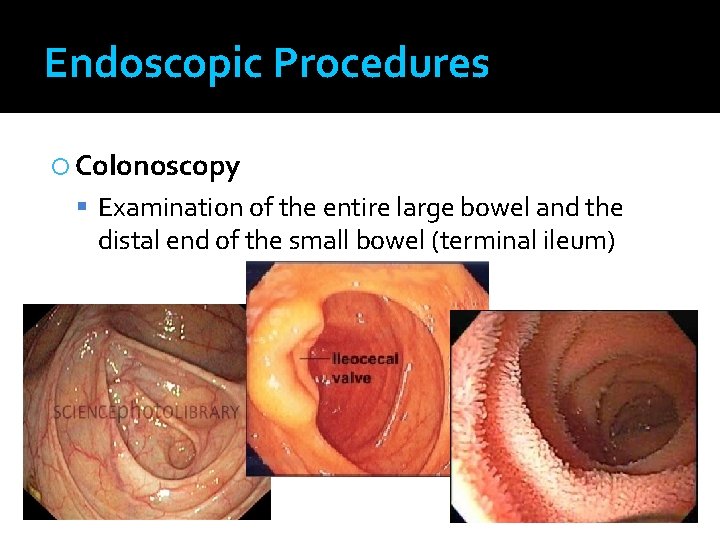
Endoscopic Procedures Colonoscopy Examination of the entire large bowel and the distal end of the small bowel (terminal ileum)
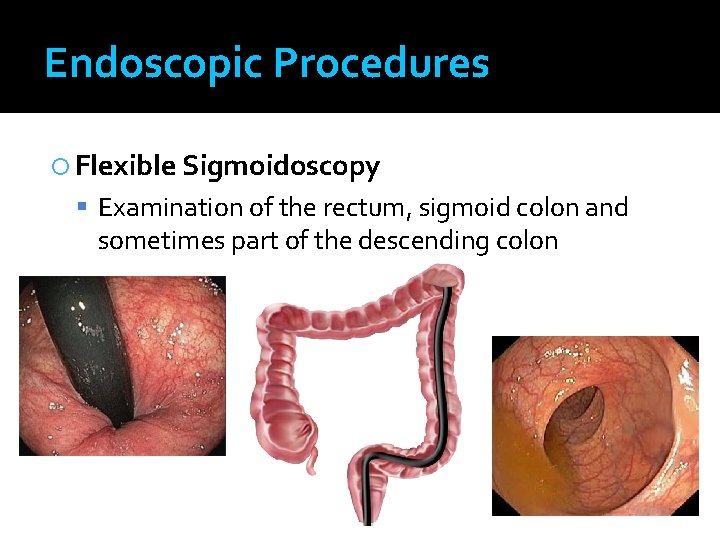
Endoscopic Procedures Flexible Sigmoidoscopy Examination of the rectum, sigmoid colon and sometimes part of the descending colon
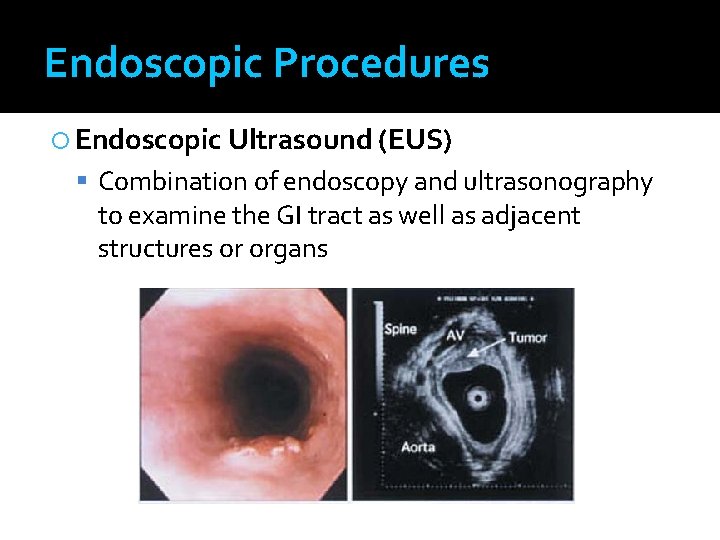
Endoscopic Procedures Endoscopic Ultrasound (EUS) Combination of endoscopy and ultrasonography to examine the GI tract as well as adjacent structures or organs
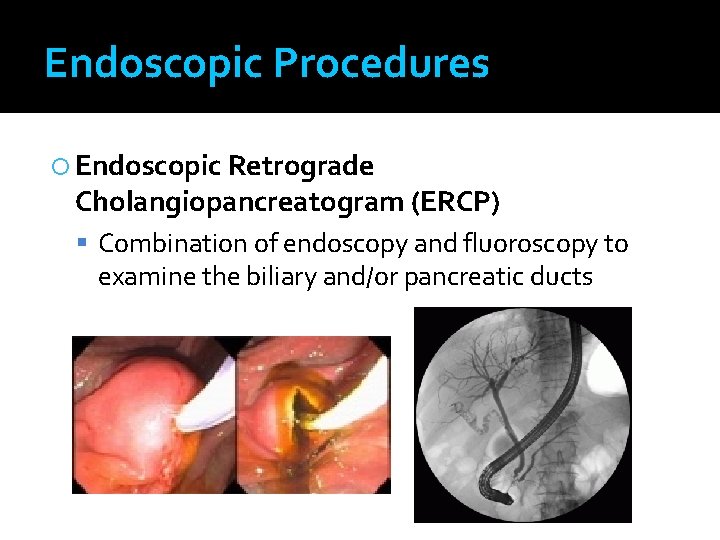
Endoscopic Procedures Endoscopic Retrograde Cholangiopancreatogram (ERCP) Combination of endoscopy and fluoroscopy to examine the biliary and/or pancreatic ducts
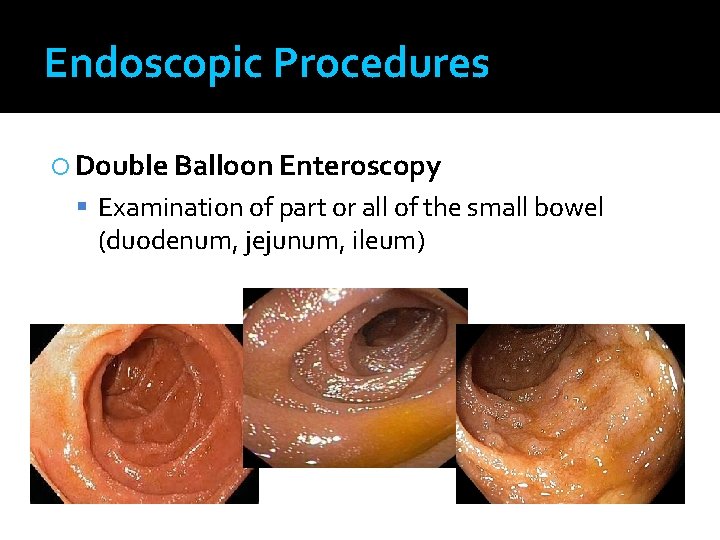
Endoscopic Procedures Double Balloon Enteroscopy Examination of part or all of the small bowel (duodenum, jejunum, ileum)
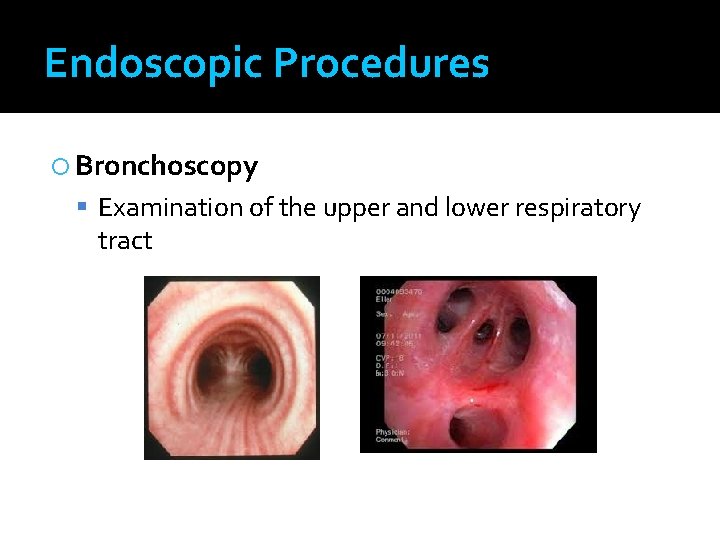
Endoscopic Procedures Bronchoscopy Examination of the upper and lower respiratory tract
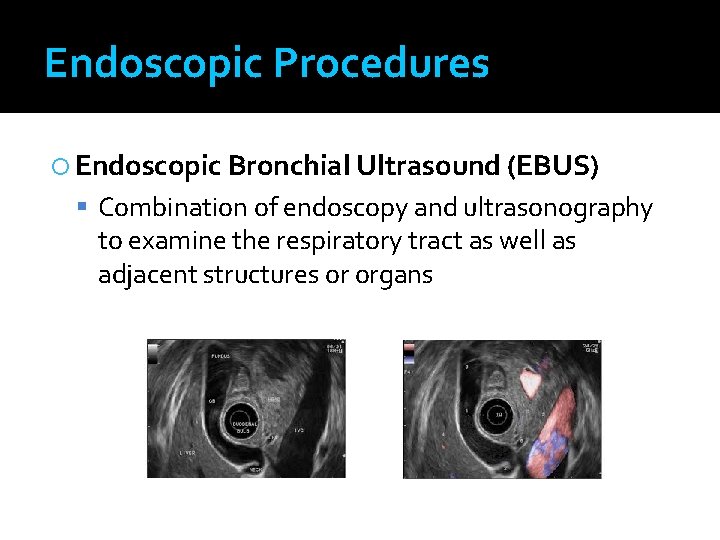
Endoscopic Procedures Endoscopic Bronchial Ultrasound (EBUS) Combination of endoscopy and ultrasonography to examine the respiratory tract as well as adjacent structures or organs
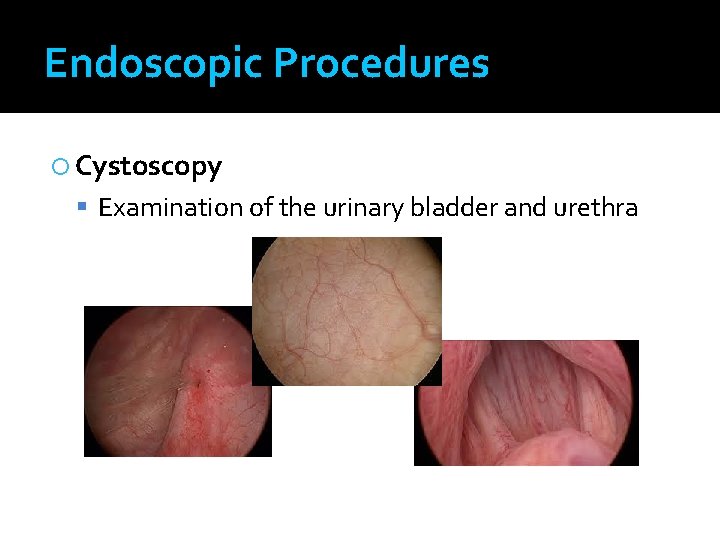
Endoscopic Procedures Cystoscopy Examination of the urinary bladder and urethra
Other Procedures Paracentesis Using a large bore catheter fluid is drained from the peritoneal cavity for therapeutic and/or diagnostic purposes Therapeutic Phlebotomy Blood withdrawl for the treatment of hemochromatosis Fibro. Scan® Use of shear waves to measures liver stiffness, allowing physicians to monitor the progression of various liver diseases
Other Procedures Urea Breath Test Used to diagnose the presence of Helicobacter pylori (H. Pylori) in the stomach Hydrogen Breath Test Measures the volume of hydrogen absorbed from the colon and expelled in the breath to diagnose lactose intolerance
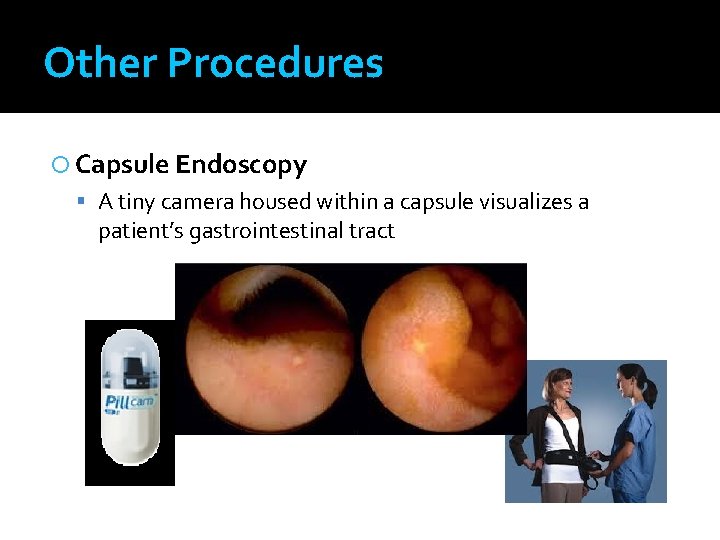
Other Procedures Capsule Endoscopy A tiny camera housed within a capsule visualizes a patient’s gastrointestinal tract
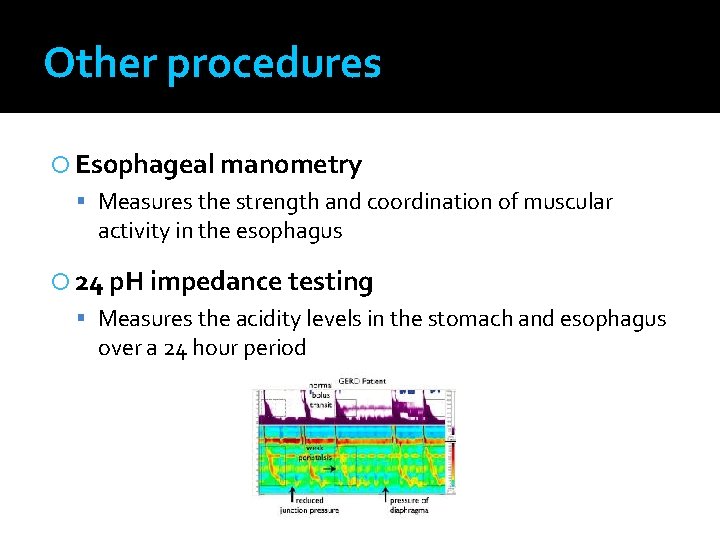
Other procedures Esophageal manometry Measures the strength and coordination of muscular activity in the esophagus 24 p. H impedance testing Measures the acidity levels in the stomach and esophagus over a 24 hour period
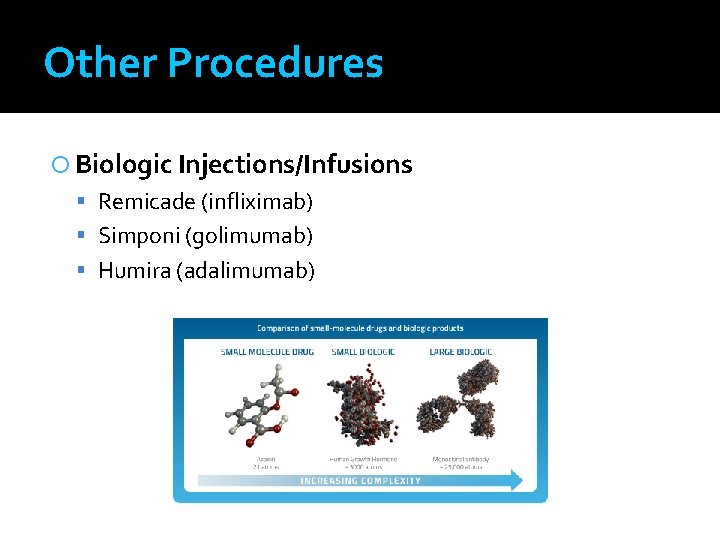
Other Procedures Biologic Injections/Infusions Remicade (infliximab) Simponi (golimumab) Humira (adalimumab)
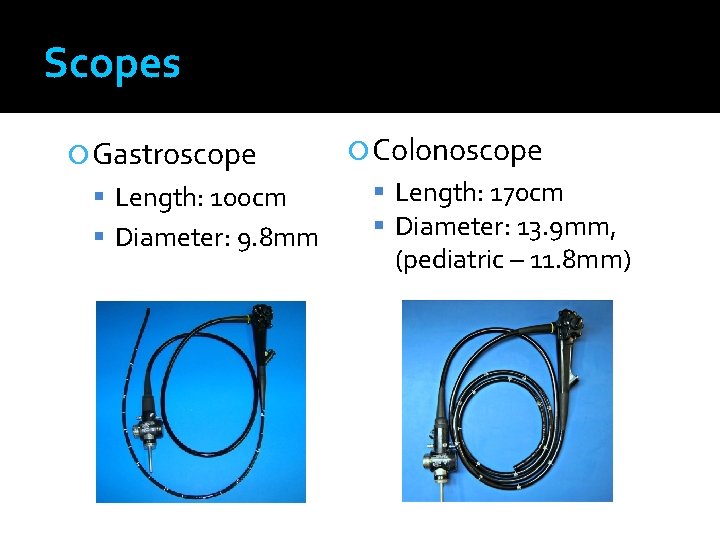
Scopes Gastroscope Length: 100 cm Diameter: 9. 8 mm Colonoscope Length: 170 cm Diameter: 13. 9 mm, (pediatric – 11. 8 mm)
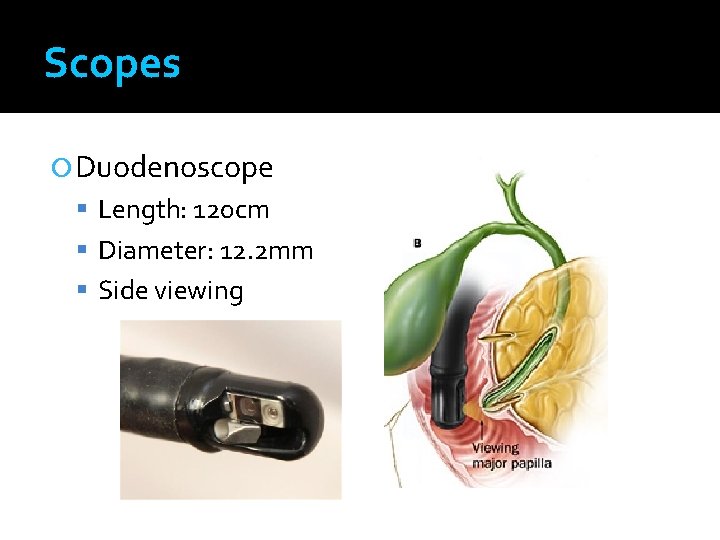
Scopes Duodenoscope Length: 120 cm Diameter: 12. 2 mm Side viewing
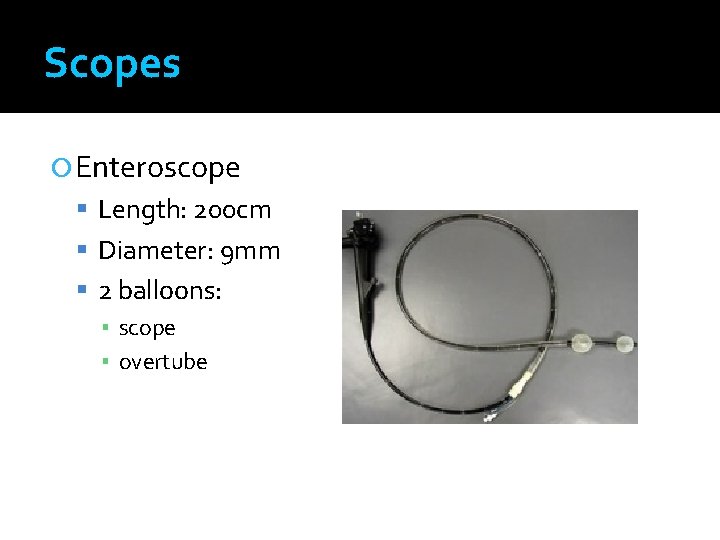
Scopes Enteroscope Length: 200 cm Diameter: 9 mm 2 balloons: ▪ scope ▪ overtube
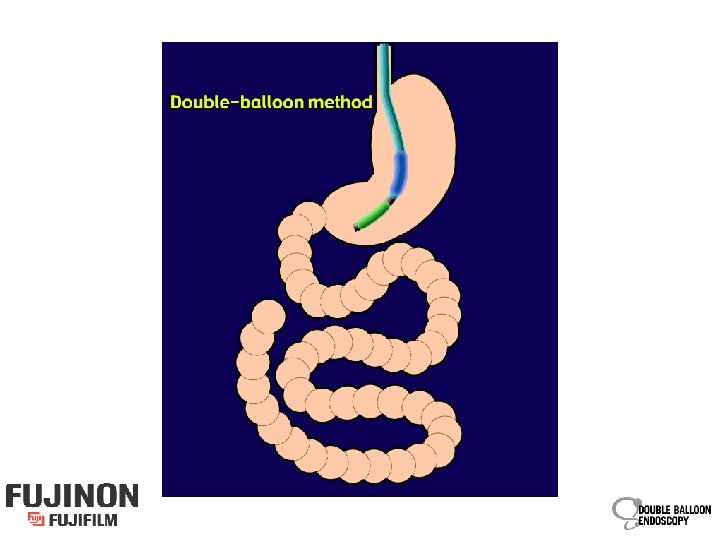
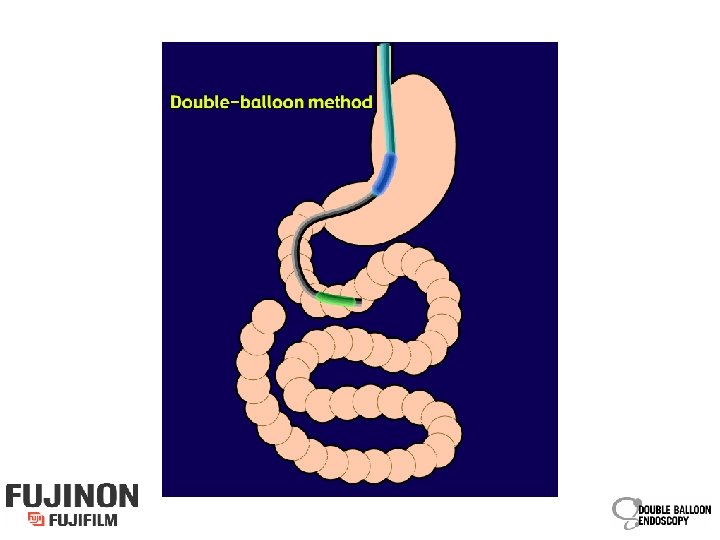
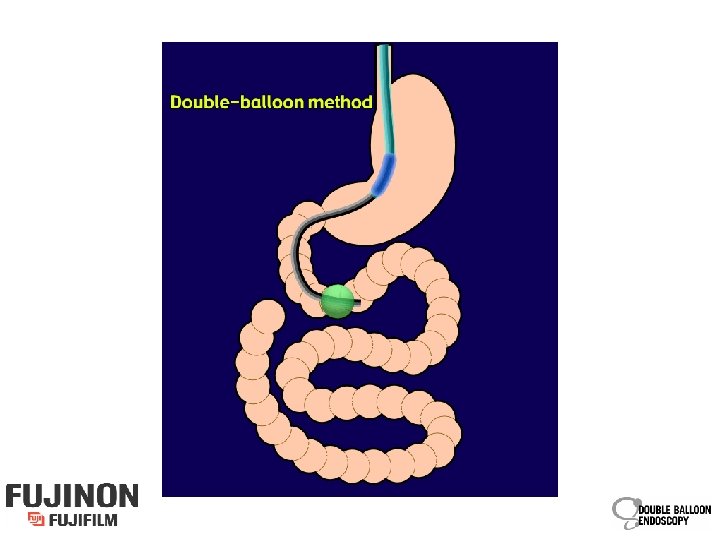
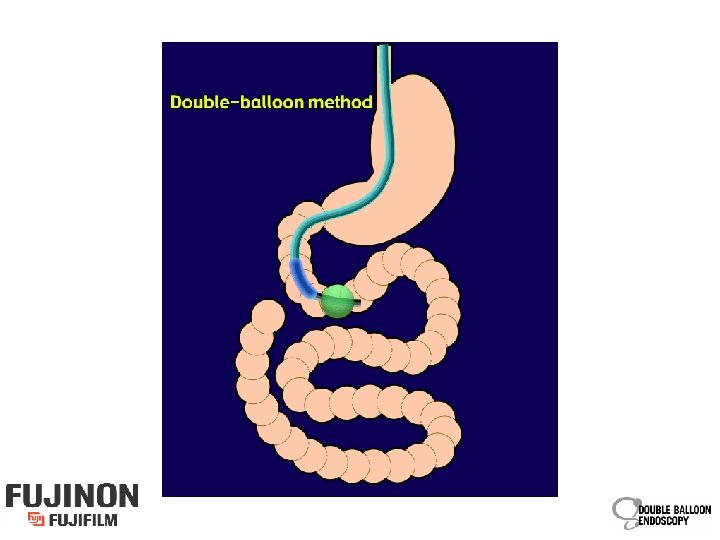
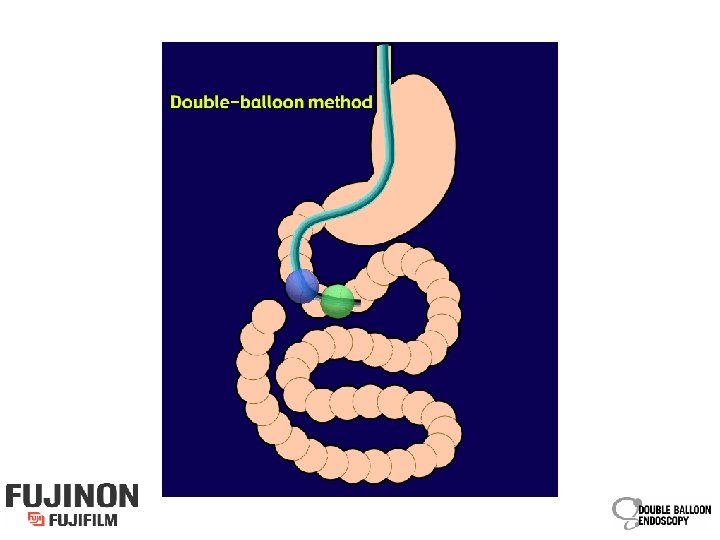
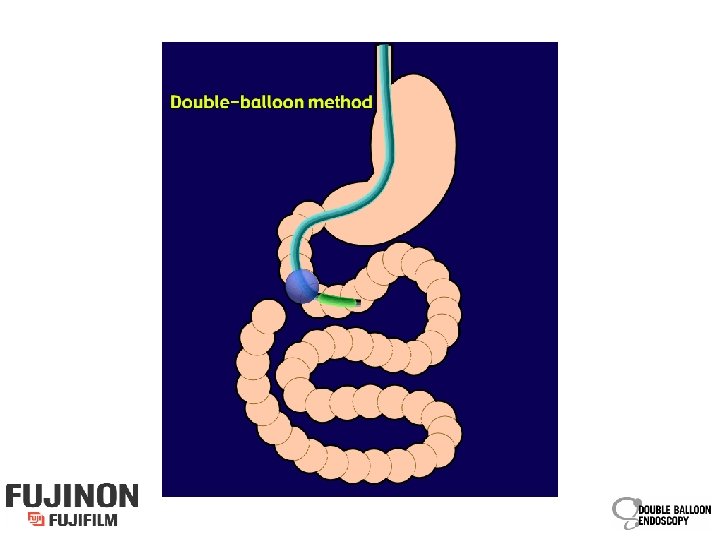
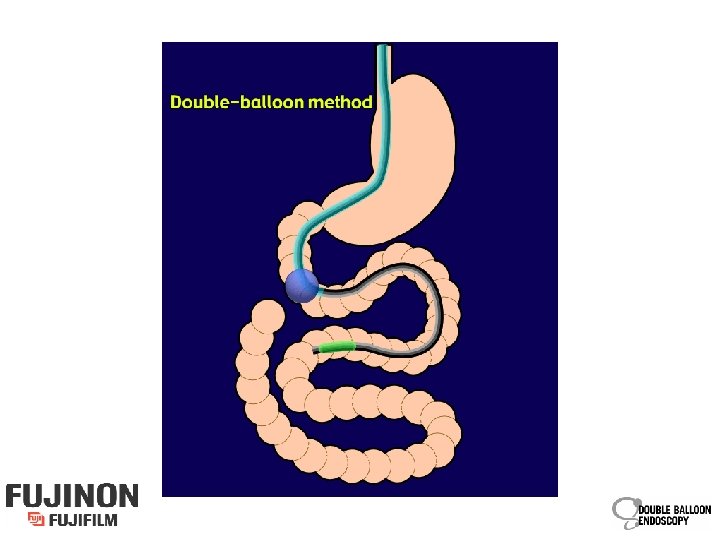
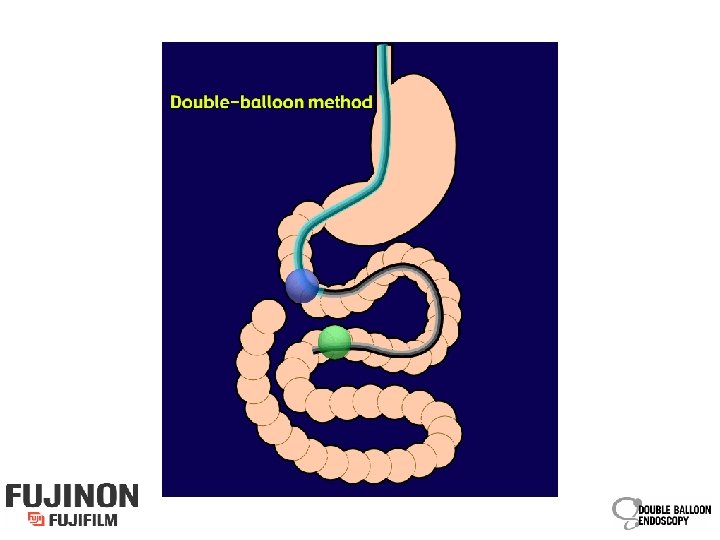
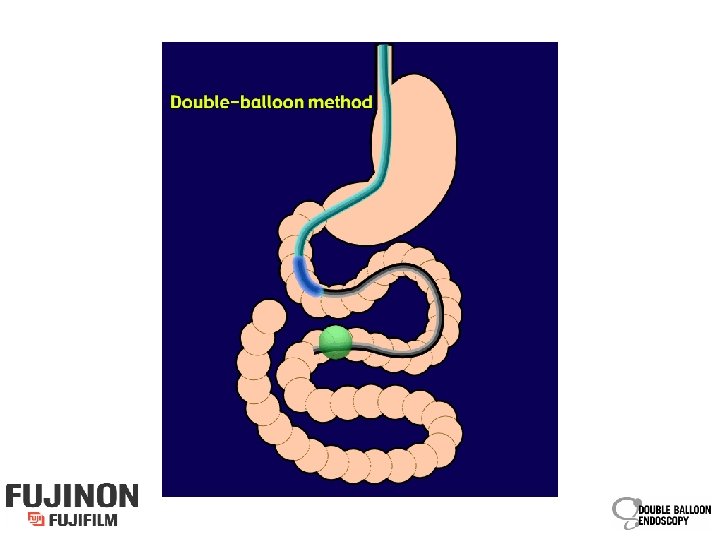
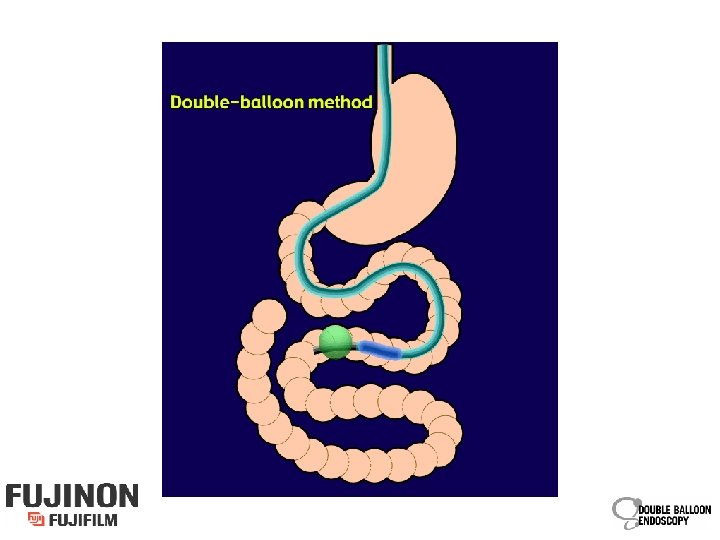
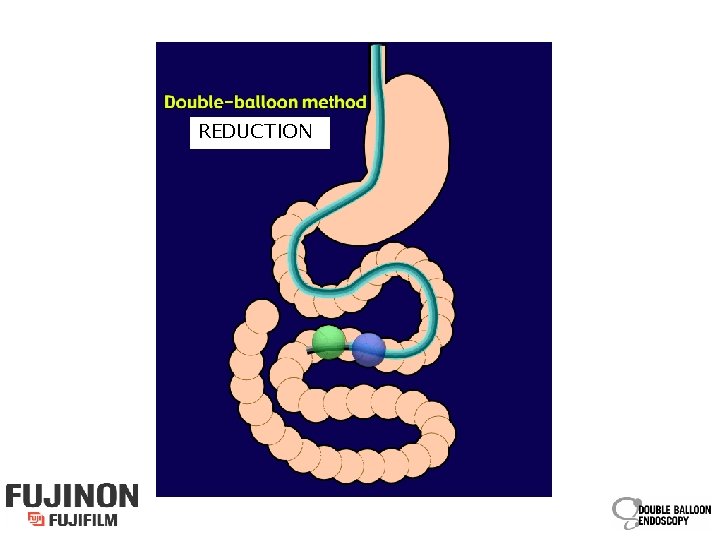
REDUCTION
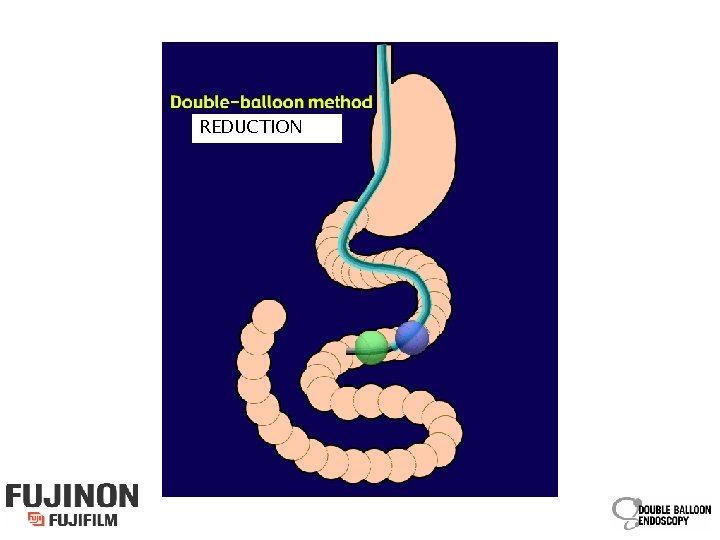
REDUCTION
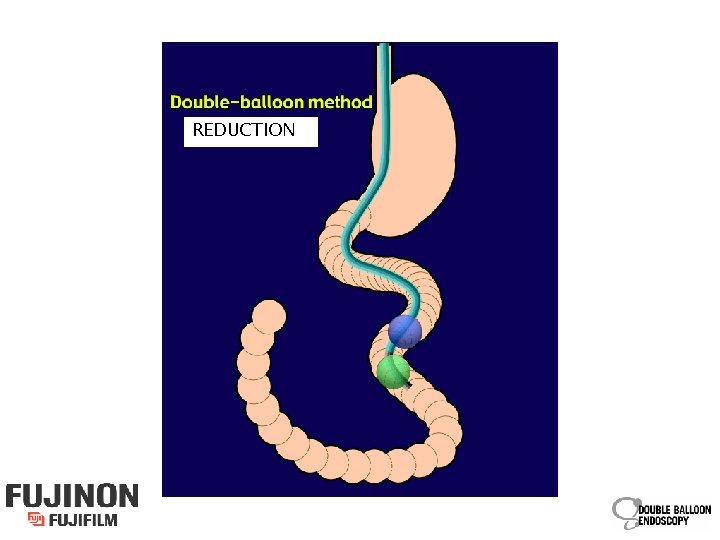
REDUCTION
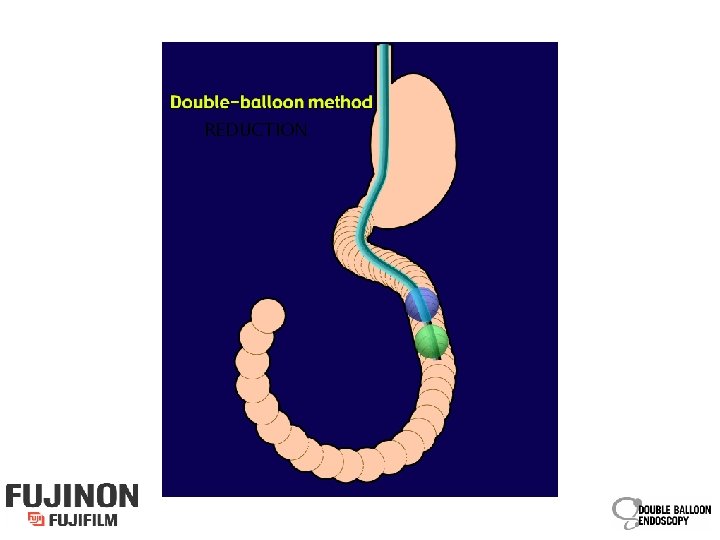
REDUCTION
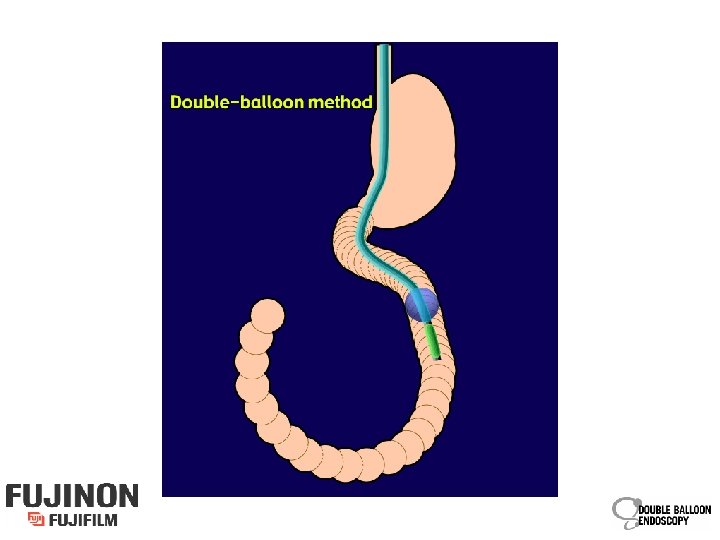
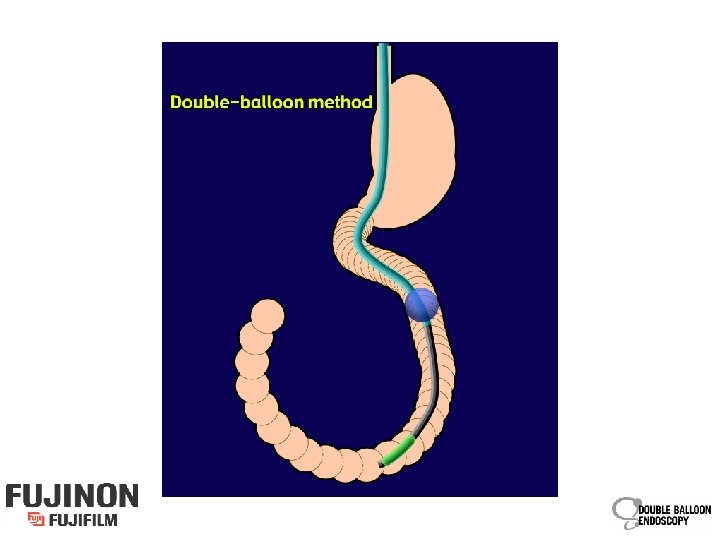
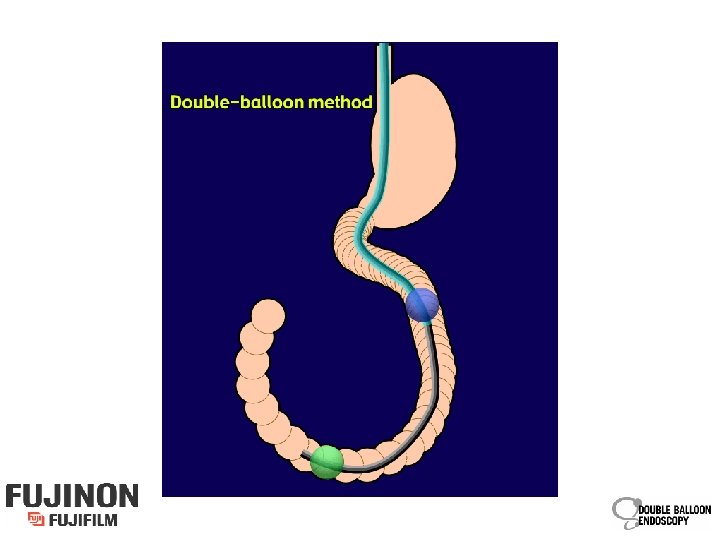
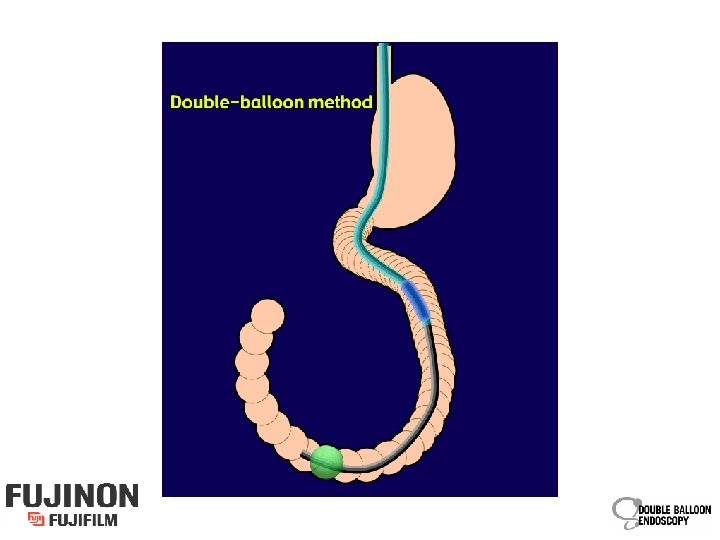
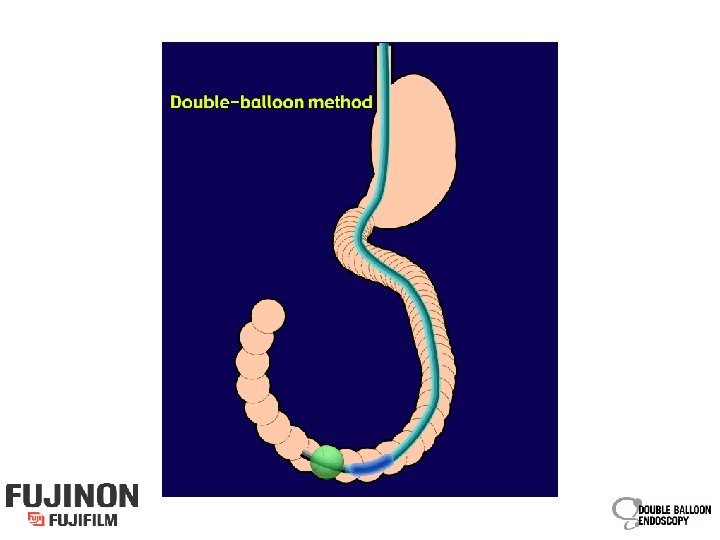
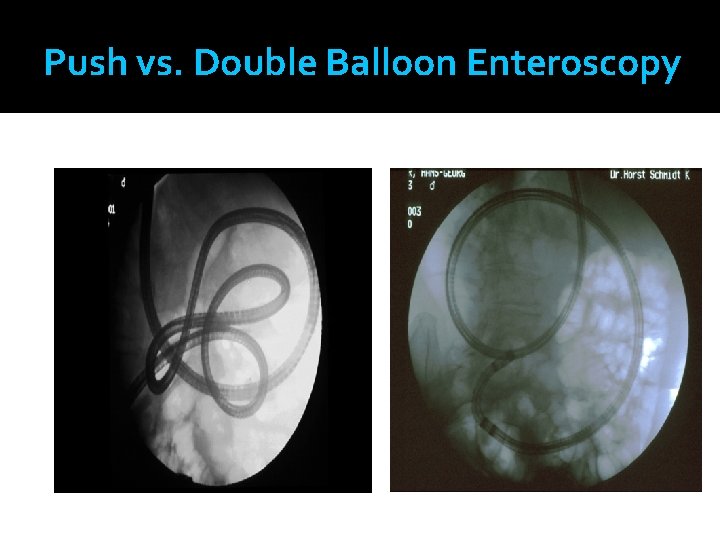
Push vs. Double Balloon Enteroscopy
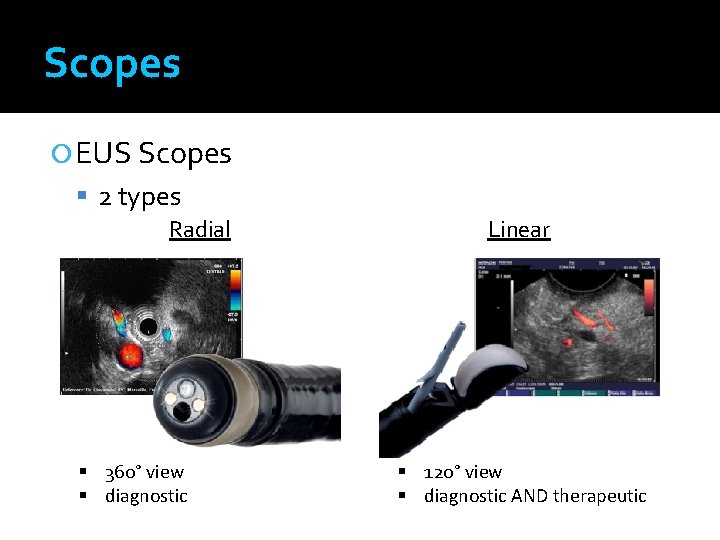
Scopes EUS Scopes 2 types Radial 360° view diagnostic Linear 120° view diagnostic AND therapeutic
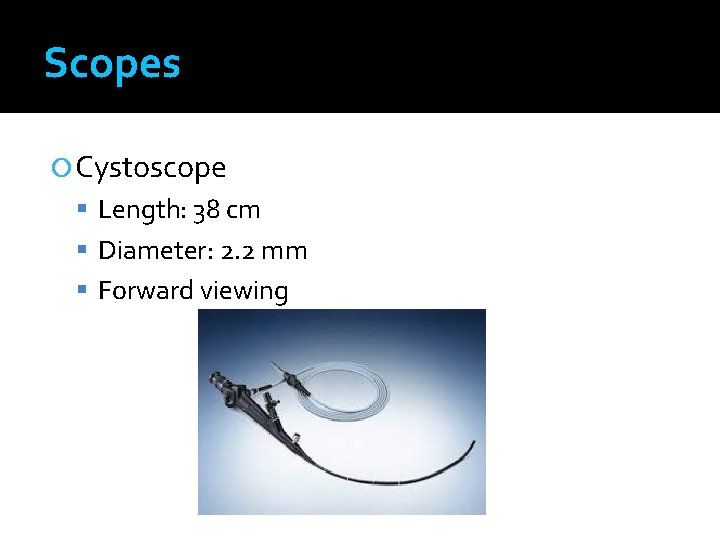
Scopes Cystoscope Length: 38 cm Diameter: 2. 2 mm Forward viewing
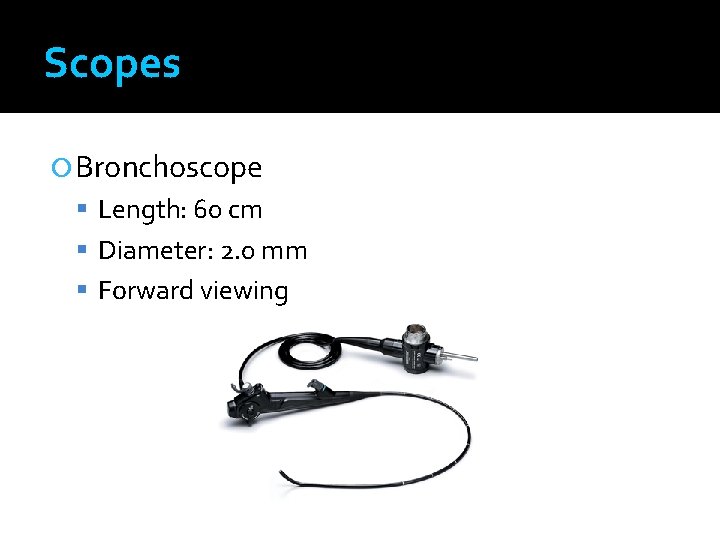
Scopes Bronchoscope Length: 60 cm Diameter: 2. 0 mm Forward viewing
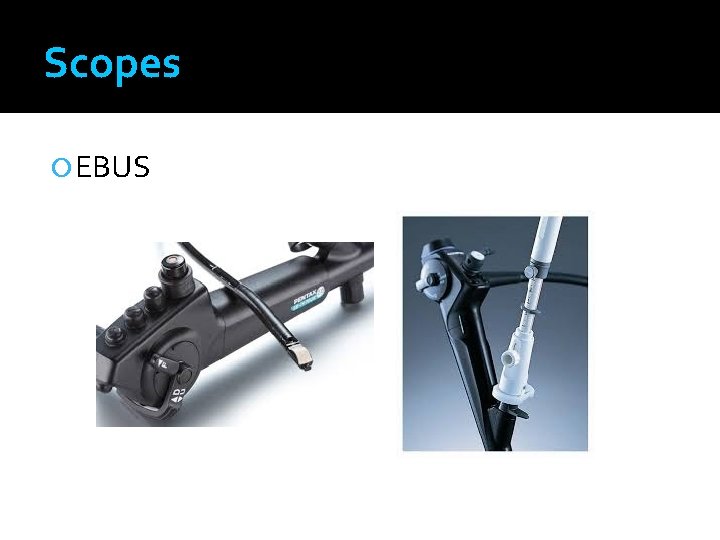
Scopes EBUS
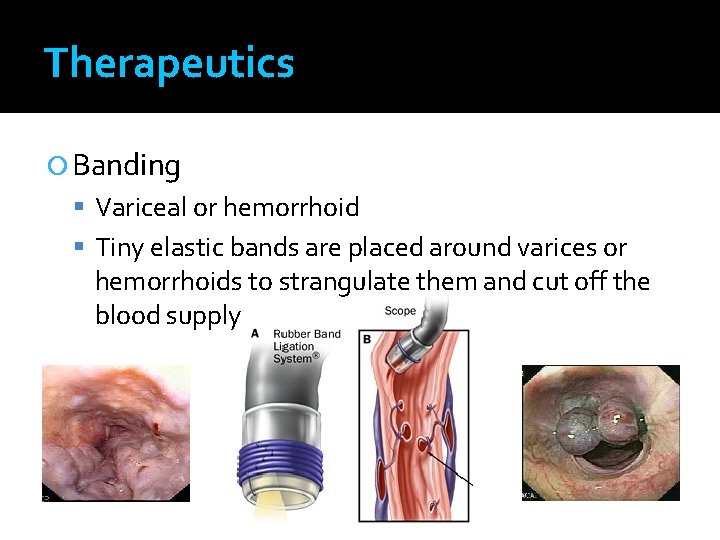
Therapeutics Banding Variceal or hemorrhoid Tiny elastic bands are placed around varices or hemorrhoids to strangulate them and cut off the blood supply
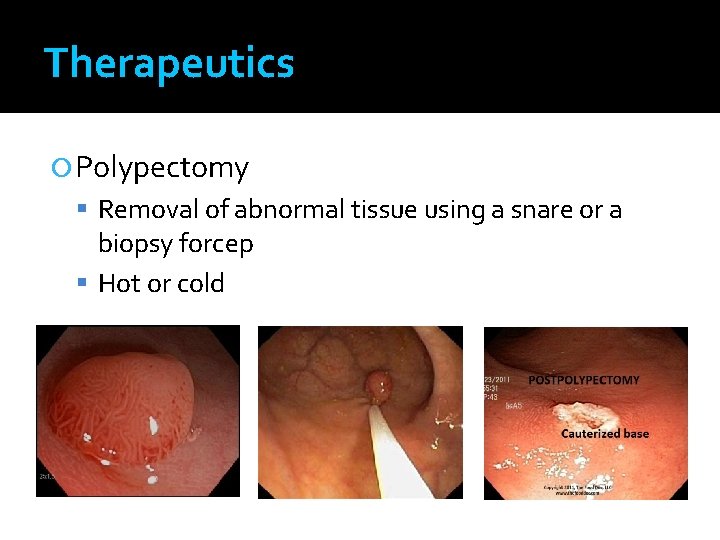
Therapeutics Polypectomy Removal of abnormal tissue using a snare or a biopsy forcep Hot or cold
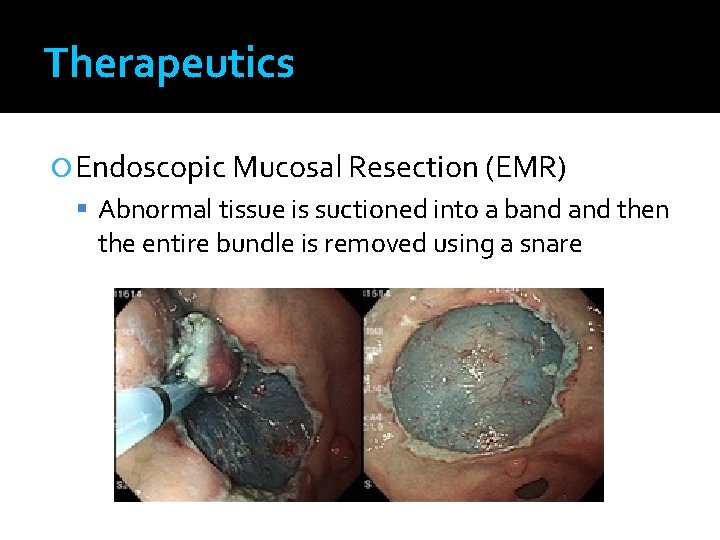
Therapeutics Endoscopic Mucosal Resection (EMR) Abnormal tissue is suctioned into a band then the entire bundle is removed using a snare
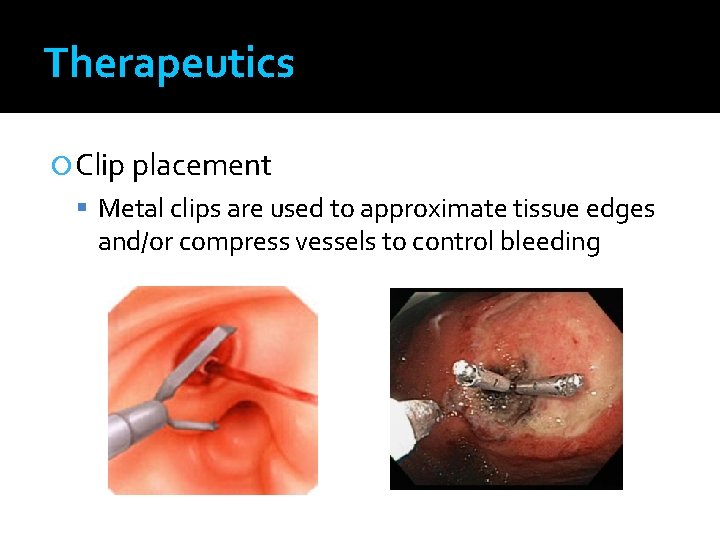
Therapeutics Clip placement Metal clips are used to approximate tissue edges and/or compress vessels to control bleeding
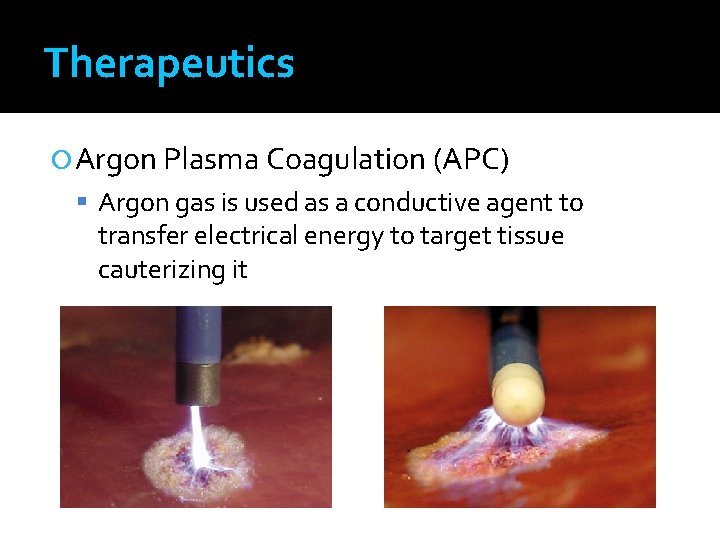
Therapeutics Argon Plasma Coagulation (APC) Argon gas is used as a conductive agent to transfer electrical energy to target tissue cauterizing it
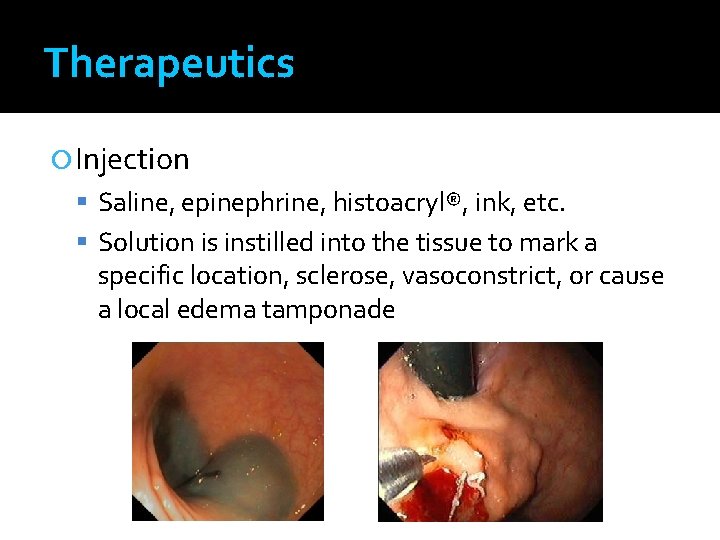
Therapeutics Injection Saline, epinephrine, histoacryl®, ink, etc. Solution is instilled into the tissue to mark a specific location, sclerose, vasoconstrict, or cause a local edema tamponade
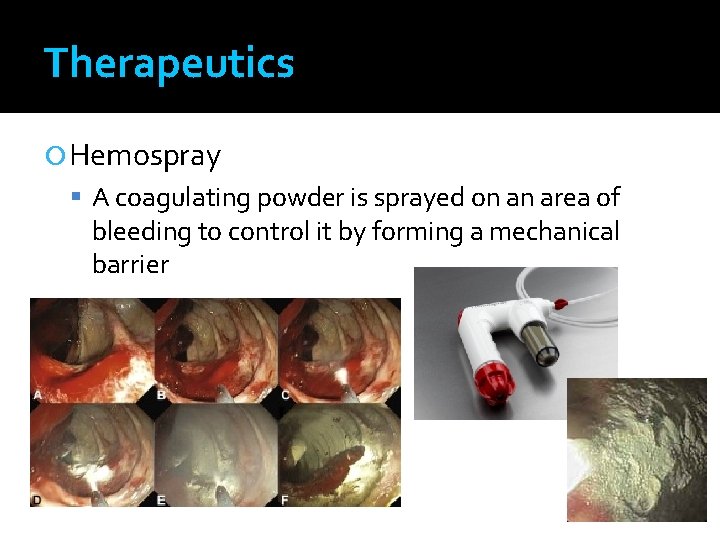
Therapeutics Hemospray A coagulating powder is sprayed on an area of bleeding to control it by forming a mechanical barrier
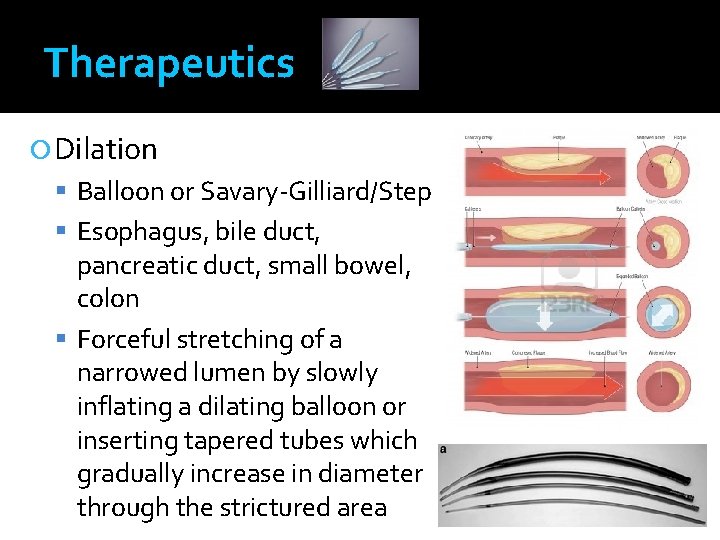
Therapeutics Dilation Balloon or Savary-Gilliard/Step Esophagus, bile duct, pancreatic duct, small bowel, colon Forceful stretching of a narrowed lumen by slowly inflating a dilating balloon or inserting tapered tubes which gradually increase in diameter through the strictured area
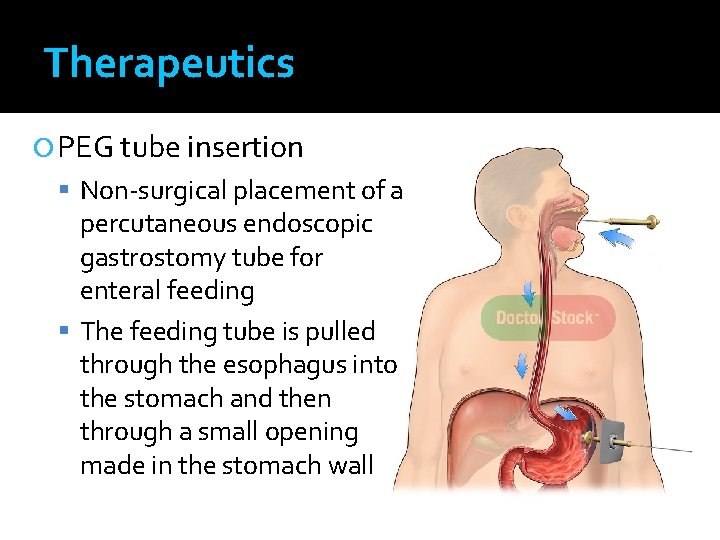
Therapeutics PEG tube insertion Non-surgical placement of a percutaneous endoscopic gastrostomy tube for enteral feeding The feeding tube is pulled through the esophagus into the stomach and then through a small opening made in the stomach wall
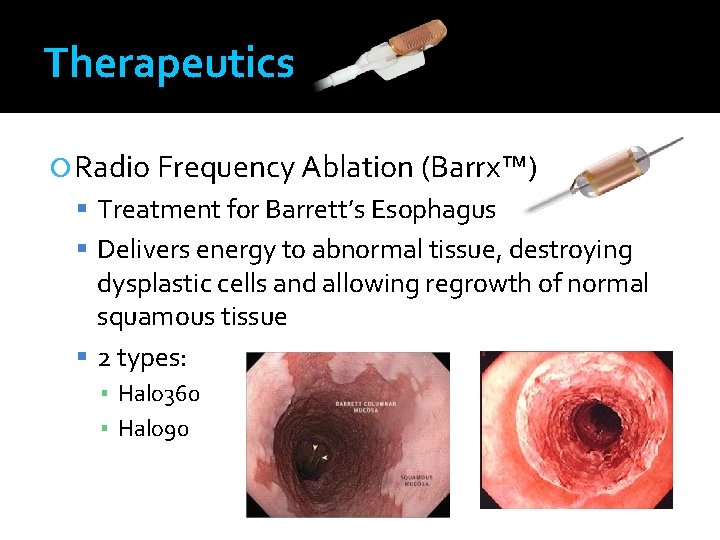
Therapeutics Radio Frequency Ablation (Barrx™) Treatment for Barrett’s Esophagus Delivers energy to abnormal tissue, destroying dysplastic cells and allowing regrowth of normal squamous tissue 2 types: ▪ Halo 360 ▪ Halo 90
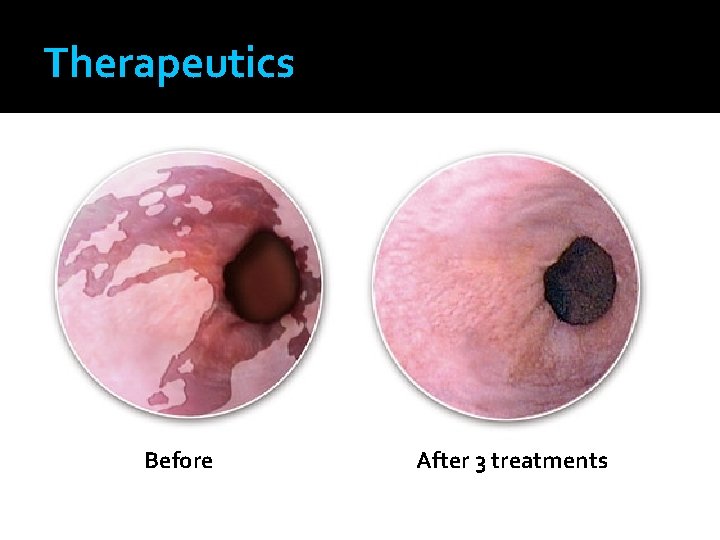
Therapeutics Before After 3 treatments
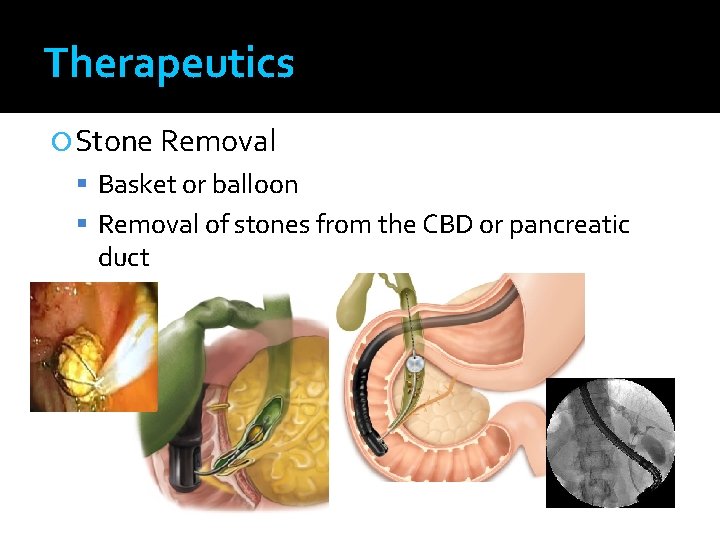
Therapeutics Stone Removal Basket or balloon Removal of stones from the CBD or pancreatic duct
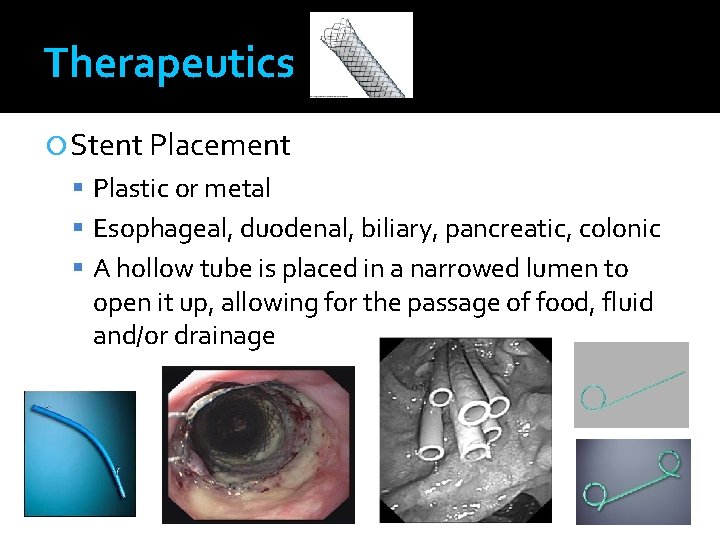
Therapeutics Stent Placement Plastic or metal Esophageal, duodenal, biliary, pancreatic, colonic A hollow tube is placed in a narrowed lumen to open it up, allowing for the passage of food, fluid and/or drainage
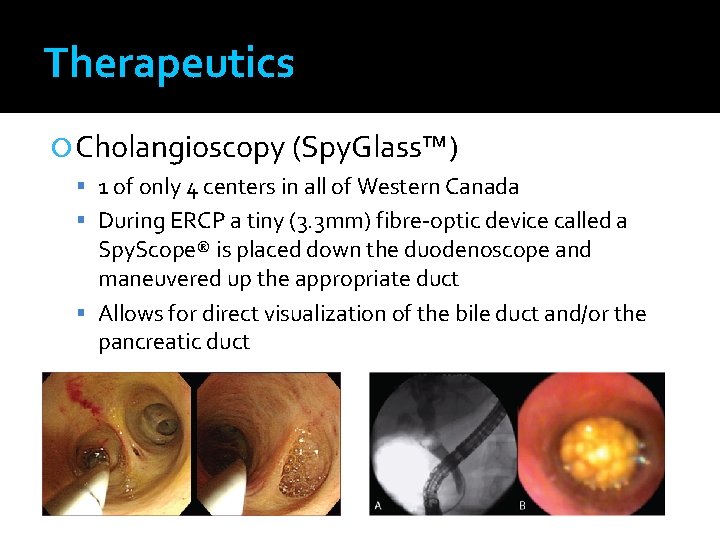
Therapeutics Cholangioscopy (Spy. Glass™) 1 of only 4 centers in all of Western Canada During ERCP a tiny (3. 3 mm) fibre-optic device called a Spy. Scope® is placed down the duodenoscope and maneuvered up the appropriate duct Allows for direct visualization of the bile duct and/or the pancreatic duct
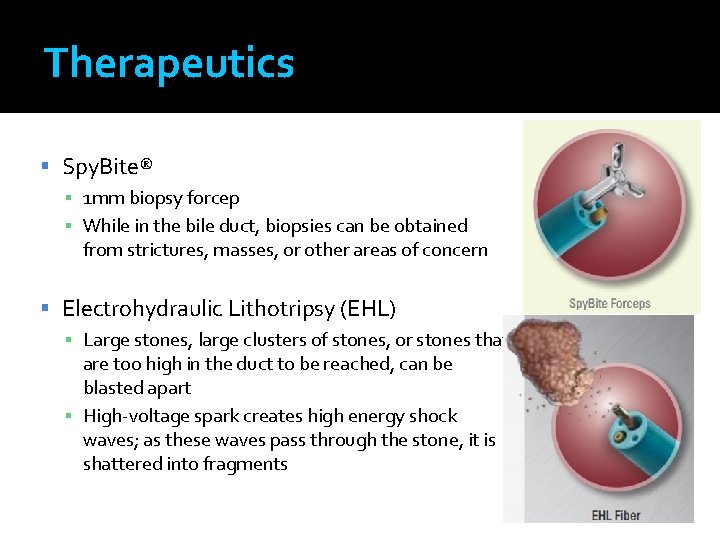
Therapeutics Spy. Bite® ▪ 1 mm biopsy forcep ▪ While in the bile duct, biopsies can be obtained from strictures, masses, or other areas of concern Electrohydraulic Lithotripsy (EHL) ▪ Large stones, large clusters of stones, or stones that are too high in the duct to be reached, can be blasted apart ▪ High-voltage spark creates high energy shock waves; as these waves pass through the stone, it is shattered into fragments
Thank you for your attention… Questions?
- Slides: 70