
SEPSIS Originally from Richard Jackson Consultant Critical Care
- Slides: 23
SEPSIS Originally from Richard Jackson Consultant, Critical Care Unit UHCW Adapted by Prof Siobhan Quenby University of Warwick
Definition of sepsis 'Sepsis is a life-threatening condition that arises when the body's response to an infection injures its own tissues and organs. Sepsis can lead to shock, multiple organ failure and death especially if not recognized early and treated promptly. Sepsis remains the primary cause of death from infection despite advances in modern medicine, including vaccines, antibiotics & acute care. ’ The ‘Merinoff Definition’, September 2010
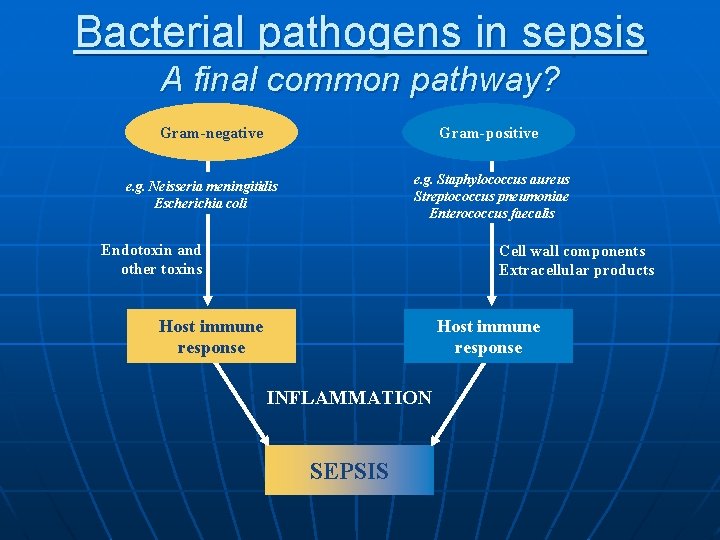
Bacterial pathogens in sepsis A final common pathway? Gram-negative Gram-positive e. g. Staphylococcus aureus Streptococcus pneumoniae Enterococcus faecalis e. g. Neisseria meningitidis Escherichia coli Endotoxin and other toxins Cell wall components Extracellular products Host immune response INFLAMMATION SEPSIS
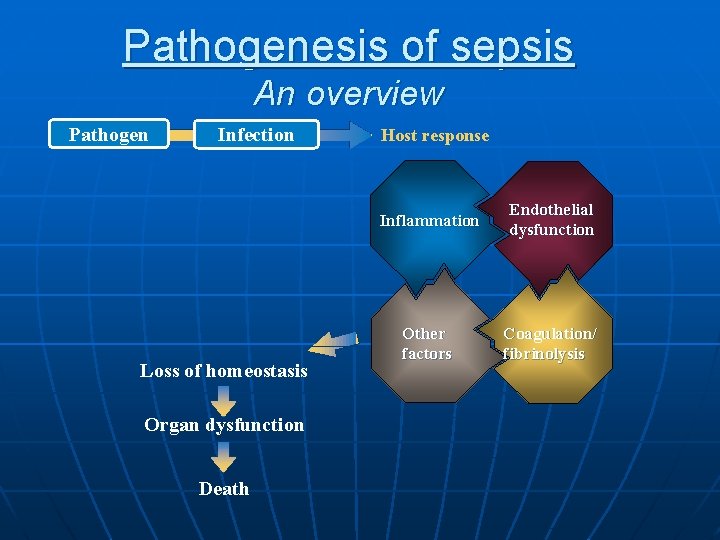
Pathogenesis of sepsis An overview Pathogen Infection Loss of homeostasis Organ dysfunction Death Host response Inflammation Endothelial dysfunction Other factors Coagulation/ fibrinolysis
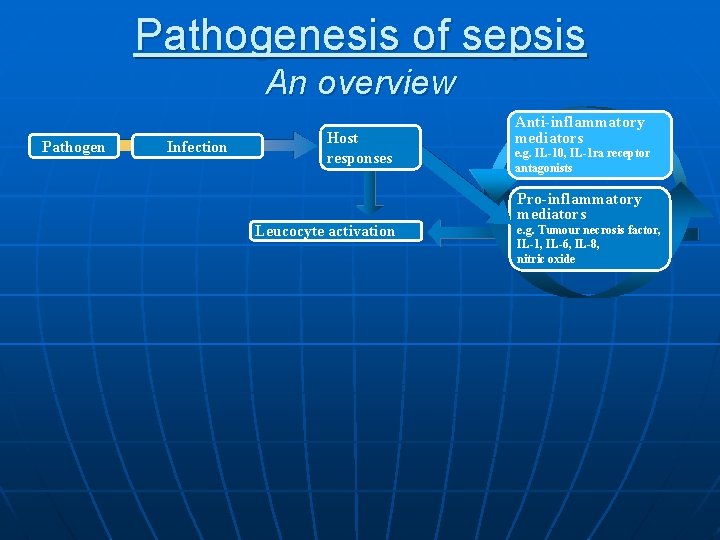
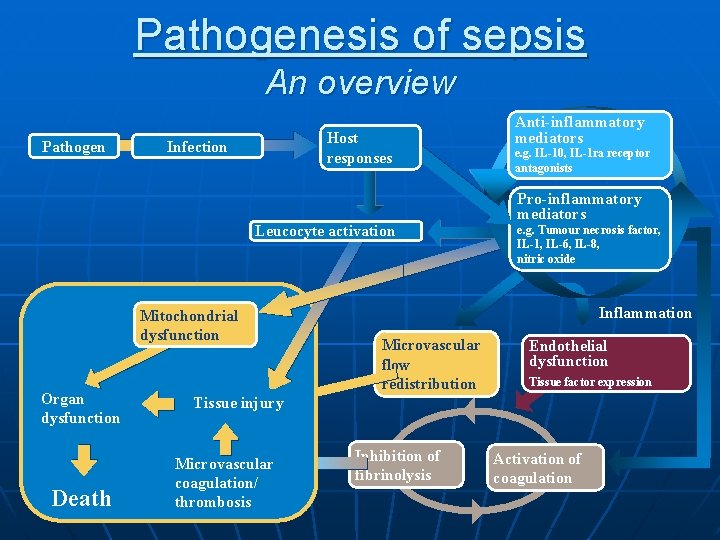
Pathogenesis of sepsis An overview Pathogen Infection Host responses Leucocyte activation Anti-inflammatory mediators e. g. IL-10, IL-1 ra receptor antagonists Pro-inflammatory mediators e. g. Tumour necrosis factor, IL-1, IL-6, IL-8, nitric oxide
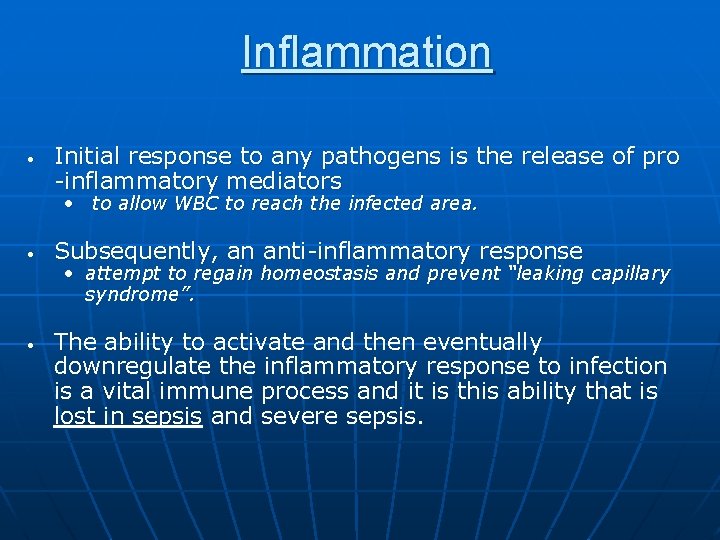
Inflammation • Initial response to any pathogens is the release of pro -inflammatory mediators • to allow WBC to reach the infected area. • • Subsequently, an anti-inflammatory response • attempt to regain homeostasis and prevent “leaking capillary syndrome”. The ability to activate and then eventually downregulate the inflammatory response to infection is a vital immune process and it is this ability that is lost in sepsis and severe sepsis.
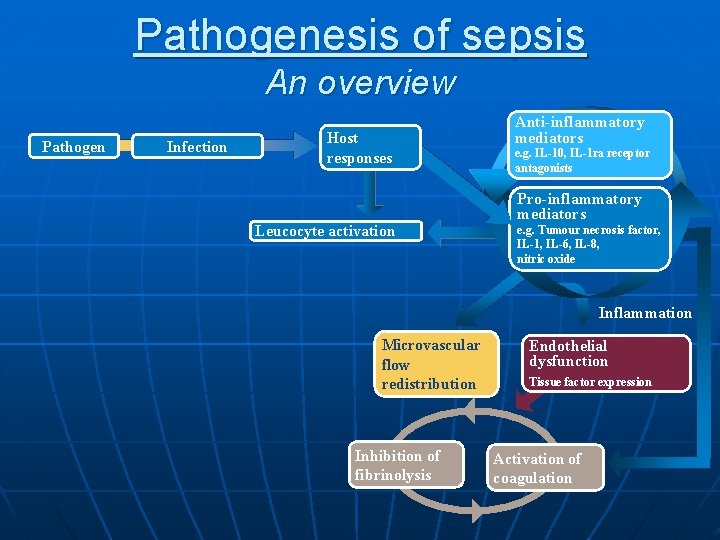
Pathogenesis of sepsis An overview Pathogen Infection Host responses Leucocyte activation Anti-inflammatory mediators e. g. IL-10, IL-1 ra receptor antagonists Pro-inflammatory mediators e. g. Tumour necrosis factor, IL-1, IL-6, IL-8, nitric oxide Inflammation Microvascular flow redistribution Inhibition of fibrinolysis Endothelial dysfunction Tissue factor expression Activation of coagulation
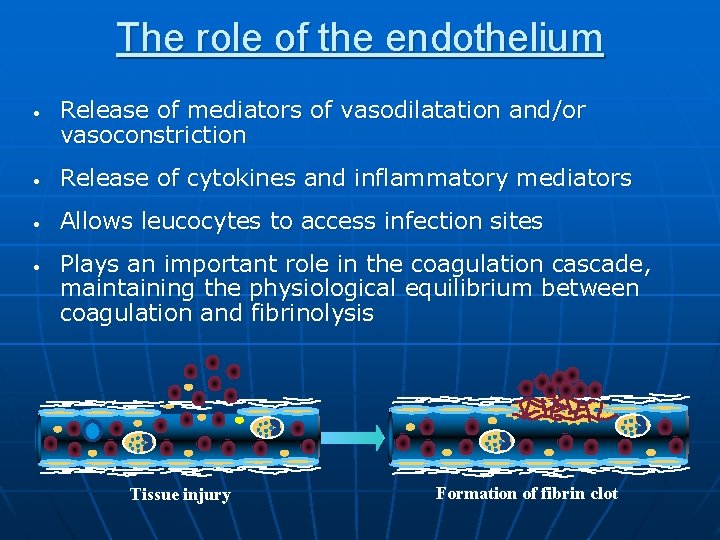
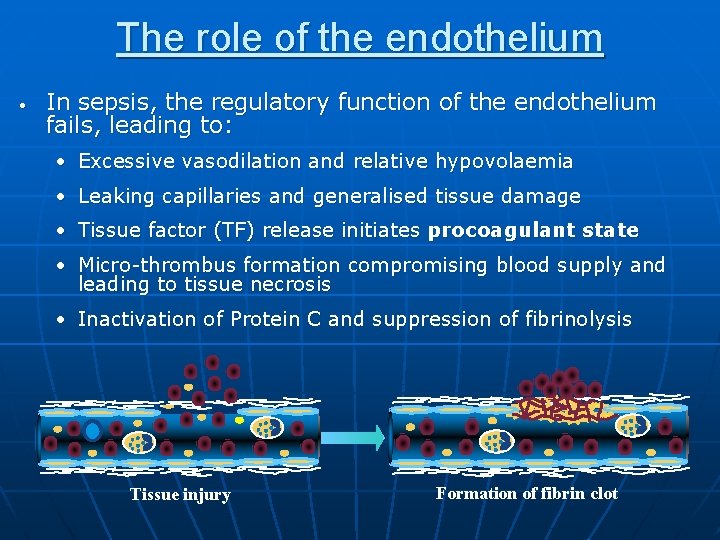
The role of the endothelium • Release of mediators of vasodilatation and/or vasoconstriction • Release of cytokines and inflammatory mediators • Allows leucocytes to access infection sites • Plays an important role in the coagulation cascade, maintaining the physiological equilibrium between coagulation and fibrinolysis Tissue injury Formation of fibrin clot
The role of the endothelium • In sepsis, the regulatory function of the endothelium fails, leading to: • Excessive vasodilation and relative hypovolaemia • Leaking capillaries and generalised tissue damage • Tissue factor (TF) release initiates procoagulant state • Micro-thrombus formation compromising blood supply and leading to tissue necrosis • Inactivation of Protein C and suppression of fibrinolysis Tissue injury Formation of fibrin clot
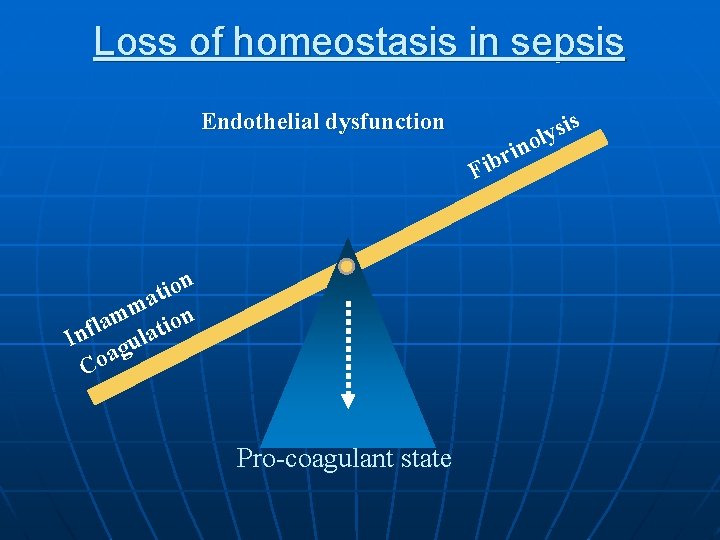
Loss of homeostasis in sepsis s Endothelial dysfunction i r b Fi n on i t a m am ation l f In gul a Co Pro-coagulant state i s y ol
Disseminated Intravascular Coagulation (DIC) DIC can cause: • • bleeding large vessel thrombosis haemorrhagic tissue necrosis microthrombi leading to organ failure Widespread clotting causes consumption of: • • • Low platelets clotting factors long clotting time fibrinogen As a result, bleeding risk increases
Disseminated Intravascular Coagulation (DIC) Testing for DIC: • • • APTT and INR are raised. platelets count low. fibrinogen level low. After the increased coagulation and fibrin formation, fibrinolysis results in: • raised FDP (fibrin degradation products) • raised D‑Dimer
Pathogenesis of sepsis An overview Pathogen Host responses Infection Leucocyte activation Mitochondrial dysfunction Organ dysfunction Death Anti-inflammatory mediators e. g. IL-10, IL-1 ra receptor antagonists Pro-inflammatory mediators e. g. Tumour necrosis factor, IL-1, IL-6, IL-8, nitric oxide Inflammation Microvascular flow redistribution Endothelial dysfunction Tissue factor expression Tissue injury Microvascular coagulation/ thrombosis Inhibition of fibrinolysis Activation of coagulation
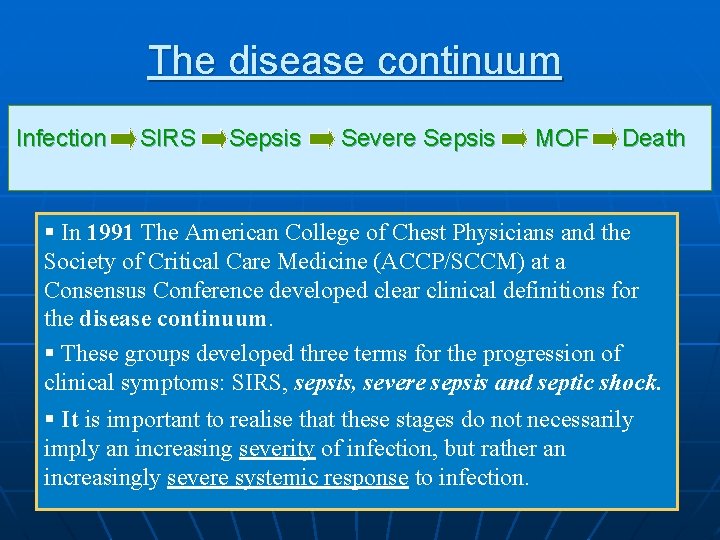
The disease continuum Infection SIRS Sepsis Severe Sepsis MOF Death § In 1991 The American College of Chest Physicians and the Society of Critical Care Medicine (ACCP/SCCM) at a Consensus Conference developed clear clinical definitions for the disease continuum. § These groups developed three terms for the progression of clinical symptoms: SIRS, sepsis, severe sepsis and septic shock. § It is important to realise that these stages do not necessarily imply an increasing severity of infection, but rather an increasingly severe systemic response to infection.
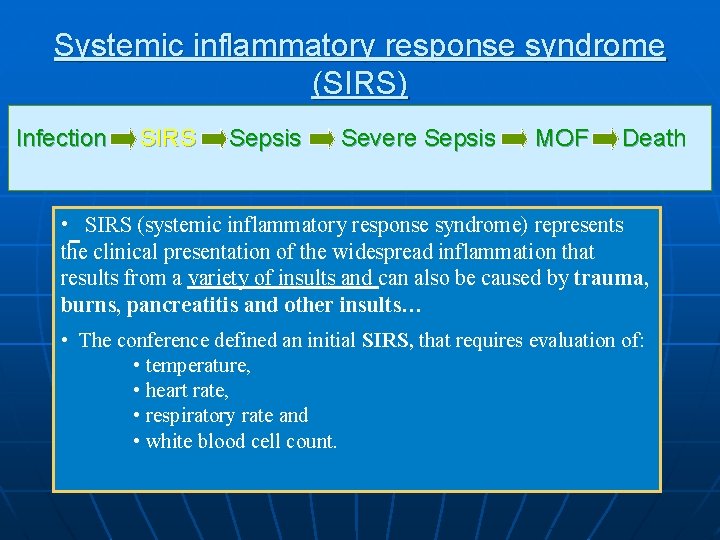
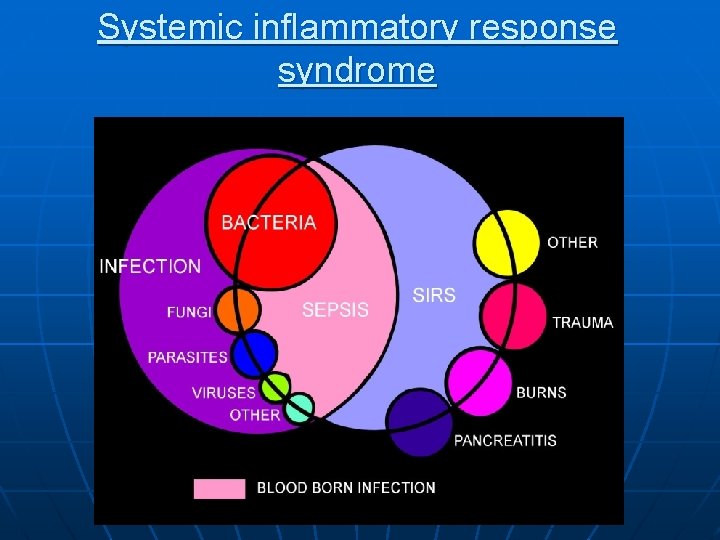
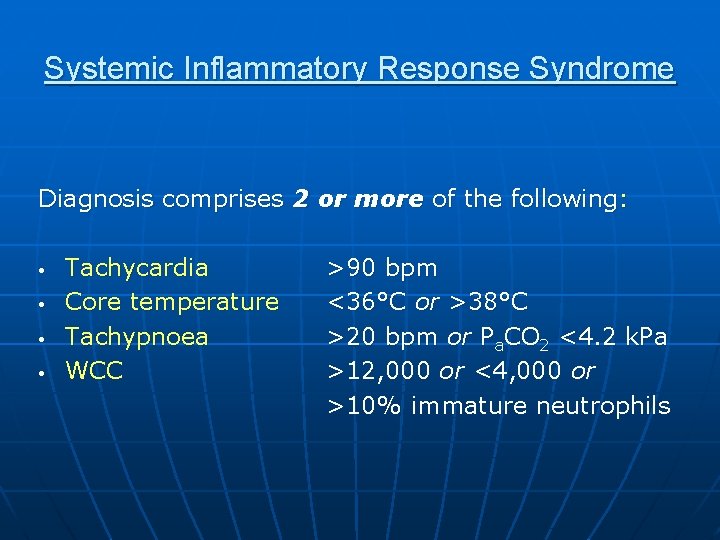
Systemic inflammatory response syndrome (SIRS) Infection SIRS Sepsis Severe Sepsis MOF Death • SIRS (systemic inflammatory response syndrome) represents the clinical presentation of the widespread inflammation that results from a variety of insults and can also be caused by trauma, burns, pancreatitis and other insults… • The conference defined an initial SIRS, that requires evaluation of: • temperature, • heart rate, • respiratory rate and • white blood cell count.
Systemic inflammatory response syndrome
Systemic Inflammatory Response Syndrome Diagnosis comprises 2 or more of the following: • • Tachycardia Core temperature Tachypnoea WCC >90 bpm <36°C or >38°C >20 bpm or Pa. CO 2 <4. 2 k. Pa >12, 000 or <4, 000 or >10% immature neutrophils
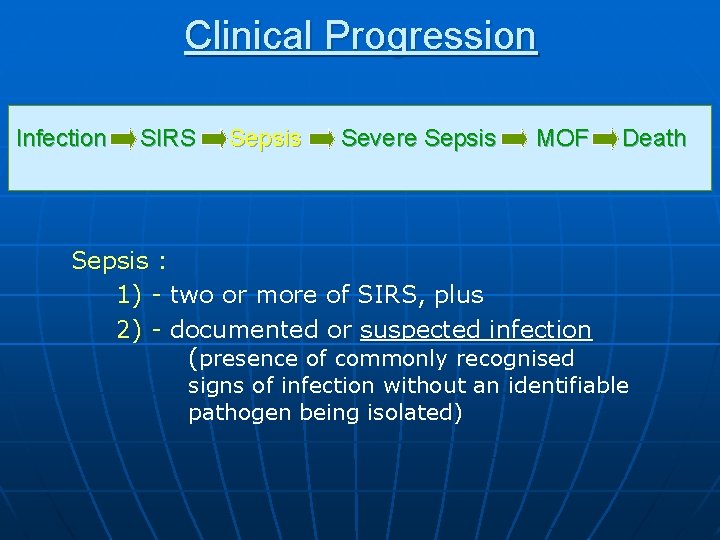
Clinical Progression Infection SIRS Sepsis Severe Sepsis MOF Sepsis : 1) - two or more of SIRS, plus 2) - documented or suspected infection (presence of commonly recognised Death signs of infection without an identifiable pathogen being isolated)
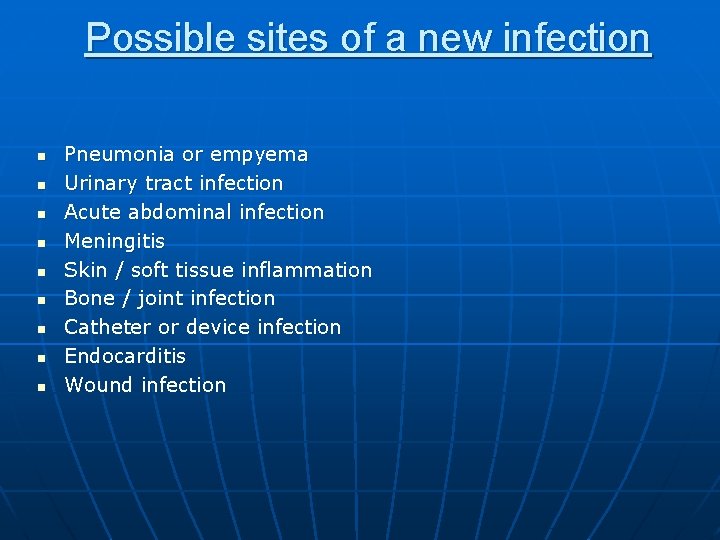
Possible sites of a new infection n n n n Pneumonia or empyema Urinary tract infection Acute abdominal infection Meningitis Skin / soft tissue inflammation Bone / joint infection Catheter or device infection Endocarditis Wound infection
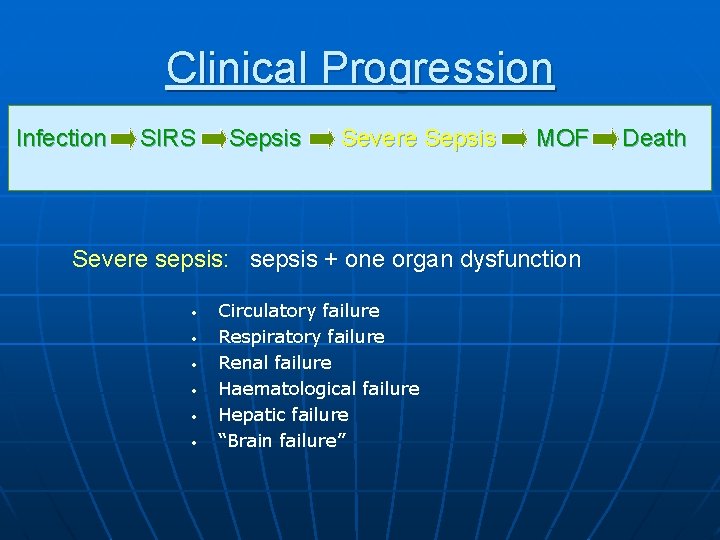
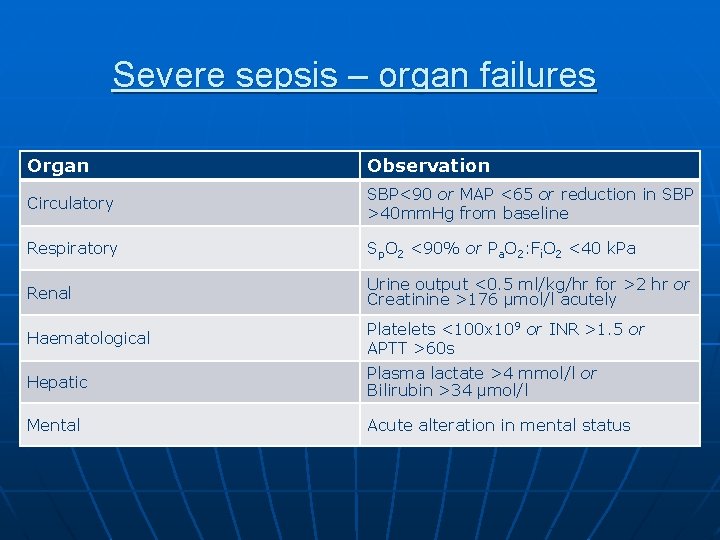
Clinical Progression Infection SIRS Sepsis Severe Sepsis MOF Severe sepsis: sepsis + one organ dysfunction • • • Circulatory failure Respiratory failure Renal failure Haematological failure Hepatic failure “Brain failure” Death
Severe sepsis – organ failures Organ Circulatory n Respiratory n Renal n Haematological n Hepatic n Mental Observation Systolic BP <90 mm. Hg or MAP <65 mm. Hg or SBP<90 or MAPfrom <65 or reduction in SBP 40 mm. Hg baseline >40 mm. Hg from baseline O 2 saturation <90% on air or oxygen or Pa. O 2: Fi. O 2 <40 Sk. Pa p. O 2 <90% or Pa. O 2: Fi. O 2 <40 k. Pa Urine output <0. 5 ml/kg/hr for >2 hrs or Urine output <0. 5 ml/kg/hr for >2 hr or Creatinine >176 µmol/l acutely Platelets <100 x 109 or INR >1. 5 or APTT >60 s Plasma lactate >4 mmol/l or Bilirubin >34 µBilirubin mol/l >34 µmol/l Acute alteration in mental status
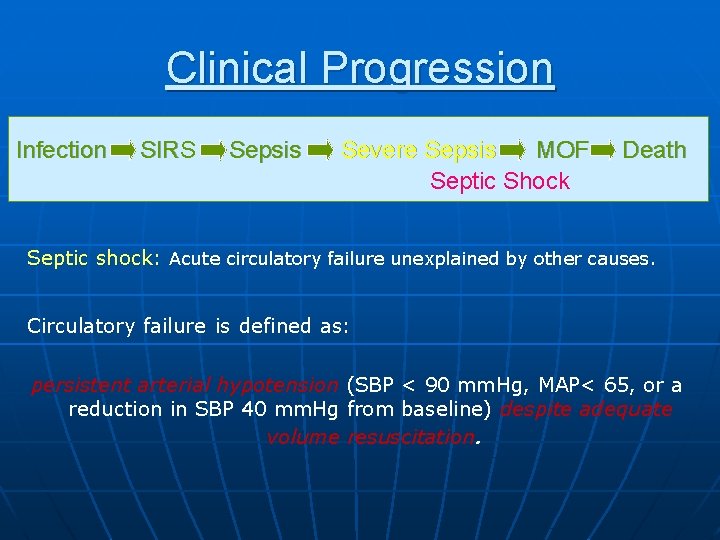
Clinical Progression Infection SIRS Sepsis Severe Sepsis MOF Septic Shock Death Septic shock: Acute circulatory failure unexplained by other causes. Circulatory failure is defined as: persistent arterial hypotension (SBP < 90 mm. Hg, MAP< 65, or a reduction in SBP 40 mm. Hg from baseline) despite adequate volume resuscitation.
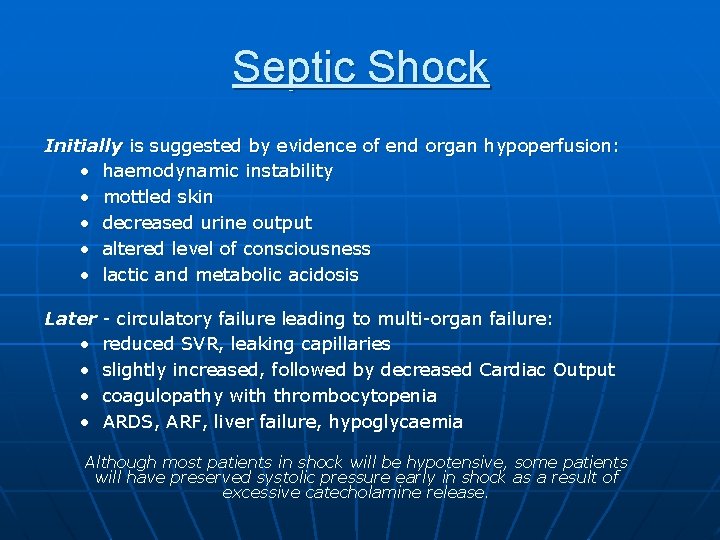
Septic Shock Initially is suggested by evidence of end organ hypoperfusion: • haemodynamic instability • mottled skin • decreased urine output • altered level of consciousness • lactic and metabolic acidosis Later - circulatory failure leading to multi-organ failure: • reduced SVR, leaking capillaries • slightly increased, followed by decreased Cardiac Output • coagulopathy with thrombocytopenia • ARDS, ARF, liver failure, hypoglycaemia Although most patients in shock will be hypotensive, some patients will have preserved systolic pressure early in shock as a result of excessive catecholamine release.