
Sepsis Evidence Based Controversies Rachel Hinerman MD FCCP
Sepsis: Evidence Based Controversies Rachel Hinerman, MD FCCP
Definitions Sepsis = suspected or proven infection and some of the following: General Variables Inflammatory Variables Hemodynamic Variables Organ Dysfunction Variables Tissue Perfusion Variables
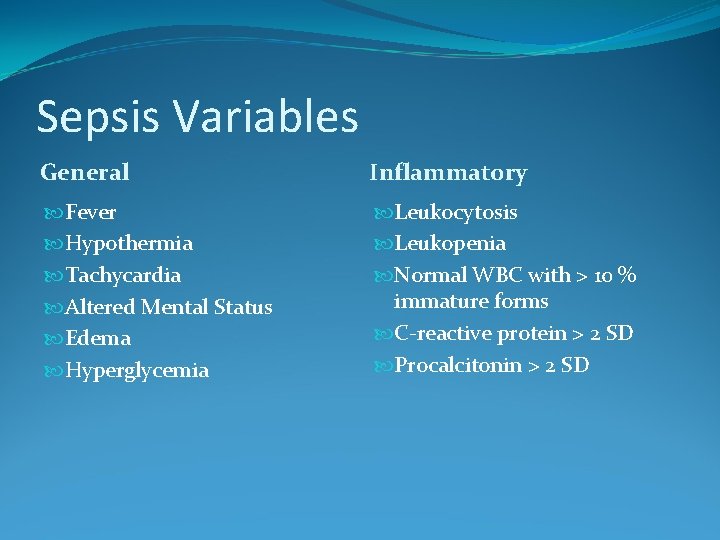
Sepsis Variables General Inflammatory Fever Hypothermia Tachycardia Altered Mental Status Edema Hyperglycemia Leukocytosis Leukopenia Normal WBC with > 10 % immature forms C-reactive protein > 2 SD Procalcitonin > 2 SD
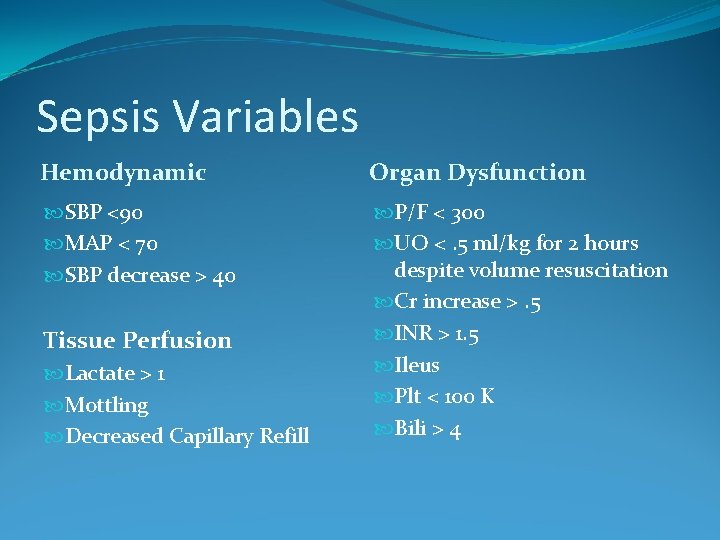
Sepsis Variables Hemodynamic Organ Dysfunction SBP <90 MAP < 70 SBP decrease > 40 P/F < 300 UO <. 5 ml/kg for 2 hours despite volume resuscitation Cr increase >. 5 INR > 1. 5 Ileus Plt < 100 K Bili > 4 Tissue Perfusion Lactate > 1 Mottling Decreased Capillary Refill
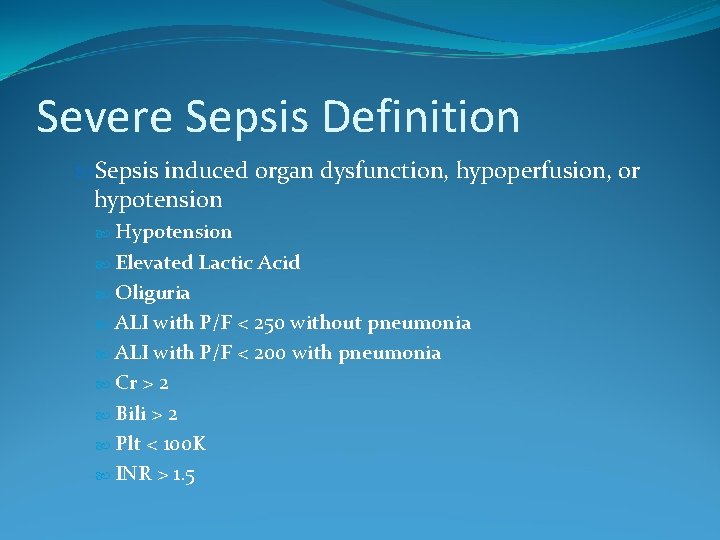
Severe Sepsis Definition Sepsis induced organ dysfunction, hypoperfusion, or hypotension Hypotension Elevated Lactic Acid Oliguria ALI with P/F < 250 without pneumonia ALI with P/F < 200 with pneumonia Cr > 2 Bili > 2 Plt < 100 K INR > 1. 5
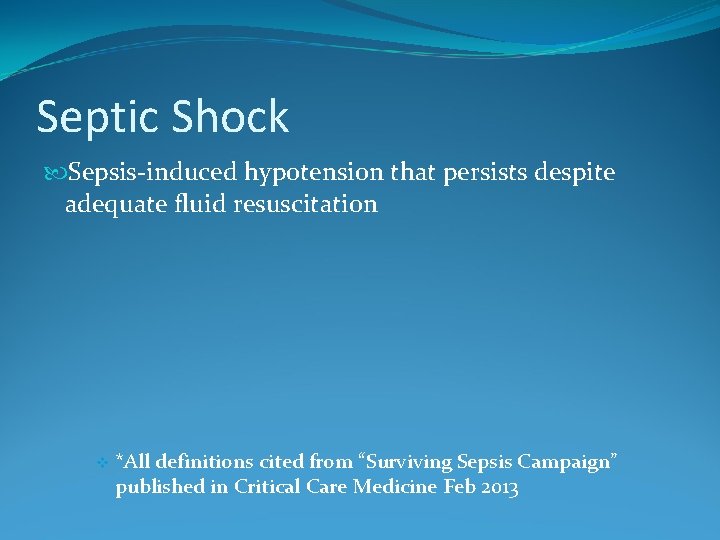
Septic Shock Sepsis-induced hypotension that persists despite adequate fluid resuscitation v *All definitions cited from “Surviving Sepsis Campaign” published in Critical Care Medicine Feb 2013
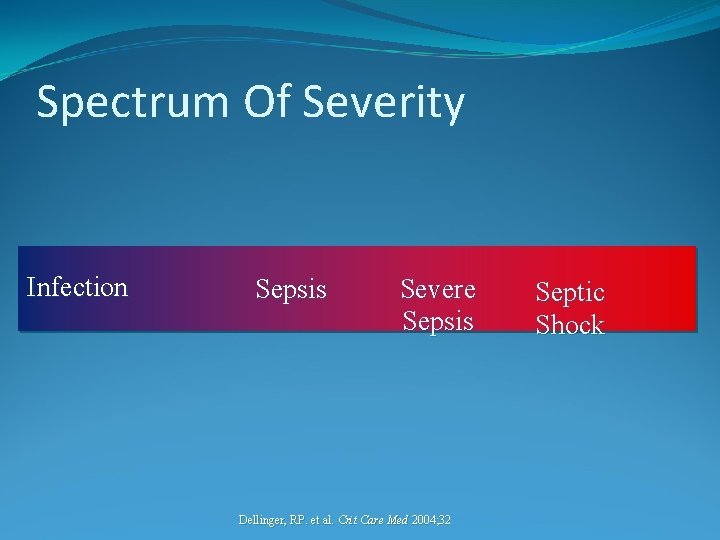
Spectrum Of Severity Infection Sepsis Severe Sepsis Dellinger, RP. et al. Crit Care Med 2004; 32 Septic Shock

Scope of The Problem
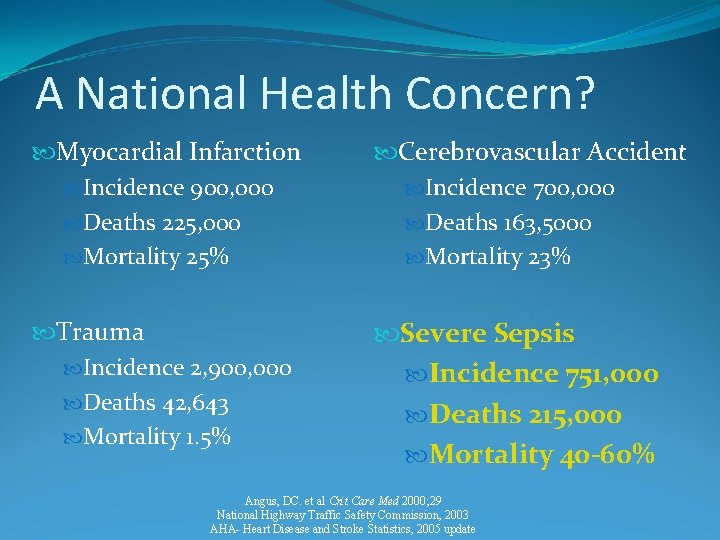
A National Health Concern? Myocardial Infarction Incidence 900, 000 Deaths 225, 000 Mortality 25% Cerebrovascular Accident Incidence 700, 000 Deaths 163, 5000 Mortality 23% Trauma Incidence 2, 900, 000 Deaths 42, 643 Mortality 1. 5% Severe Sepsis Incidence 751, 000 Deaths 215, 000 Mortality 40 -60% Angus, DC. et al Crit Care Med 2000; 29 National Highway Traffic Safety Commission, 2003 AHA- Heart Disease and Stroke Statistics, 2005 update
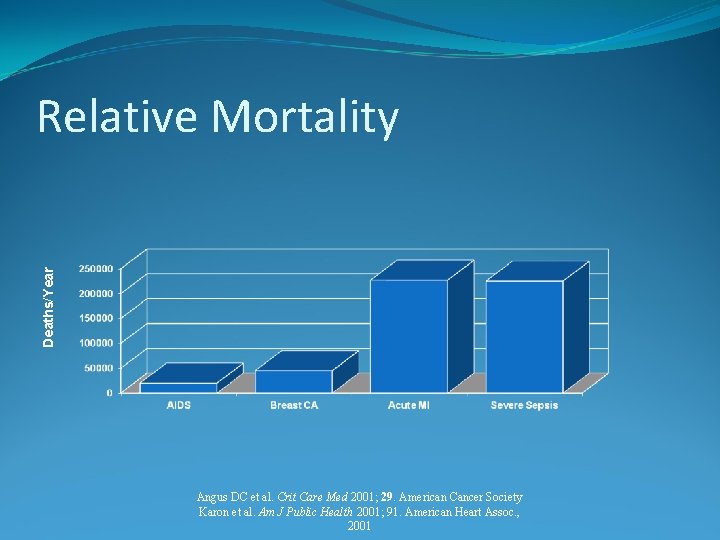
Deaths/Year Relative Mortality Angus DC et al. Crit Care Med 2001; 29. American Cancer Society Karon et al. Am J Public Health 2001; 91. American Heart Assoc. , 2001
Determinants of Mortality Source control is most vital factor Adequate resuscitation or re-established perfusion in 6 hours Appropriate antibiotic therapy within 1 hr of hypotension

Improving Outcomes
Interventions Early Goal Directed Therapy (EGDT) Anti-microbials Steroids Glucose Control Lung Protective Ventilation
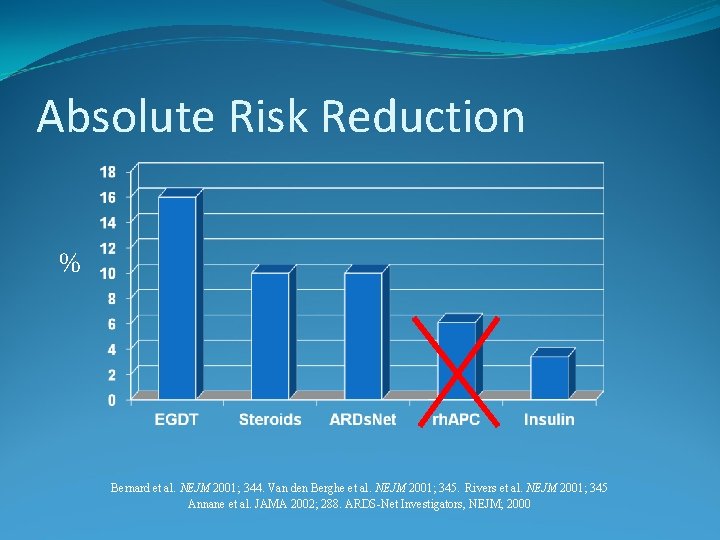
Absolute Risk Reduction % Bernard et al. NEJM 2001; 344. Van den Berghe et al. NEJM 2001; 345. Rivers et al. NEJM 2001; 345 Annane et al. JAMA 2002; 288. ARDS-Net Investigators, NEJM; 2000
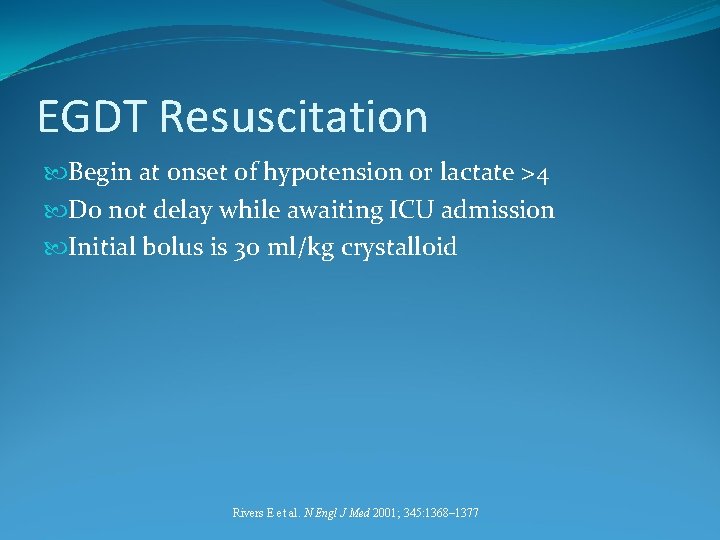
EGDT Resuscitation Begin at onset of hypotension or lactate >4 Do not delay while awaiting ICU admission Initial bolus is 30 ml/kg crystalloid Rivers E et al. N Engl J Med 2001; 345: 1368– 1377
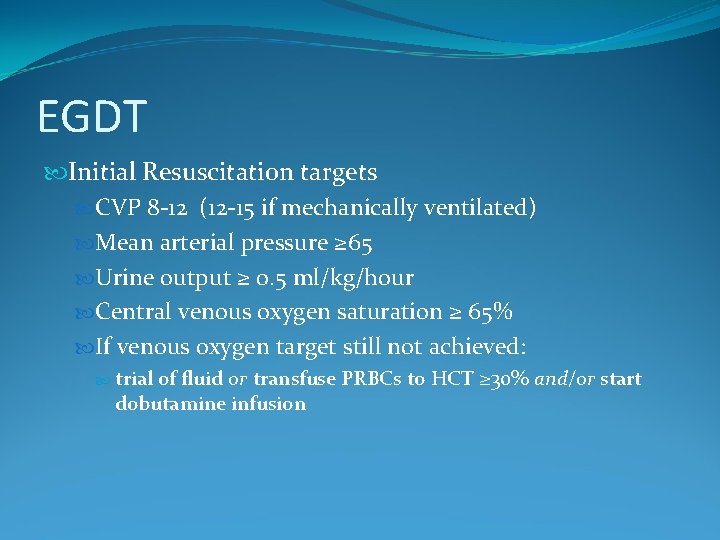
EGDT Initial Resuscitation targets CVP 8 -12 (12 -15 if mechanically ventilated) Mean arterial pressure ≥ 65 Urine output ≥ 0. 5 ml/kg/hour Central venous oxygen saturation ≥ 65% If venous oxygen target still not achieved: trial of fluid or transfuse PRBCs to HCT ≥ 30% and/or start dobutamine infusion
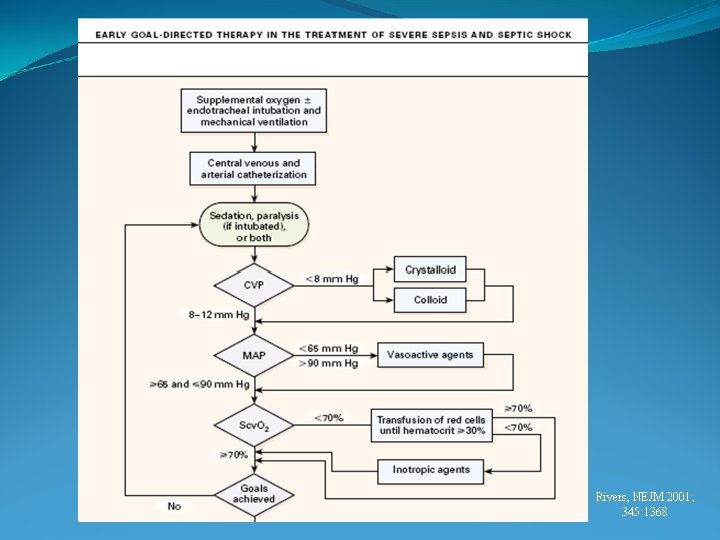
Rivers, NEJM 2001; 345: 1368
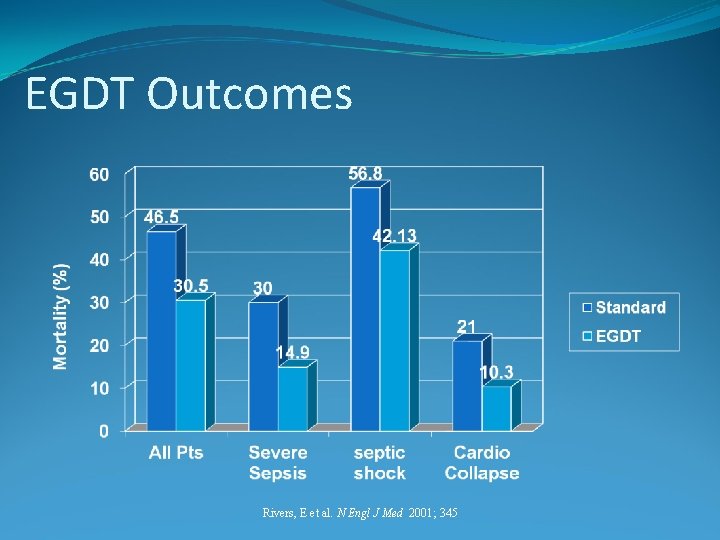
EGDT Outcomes Rivers, E et al. N Engl J Med 2001; 345
EGDT Cost 23% reduction in hospital cost Most cost effective if patient volume > 16 cases/year Mean reduction of 4 days per hospital admission Cost per life saved of approximately $32, 336 Reduction in hospital charges from $135, 000 to $82, 000 Treciak S et al. Chest 2006; 129: 225 -232 Huang DT, et al Crit Care 2003; 7: S 116 Shapiro N, et al. Crit Care Med 2006; 34: 1025 -
What to Use? SAFE study: 28 day outcomes RCT n=6997, 4% albumin or normal saline Albumin group, 726 deaths - Saline group, 729 deaths New organ failure was similar in the two groups No difference: ICU or hospital LOS, mechanical ventilation days, or days of renal-replacement therapy Guideline: colloid or crystalloid may be used Schierhout G et al. BMJ 1998; 316: 961– 964 Finfer S et al. N Engl J Med 2004; 350: 2247– 2256
EGDT (and we mean EARLY) Retrospective analysis of 212 patients Diagnosis: septic shock and ALI within 72 hours Adequate initial fluid resuscitation (AIFR) group Administration of an initial fluid bolus of ≥ 20 m. L/kg prior to and achievement of a central venous pressure of ≥ 8 mm Hg within 6 h after the onset of therapy with a vasopressor Conservative late fluid management (CLFM) Even-to-negative fluid balance measured on at least 2 consecutive days during the first 7 days after septic shock onset Murphy C V et al. Chest 2009; 136: 102 -109
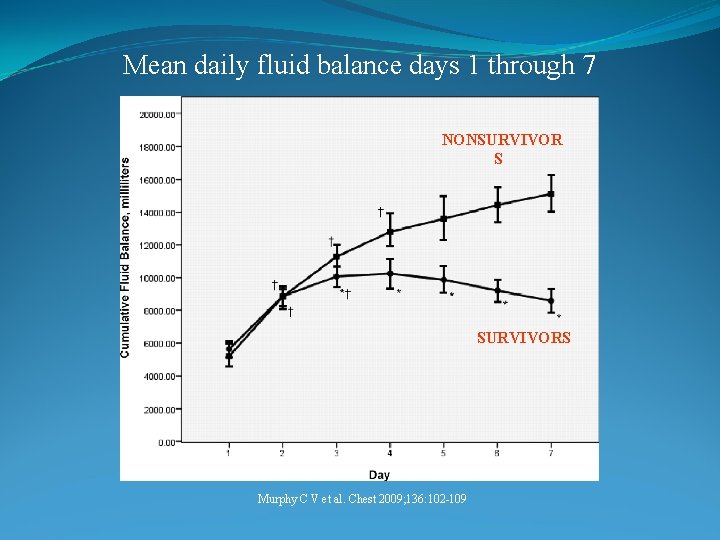
Mean daily fluid balance days 1 through 7 NONSURVIVOR S SURVIVORS Murphy C V et al. Chest 2009; 136: 102 -109
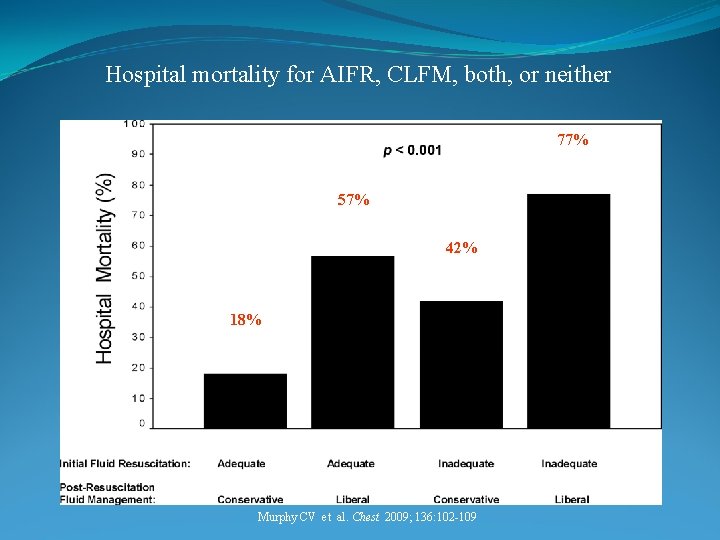
Hospital mortality for AIFR, CLFM, both, or neither 77% 57% 42% 18% Murphy CV et al. Chest 2009; 136: 102 -109
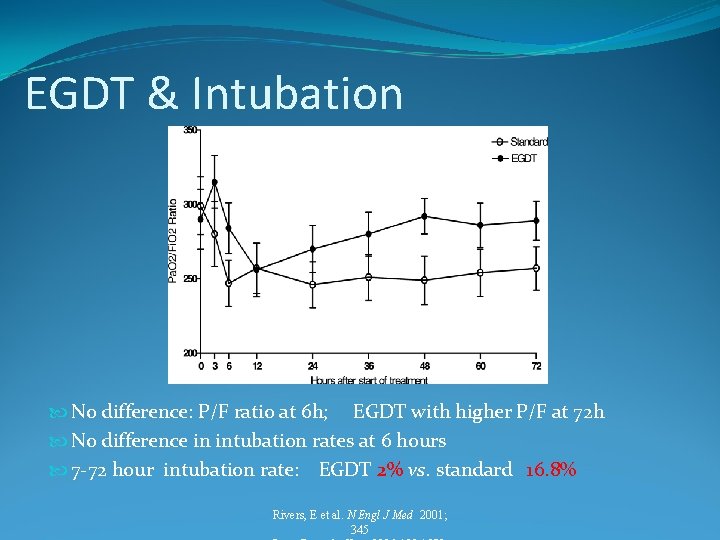
EGDT & Intubation No difference: P/F ratio at 6 h; EGDT with higher P/F at 72 h No difference in intubation rates at 6 hours 7 -72 hour intubation rate: EGDT 2% vs. standard 16. 8% Rivers, E et al. N Engl J Med 2001; 345
Vasopressors Mean arterial pressure (MAP) maintained ≥ 65 First choice: norepinephrine or epinephrine Vasopressin 0. 03 units/min may be added
Vasopressin VASST Trial Hypothesis: VP will increase survival compared to NE at 28 d 779 patients in septic shock requiring vasopressors for ≥ 6 hours Randomization to vasopressin or norepinephrine No difference in 28 -day survival (35. 4% v 39. 3%, P =. 27). When groups were stratified by severity of hypotension Low-dose NE improved survival with VP 26% v 35%, P. 05 Result persisted at 90 days: mortality of 36% vs. 46 %, P =. 04 Russell J et al. NEJM 2008; 358, 9.
Inotropes Dobutamine infusion for suspected myocardial dysfunction suggested by elevated cardiac filling pressures and low cardiac output Recommend against a strategy to increase cardiac index to supranormal levels Gattinoni L, et al. New Engl J Med 1995; 333: 1025 -32 Hayes MA, et al. New Engl J Med 1994; 330: 1717 -22
Interventions Early Goal Directed Therapy (EGDT) Anti-microbials Steroids Glucose Control
Antimicrobials Begin therapy within the first hour of recognizing severe sepsis or septic shock Broad spectrum: one or more agents against likely bacterial or fungal pathogens Consider combination therapy for potentially resistant gram negative pathogens Consider combination therapy in neutropenic patients Narrow coverage when culture data available Garnacho-Montero J et al. CCM 2007; 25: 1888 -1895
Antimicrobials Study objective: to determine the impact of initial antimicrobial therapy on survival in patients with septic shock Data: 5, 715 cases between 1996 and 2005 Community-acquired = 55%; nosocomial origin = 45% Appropriate empiric antimicrobial therapy = 80% Overall rate of survival to hospital discharge = 43% The survival rates: Appropriate initial therapy 52% Inappropriate initial therapy 10% Kumar A et al. Chest 2009; 136: 1237 -1248
Interventions Early Goal Directed Therapy (EGDT) Anti-microbials Steroids Glucose Control
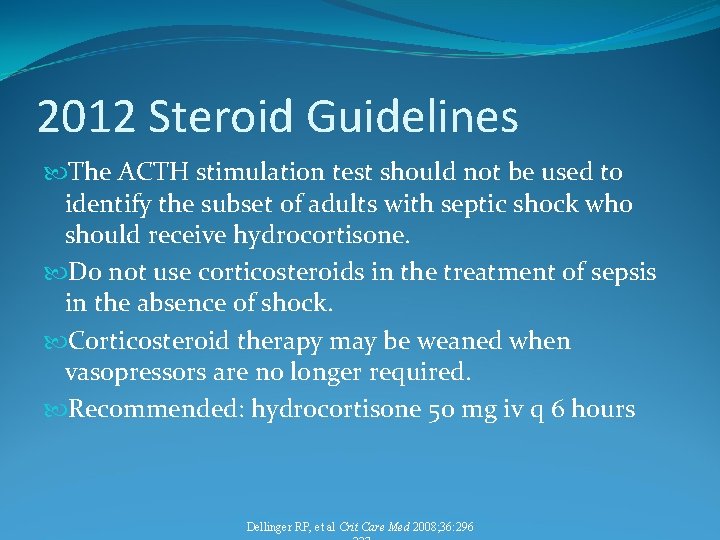
2012 Steroid Guidelines The ACTH stimulation test should not be used to identify the subset of adults with septic shock who should receive hydrocortisone. Do not use corticosteroids in the treatment of sepsis in the absence of shock. Corticosteroid therapy may be weaned when vasopressors are no longer required. Recommended: hydrocortisone 50 mg iv q 6 hours Dellinger RP, et al Crit Care Med 2008; 36: 296
Interventions Early Goal Directed Therapy (EGDT) Anti-microbials Steroids Glucose Control
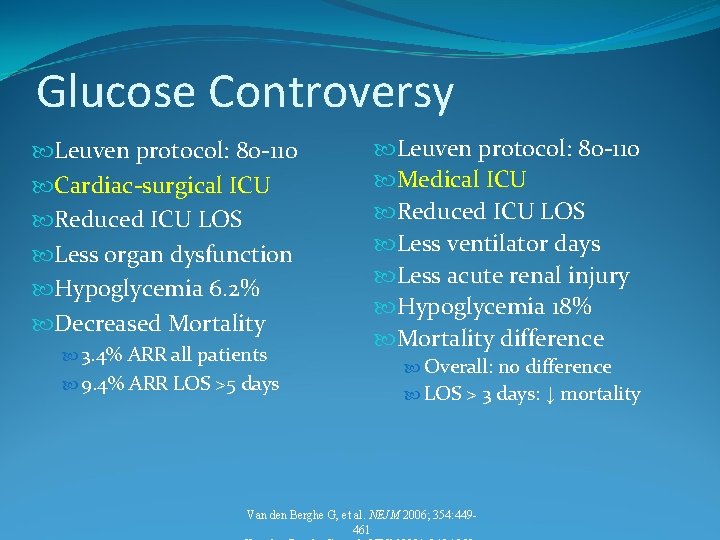
Glucose Controversy Leuven protocol: 80 -110 Cardiac-surgical ICU Reduced ICU LOS Less organ dysfunction Hypoglycemia 6. 2% Decreased Mortality 3. 4% ARR all patients 9. 4% ARR LOS >5 days Leuven protocol: 80 -110 Medical ICU Reduced ICU LOS Less ventilator days Less acute renal injury Hypoglycemia 18% Mortality difference Overall: no difference LOS > 3 days: ↓ mortality Van den Berghe G, et al. NEJM 2006; 354: 449461
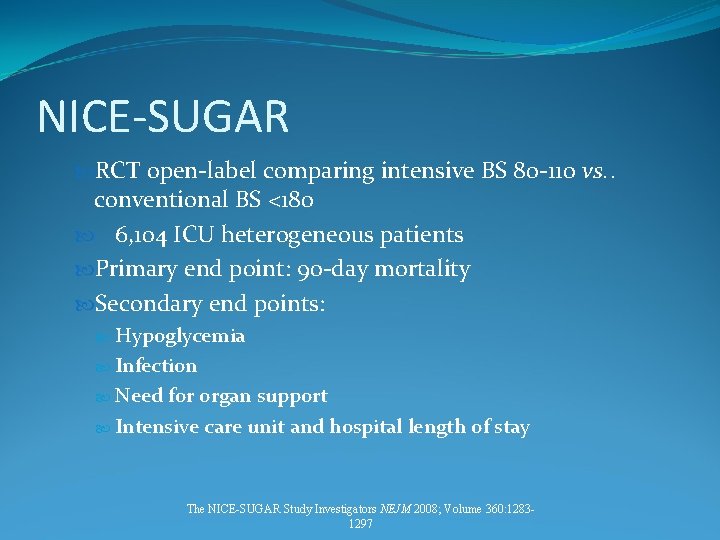
NICE-SUGAR RCT open-label comparing intensive BS 80 -110 vs. . conventional BS <180 6, 104 ICU heterogeneous patients Primary end point: 90 -day mortality Secondary end points: Hypoglycemia Infection Need for organ support Intensive care unit and hospital length of stay The NICE-SUGAR Study Investigators NEJM 2008; Volume 360: 12831297
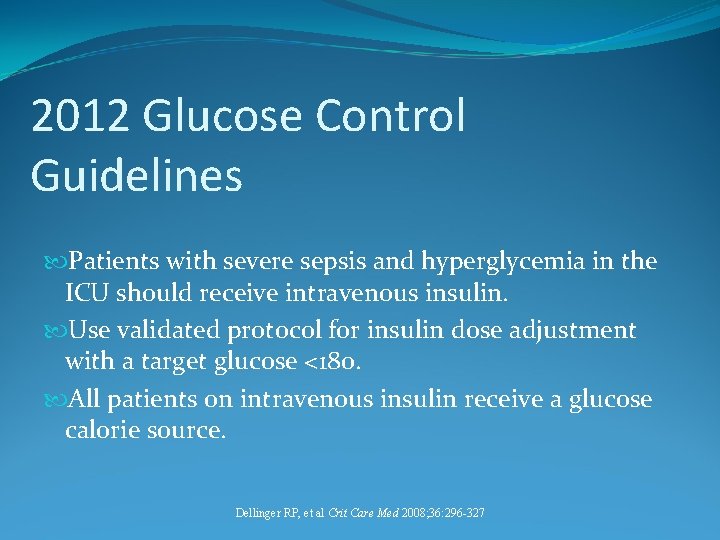
2012 Glucose Control Guidelines Patients with severe sepsis and hyperglycemia in the ICU should receive intravenous insulin. Use validated protocol for insulin dose adjustment with a target glucose <180. All patients on intravenous insulin receive a glucose calorie source. Dellinger RP, et al Crit Care Med 2008; 36: 296 -327
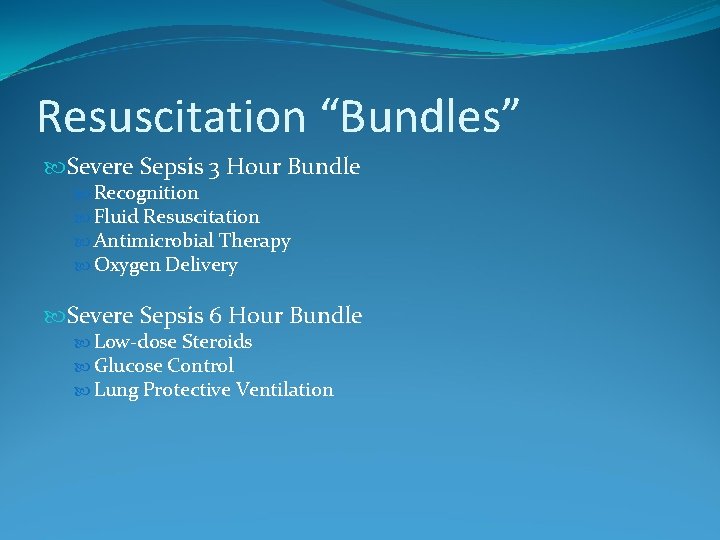
Resuscitation “Bundles” Severe Sepsis 3 Hour Bundle Recognition Fluid Resuscitation Antimicrobial Therapy Oxygen Delivery Severe Sepsis 6 Hour Bundle Low-dose Steroids Glucose Control Lung Protective Ventilation
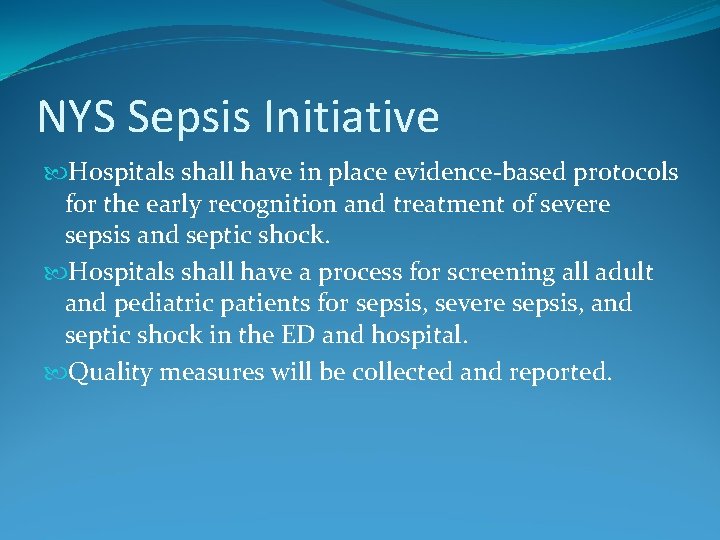
NYS Sepsis Initiative Hospitals shall have in place evidence-based protocols for the early recognition and treatment of severe sepsis and septic shock. Hospitals shall have a process for screening all adult and pediatric patients for sepsis, severe sepsis, and septic shock in the ED and hospital. Quality measures will be collected and reported.
- Slides: 38