
Sepsis Awareness Training for NonClinical Staff 032021 Please

- Slides: 26
Sepsis Awareness Training for Non-Clinical Staff 03/2021
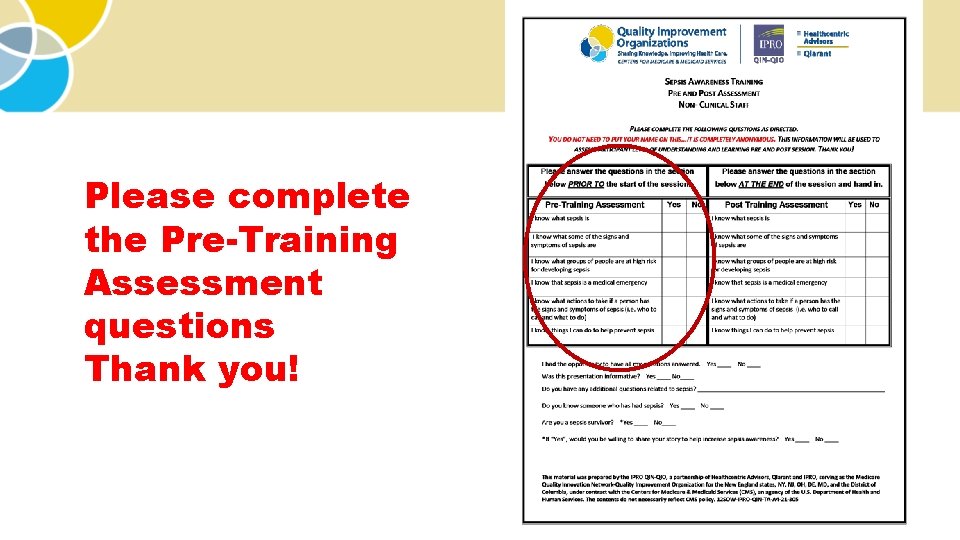
Please complete the Pre-Training Assessment questions Thank you! 2
CDC Get Ahead of Sepsis Campaign https: //www. youtube. com/watch? v=5 Jv. Gi. AFLels 3
Why This is Important… About Sepsis Alliance was created to raise sepsis awareness among both the general public and healthcare professionals. Sepsis awareness can and does save lives, yet only 58% of American adults have ever heard the word. Sepsis Alliance gives a voice to the millions of people who have been touched by sepsis – to the survivors, and the friends and family members of those who have survived or who have died. SEPSIS: EMERGENCY video Sepsis: Emergency Video Available on Sepsis Alliance Website: https: //www. sepsis. org 4
Sepsis: Emergency video Cut and paste this URL into your browser https: //www. youtube. com/watch? v=Dns. Q 4 Rl. Xs. ZY 5
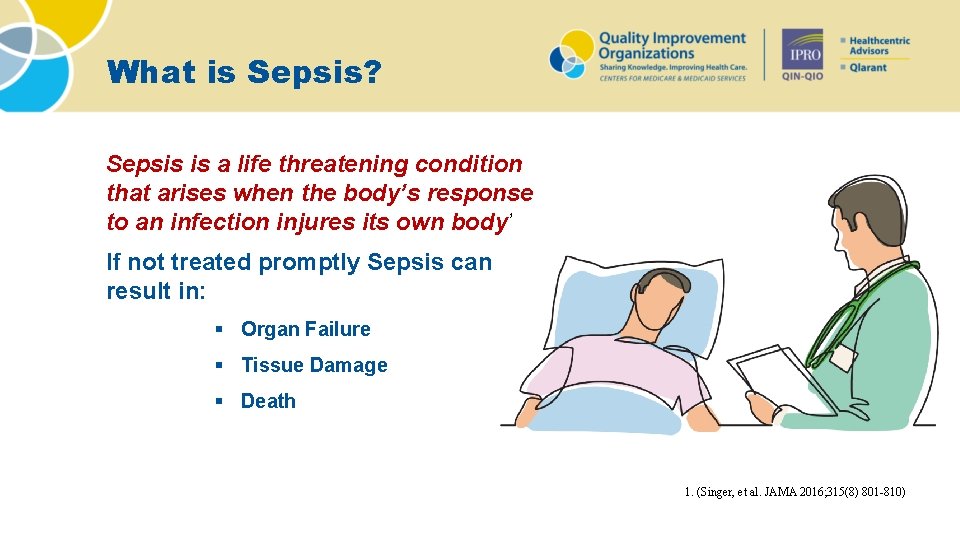
What is Sepsis? Sepsis is a life threatening condition that arises when the body’s response to an infection injures its own body 1 If not treated promptly Sepsis can result in: § Organ Failure § Tissue Damage § Death 1. (Singer, et al. JAMA 2016; 315(8) 801 -810) 6
Sepsis and Infection § Sepsis is always triggered by an infection § Sometimes people don’t know they have an infection § Sometimes the causative agent of the infection is not identified § Sepsis diagnosis is sometimes missed due to various manifestations of sepsis § If symptoms of sepsis exist, a source of infection should be sought 7
Early Recognition is Important Most people have little or no knowledge of sepsis Early detection and treatment is critical for: § § Survival Avoiding long term health-related complications Your prompt actions could save a life! 8
Why Haven’t I Heard of Sepsis? You may have heard of people dying of: § § Pneumonia Abdominal Infections Kidney Infections Blood Poisoning But often the cause of death may have been sepsis 9
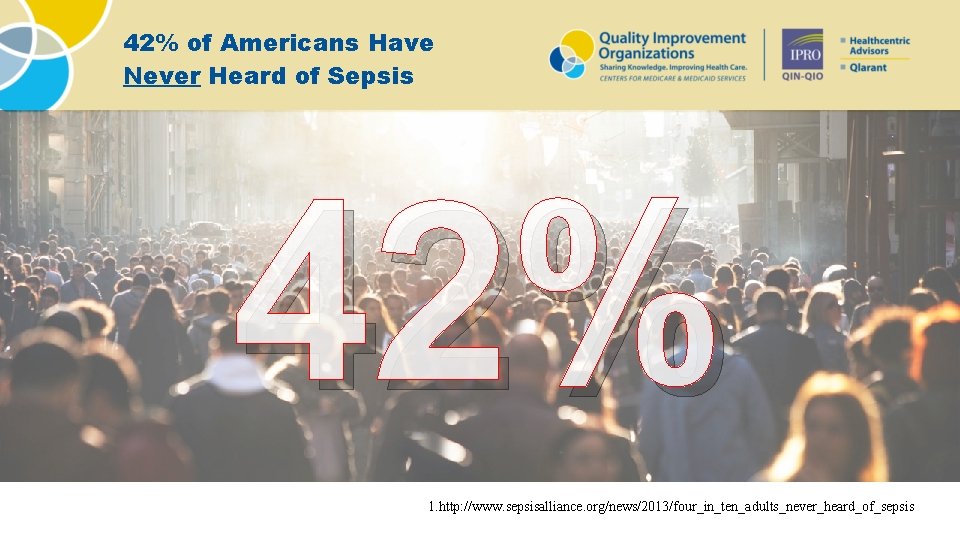
42% of Americans Have Never Heard of Sepsis 42% 1. http: //www. sepsisalliance. org/news/2013/four_in_ten_adults_never_heard_of_sepsis
Who is at Risk for Sepsis? Anyone with an infection! Those at higher risk for developing sepsis include: § § § § People 65 or older Infants less than 1 year old People with chronic illnesses: diabetes, cancer, AIDS People with weakened immune systems People recently hospitalized People recovering from surgery People who have had sepsis 11
Early Recognition is Important Early detection and treatment is critical to: § Decrease sepsis related deaths § Avoid long term health-related complications § Potentially avoiding sepsis-related hospitalizations Your prompt actions could save a life! 12
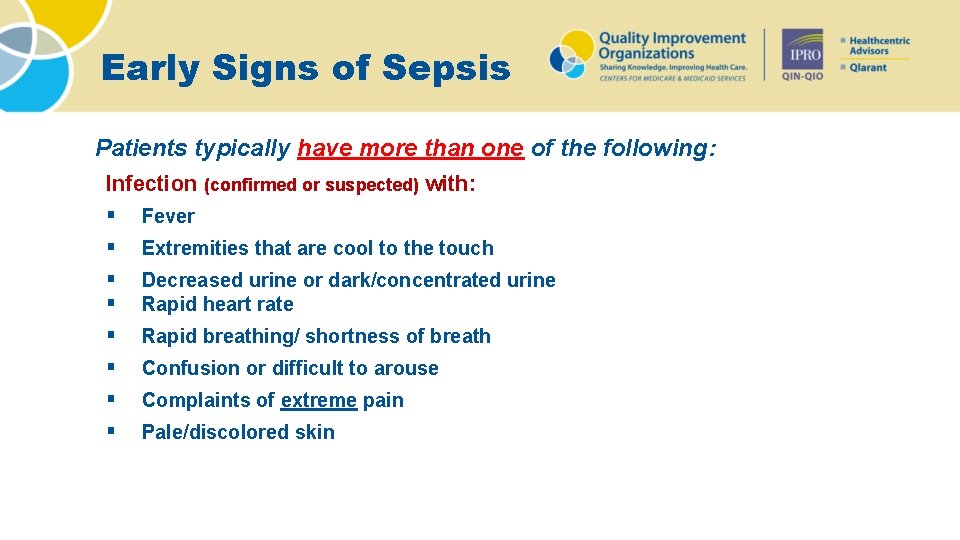
Early Signs of Sepsis Patients typically have more than one of the following: Infection (confirmed or suspected) with: § Fever § Extremities that are cool to the touch § Decreased urine or dark/concentrated urine § Rapid heart rate § Rapid breathing/ shortness of breath § Confusion or difficult to arouse § Complaints of extreme pain § Pale/discolored skin 13
What Actions Should I take? Sepsis should always be treated as a medical emergency! If you notice these signs in a resident, yourself or a loved one: § § Let your Dr. or healthcare provider know you are concerned about sepsis There is no single test for sepsis Certain tests will help your doctor make the diagnosis Say “I am concerned about sepsis” 14
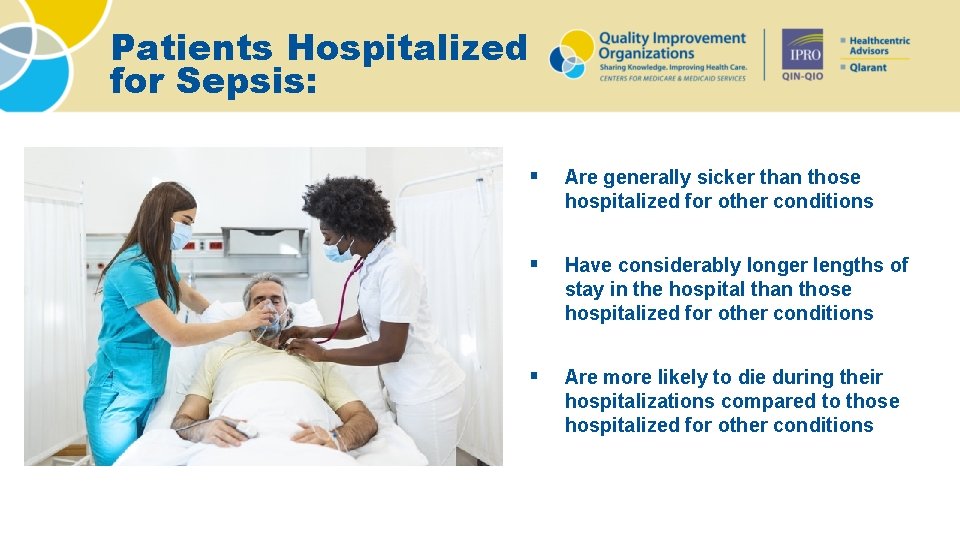
Patients Hospitalized for Sepsis: § Are generally sicker than those hospitalized for other conditions § Have considerably longer lengths of stay in the hospital than those hospitalized for other conditions § Are more likely to die during their hospitalizations compared to those hospitalized for other conditions 15
What if My Dr. Tells Me I Have Sepsis? If sepsis is caught early you have a good chance for survival as well as avoiding long term complications! § § § People with sepsis are usually treated in the hospital Doctors will treat your infection with (IV) antibiotics In the hospital you will have your blood and vital signs tested You will probably be given IV fluids You may be admitted to the hospital for ongoing care 16
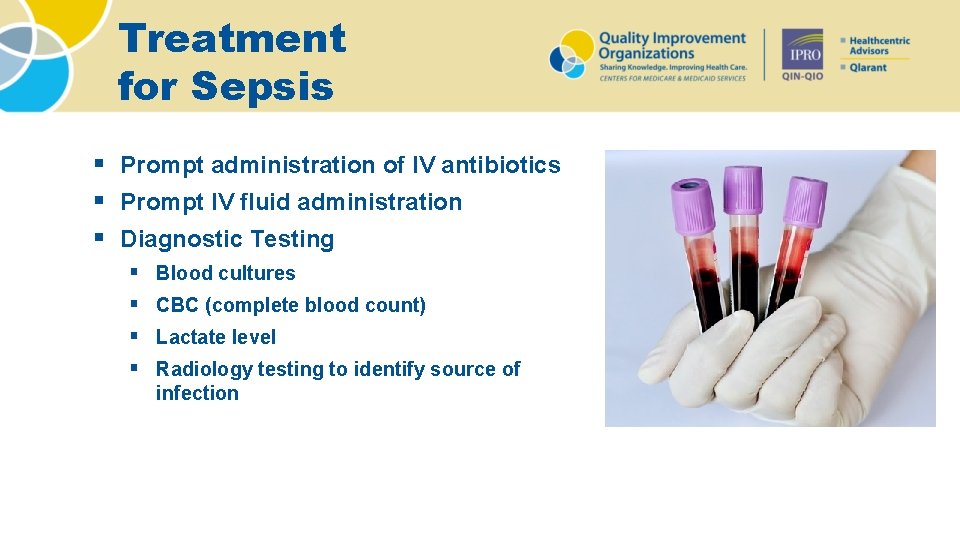
Treatment for Sepsis § Prompt administration of IV antibiotics § Prompt IV fluid administration § Diagnostic Testing § § Blood cultures CBC (complete blood count) Lactate level Radiology testing to identify source of infection 17
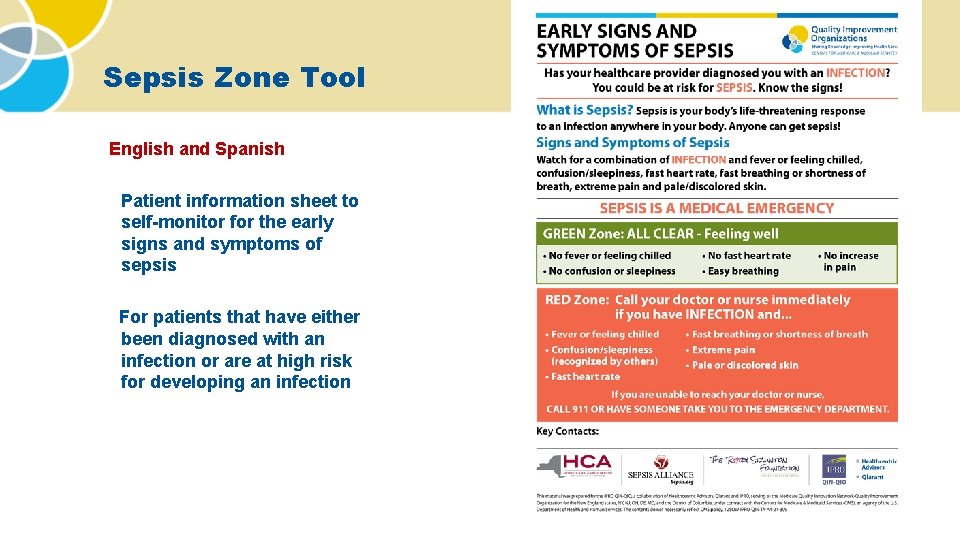
Sepsis Zone Tool English and Spanish Patient information sheet to self-monitor for the early signs and symptoms of sepsis For patients that have either been diagnosed with an infection or are at high risk for developing an infection 18
Every Minute Counts! SEPSIS IS A MEDICAL EMERGENCY! § Sepsis is treatable and can be prevented from progressing to septic shock…BUT it must be suspected! § For every hour that appropriate treatment is delayed the risk of death increases by about 8%1 1. Crit Care Med, 2006; 34: 1589 -96. 19
Preventing Sepsis § Wash hands often § Get vaccinated against: § Influenza § Pneumonia § Prevent infections whenever possible § Treat infections promptly § Maintain good overall health 20
How You Can Help § Familiarize yourself with the early signs of sepsis § Know who is at risk for sepsis § Know the actions to take § Know preventative measures to decrease your risk of developing sepsis § Educate your family and friends about the signs & symptoms of sepsis 21
Sepsis Awareness Saves Lives § Treat sepsis as a MEDICAL EMERGENCY § If you or a family member exhibits the early signs of sepsis notify a physician for medical attention ASAP EARLY, PROMPT RECOGNITION & TREATMENT GREATLY IMPROVE SURVIVAL RATES 22
Resources: Surviving Sepsis Campaign: http: //www. survivingsepsis. org/Pages/default. aspx Centers for Disease Control (CDC): http: //www. cdc. gov/sepsis/clinicaltools/index. html Sepsis Alliance: http: //www. sepsis. org/ Rory Staunton Foundation: https: //rorystauntonfoundationforsepsis. org/ IPRO Sepsis Initiative http: //stopsepsisnow. org 23
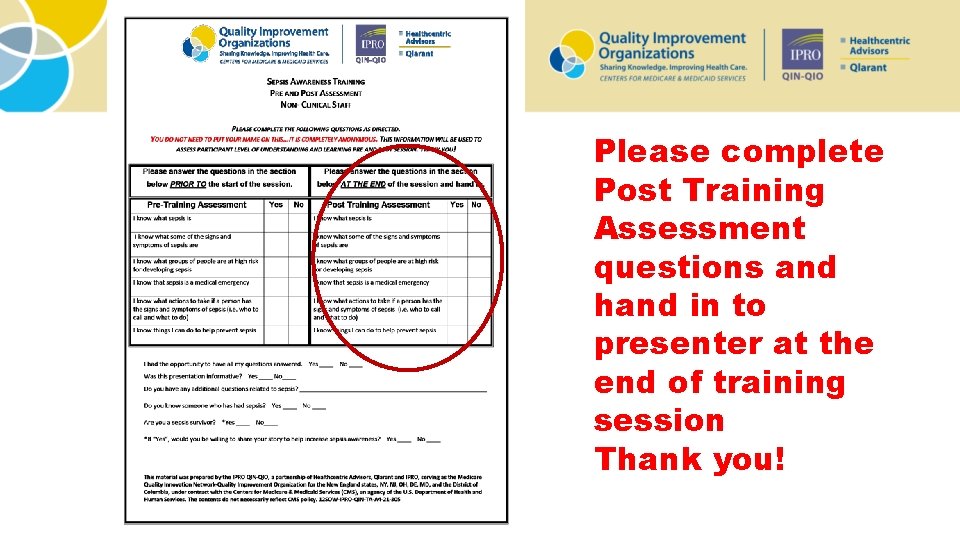
Please complete Post Training Assessment questions and hand in to presenter at the end of training session Thank you! 24
Questions / Feedback 25
For more information Sara Butterfield, RN, BSN, CPHQ Assistant Vice President Healthcare Quality Improvement Program (518) 320 -3504 SButterfield@ipro. org IPRO REGIONAL OFFICE 20 Corporate Woods Boulevard Albany, NY 12211 -2370 IPRO Sepsis Initiative http: //stopsepsisnow. org This resource is not all inclusive and may not apply to all patients/residents and/or situations. It is intended for educational purposes only and as guidance to support investigation for performance improvement, not as a substitute for treatment or advice from a physician or healthcare provider. IPRO does not endorse any particular vendor or tools. This material was prepared by the IPRO QIN-QIO, a partnership of Healthcentric Advisors, Qlarant and IPRO, serving as the Medicare Quality Innovation Network-Quality Improvement Organization for the New England states, NY, NJ, OH, DE, MD, and the District of Columbia, under contract with the Centers for Medicare & Medicaid Services (CMS), an agency of the U. S. Department of Health and Human Services. The contents do not necessarily reflect CMS policy. 12 SOW-IPRO-QIN-TA-A 4 -21 -307