
Sentences Utterances Deanship of ELearning and Distance Education

- Slides: 18
Sentences & Utterances ﻋﻤﺎﺩﺓ ﺍﻟﺘﻌﻠﻢ ﺍﻹﻟﻜﺘﺮﻭﻧﻲ ﻭﺍﻟﺘﻌﻠﻴﻢ ﻋﻦ ﺑﻌﺪ Deanship of E-Learning and Distance Education ][ 3 [ ] ﺟﺎﻣﻌﺔ ﺍﻟﻤﻠﻚ ﻓﻴﺼﻞ King Faisal University
Sentences & Utterances • An utterance is any stretch of talk, by one person, before and after which there is silence on the part of that person. • An utterance is the use of a piece of language (one or more word/phrase/sentence) by a particular speaker on a particular occasion. ﻋﻤﺎﺩﺓ ﺍﻟﺘﻌﻠﻢ ﺍﻹﻟﻜﺘﺮﻭﻧﻲ ﻭﺍﻟﺘﻌﻠﻴﻢ ﻋﻦ ﺑﻌﺪ Deanship of E-Learning and Distance Education ][ 4 [ ] ﺟﺎﻣﻌﺔ ﺍﻟﻤﻠﻚ ﻓﻴﺼﻞ King Faisal University
Sentences & Utterances To make the notion of utterance clearer to you, read this sentence out loud: e. g. “There is a car coming. ” - Now read it out loud a second time. The same sentence in this example was involved in the two readings. So, we have one sentence, but you made two different utterances of this one sentence, i. e. two unique physical events took place. ﻋﻤﺎﺩﺓ ﺍﻟﺘﻌﻠﻢ ﺍﻹﻟﻜﺘﺮﻭﻧﻲ ﻭﺍﻟﺘﻌﻠﻴﻢ ﻋﻦ ﺑﻌﺪ Deanship of E-Learning and Distance Education ][ 5 [ ] ﺟﺎﻣﻌﺔ ﺍﻟﻤﻠﻚ ﻓﻴﺼﻞ King Faisal University
Sentences & Utterances • A sentence is neither a physical event nor a physical object. It is an abstract string of words put together by the grammatical rules of a language. • A sentence, then, exists abstractly in the mind of language speakers before they say it or write it. • A sentence can be thought of as the ideal string of words behind various realizations in utterances and inscriptions. ﻋﻤﺎﺩﺓ ﺍﻟﺘﻌﻠﻢ ﺍﻹﻟﻜﺘﺮﻭﻧﻲ ﻭﺍﻟﺘﻌﻠﻴﻢ ﻋﻦ ﺑﻌﺪ Deanship of E-Learning and Distance Education ][ 6 [ ] ﺟﺎﻣﻌﺔ ﺍﻟﻤﻠﻚ ﻓﻴﺼﻞ King Faisal University
Sentences & Utterances To make the difference between sentences and utterances clearer consider the following situation. Ahmed and Ali both greet each other one morning with: ‘How are you today? ’ In this example, Ahmed made one utterance, and Ali made another utterance. As a result, we have two utterances. On the other hand, there is only one sentence involved in the situation above. ﻋﻤﺎﺩﺓ ﺍﻟﺘﻌﻠﻢ ﺍﻹﻟﻜﺘﺮﻭﻧﻲ ﻭﺍﻟﺘﻌﻠﻴﻢ ﻋﻦ ﺑﻌﺪ Deanship of E-Learning and Distance Education ][ 7 [ ] ﺟﺎﻣﻌﺔ ﺍﻟﻤﻠﻚ ﻓﻴﺼﻞ King Faisal University
Constatives & Performatives ﻋﻤﺎﺩﺓ ﺍﻟﺘﻌﻠﻢ ﺍﻹﻟﻜﺘﺮﻭﻧﻲ ﻭﺍﻟﺘﻌﻠﻴﻢ ﻋﻦ ﺑﻌﺪ Deanship of E-Learning and Distance Education ][ 8 [ ] ﺟﺎﻣﻌﺔ ﺍﻟﻤﻠﻚ ﻓﻴﺼﻞ King Faisal University
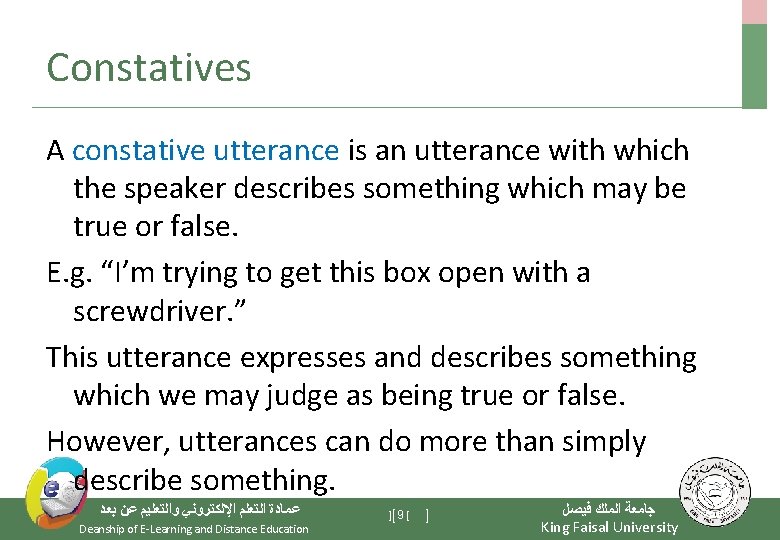
Constatives A constative utterance is an utterance with which the speaker describes something which may be true or false. E. g. “I’m trying to get this box open with a screwdriver. ” This utterance expresses and describes something which we may judge as being true or false. However, utterances can do more than simply describe something. ﻋﻤﺎﺩﺓ ﺍﻟﺘﻌﻠﻢ ﺍﻹﻟﻜﺘﺮﻭﻧﻲ ﻭﺍﻟﺘﻌﻠﻴﻢ ﻋﻦ ﺑﻌﺪ Deanship of E-Learning and Distance Education ][ 9 [ ] ﺟﺎﻣﻌﺔ ﺍﻟﻤﻠﻚ ﻓﻴﺼﻞ King Faisal University
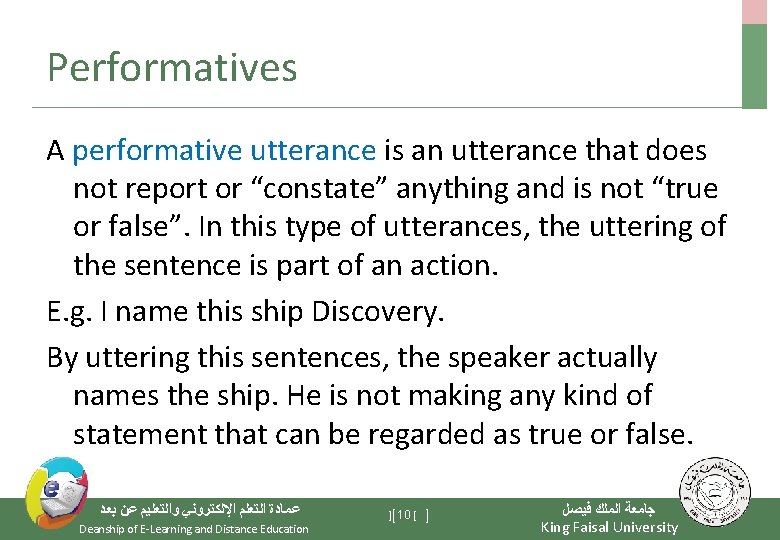
Performatives A performative utterance is an utterance that does not report or “constate” anything and is not “true or false”. In this type of utterances, the uttering of the sentence is part of an action. E. g. I name this ship Discovery. By uttering this sentences, the speaker actually names the ship. He is not making any kind of statement that can be regarded as true or false. ﻋﻤﺎﺩﺓ ﺍﻟﺘﻌﻠﻢ ﺍﻹﻟﻜﺘﺮﻭﻧﻲ ﻭﺍﻟﺘﻌﻠﻴﻢ ﻋﻦ ﺑﻌﺪ Deanship of E-Learning and Distance Education ][ 10 [ ] ﺟﺎﻣﻌﺔ ﺍﻟﻤﻠﻚ ﻓﻴﺼﻞ King Faisal University
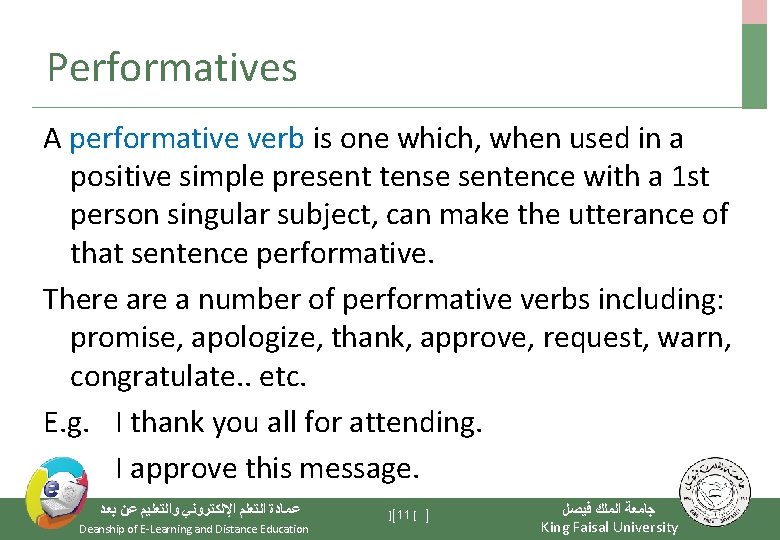
Performatives A performative verb is one which, when used in a positive simple present tense sentence with a 1 st person singular subject, can make the utterance of that sentence performative. There a number of performative verbs including: promise, apologize, thank, approve, request, warn, congratulate. . etc. E. g. I thank you all for attending. I approve this message. ﻋﻤﺎﺩﺓ ﺍﻟﺘﻌﻠﻢ ﺍﻹﻟﻜﺘﺮﻭﻧﻲ ﻭﺍﻟﺘﻌﻠﻴﻢ ﻋﻦ ﺑﻌﺪ Deanship of E-Learning and Distance Education ][ 11 [ ] ﺟﺎﻣﻌﺔ ﺍﻟﻤﻠﻚ ﻓﻴﺼﻞ King Faisal University
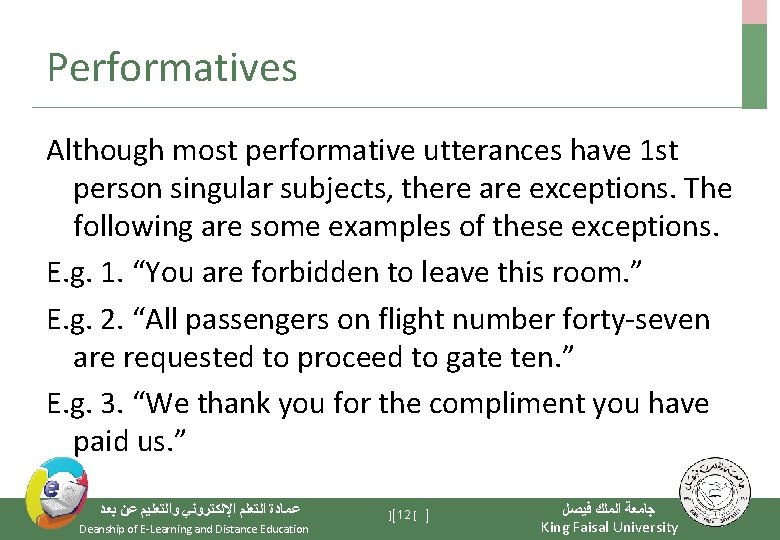
Performatives Although most performative utterances have 1 st person singular subjects, there are exceptions. The following are some examples of these exceptions. E. g. 1. “You are forbidden to leave this room. ” E. g. 2. “All passengers on flight number forty-seven are requested to proceed to gate ten. ” E. g. 3. “We thank you for the compliment you have paid us. ” ﻋﻤﺎﺩﺓ ﺍﻟﺘﻌﻠﻢ ﺍﻹﻟﻜﺘﺮﻭﻧﻲ ﻭﺍﻟﺘﻌﻠﻴﻢ ﻋﻦ ﺑﻌﺪ Deanship of E-Learning and Distance Education ][ 12 [ ] ﺟﺎﻣﻌﺔ ﺍﻟﻤﻠﻚ ﻓﻴﺼﻞ King Faisal University
Performatives can be either explicit or implicit. An explicit performative contains a performative verb naming the act. E. g. I order you to go. An implicit performative does not contain a performative verb naming the act. E. g. Go. In the two examples above, we can achieve the same purpose (giving an order) with “Go” as we did with “I order you to go. ” ﻋﻤﺎﺩﺓ ﺍﻟﺘﻌﻠﻢ ﺍﻹﻟﻜﺘﺮﻭﻧﻲ ﻭﺍﻟﺘﻌﻠﻴﻢ ﻋﻦ ﺑﻌﺪ Deanship of E-Learning and Distance Education ][ 13 [ ] ﺟﺎﻣﻌﺔ ﺍﻟﻤﻠﻚ ﻓﻴﺼﻞ King Faisal University
Performatives Consider the following two examples: 1. “There is a car coming. ” 2. “I shall be there. ” These examples can either be constative utterances, or implicit performatives. Example 1 is an implicit performative if it is used as a warning, and so is example 2 if it is used as a promise. Both examples can also constatives if they are simply used to describe something. ﻋﻤﺎﺩﺓ ﺍﻟﺘﻌﻠﻢ ﺍﻹﻟﻜﺘﺮﻭﻧﻲ ﻭﺍﻟﺘﻌﻠﻴﻢ ﻋﻦ ﺑﻌﺪ Deanship of E-Learning and Distance Education ][ 14 [ ] ﺟﺎﻣﻌﺔ ﺍﻟﻤﻠﻚ ﻓﻴﺼﻞ King Faisal University
Constatives Vs. Performatives The difference between performatives and constatives is that a performative utterance performs some act and simultaneously describes that act. On the other hand, a constative utterance does NOT perform the act. Compare the following two examples: “I promise to repay you tomorrow. ” “John promised to repay me tomorrow. ” ﻋﻤﺎﺩﺓ ﺍﻟﺘﻌﻠﻢ ﺍﻹﻟﻜﺘﺮﻭﻧﻲ ﻭﺍﻟﺘﻌﻠﻴﻢ ﻋﻦ ﺑﻌﺪ Deanship of E-Learning and Distance Education ][ 15 [ ] ﺟﺎﻣﻌﺔ ﺍﻟﻤﻠﻚ ﻓﻴﺼﻞ King Faisal University
Constatives Vs. Performatives ‘I promise to repay you tomorrow’ is a performative because in saying it, the speaker actually does what the utterance describes, i. e. he promises to repay the hearer the next day. That is, the utterance both describes and is a promise. By contrast, the utterance ‘John promised to repay me tomorrow’, although it describes a promise, is not itself a promise. So this utterance does not simultaneously do what it describes, and is therefore a constative, not a performative. ﻋﻤﺎﺩﺓ ﺍﻟﺘﻌﻠﻢ ﺍﻹﻟﻜﺘﺮﻭﻧﻲ ﻭﺍﻟﺘﻌﻠﻴﻢ ﻋﻦ ﺑﻌﺪ Deanship of E-Learning and Distance Education ][ 16 [ ] ﺟﺎﻣﻌﺔ ﺍﻟﻤﻠﻚ ﻓﻴﺼﻞ King Faisal University
Speech Acts Words and sentences when uttered are used to do things, to carry out socially significant acts, in addition to merely describing aspects of the world. The notion of a performative clearly illustrates this point. Thus, we can argue that part of the meaning of an utterance is what that utterance does. In our next lecture, we will talk in more details about the different characteristics of speech acts. ﻋﻤﺎﺩﺓ ﺍﻟﺘﻌﻠﻢ ﺍﻹﻟﻜﺘﺮﻭﻧﻲ ﻭﺍﻟﺘﻌﻠﻴﻢ ﻋﻦ ﺑﻌﺪ Deanship of E-Learning and Distance Education ][ 17 [ ] ﺟﺎﻣﻌﺔ ﺍﻟﻤﻠﻚ ﻓﻴﺼﻞ King Faisal University