
Sentences adapted from http www bbc co ukskillswisefactsheeten
Sentences (adapted from http: //www. bbc. co. uk/skillswise/factsheet/en 30 stru-l 1 -frules-and-egs-to-help-you-make-a-sentence
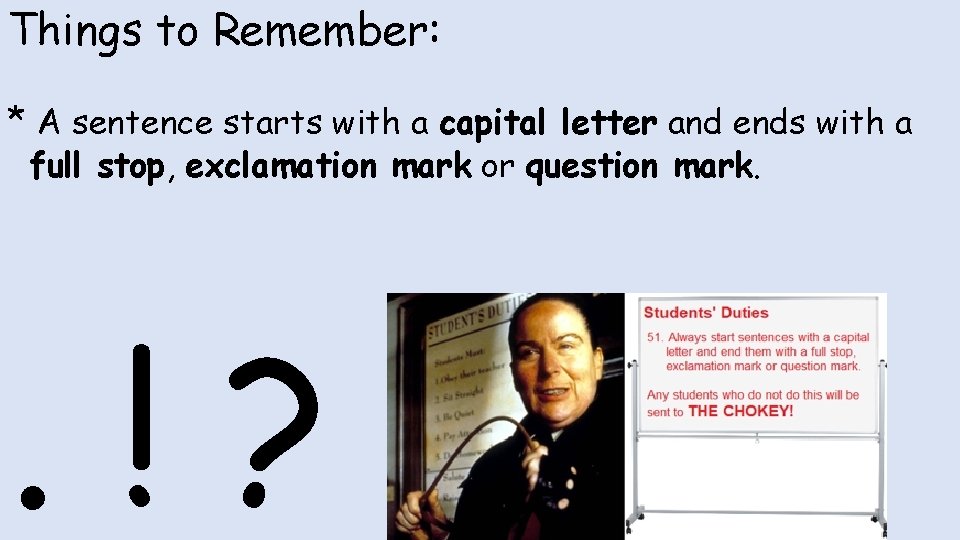
Things to Remember: * A sentence starts with a capital letter and ends with a full stop, exclamation mark or question mark. . !?
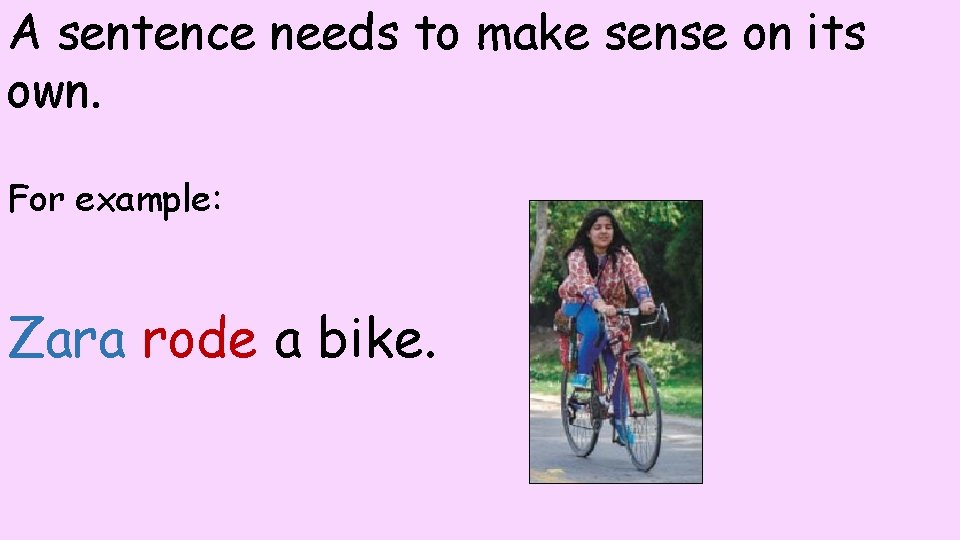
A sentence needs to make sense on its own. For example: Zara rode a bike.
It is also OK to use a pronoun instead of the name of the person or thing in the sentence. However, we usually only do this if the name (of the person or thing) has already appeared in an earlier sentence. Zara didn’t catch the bus. She rode a bike. Other pronouns include: he it they them yours hers theirs his your him her

(adapted from http: //www. bbc. co. uk/skillswise/factsheet/en 30 stru-l 1 -f-rules-) A sentence needs at least one main clause, but can contain more than one clause. A clause needs to have a verb and a subject.

A verb is an action (or a ‘doing word’) or a state of being word. The subject is the person, animal or thing who is doing the action or being something. Zara is riding a bike.
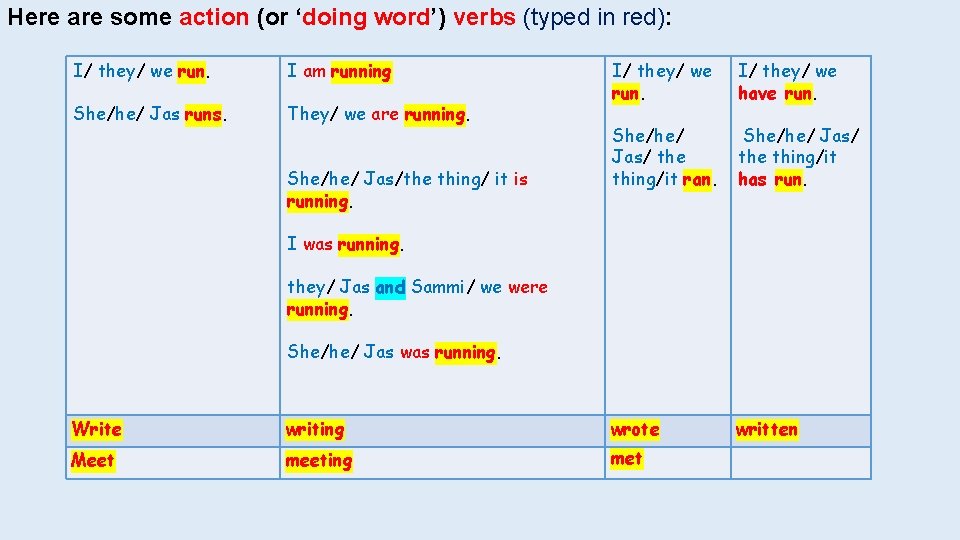
Here are some action (or ‘doing word’) verbs (typed in red): I/ they/ we run. I am running She/he/ Jas runs. They/ we are running. She/he/ Jas/the thing/ it is running. I/ they/ we run. I/ they/ we have run. She/he/ Jas/ the thing/it ran. She/he/ Jas/ the thing/it has run. written I was running. they/ Jas and Sammi/ we were running. She/he/ Jas was running. Write writing wrote Meet meeting met
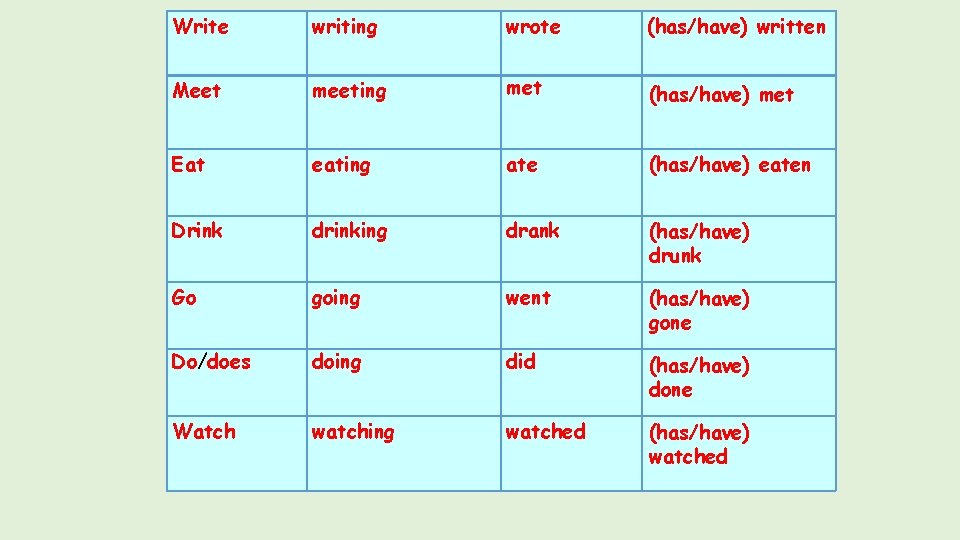
Write writing wrote (has/have) written Meet meeting met (has/have) met Eat eating ate (has/have) eaten Drink drinking drank (has/have) drunk Go going went (has/have) gone Do/does doing did (has/have) done Watch watching watched (has/have) watched
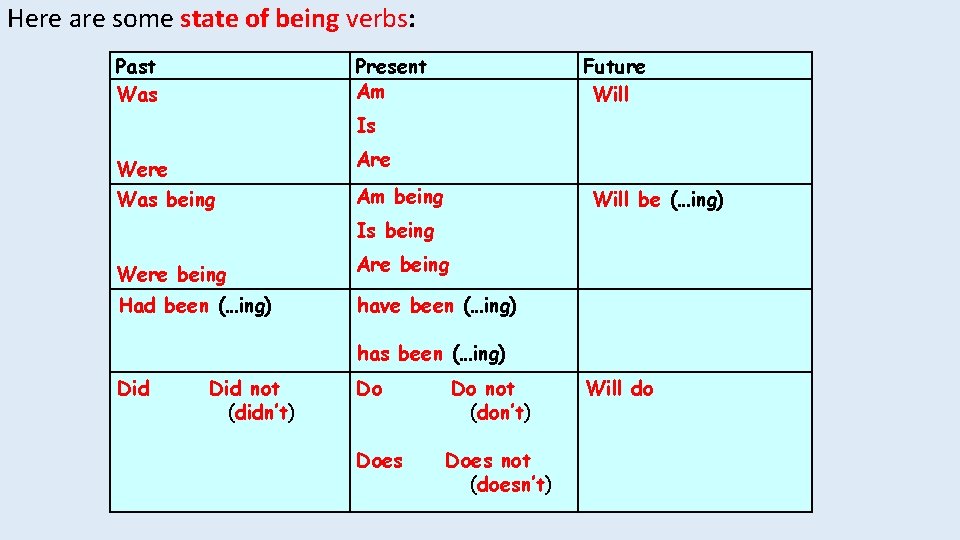
Here are some state of being verbs: Past Was Present Am Future Will Is Were Was being Are Am being Will be (…ing) Is being Were being Had been (…ing) Are being have been (…ing) has been (…ing) Did not (didn’t) Do Do not (don’t) Does not (doesn’t) Will do
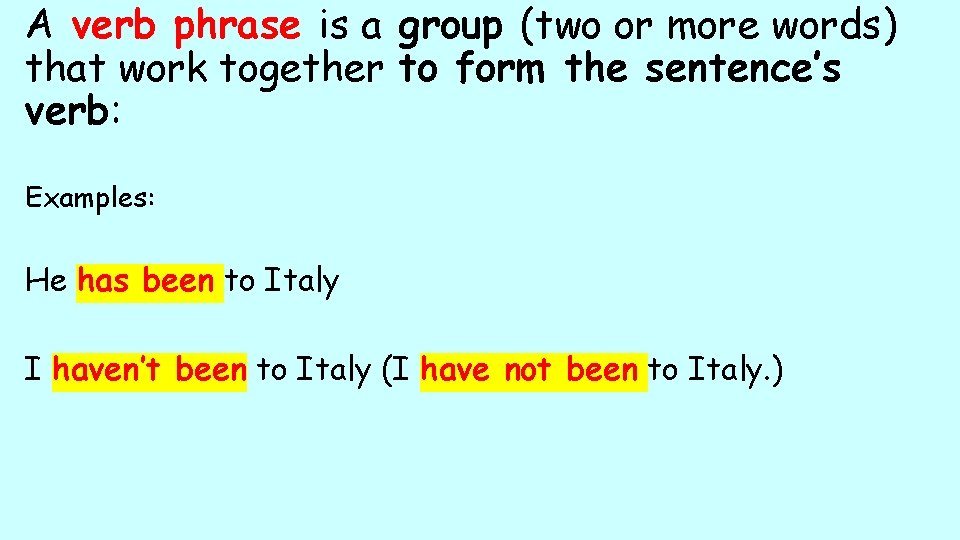
A verb phrase is a group (two or more words) that work together to form the sentence’s verb: Examples: He has been to Italy I haven’t been to Italy (I have not been to Italy. )
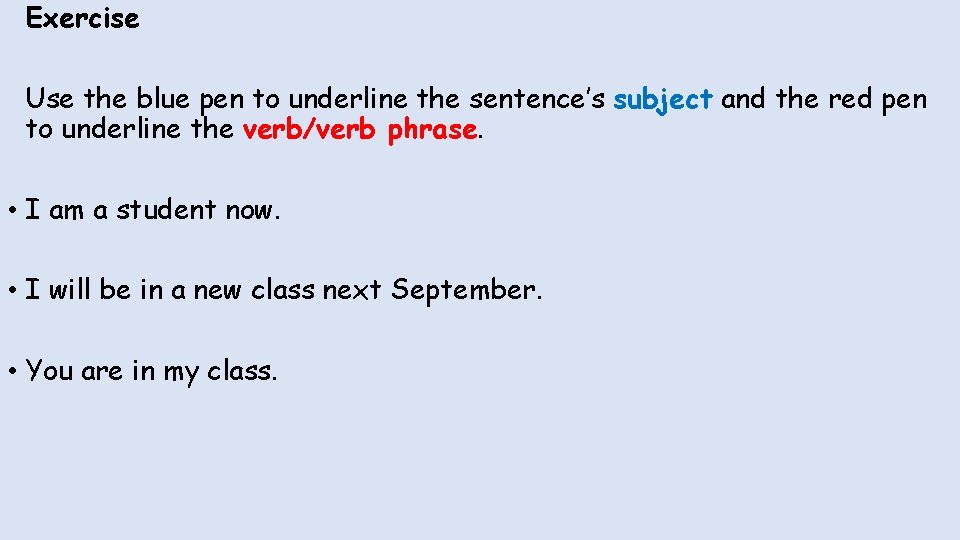
Exercise Use the blue pen to underline the sentence’s subject and the red pen to underline the verb/verb phrase. • I am a student now. • I will be in a new class next September. • You are in my class.
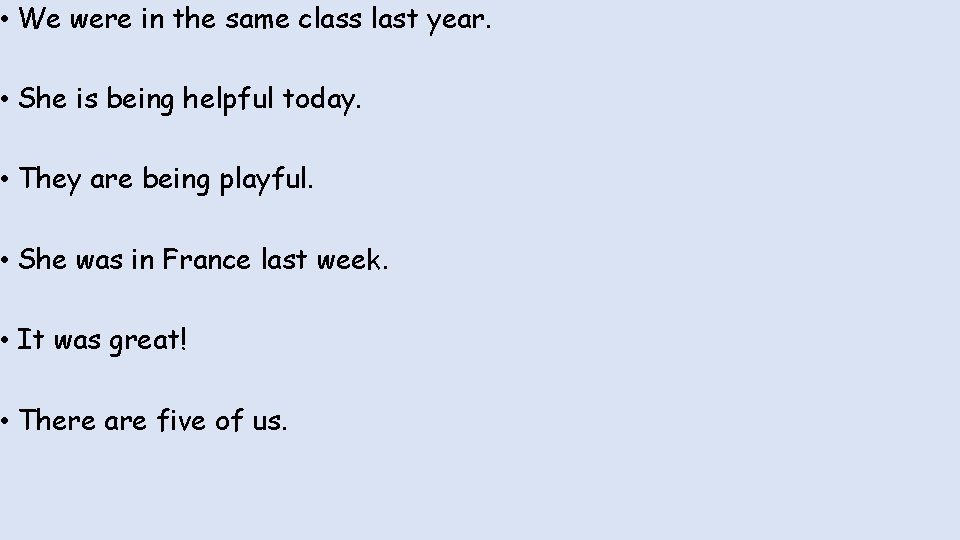
• We were in the same class last year. • She is being helpful today. • They are being playful. • She was in France last week. • It was great! • There are five of us.
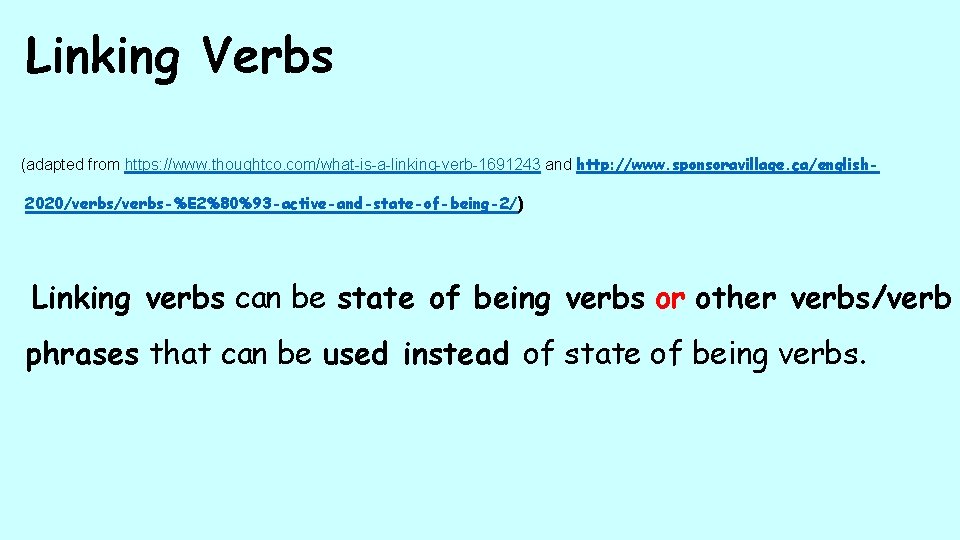
Linking Verbs (adapted from https: //www. thoughtco. com/what-is-a-linking-verb-1691243 and http: //www. sponsoravillage. ca/english 2020/verbs-%E 2%80%93 -active-and-state-of-being-2/) Linking verbs can be state of being verbs or other verbs/verb phrases that can be used instead of state of being verbs.
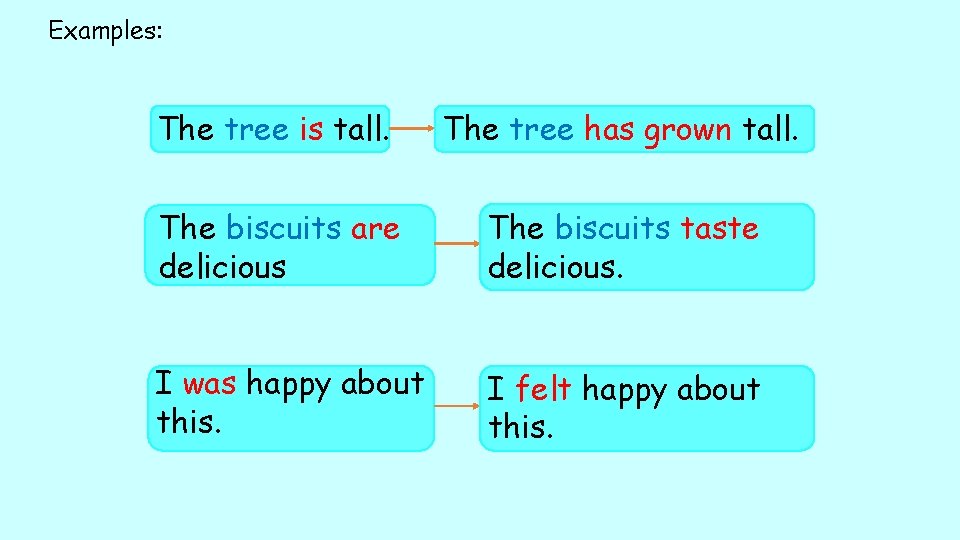
Examples: The tree is tall. The tree has grown tall. The biscuits are delicious The biscuits taste delicious. I was happy about this. I felt happy about this.
- Slides: 14