
SENTENCE STRUCTURE ENC 0025 L Unit 3 SENTENCE
- Slides: 40
SENTENCE STRUCTURE ENC 0025 L Unit 3
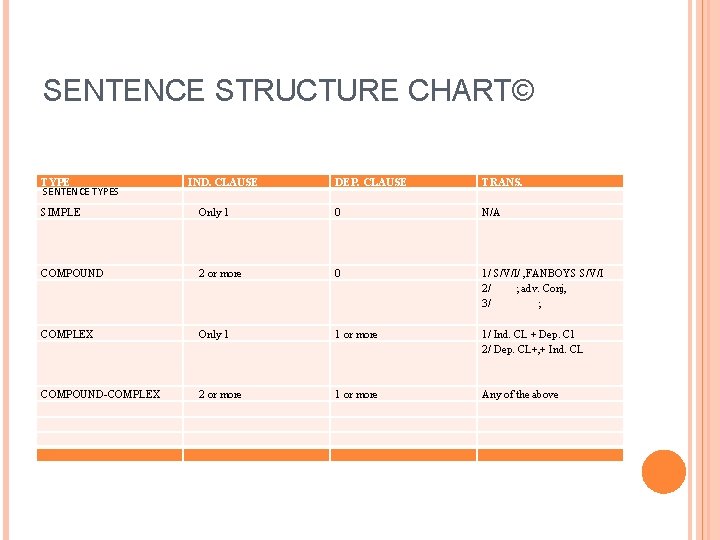
SENTENCE TYPES Simple Compound Complex Compound-Complex
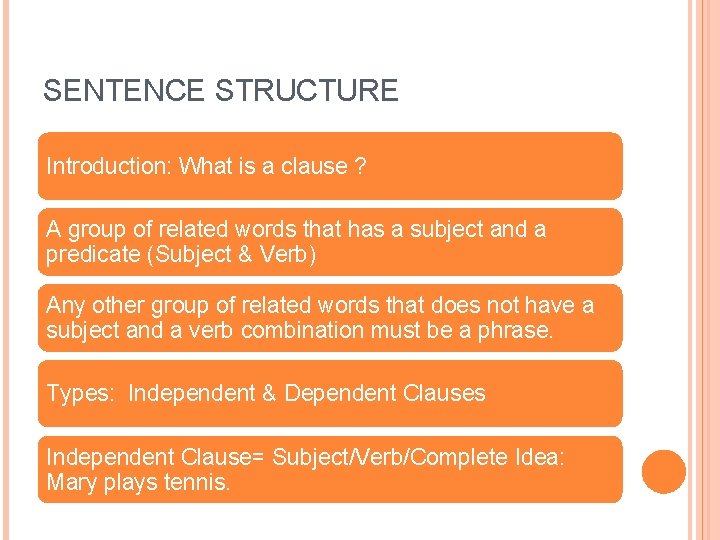
SENTENCE STRUCTURE Introduction: What is a clause ? A group of related words that has a subject and a predicate (Subject & Verb) Any other group of related words that does not have a subject and a verb combination must be a phrase. Types: Independent & Dependent Clauses Independent Clause= Subject/Verb/Complete Idea: Mary plays tennis.
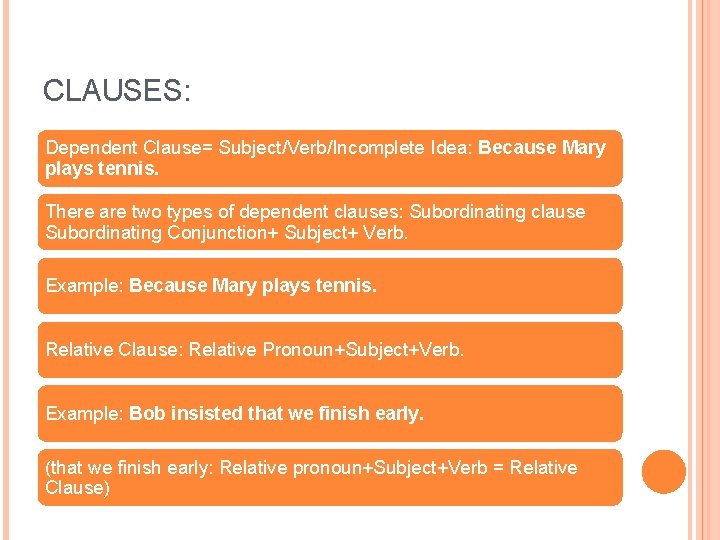
CLAUSES: Dependent Clause= Subject/Verb/Incomplete Idea: Because Mary plays tennis. There are two types of dependent clauses: Subordinating clause Subordinating Conjunction+ Subject+ Verb. Example: Because Mary plays tennis. Relative Clause: Relative Pronoun+Subject+Verb. Example: Bob insisted that we finish early. (that we finish early: Relative pronoun+Subject+Verb = Relative Clause)
SENTENCE STRUCTURE CHART© TYPE SENTENCE TYPES SIMPLE COMPOUND COMPLEX COMPOUND-COMPLEX IND. CLAUSE Only 1 DEP. CLAUSE 0 TRANS. N/A 2 or more 0 1/ S/V/I/ , FANBOYS S/V/I 2/ ; adv. Conj, 3/ ; Only 1 1 or more 1/ Ind. CL + Dep. Cl 2/ Dep. CL+, + Ind. CL 2 or more 1 or more Any of the above
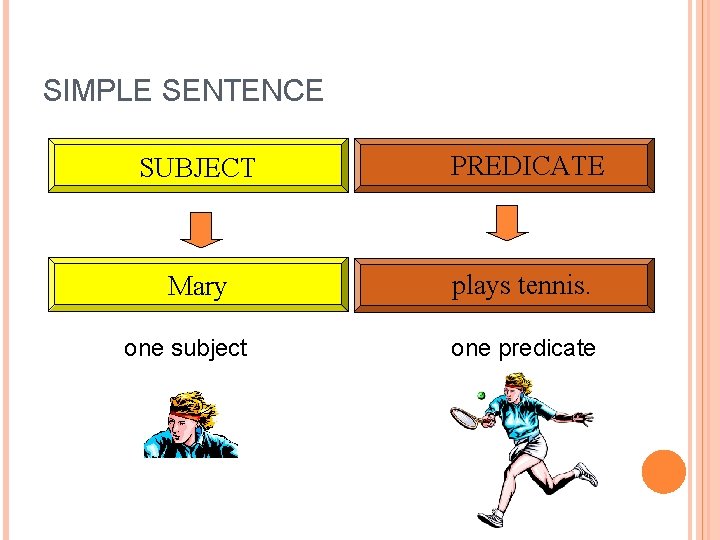
SIMPLE SENTENCE SUBJECT PREDICATE Mary plays tennis. one subject one predicate
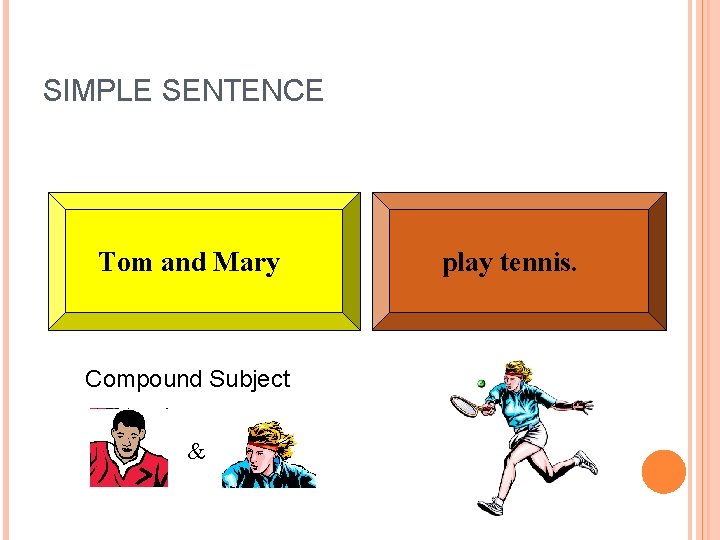
SIMPLE SENTENCE Tom and Mary Compound Subject & play tennis.
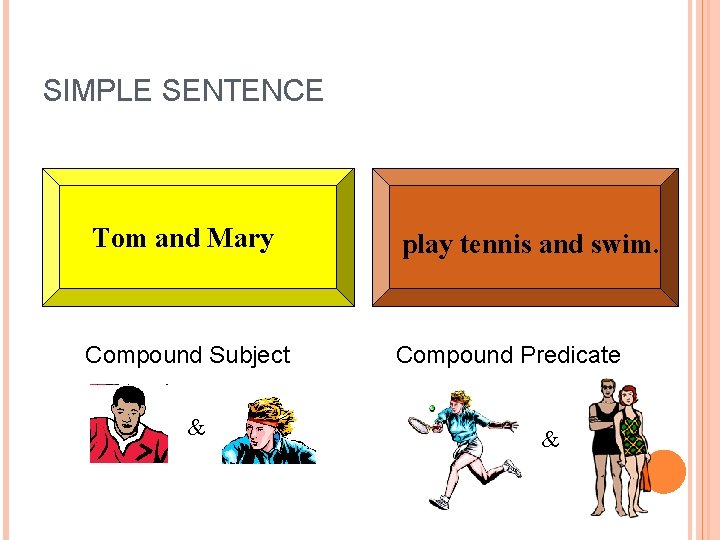
SIMPLE SENTENCE Tom and Mary play tennis and swim. Compound Subject Compound Predicate & &
Hi, I’m Punctuation Pete!
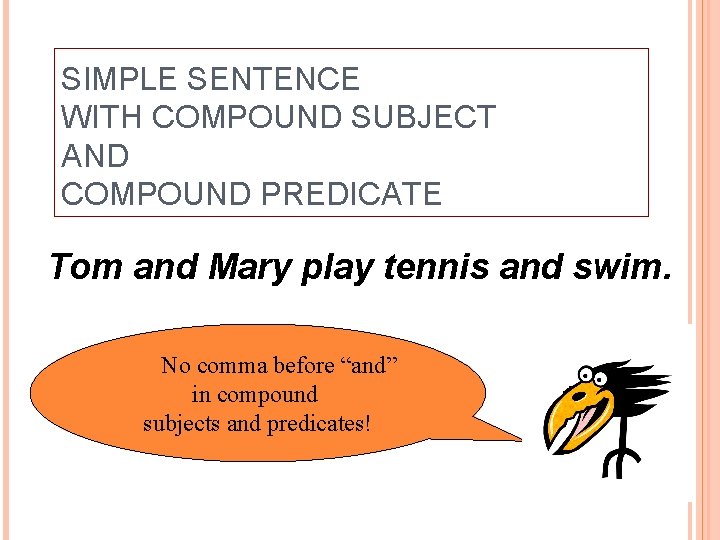
SIMPLE SENTENCE WITH COMPOUND SUBJECT AND COMPOUND PREDICATE Tom and Mary play tennis and swim. No comma before “and” in compound subjects and predicates!
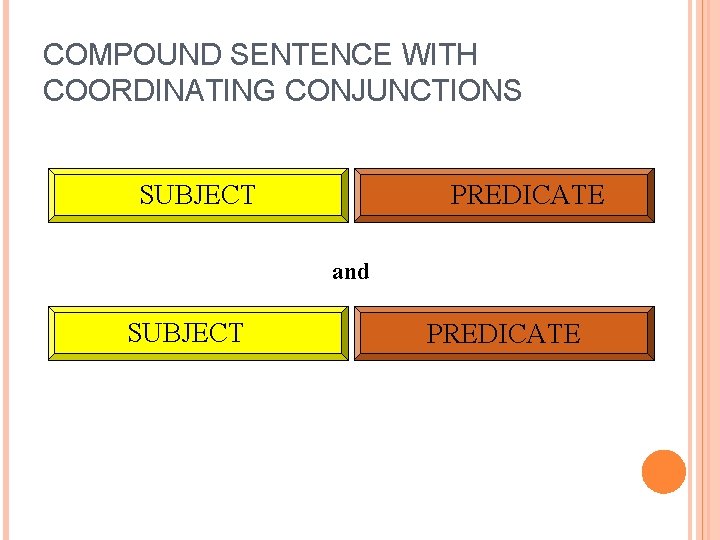
COMPOUND SENTENCE WITH COORDINATING CONJUNCTIONS SUBJECT PREDICATE and SUBJECT PREDICATE
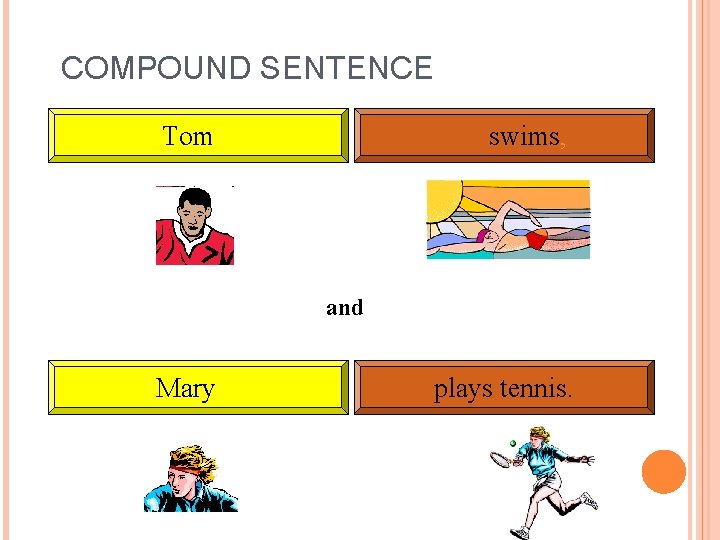
COMPOUND SENTENCE Tom swims, and Mary plays tennis.
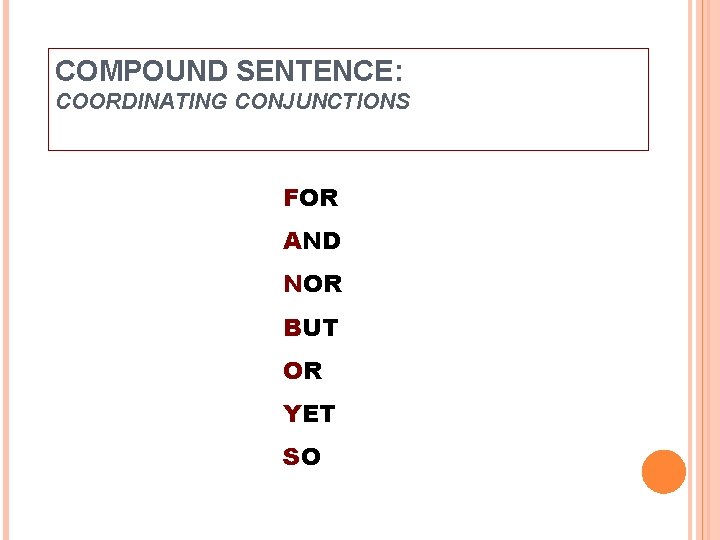
COMPOUND SENTENCE: COORDINATING CONJUNCTIONS FOR AND NOR BUT OR YET SO
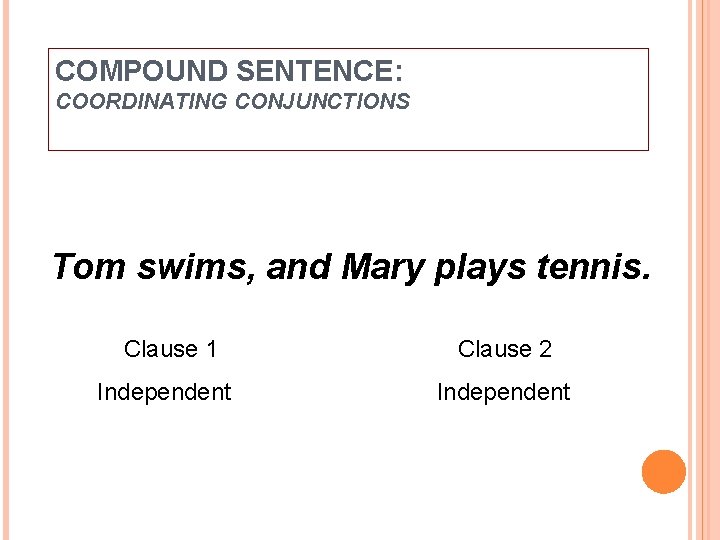
COMPOUND SENTENCE: COORDINATING CONJUNCTIONS Tom swims, and Mary plays tennis. Clause 1 Independent Clause 2 Independent
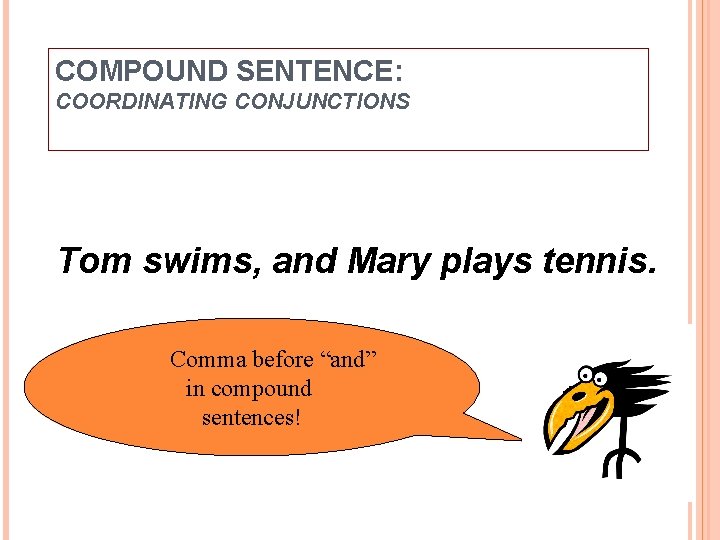
COMPOUND SENTENCE: COORDINATING CONJUNCTIONS Tom swims, and Mary plays tennis. Comma before “and” in compound sentences!
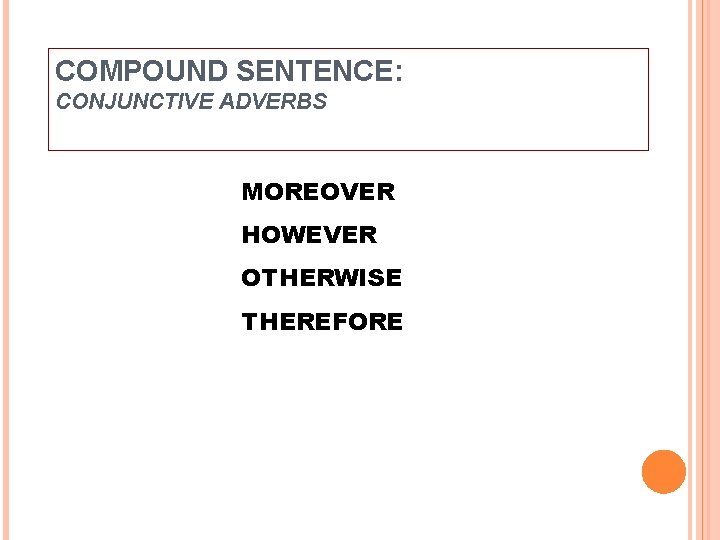
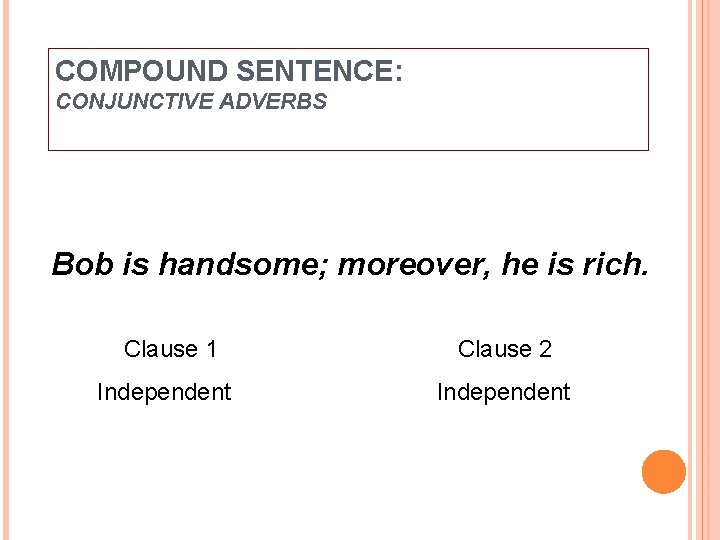
COMPOUND SENTENCE: CONJUNCTIVE ADVERBS MOREOVER HOWEVER OTHERWISE THEREFORE
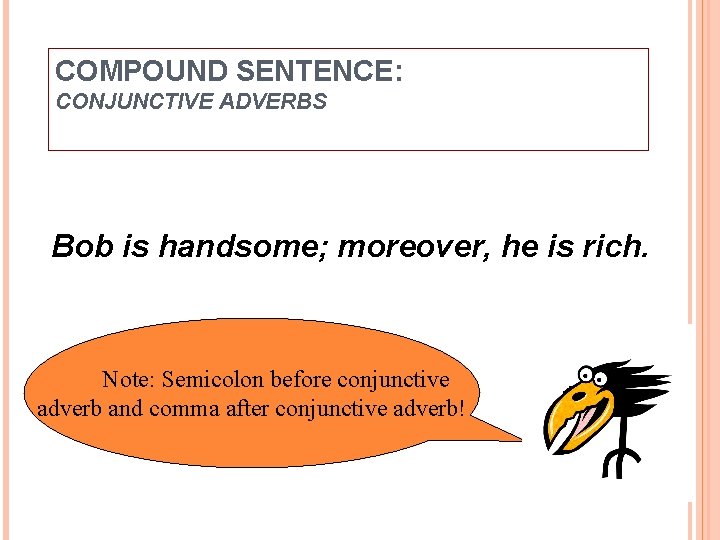
COMPOUND SENTENCE: CONJUNCTIVE ADVERBS Bob is handsome; moreover, he is rich. Clause 1 Independent Clause 2 Independent
COMPOUND SENTENCE: CONJUNCTIVE ADVERBS Bob is handsome; moreover, he is rich. Note: Semicolon before conjunctive adverb and comma after conjunctive adverb!
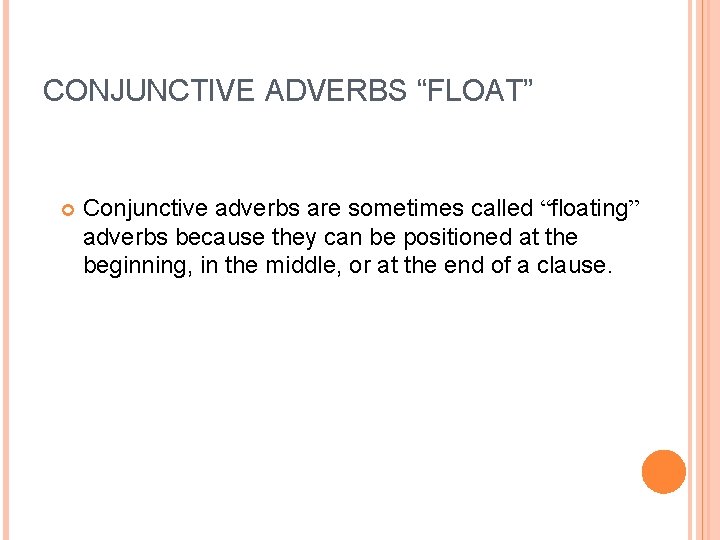
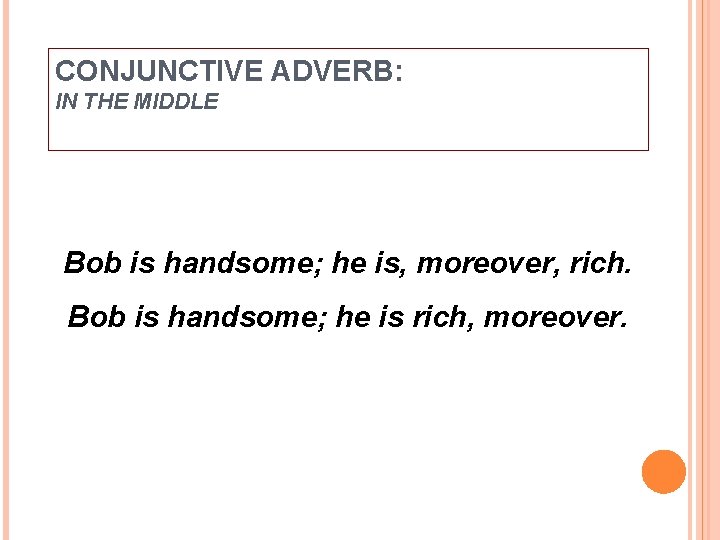
CONJUNCTIVE ADVERBS “FLOAT” Conjunctive adverbs are sometimes called “floating” adverbs because they can be positioned at the beginning, in the middle, or at the end of a clause.
CONJUNCTIVE ADVERB: IN THE MIDDLE Bob is handsome; he is, moreover, rich. Bob is handsome; he is rich, moreover.
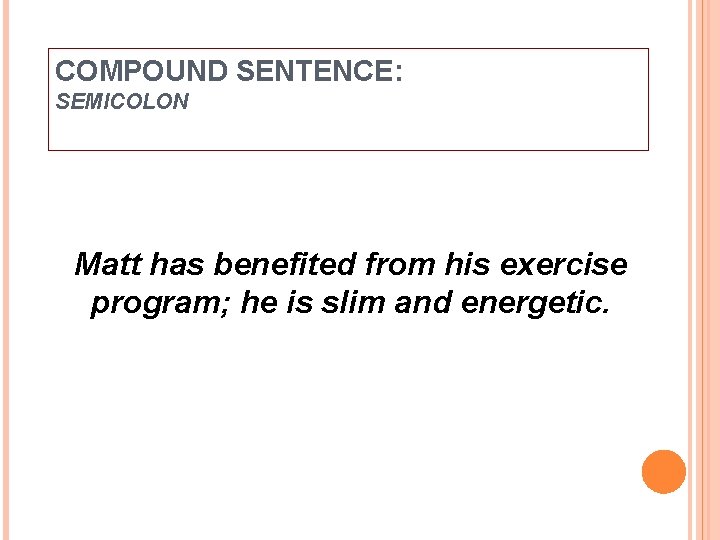
COMPOUND SENTENCE: SEMICOLON Matt has benefited from his exercise program; he is slim and energetic.
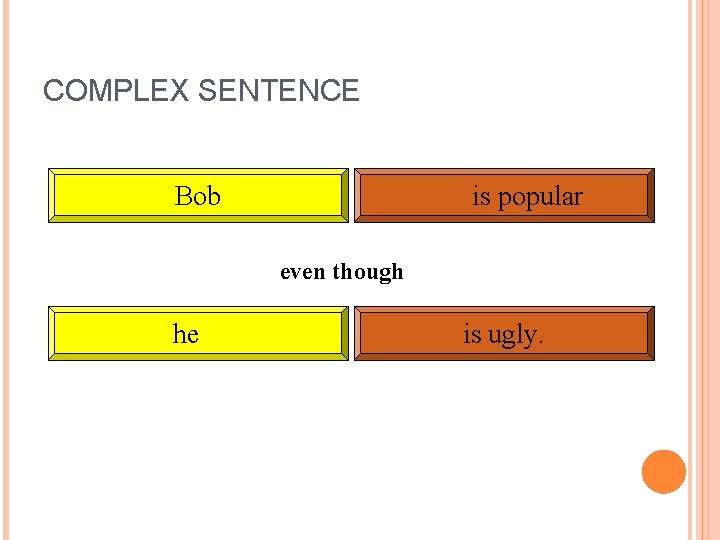
COMPLEX SENTENCE Bob is popular even though he is ugly.
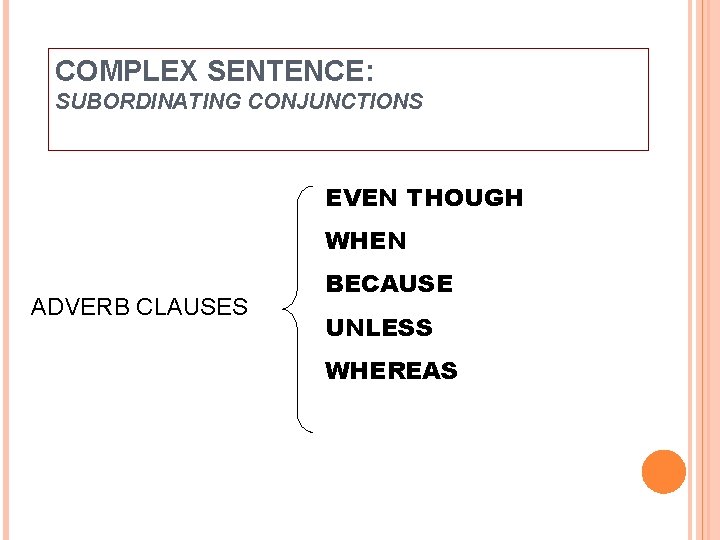
COMPLEX SENTENCE: SUBORDINATING CONJUNCTIONS EVEN THOUGH WHEN ADVERB CLAUSES BECAUSE UNLESS WHEREAS
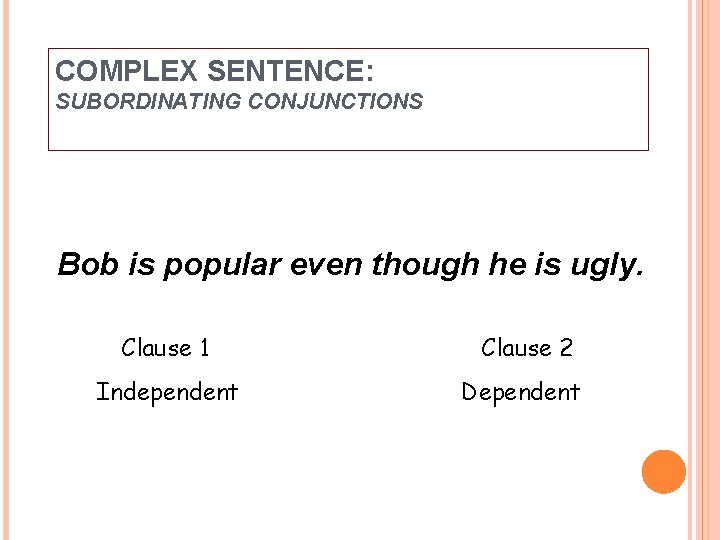
COMPLEX SENTENCE: SUBORDINATING CONJUNCTIONS Bob is popular even though he is ugly. Clause 1 Independent Clause 2 Dependent
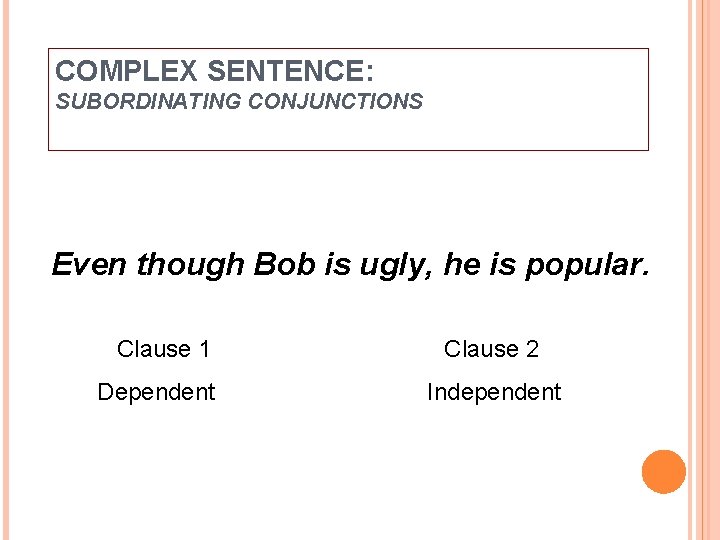
COMPLEX SENTENCE: SUBORDINATING CONJUNCTIONS Even though Bob is ugly, he is popular. Clause 1 Dependent Clause 2 Independent
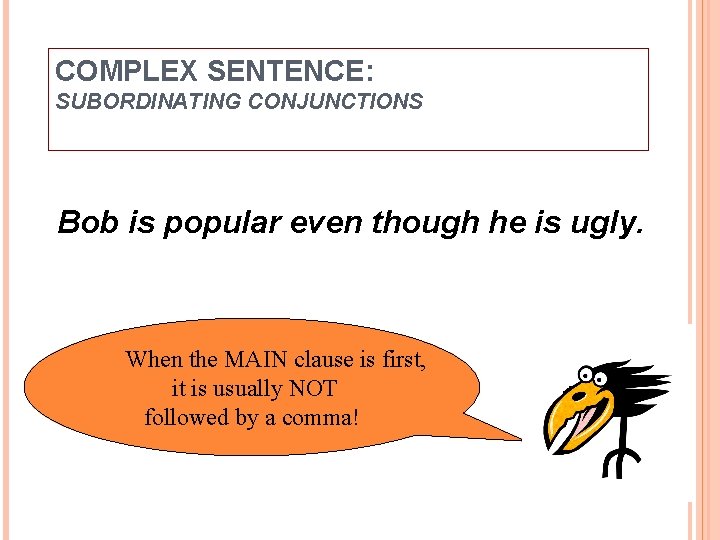
COMPLEX SENTENCE: SUBORDINATING CONJUNCTIONS Bob is popular even though he is ugly. When the MAIN clause is first, it is usually NOT followed by a comma!
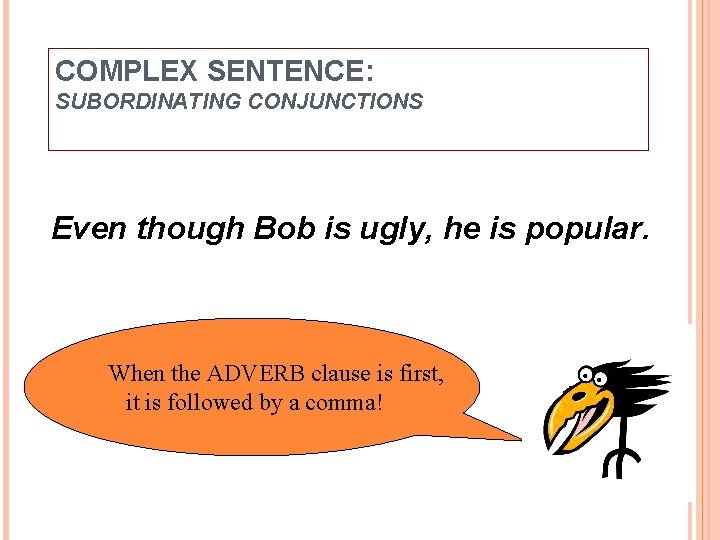
COMPLEX SENTENCE: SUBORDINATING CONJUNCTIONS Even though Bob is ugly, he is popular. When the ADVERB clause is first, it is followed by a comma!
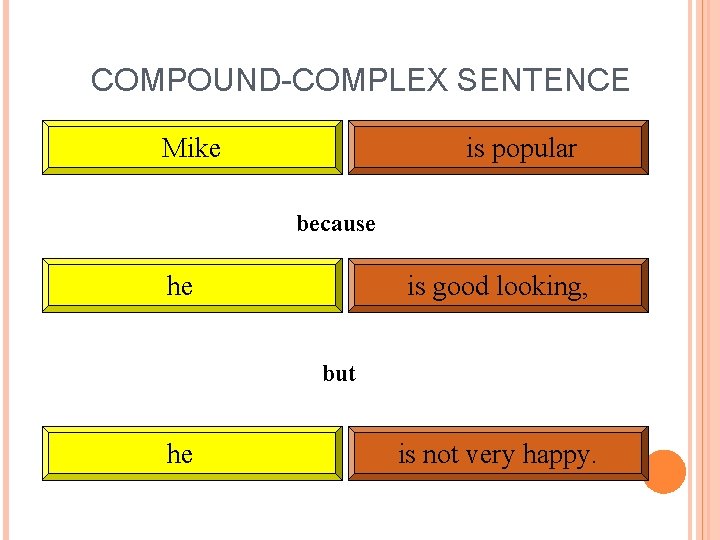
COMPOUND-COMPLEX SENTENCE Mike is popular because he is good looking, but he is not very happy.
PRACTICE EXERCISES Each one of you is going to read the sentence on each practice slide and select the correct sentence type: Simple, Compound, Complex, or Compound-Complex. Hint: Count how many independent and dependent clauses, and use the sentence type chart you copied.
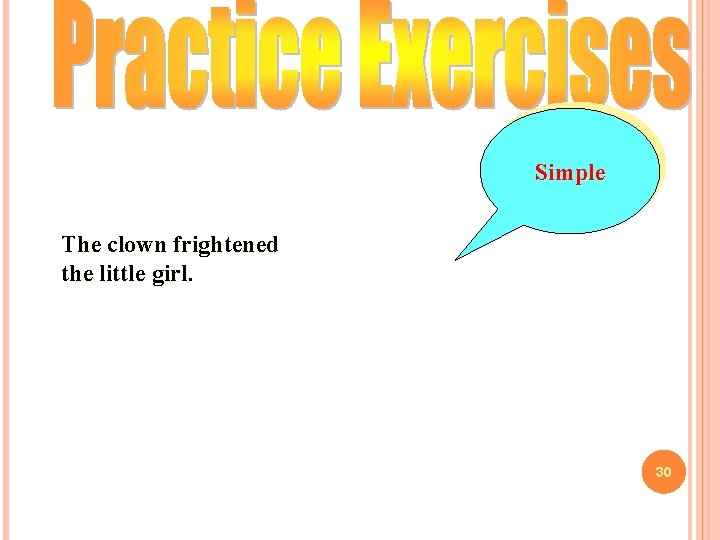
Simple The clown frightened the little girl. 30
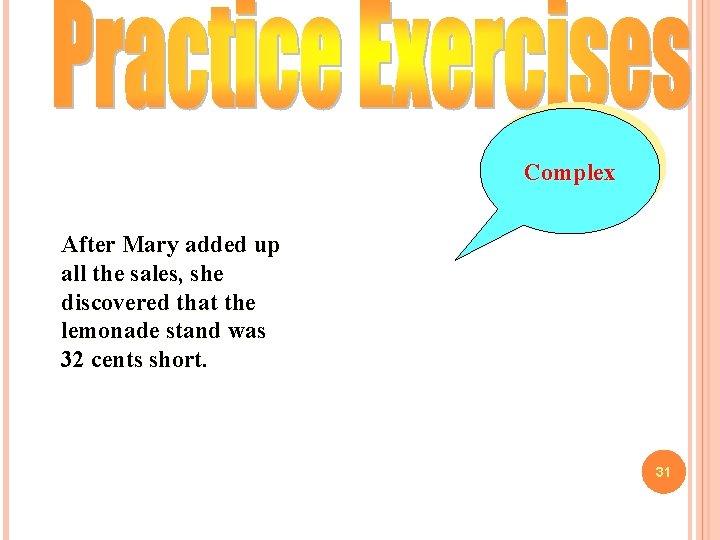
Complex After Mary added up all the sales, she discovered that the lemonade stand was 32 cents short. 31
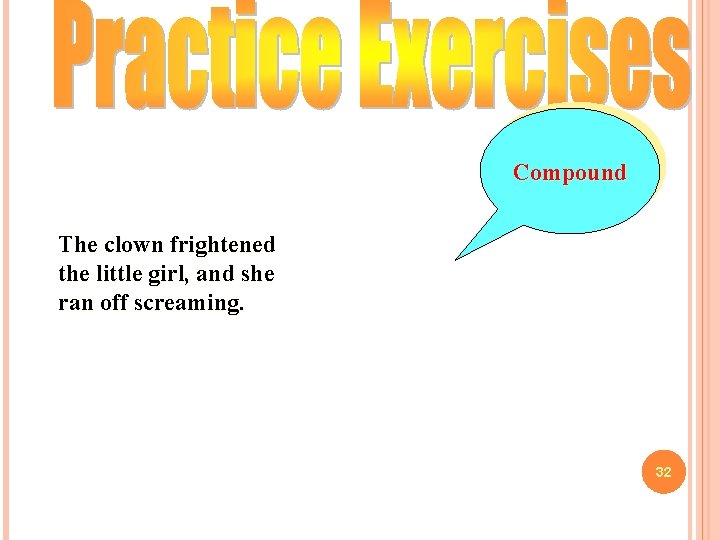
Compound The clown frightened the little girl, and she ran off screaming. 32
Simple The Freedom Riders departed on May 4, 1961. 33
Compound The Freedom Riders departed on May 4, 1961, and they were determined to travel through many southern states. 34
Complex After Mary added up all the sales, she discovered that the lemonade stand was 32 cents short. 35
Complex After you finish the first assignment, take a break. 36
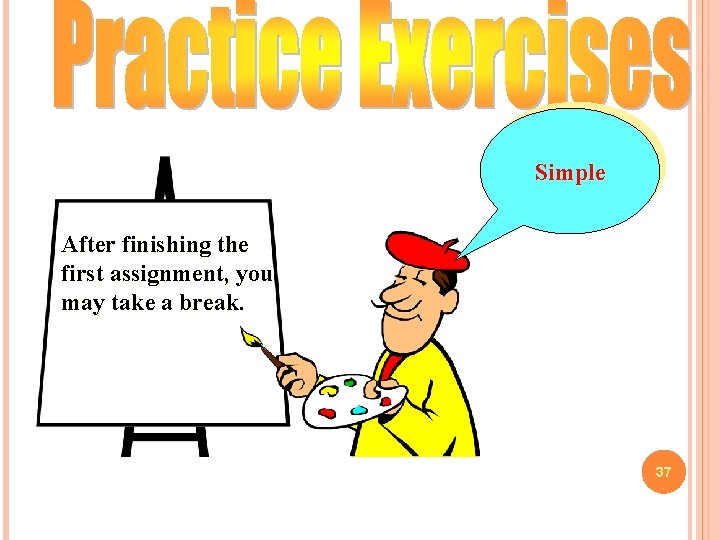
Simple After finishing the first assignment, you may take a break. 37
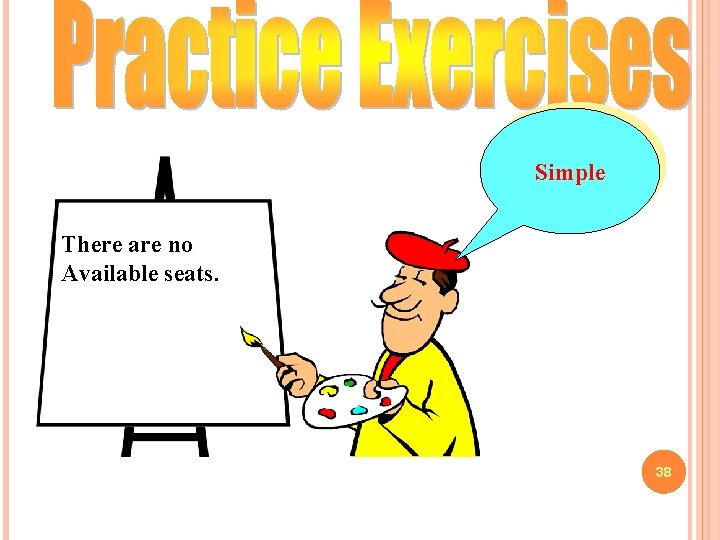
Simple There are no Available seats. 38
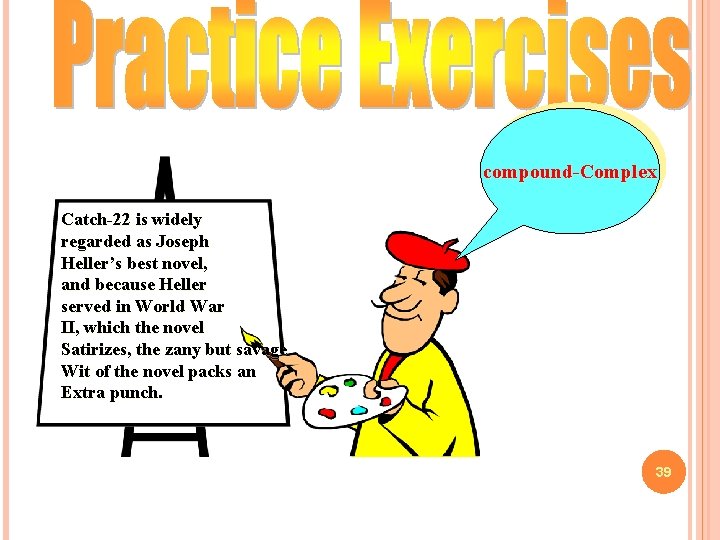
compound-Complex Catch-22 is widely regarded as Joseph Heller’s best novel, and because Heller served in World War II, which the novel Satirizes, the zany but savage Wit of the novel packs an Extra punch. 39
Any Questions? 40