
Sentence patterns English and Arabic 1 SV The
Sentence patterns English and Arabic
1. SV • The common word order of English sentences starts with subject followed by verb. • Ice melts. • Analysis: This is a simple English sentence consisting of a subject (ice) which is an uncountable noun and an intransitive verb.
SV in Arabic • If we translate the English sentence Ice melts into Arabic as ﺍﻟﺜﻠﺞ ﻳﺬﻭﺏ then ﺍﻟﺜﻠﺞ is not considered as subject ﻓﺎﻋﻞ. • It is rather called ( ﻣﺒﺘﺪﺃ subject) according to the majority of Arab grammarians. • In a sentence like ﺍﻟﺮﺟﻞ ﺳﺎﻓﺮ ﺃﻤﺲ , the word ﺍﻟﺮﺟﻞ is treated as ﻣﺒﺘﺪﺃ not as ( ﻓﺎﻋﻞ agent)

Subject vs Agent
• Words in a sentence can be analyzed according to their: 1. Grammatical role: subject, indirect object, direct object 2. Semantic role: agent, recipient, patient, and location 3. The subject is determined syntactically, primarily through word order. 4. The agent is determined through its relationship to the action expressed by the verb.
Examples • The little girl ate an apple. (agent) • The little girl was bitten by the dog. (subject)
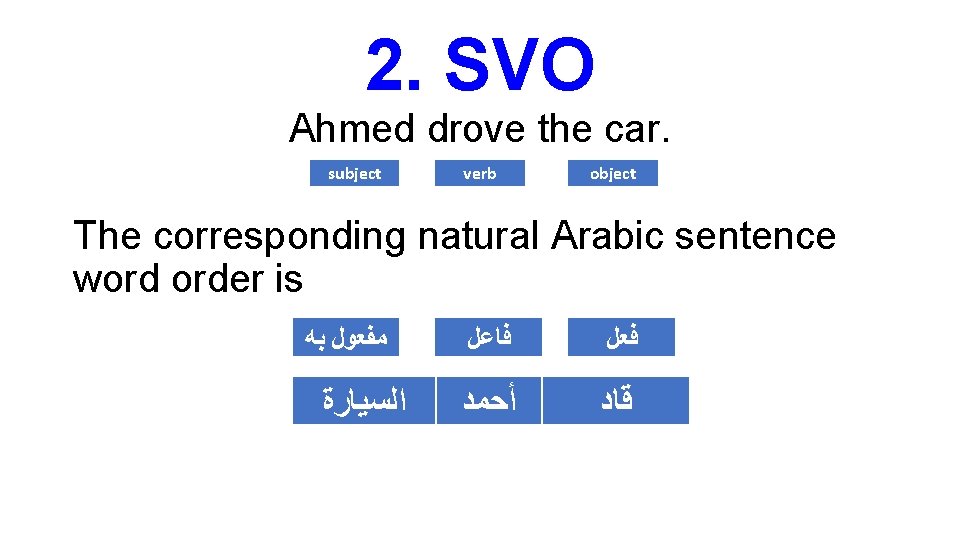
2. SVO Ahmed drove the car. subject verb object The corresponding natural Arabic sentence word order is ﻣﻔﻌﻮﻝ ﺑﻪ ﺍﻟﺴﻴﺎﺭﺓ ﻓﺎﻋﻞ ﻓﻌﻞ ﺃﺤﻤﺪ ﻗﺎﺩ
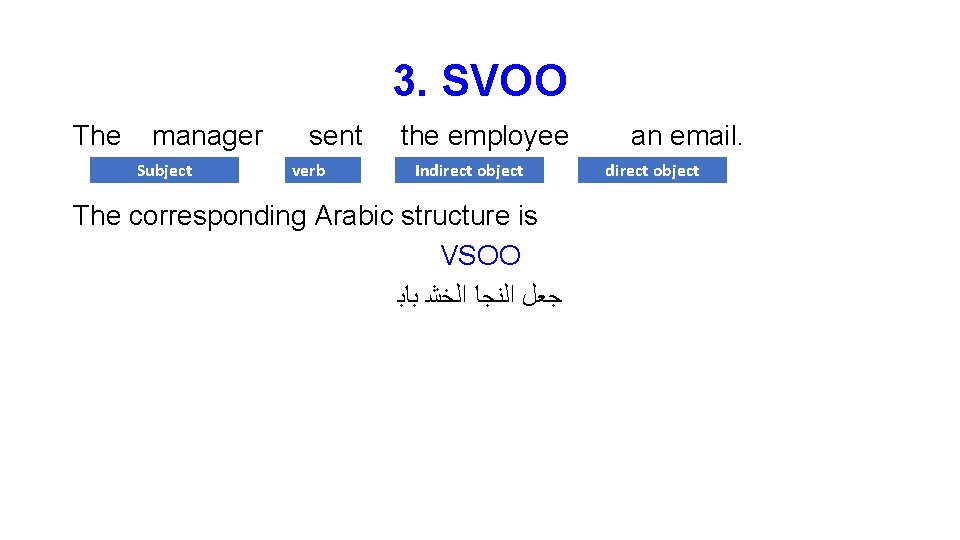
3. SVOO The manager Subject sent verb the employee Indirect object The corresponding Arabic structure is VSOO ﺟﻌﻞ ﺍﻟﻨﺠﺎ ﺍﻟﺨﺸ ﺑﺎﺑ an email. direct object
Verbs taking 2 objects in English • Examples: • Tell: He told us a story. • Lend: I lent money to my friend. • Buy: I bought my father a gift. (buy can also be monotransitive) • Send: His wife sent him the key. • Order: My friend ordered me a sandwich.
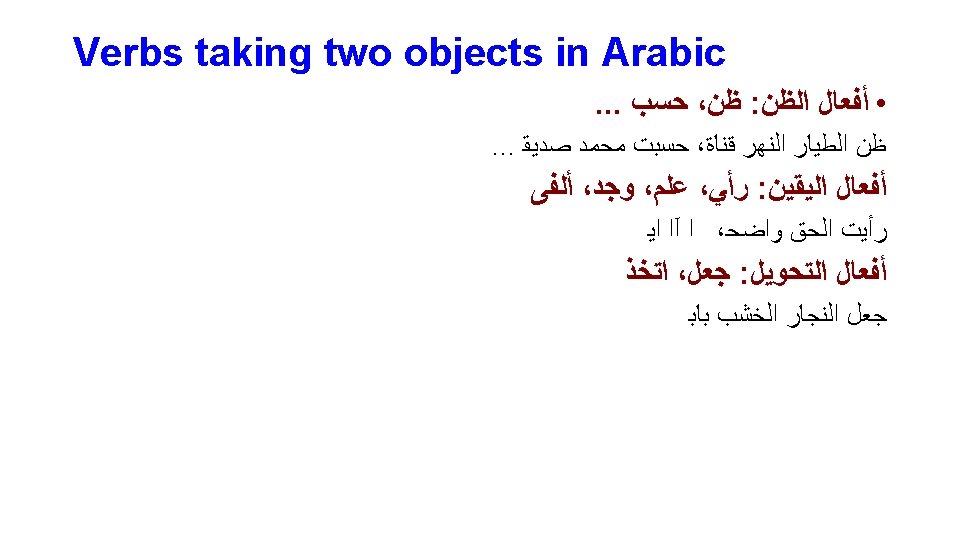
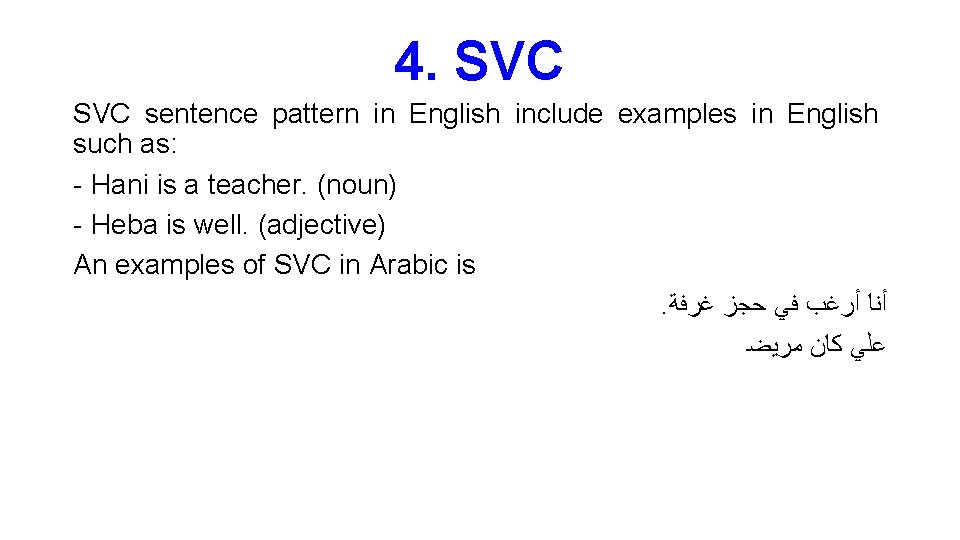
4. SVC sentence pattern in English include examples in English such as: - Hani is a teacher. (noun) - Heba is well. (adjective) An examples of SVC in Arabic is. ﺃﻨﺎ ﺃﺮﻏﺐ ﻓﻲ ﺣﺠﺰ ﻏﺮﻓﺔ ﻋﻠﻲ ﻛﺎﻥ ﻣﺮﻳﻀ
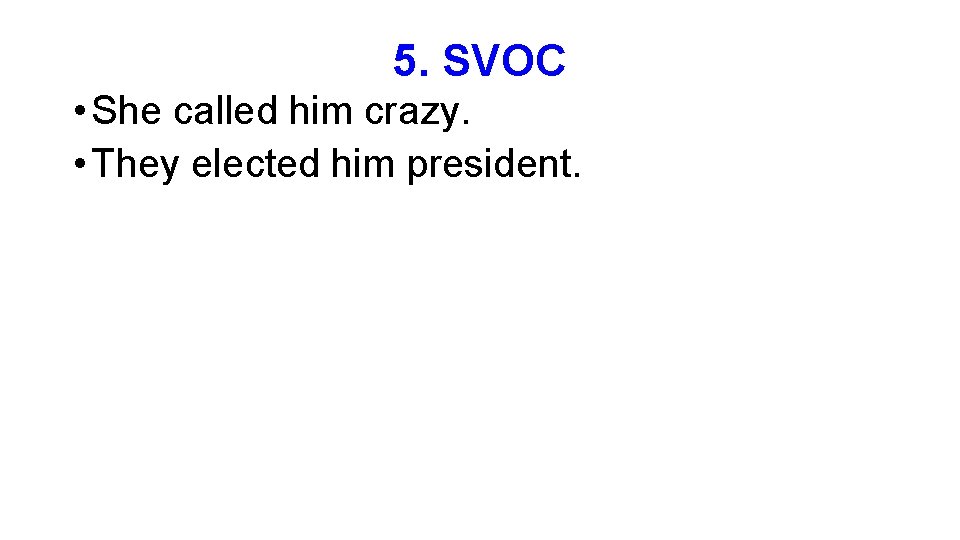
5. SVOC • She called him crazy. • They elected him president.
Question • Some English and Arabic sentences can two sentence elements only. Explain the difference in this regard.
- Slides: 13