
Sentence Modelling Language Learning and Brain Activity John
Sentence Modelling, Language Learning and Brain Activity John Bald Presentation Copyright © John Bald 2007 johnbald. typepad. com/language

Brain cells and connections (from The Learning Brain, Blakemore and Frith, 2005) As we learn, brain cells form connections with each other that build into chunks and networks. These connections are strengthened with practice.
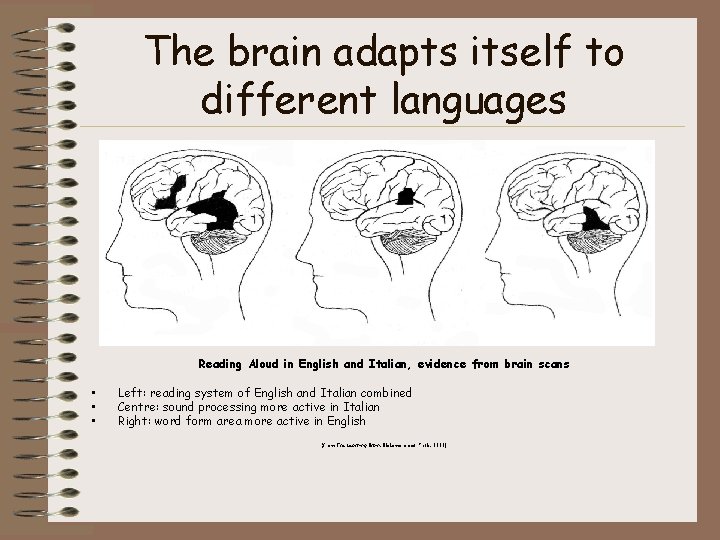
The brain adapts itself to different languages Reading Aloud in English and Italian, evidence from brain scans • • • Left: reading system of English and Italian combined Centre: sound processing more active in Italian Right: word form area more active in English (from The Learning Brain, Blakemore and Frith, 2005)
As we learn a new language… • We add to and adapt the structures formed in our brain as we learned our first language • These structures influence the way we learn the new language, both the parts we find easy, and the errors we make

Sentence Modelling… • Presents new structures clearly and simply • Extends opportunities for study, explanation and questions • Lets children compose written sentences as they do spoken ones, • Eliminates the to-and-fro brain switches involved in copying • Letting us teach written and spoken language together • Allows children to say what they want to say • Lets us present advanced language clearly and flexibly • Raises achievement in reading and writing • Is easy to use
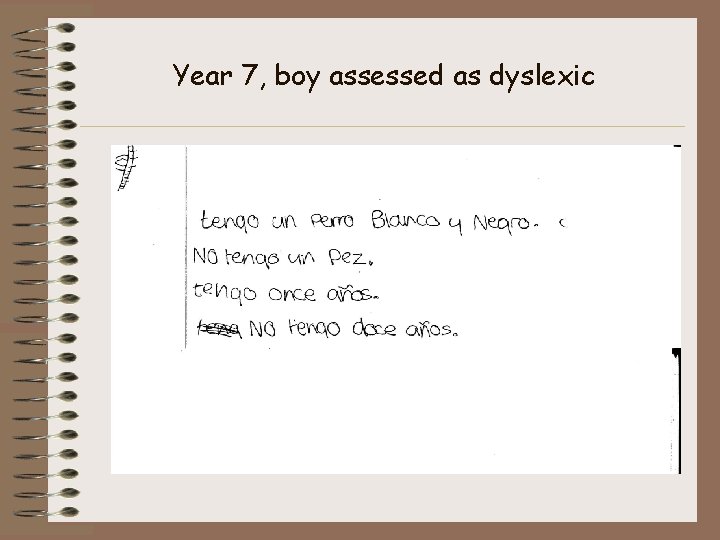
Year 7, boy assessed as dyslexic
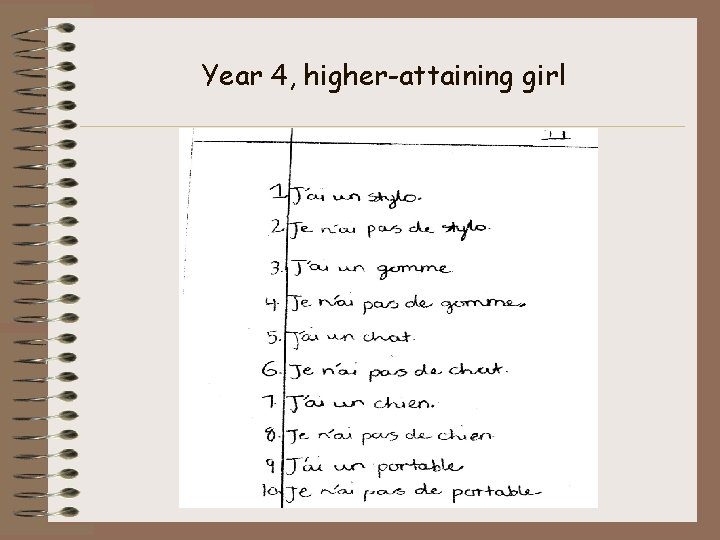
Year 4, higher-attaining girl
- Slides: 7