
Sensory Systems Learning Objectives Nerve cells identify particular
Sensory Systems

Learning Objectives • • Nerve cells identify particular stimuli, depending on their type. Neurons carry signal to brain where it is decoded. The brain uses information about which nerve cells are involved, the frequency of impulses (action potentials), and number of neurons in order to identify the stimulus. What is referred pain? For each sense, specialized receptors sense the stimulus and transmit information to the brain: • Skin – many types of receptors, including for pain, temperature, pressure • Taste and smell – chemical receptors • Hearing – vibrations of hair cells • Vision – rods and cones identify b/w light and colored light respectively, though rods are much more sensitive to low light than are cones.
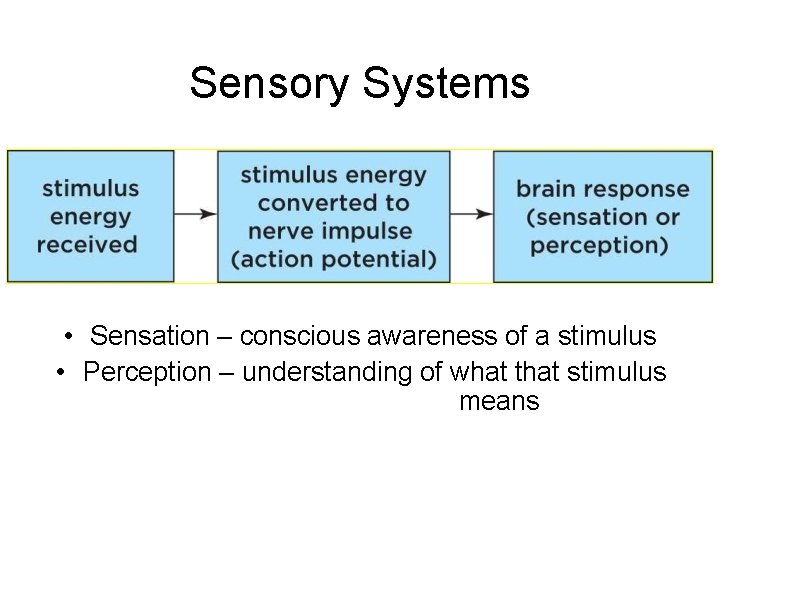
Sensory Systems • Sensation – conscious awareness of a stimulus • Perception – understanding of what that stimulus means
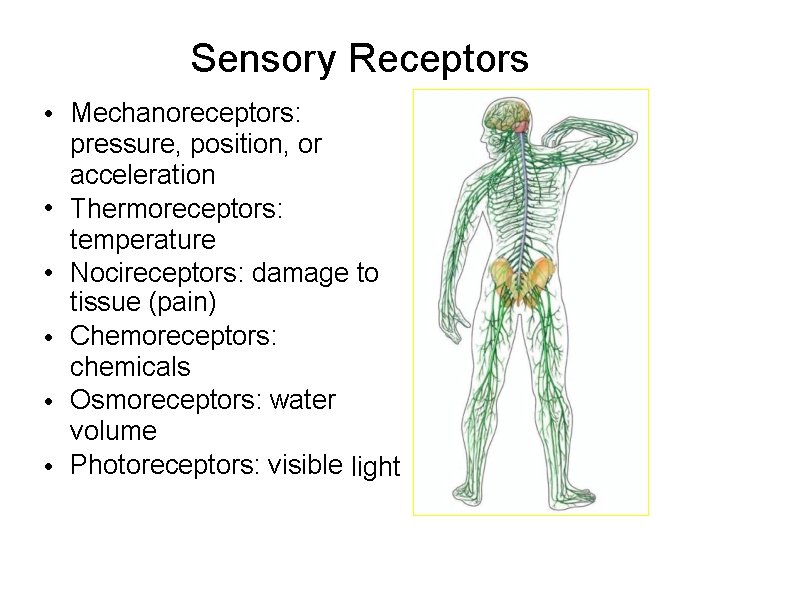
Sensory Receptors • Mechanoreceptors: pressure, position, or acceleration • Thermoreceptors: temperature • Nocireceptors: damage to tissue (pain) • Chemoreceptors: chemicals • Osmoreceptors: water volume • Photoreceptors: visible light
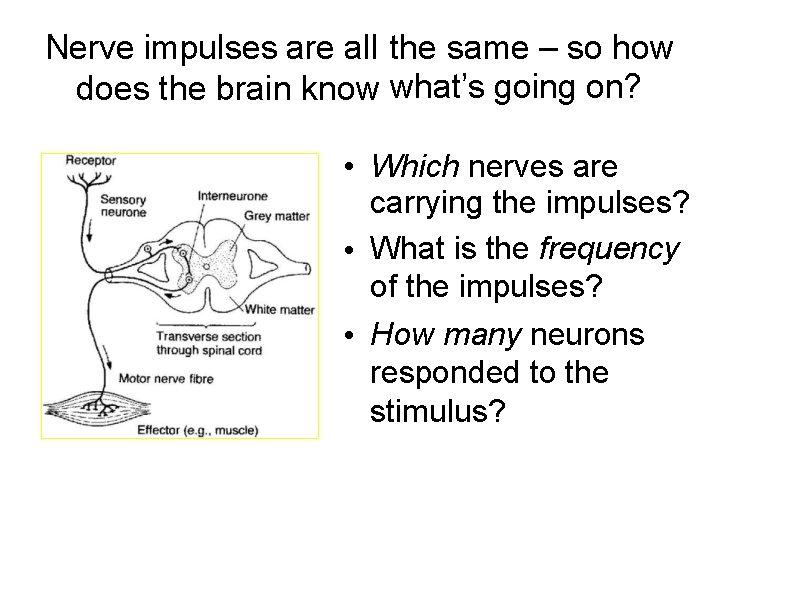
Nerve impulses are all the same – so how does the brain know what’s going on? • Which nerves are carrying the impulses? • What is the frequency of the impulses? • How many neurons responded to the stimulus?
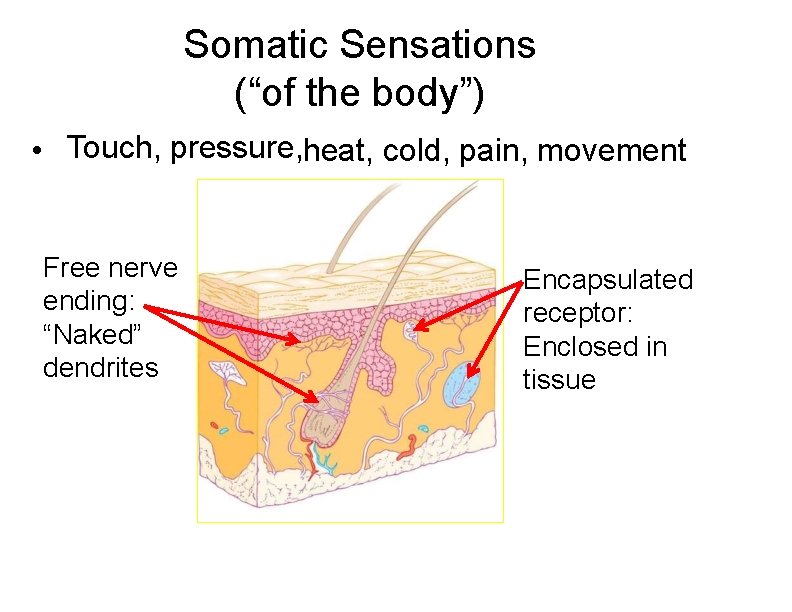
Somatic Sensations (“of the body”) • Touch, pressure, heat, cold, pain, movement Free nerve ending: “Naked” dendrites Encapsulated receptor: Enclosed in tissue
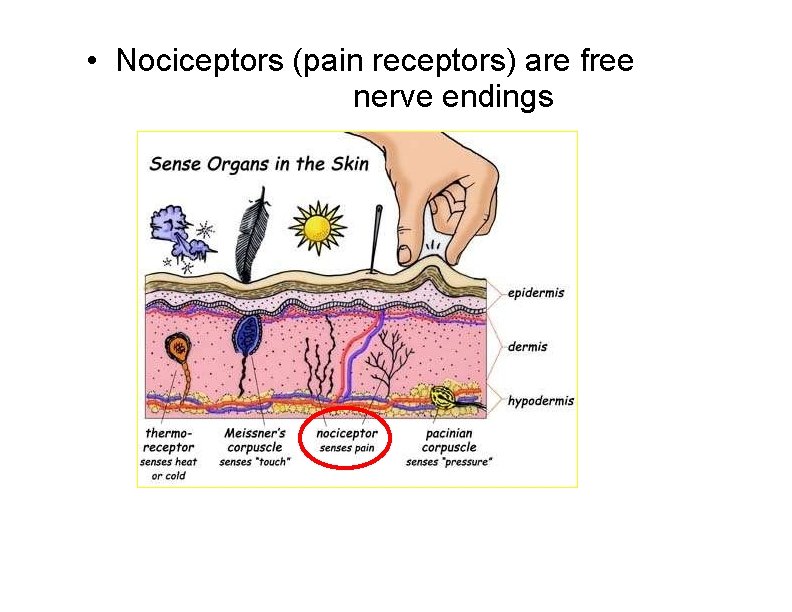
• Nociceptors (pain receptors) are free nerve endings
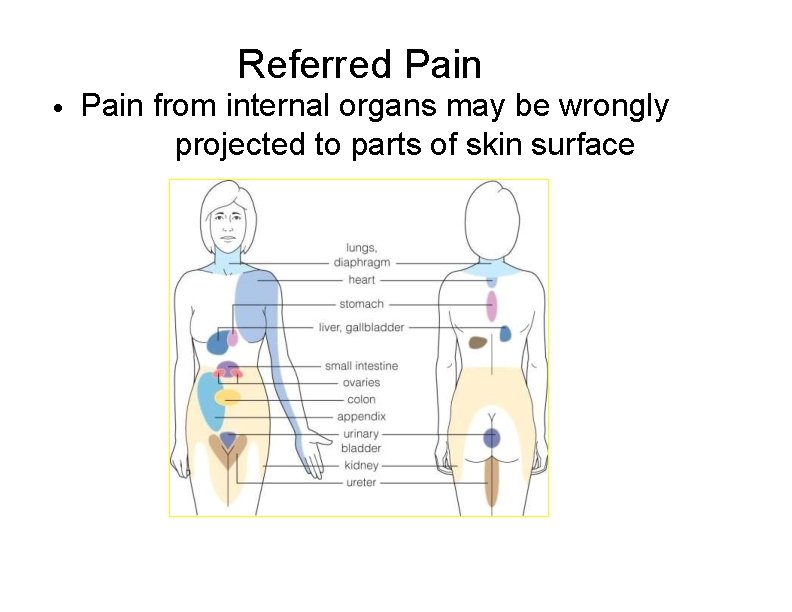
Referred Pain • Pain from internal organs may be wrongly projected to parts of skin surface
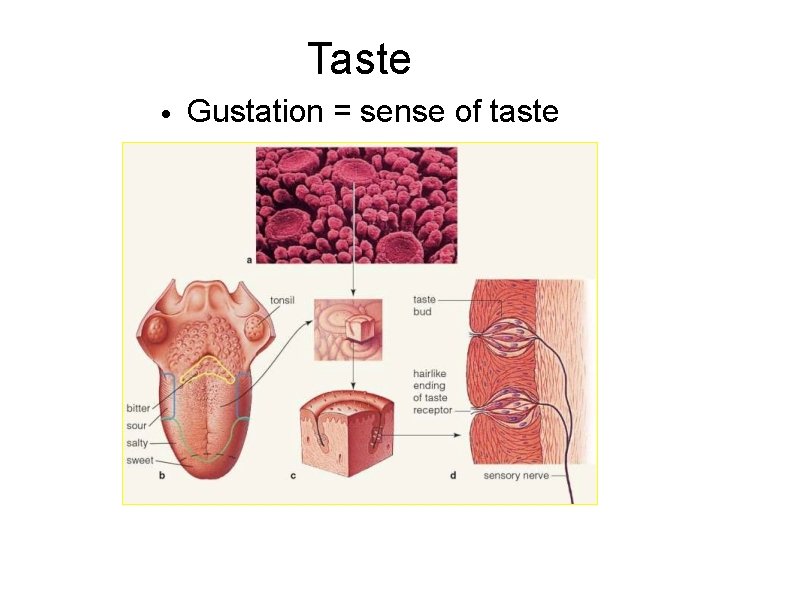
Taste • Gustation = sense of taste
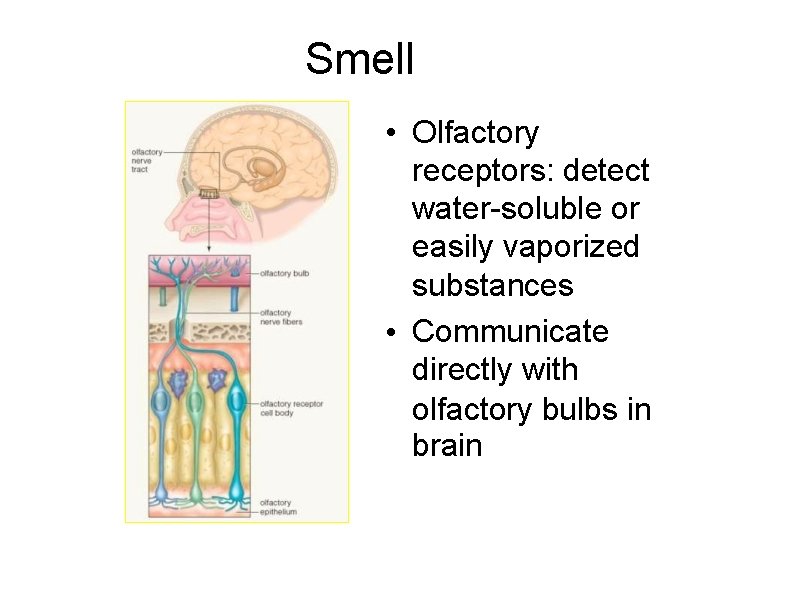
Smell • Olfactory receptors: detect water-soluble or easily vaporized substances • Communicate directly with olfactory bulbs in brain
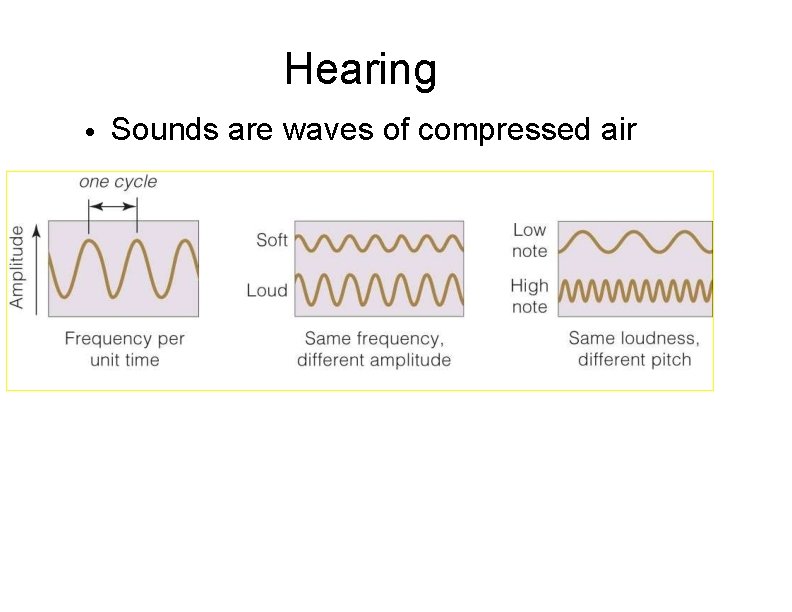
Hearing • Sounds are waves of compressed air
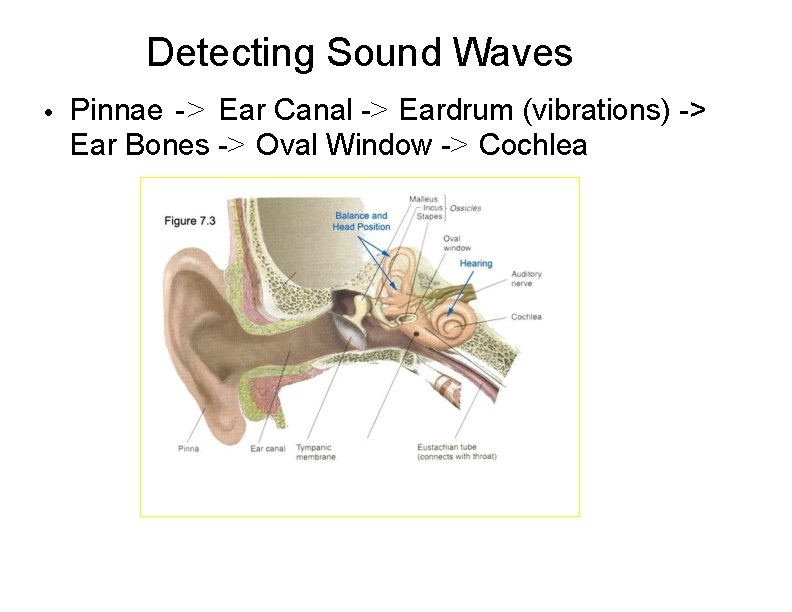
Detecting Sound Waves • Pinnae - > Ear Canal -> Eardrum (vibrations) -> Ear Bones -> Oval Window -> Cochlea
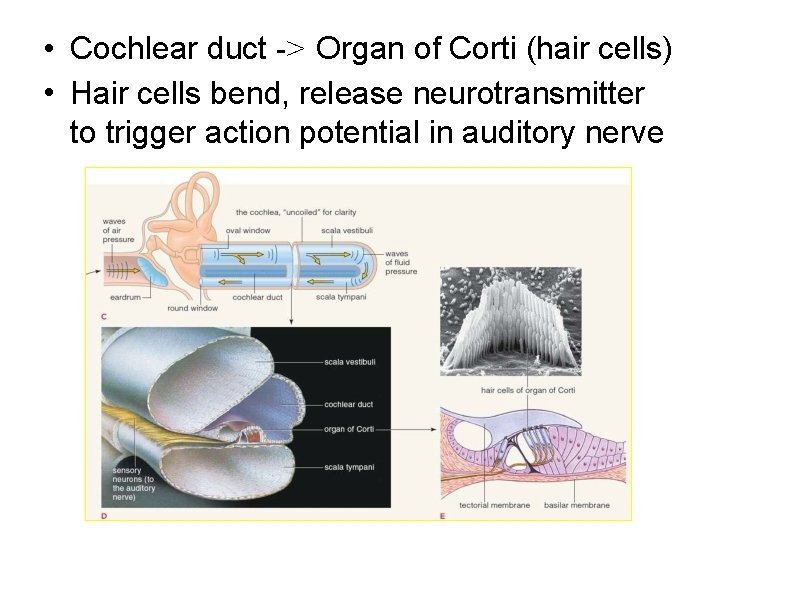
• Cochlear duct -> Organ of Corti (hair cells) • Hair cells bend, release neurotransmitter to trigger action potential in auditory nerve
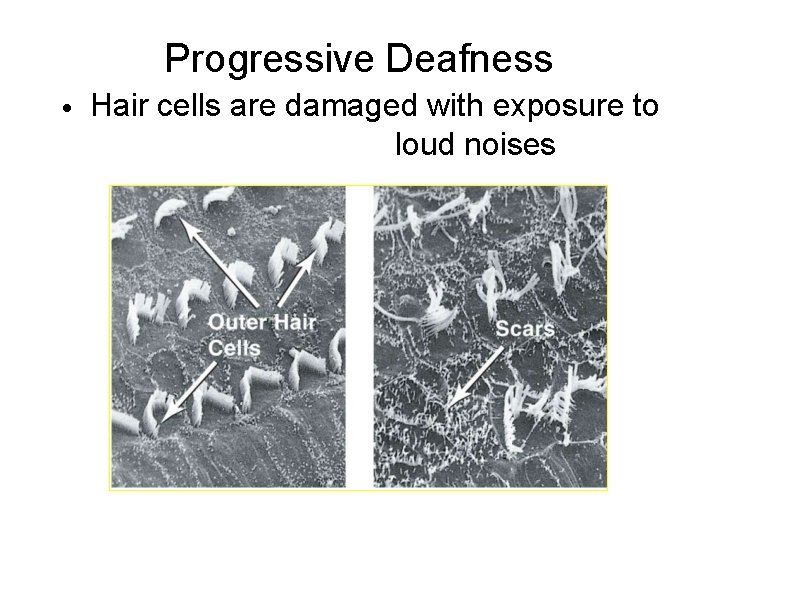
Progressive Deafness • Hair cells are damaged with exposure to loud noises
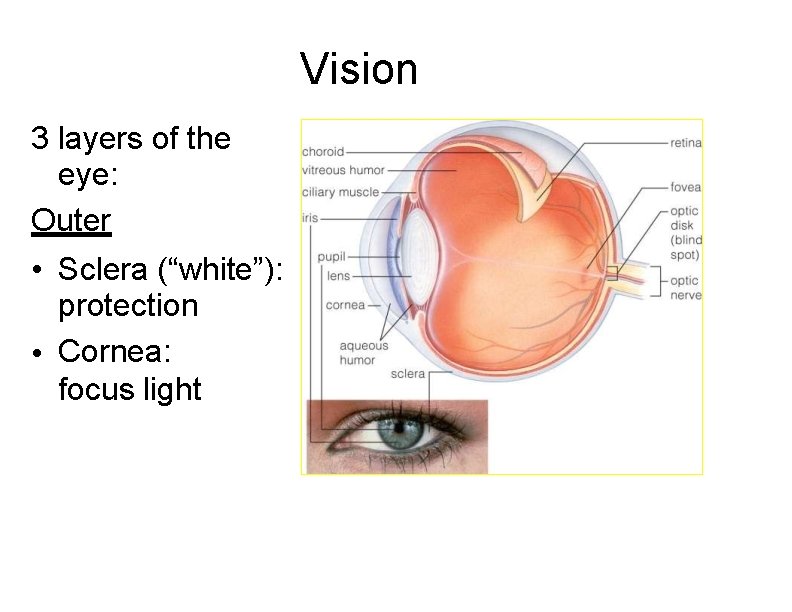
Vision 3 layers of the eye: Outer • Sclera (“white”): protection • Cornea: focus light
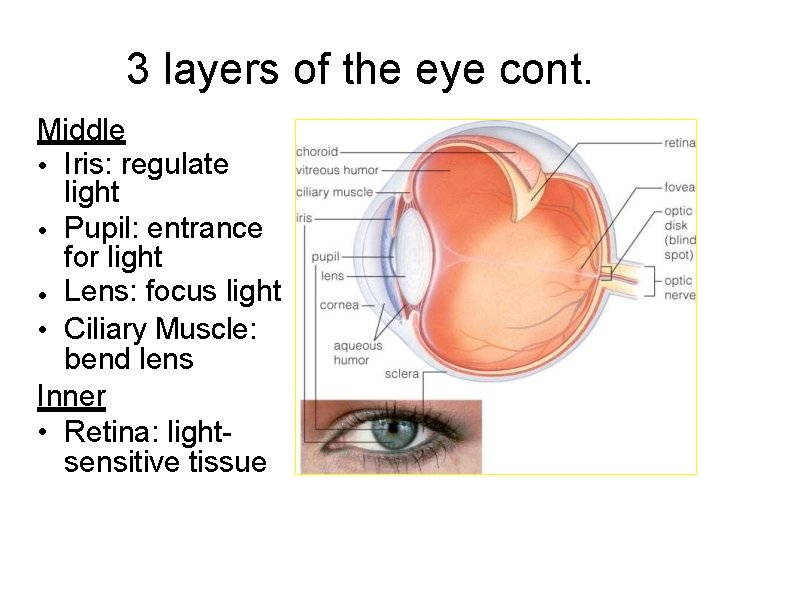
3 layers of the eye cont. Middle • Iris: regulate light • Pupil: entrance for light • Lens: focus light • Ciliary Muscle: bend lens Inner • Retina: lightsensitive tissue
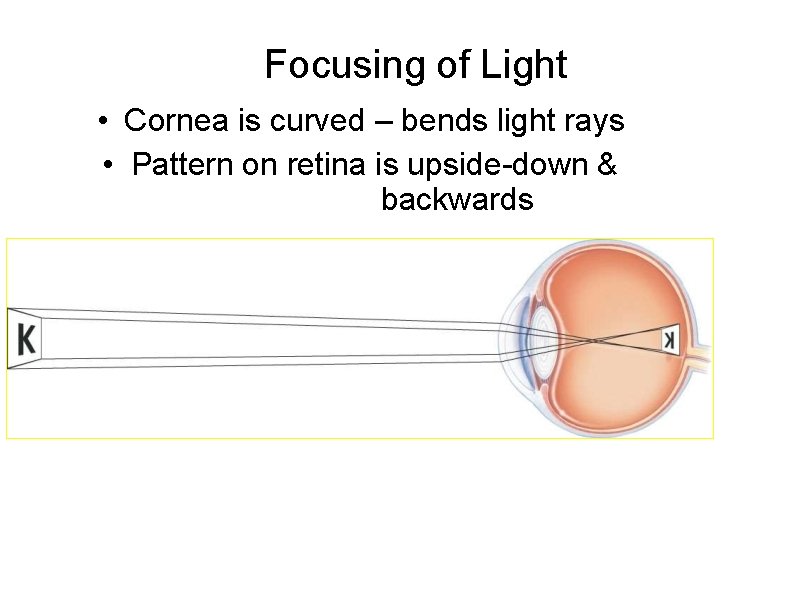
Focusing of Light • Cornea is curved – bends light rays • Pattern on retina is upside-down & backwards
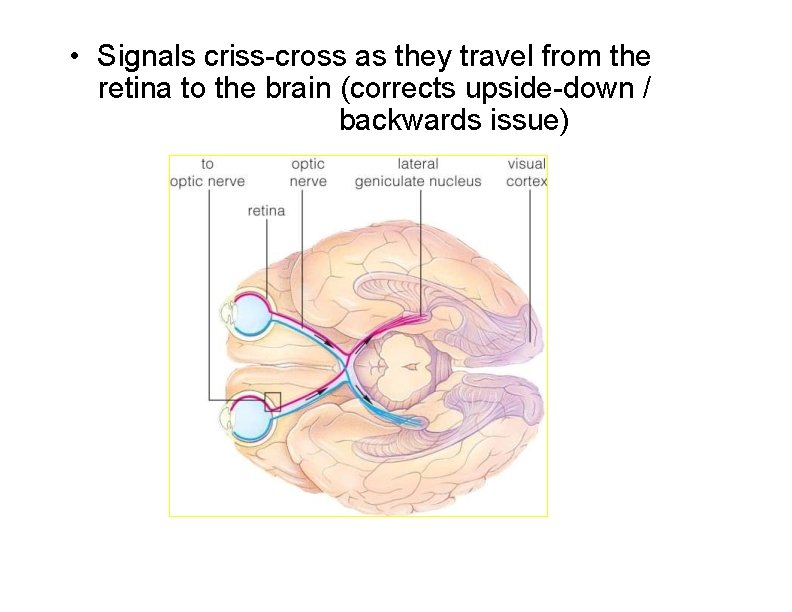
• Signals criss-cross as they travel from the retina to the brain (corrects upside-down / backwards issue)
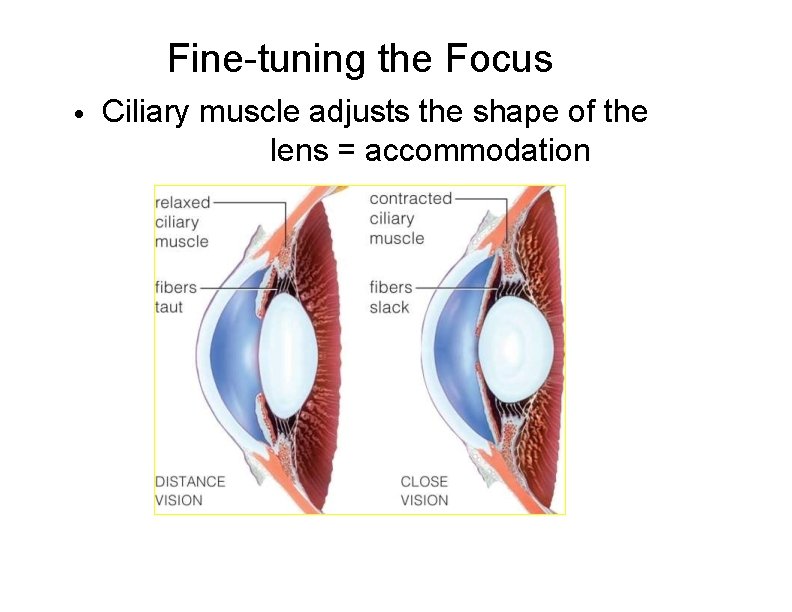
Fine-tuning the Focus • Ciliary muscle adjusts the shape of the lens = accommodation
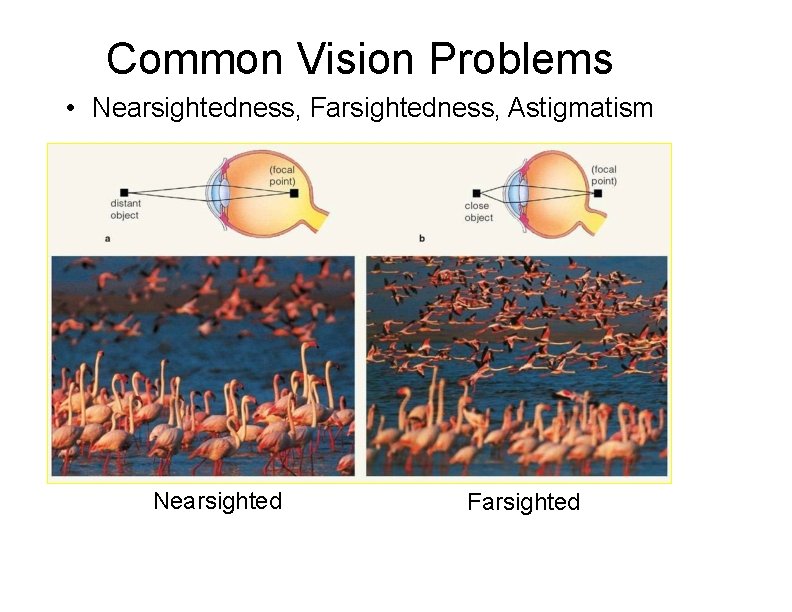
Common Vision Problems • Nearsightedness, Farsightedness, Astigmatism Nearsighted Farsighted
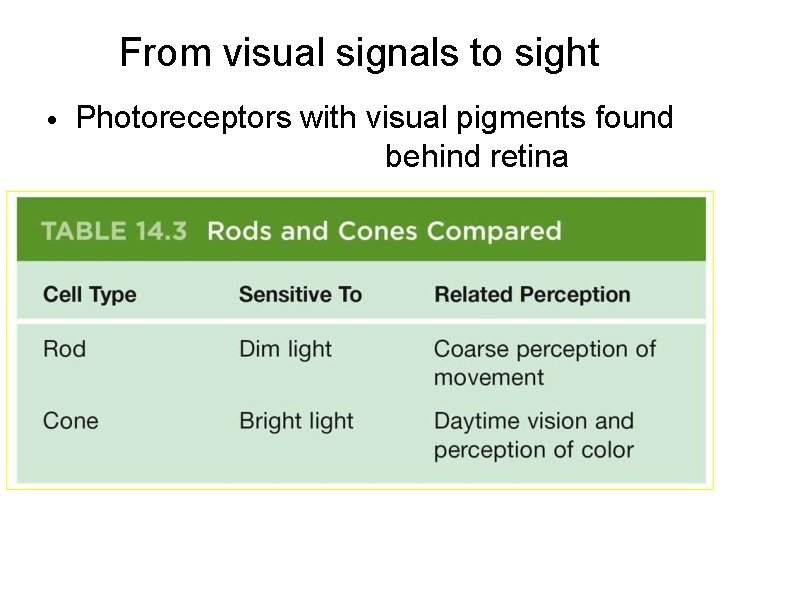
From visual signals to sight • Photoreceptors with visual pigments found behind retina
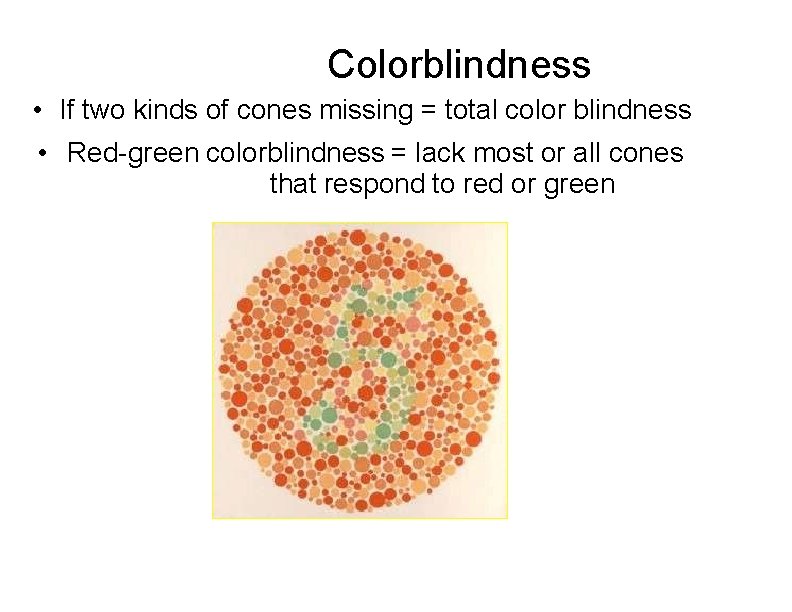
Colorblindness • If two kinds of cones missing = total color blindness • Red-green colorblindness = lack most or all cones that respond to red or green
- Slides: 22