
SENSORY SYSTEM Structure and Function Sensory system consists
- Slides: 20
SENSORY SYSTEM
Structure and Function • Sensory system consists of receptors in specialized cells and organs that perceive changes in the internal and external environment • The stimuli cause nerve impulses that are sent to the brain for interpretation • Environmental stimuli are perceived with the senses of vision, hearing, touch, taste, position, and balance
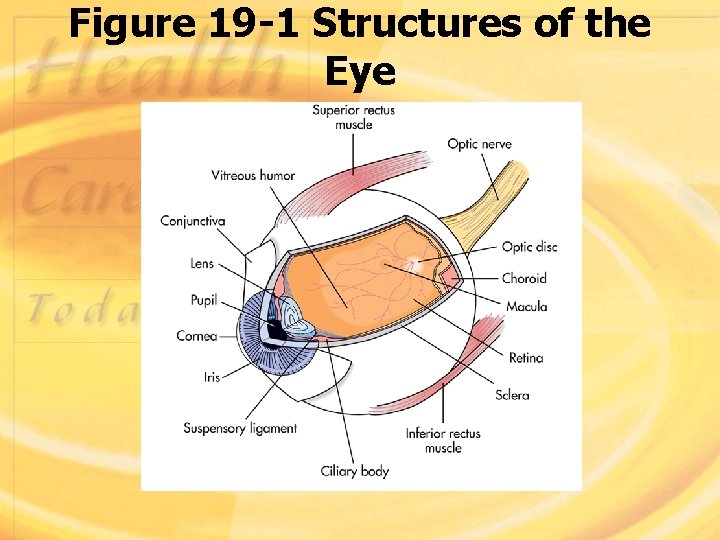
Eye • The most important sensory organ because 90% of the information about the environment reaches the brain from the eyes • Movement of the eye is controlled by the extrinsic muscles • Only one fifth of the eye is actually exposed to the environment
Figure 19 -1 Structures of the Eye
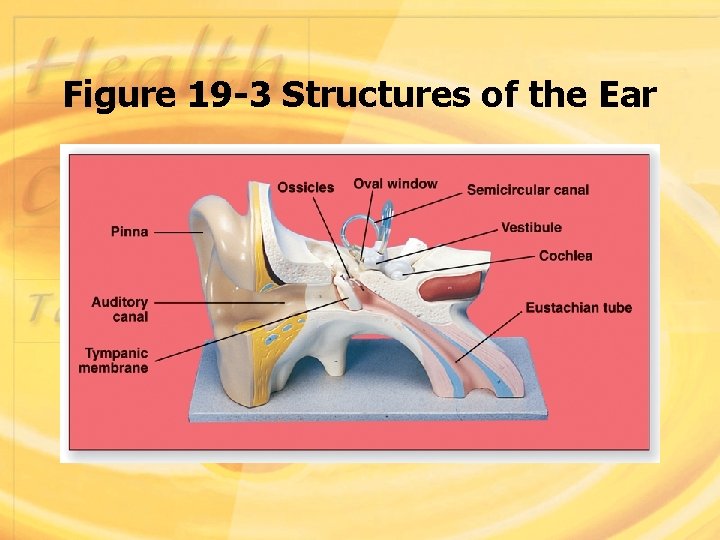
Ear • Auditory or acoustic sense (hearing) is the primary function of the ear • Helps maintain equilibrium • Three parts of the ear – External – Middle – Inner
Figure 19 -3 Structures of the Ear
Tongue • Taste, or the gustatory sense, is perceived by specialized cells located in papillae on the tongue called taste buds • Flavor is identified by smell as well as taste
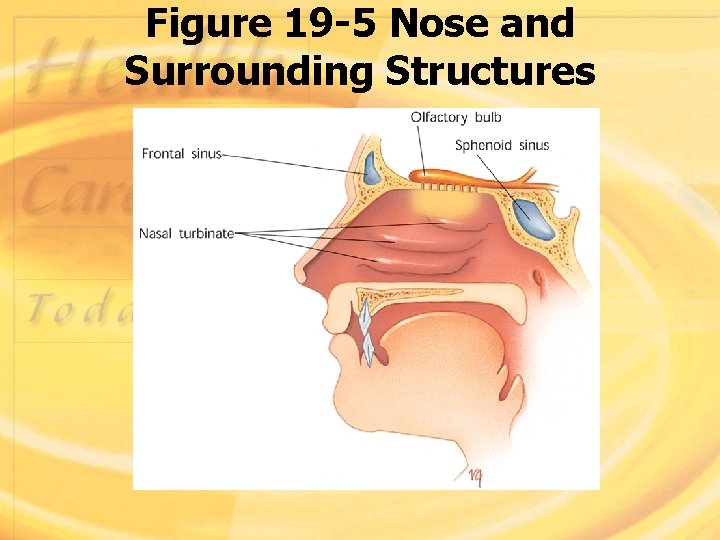
Nose • Olfactory sense originates in olfactory receptor cells in the nose that immediately transmit impulses to the brain through the olfactory cranial nerves • Nasal cavity is divided into two sections by the septum • Olfactory receptor neurons are stimulated by chemicals (gases) in the air • Smells can reduce stress, affect blood pressure, recall memories, and aid in the sense of taste
Figure 19 -5 Nose and Surrounding Structures
Skin • Senses of the skin perceive touch, pressure, temperature, and pain through five specialized cells located in the skin – – – Meissner's corpuscles Pacinian corpuscles End-bulbs of Krause Corpuscles of Ruffini Nociceptors
Assessment Techniques • Sight – – Ophthalmoscope Visual acuity Tonometer Color blindness chart • Hearing – – Otoscope Impedance testing Rinne’s test Weber's test
Disorders of the Sensory System • Achromatism – Called color blindness, is a common inherited defect • Amblyopia – Also called “lazy eye, ” is poor vision in one eye often resulting from better vision in the other eye during infancy or early childhood • Anacusis – Hearing loss resulting from damage to neural tissues
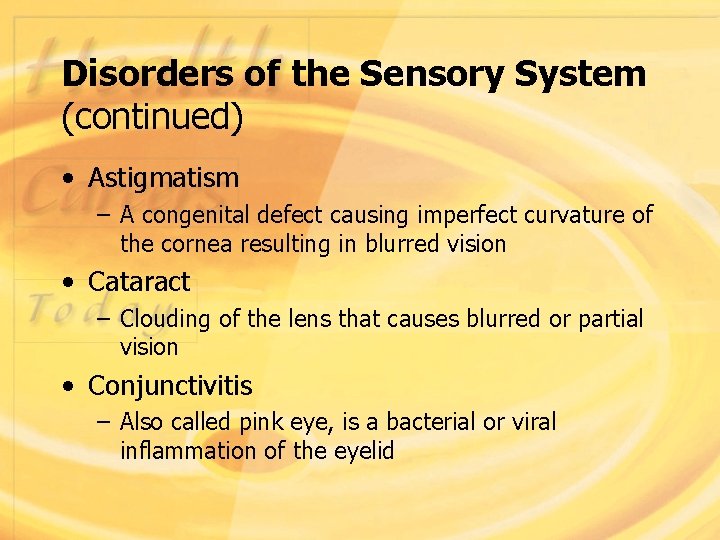
Disorders of the Sensory System (continued) • Astigmatism – A congenital defect causing imperfect curvature of the cornea resulting in blurred vision • Cataract – Clouding of the lens that causes blurred or partial vision • Conjunctivitis – Also called pink eye, is a bacterial or viral inflammation of the eyelid
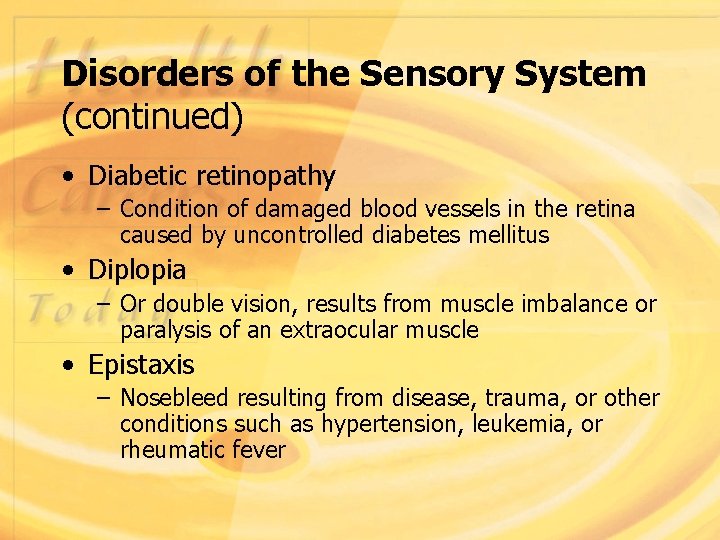
Disorders of the Sensory System (continued) • Diabetic retinopathy – Condition of damaged blood vessels in the retina caused by uncontrolled diabetes mellitus • Diplopia – Or double vision, results from muscle imbalance or paralysis of an extraocular muscle • Epistaxis – Nosebleed resulting from disease, trauma, or other conditions such as hypertension, leukemia, or rheumatic fever
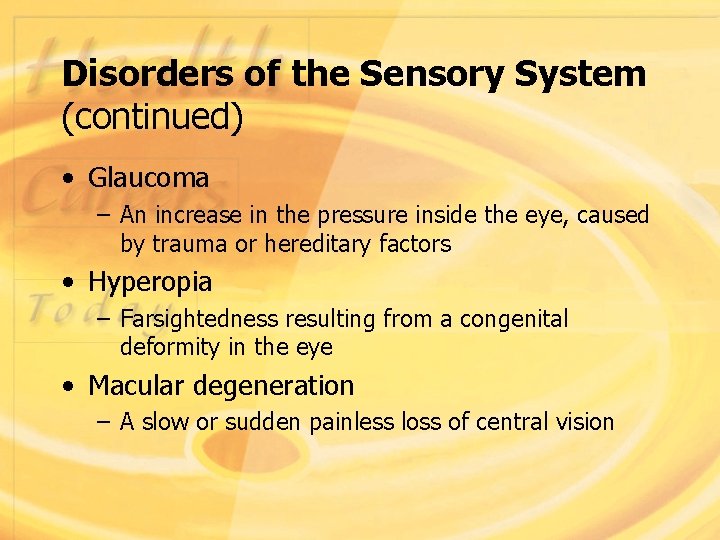
Disorders of the Sensory System (continued) • Glaucoma – An increase in the pressure inside the eye, caused by trauma or hereditary factors • Hyperopia – Farsightedness resulting from a congenital deformity in the eye • Macular degeneration – A slow or sudden painless loss of central vision
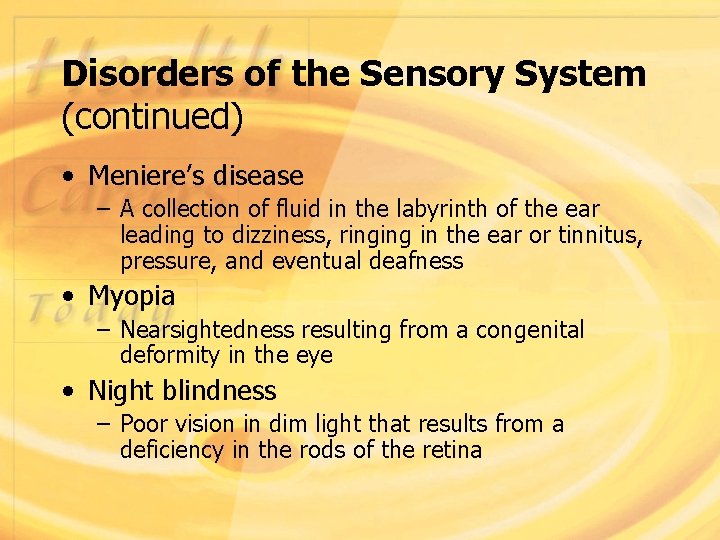
Disorders of the Sensory System (continued) • Meniere’s disease – A collection of fluid in the labyrinth of the ear leading to dizziness, ringing in the ear or tinnitus, pressure, and eventual deafness • Myopia – Nearsightedness resulting from a congenital deformity in the eye • Night blindness – Poor vision in dim light that results from a deficiency in the rods of the retina
Disorders of the Sensory System (continued) • Otitis media – A middle ear bacterial or viral infection common in young children • Presbyopia – A type of farsightedness related to aging • Retinal detachment – Due to injury or uncontrolled diabetes mellitus
Disorders of the Sensory System (continued) • Rhinitis – Inflammation of the lining of the nose caused by allergic reaction, viral infection, sinusitis, or chemical irritants • Ruptured eardrum – Results from infection, an explosion, a blow to the head, or a sharp object inserted into the ear • Sinusitis – A chronic or acute inflammation of the cranium
Disorders of the Sensory System (continued) • Strabismus – A condition in which both eyes do not focus on the same point or direction • Stye – Bacterial infection of the sebaceous glands of the eyelid
Issues and Innovations • Visual correction by surgery – Radial keratotomy – Epikeratophakia – Photorefractive keratectomy (laser surgery) • Noise pollution – Inner ear damage is permanent – Loud music and phones can cause hearing loss