
SENSORY SYSTEM RECEPTORS SENSORY PATHWAYS LECTURE 3 DR






- Slides: 49
SENSORY SYSTEM RECEPTORS & SENSORY PATHWAYS LECTURE 3 DR. ZAHOOR ALI SHAIKH 1
Sensory system or Input system � What type of sensation do you know? � Touch � Fine � Crude � Pressure � Position � Vibration � Two point discrimination � Pain � Temperature � Cold � Warm � Stereognosis 2
How we feel the sensation? �Sensory receptor �Sensory pathway �Sensory cortex 3
Cont…. COMPONENTS �Receptors �Peripheral nerves �Spinal cord �Tracts �Brain stem �Thalamus �Thalamocortical projection �Somatosensory cortex 4
Sensory Receptors �These are transducers that convert various forms of energy into action potentials. �The particular form of energy to which a receptor is most sensitive is called as its adequate stimulus. 5
Adequate stimulus Each type of receptor is most sensitive to a specific form of energy, called adequate stimulus, the receptor is almost non-responsive to the normal intensities of other forms of energy. e. g. rods & cones are stimulated by light not heat. Touch receptors are stimulated by touch. 6
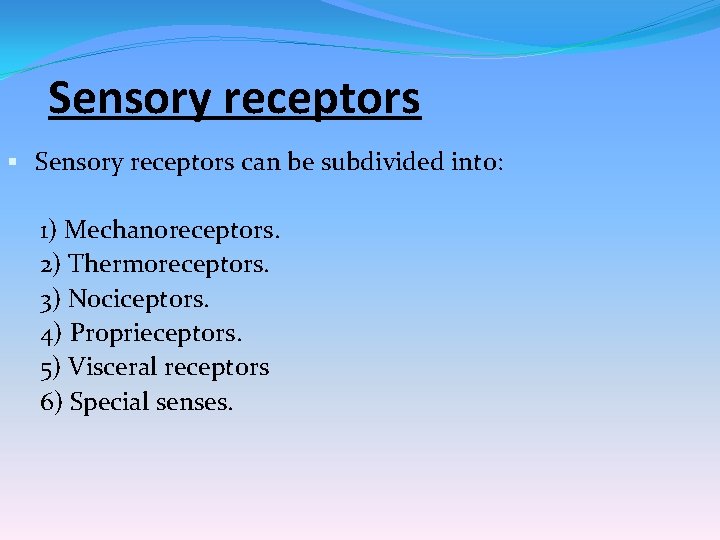
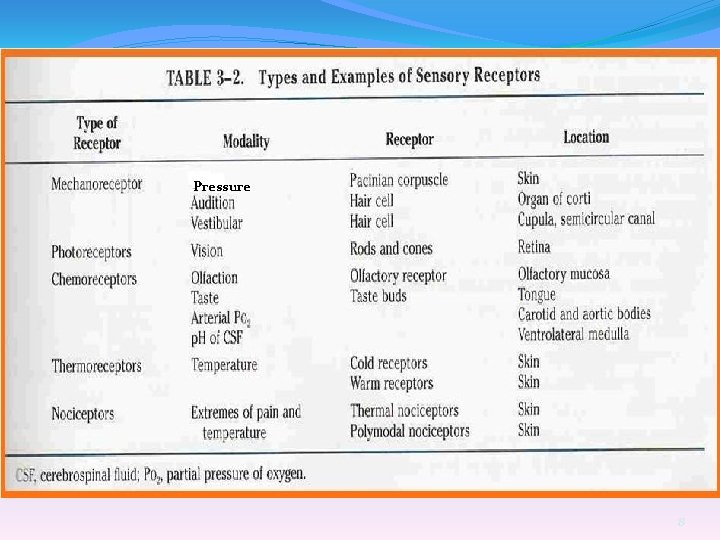
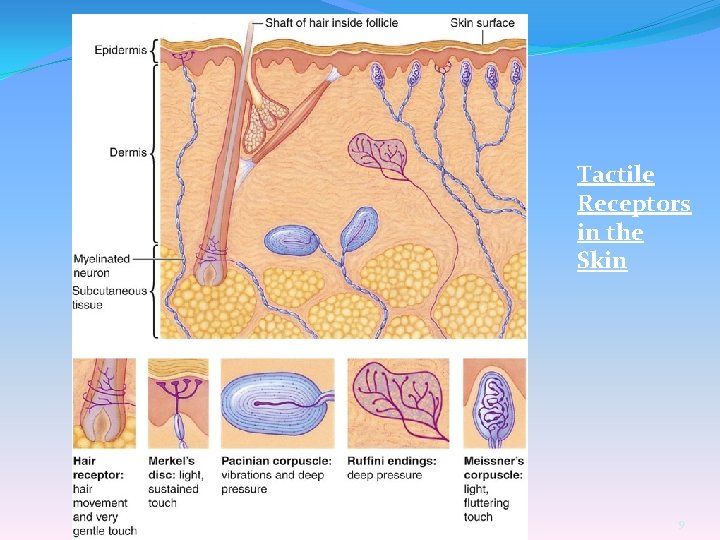
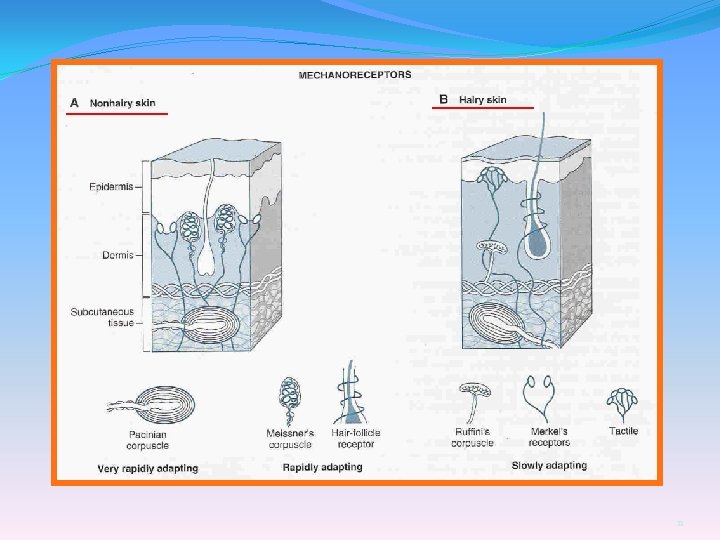
Sensory receptors § Sensory receptors can be subdivided into: 1) Mechanoreceptors. 2) Thermoreceptors. 3) Nociceptors. 4) Proprieceptors. 5) Visceral receptors 6) Special senses.
Pressure 8
Tactile Receptors in the Skin 9
Skin Receptors 10
11
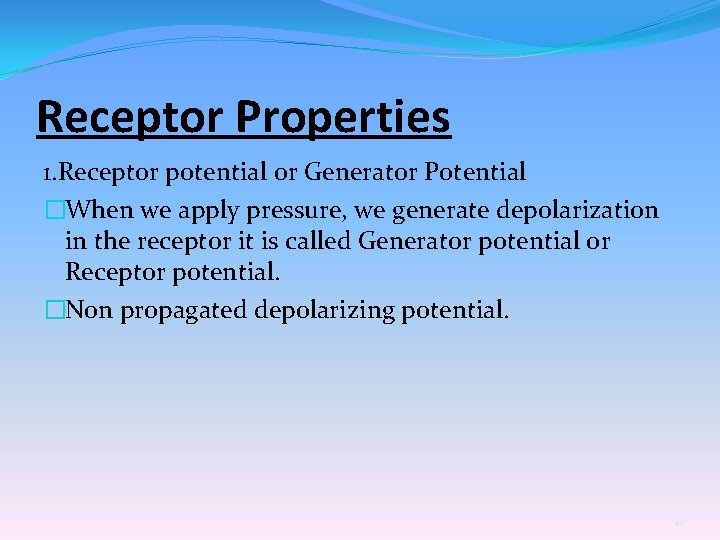
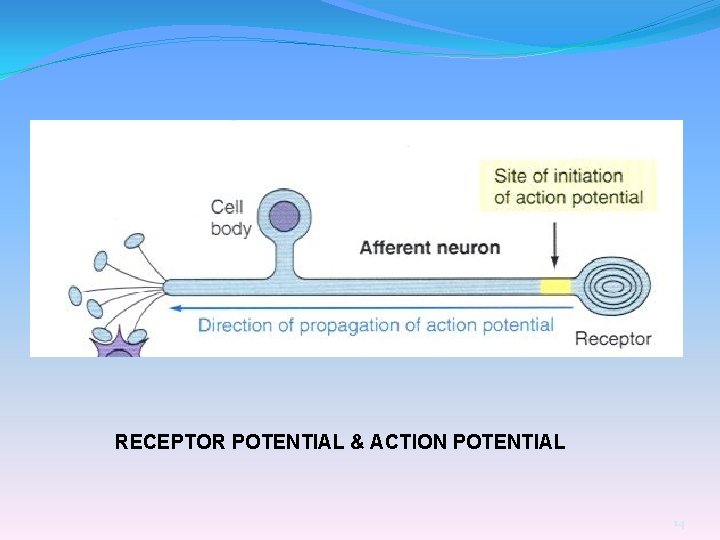
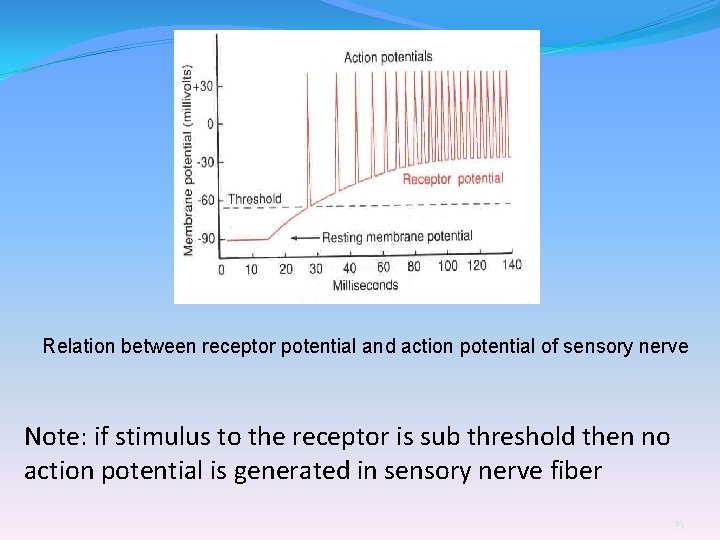
Receptor Properties 1. Receptor potential or Generator Potential �When we apply pressure, we generate depolarization in the receptor it is called Generator potential or Receptor potential. �Non propagated depolarizing potential. 12
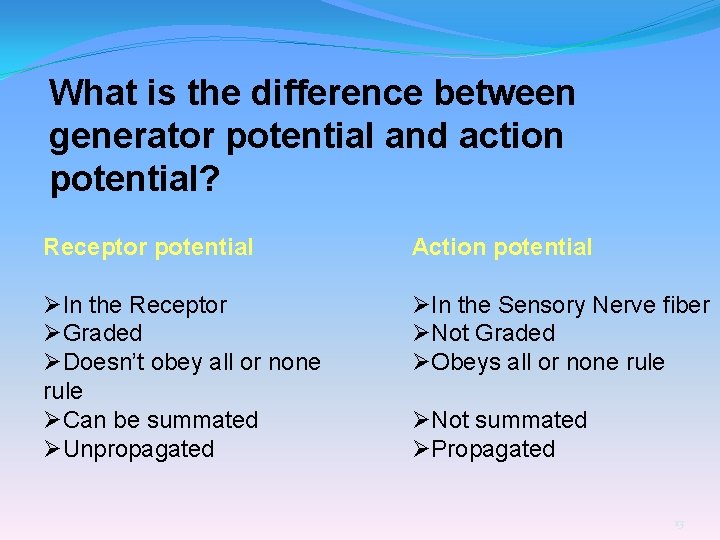
What is the difference between generator potential and action potential? Receptor potential Action potential ØIn the Receptor ØGraded ØDoesn’t obey all or none rule ØCan be summated ØUnpropagated ØIn the Sensory Nerve fiber ØNot Graded ØObeys all or none rule ØNot summated ØPropagated 13
RECEPTOR POTENTIAL & ACTION POTENTIAL 14
Relation between receptor potential and action potential of sensory nerve Note: if stimulus to the receptor is sub threshold then no action potential is generated in sensory nerve fiber 15
Sensory Transduction 16
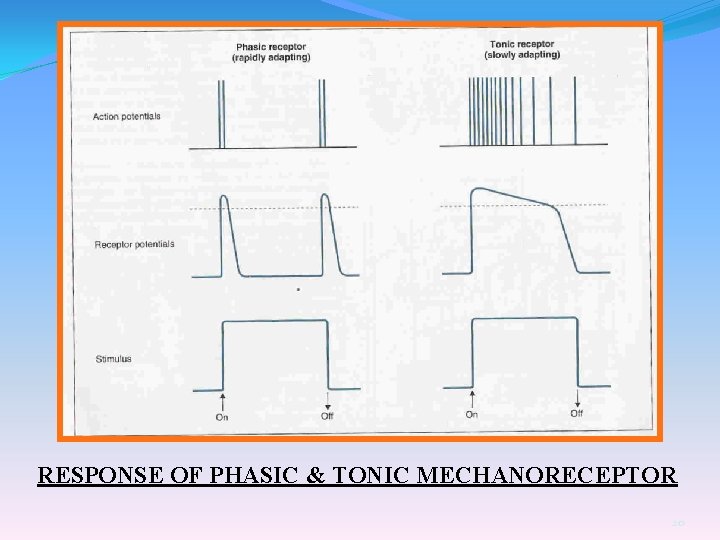
2. Adaptation or Desensitization �When stimulus of constant strength is applied to a receptor, some receptors can diminish the extent of their depolarization inspite of sustained stimulus. This is called adaptation. Degree of adaptation varies in different receptors. 17
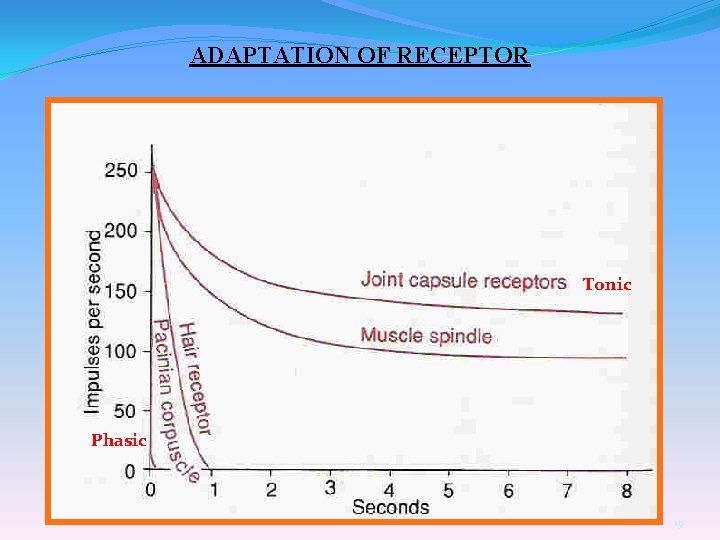
Classification of receptors �Rapidly adapting or phasic receptors e. g. pacinian corpuscles, Meissners corpusle. Because of that we are not aware of sitting on the chair, wearing watch, wearing clothes. � Slowly or non adapting or tonic receptors e. g. Nociceptors, muscle spindles. 18
ADAPTATION OF RECEPTOR Tonic Phasic 19
RESPONSE OF PHASIC & TONIC MECHANORECEPTOR 20
3. Coding of sensory information Why we feel touch, pain, warm sensation when all sensory nerve carry the information to brain as action potential? 21
Coding of sensory information �Due to the Doctrine of specific nerve energies. We have; �Specific receptors. �Specific sensory pathways. �Specific part of the brain they activate. 22
Law of projection �If we stimulate sensory pathway along its course to the sensory cortex, the conscious sensation produced is refered to the location of receptors. This principle is called as Law of projection. �If we stimulate sensory cortex area which receives impulses from left hand, patient reports sensation in the left hand, not in the head. 23
Cont…. . Q. In patients whose limb was amputed (cut off) they complained of pain in the absent limb (Phantom limb), Why? Due to law of projection, the ends of nerves cut at the time of amputation when stimulated, sensation evoked are projected to where the receptor used to be present, i. e. in the limb. 24
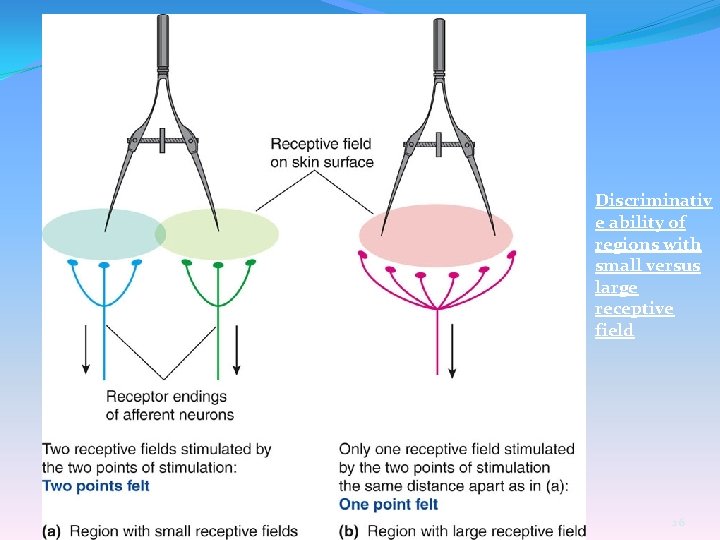
Receptor field • Receptor field of a sensory unit is the area from which a stimulus produces response in that unit. • Smaller the receptive field – More precise the information e. g. Finger tips • Larger the receptive field- less precise the information e. g. arms, legs. 25
Discriminativ e ability of regions with small versus large receptive field 26
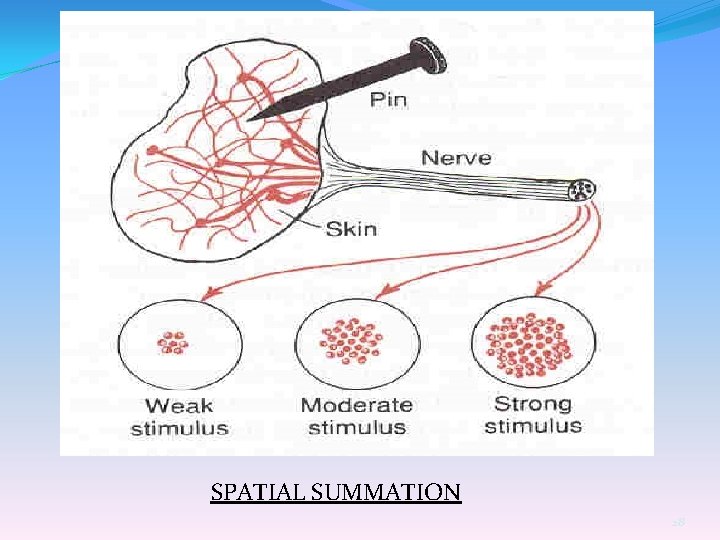
Recruitment of sensory units �Weak stimulus activates receptors with lowest threshold. �Strong stimulus activates those receptors also which have high threshold. 27
SPATIAL SUMMATION 28
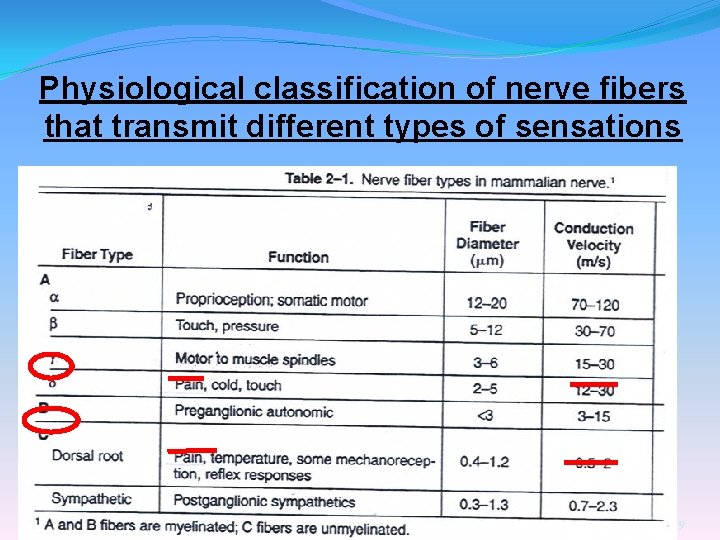
Physiological classification of nerve fibers that transmit different types of sensations 29
Physiological classification of nerve fibers that transmit different types of sensations Number Origin Fiber type Muscle spindle, annulo-spiral ending. Golgi tendon organ. A II Muscle spindle, flower-spray ending, touch, pressure A III Pain and cold receptors; some touch receptors A IV Pain, temperature, and other receptors Dorsal root C Ia Ib A 30
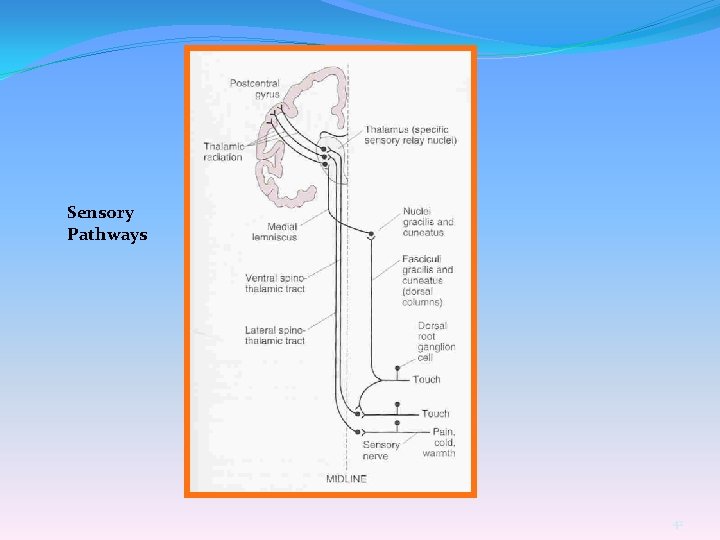
Sensory Pathways Somatosensory pathways are THREE Neuron system 31
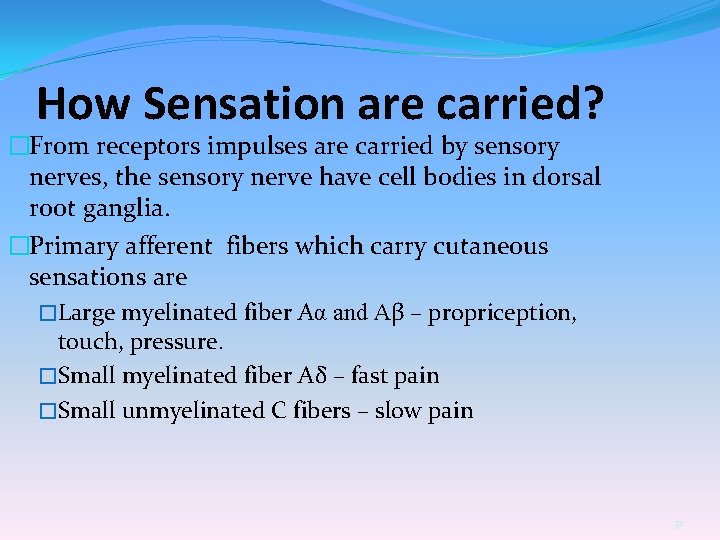
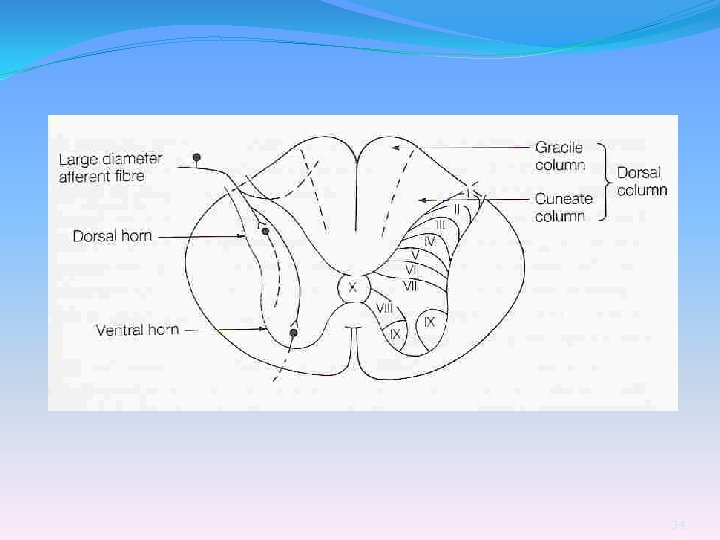
How Sensation are carried? �From receptors impulses are carried by sensory nerves, the sensory nerve have cell bodies in dorsal root ganglia. �Primary afferent fibers which carry cutaneous sensations are �Large myelinated fiber Aα and Aβ – propriception, touch, pressure. �Small myelinated fiber Aδ – fast pain �Small unmyelinated C fibers – slow pain 32
�Sensory fiber go to dorsal horn in the spinal cord. �Dorsal horn represent a gate in which impulses in the sensory nerve fiber are translated into impulses in ascending tracts. �Dorsal horns are divided into laminae I – VII. (I – superficial, VII – deepest). 33
34
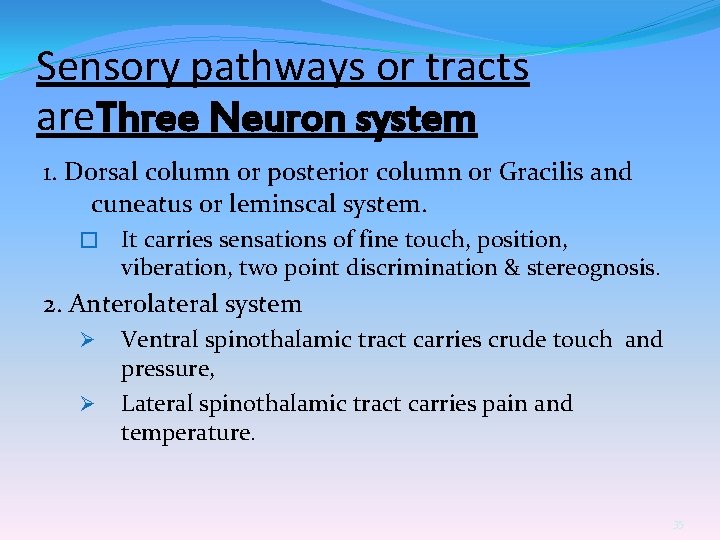
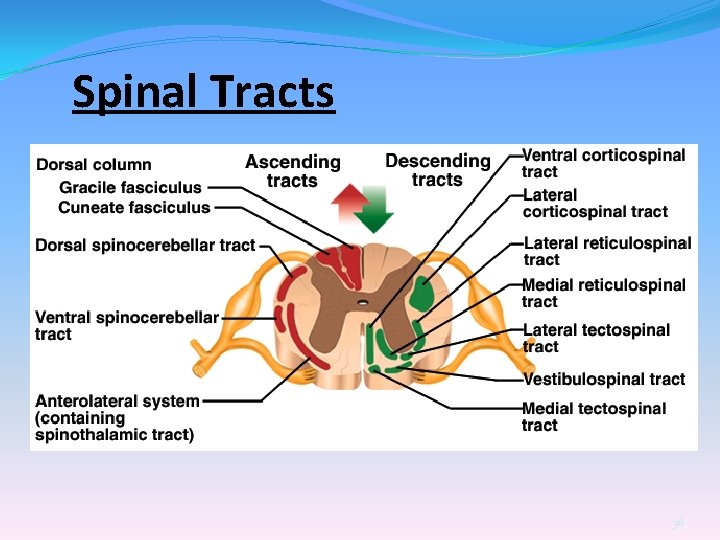
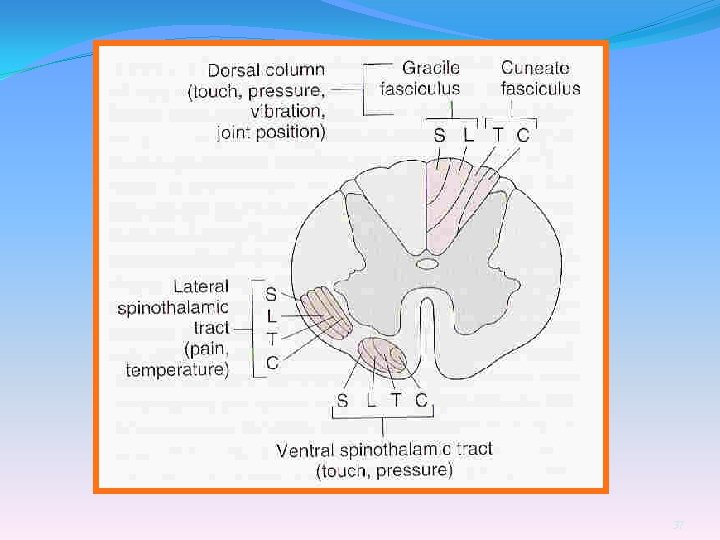
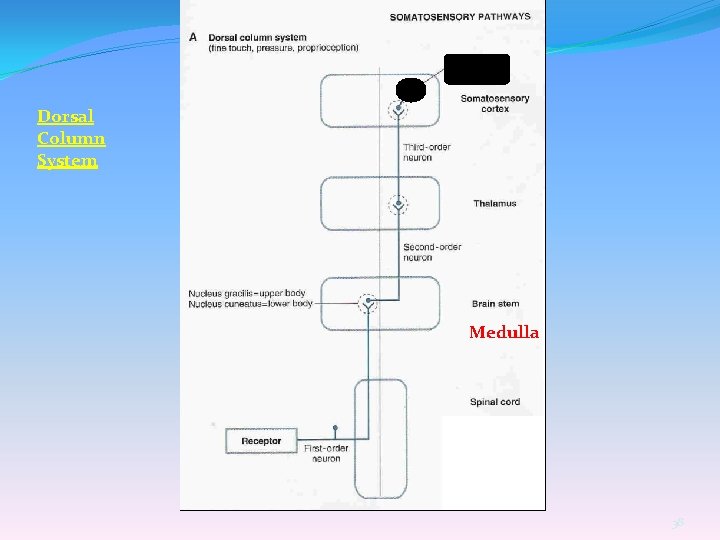
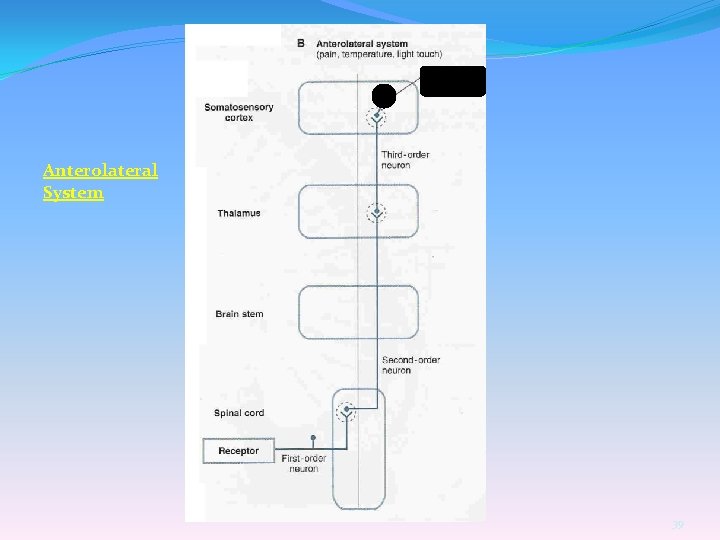
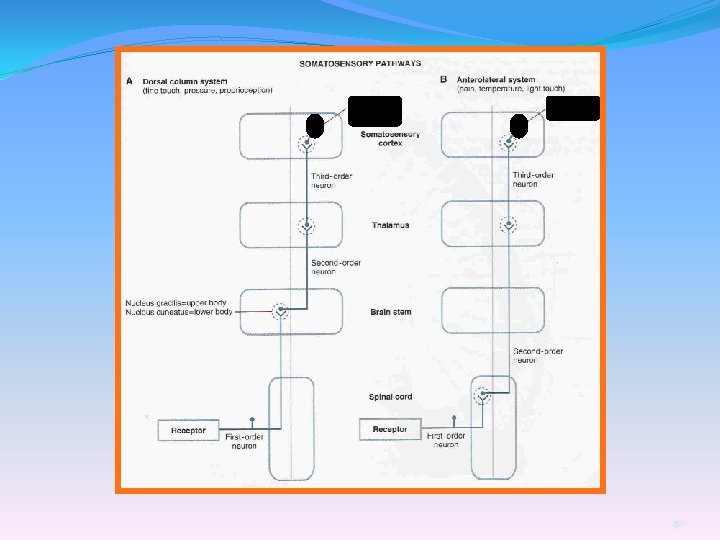
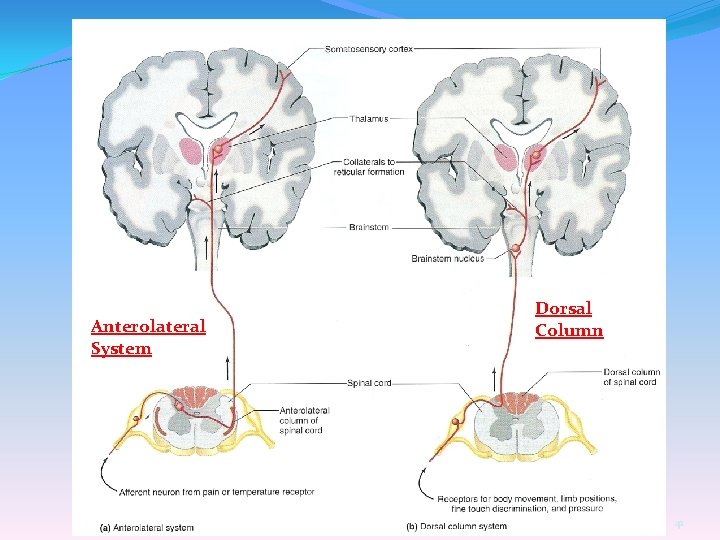
Sensory pathways or tracts are. Three Neuron system 1. Dorsal column or posterior column or Gracilis and cuneatus or leminscal system. � It carries sensations of fine touch, position, viberation, two point discrimination & stereognosis. 2. Anterolateral system Ø Ø Ventral spinothalamic tract carries crude touch and pressure, Lateral spinothalamic tract carries pain and temperature. 35
Spinal Tracts 36
37
Dorsal Column System Medulla 38
Anterolateral System 39
40
Anterolateral System Dorsal Column 41
Sensory Pathways 42
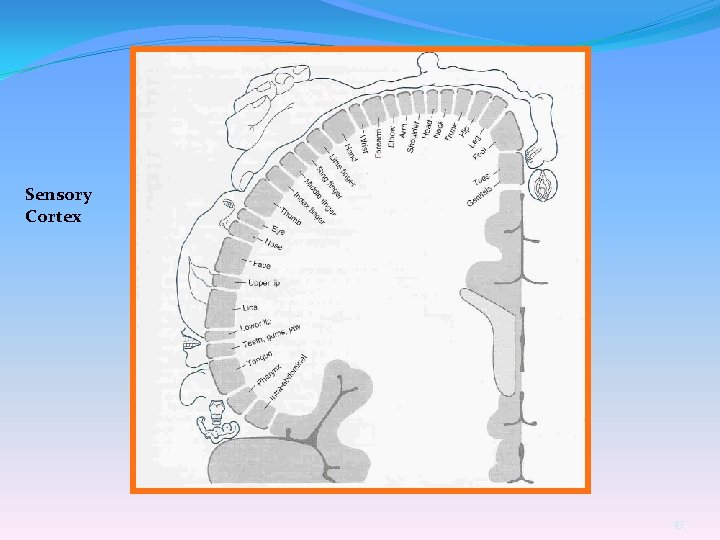
Sensory Cortex 43
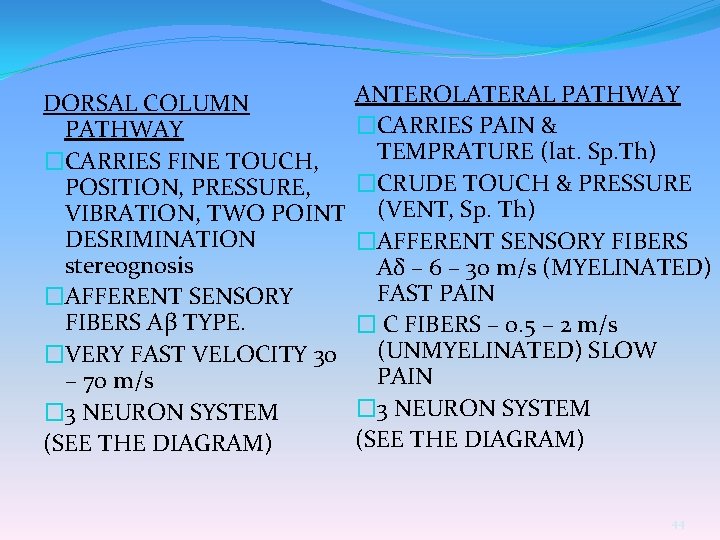
DORSAL COLUMN PATHWAY �CARRIES FINE TOUCH, POSITION, PRESSURE, VIBRATION, TWO POINT DESRIMINATION stereognosis �AFFERENT SENSORY FIBERS Aβ TYPE. �VERY FAST VELOCITY 30 – 70 m/s � 3 NEURON SYSTEM (SEE THE DIAGRAM) ANTEROLATERAL PATHWAY �CARRIES PAIN & TEMPRATURE (lat. Sp. Th) �CRUDE TOUCH & PRESSURE (VENT, Sp. Th) �AFFERENT SENSORY FIBERS Aδ – 6 – 30 m/s (MYELINATED) FAST PAIN � C FIBERS – 0. 5 – 2 m/s (UNMYELINATED) SLOW PAIN � 3 NEURON SYSTEM (SEE THE DIAGRAM) 44
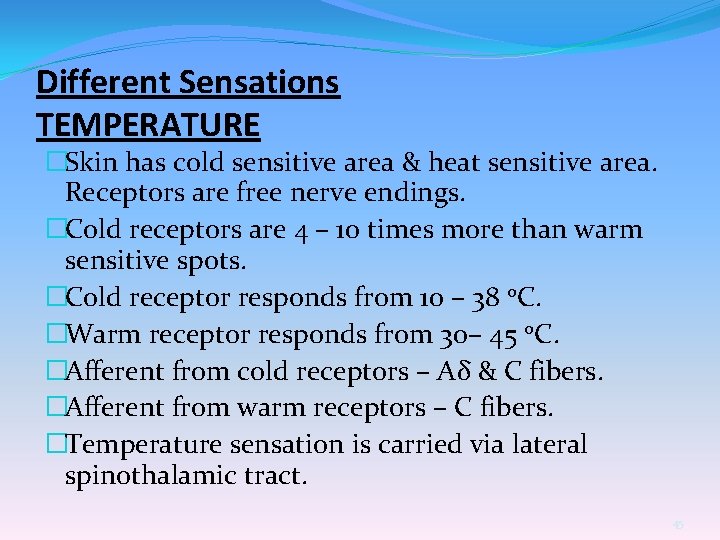
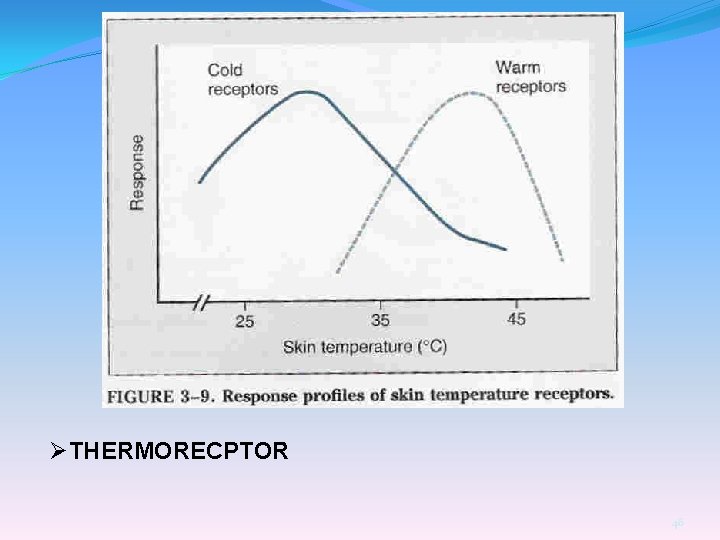
Different Sensations TEMPERATURE �Skin has cold sensitive area & heat sensitive area. Receptors are free nerve endings. �Cold receptors are 4 – 10 times more than warm sensitive spots. �Cold receptor responds from 10 – 38 o. C. �Warm receptor responds from 30– 45 o. C. �Afferent from cold receptors – Aδ & C fibers. �Afferent from warm receptors – C fibers. �Temperature sensation is carried via lateral spinothalamic tract. 45
ØTHERMORECPTOR 46
Different Sensations PAIN �Pain receptors or nociceptors – free nerve endings. �Pain sensation are carried by two types of nerve fibers. �Aδ (myelinated) -2 – 5 μm. in diameter, conduction velocity 12 – 30 m/sec. � For fast pain (sharp localized) �C fibers (unmyelinated) 0. 4 – 1. 2μm. in diameter, conduction velocity 0. 5 – 2 m/sec. �For slow pain (dull, diffuse) �Both Aδ & C fibers terminate in dorsal horn. Pain is carried via lateral spinothalamic tract. 47
PERCEPTION �Perception is conscious interpretation of external world by Brain due to sensory impulses delivered to Brain from sensory receptors. We perceive sounds , colors, smell. �Why we do not perceive X-Ray, light waves, MRI. Because we do not have receptors to respond. 48
Thank you 49