
Sensory System 4 25 2016 Sensory receptors Somatic



- Slides: 58
Sensory System 4 -25 -2016
Sensory receptors • Somatic • Visceral -- Chemoreceptors (taste, smell) -- Thermoreceptors (temperature) -- Photoreceptors (vision) -- Baroreceptors (sound, balance) -- Proprioreceptors (muscle stretch) -- Chemoreceptors (chemicals in blood, osmoreceptors) -- Baroreceptors (blood pressure)
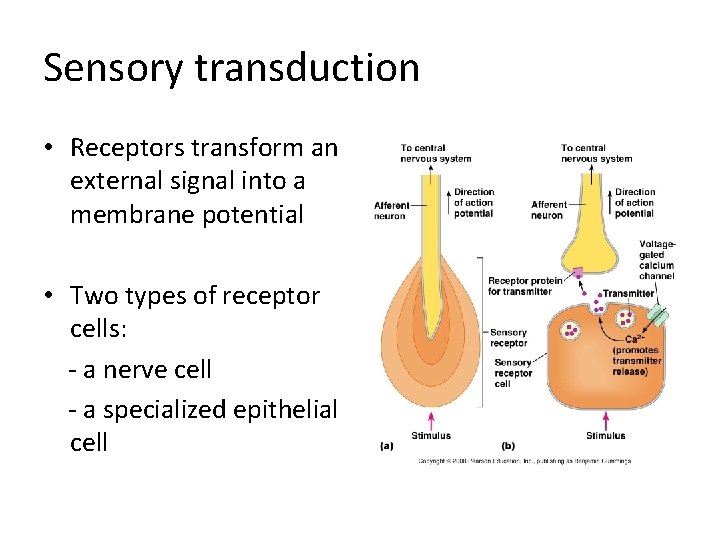
Sensory transduction • Receptors transform an external signal into a membrane potential • Two types of receptor cells: - a nerve cell - a specialized epithelial cell
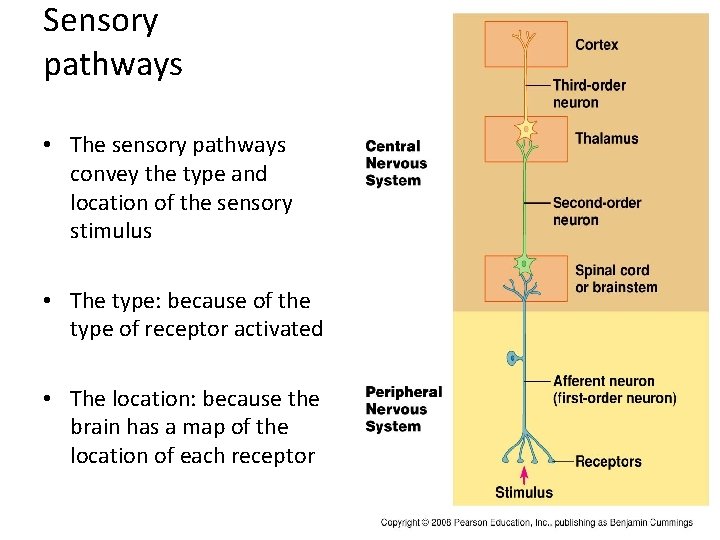
Sensory pathways • The sensory pathways convey the type and location of the sensory stimulus • The type: because of the type of receptor activated • The location: because the brain has a map of the location of each receptor
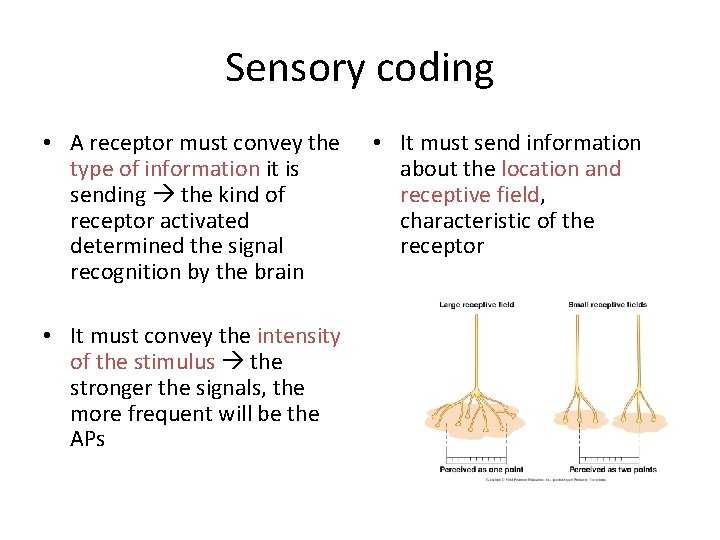
Sensory coding • A receptor must convey the type of information it is sending the kind of receptor activated determined the signal recognition by the brain • It must convey the intensity of the stimulus the stronger the signals, the more frequent will be the APs • It must send information about the location and receptive field, characteristic of the receptor
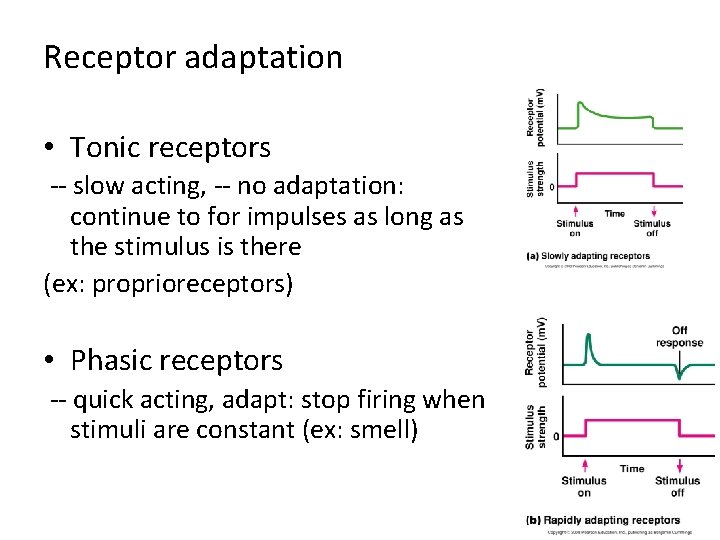
Receptor adaptation • Tonic receptors -- slow acting, -- no adaptation: continue to for impulses as long as the stimulus is there (ex: proprioreceptors) • Phasic receptors -- quick acting, adapt: stop firing when stimuli are constant (ex: smell)
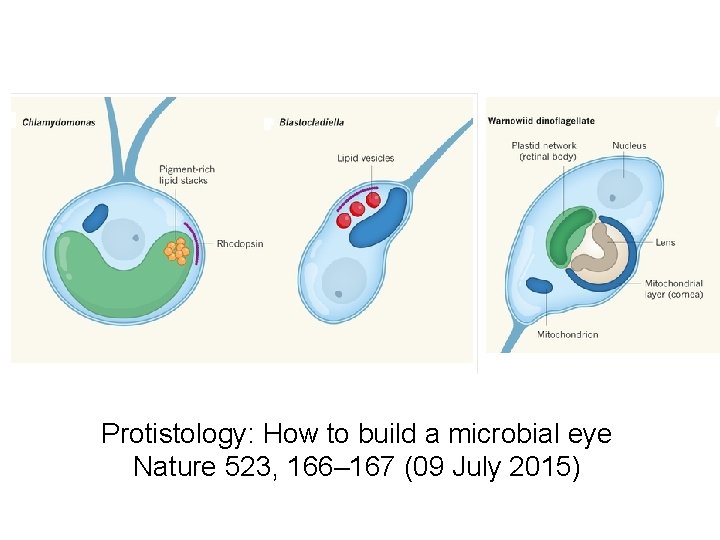
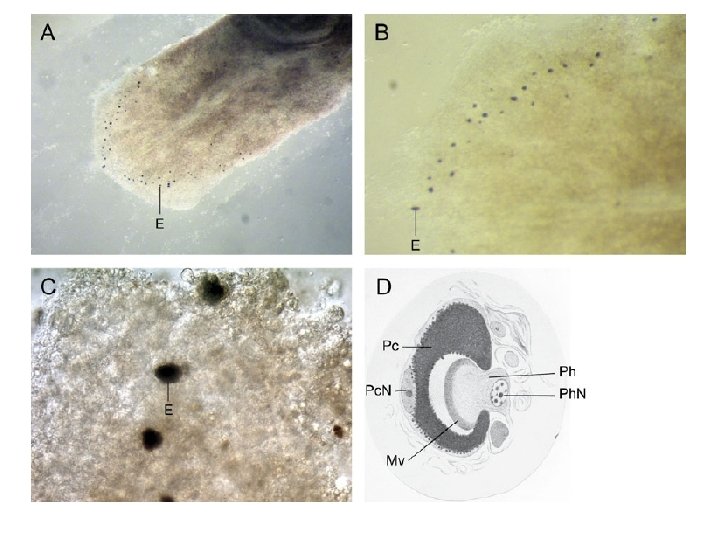
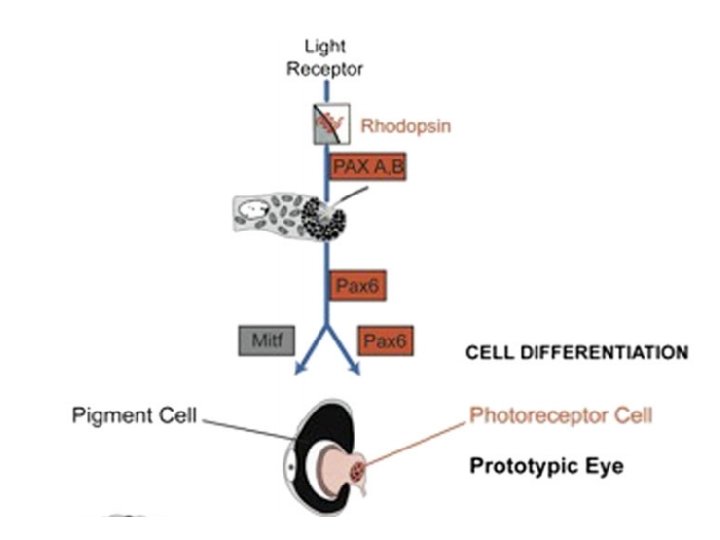
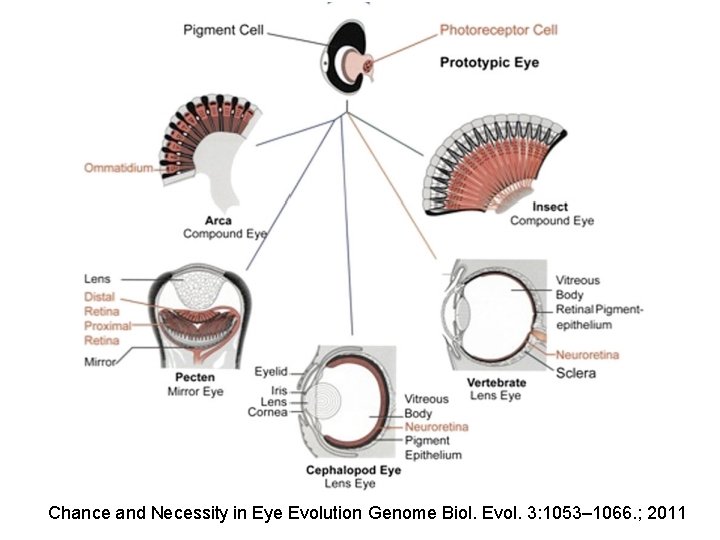
Vision Charles Darwin’s “Origin of the species” (1882) under the heading of “Difficulties of theory”: How to explain the origins of organs of extreme perfection, like the eyes of eagles. Darwin proposed a very simple prototypic eye consisting of just two cells, a photoreceptor cell and a pigment cell, shielding the light from one side.
Protistology: How to build a microbial eye Nature 523, 166– 167 (09 July 2015)
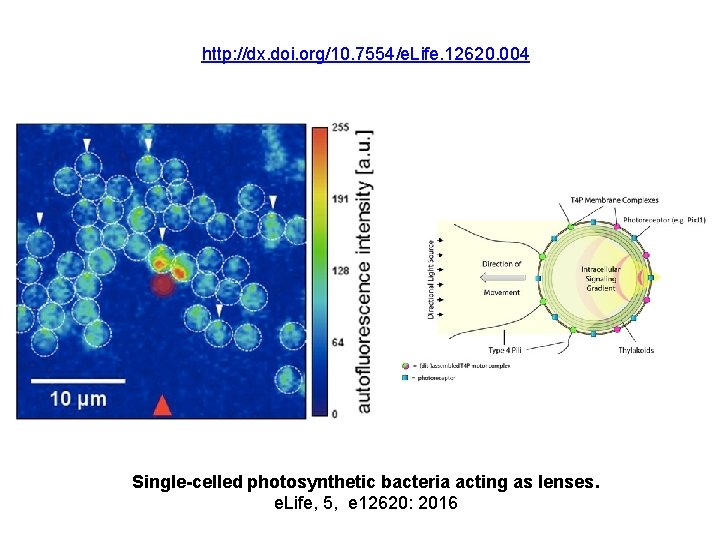
http: //dx. doi. org/10. 7554/e. Life. 12620. 004 Single-celled photosynthetic bacteria acting as lenses. e. Life, 5, e 12620: 2016
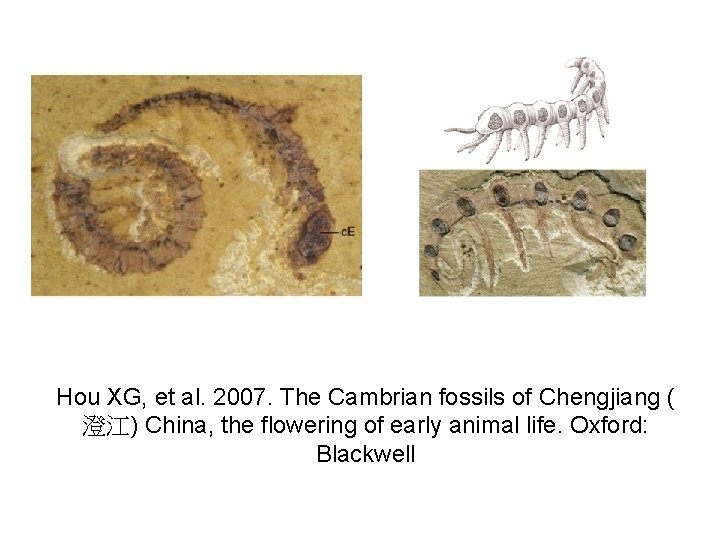
Hou XG, et al. 2007. The Cambrian fossils of Chengjiang ( 澄江) China, the flowering of early animal life. Oxford: Blackwell
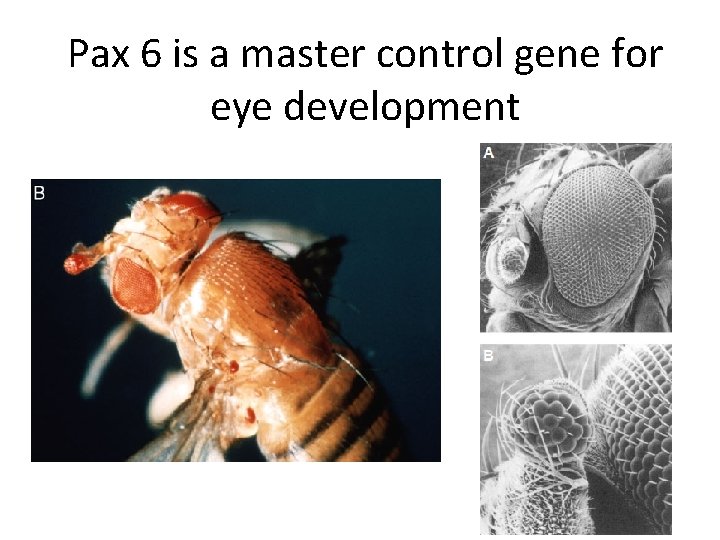
Pax 6 is a master control gene for eye development
Chance and Necessity in Eye Evolution Genome Biol. Evol. 3: 1053– 1066. ; 2011
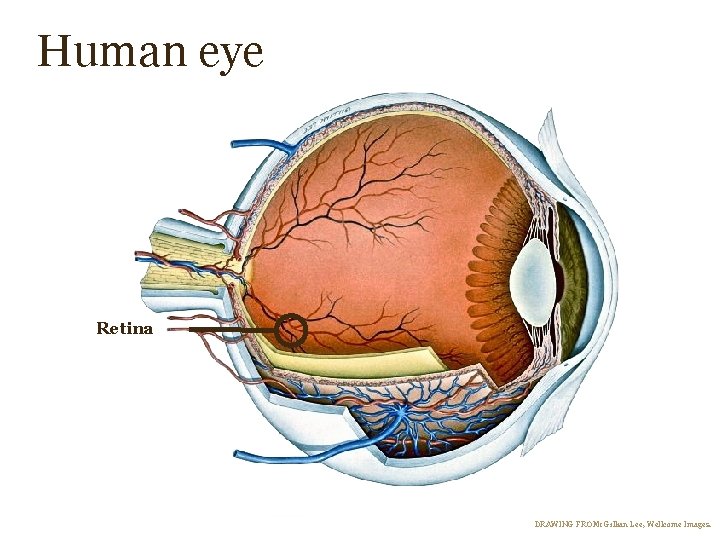
Human eye Retina DRAWING FROM: Gillian Lee, Wellcome Images.
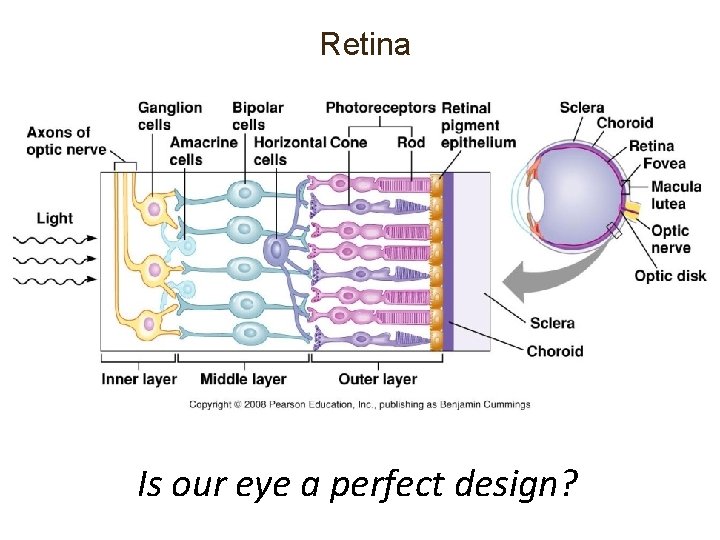
Retina Is our eye a perfect design?
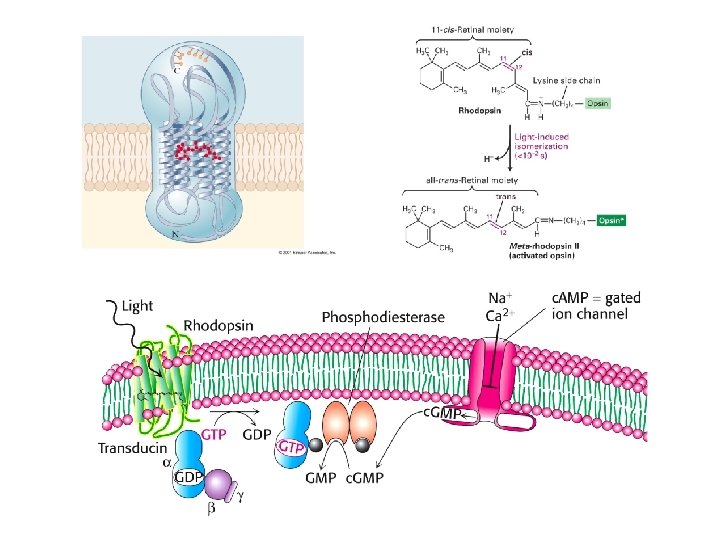
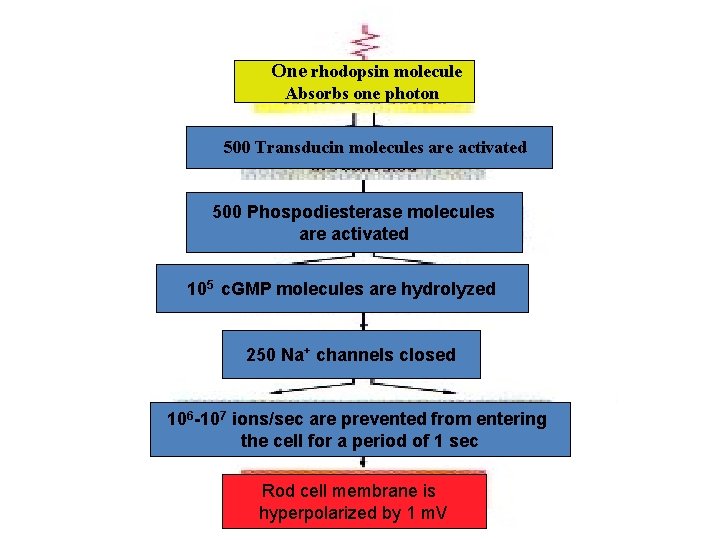
One rhodopsin molecule Absorbs one photon 500 Transducin molecules are activated 500 Phospodiesterase molecules are activated 105 c. GMP molecules are hydrolyzed 250 Na+ channels closed 106 -107 ions/sec are prevented from entering the cell for a period of 1 sec Rod cell membrane is hyperpolarized by 1 m. V
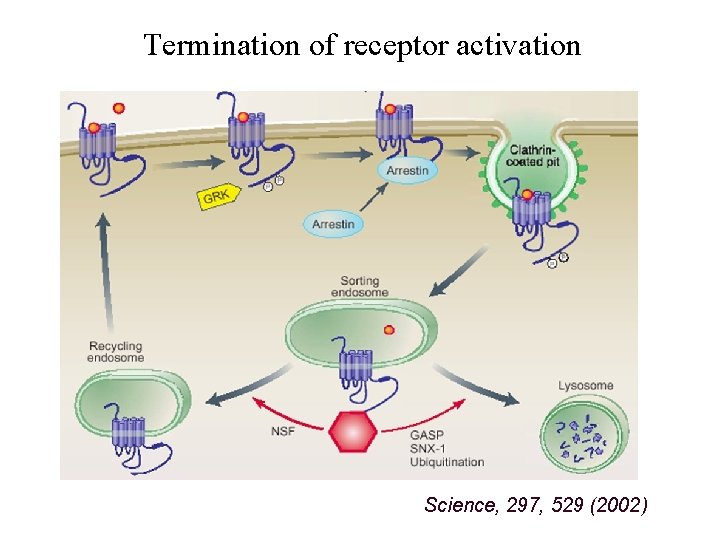
Termination of receptor activation Science, 297, 529 (2002)
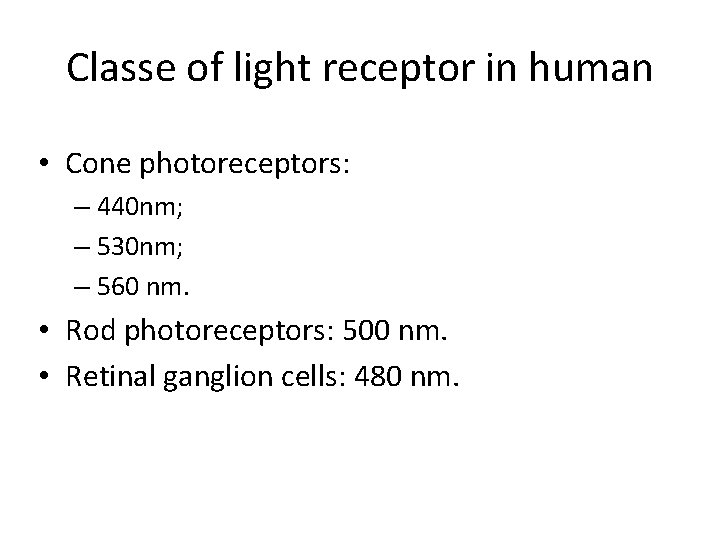
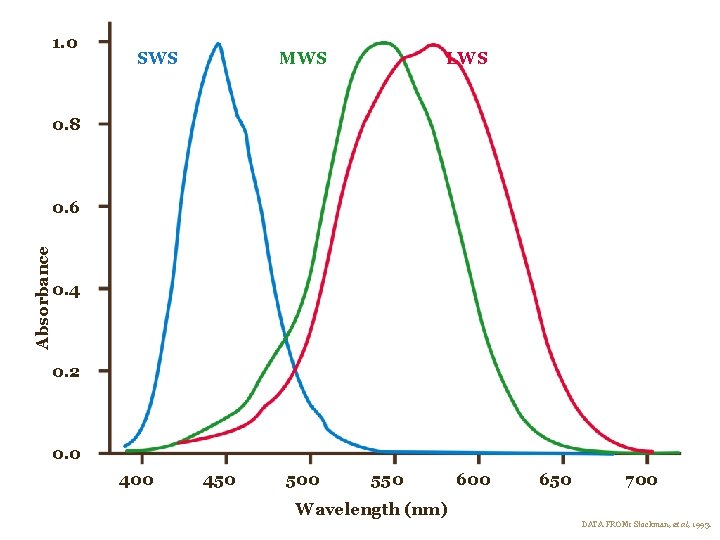
Classe of light receptor in human • Cone photoreceptors: – 440 nm; – 530 nm; – 560 nm. • Rod photoreceptors: 500 nm. • Retinal ganglion cells: 480 nm.
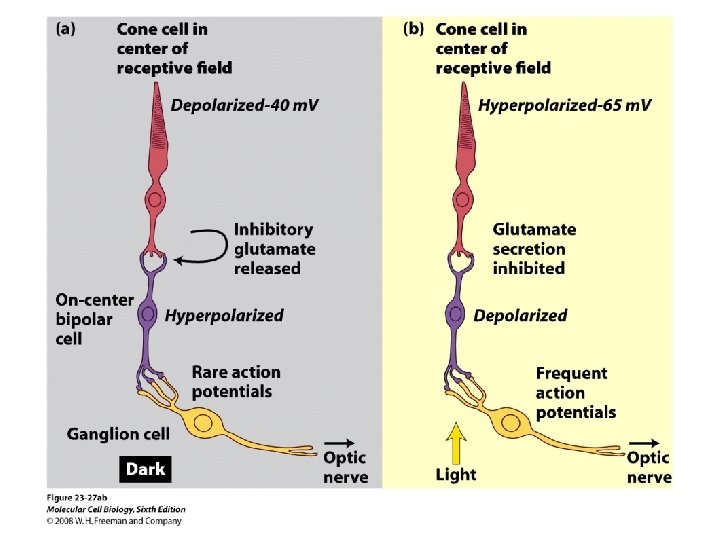
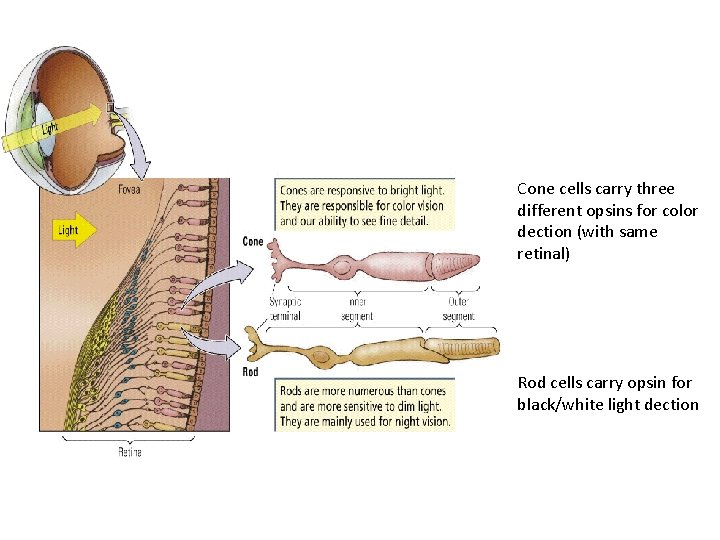
Cone cells carry three different opsins for color dection (with same retinal) Rod cells carry opsin for black/white light dection
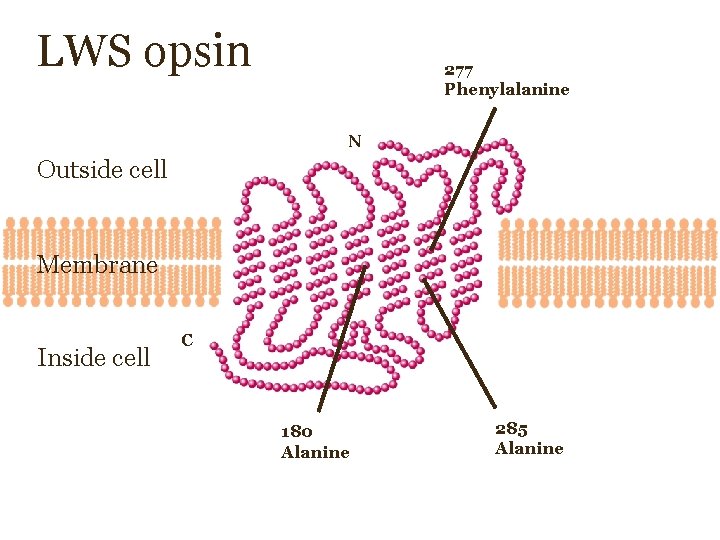
LWS opsin 277 Phenylalanine N Outside cell Membrane Inside cell C 180 Alanine 285 Alanine
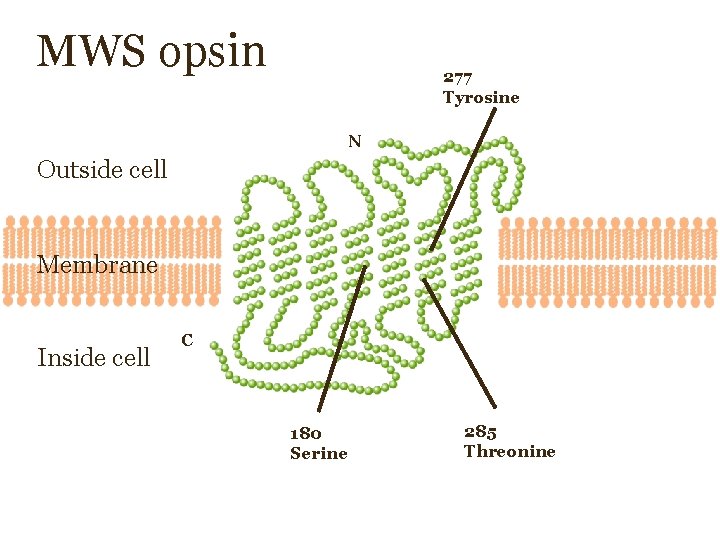
MWS opsin 277 Tyrosine N Outside cell Membrane Inside cell C 180 Serine 285 Threonine
1. 0 SWS MWS LWS 0. 8 Absorbance 0. 6 0. 4 0. 2 0. 0 400 450 500 550 600 650 700 Wavelength (nm) DATA FROM: Stockman, et al, 1993.
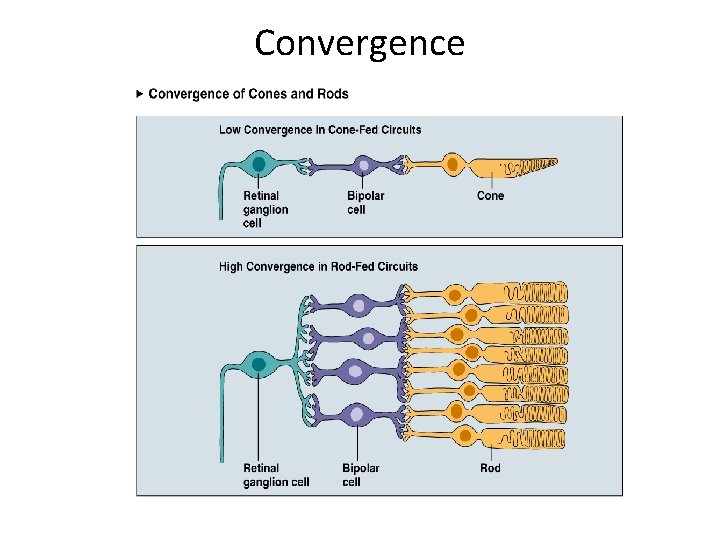
Convergence
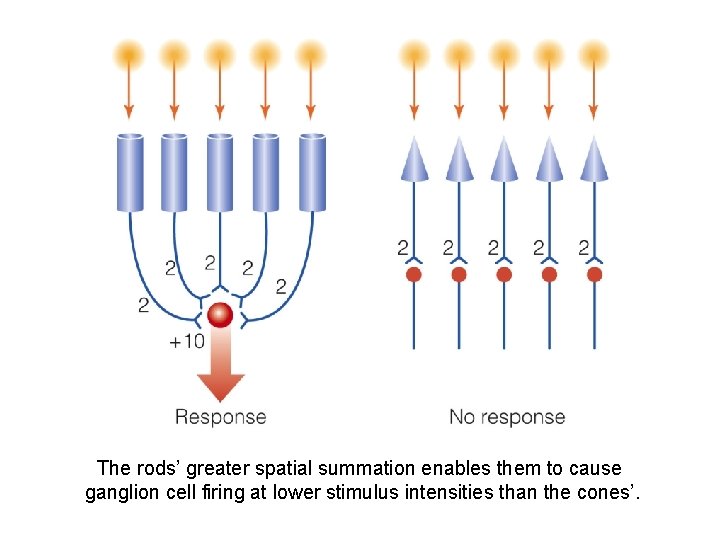
The rods’ greater spatial summation enables them to cause ganglion cell firing at lower stimulus intensities than the cones’.
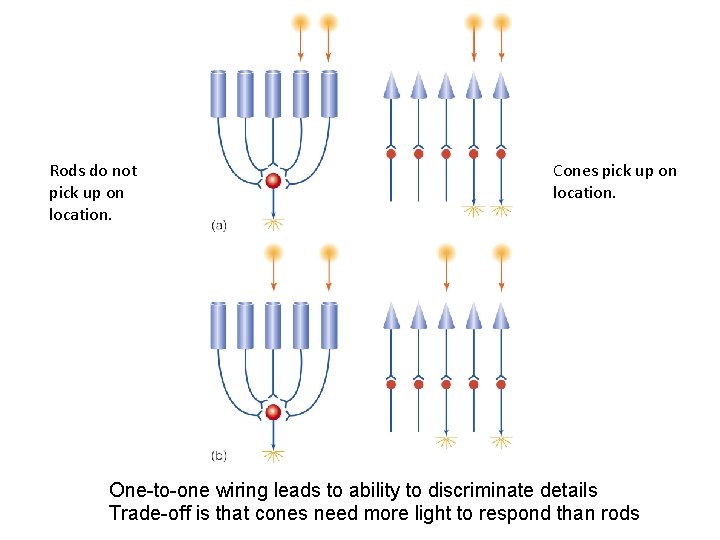
Rods do not pick up on location. Cones pick up on location. One-to-one wiring leads to ability to discriminate details Trade-off is that cones need more light to respond than rods
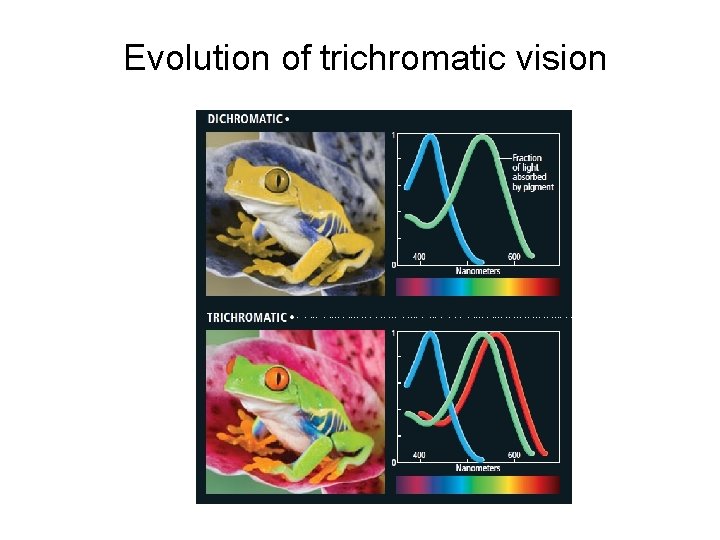
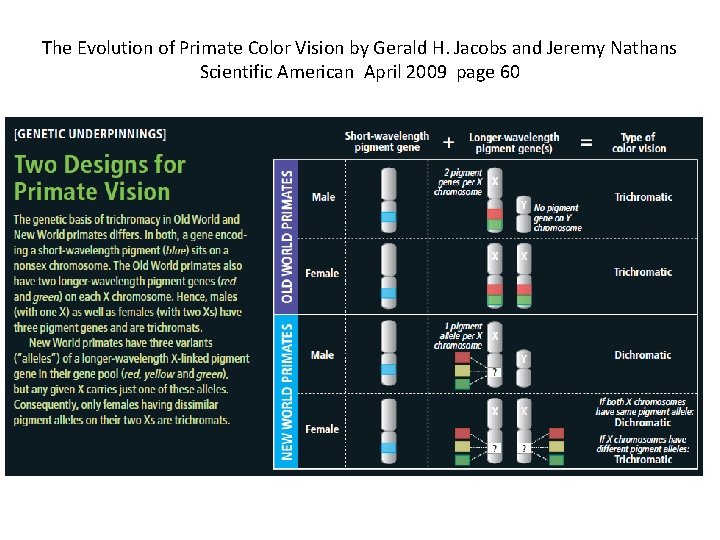
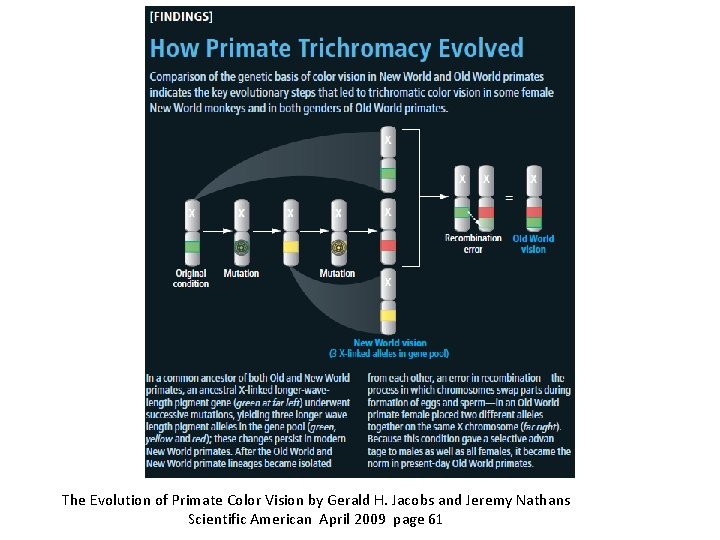
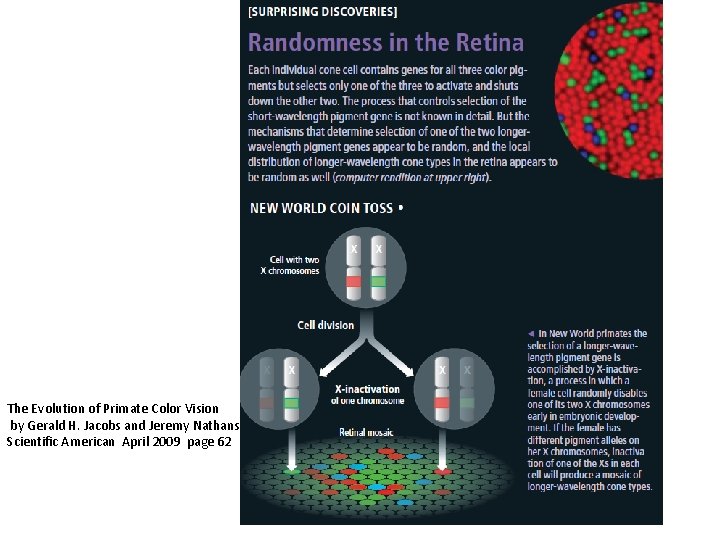
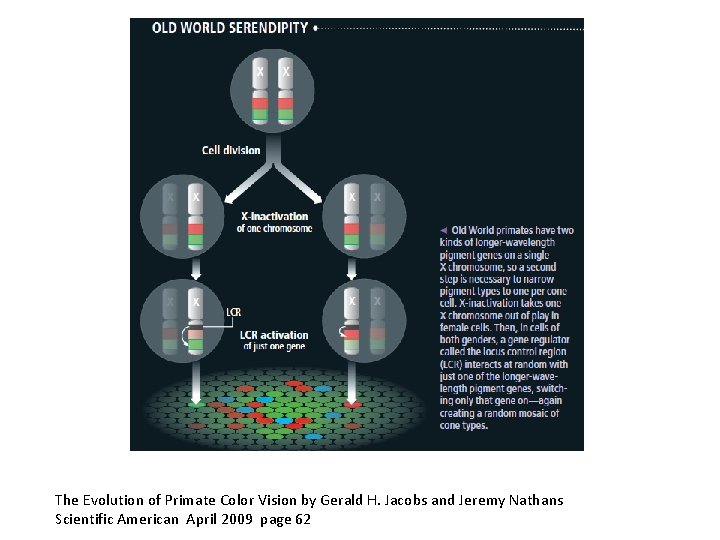
Evolution of trichromatic vision
The Evolution of Primate Color Vision by Gerald H. Jacobs and Jeremy Nathans Scientific American April 2009 page 60
The Evolution of Primate Color Vision by Gerald H. Jacobs and Jeremy Nathans Scientific American April 2009 page 61
The Evolution of Primate Color Vision by Gerald H. Jacobs and Jeremy Nathans Scientific American April 2009 page 62
The Evolution of Primate Color Vision by Gerald H. Jacobs and Jeremy Nathans Scientific American April 2009 page 62
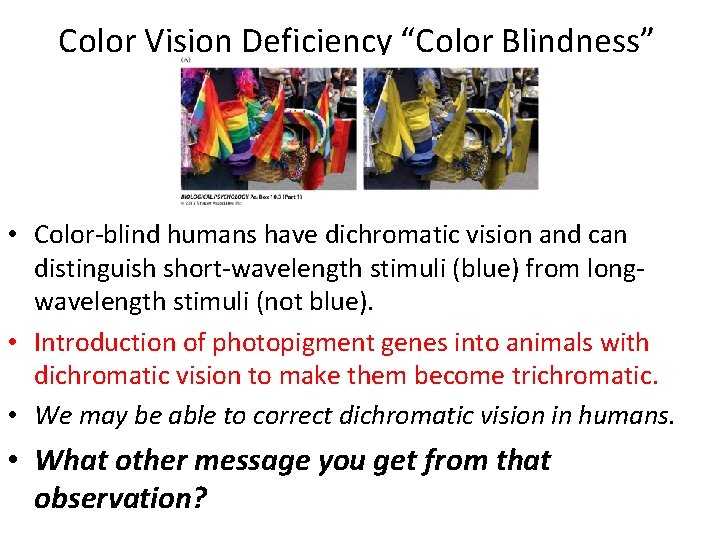
Color Vision Deficiency “Color Blindness” • Color-blind humans have dichromatic vision and can distinguish short-wavelength stimuli (blue) from longwavelength stimuli (not blue). • Introduction of photopigment genes into animals with dichromatic vision to make them become trichromatic. • We may be able to correct dichromatic vision in humans. • What other message you get from that observation?
“Real taste [in] the mouth, in my theory must be acquired by certain foods being habitual—[and] hence become hereditary” Charles Darwin’s Notebooks, 1836– 1844
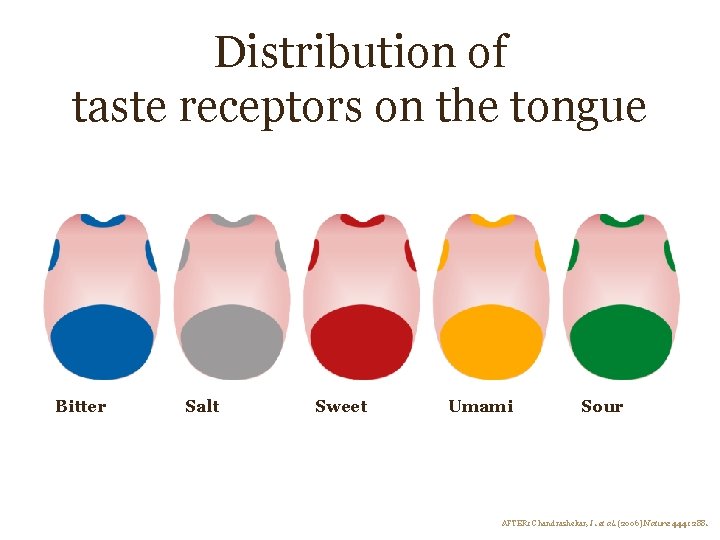
Distribution of taste receptors on the tongue Bitter Salt Sweet Umami Sour AFTER: Chandrashekar, J. et al. (2006) Nature 444: 288.
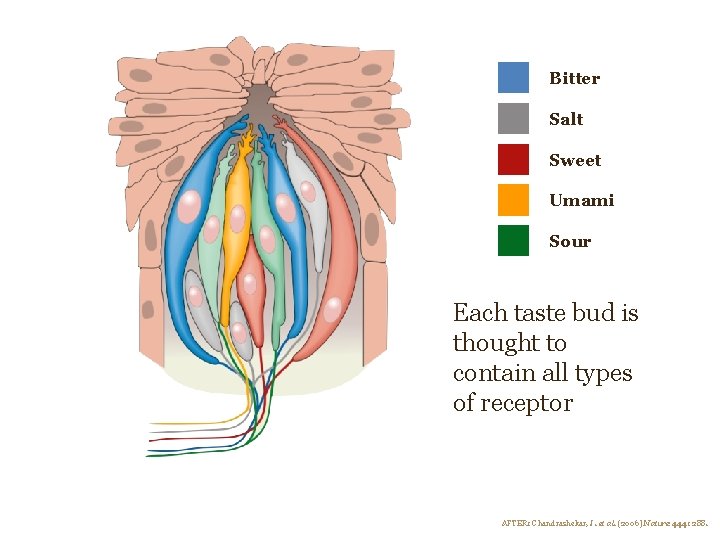
Bitter Salt Sweet Umami Sour Each taste bud is thought to contain all types of receptor AFTER: Chandrashekar, J. et al. (2006) Nature 444: 288.
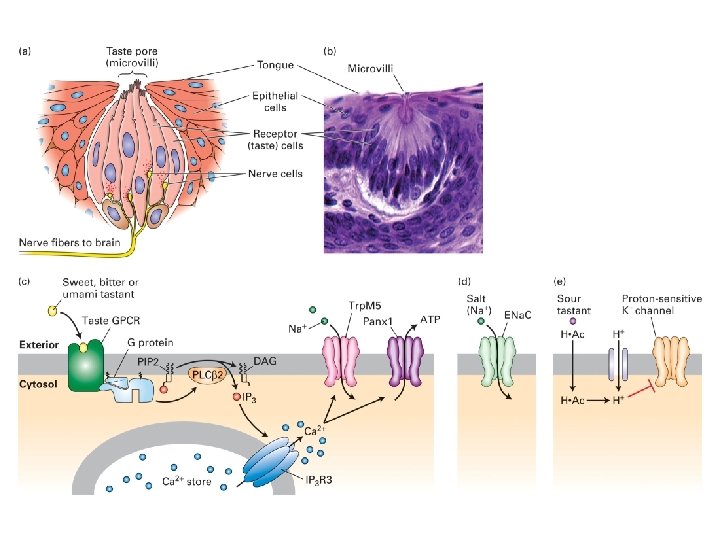
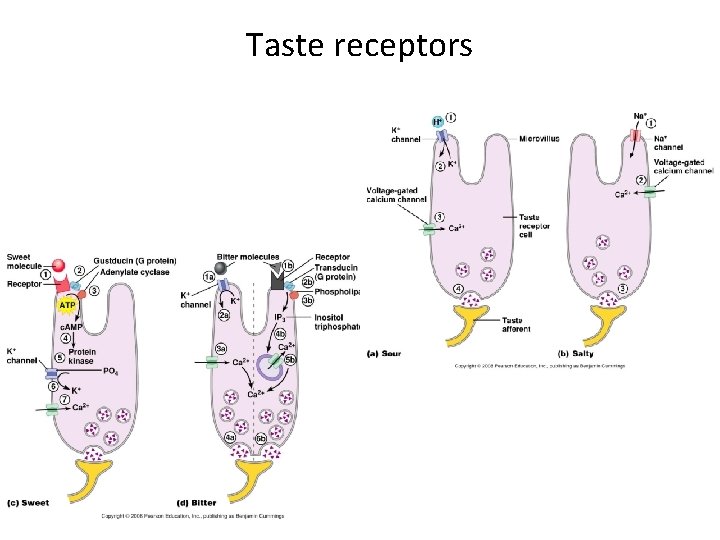
Taste receptors
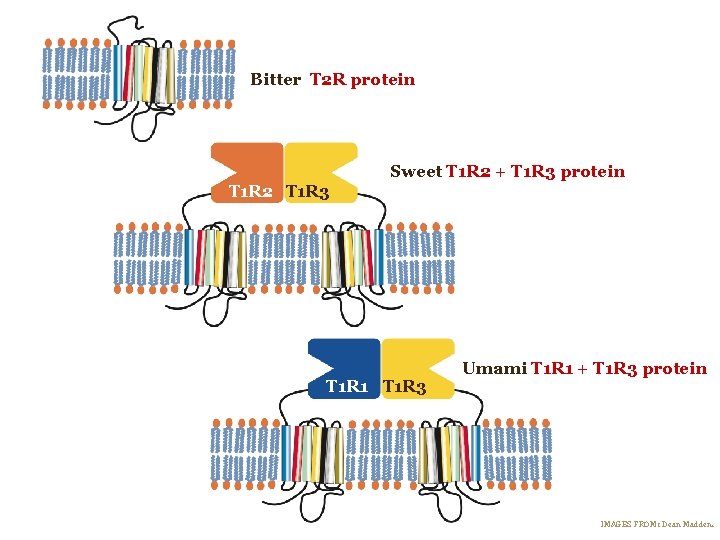
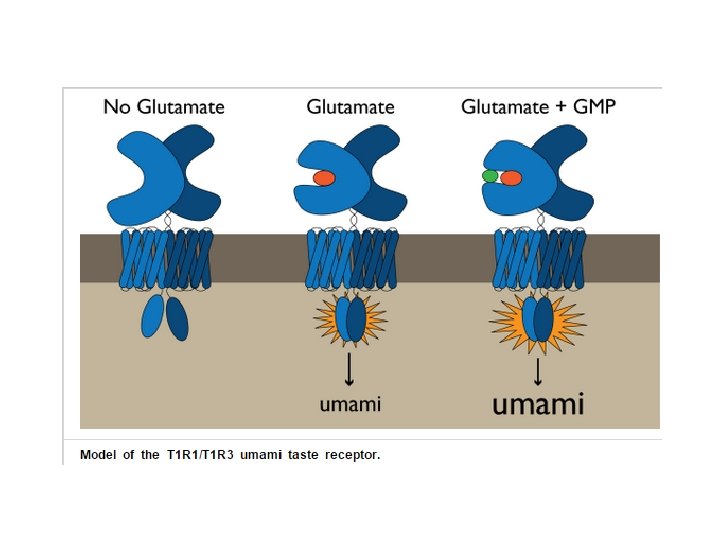
Bitter T 2 R protein Sweet T 1 R 2 + T 1 R 3 protein T 1 R 2 T 1 R 3 T 1 R 1 T 1 R 3 Umami T 1 R 1 + T 1 R 3 protein IMAGES FROM: Dean Madden.
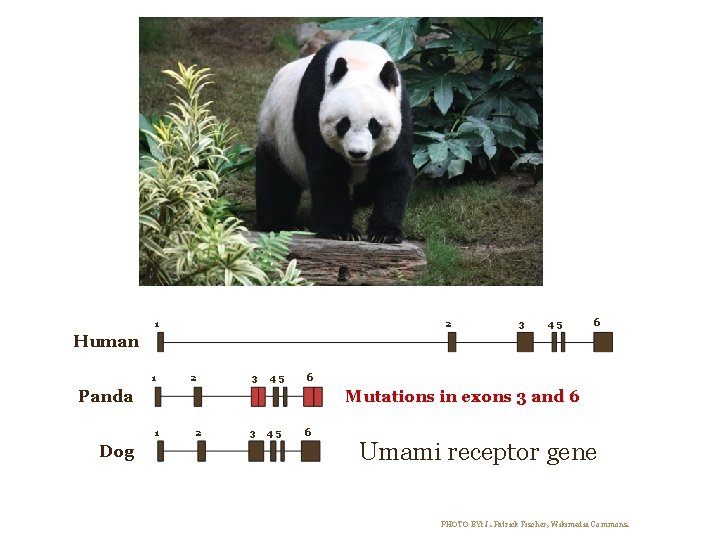
New virus leaves cell HIV attaches to CD 4 receptors on T-Cell 1 2 3 45 6 Human 1 2 3 45 6 Panda Mutations in exons 3 and 6 1 Dog 2 3 45 6 Umami receptor gene PHOTO BY: J. Patrick Fischer, Wikimedia Commons.
Other examples • For whales, mammals that migrated back to the sea from land 25 to 55 million years ago, extensive losses of sweet, umami, bitter, and sour tastes were found. – Genome Biol Evol. 2014 Jun; 6(6): 1254– 1265.
"the umami and bitter tastes were lost in the common ancestor of all penguins, whereas the sweet taste was lost earlier" Make an explanation! Molecular evidence for the loss of three basic tastes in penguins Current Biology 25, p. R 141–R 142, 2015
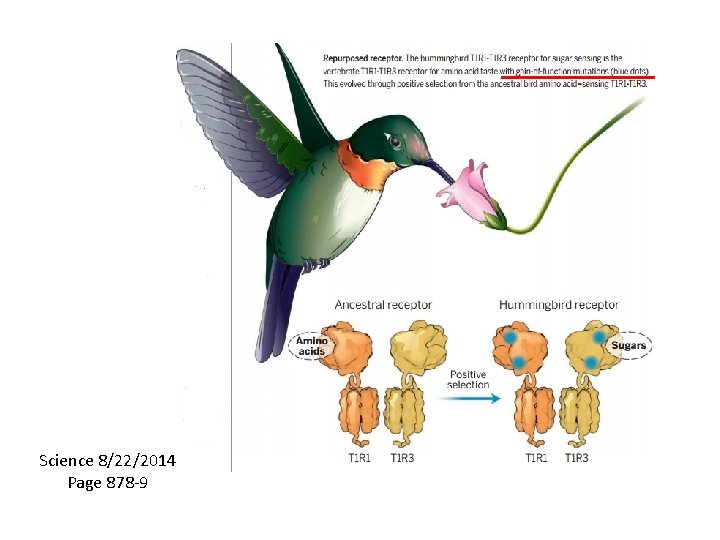
Dynamic changes of sweet • loss of the sweet taste receptor gene Tas 1 r 2 in many obligate carnivores. • all birds also have lost the Tas 1 r 2 taste receptor gene! • How can one explain the appetitive behavior of bird species such as hummingbirds that typically consume foods that consist primarily of sweet sugars?
Science 8/22/2014 Page 878 -9
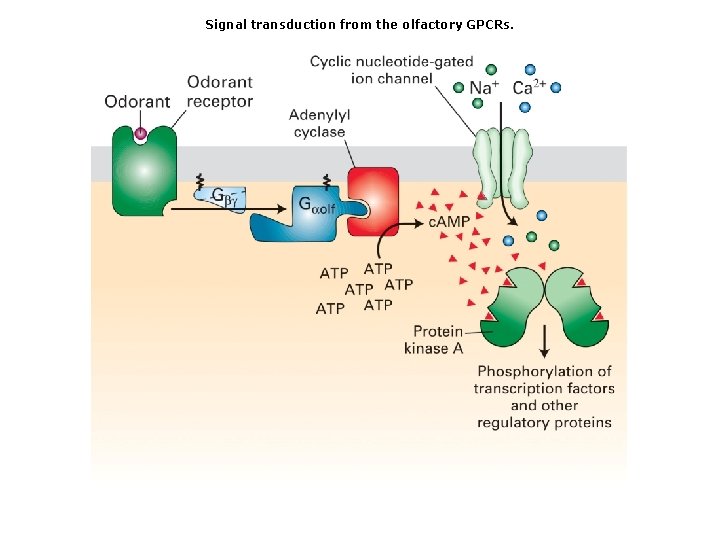
Signal transduction from the olfactory GPCRs.
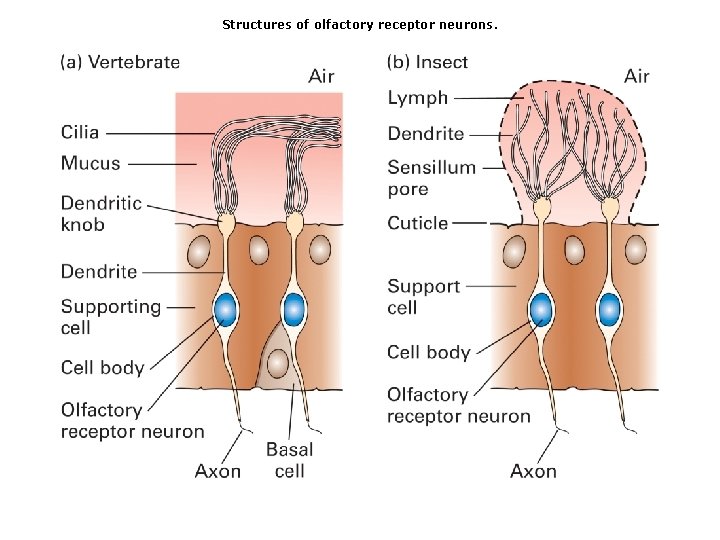
Structures of olfactory receptor neurons.
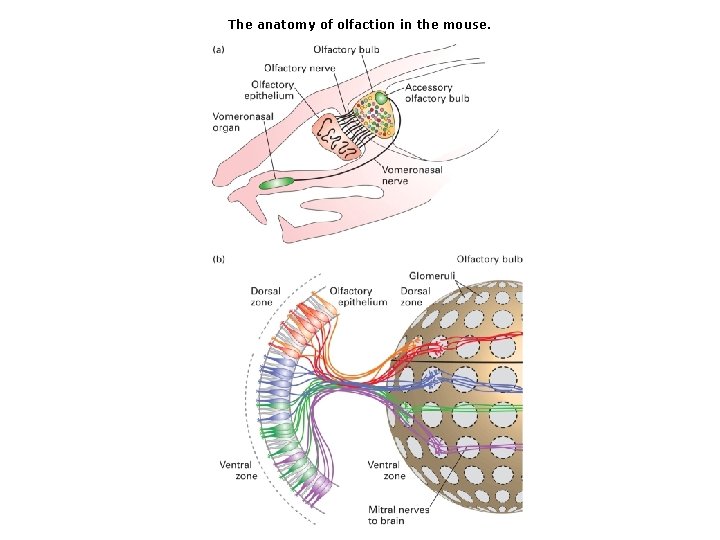
The anatomy of olfaction in the mouse.
Why mosquito like to bite humans?
Evolution of mosquito preference for humans linked to an odorant receptor Or 4 recognizes the human odorant sulcatone (6 -methyl-5 -hepten-2 -one) NATURE 515: 222 – 227; 2014
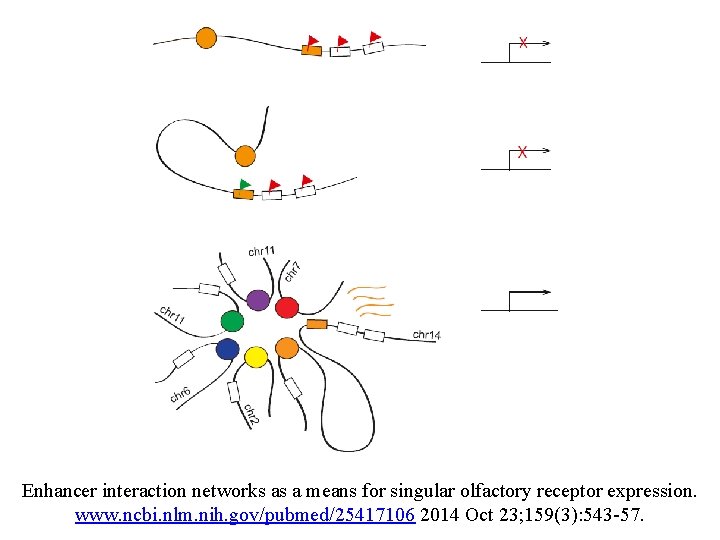
What transcriptional mechanism can assure the random choice of only one of the multiple OR genes in a given neuron? 1, DNA recombination to bring one OR to the promoter just like V/C joining of Ig. 2, one single enhancer acts trans to regulate expression of one OR gene!
Controversial issue • Interchromosomal Interactions and Olfactory Receptor Choice. Cell 126, 403– 413, 2006 • Results from H element knock out mice are not consistent with the hypothesis of H as an essential trans-acting enhancer for genomewide regulation of OR gene expression. Cell 130, 373– 384, 2007.
Enhancer interaction networks as a means for singular olfactory receptor expression. www. ncbi. nlm. nih. gov/pubmed/25417106 2014 Oct 23; 159(3): 543 -57.
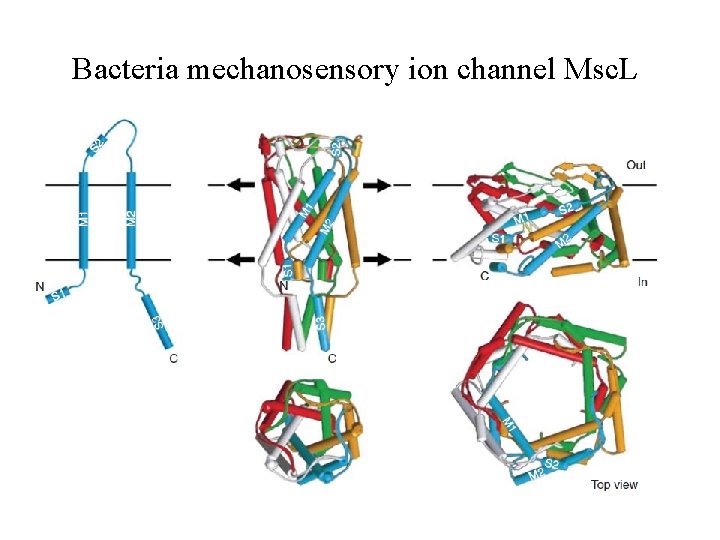
Bacteria mechanosensory ion channel Msc. L
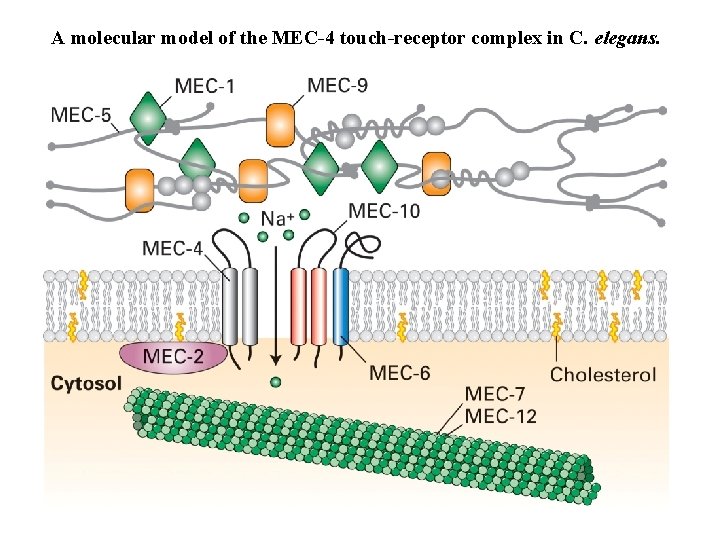
A molecular model of the MEC-4 touch-receptor complex in C. elegans.