
Sensory Receptors Transduction and Coding Narrado por Renato

- Slides: 4
Sensory Receptors: Transduction and Coding Narrado por: Renato M. E. Sabbatini, Ph. D
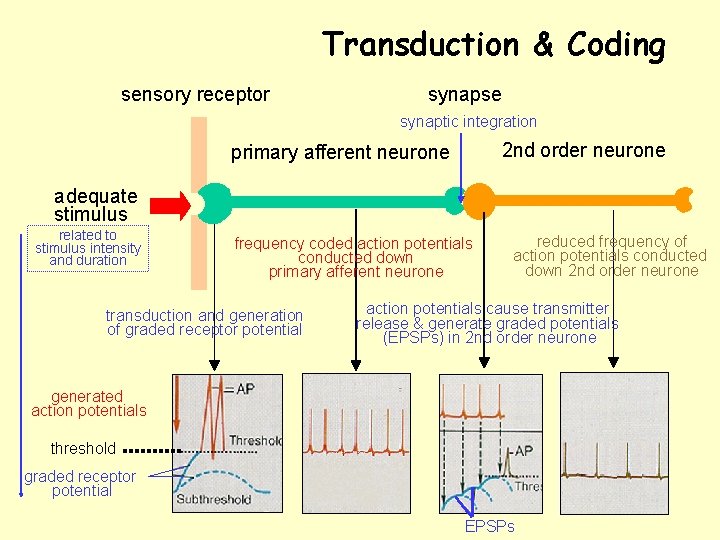
Transduction & Coding sensory receptor synapse synaptic integration 2 nd order neurone primary afferent neurone adequate stimulus related to stimulus intensity and duration frequency coded action potentials conducted down primary afferent neurone transduction and generation of graded receptor potential reduced frequency of action potentials conducted down 2 nd order neurone action potentials cause transmitter release & generate graded potentials (EPSPs) in 2 nd order neurone generated action potentials threshold graded receptor potential EPSPs
Sensory Coding for Intensity & Duration amplitude 40 mv duration 4 ms exceeds threshold & generates action potentials conducted down sensory axon small amount transmitter released recording arrangement from sensory unit amplitude 65 mv duration 7 ms - note decay of receptor potential generates higher frequency of action potentials for longer period more action potentials conducted down sensory axon large amount transmitter released
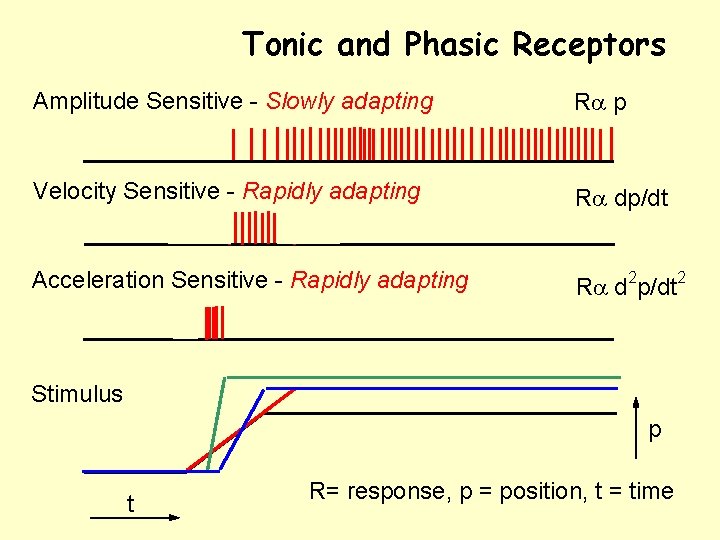
Tonic and Phasic Receptors Amplitude Sensitive - Slowly adapting Ra p Velocity Sensitive - Rapidly adapting Ra dp/dt Acceleration Sensitive - Rapidly adapting Ra d 2 p/dt 2 Stimulus p t R= response, p = position, t = time