
Sensory processing in behavioural feeding Hayley Dutton Occupational
Sensory processing in behavioural feeding Hayley Dutton (Occupational Therapist) Behavioural Feeding Team Evelina Children’s Hospital Guy’s & St Thomas’ NHS Foundation Trust
What we are going to cover: 1. Terms & definitions 2. Theory 3. Assessment 4. Intervention
Terms Over the years, in practice, the root term "sensory integration" has been commonly used in four different ways: O A theory (sensory integration theory) O A diagnosis (based on a sensory integration assessment) O A functional pattern (normal sensory integration abilities) O A remediation approach (sensory integration intervention)
O The condition: Sensory Processing Disorder O The treatment: Occupational Therapy with a sensory integration approach O The theory: Sensory Integration frame of reference
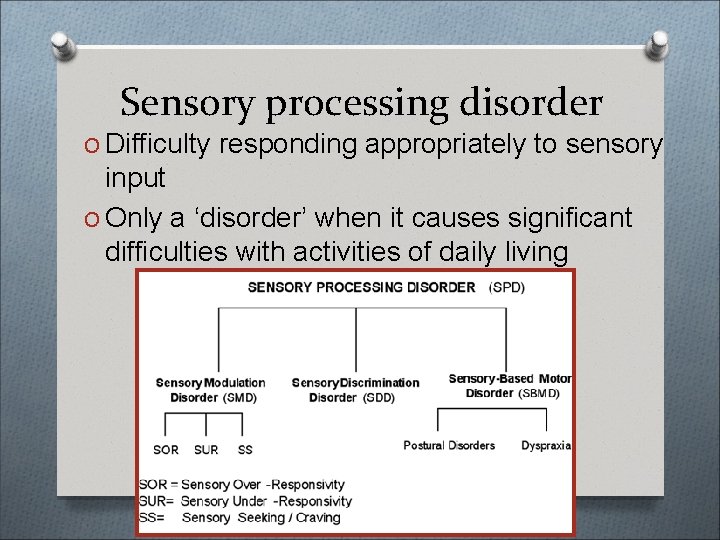
Sensory processing disorder O Difficulty responding appropriately to sensory input O Only a ‘disorder’ when it causes significant difficulties with activities of daily living
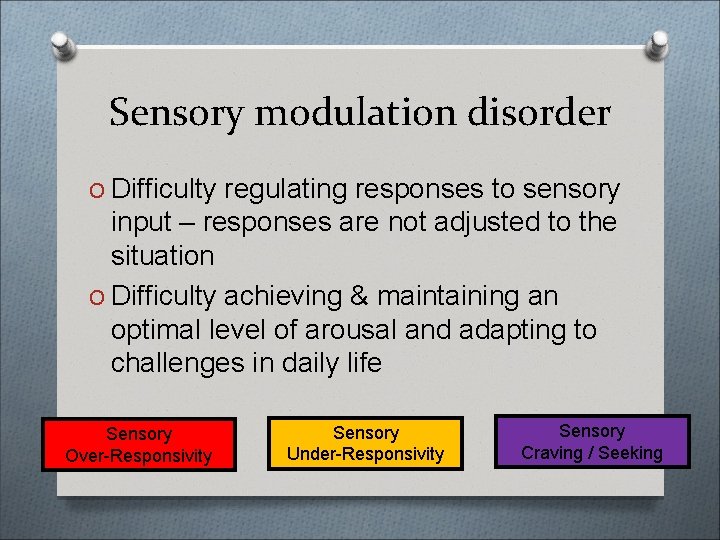
Sensory modulation disorder O Difficulty regulating responses to sensory input – responses are not adjusted to the situation O Difficulty achieving & maintaining an optimal level of arousal and adapting to challenges in daily life Sensory Over-Responsivity Sensory Under-Responsivity Sensory Craving / Seeking

Sensory thresholds
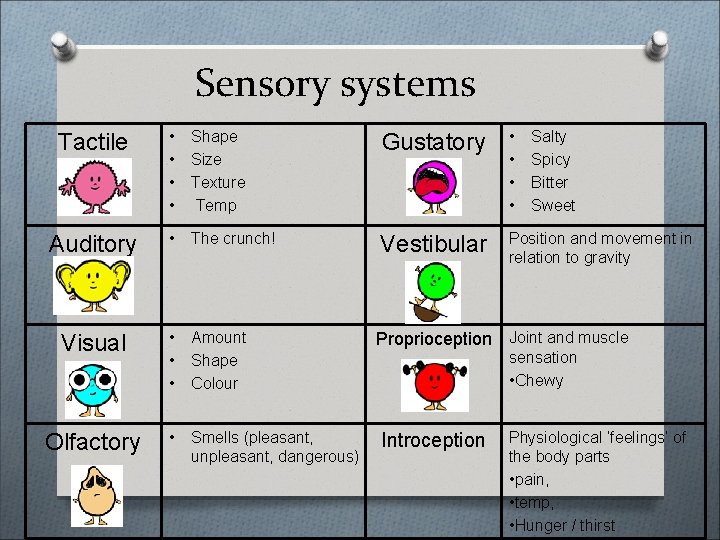
Sensory systems Tactile • • Shape Size Texture Temp Gustatory • • Auditory • The crunch! Vestibular Position and movement in relation to gravity Visual • • • Amount Shape Colour Proprioception Joint and muscle Olfactory • Smells (pleasant, unpleasant, dangerous) Salty Spicy Bitter Sweet sensation • Chewy Introception Physiological ‘feelings’ of the body parts • pain, • temp, • Hunger / thirst

Tactile O Anterio-lateral pathway PROTECTIVE O Light touch & pain O Dorsal Column Medial Lemniscle DISCRIMINATIVE O Proprioception O Deep pressure / massage O Vibration
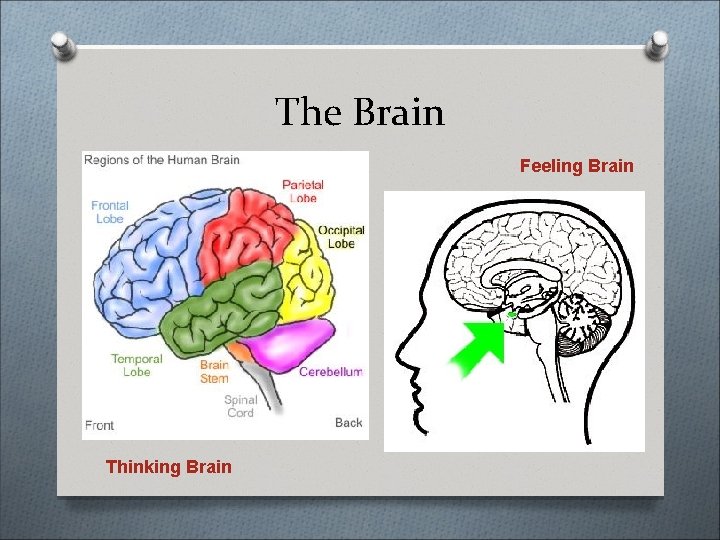
The Brain Feeling Brain Thinking Brain
Amygdala O Primary role: forming, modulating & storing memories O Mediates effect of emotional arousal on memory of the event (> emotion = > retention) O Links with the hippocampus to influence ANS O Survival – fear & freeze responses – rapid heart beat and respiration O Olfaction O In children: limbic system is not modulated by cortex
Early childhood experiences O Self-regulation / self- soothing O NG tube/ invasive procedures O Impact of GOR – early negative experiences O Weaning – textures and lumps
Assessment cont. . . O Standardised assessment: O Short sensory profile O Sensory processing measure O Observation! O Behaviour as a indicator for underlying neurological processing
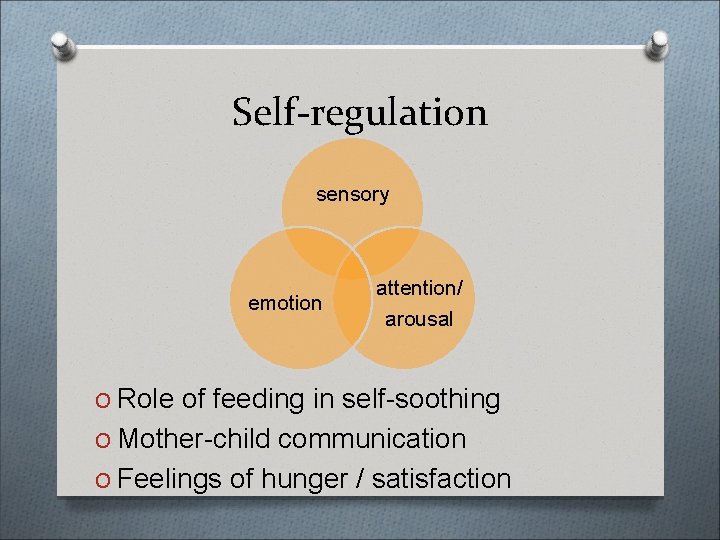
Self-regulation sensory emotion attention/ arousal O Role of feeding in self-soothing O Mother-child communication O Feelings of hunger / satisfaction
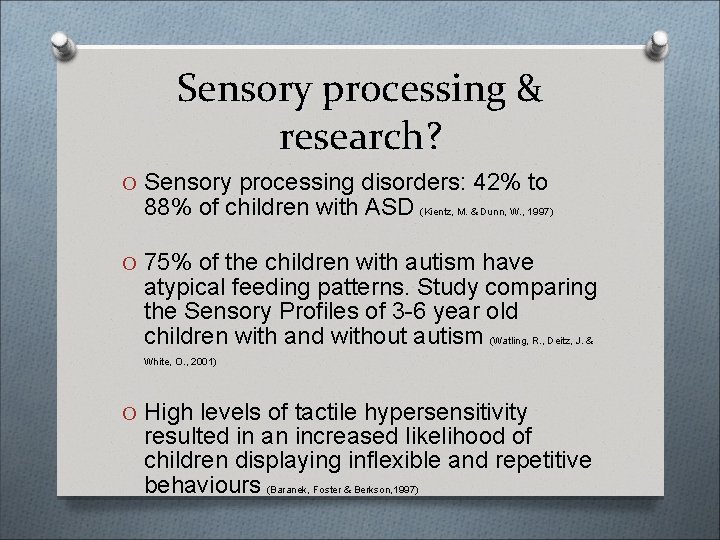
Sensory processing & research? O Sensory processing disorders: 42% to 88% of children with ASD (Kientz, M. & Dunn, W. , 1997) O 75% of the children with autism have atypical feeding patterns. Study comparing the Sensory Profiles of 3 -6 year old children with and without autism (Watling, R. , Deitz, J. & White, O. , 2001) O High levels of tactile hypersensitivity resulted in an increased likelihood of children displaying inflexible and repetitive behaviours (Baranek, Foster & Berkson, 1997)
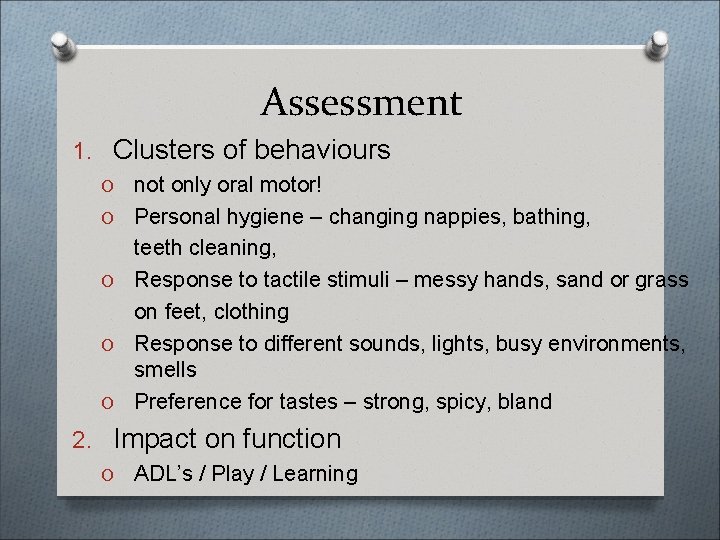
Assessment 1. Clusters of behaviours O O O not only oral motor! Personal hygiene – changing nappies, bathing, teeth cleaning, Response to tactile stimuli – messy hands, sand or grass on feet, clothing Response to different sounds, lights, busy environments, smells Preference for tastes – strong, spicy, bland 2. Impact on function O ADL’s / Play / Learning
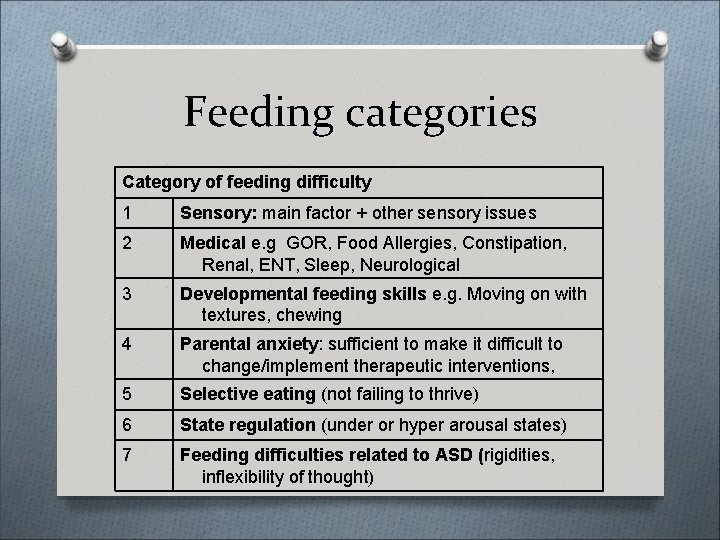
Feeding categories Category of feeding difficulty 1 Sensory: main factor + other sensory issues 2 Medical e. g GOR, Food Allergies, Constipation, Renal, ENT, Sleep, Neurological 3 Developmental feeding skills e. g. Moving on with textures, chewing 4 Parental anxiety: sufficient to make it difficult to change/implement therapeutic interventions, 5 Selective eating (not failing to thrive) 6 State regulation (under or hyper arousal states) 7 Feeding difficulties related to ASD (rigidities, inflexibility of thought)
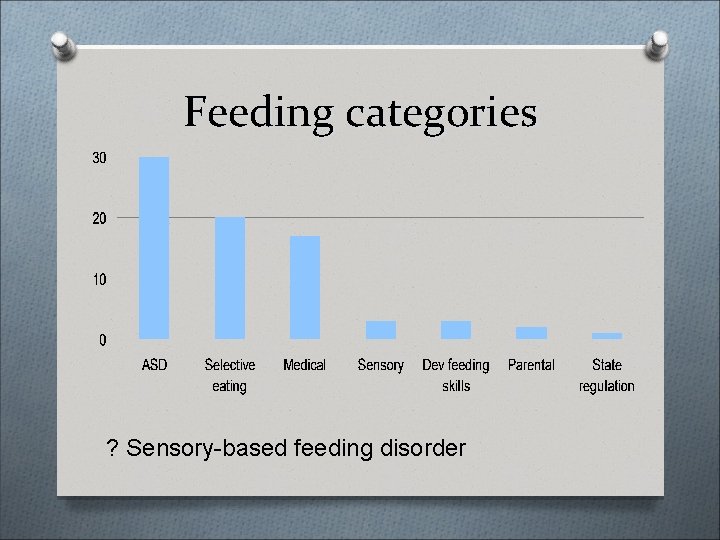
Feeding categories ? Sensory-based feeding disorder
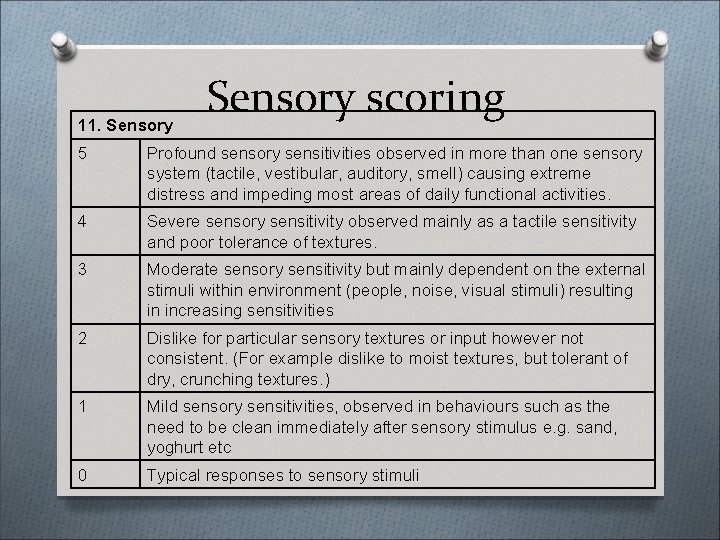
11. Sensory scoring 5 Profound sensory sensitivities observed in more than one sensory system (tactile, vestibular, auditory, smell) causing extreme distress and impeding most areas of daily functional activities. 4 Severe sensory sensitivity observed mainly as a tactile sensitivity and poor tolerance of textures. 3 Moderate sensory sensitivity but mainly dependent on the external stimuli within environment (people, noise, visual stimuli) resulting in increasing sensitivities 2 Dislike for particular sensory textures or input however not consistent. (For example dislike to moist textures, but tolerant of dry, crunching textures. ) 1 Mild sensory sensitivities, observed in behaviours such as the need to be clean immediately after sensory stimulus e. g. sand, yoghurt etc 0 Typical responses to sensory stimuli
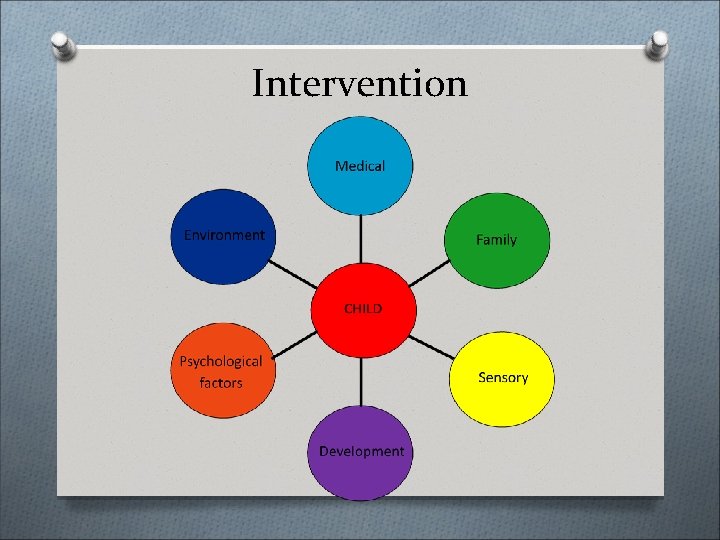
Intervention
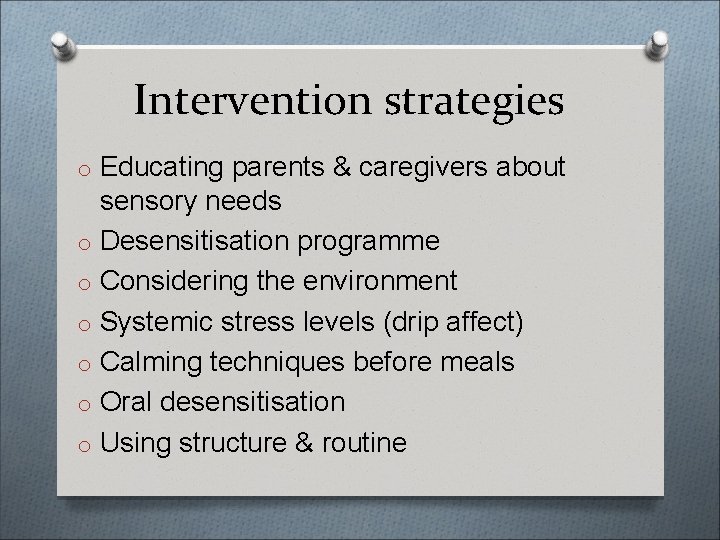
Intervention strategies o Educating parents & caregivers about sensory needs o Desensitisation programme o Considering the environment o Systemic stress levels (drip affect) o Calming techniques before meals o Oral desensitisation o Using structure & routine
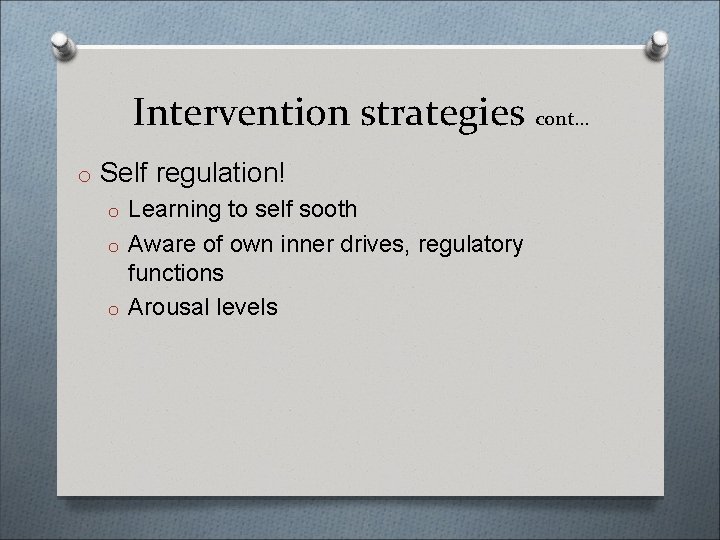
Intervention strategies cont… o Self regulation! o Learning to self sooth o Aware of own inner drives, regulatory functions o Arousal levels
Desensitisation programmes O Messy play O Tactile hierarchy: O hard plastic objects – smooth to rough O rubber objects – smooth to rough O softer, squashier objects O objects with multiple textures – hard bits, soft O O O bits, lumpy bits etc. Dry textures – pasta, rice, sand, cereals, flour Wet textures - shaving foam, custard, yogurt Mixed textures – cooked pasta, mashed potato, play dough, jelly
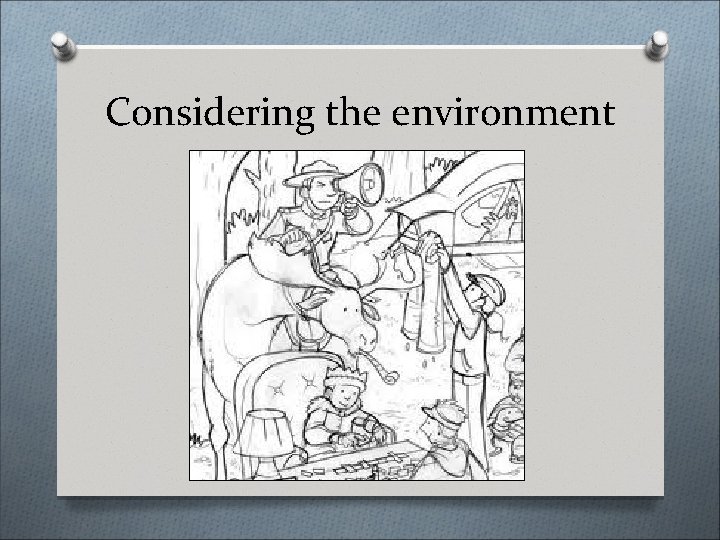
Considering the environment
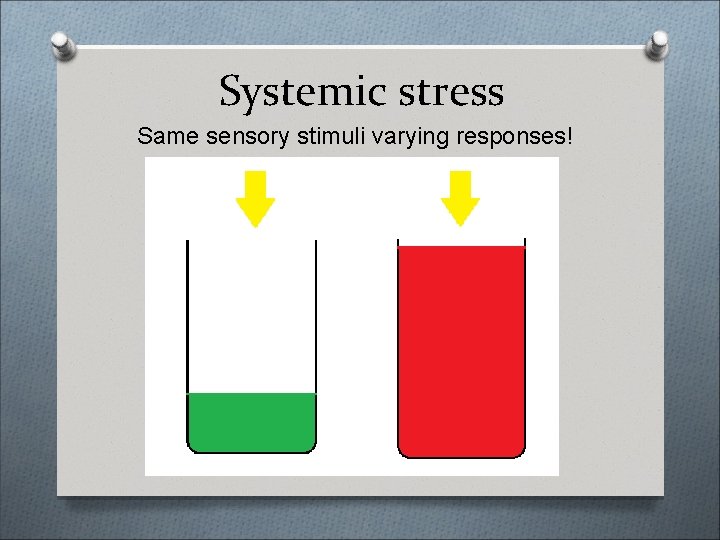
Systemic stress Same sensory stimuli varying responses!
Calming strategies before mealtimes: O Proprioception, massage & vibration – inhibitory affect on pain O Heavy work for muscle O Quiet space with favourite toy/ activity O Slow rhythmical movement O Oral-motor: chewing, sucking or blowing O Providing choice – sensory toolkit!
Oral desensitisation
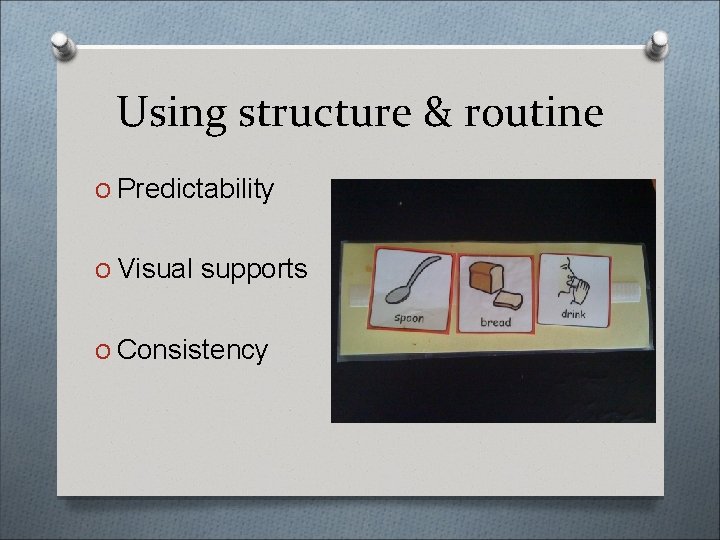
Using structure & routine O Predictability O Visual supports O Consistency
Questions?
- Slides: 29