
Sensory Evaluation In the Culinary Classroom By Dr

Sensory Evaluation In the Culinary Classroom By: Dr. Aubrey Coffee Clemson University
Development of Sensory Testing �Evaluation Historical of goods, water, weapons, etc. by humans �The rise of trading graders professional tasters �Systematic “sensory” analysis based on: ◦ Wartime efforts
Development of Sensory Testing �Development Historical of triangle test (Scandinavia) ◦ Food Science Dept at UC Davis (1965) �Sensory methods developed to serve economic interests ◦ Worth or acceptability of commodity ◦ Evaluates alternate courses optimizes value for money
Development of Sensory Testing Principle uses of sensory techniques: �Quality control �Product development �Research
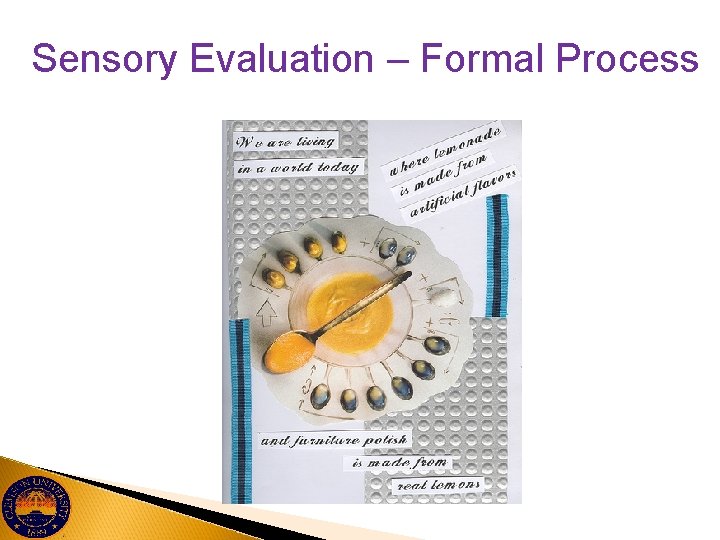
Sensory Evaluation – Formal Process

Sensory Evaluation �The assessment of all the qualities of a food item as perceived by the human senses �Not merely food “tasting” it can involve describing food color as well as texture, flavor, aftertaste, aroma, tactile response, and even auditory response �Sometimes sensory analysis is used interchangeably with sensory evaluation.
Sensory Evaluation IFT Definition of Sensory Evaluation: The scientific discipline used to evoke, measure, analyze, and interpret human reactions to those characteristics of foods and beverages as they are perceived by the senses of sight, smell, taste, touch, and hearing
Development of Sensory Testing Primary function of sensory testing: To conduct valid and reliable tests, which provide data on which sound decision can be made.
Sensory Evaluation The role of sensory evaluation is to…. provide valid and reliable information to R&D, production, and marketing for management to make sound business decisions about the perceived sensory properties of products.
Sensory Evaluation as a Scientific Method �Incorporates the following: ◦ Identification of a problem ◦ The statement of a hypothesis ◦ An experimental strategy to investigate the problem �Strategy accomplished through data collection and analysis and a conclusion is reached that answers the original question
Sensory Evaluation as a Scientific Method �The conclusion either accepts or rejects the hypothesis according to the results of the study
Sensory Evaluation as a Quantitative Science �When numerical data are collected to establish specific relationship between product characteristics and human perception. �Human responses to stimuli are quantified.
Classification of Test Methods �Classified according to their primary purpose and most valid use �Critical to match test method to objectives of project �Three classes are most commonly used ◦ Affective ◦ Discrimination ◦ Descriptive �Each have a different goal and selection criteria for panelist
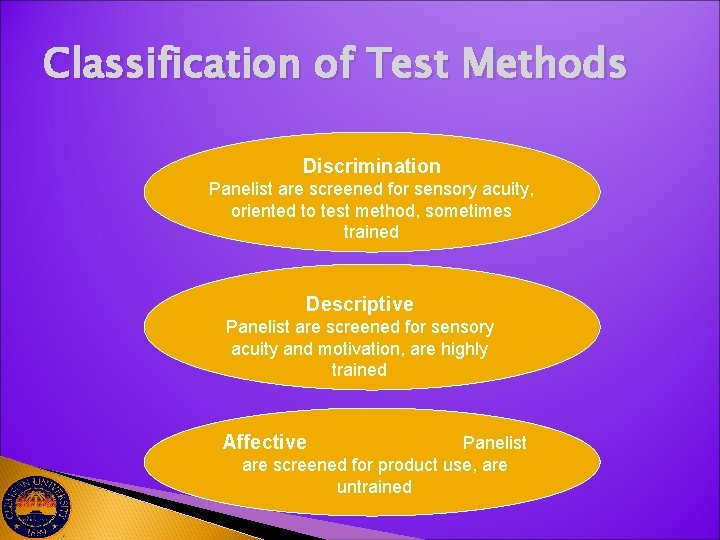
Classification of Test Methods Discrimination Panelist are screened for sensory acuity, oriented to test method, sometimes trained Descriptive Panelist are screened for sensory acuity and motivation, are highly trained Affective Panelist are screened for product use, are untrained
Sensory Evaluation-Food Service Industry Formal Evaluation �R&D at Corporate Offices (Mc. Donalds, Maggie Moo’s Ice Cream, Wendy’s, Denny’s Informal Evaluation �Wait staff sampling daily specials; Customers-specials of the day; chefsdeveloping new menu items (trial/error)
The Way We Eat: File of Dreams
Sensory Attributes We tend to perceive the attributes of a food item in the following order…. . �Appearance �Odor / aroma / fragrance �Consistency and texture �Flavor (aromatics, chemical feeling, taste)
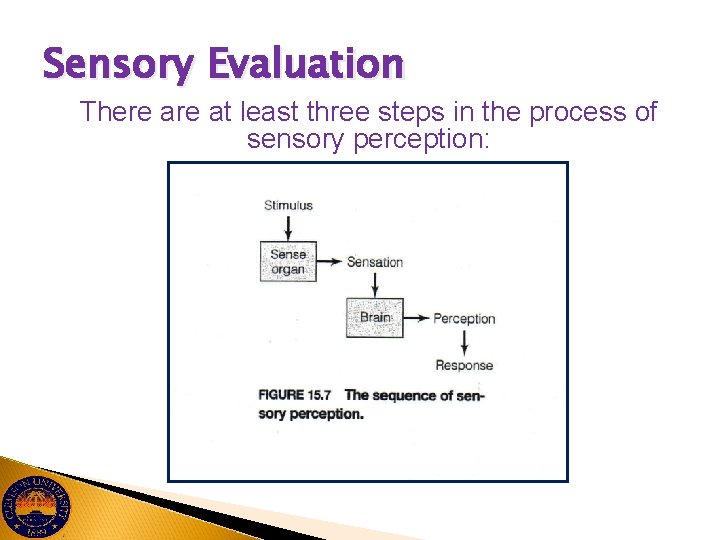
Sensory Evaluation There at least three steps in the process of sensory perception:
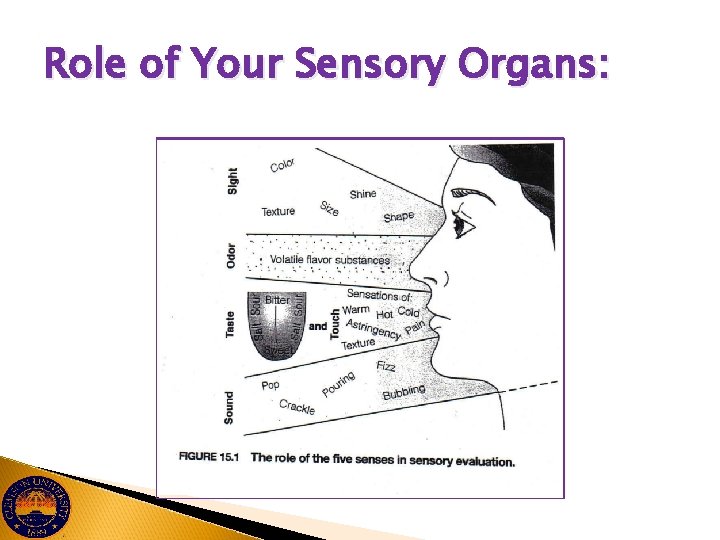
Role of Your Sensory Organs:
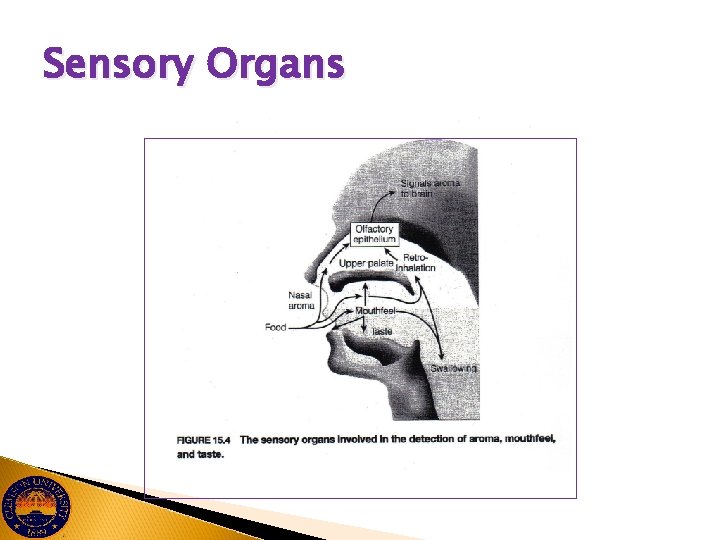
Sensory Organs
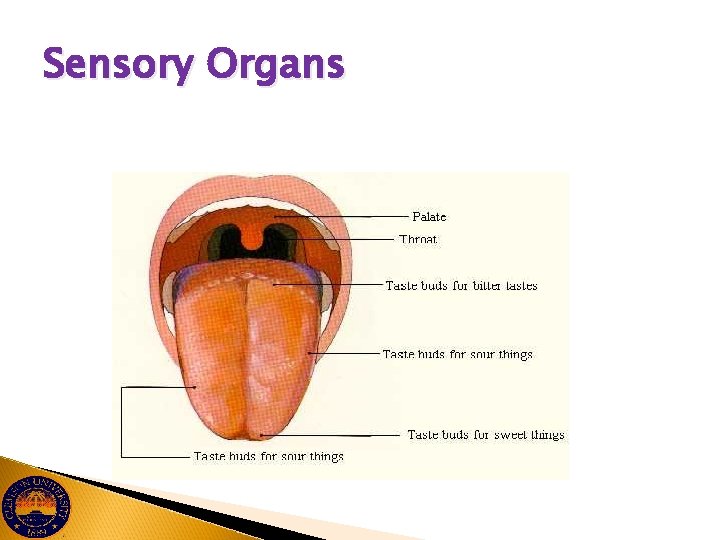
Sensory Organs
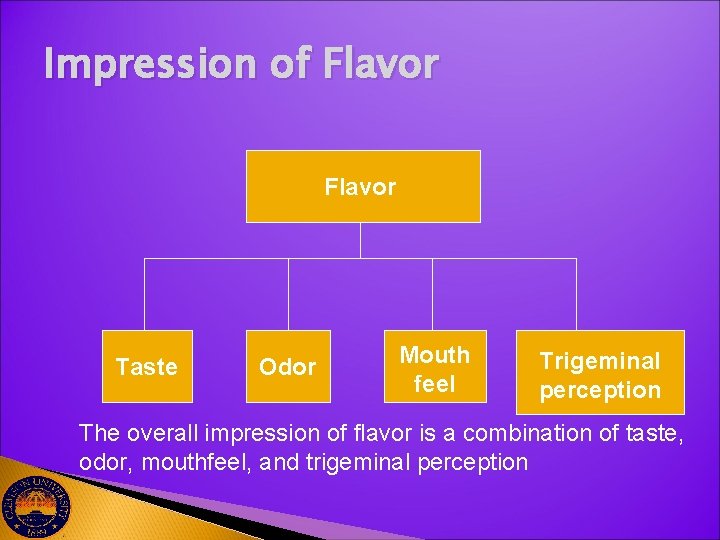
Impression of Flavor Taste Odor Mouth feel Trigeminal perception The overall impression of flavor is a combination of taste, odor, mouthfeel, and trigeminal perception
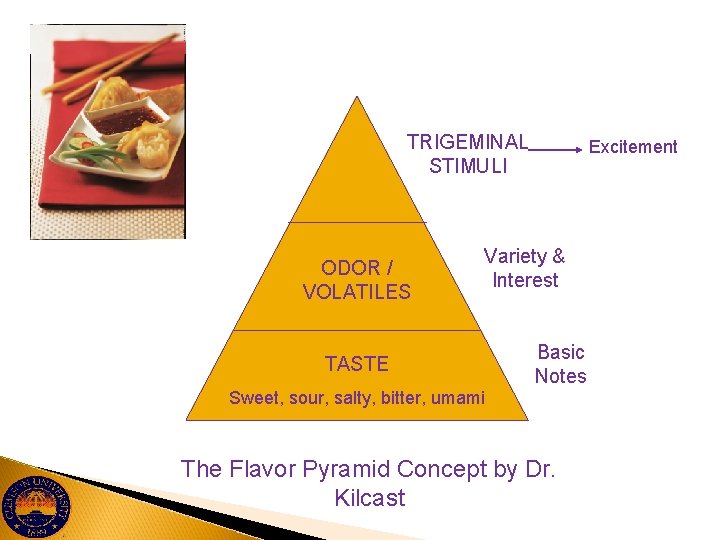
TRIGEMINAL STIMULI ODOR / VOLATILES Excitement Variety & Interest TASTE Basic Notes Sweet, sour, salty, bitter, umami The Flavor Pyramid Concept by Dr. Kilcast
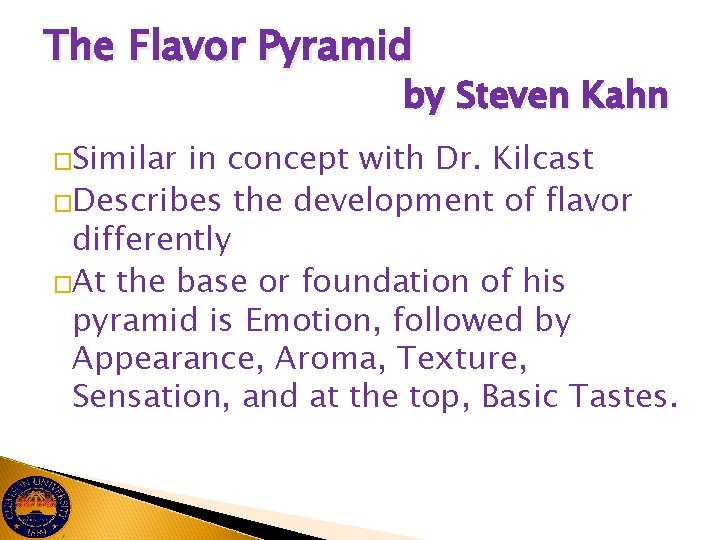
The Flavor Pyramid by Steven Kahn �Similar in concept with Dr. Kilcast �Describes the development of flavor differently �At the base or foundation of his pyramid is Emotion, followed by Appearance, Aroma, Texture, Sensation, and at the top, Basic Tastes.
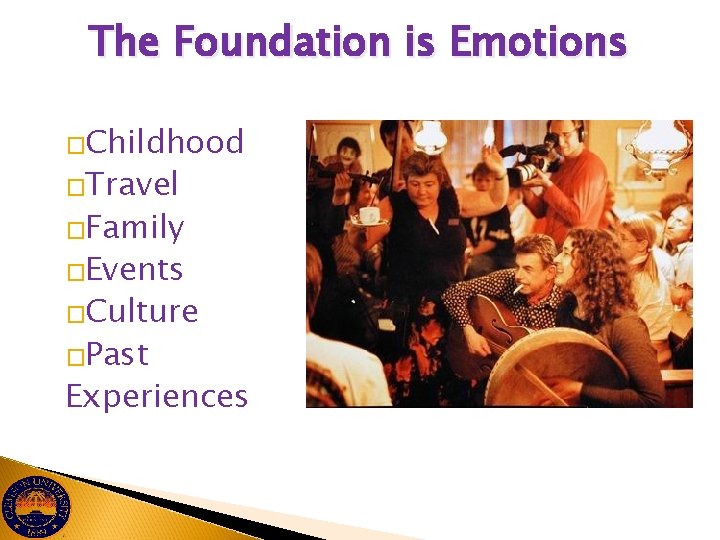
The Foundation is Emotions �Childhood �Travel �Family �Events �Culture �Past Experiences
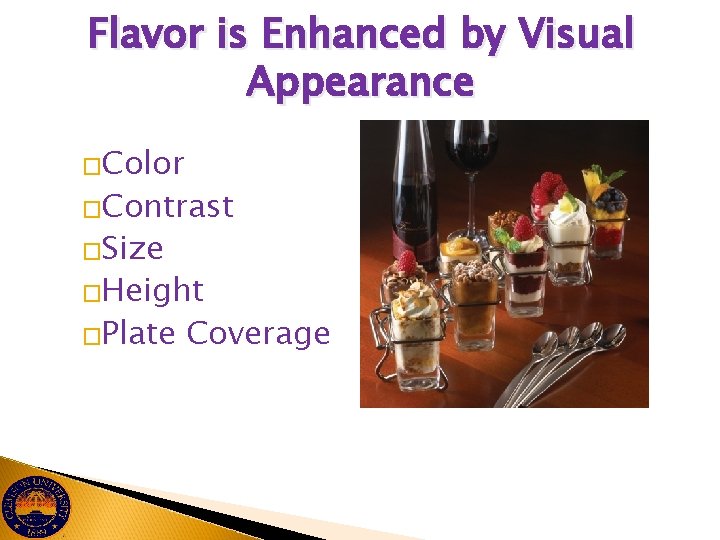
Flavor is Enhanced by Visual Appearance �Color �Contrast �Size �Height �Plate Coverage
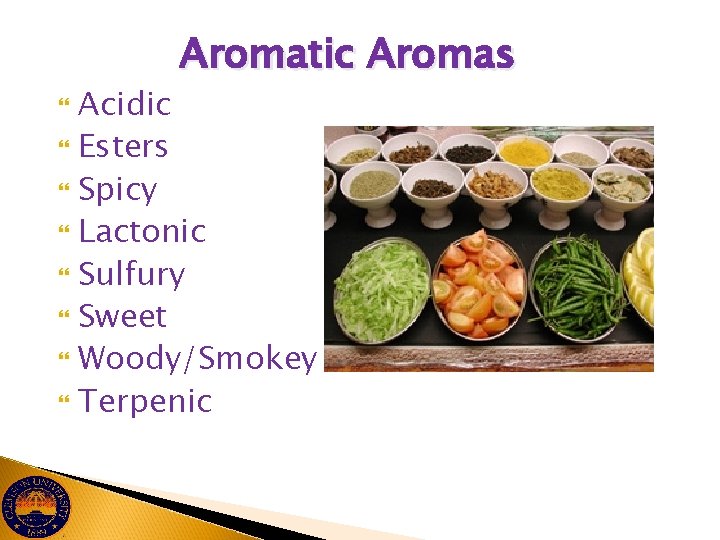
Aromatic Aromas Acidic Esters Spicy Lactonic Sulfury Sweet Woody/Smokey Terpenic
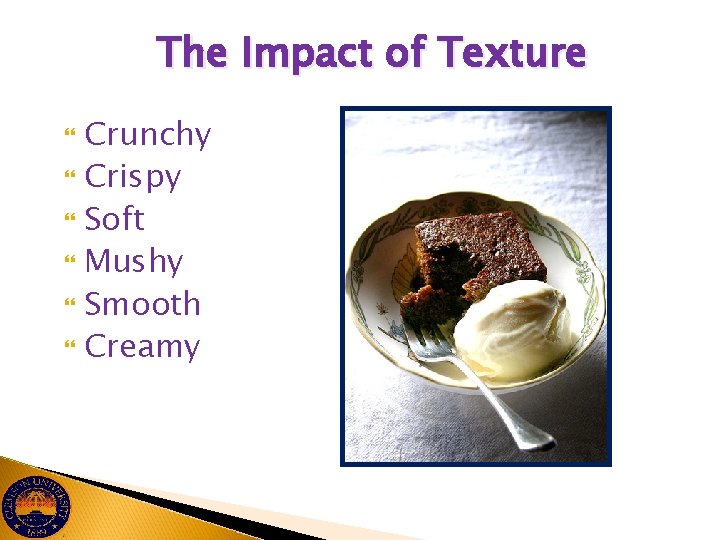
The Impact of Texture Crunchy Crispy Soft Mushy Smooth Creamy
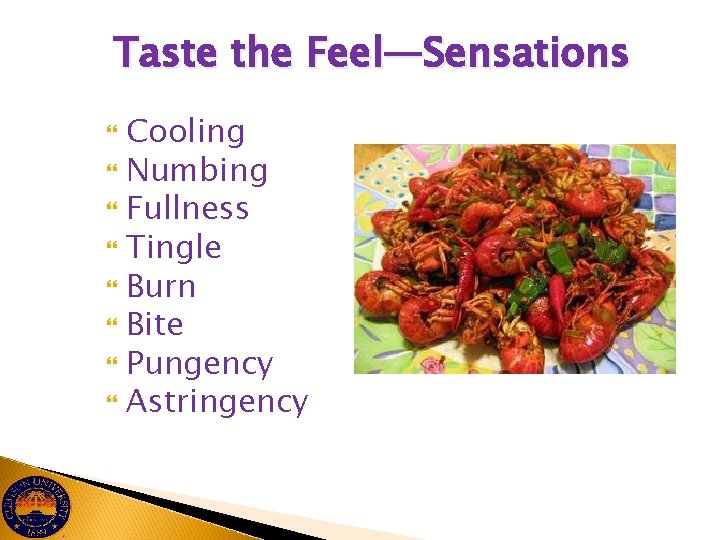
Taste the Feel—Sensations Cooling Numbing Fullness Tingle Burn Bite Pungency Astringency
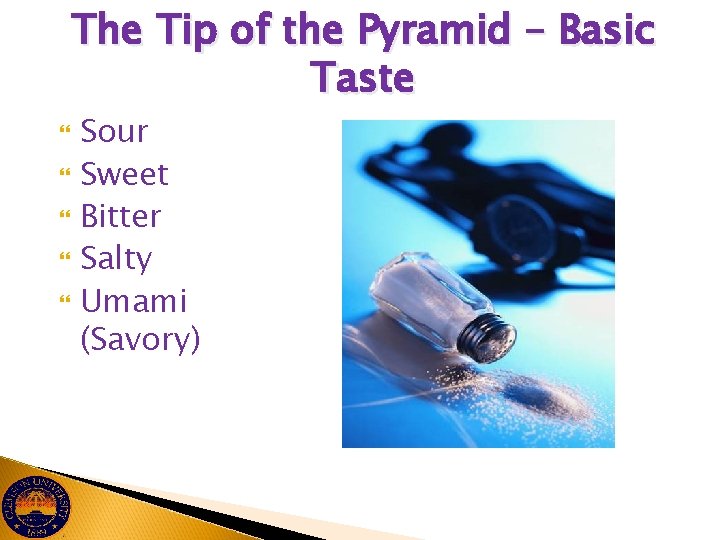
The Tip of the Pyramid – Basic Taste Sour Sweet Bitter Salty Umami (Savory)
When Science Sniffs Around The Kitchen
How do you incorporate sensory evaluation into your curriculum? As a course offering • An introductory or first level course focusing on all aspects of sensory evaluation As a component in an existing course • Incorporating elements of sensory evaluation within an basic culinary course • Utilize ingredient companies educational initiatives
Hands-on Activities As a component in an existing course: Basic Tastes – Umami Laboratory
Basic Tastes – Umami Laboratory Scope (Introduction) • Information on the topic • Basic tastes types • History on umami • What is it? • Where can it be found? • How difficult is it to identify? • Characteristics
Basic Tastes – Umami Laboratory Test Objective(s) • Why is the laboratory being conducted? • What do you expect the students to learn? • Objective for this laboratory: To recognize and evaluate umami taste qualities
Basic Tastes – Umami Laboratory Materials and Methods for the Laboratory • What supplies are needed – can be time intensive • Include every step in the process – makes it easier the next time it is conducted • Note adjustment or changes immediately after lab • Include directions for the students • If demonstrating, include also
Basic Tastes – Umami Laboratory Key Teaching Points • List here the teaching points for the labs • Just the “cake”, no “icing” • As students are completing the lab, these would be the comments to emphasize the objectives stated in the beginning.
Basic Tastes – Umami Laboratory References • Include all of your sources • When using web-based sources, include address and date accessed – information do change • Allows for students to complete further research • Gives credit to researcher and authors
Basic Tastes – Umami Laboratory Supplemental Handouts • Tables and forms for students data collection • Additional information to reinforce topic or objectives
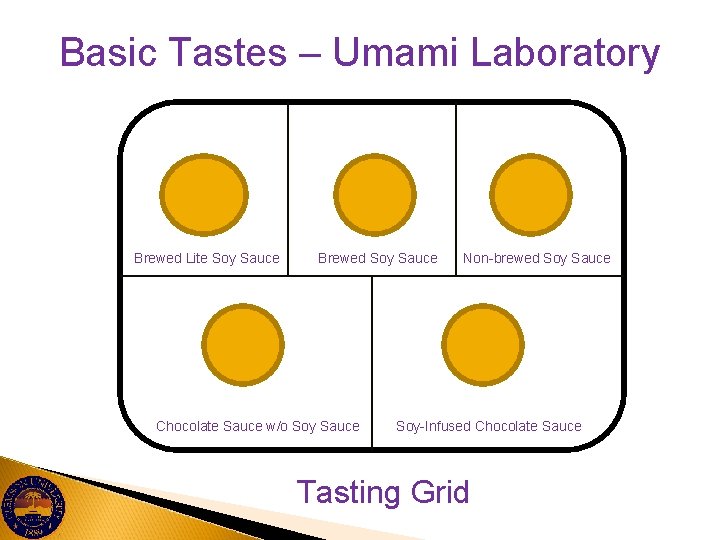
Basic Tastes – Umami Laboratory Brewed Lite Soy Sauce Brewed Soy Sauce Chocolate Sauce w/o Soy Sauce Non-brewed Soy Sauce Soy-Infused Chocolate Sauce Tasting Grid
Hands-on Activities As a course offering: The Elements of Butter Laboratory
Elements of Butter Laboratory • Research and Development • New Product Development • Ingredient Substitution.
Elements of Butter Laboratory Fresh Butter • Mild, sweet, clean, pleasant flavor and a delicate aroma • Appetite seems to “craves more of the product • Reminiscent of the best “butter popcorn”.
Elements of Butter Laboratory Butter Buds® 8 x • Enzyme modification technology • Highly concentrated flavor in convenient powder form – 400 x the flavor strength • 1# of Butter Buds® 8 x = flavor strength of ~ 8# butter • Typical usage level: 1. 0%-4. 0% total batch weight
Elements of Butter Laboratory Diacetyl • Greenish yellow liquid compound (CH 3 CO)2 • Occurs as a natural byproduct of fermentation • Found in several dairy products (butter, cheese, milk), as well as bread, coffee, and rum • Component of artificial butter flavoring
Thank You ! Questions?
References: Kaun, S. 2006. The multi-sensory flavor experience. Flavor & the Menu. Tigard, Oregon. Pg. 48 -52 ------ 2006. Building on the flavor pyramid. Flavor & the Menu. Tigard, Oregon. Pg. 55 -58 ------ 2006 Flavor by Latitude. Flavor & the Menu. Tigard, Oregon. Pg. 48 -52 Kikkoman International, Inc. 50 California Street, Suite 3600, San Francisco, Ca 94111. Website: www. kikkoman-usa. com Mc. Gee, H. 2006. When science sniffs around the kitchen. New York Times. Accessed December 11, 2006 at http: //www. nytimes. com/2006/12/06/dining/06 curi. html? ei=5024&en=8 b 5 dee 2 a 4 bc 205 a 5 &ex=1. . . Meilgaard, MM. , Civille, GV. , Carr, BT. 1999. Sensory Evaluation Techniques. 3 rd Edition. CRC Press. New York Murano, P. S. 2003. Understanding food science and technology. Wadsworth / Thompson Learning. Belmont, CA Powell, J. 2006. The way we eat: file of dreams. New York Times. Accessed December 11, 2006 at http: //nytimes. com/2006/12/10/magazine/10 food. t. html? ei=5024&en=a 2188 a 66370 da 7 ed. .
- Slides: 47