
Sensorimotor Neurophysiology of Active Sensing Somatosensory System Part
- Slides: 19
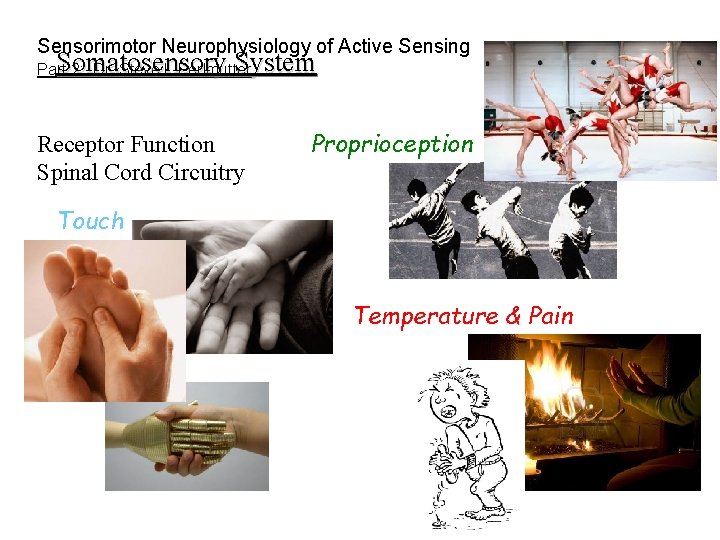
Sensorimotor Neurophysiology of Active Sensing Somatosensory System Part 2: Dr. Steve I. Perlmutter Receptor Function Spinal Cord Circuitry Proprioception Touch Temperature & Pain
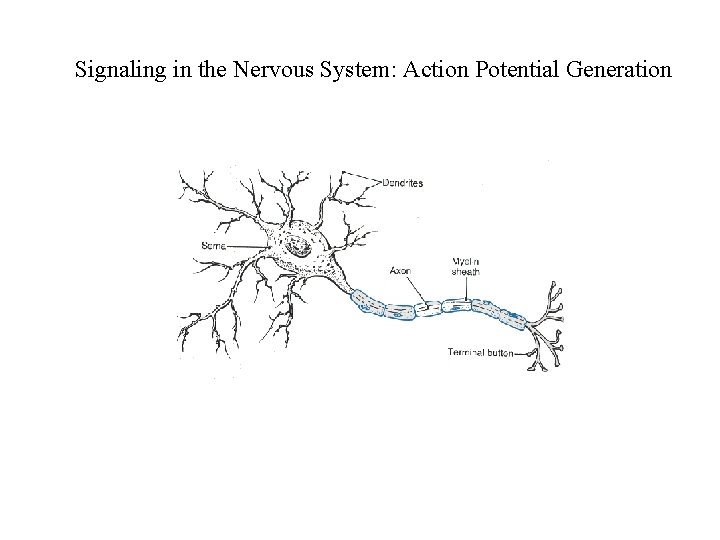
Signaling in the Nervous System: Action Potential Generation
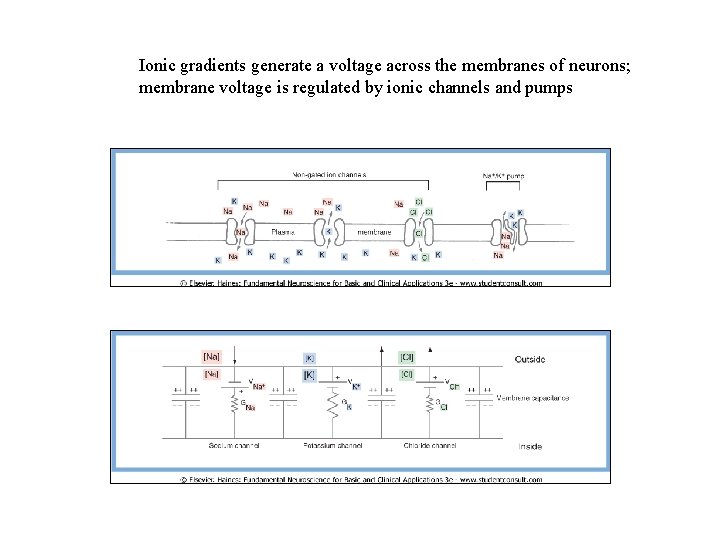
Ionic gradients generate a voltage across the membranes of neurons; membrane voltage is regulated by ionic channels and pumps
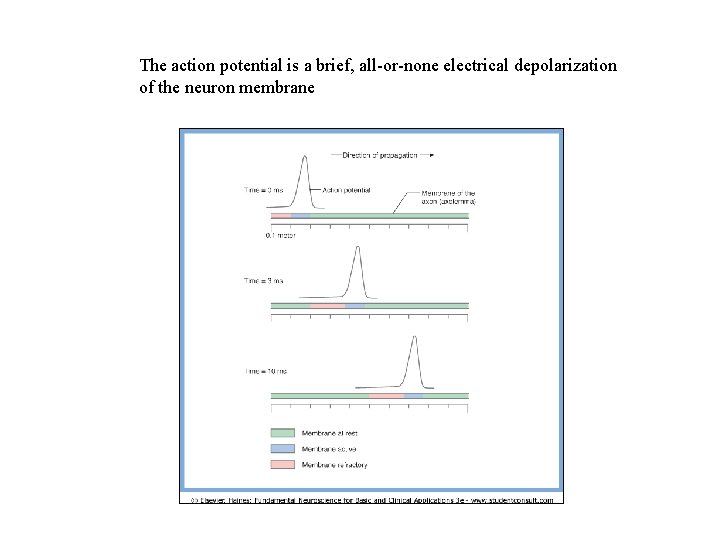
The action potential is a brief, all-or-none electrical depolarization of the neuron membrane
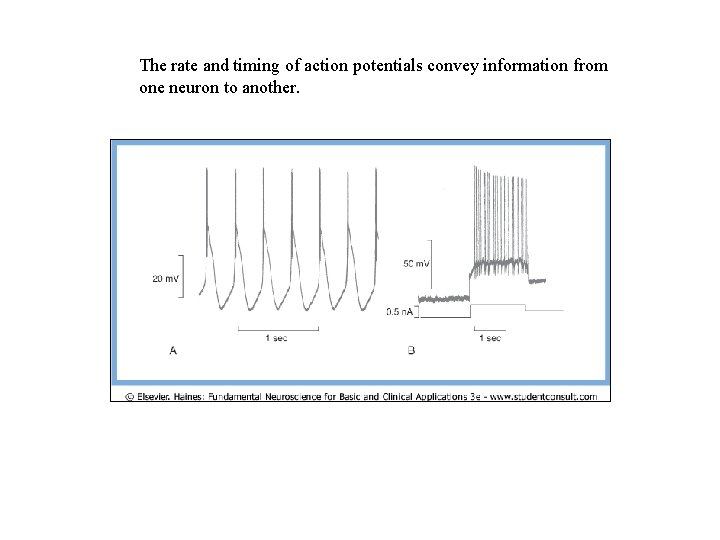
The rate and timing of action potentials convey information from one neuron to another.
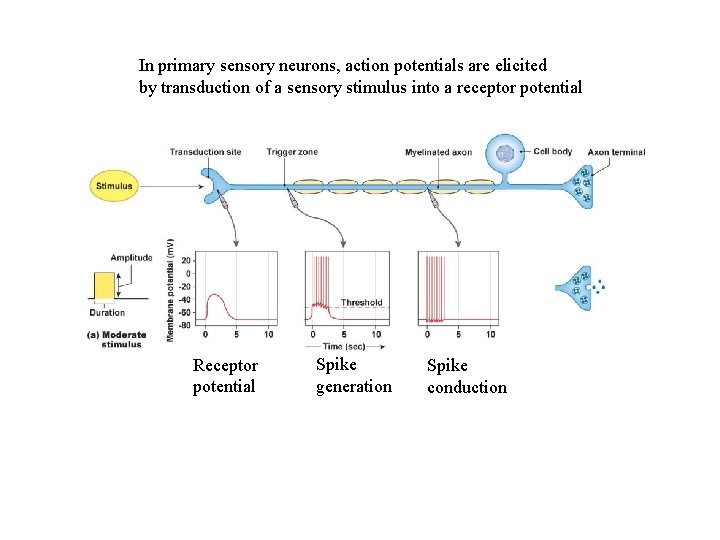
In primary sensory neurons, action potentials are elicited by transduction of a sensory stimulus into a receptor potential Receptor potential Spike generation Spike conduction
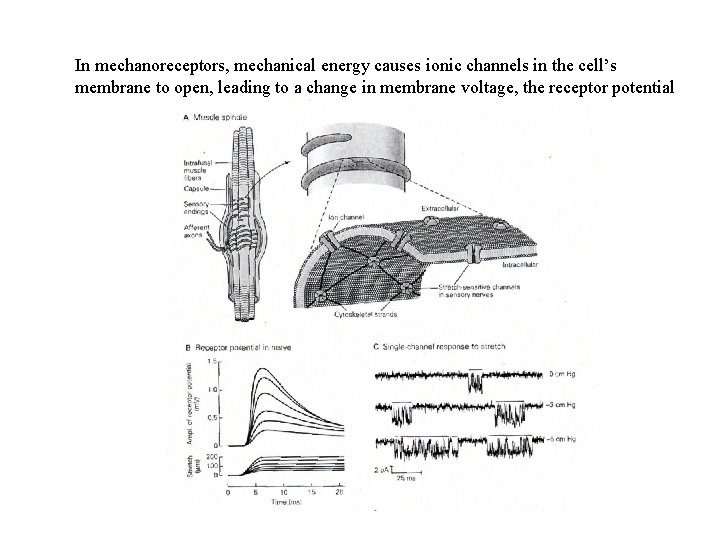
In mechanoreceptors, mechanical energy causes ionic channels in the cell’s membrane to open, leading to a change in membrane voltage, the receptor potential
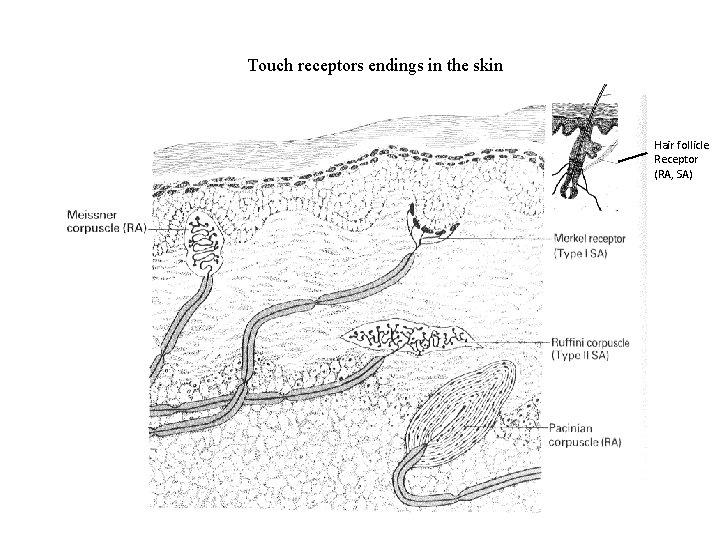
Touch receptors endings in the skin Hair follicle Receptor (RA, SA)
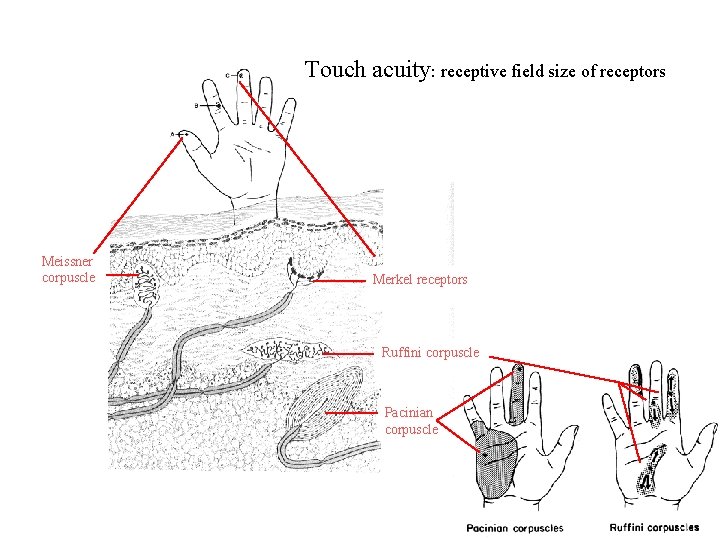
Touch acuity: receptive field size of receptors Meissner corpuscle Merkel receptors Ruffini corpuscle Pacinian corpuscle
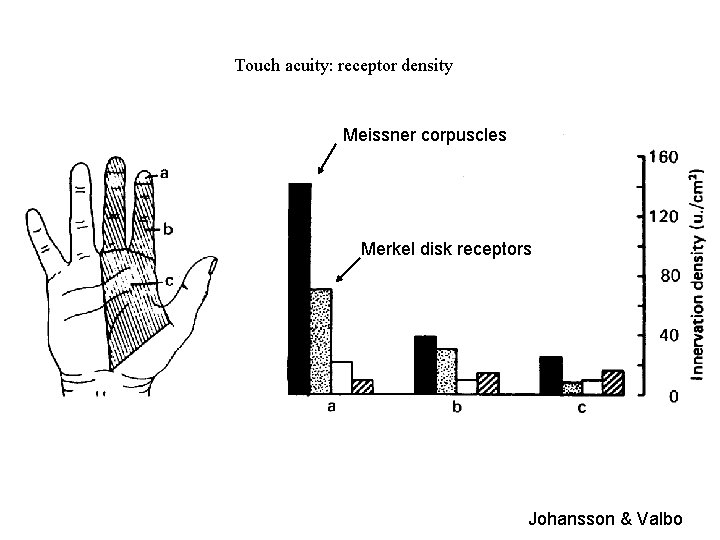
Touch acuity: receptor density Meissner corpuscles Merkel disk receptors Johansson & Valbo
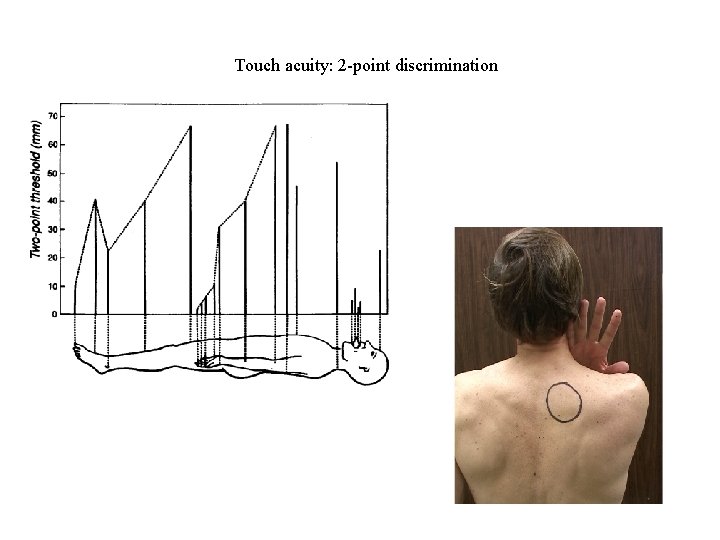
Touch acuity: 2 -point discrimination
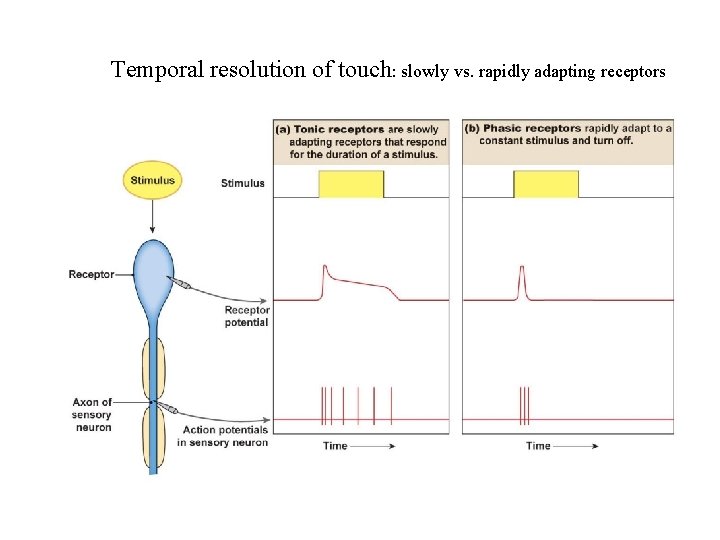
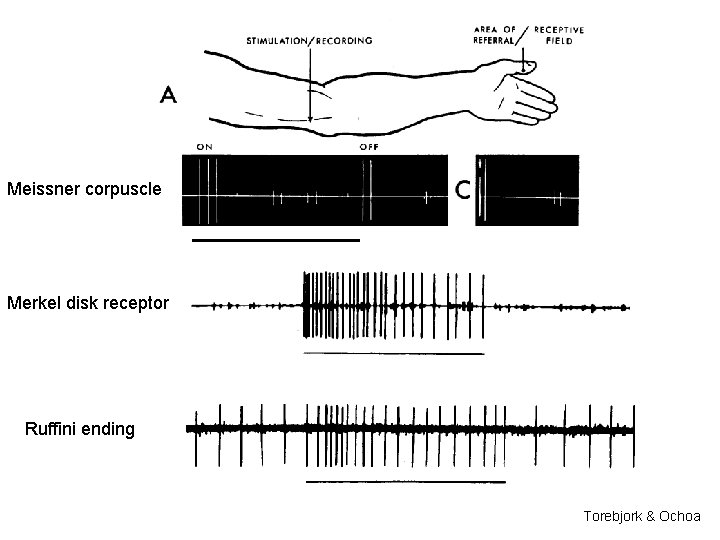
Temporal resolution of touch: slowly vs. rapidly adapting receptors
Meissner corpuscle Merkel disk receptor Ruffini ending Torebjork & Ochoa
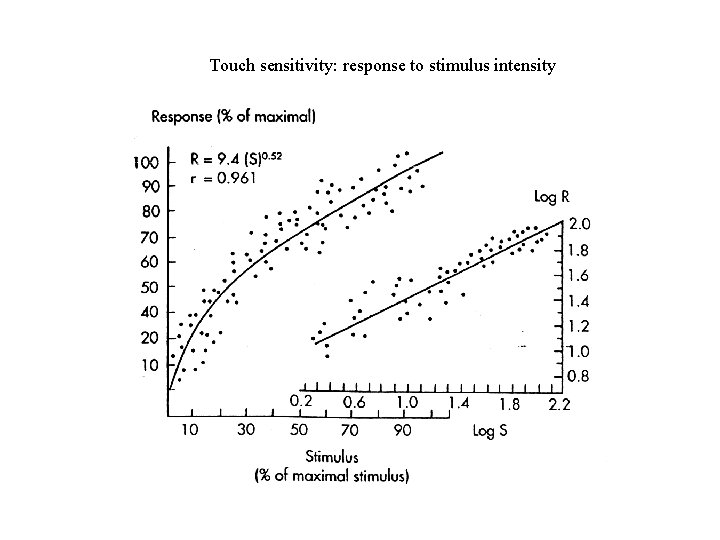
Touch sensitivity: response to stimulus intensity
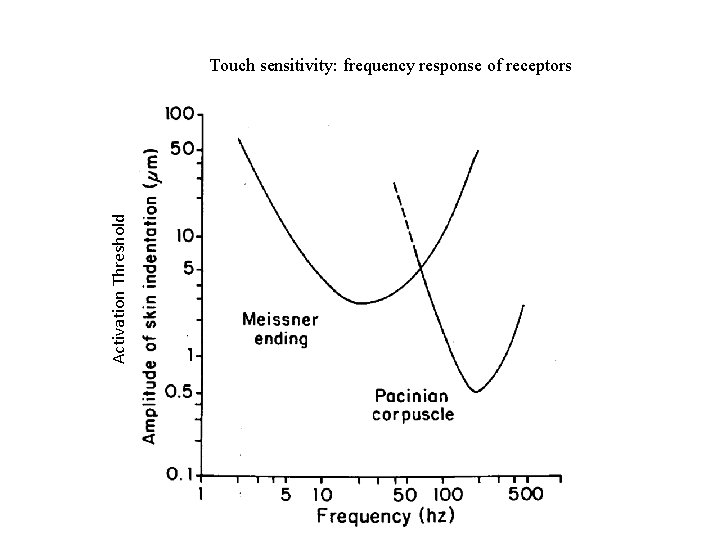
Activation Threshold Touch sensitivity: frequency response of receptors
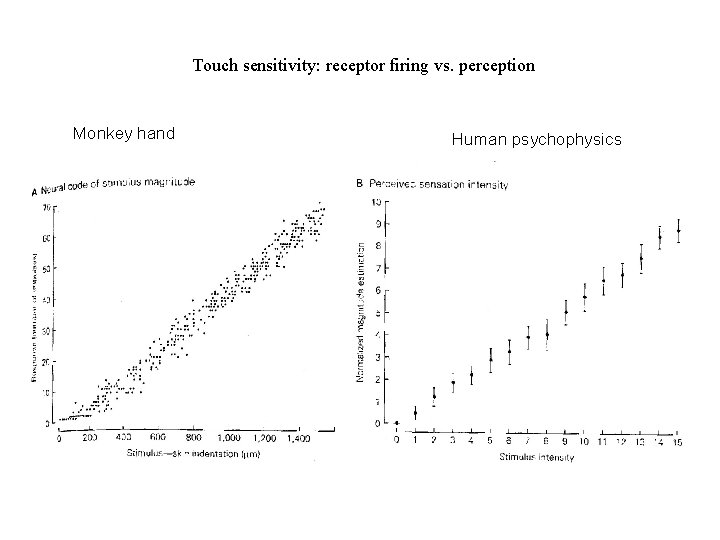
Touch sensitivity: receptor firing vs. perception Monkey hand Human psychophysics
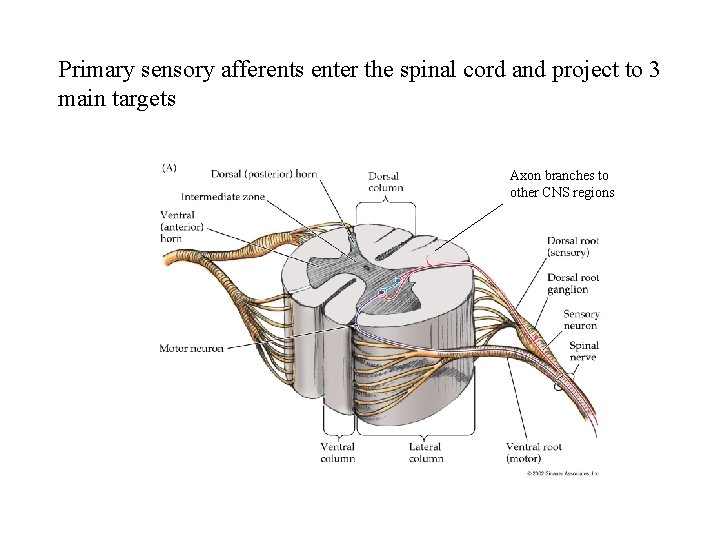
Primary sensory afferents enter the spinal cord and project to 3 main targets Axon branches to other CNS regions
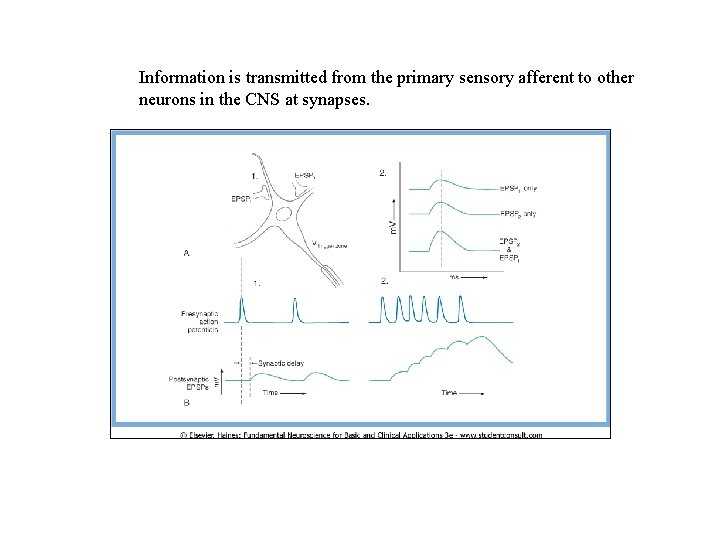
Information is transmitted from the primary sensory afferent to other neurons in the CNS at synapses.
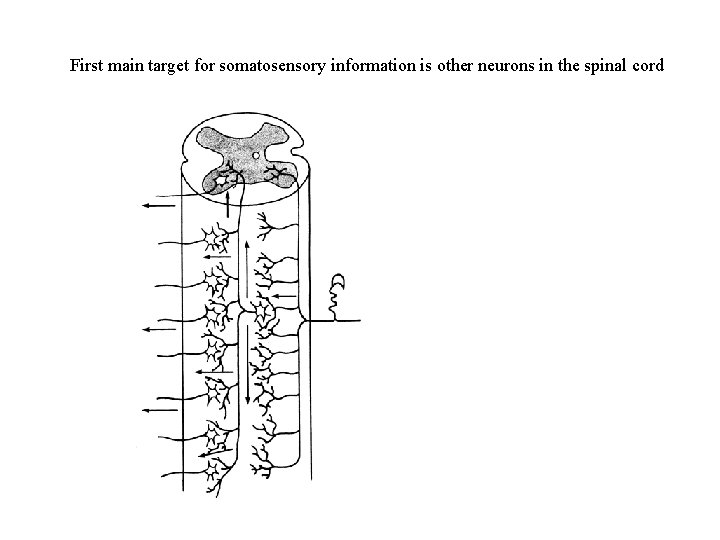
First main target for somatosensory information is other neurons in the spinal cord