
Sense of Hearing SENSES Sensory Receptors detect environmental
- Slides: 12
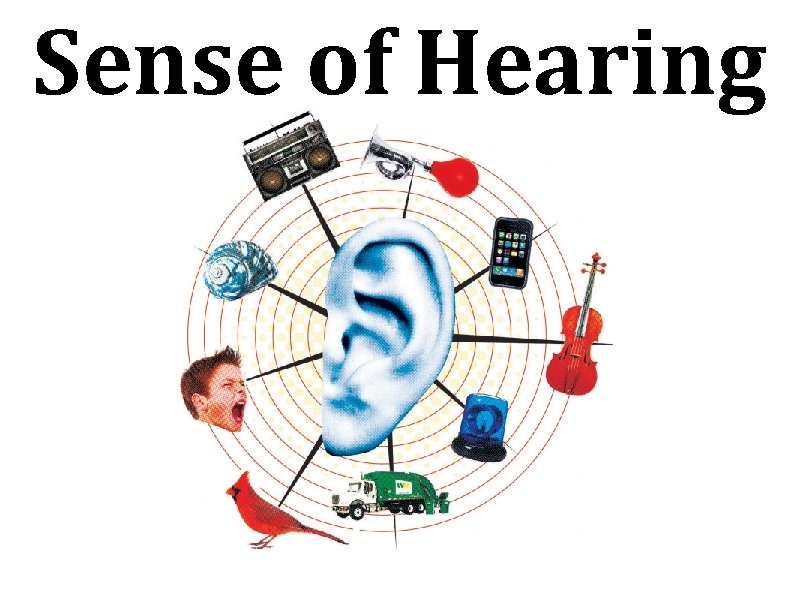
Sense of Hearing
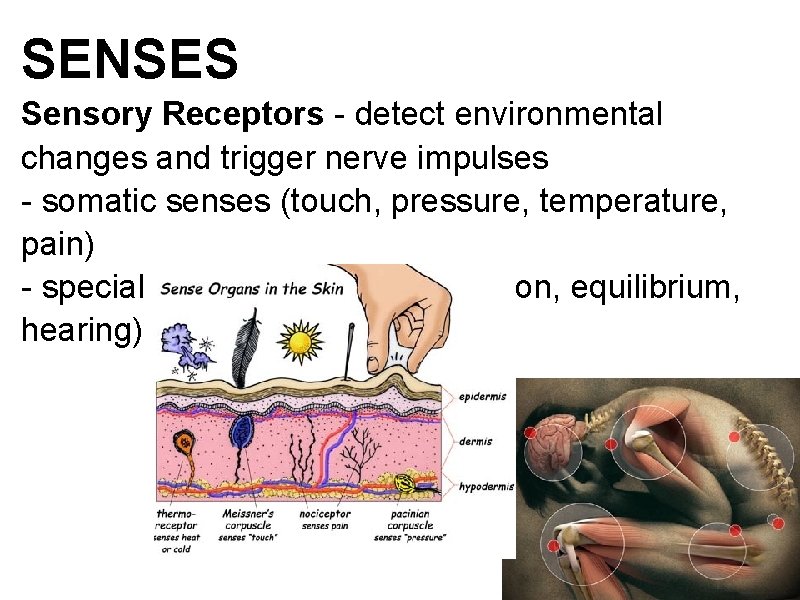
SENSES Sensory Receptors - detect environmental changes and trigger nerve impulses - somatic senses (touch, pressure, temperature, pain) - special senses (smell, taste, vision, equilibrium, hearing)
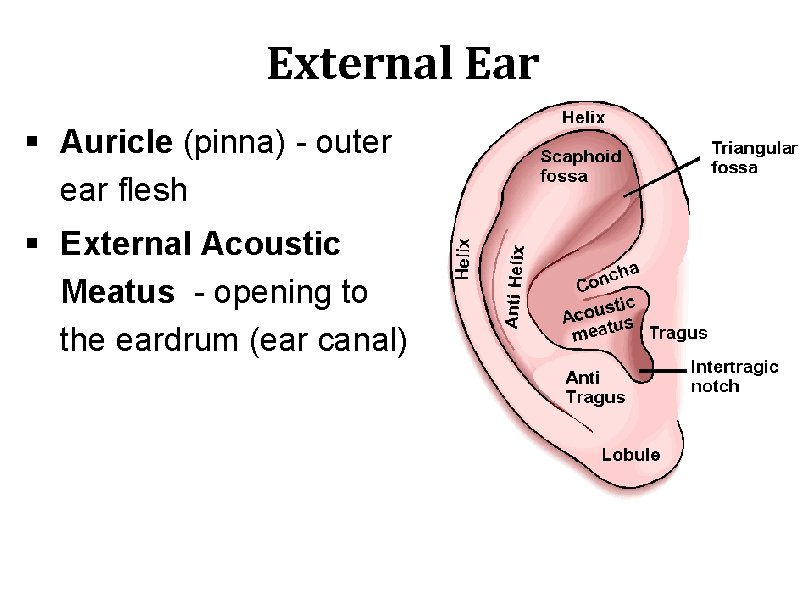
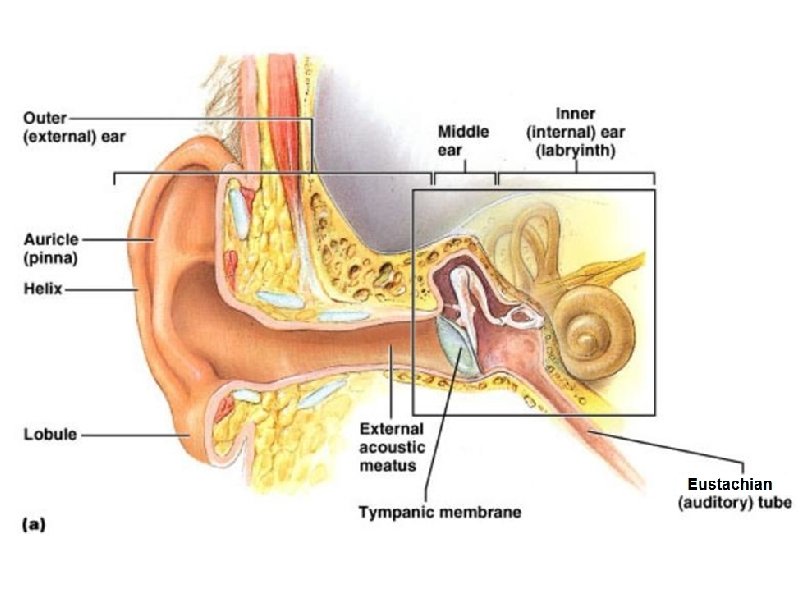
External Ear § Auricle (pinna) - outer ear flesh § External Acoustic Meatus - opening to the eardrum (ear canal)
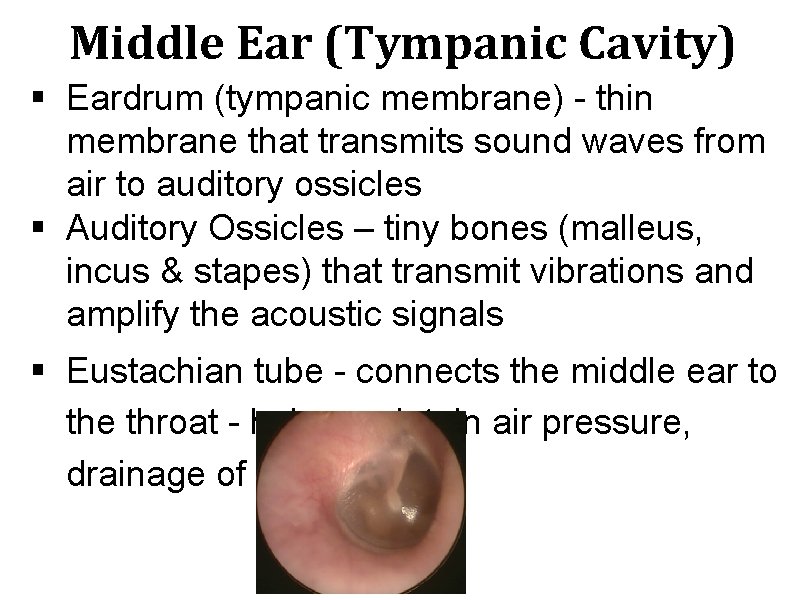
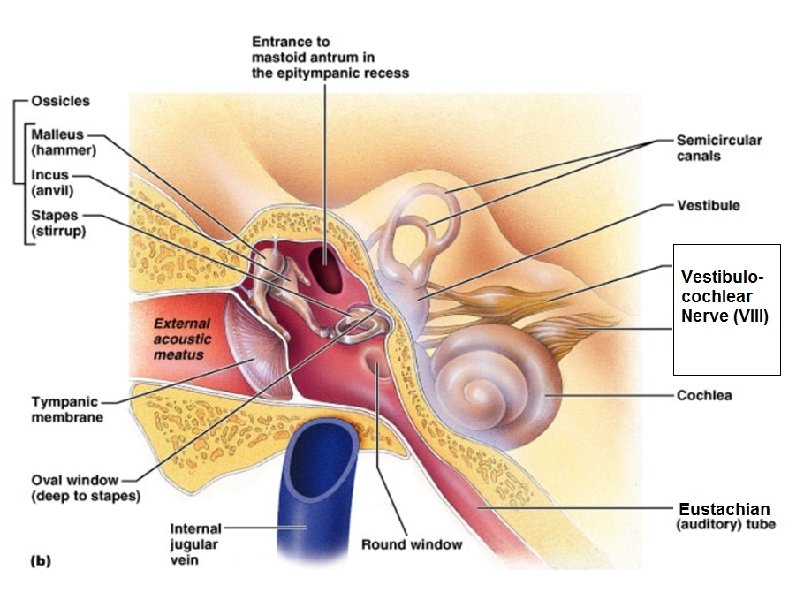
Middle Ear (Tympanic Cavity) § Eardrum (tympanic membrane) - thin membrane that transmits sound waves from air to auditory ossicles § Auditory Ossicles – tiny bones (malleus, incus & stapes) that transmit vibrations and amplify the acoustic signals § Eustachian tube - connects the middle ear to the throat - helps maintain air pressure, drainage of fluid
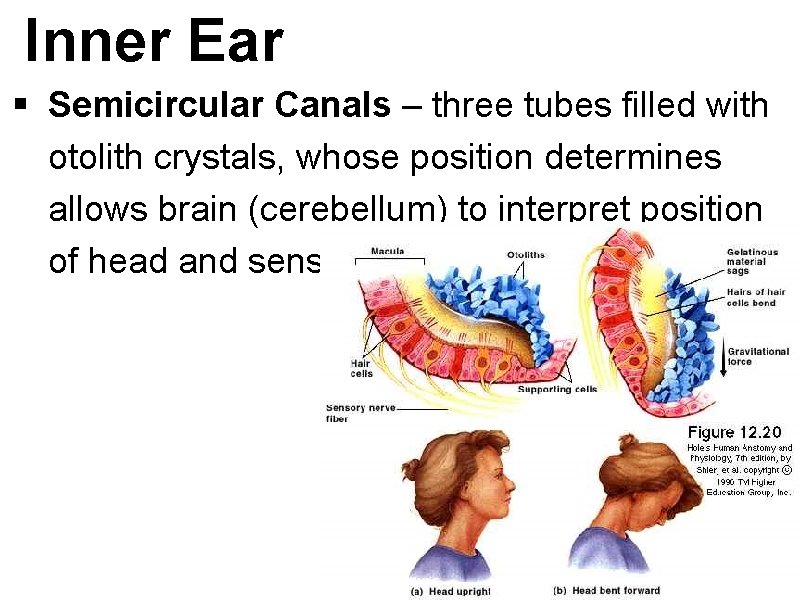
Inner Ear § Semicircular Canals – three tubes filled with otolith crystals, whose position determines allows brain (cerebellum) to interpret position of head and sense of equilibrium/balance
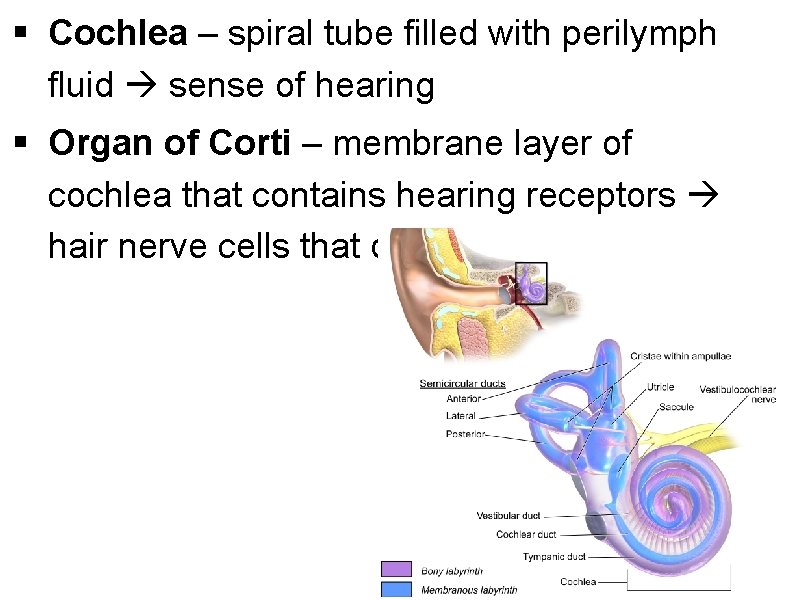
§ Cochlea – spiral tube filled with perilymph fluid sense of hearing § Organ of Corti – membrane layer of cochlea that contains hearing receptors hair nerve cells that detect sound vibrations
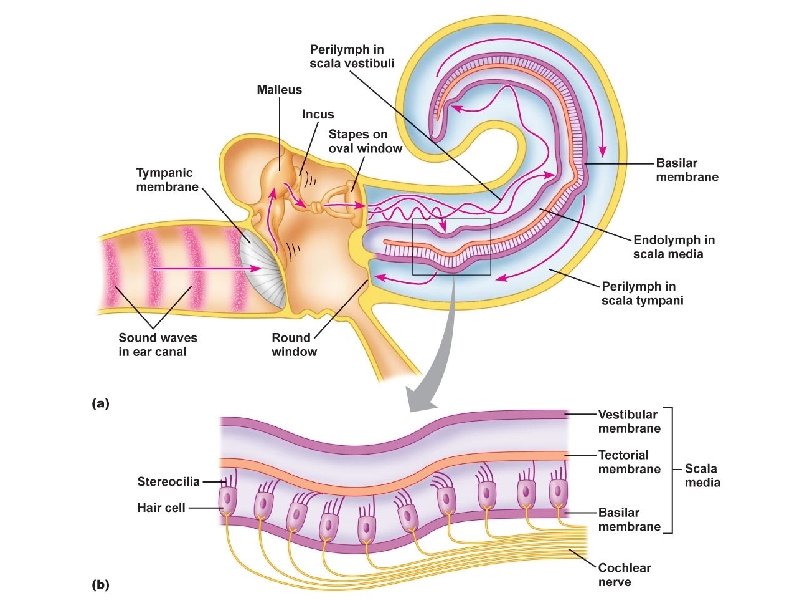
§ Inside the cochlea in the basilar membrane are special neurons called HAIR CELLS; they are stimulated to produce action potentials due to pressure § The stapes is attached to the OVAL WINDOW. Sound vibrations are transmitted along the ear and cause the perilymph fluid in the cochlea to vibrate, which “bends” the hair cells. § Hair cells in the cochlea transmit this
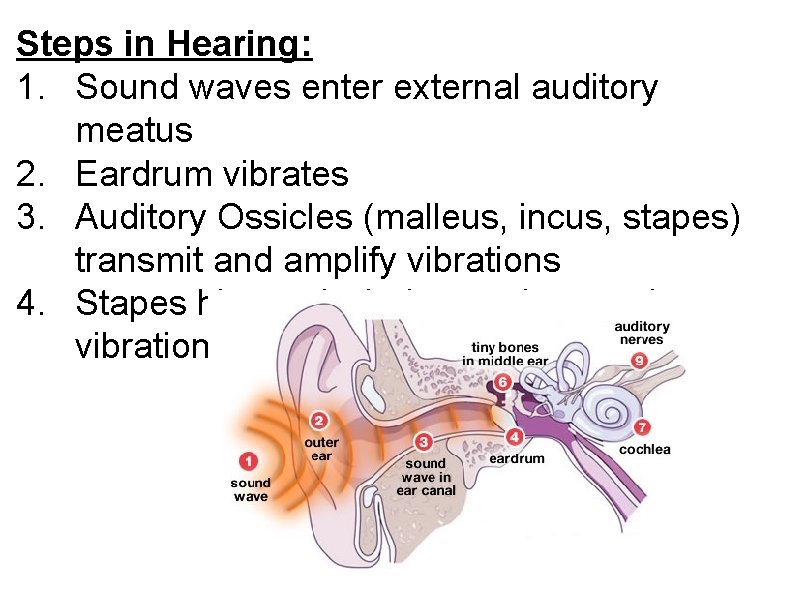
Steps in Hearing: 1. Sound waves enter external auditory meatus 2. Eardrum vibrates 3. Auditory Ossicles (malleus, incus, stapes) transmit and amplify vibrations 4. Stapes hits oval window and transmits vibrations to cochlea
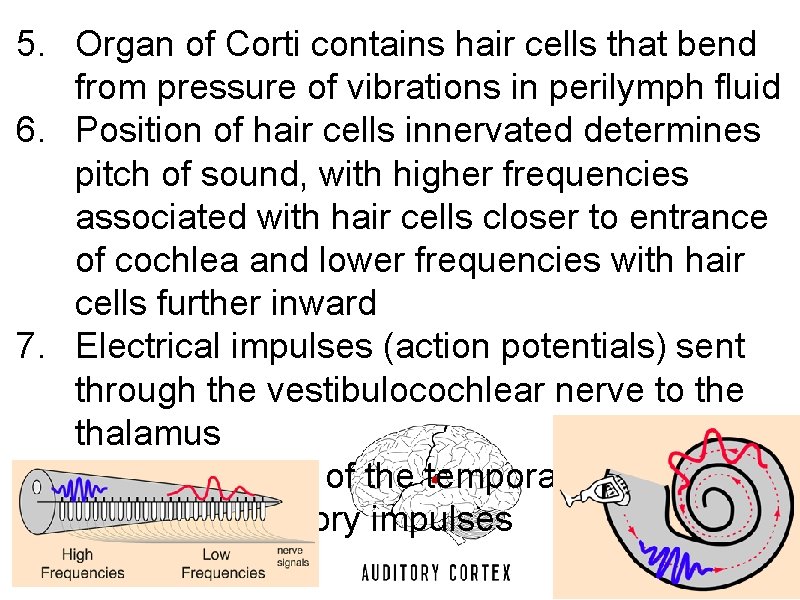
5. Organ of Corti contains hair cells that bend from pressure of vibrations in perilymph fluid 6. Position of hair cells innervated determines pitch of sound, with higher frequencies associated with hair cells closer to entrance of cochlea and lower frequencies with hair cells further inward 7. Electrical impulses (action potentials) sent through the vestibulocochlear nerve to the thalamus 8. Auditory cortex of the temporal lobe interprets sensory impulses