
Sensation Taste Smell and Touch Objectives Discuss the
Sensation Taste, Smell and Touch
Objectives • Discuss the role of the kinesthetic and vestibular senses in body position, balance, and equilibrium. • Discuss the role played by the skin in the sensation of touch, including the types and distribution of sensory receptors in the skin. • Explain how taste sensations are produced and identify the basic taste categories. • Define pheromones, and discuss the research evidence supporting the notion that human pheromones exist. • Describe the process of olfaction, including the transmission of olfactory information to the brain.
Sensation • The process of detecting a physical stimulus, such as light, sound, heat, pressure, etc, …
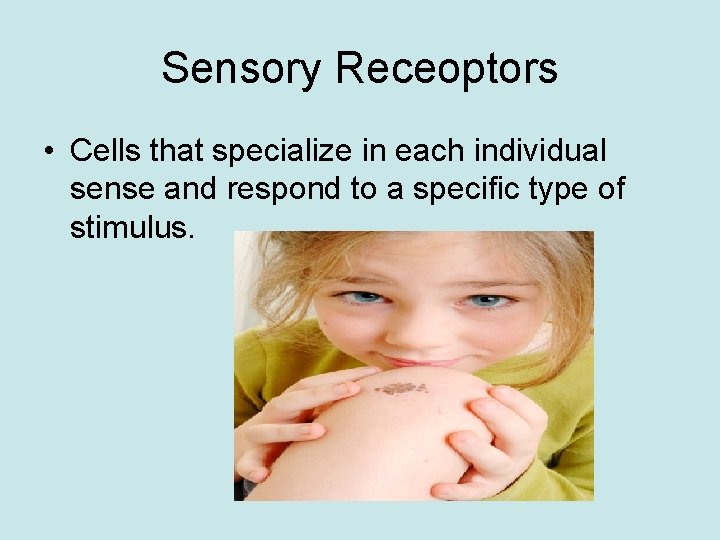
Sensory Receoptors • Cells that specialize in each individual sense and respond to a specific type of stimulus.
Transduction • The process by which a form of physical energy is converted into a coded neural signal that can be processed by the nervous system.
Sensory Threshold • Our abilities to detect energy from the outside world is not infinite • The point at which a stimulus is strong enough to be detected.
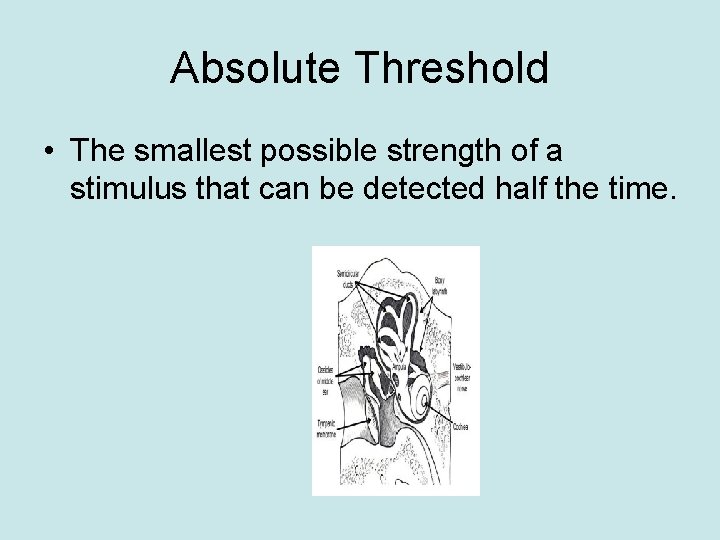
Absolute Threshold • The smallest possible strength of a stimulus that can be detected half the time.
Gustation • Taste is a chemical sense. • The little bumps on our tongues are actually called papillae • Inside some of these papillae are clumps of taste cells. • These clumps of cells are actually the taste buds.
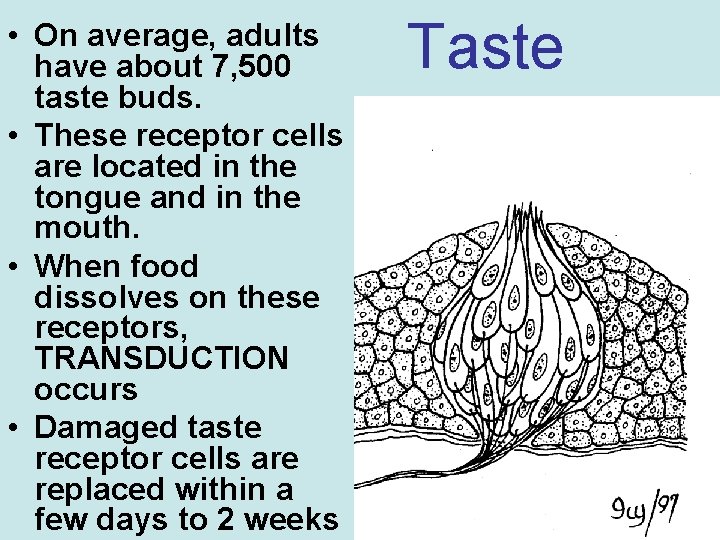
• On average, adults have about 7, 500 taste buds. • These receptor cells are located in the tongue and in the mouth. • When food dissolves on these receptors, TRANSDUCTION occurs • Damaged taste receptor cells are replaced within a few days to 2 weeks Taste
Taste • Substances dissolved by saliva activating the taste buds • (cheeks, roof of mouth, throat, tongue)
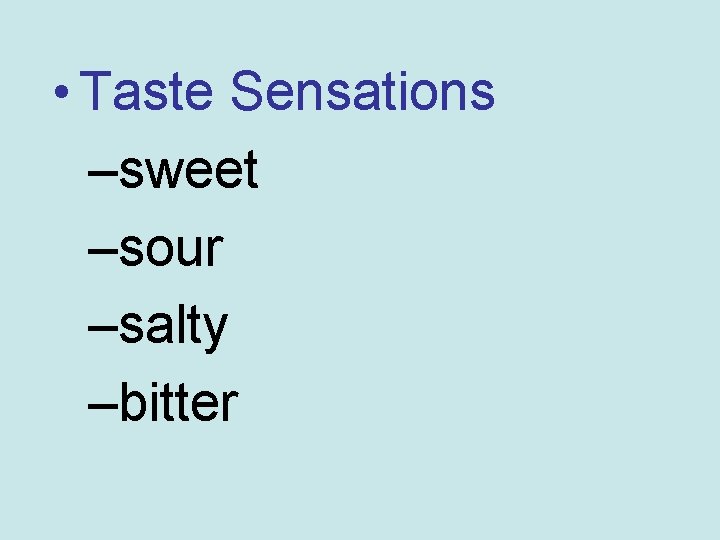
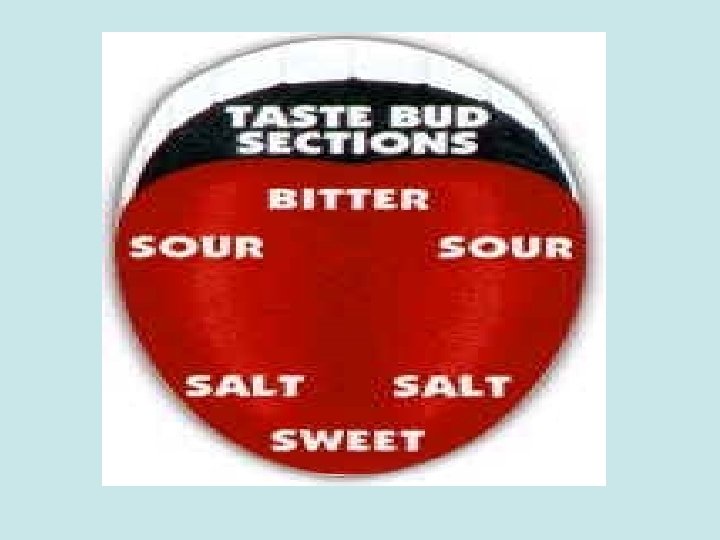
• Taste Sensations –sweet –sour –salty –bitter

Supertasters • People with an abundance of taste receptors • Approximately 25% of the population
Nontasters • People with a minimum of taste receptors • Taste with less intensity than the rest of the population • Approximately 25% of the population
Module 9: Sensation Other Senses: Smell
Other Senses:
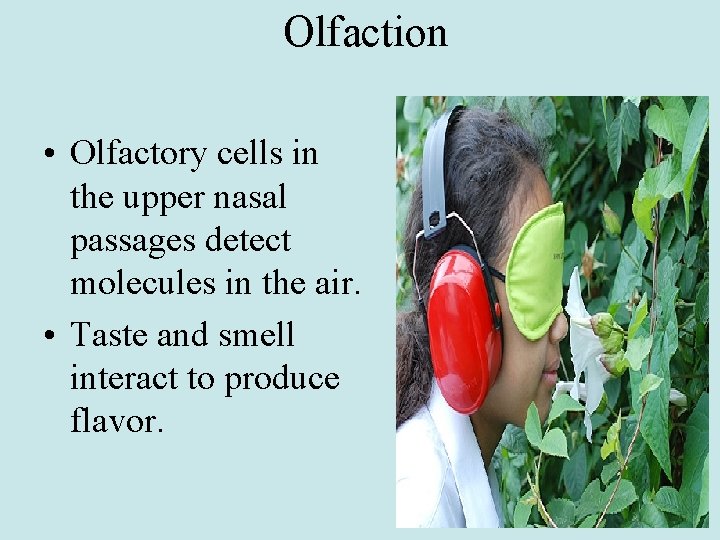
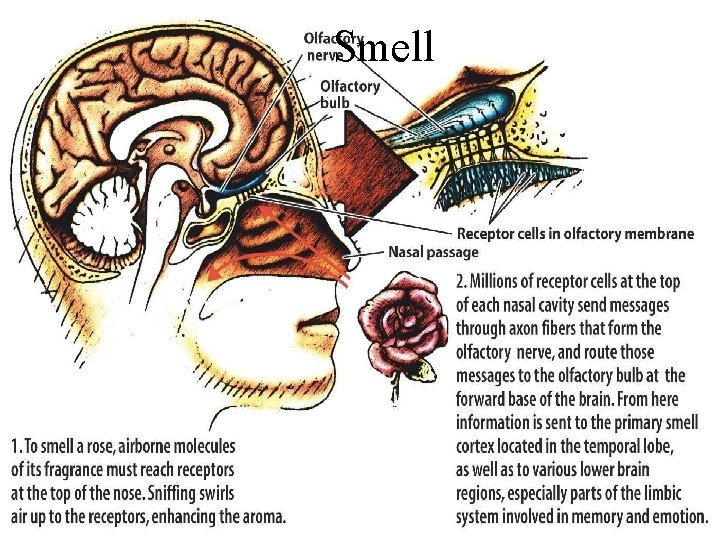
Olfaction • Olfactory cells in the upper nasal passages detect molecules in the air. • Taste and smell interact to produce flavor.
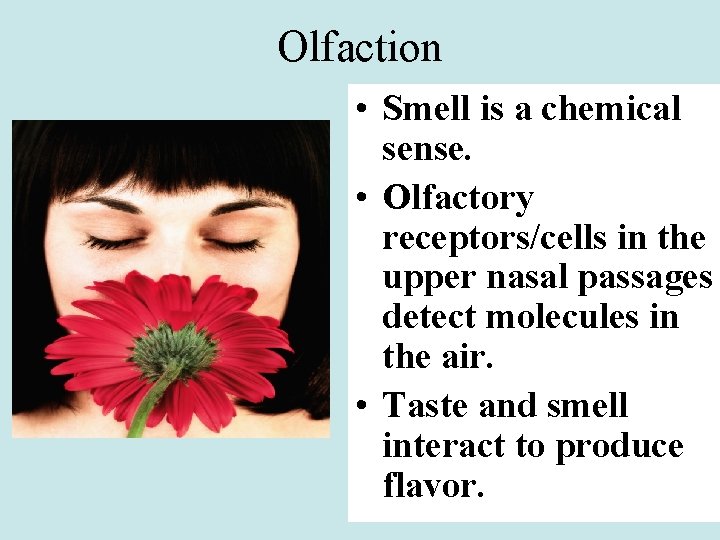
Olfaction • Smell is a chemical sense. • Olfactory receptors/cells in the upper nasal passages detect molecules in the air. • Taste and smell interact to produce flavor.
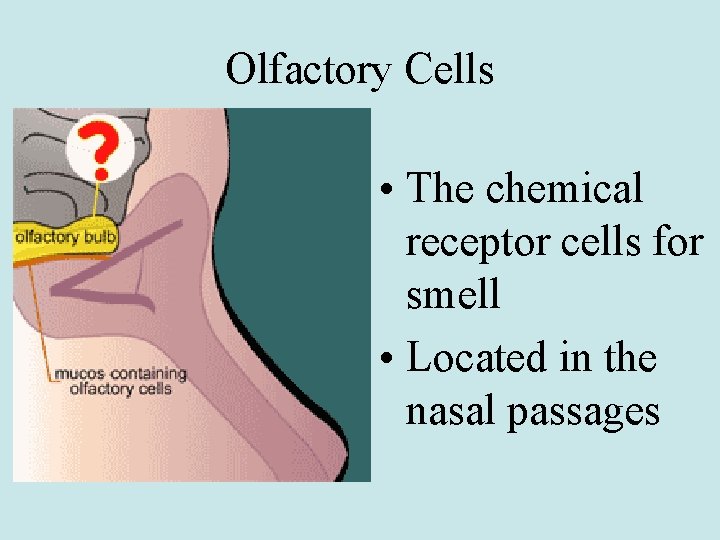
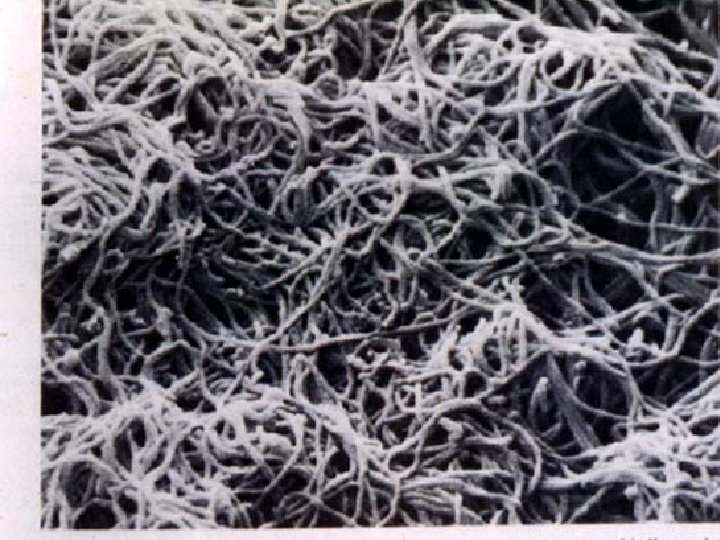
Olfactory Cells • The chemical receptor cells for smell • Located in the nasal passages
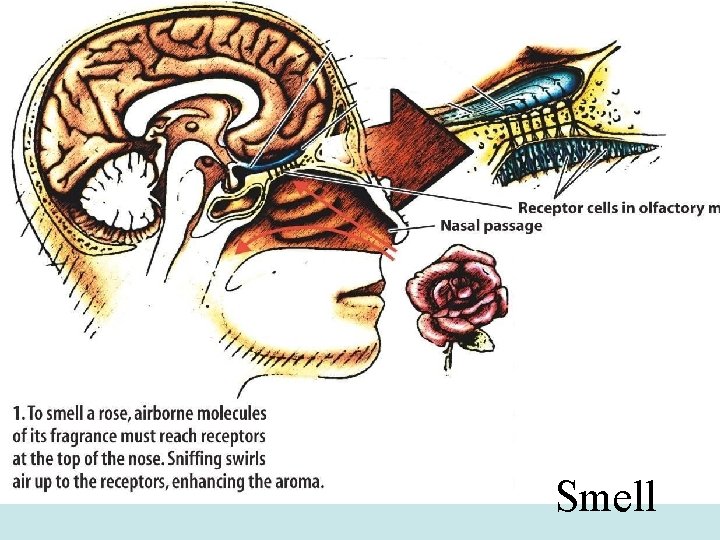
Smell
Smell
Do Pheromones Influence Human Behavior? • Please read the article on page 100 in your textbook and record your answer. Remember to explain your reasoning.
Other Senses: Touch
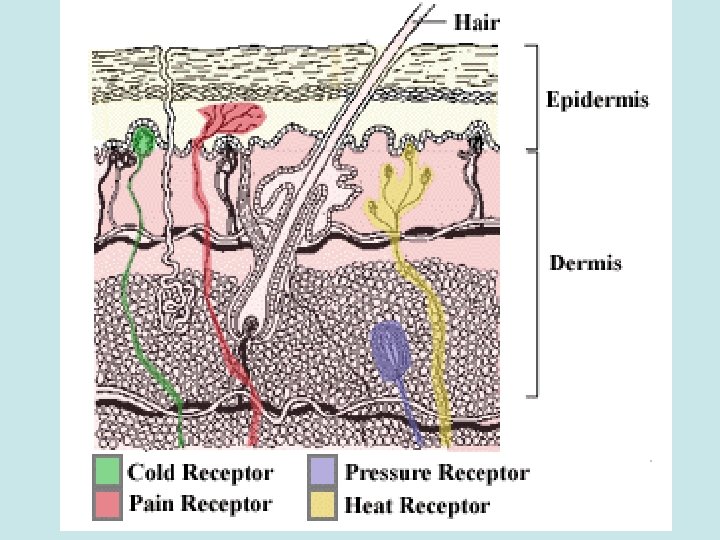
Touch • Touch receptors are on the skin • Four basic skin senses are – Pain, warmth, cold, and pressure • All skin sensations are a combination of these four basic senses
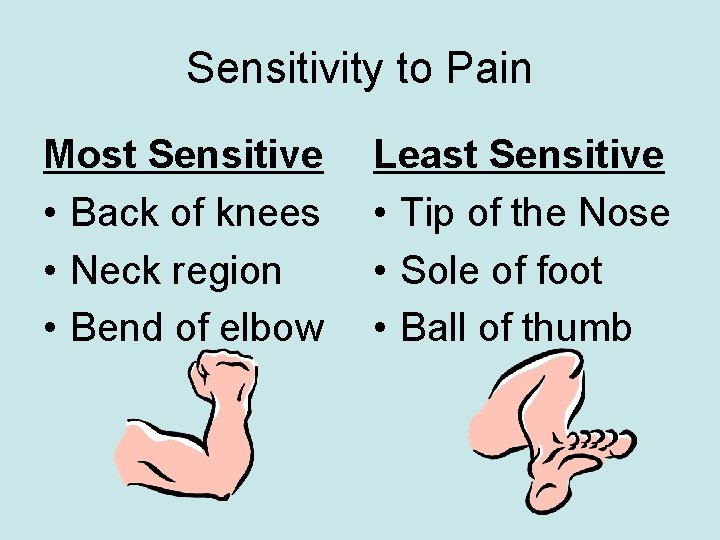
Sensitivity to Pain Most Sensitive • Back of knees • Neck region • Bend of elbow Least Sensitive • Tip of the Nose • Sole of foot • Ball of thumb
• Pain messages travel on one set of nerve fibers containing pain gates. • The gates are open when pain is felt. • Other sensory messages go through another set of fibers. • The non-pain fibers can close the pain gates to stop the sense of pain.
Gate-control Theory of Pain • Pain is a product of both physiological and psychological factors. • The gates are open when pain is felt.
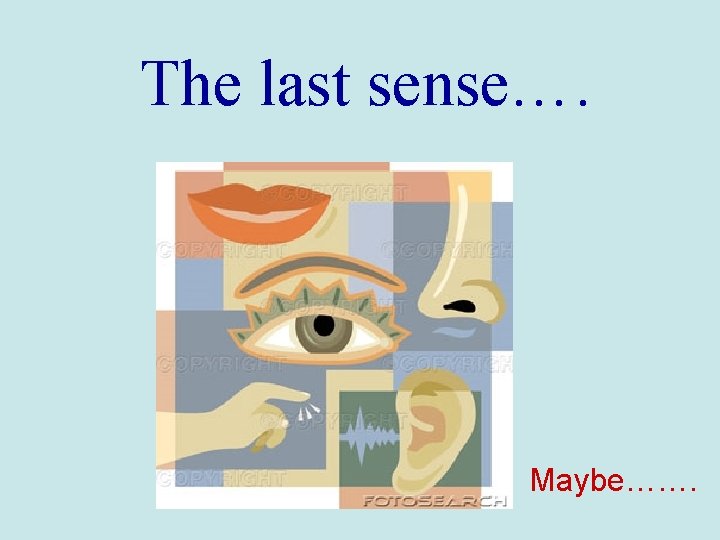
The last sense…. Maybe…….
Kinesthetic Sense • The technical name for the sense of location and position of body parts in relation to one another. • One’s leg “falling asleep” is a disruption of the kinesthetic sense
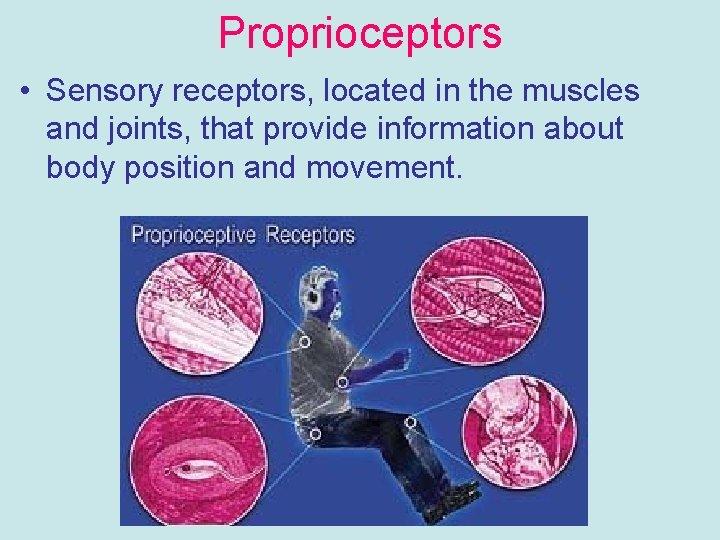
Proprioceptors • Sensory receptors, located in the muscles and joints, that provide information about body position and movement.
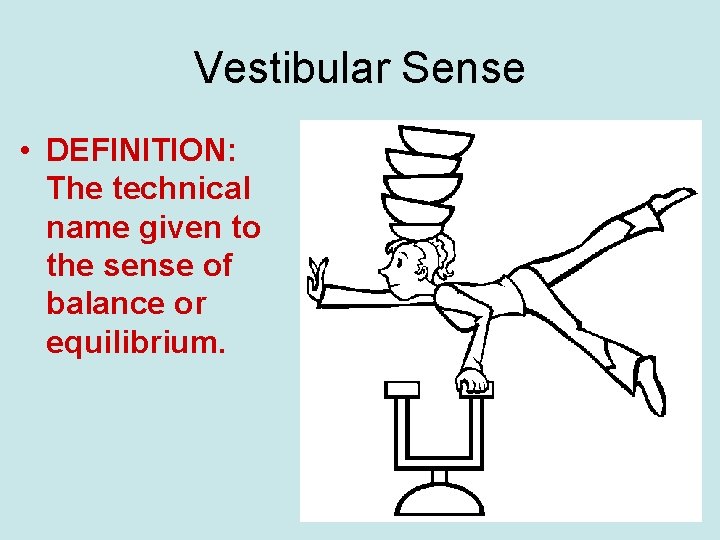
Vestibular Sense • DEFINITION: The technical name given to the sense of balance or equilibrium.
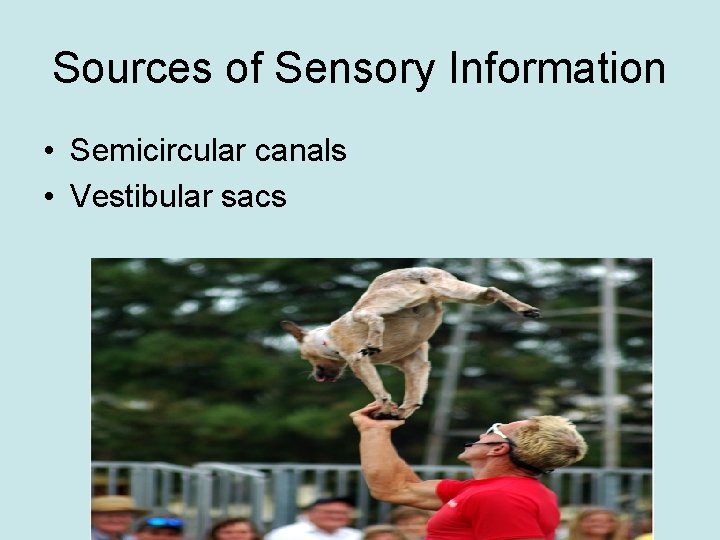
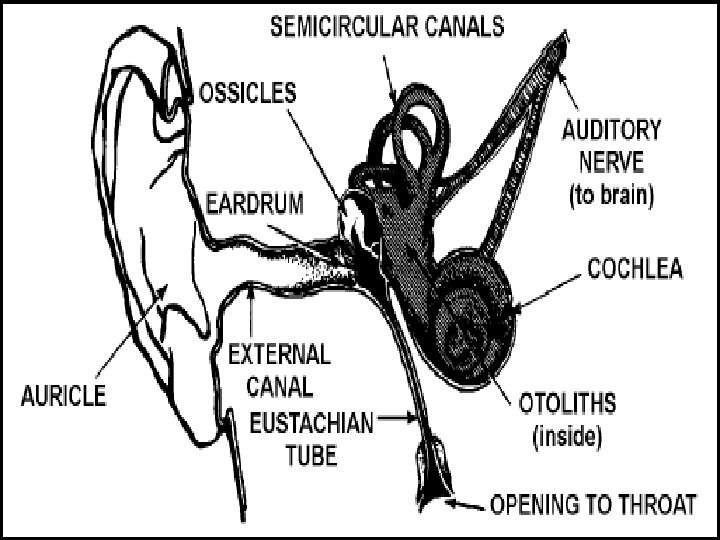
Sources of Sensory Information • Semicircular canals • Vestibular sacs

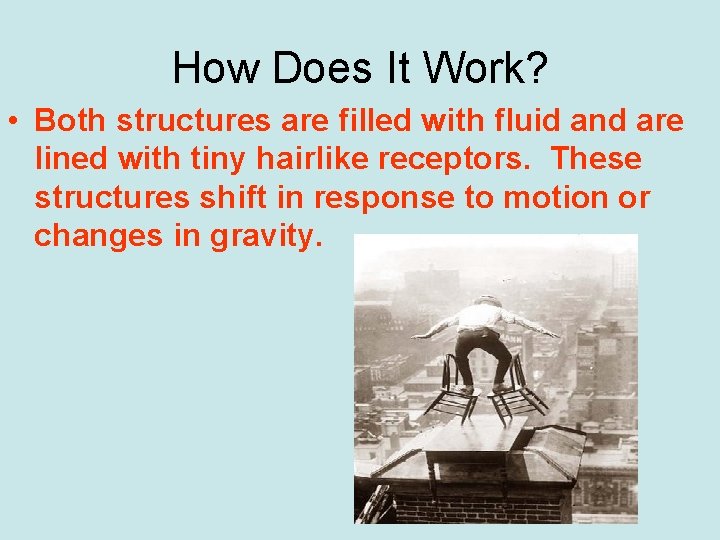
How Does It Work? • Both structures are filled with fluid and are lined with tiny hairlike receptors. These structures shift in response to motion or changes in gravity.

I Need Three Volunteers • Who thinks they have a decent vestibular Please… sense?

Do That.
Let’s Review • Name the senses • How many do you have? • Think again…

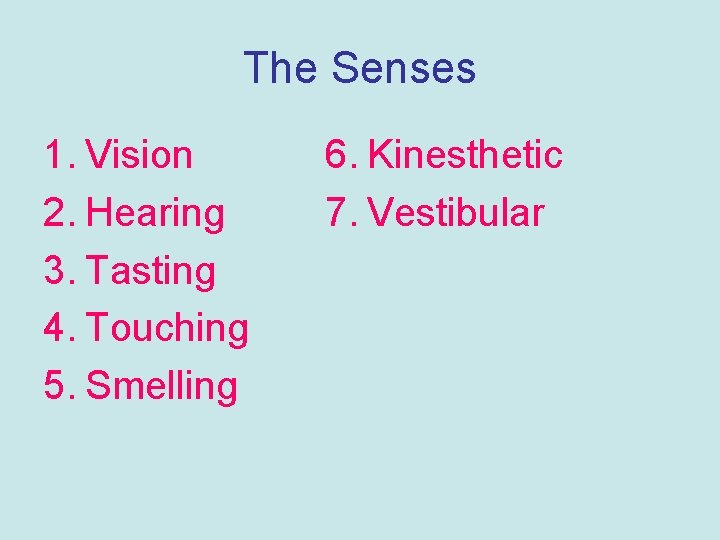
The Senses 1. Vision 2. Hearing 3. Tasting 4. Touching 5. Smelling 6. Kinesthetic 7. Vestibular
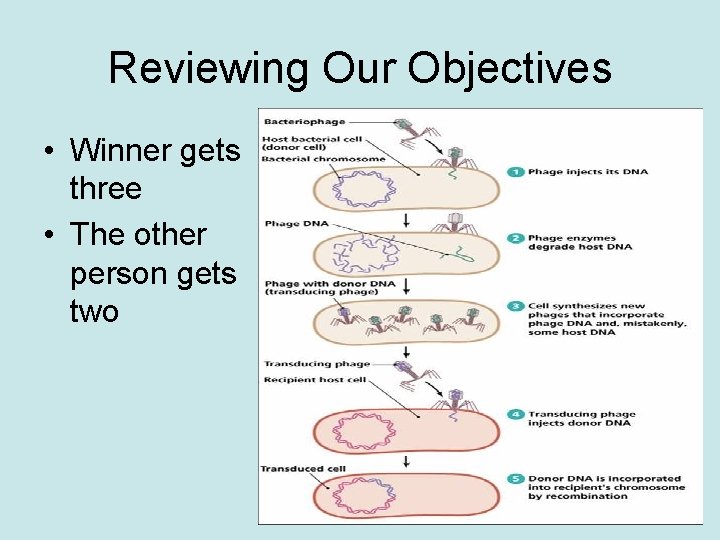
Reviewing Our Objectives • Winner gets three • The other person gets two
Reviewing Our Objectives • Turn to your neighbor and describe all objectives. • Use as many vocabulary terms as possible.
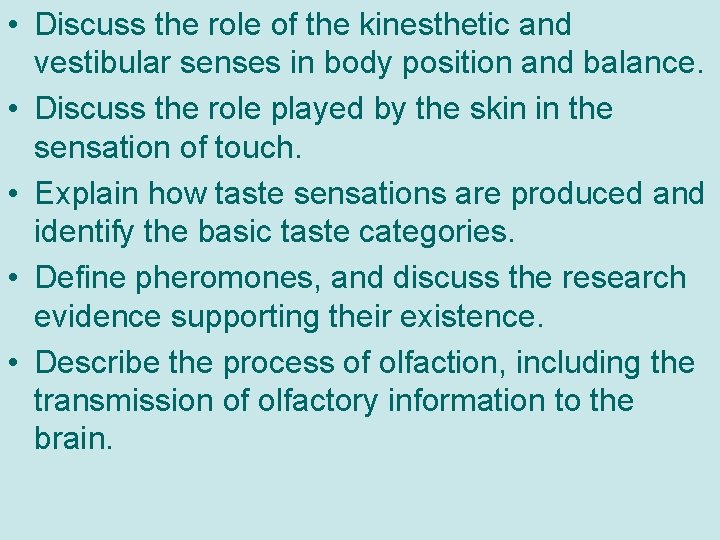
• Discuss the role of the kinesthetic and vestibular senses in body position and balance. • Discuss the role played by the skin in the sensation of touch. • Explain how taste sensations are produced and identify the basic taste categories. • Define pheromones, and discuss the research evidence supporting their existence. • Describe the process of olfaction, including the transmission of olfactory information to the brain.
The End
- Slides: 46