
Sensation Sensation vs Perception Transduction conversion of energy

- Slides: 36
Sensation
Sensation vs. Perception • Transduction: conversion of energy • Sensation: transduction of stimuli into electrochemical (nervous) energy • Perception: organization of sensations • Bottom up processing: Sensation perception understanding • Top down processing: understanding (expectation) + sensation perception
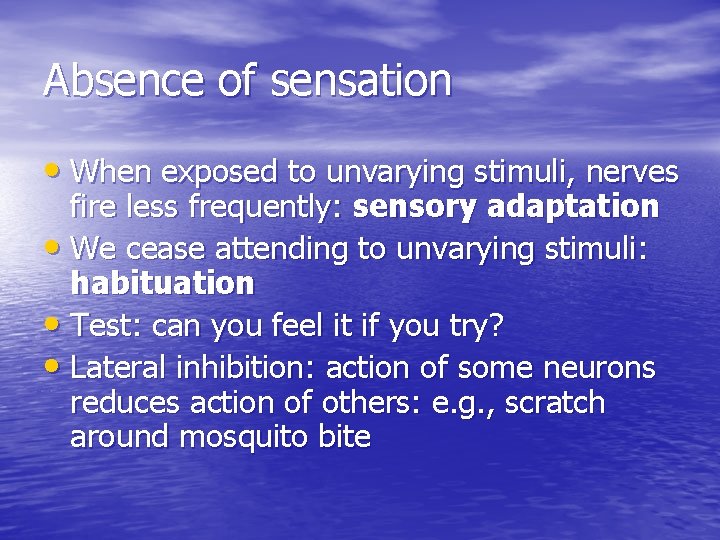
Absence of sensation • When exposed to unvarying stimuli, nerves fire less frequently: sensory adaptation • We cease attending to unvarying stimuli: habituation • Test: can you feel it if you try? • Lateral inhibition: action of some neurons reduces action of others: e. g. , scratch around mosquito bite
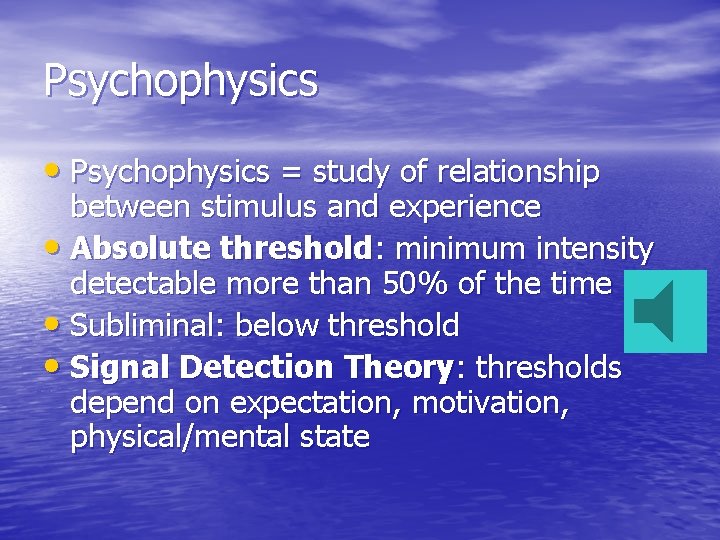
Psychophysics • Psychophysics = study of relationship between stimulus and experience • Absolute threshold: minimum intensity detectable more than 50% of the time • Subliminal: below threshold • Signal Detection Theory: thresholds depend on expectation, motivation, physical/mental state
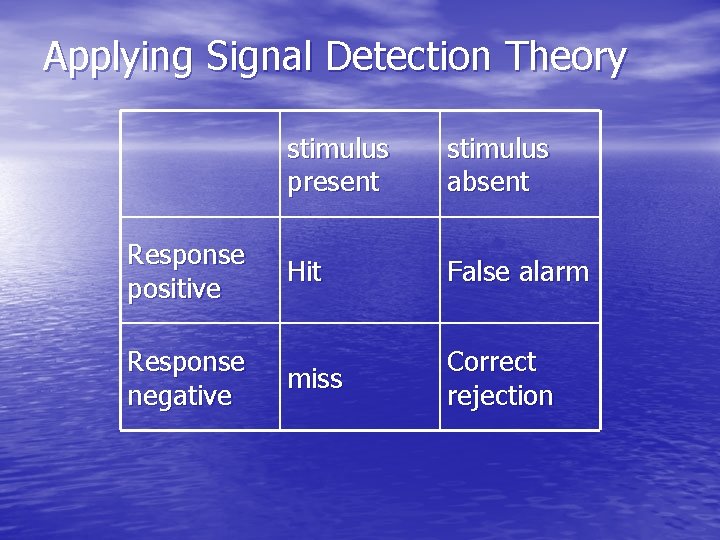
Applying Signal Detection Theory Response positive Response negative stimulus present stimulus absent Hit False alarm miss Correct rejection
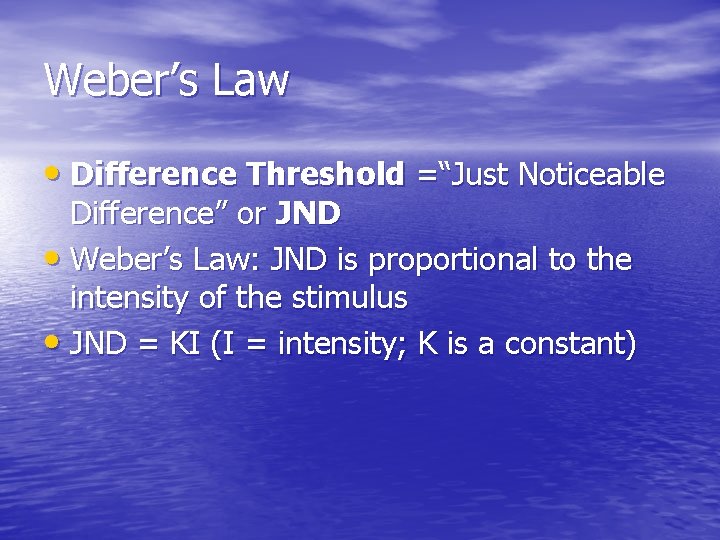
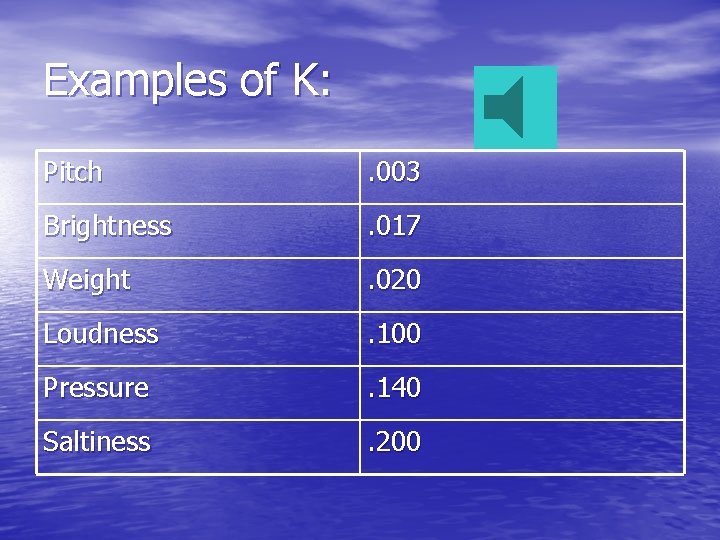
Weber’s Law • Difference Threshold =“Just Noticeable Difference” or JND • Weber’s Law: JND is proportional to the intensity of the stimulus • JND = KI (I = intensity; K is a constant)
Examples of K: Pitch . 003 Brightness . 017 Weight . 020 Loudness . 100 Pressure . 140 Saltiness . 200
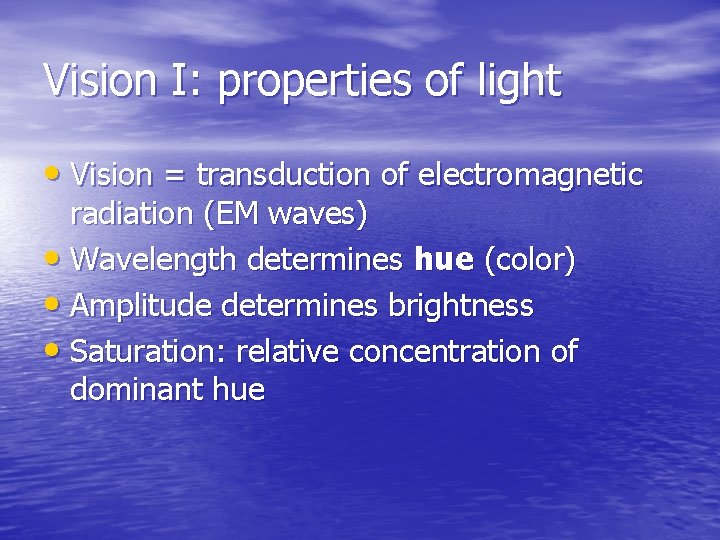
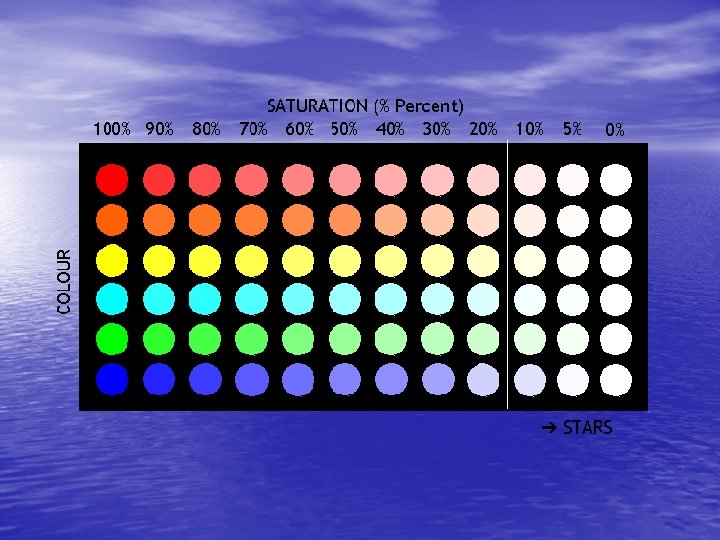
Vision I: properties of light • Vision = transduction of electromagnetic radiation (EM waves) • Wavelength determines hue (color) • Amplitude determines brightness • Saturation: relative concentration of dominant hue
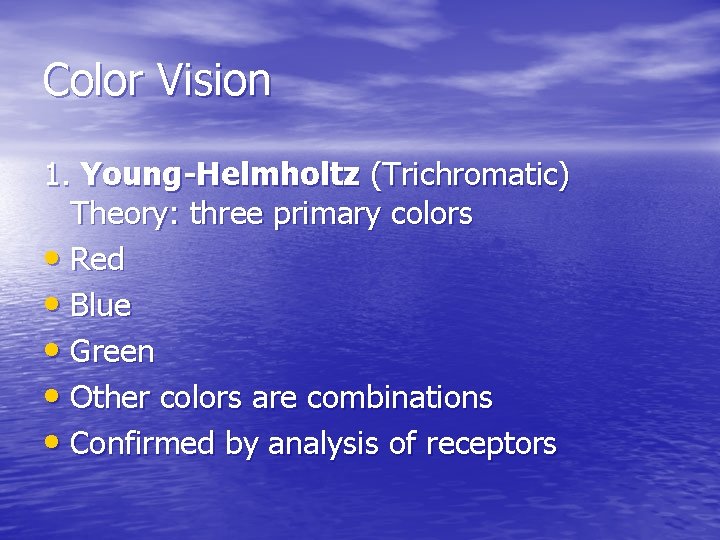
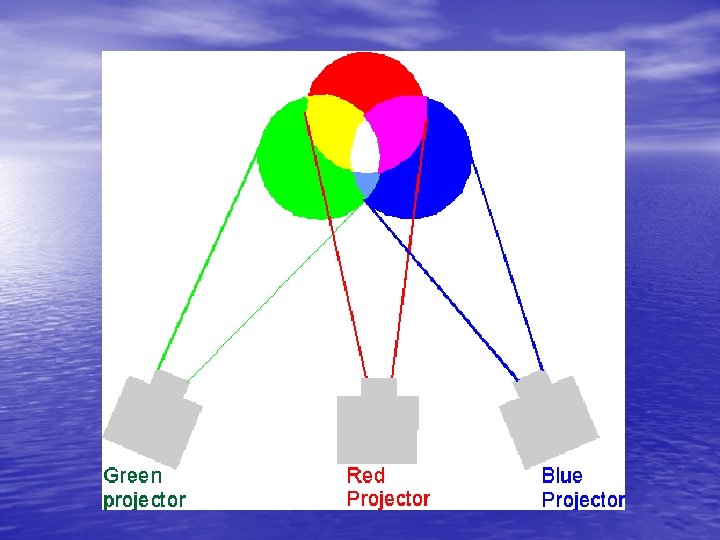
Color Vision 1. Young-Helmholtz (Trichromatic) Theory: three primary colors • Red • Blue • Green • Other colors are combinations • Confirmed by analysis of receptors
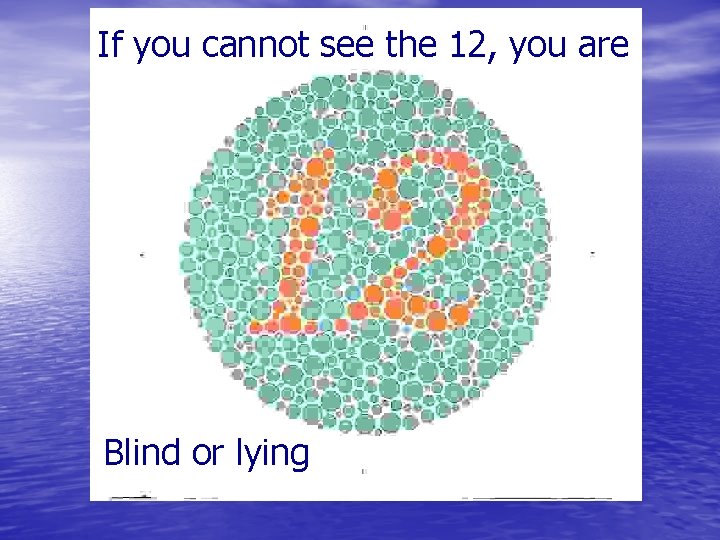
If you cannot see the 12, you are Blind or lying
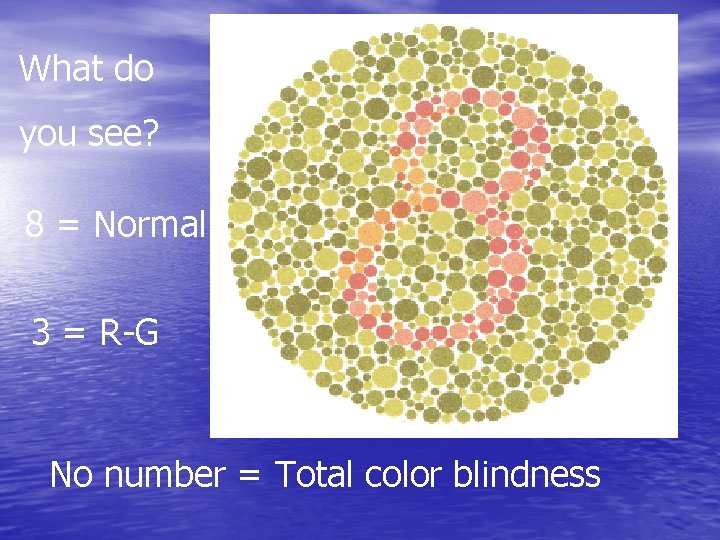
What do you see? 8 = Normal 3 = R-G No number = Total color blindness
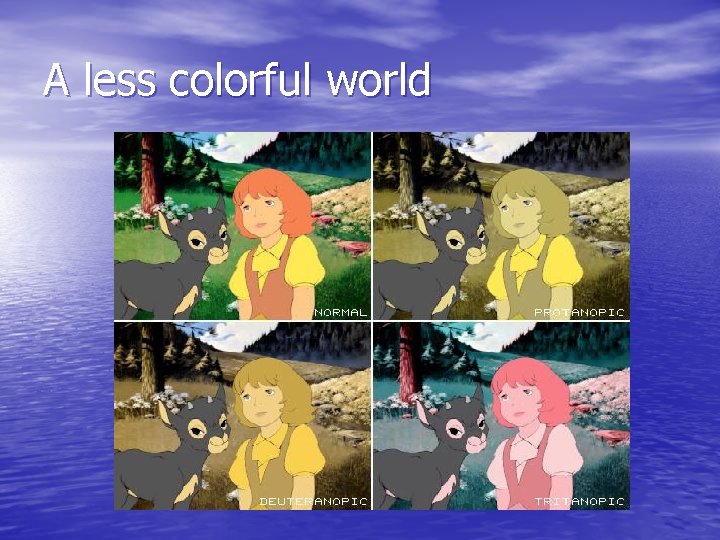
A less colorful world
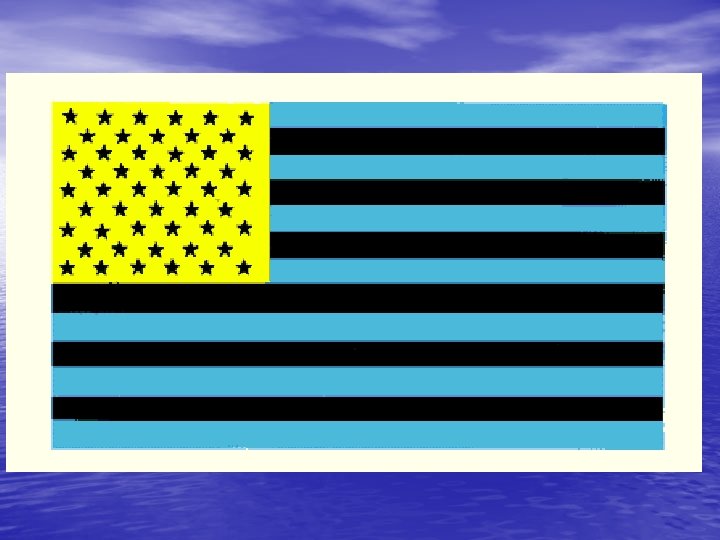
Color Vision II 2. Opponent Process Theory • Think of a reddish green • Three pairs: red/green, blue/yellow, black/white • Presence of one inhibits opponent color • Supported by afterimages
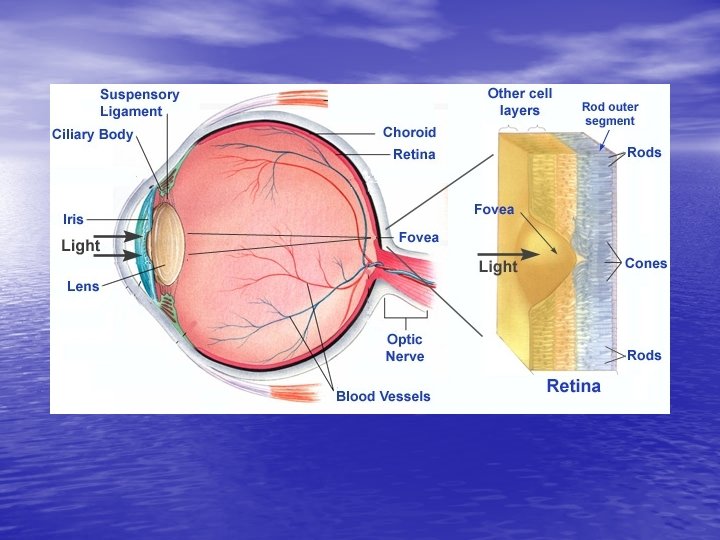
Vision III: the eye • Transduction occurs in retina by rod and cone cells • Rods work in any light, detect motion and contour • Cones work in bright light, detect color and detail • Bipolar cells receive signals, transmit to ganglion cells • Axons of ganglion cells pass back into eye, then out through optic nerve (blind spot)
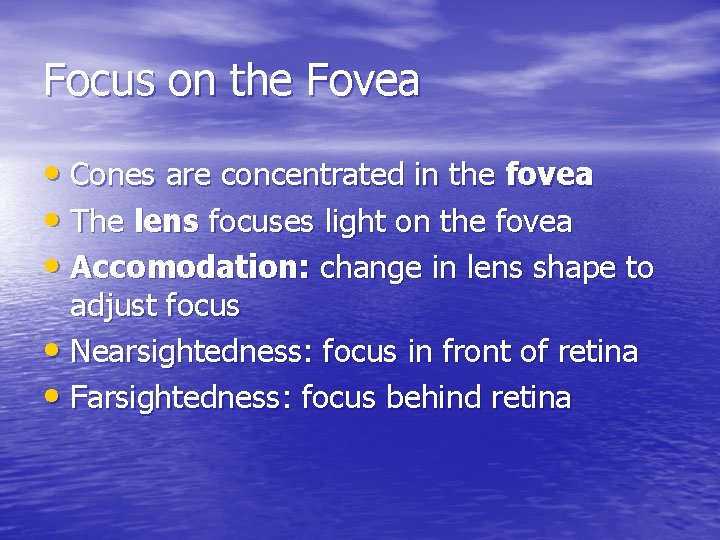
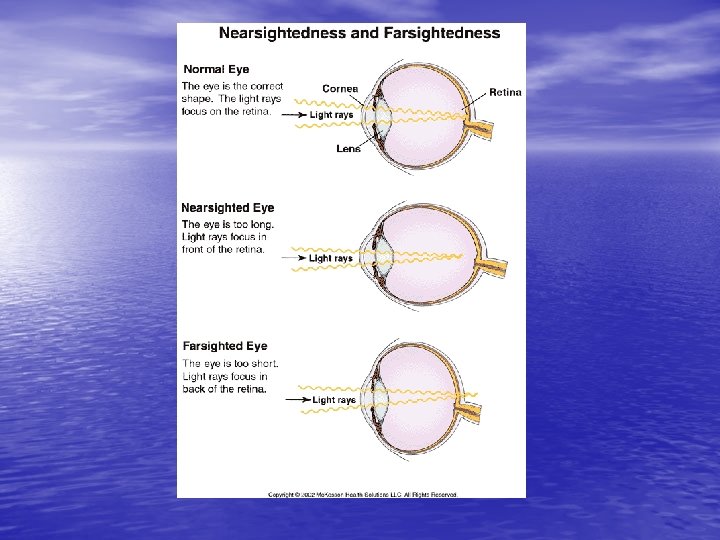
Focus on the Fovea • Cones are concentrated in the fovea • The lens focuses light on the fovea • Accomodation: change in lens shape to adjust focus • Nearsightedness: focus in front of retina • Farsightedness: focus behind retina
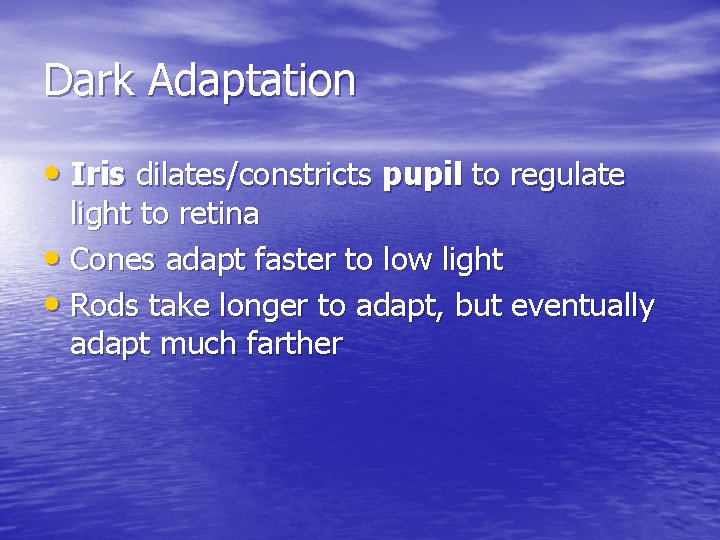
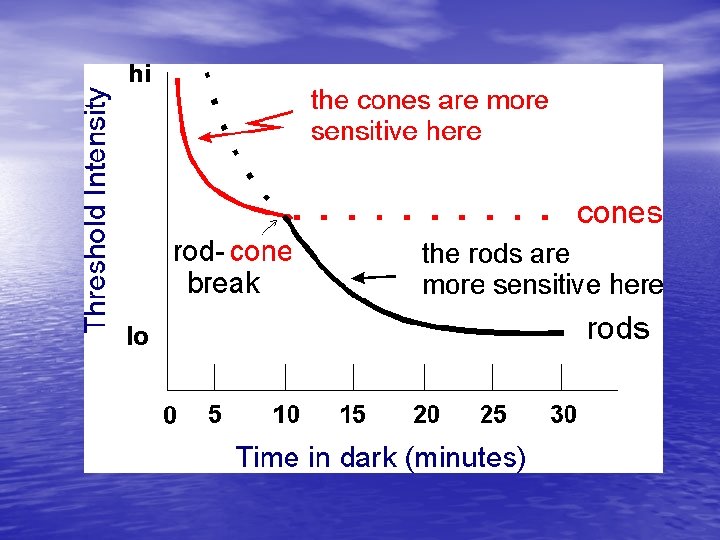
Dark Adaptation • Iris dilates/constricts pupil to regulate light to retina • Cones adapt faster to low light • Rods take longer to adapt, but eventually adapt much farther
Hearing (Audition) • Transduction of sound waves • Frequency of wave determines pitch • Amplitude determines loudness • Ear is organ of audition
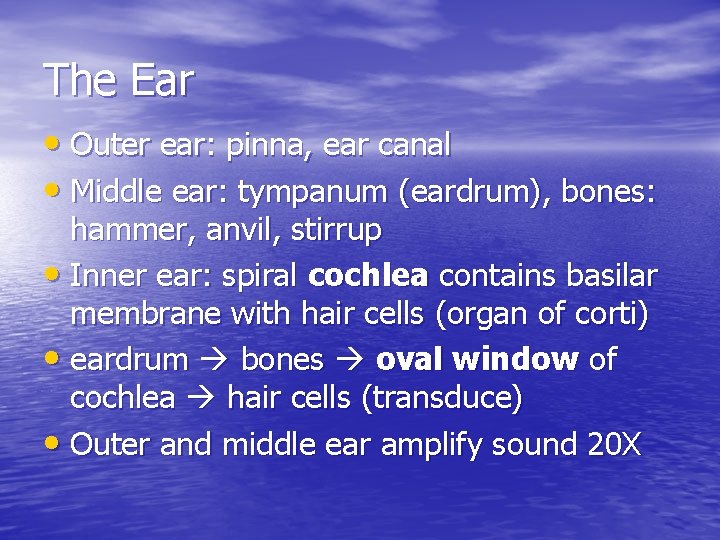
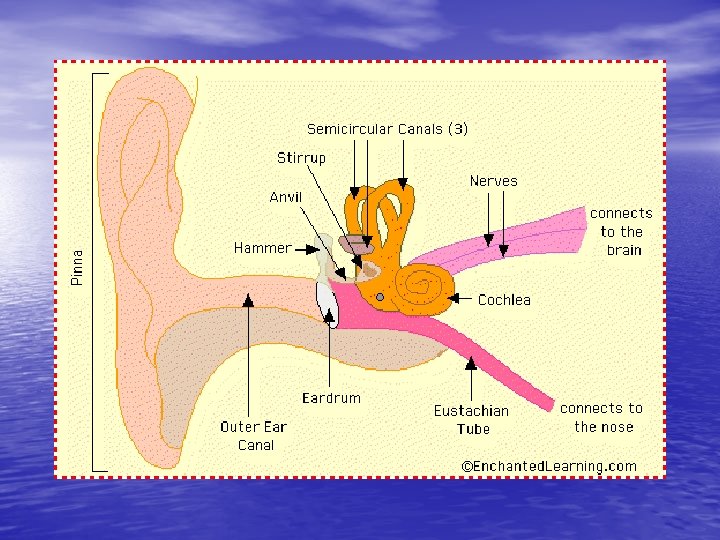
The Ear • Outer ear: pinna, ear canal • Middle ear: tympanum (eardrum), bones: hammer, anvil, stirrup • Inner ear: spiral cochlea contains basilar membrane with hair cells (organ of corti) • eardrum bones oval window of cochlea hair cells (transduce) • Outer and middle ear amplify sound 20 X
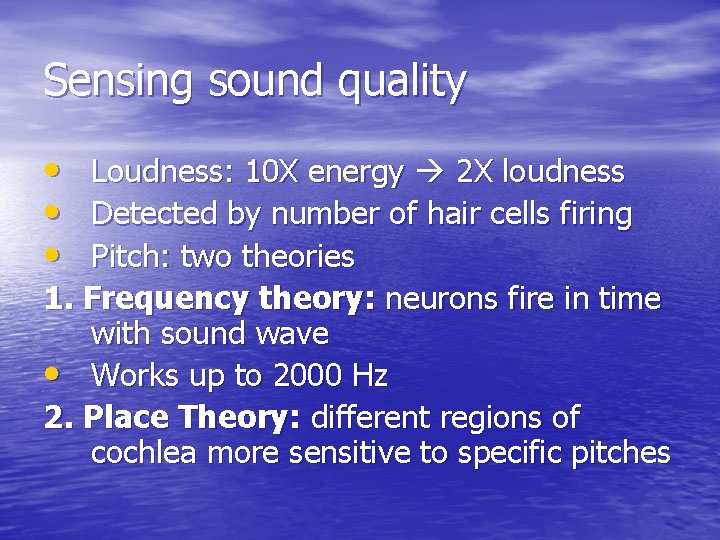
Sensing sound quality • • • Loudness: 10 X energy 2 X loudness Detected by number of hair cells firing Pitch: two theories 1. Frequency theory: neurons fire in time with sound wave • Works up to 2000 Hz 2. Place Theory: different regions of cochlea more sensitive to specific pitches
Sound Localization 1. Left-Right detection: • Time delay between L and R ear 2. Up-down, front-back: • shape of pinna changes sound quality • L-R is much more accurate
Hearing disorders 1. Tinnitus: ringing in the ears • Excessive noise, infection, poor circulation etc. 2. Conduction hearing loss • Perforated eardrum, infection, wax 3. Sensorineural hearing loss • Damage to cochlea or auditory nerve • Cochlear implant = artificial cochlea • Some deaf people object on cultural grounds
Chemical Senses: Gustation • Five kinds of taste buds 1. Salt 2. Sweet 3. Sour 4. Bitter 5. Umame • Not localized • All other “tastes” are smells or combinations
Chemical Senses: Olfaction • About 1000 different olfactory receptors in sinuses • Each detects a single chemical • Other smells are combinations • Flavor results from sensory interaction between taste and smell – Sensory interaction: two or more senses combine to produce a single perception – Mc. Gurk Effect
Touch: the skin senses • 1. 2. 3. 4. • Four types of skin sensation: Pressure Pain Warm Cold Gate-Control Theory: other signals block transmission of pain signals in spinal cord
Sensational Skin Combos • Light pressure = tickle • Light pain = itch • Cold + pressure = wet • Cold + warm = hot
Other senses: proprioception • Kinesthetic sense: position of body parts • Sensed through stretch receptors in muscles • Vestibular sense: detects down • Semicircular canals etc. in inner ear contain fluid, hair cells, bone pellets