
Sensation Sensation The process by which our sensory
Sensation
Sensation • The process by which our sensory receptors and nervous system receive stimulus from the environment.

Perception • The process of organizing and interpreting sensory information, enabling us to recognize meaningful objects and events.
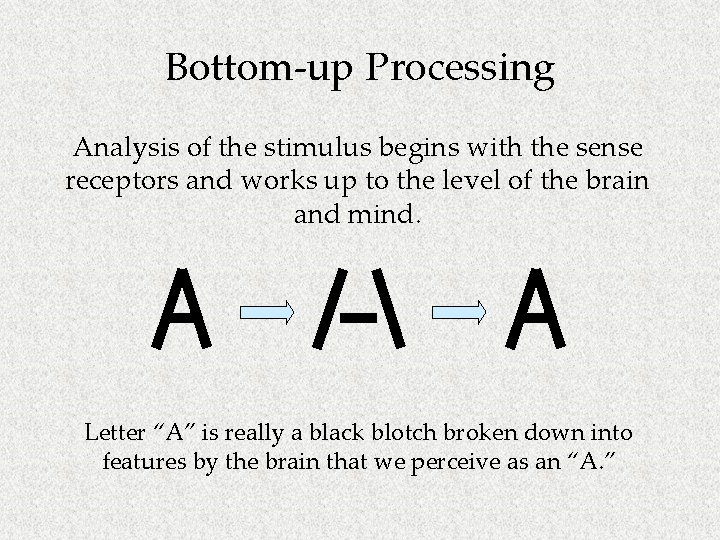
Bottom-up Processing Analysis of the stimulus begins with the sense receptors and works up to the level of the brain and mind. Letter “A” is really a black blotch broken down into features by the brain that we perceive as an “A. ”
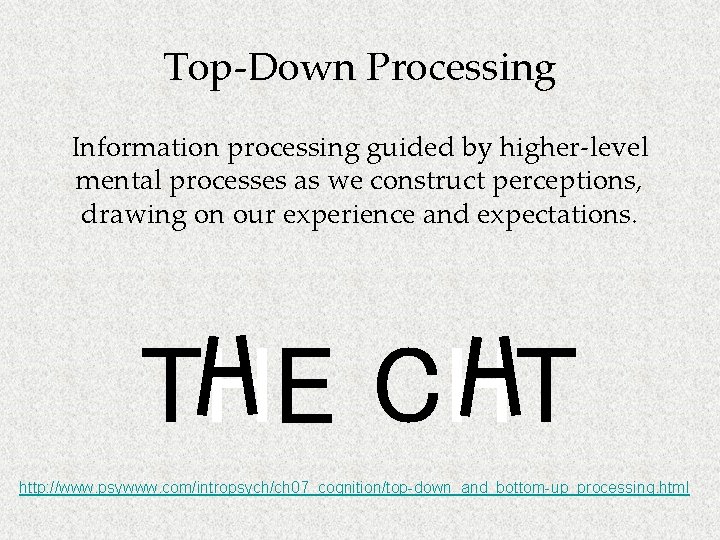
Top-Down Processing Information processing guided by higher-level mental processes as we construct perceptions, drawing on our experience and expectations. THE CHT http: //www. psywww. com/intropsych/ch 07_cognition/top-down_and_bottom-up_processing. html

Making Sense of Complexity Our sensory and perceptual processes work together to help us sort out complex images.
• Failures of perception: cataracts, brain damage • Prosopagnosia- complete sensation but incomplete perception. Can sense visual information but cant recognize it—(cannot process top-down) ex: faces
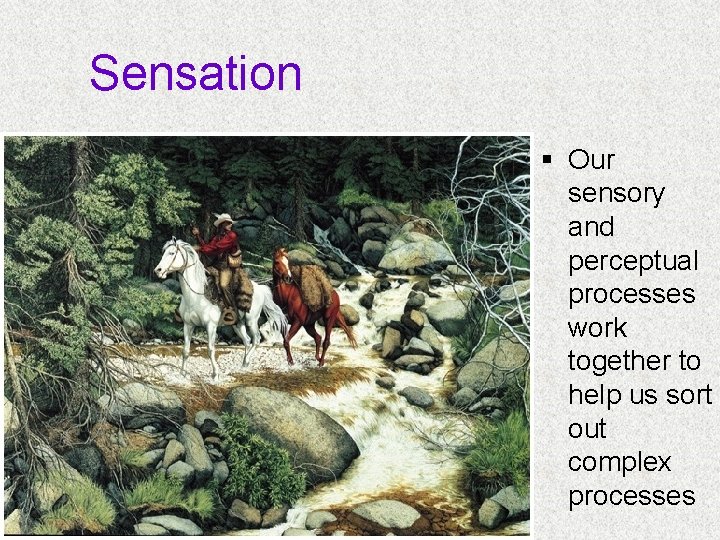
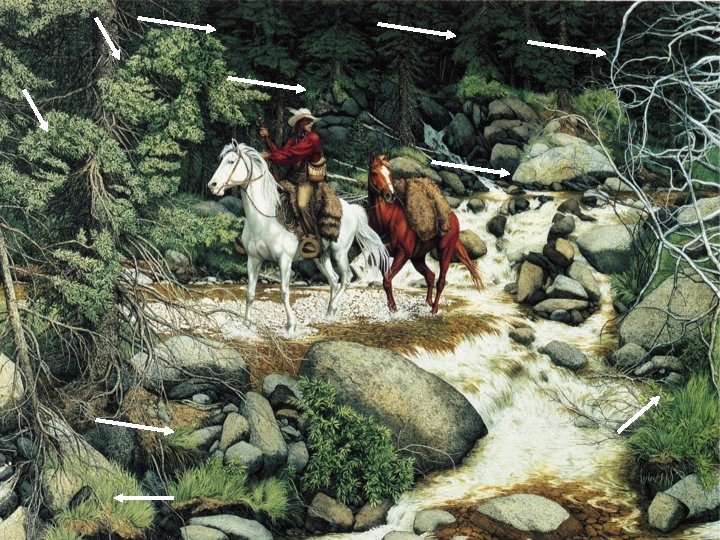
Sensation § Our sensory and perceptual processes work together to help us sort out complex processes
Sensing the World Senses are nature’s gift that suit an organism’s needs. A frog feeds on flying insects; a male silkworm moth is sensitive to female sex-attractant odor; and we as human beings are sensitive to sound frequencies that represent the range of human voice.
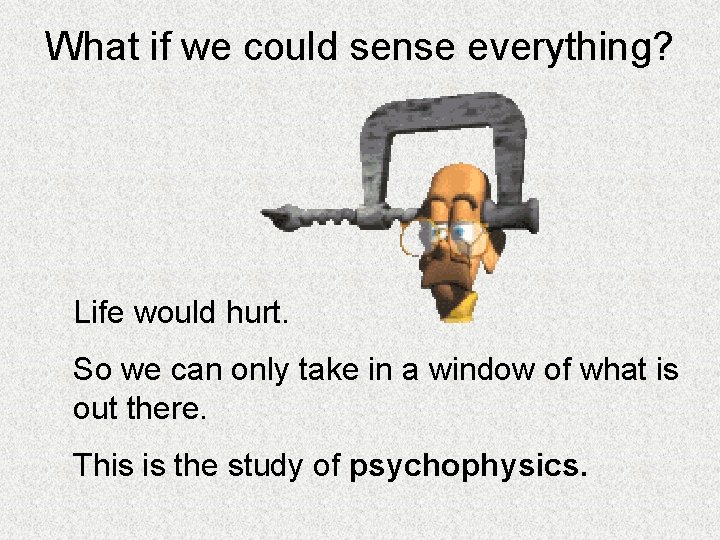
What if we could sense everything? Life would hurt. So we can only take in a window of what is out there. This is the study of psychophysics.
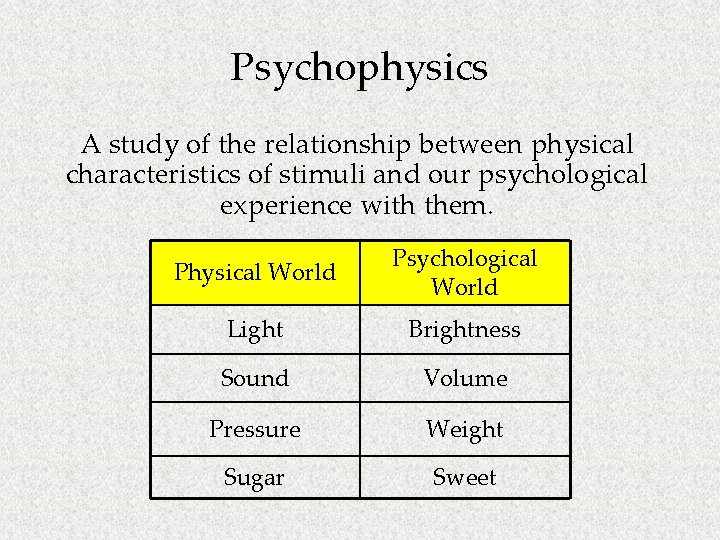
Psychophysics A study of the relationship between physical characteristics of stimuli and our psychological experience with them. Physical World Psychological World Light Brightness Sound Volume Pressure Weight Sugar Sweet
![22 nd October 1850 A relative increase in mental intensity, [Fechner] realized, might be](http://slidetodoc.com/presentation_image/5ebe79ee1c8f8b9486ce59efd6536155/image-13.jpg "22 nd October 1850 A relative increase in mental intensity, [Fechner] realized, might be")
22 nd October 1850 A relative increase in mental intensity, [Fechner] realized, might be measured in terms of the relative increase in physical energy required to bring it about (Wozniak, 1999). Gustav Fechner (1801 -1887)
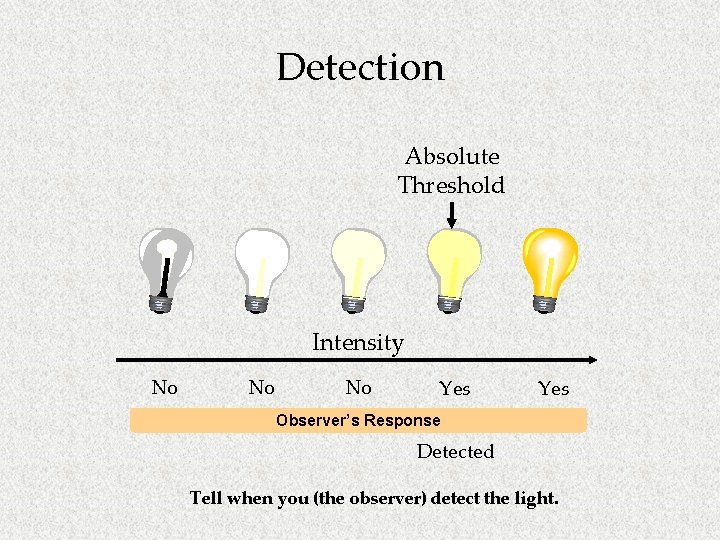
Detection Absolute Threshold Intensity No No No Yes Observer’s Response Detected Tell when you (the observer) detect the light.
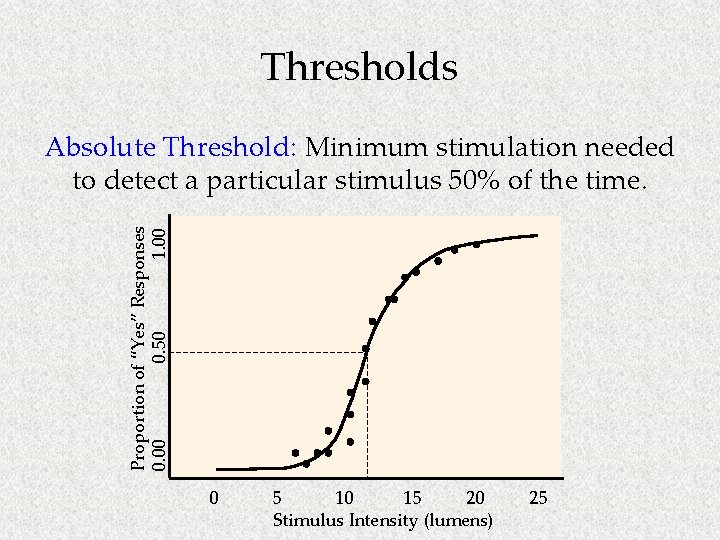
Thresholds Proportion of “Yes” Responses 0. 00 0. 50 1. 00 Absolute Threshold: Minimum stimulation needed to detect a particular stimulus 50% of the time. 0 5 10 15 20 Stimulus Intensity (lumens) 25
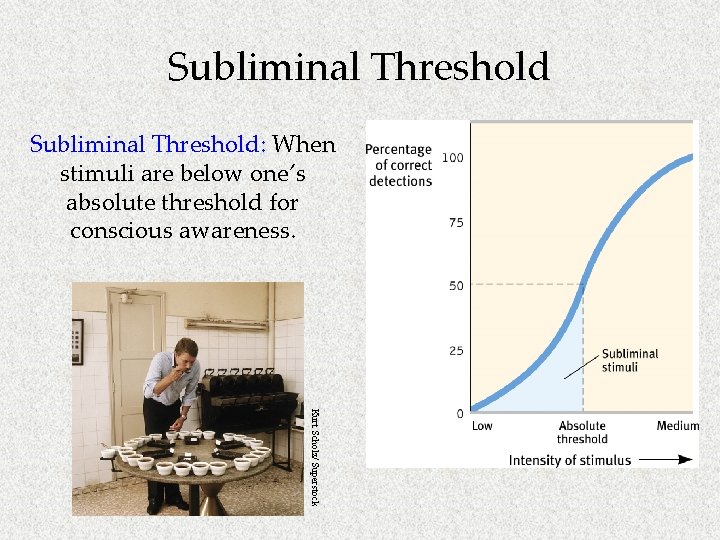
Subliminal Threshold: When stimuli are below one’s absolute threshold for conscious awareness. Kurt Scholz/ Superstock
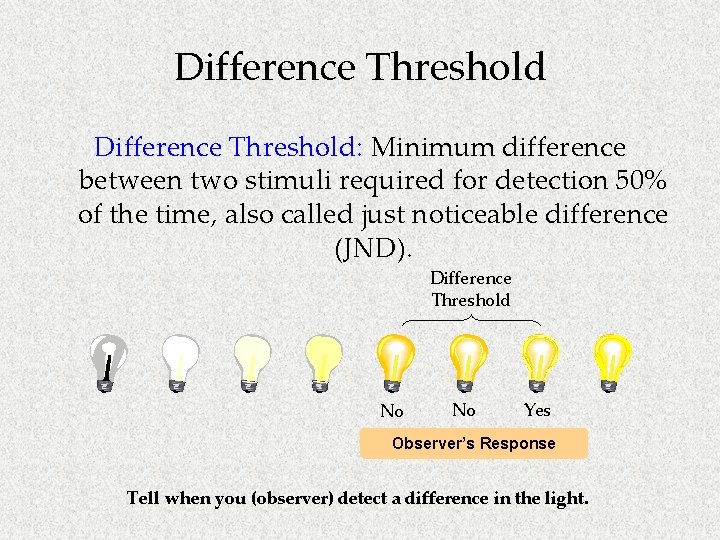
Difference Threshold: Minimum difference between two stimuli required for detection 50% of the time, also called just noticeable difference (JND). Difference Threshold No No Yes Observer’s Response Tell when you (observer) detect a difference in the light.
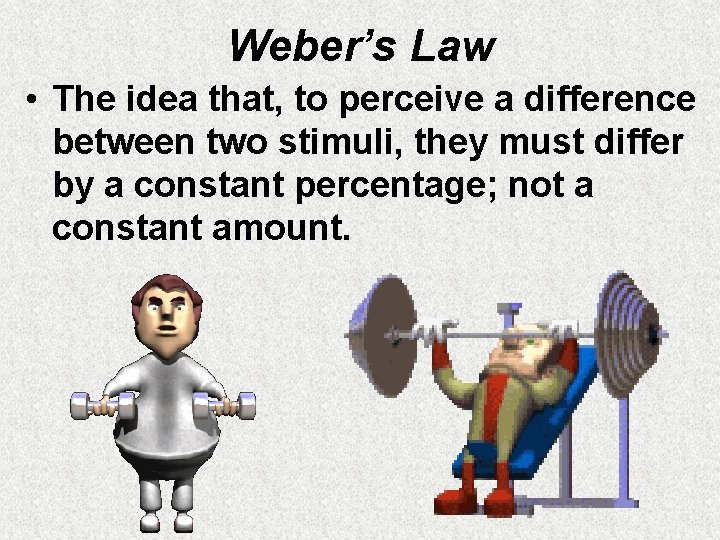
Weber’s Law • The idea that, to perceive a difference between two stimuli, they must differ by a constant percentage; not a constant amount.
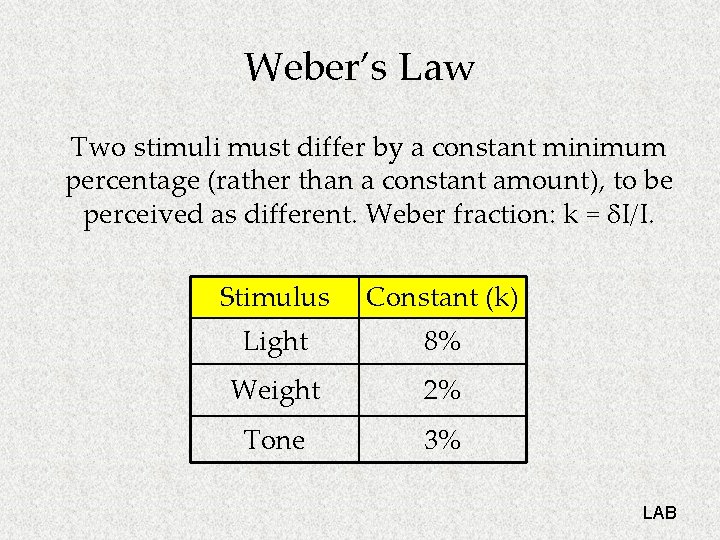
Weber’s Law Two stimuli must differ by a constant minimum percentage (rather than a constant amount), to be perceived as different. Weber fraction: k = d. I/I. Stimulus Constant (k) Light 8% Weight 2% Tone 3% LAB
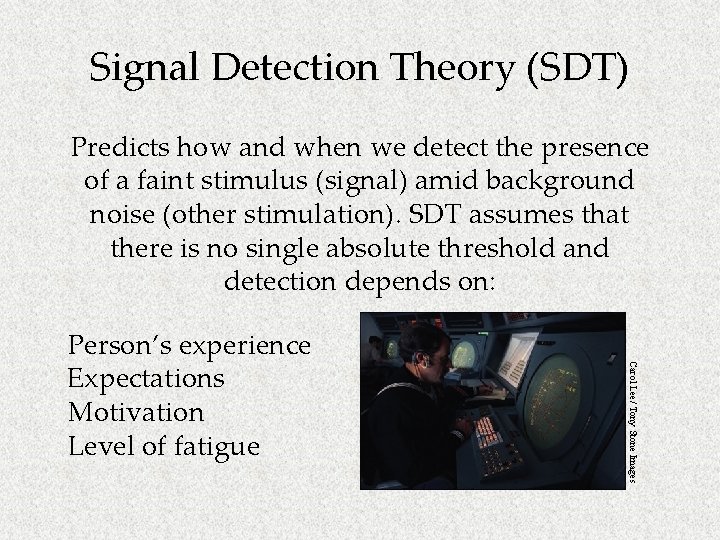
Signal Detection Theory (SDT) Predicts how and when we detect the presence of a faint stimulus (signal) amid background noise (other stimulation). SDT assumes that there is no single absolute threshold and detection depends on: Carol Lee/ Tony Stone Images Person’s experience Expectations Motivation Level of fatigue
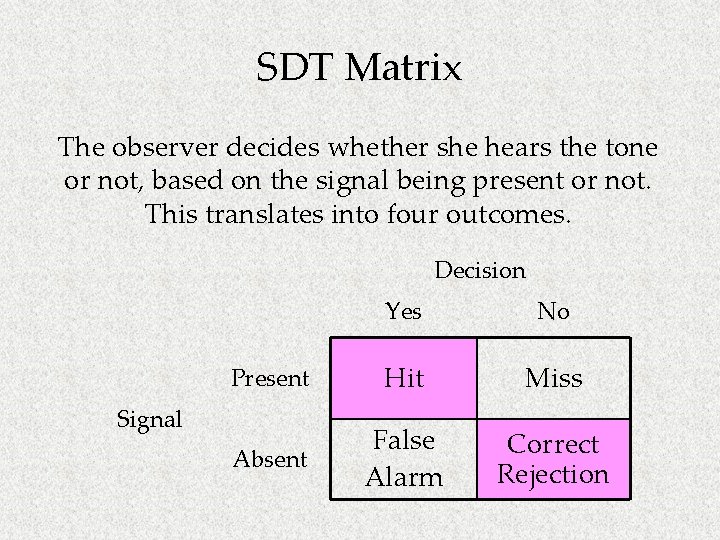
SDT Matrix The observer decides whether she hears the tone or not, based on the signal being present or not. This translates into four outcomes. Decision Yes No Present Hit Miss Absent False Alarm Correct Rejection Signal
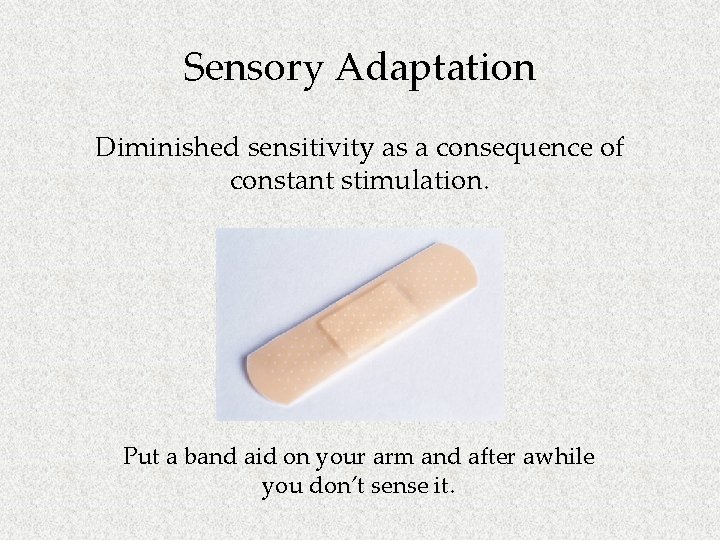
Sensory Adaptation Diminished sensitivity as a consequence of constant stimulation. Put a band aid on your arm and after awhile you don’t sense it.
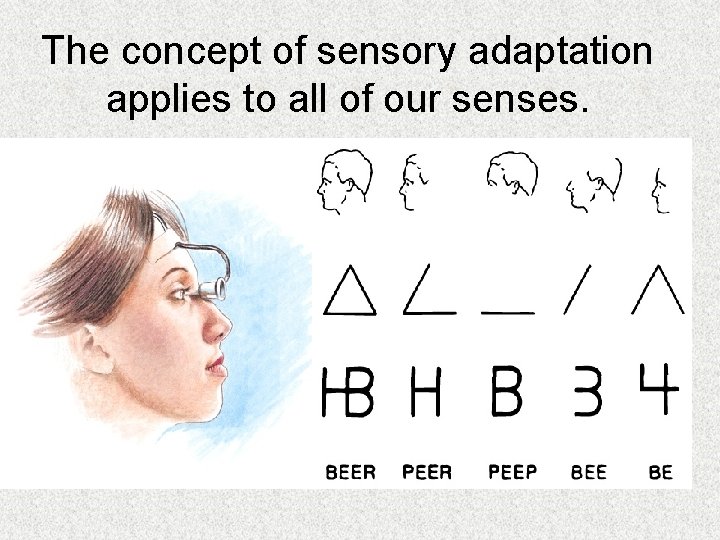
The concept of sensory adaptation applies to all of our senses.
We do not perceive the world how it really is, but as it is useful for us to perceive it.
• See page 197 in text for example on difference threshold- 23 rd psalm • Riddle page 195 - bus driver • Backmasking: http: //jeffmilner. com/backmasking/
- Slides: 25