
Sensation Sensation and Perception ABCs Sensation ABCsofof Sensation


Sensation & Sensation and Perception
ABCs Sensation ABCsofof Sensation
ensation Activation of receptors in various sense organs
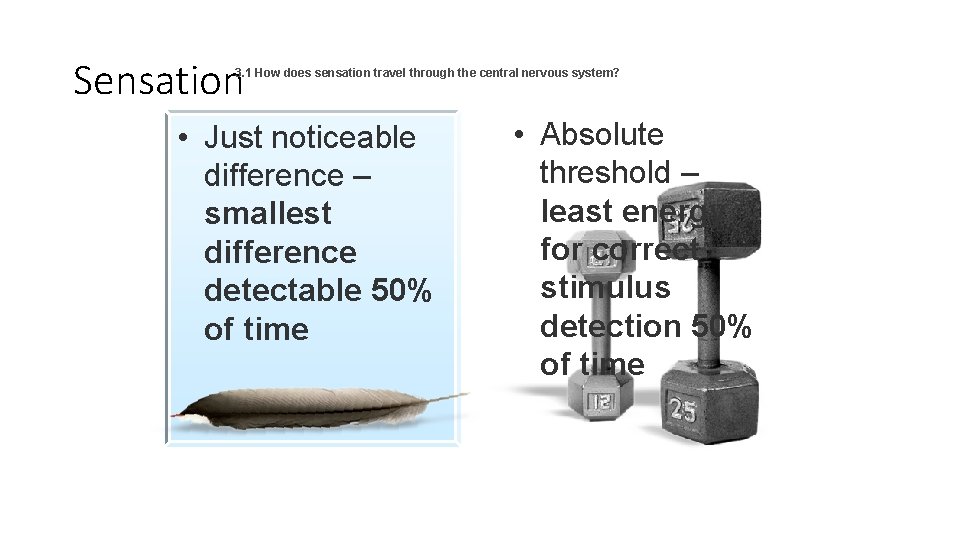
Sensation 3. 1 How does sensation travel through the central nervous system? • Just noticeable difference – smallest difference detectable 50% of time • Absolute threshold – least energy for correct stimulus detection 50% of time
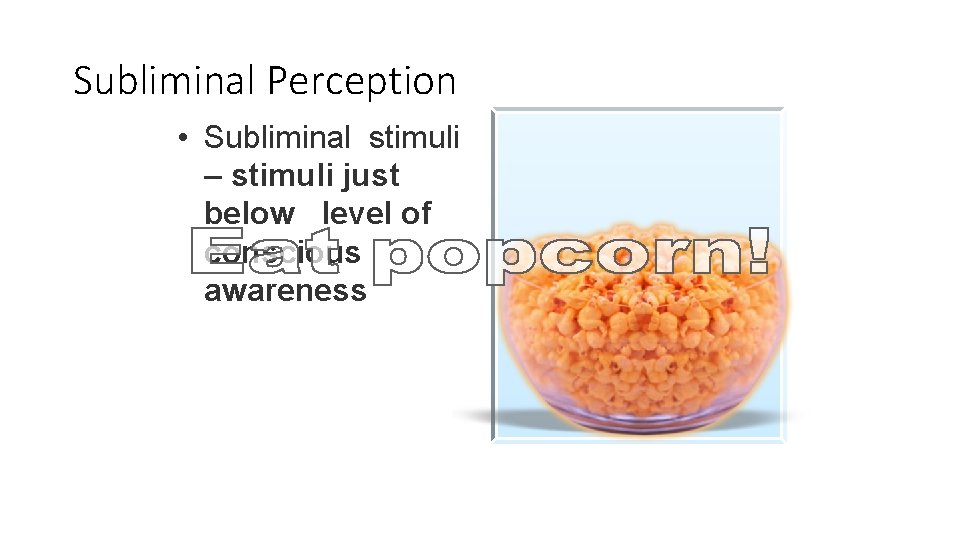
Subliminal Perception • Subliminal stimuli – stimuli just below level of conscious awareness
Habituation & Sensory Adaptation • Habituation – brain stops attending to constant, unchanging stimuli (cognitive) • Sensory adaptation – sensory receptors less response to constant stimuli (biological) Does sensory adaptation mean that if I stare at something long enough, it will disappear?
The of Seeing The. Science of Seeing
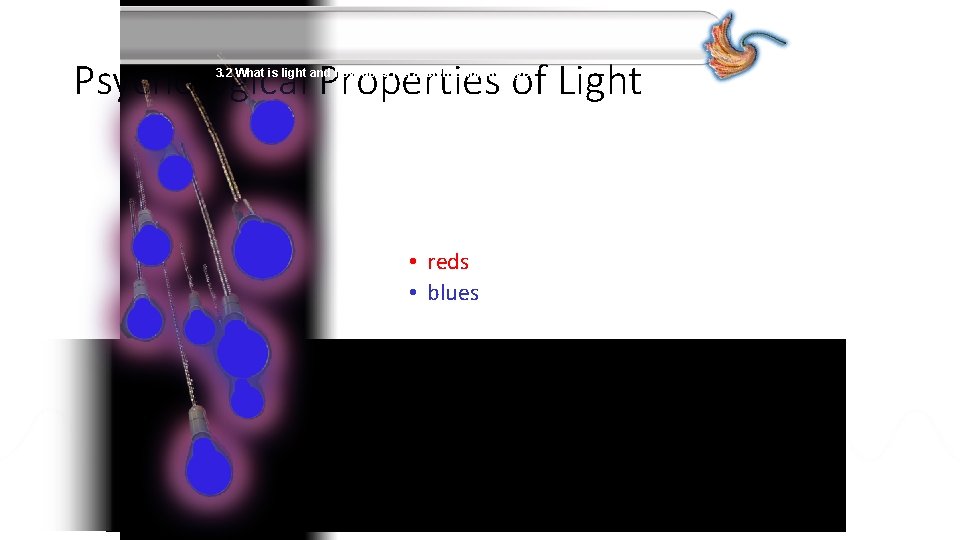
Psychological Properties of Light 3. 2 What is light and how does it travel through the eye? • Brightness (amplitude) • dim light • bright light • Color (wavelength) • reds • blues
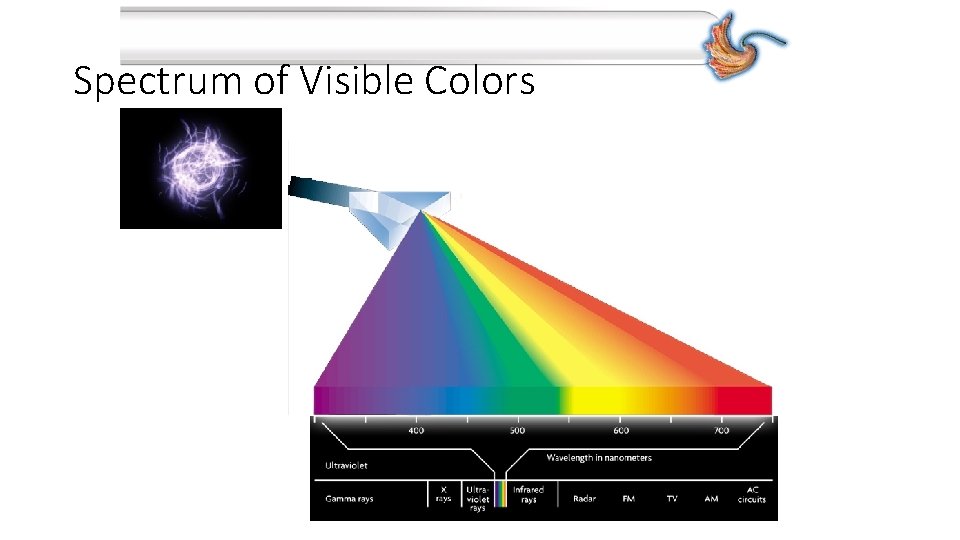
Spectrum of Visible Colors
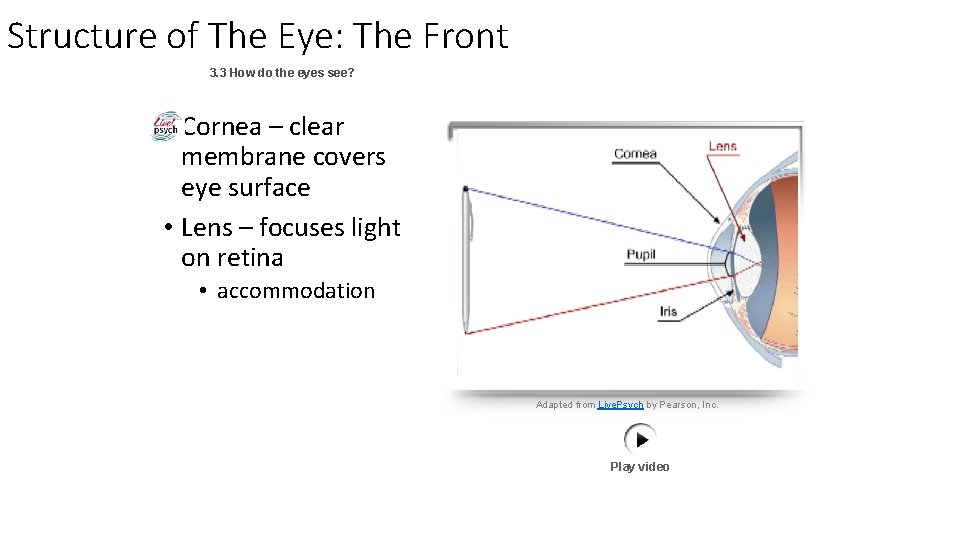
Structure of The Eye: The Front 3. 3 How do the eyes see? • Cornea – clear membrane covers eye surface • Lens – focuses light on retina • accommodation Adapted from Live. Psych by Pearson, Inc. Play video
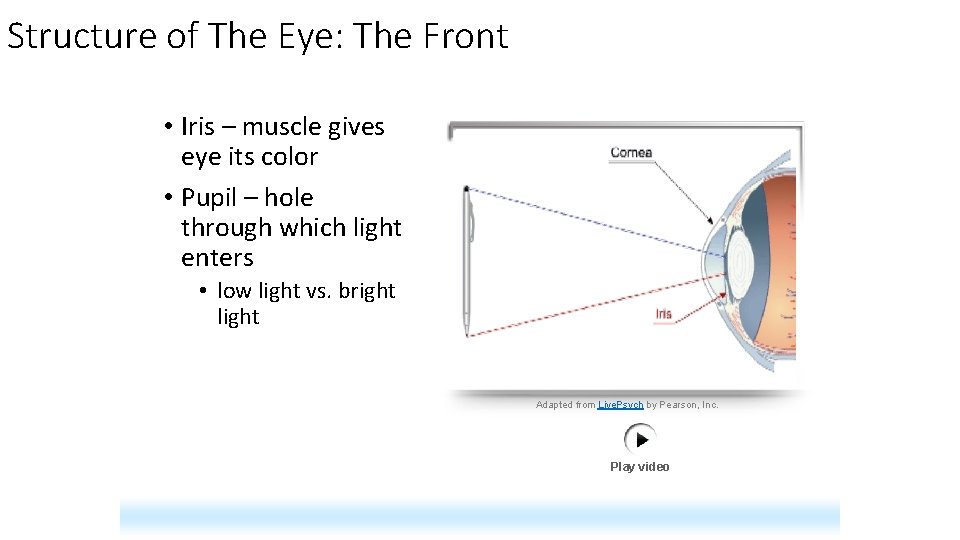
Structure of The Eye: The Front • Iris – muscle gives eye its color • Pupil – hole through which light enters • low light vs. bright light Adapted from Live. Psych by Pearson, Inc. Play video
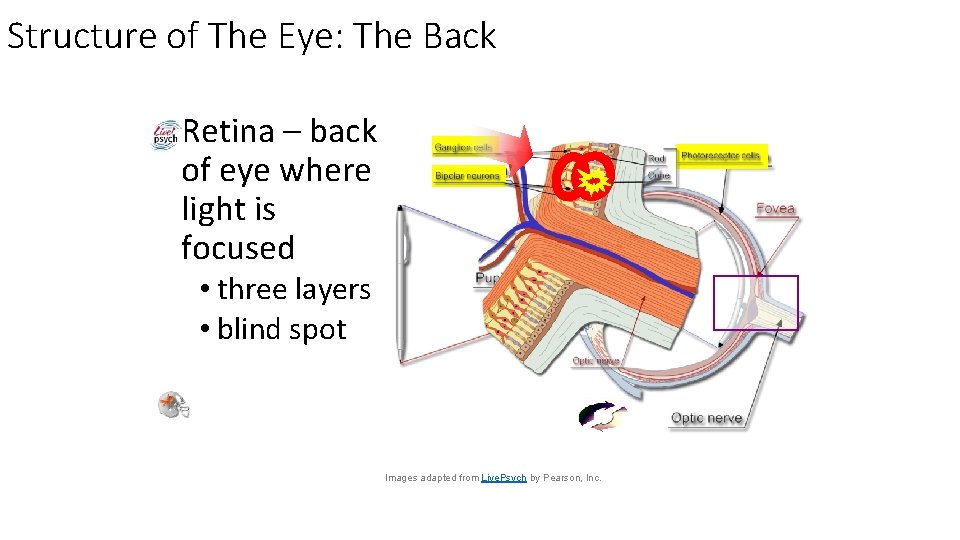
Structure of The Eye: The Back • Retina – back of eye where light is focused • three layers • blind spot Images adapted from Live. Psych by Pearson, Inc.
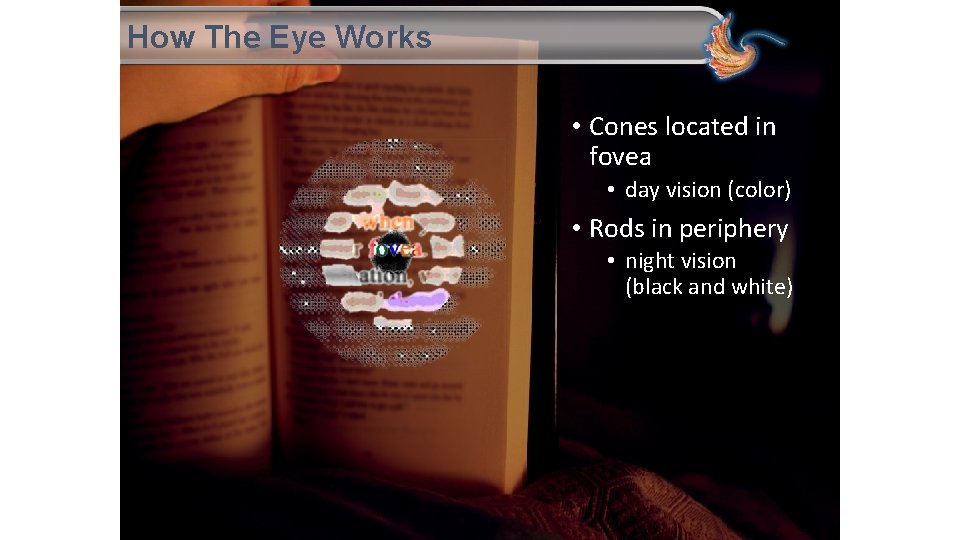
How The Eye Works • Cones located in fovea • day vision (color) • Rods in periphery • night vision (black and white)
- Slides: 14