
Sensation Perception Unit 4 Intro sensation perception Prosopagnosia


- Slides: 25
Sensation & Perception Unit 4
Intro – sensation & perception • Prosopagnosia – inability to recognize faces (even loved ones!) • Right brain • Shows difference between sensation & perception • Sensation – focus on senses (sight, hearing, others) • Light waves into brain? Sound waves into brain? • AKA: bottom-up processing – think hurt toe goes up to brain • Perception – assembles sensory input into meaning • AKA: top-down processing – from brain-to-meaning • Ex. : imagine you’re blindfolded, given something heavy, hard, rough, rectangular… • …a brick • Sometimes, we get fooled.
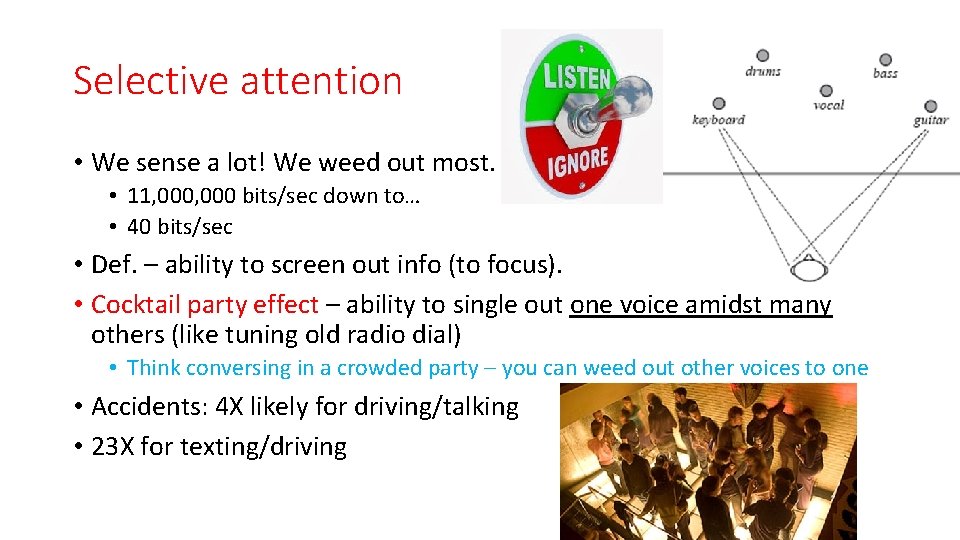
Selective attention • We sense a lot! We weed out most. • 11, 000 bits/sec down to… • 40 bits/sec • Def. – ability to screen out info (to focus). • Cocktail party effect – ability to single out one voice amidst many others (like tuning old radio dial) • Think conversing in a crowded party – you can weed out other voices to one • Accidents: 4 X likely for driving/talking • 23 X for texting/driving
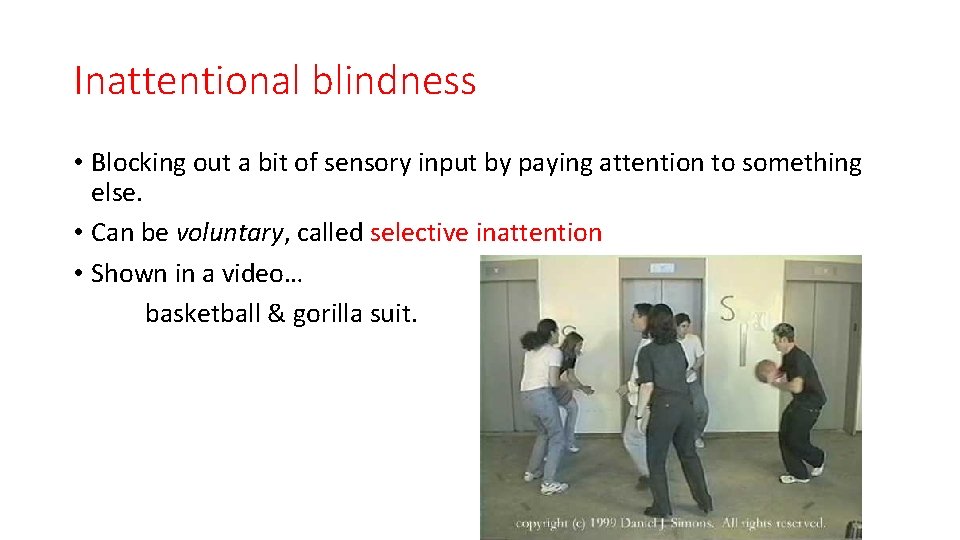
Inattentional blindness • Blocking out a bit of sensory input by paying attention to something else. • Can be voluntary, called selective inattention • Shown in a video… basketball & gorilla suit.
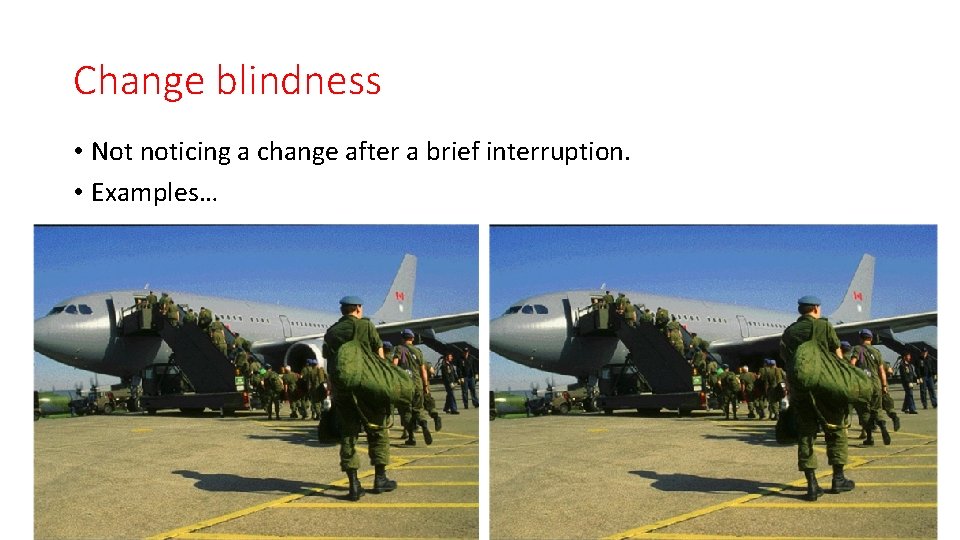
Change blindness • Not noticing a change after a brief interruption. • Examples…
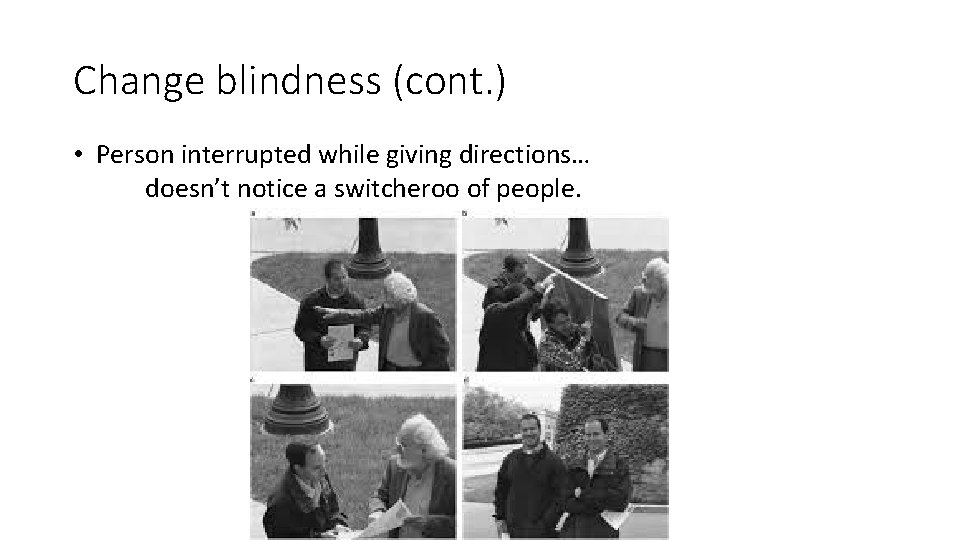
Change blindness (cont. ) • Person interrupted while giving directions… doesn’t notice a switcheroo of people.
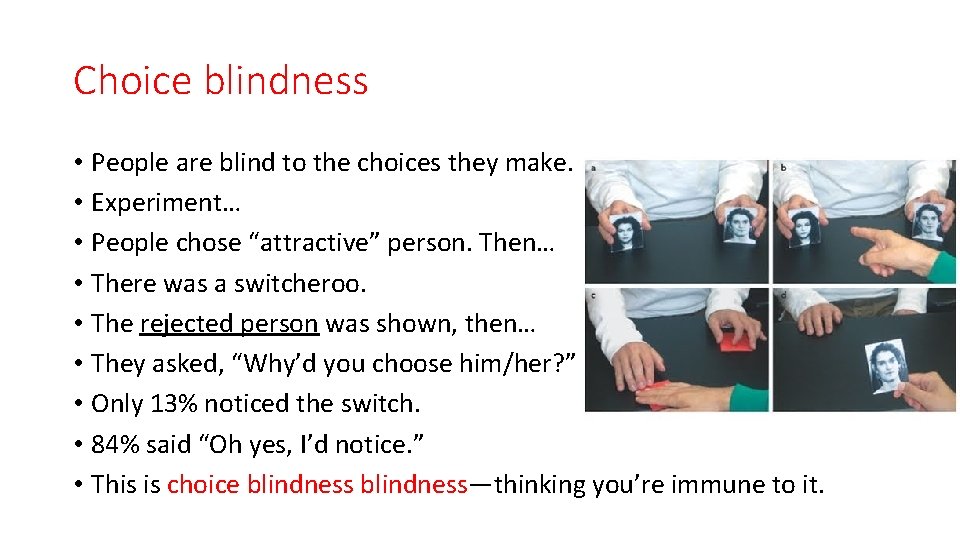
Choice blindness • People are blind to the choices they make. • Experiment… • People chose “attractive” person. Then… • There was a switcheroo. • The rejected person was shown, then… • They asked, “Why’d you choose him/her? ” • Only 13% noticed the switch. • 84% said “Oh yes, I’d notice. ” • This is choice blindness—thinking you’re immune to it.
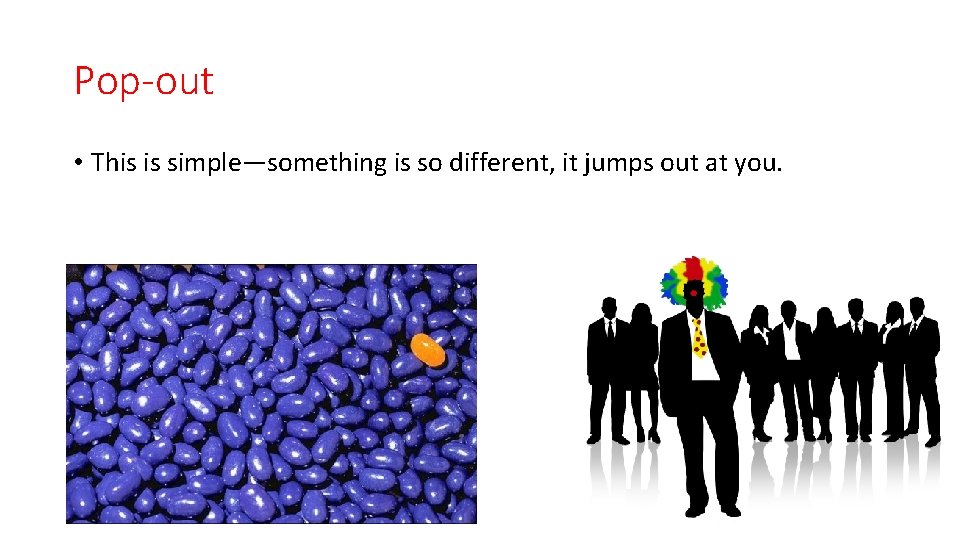
Pop-out • This is simple—something is so different, it jumps out at you.
Thresholds • Absolute threshold – minimum stimulation to detect a sense 50% of the time • Ex. : hearing – below the threshold, you don’t hear it, then…Ahah! • Signal detection theory – idea that detection depends on stimulus AND on our experience, expectations, motivation, alertness. • Ex. : soldier on guard at night high alert! • Subliminal stimulation – sensation just below our threshold…we sense it but weren’t AWARE of it. • Can it affect us? Yes. • Experiment – subliminal pics prime us to another response • Sad subliminal pic sadder response; Happy subliminal happy response
Cont. • JND (just noticeable difference) – minimum difference between two stimuli that can be detected 50% of the time • Weber’s Law – the PROPORTION difference between two stimuli is more important than the raw AMOUNT difference • Ex. : weight – must differ by 2% to be noticed • Ex. : sound – tones must differ by 0. 3% • Sensory adaptation – person’s diminishing sensory adaptation to a stimulus • In other words, you get used to something. • Think perfume. Strong at first, then you get used to it.
Transduction • Def. – changing external physical stimuli into neural messages. • This is the magic where light is changed to something the brain can handle. Or… • …sound is changed for the brain. Or touch. Or smell. Or taste. Or… • …being upside down (vestibular sense). Or moving your body (kinesthetic sense).
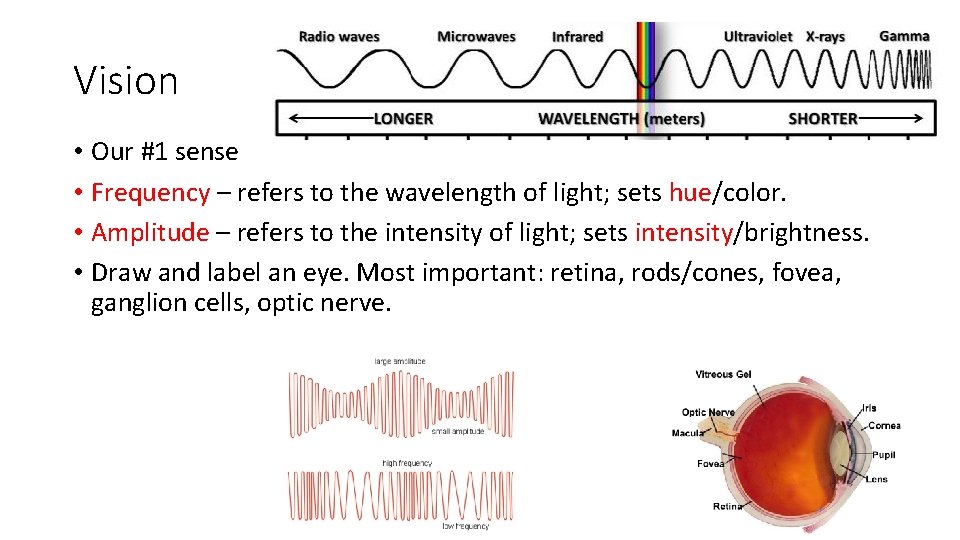
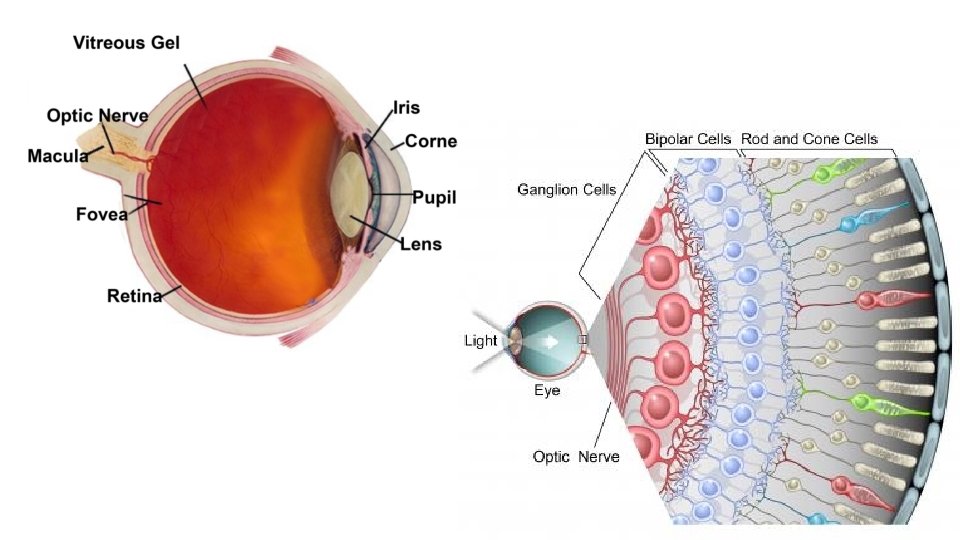
Vision • Our #1 sense • Frequency – refers to the wavelength of light; sets hue/color. • Amplitude – refers to the intensity of light; sets intensity/brightness. • Draw and label an eye. Most important: retina, rods/cones, fovea, ganglion cells, optic nerve.
Vision (cont. ) • Feature detectors – specialized brain cells for vision; pick up angles, lines, edges, & movement. (Think animal/soldier at night. ) • Parallel processing – we can pick up several things at once (angles, lines, etc. ) • Compare to serial processing – we do one thing at a time & we do NOT multi-task very well. • Bottom line – parallel processing seems good for innate/animalistic/survival things (low road); serial processing good for thinking (high road).
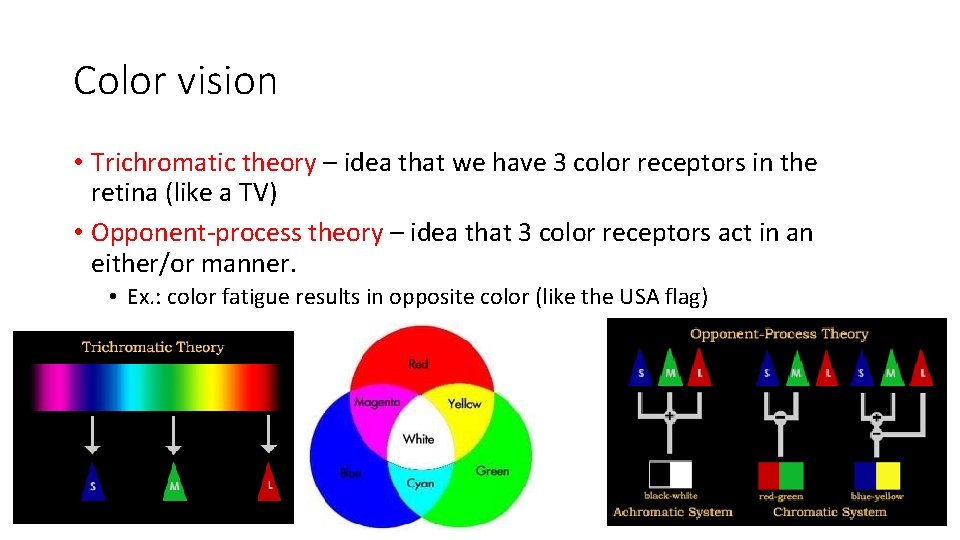
Color vision • Trichromatic theory – idea that we have 3 color receptors in the retina (like a TV) • Opponent-process theory – idea that 3 color receptors act in an either/or manner. • Ex. : color fatigue results in opposite color (like the USA flag)
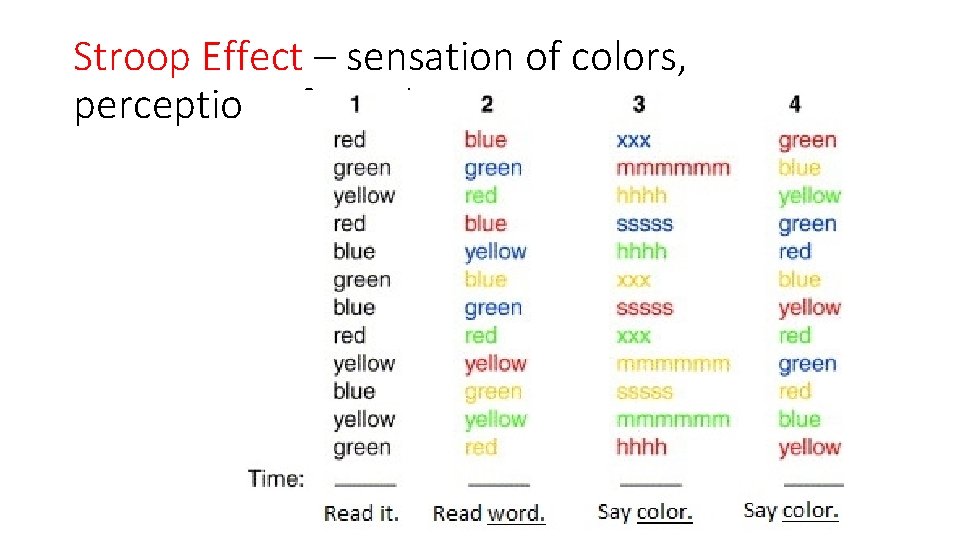
Stroop Effect – sensation of colors, perception of words
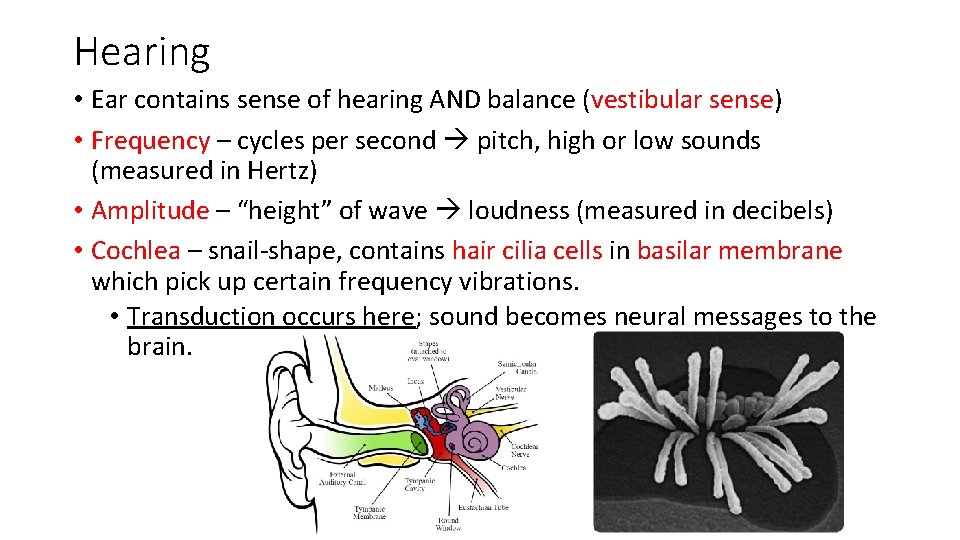
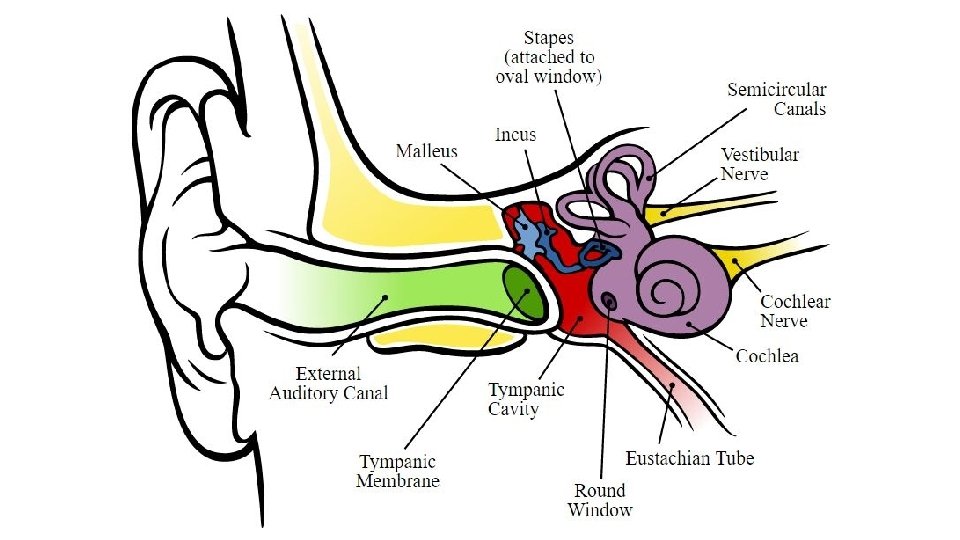
Hearing • Ear contains sense of hearing AND balance (vestibular sense) • Frequency – cycles per second pitch, high or low sounds (measured in Hertz) • Amplitude – “height” of wave loudness (measured in decibels) • Cochlea – snail-shape, contains hair cilia cells in basilar membrane which pick up certain frequency vibrations. • Transduction occurs here; sound becomes neural messages to the brain.
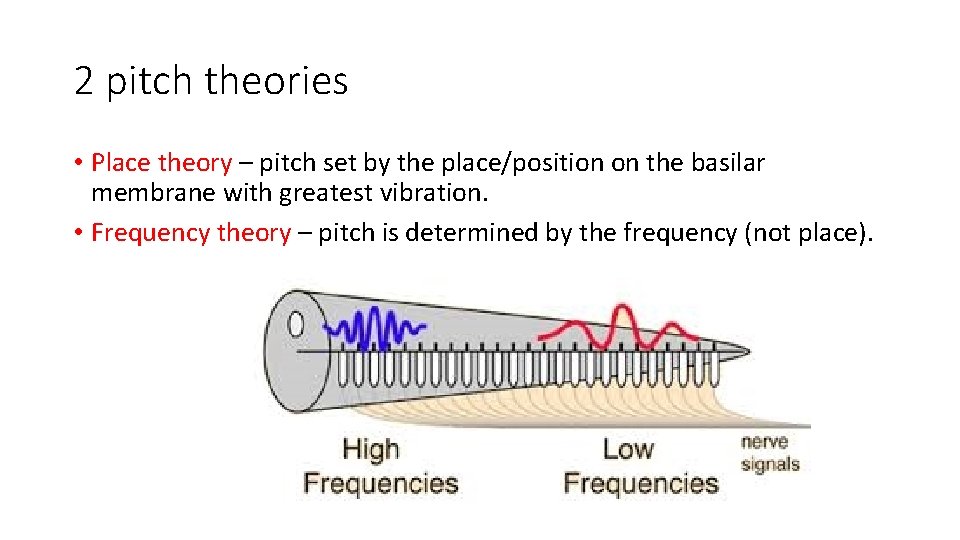
2 pitch theories • Place theory – pitch set by the place/position on the basilar membrane with greatest vibration. • Frequency theory – pitch is determined by the frequency (not place).
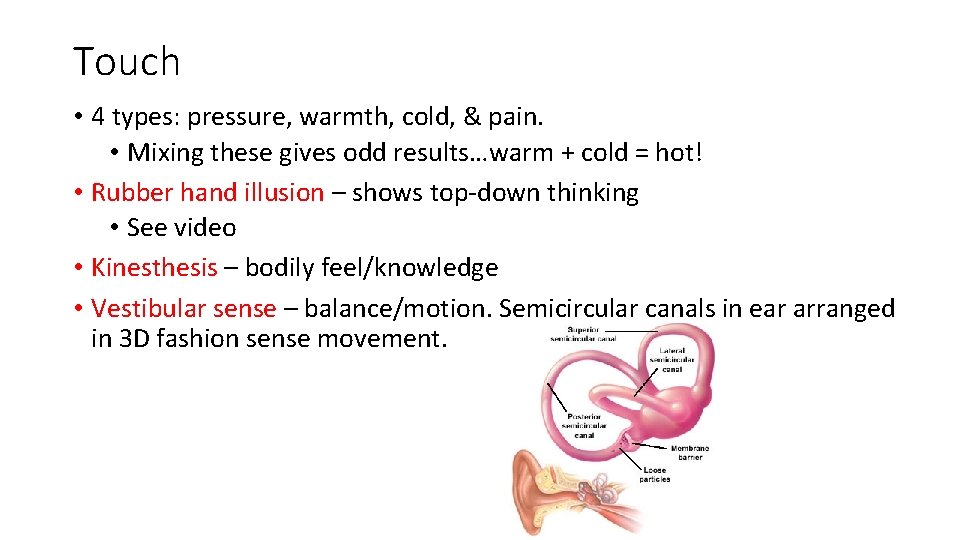
Touch • 4 types: pressure, warmth, cold, & pain. • Mixing these gives odd results…warm + cold = hot! • Rubber hand illusion – shows top-down thinking • See video • Kinesthesis – bodily feel/knowledge • Vestibular sense – balance/motion. Semicircular canals in ear arranged in 3 D fashion sense movement.
Pain • Pain – body’s warning sign. • Gate-control theory – there’s an on/off “gate” switch at spinal cord for pain. • Backed up by massage & acupuncture. • Endorphins – nature’s pain killer. • Phantom limb sensation – amputees report feeling sensation. • Tinnitus – ringing in the ears, often result of hearing loss. • Focus/distraction affects pain (athlete “plays through it”, virtual reality).
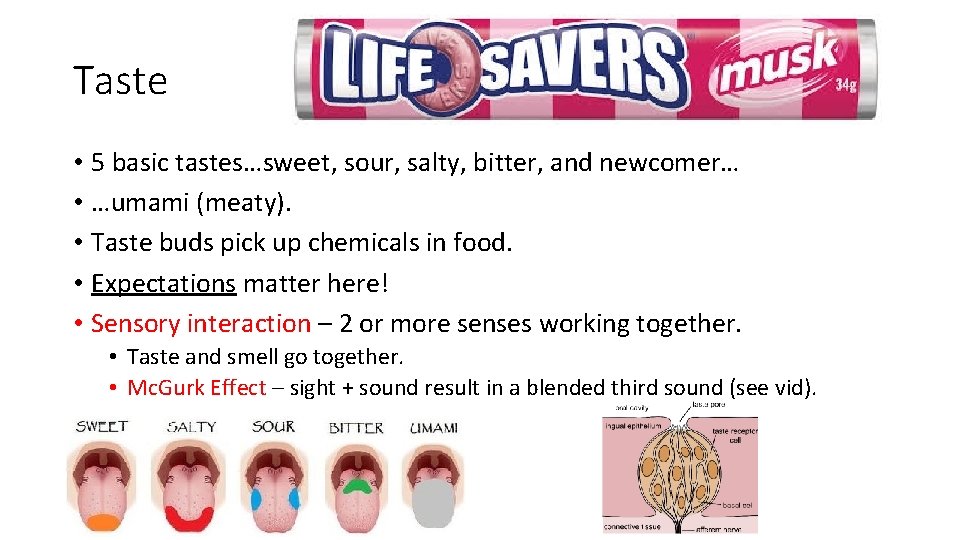
Taste • 5 basic tastes…sweet, sour, salty, bitter, and newcomer… • …umami (meaty). • Taste buds pick up chemicals in food. • Expectations matter here! • Sensory interaction – 2 or more senses working together. • Taste and smell go together. • Mc. Gurk Effect – sight + sound result in a blended third sound (see vid).
Smell • AKA “olfaction” or olfactory sense; 2 nd chemical sense. • 5 million receptor cells in nose • Smells mix uniquely, like letters making words. • “Good” smells are often learned. We associate a “good” smell with something good that happened. • Expectations matter, past experience matters.