
Sensation Perception How do we construct our representations




- Slides: 70
Sensation & Perception How do we construct our representations of the external world? To represent the world, we must detect physical energy (stimulus) from the environment and convert it into neural signals, a process called sensation. When we select, organize, and interpret our sensations, the process is called perception.
Psychophysics • Studies the links between physical stimuli in the world and the psychological experience of those stimuli • Among the earliest research to be conducted in the field of Psychology
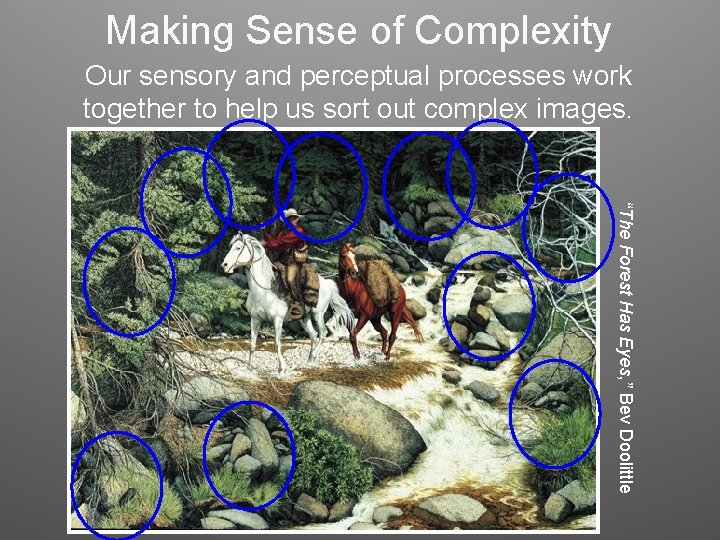
Making Sense of Complexity Our sensory and perceptual processes work together to help us sort out complex images. “The Forest Has Eyes, ” Bev Doolittle
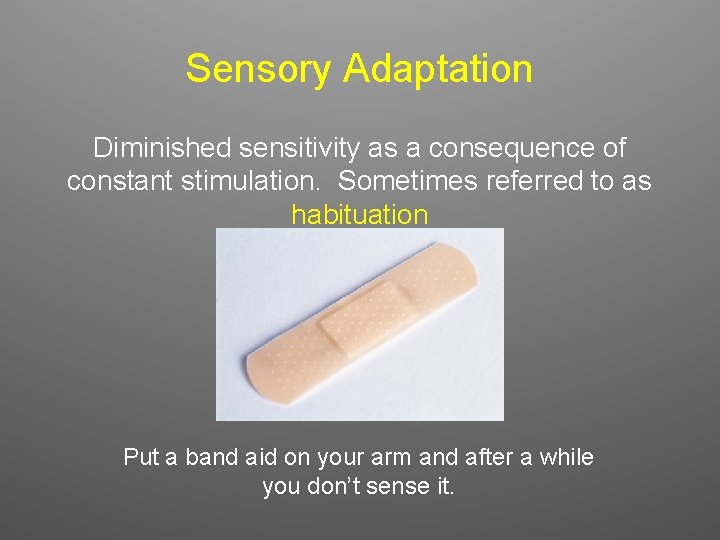
Sensory Adaptation Diminished sensitivity as a consequence of constant stimulation. Sometimes referred to as habituation Put a band aid on your arm and after a while you don’t sense it.
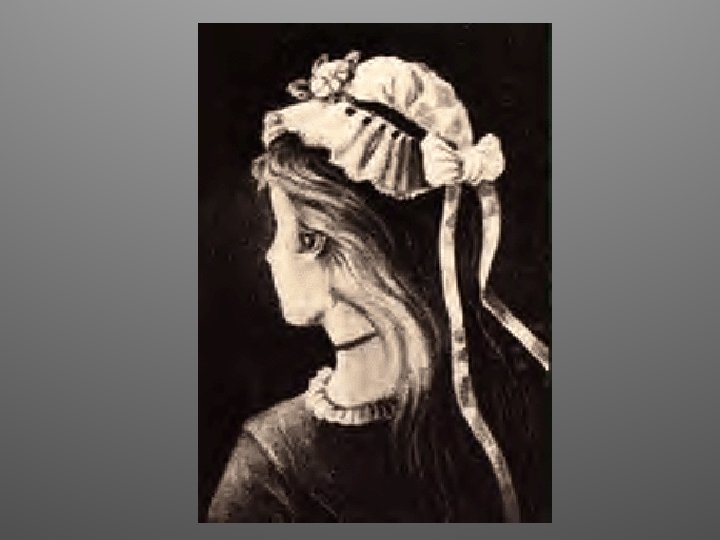
Selective Attention Perceptions about objects change from moment to moment. Different forms of Necker cube become available to our perception, however, one can pay attention only to one aspect of the object. Necker Cube
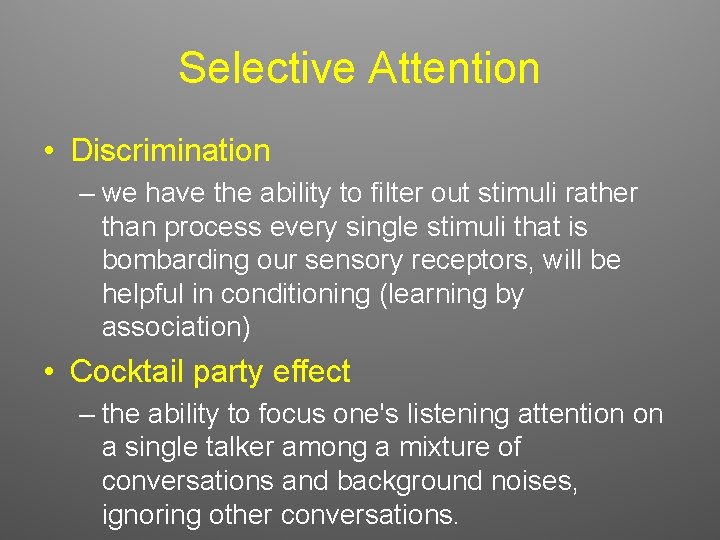
Selective Attention • Discrimination – we have the ability to filter out stimuli rather than process every single stimuli that is bombarding our sensory receptors, will be helpful in conditioning (learning by association) • Cocktail party effect – the ability to focus one's listening attention on a single talker among a mixture of conversations and background noises, ignoring other conversations.
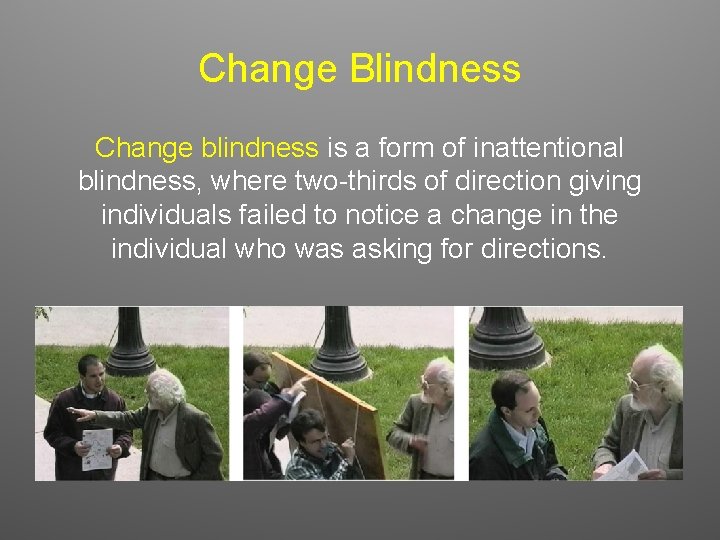
Change Blindness Change blindness is a form of inattentional blindness, where two-thirds of direction giving individuals failed to notice a change in the individual who was asking for directions.
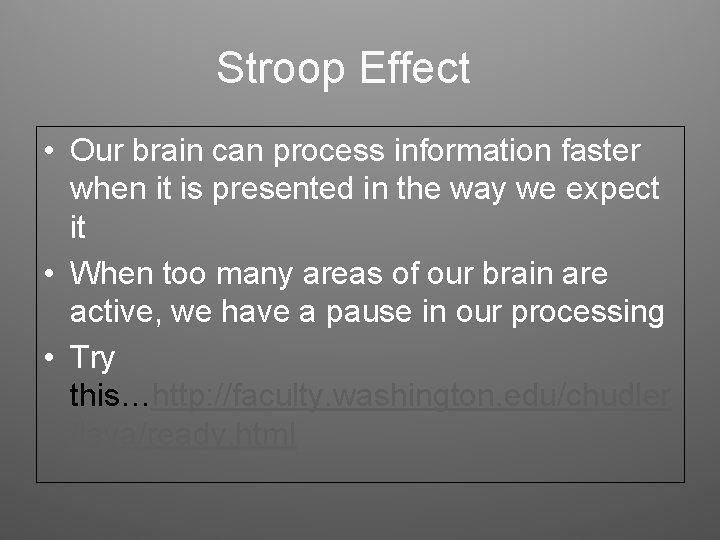
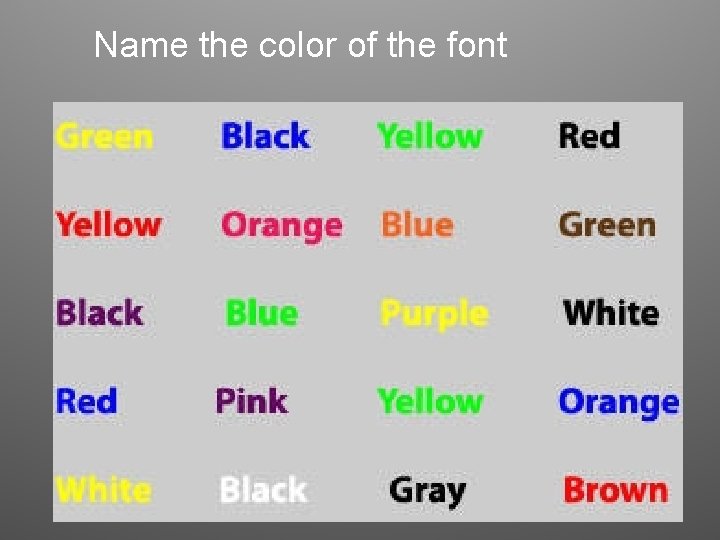
Stroop Effect • Our brain can process information faster when it is presented in the way we expect it • When too many areas of our brain are active, we have a pause in our processing • Try this…http: //faculty. washington. edu/chudler /java/ready. html
Name the color of the font
Transduction In sensation, transformation of stimulus energy into neural impulses. Phototransduction: Conversion of light energy into neural impulses that brain can understand (the rods and cones in the retina) Auditory/Acoustic transduction: Conversion of sound waves into neural impulses (the cilia in the cochlea)
Light Characteristics 1. Wavelength (hue/color) 2. Intensity (brightness) 3. Saturation (purity)
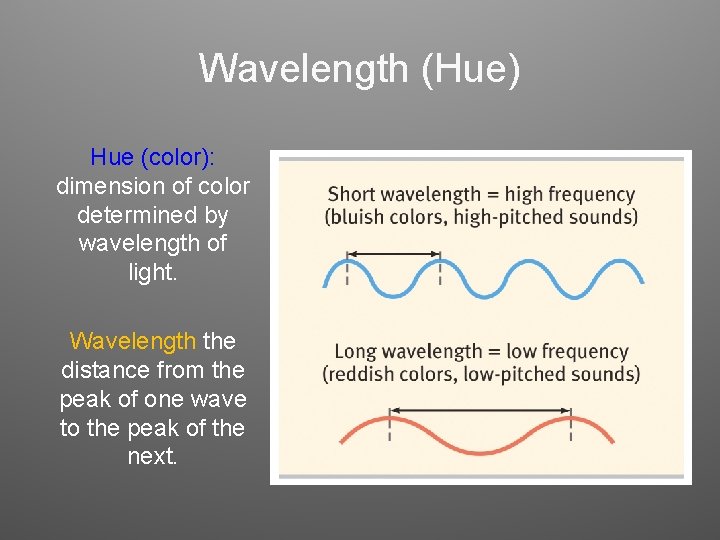
Wavelength (Hue) Hue (color): dimension of color determined by wavelength of light. Wavelength the distance from the peak of one wave to the peak of the next.
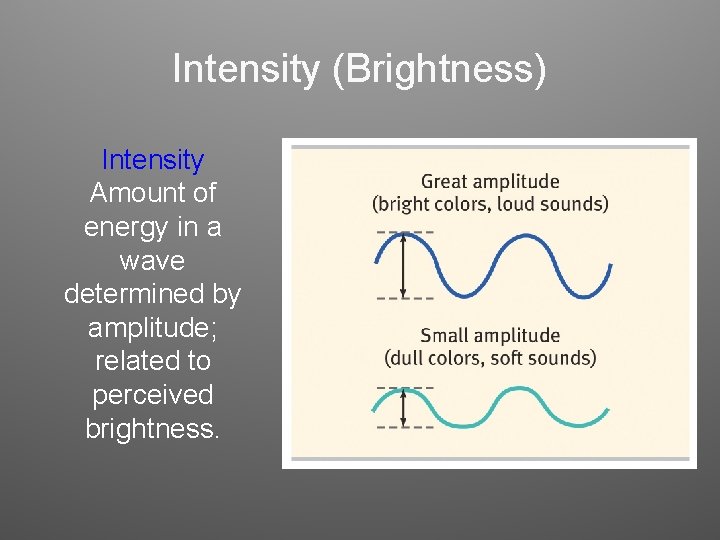
Intensity (Brightness) Intensity Amount of energy in a wave determined by amplitude; related to perceived brightness.
The Eye
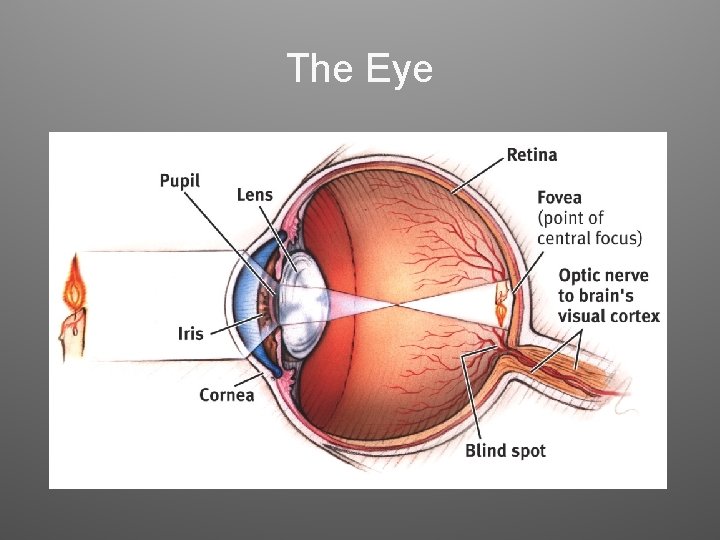
Parts of the eye 1. Cornea: Transparent tissue where light enters the eye. 2. Iris: Muscle that expands and contracts to change the size of opening (pupil) for light. 3. Lens: Focuses the light rays on the retina. 4. Retina: Contains sensory receptors that process visual information and send it to the brain.
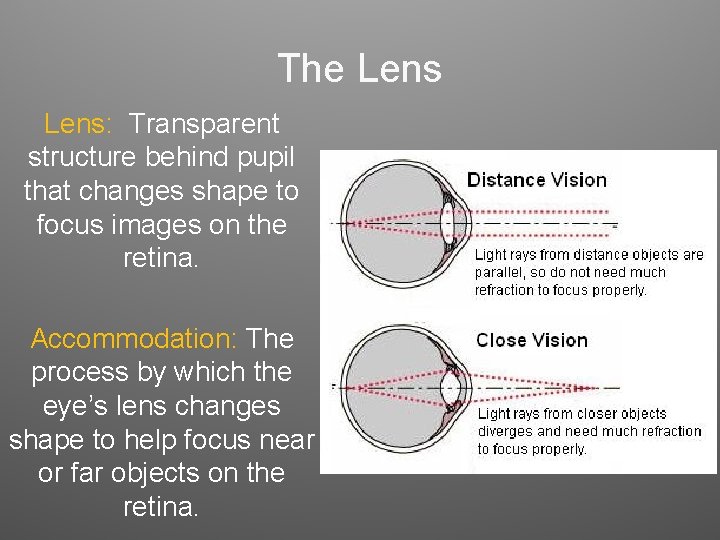
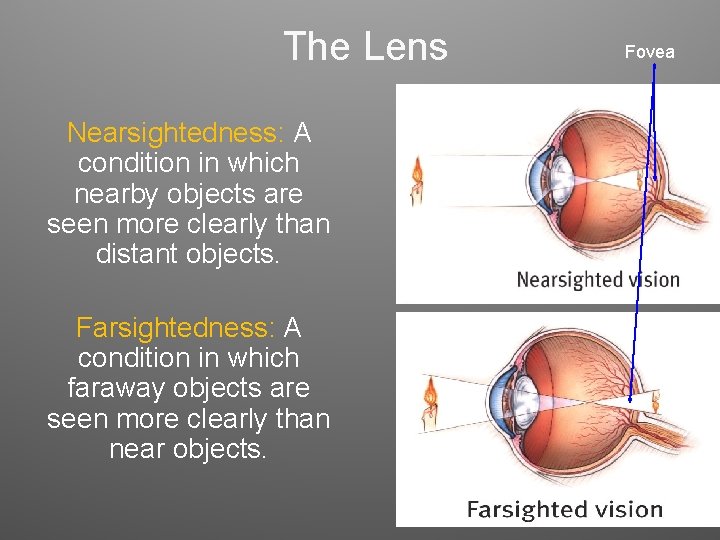
The Lens: Transparent structure behind pupil that changes shape to focus images on the retina. Accommodation: The process by which the eye’s lens changes shape to help focus near or far objects on the retina.
The Lens Nearsightedness: A condition in which nearby objects are seen more clearly than distant objects. Farsightedness: A condition in which faraway objects are seen more clearly than near objects. Fovea
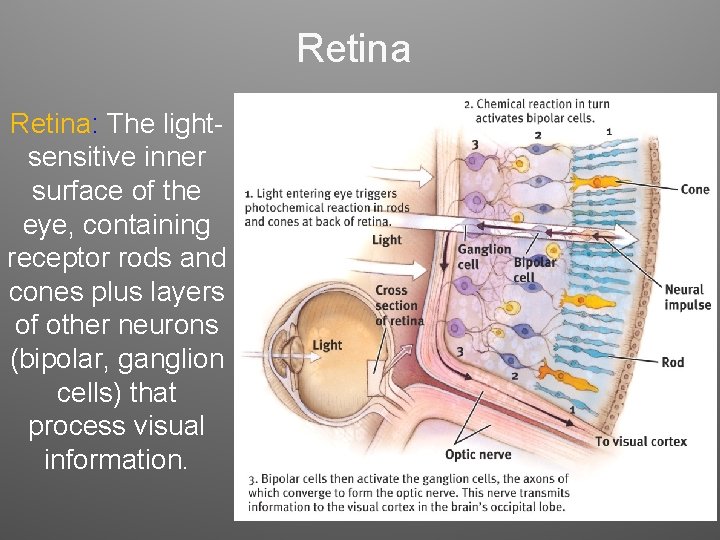
Retina: The lightsensitive inner surface of the eye, containing receptor rods and cones plus layers of other neurons (bipolar, ganglion cells) that process visual information.
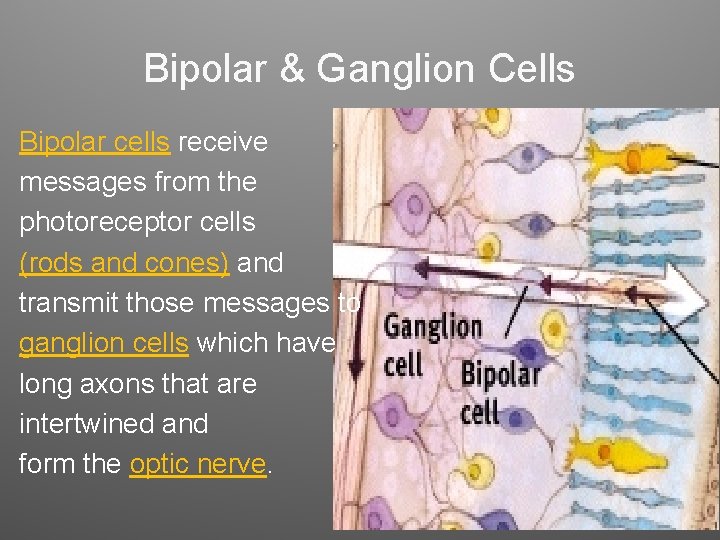
Bipolar & Ganglion Cells Bipolar cells receive messages from the photoreceptor cells (rods and cones) and transmit those messages to ganglion cells which have long axons that are intertwined and form the optic nerve.
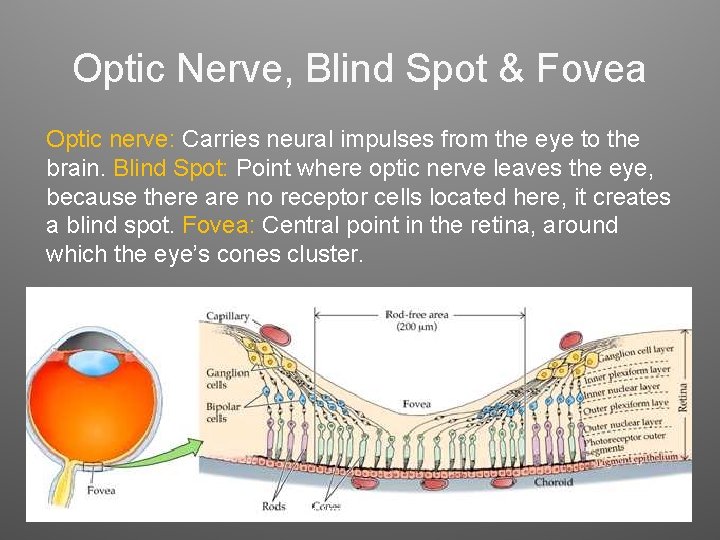
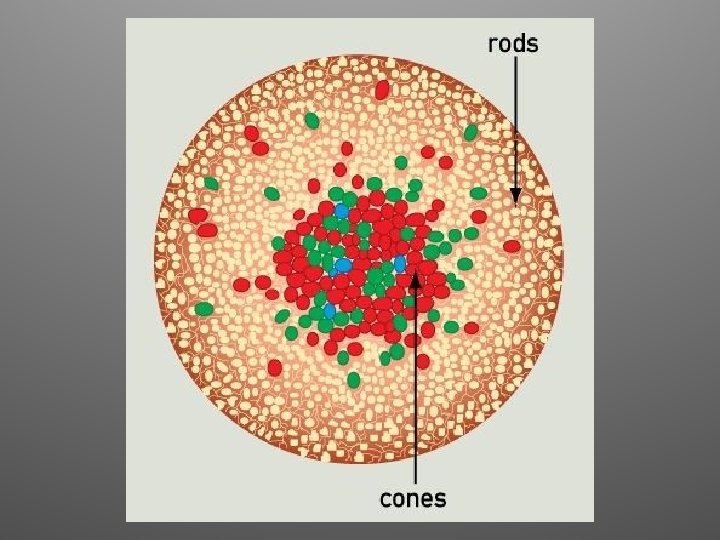
Optic Nerve, Blind Spot & Fovea Optic nerve: Carries neural impulses from the eye to the brain. Blind Spot: Point where optic nerve leaves the eye, because there are no receptor cells located here, it creates a blind spot. Fovea: Central point in the retina, around which the eye’s cones cluster. http: //www. bergen. org
Test your Blind Spot Take a piece of paper, roll it up, look through it with one eye and bring your opposite hand next to the paper. There should be a hole in your hand!!!!
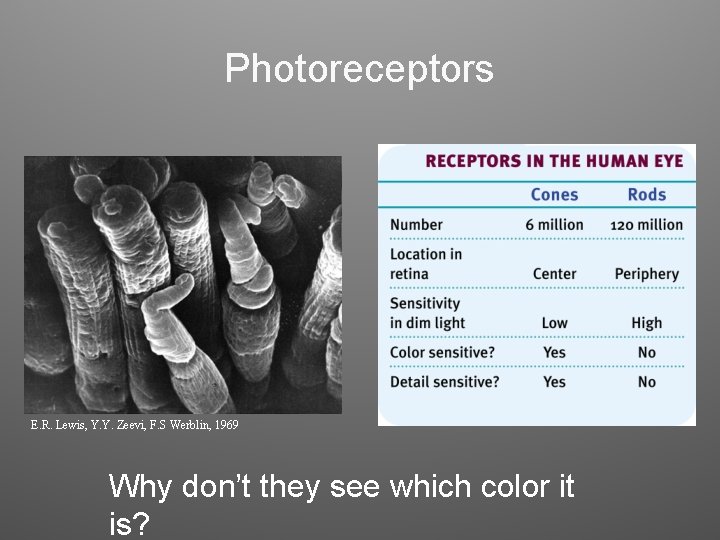
Photoreceptors E. R. Lewis, Y. Y. Zeevi, F. S Werblin, 1969 Why don’t they see which color it is?
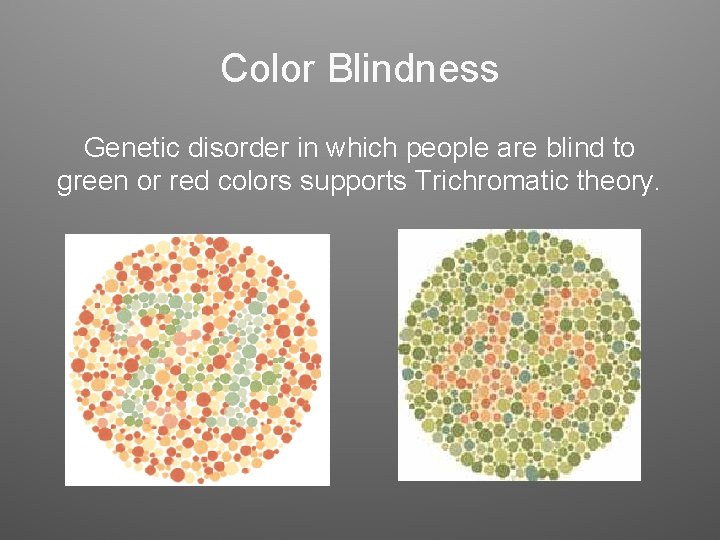
Color Blindness Genetic disorder in which people are blind to green or red colors supports Trichromatic theory.
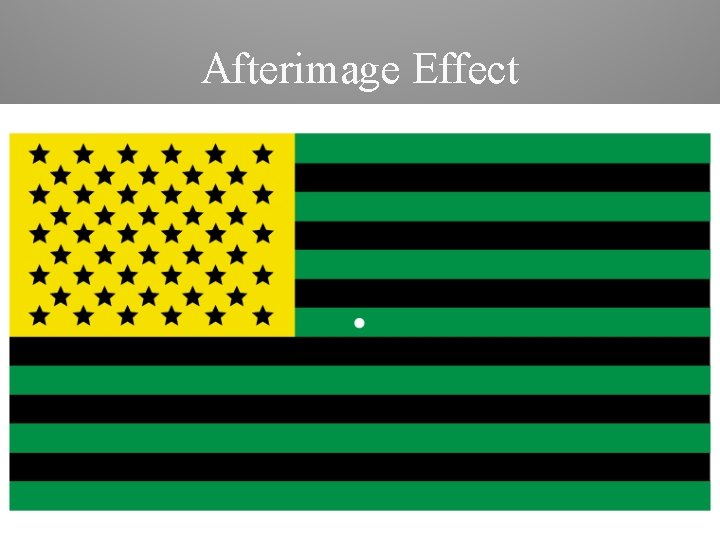
Opponent Process Theory • As our receptor cells sense colors in our environment, the cones are also firing the opponent (opposite) color Black White Red Green Blue Yellow Gaze at the middle of the flag for about 30 seconds…
Afterimage Effect
Hearing § Parts of the Ear and the hearing process § Theories of audition § Hearing loss
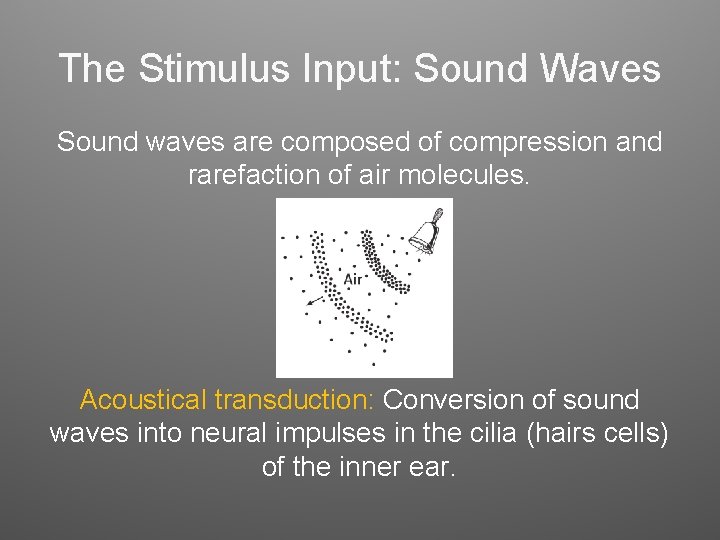
The Stimulus Input: Sound Waves Sound waves are composed of compression and rarefaction of air molecules. Acoustical transduction: Conversion of sound waves into neural impulses in the cilia (hairs cells) of the inner ear.
Sound Characteristics 1. Frequency (pitch) 2. Intensity (loudness) 3. Quality (timbre)
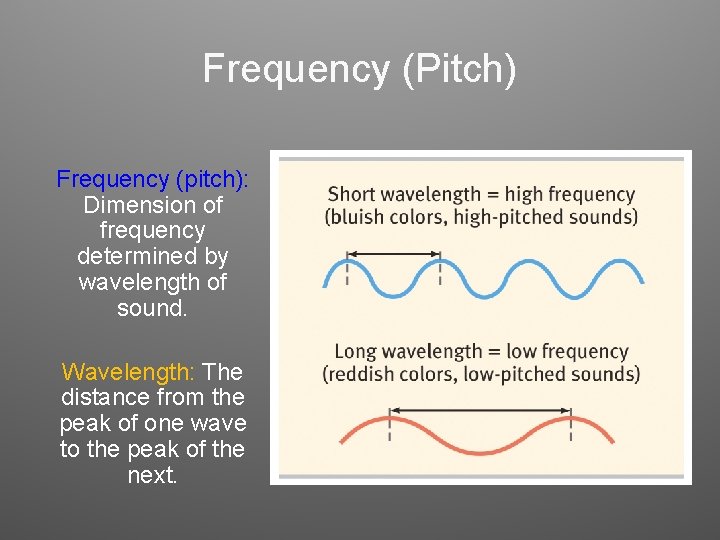
Frequency (Pitch) Frequency (pitch): Dimension of frequency determined by wavelength of sound. Wavelength: The distance from the peak of one wave to the peak of the next.
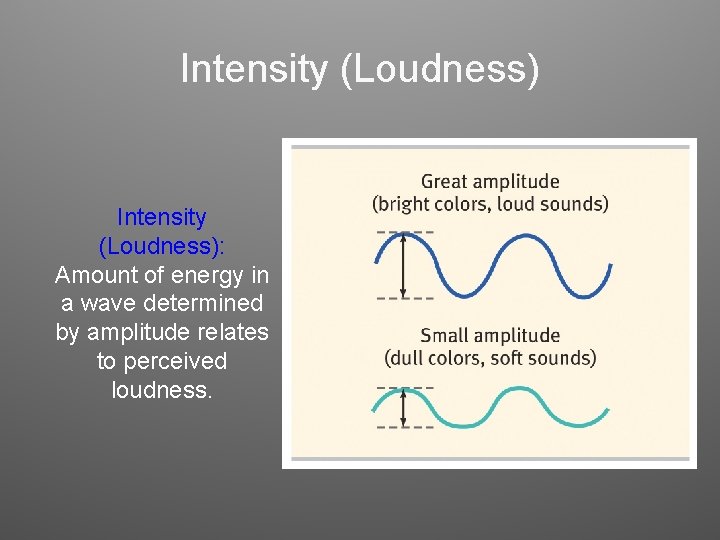
Intensity (Loudness): Amount of energy in a wave determined by amplitude relates to perceived loudness.
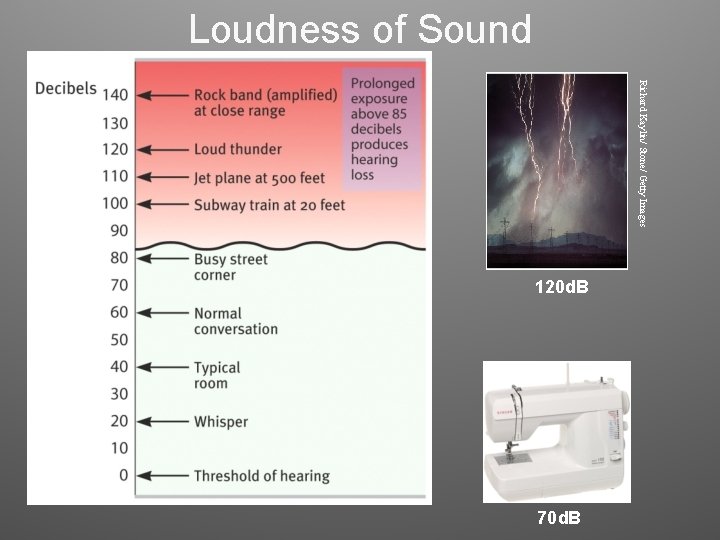
Loudness of Sound Richard Kaylin/ Stone/ Getty Images 120 d. B 70 d. B
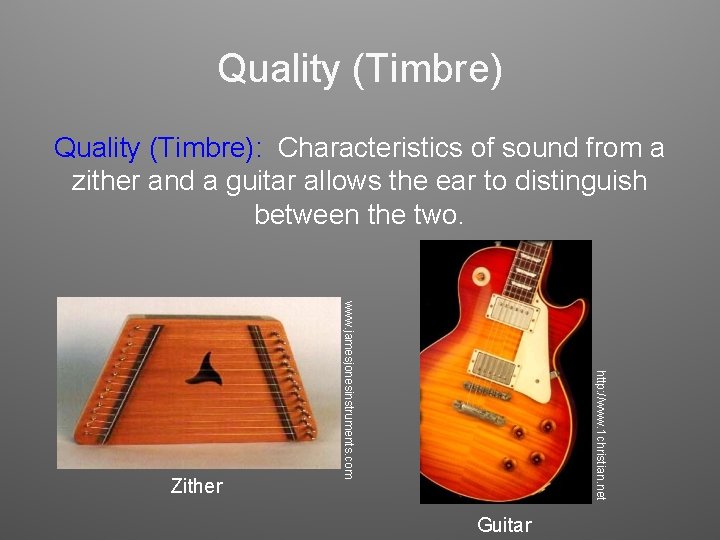
Quality (Timbre): Characteristics of sound from a zither and a guitar allows the ear to distinguish between the two. http: //www. 1 christian. net www. jamesjonesinstruments. com Zither Guitar
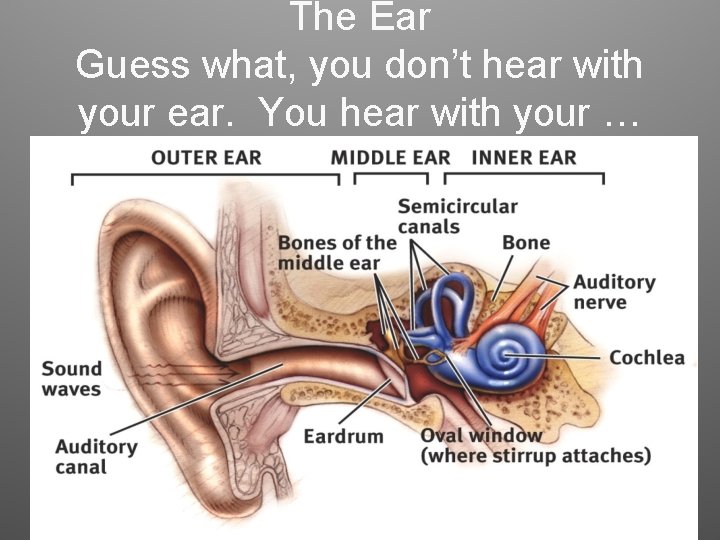
The Ear Guess what, you don’t hear with your ear. You hear with your …
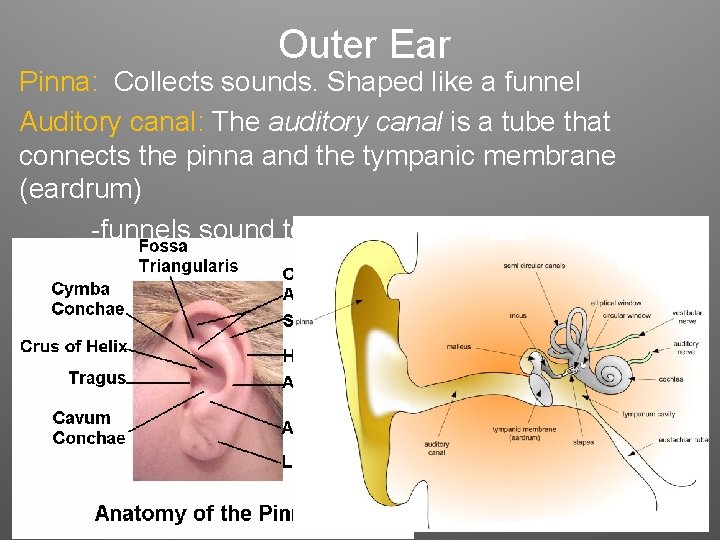
Outer Ear Pinna: Collects sounds. Shaped like a funnel Auditory canal: The auditory canal is a tube that connects the pinna and the tympanic membrane (eardrum) -funnels sound toward eardrum, protects eardrum
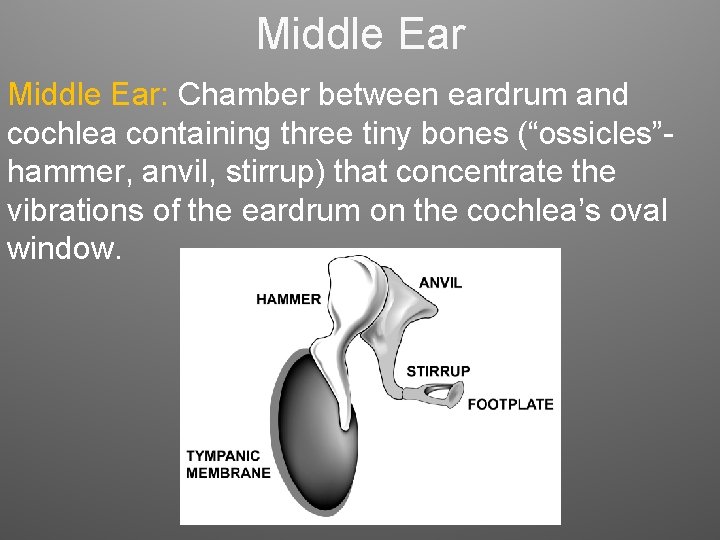
Middle Ear: Chamber between eardrum and cochlea containing three tiny bones (“ossicles”hammer, anvil, stirrup) that concentrate the vibrations of the eardrum on the cochlea’s oval window.
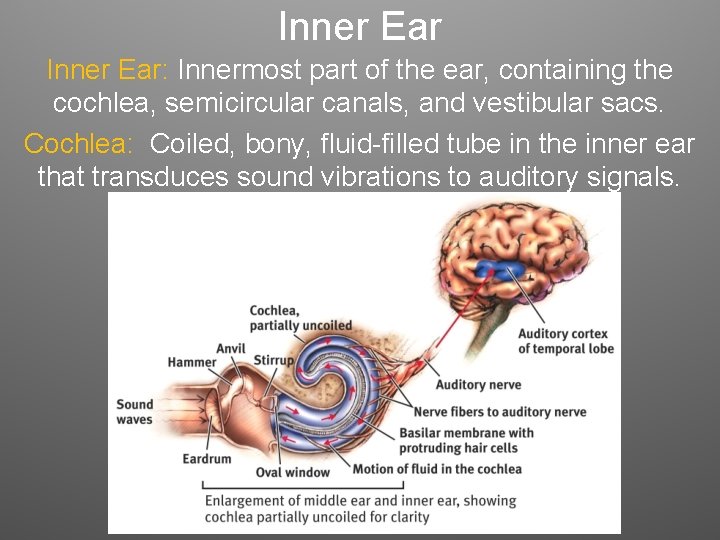
Inner Ear: Innermost part of the ear, containing the cochlea, semicircular canals, and vestibular sacs. Cochlea: Coiled, bony, fluid-filled tube in the inner ear that transduces sound vibrations to auditory signals.
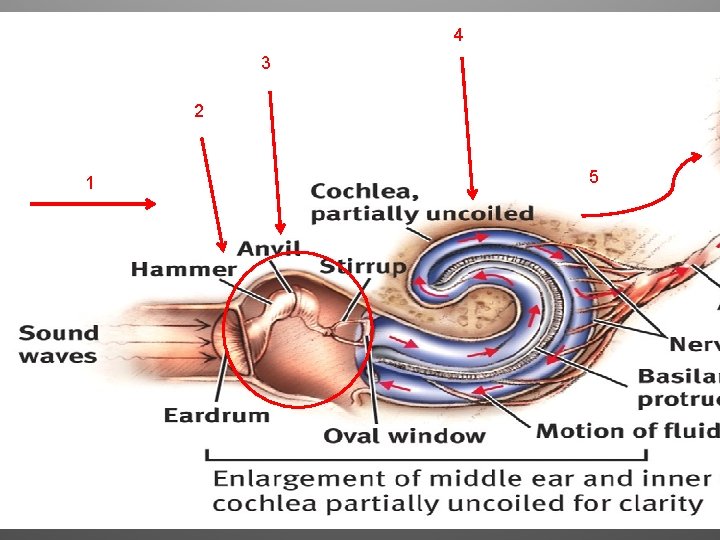
Process of hearing • 1. Sound waves enter through the pinna and travel through the auditory canal • 2. The sound waves begin to vibrate the tympanic membrane (eardrum) • 3. The ossciles of the middle ear (H. A. S. ) move and the stirrup presses on the cochlea’s oval window • 4. Fluid in the cochlea circulates causes the movement of the cilia along the basilar membrane • 5. Neural messages travel along the auditory nerve toward the temporal lobe
4 3 2 1 5
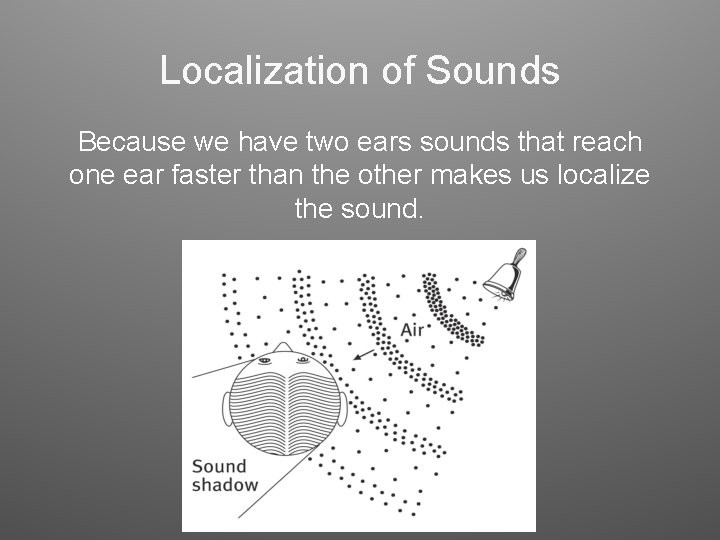
Localization of Sounds Because we have two ears sounds that reach one ear faster than the other makes us localize the sound.
Hearing Loss Conduction Hearing Loss: Hearing loss caused by damage to the mechanical system that conducts sound waves to the cochlea. The waves never reach the cochlea. Sensorineural Hearing Loss: Hearing loss caused by damage to the cochlea’s receptor cells or to the auditory nerve, also called nerve deafness.
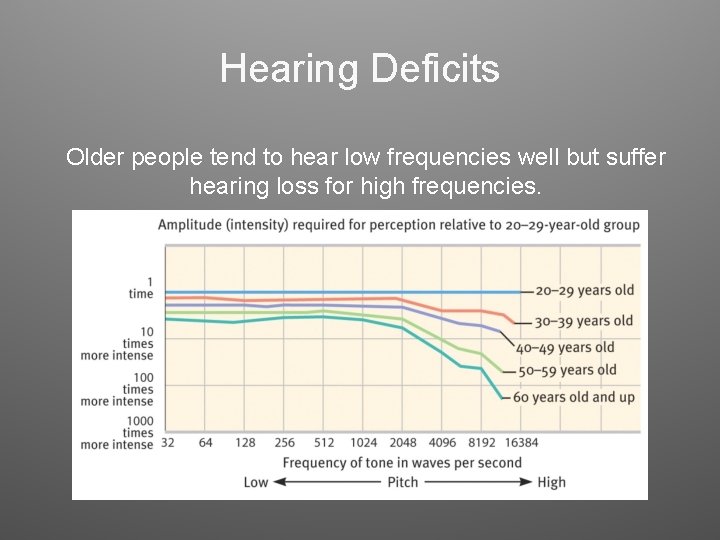
Hearing Deficits Older people tend to hear low frequencies well but suffer hearing loss for high frequencies.
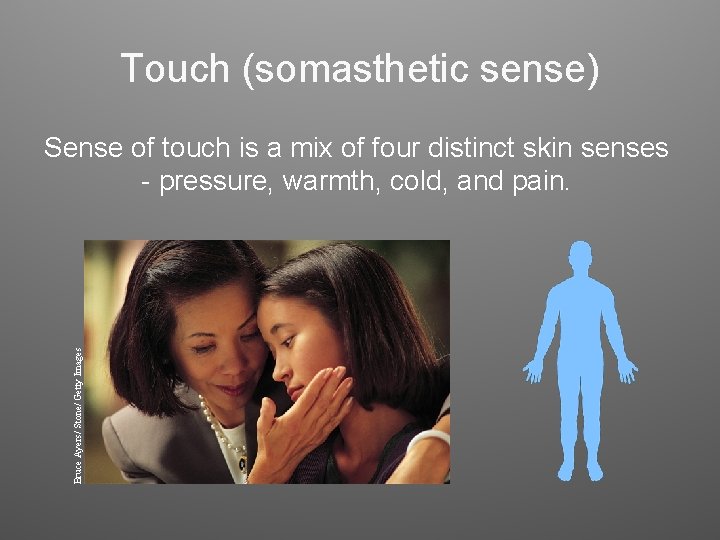
Touch (somasthetic sense) Bruce Ayers/ Stone/ Getty Images Sense of touch is a mix of four distinct skin senses - pressure, warmth, cold, and pain.
Touch • Receptors are located all over the skin, some areas more concentrated than others • The sensory cortex located in the parietal lobe receives the information (left side of body=right brain) • The more sensitive a body part is, the more surface area is given to it in the cortex
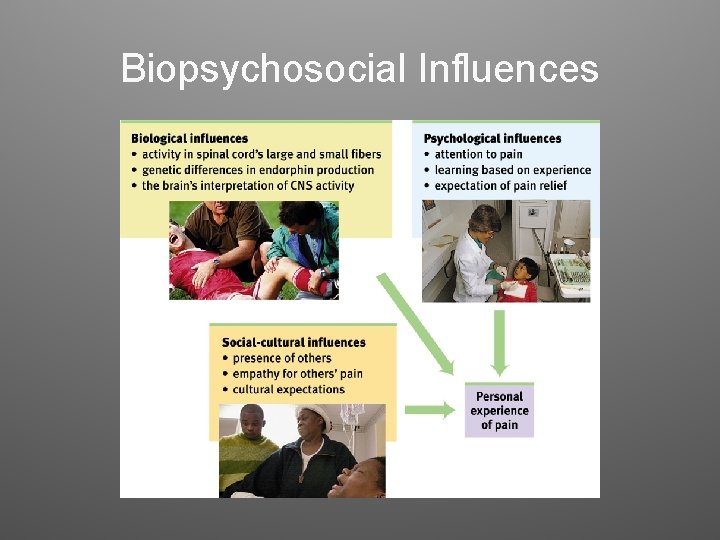
Pain tells the body that something has gone wrong. Usually pain results from damage to the skin and other tissues. There is a rare disease in which the person feels no pain. Ashley Blocker (right) feels neither pain nor extreme hot or cold.
Biopsychosocial Influences
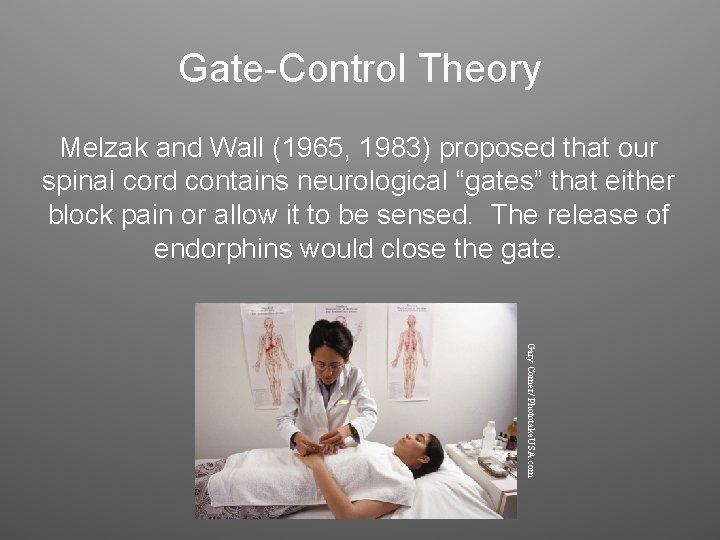
Gate-Control Theory Melzak and Wall (1965, 1983) proposed that our spinal cord contains neurological “gates” that either block pain or allow it to be sensed. The release of endorphins would close the gate. Gary Comer/ Phototake. USA. com
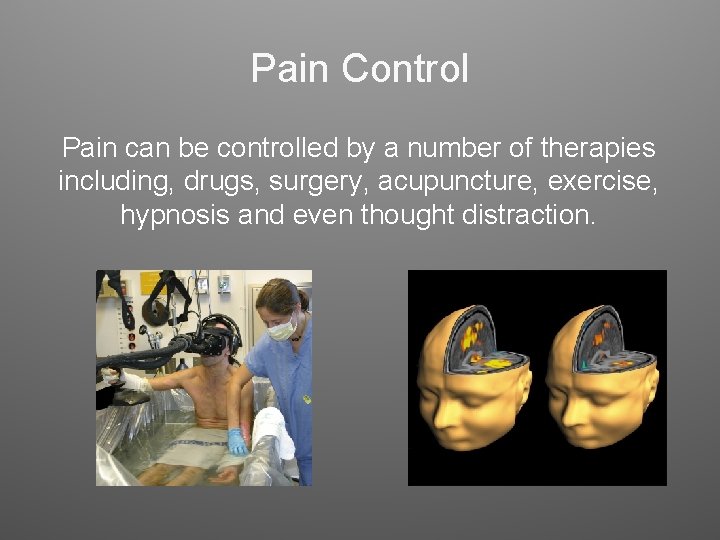
Pain Control Pain can be controlled by a number of therapies including, drugs, surgery, acupuncture, exercise, hypnosis and even thought distraction.
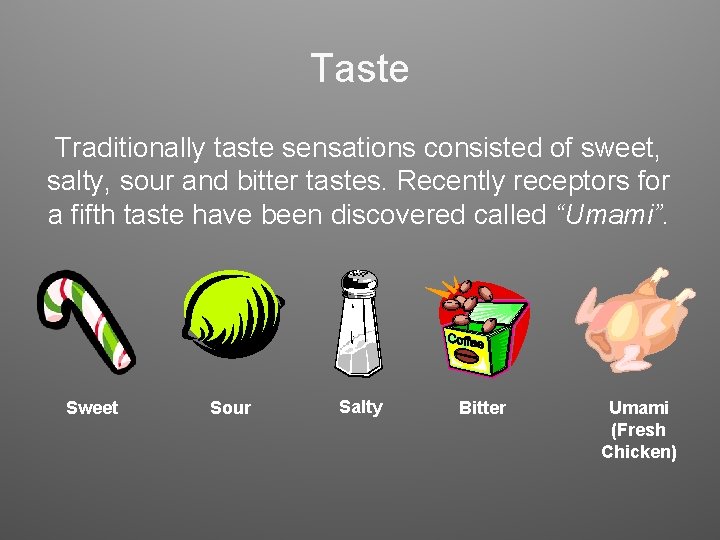
Taste Traditionally taste sensations consisted of sweet, salty, sour and bitter tastes. Recently receptors for a fifth taste have been discovered called “Umami”. Sweet Sour Salty Bitter Umami (Fresh Chicken)
Sensory Interaction When one sense affects another sense sensory interaction takes place. So the taste of starburst interacts with its smell and its texture on the tongue to produce flavor.
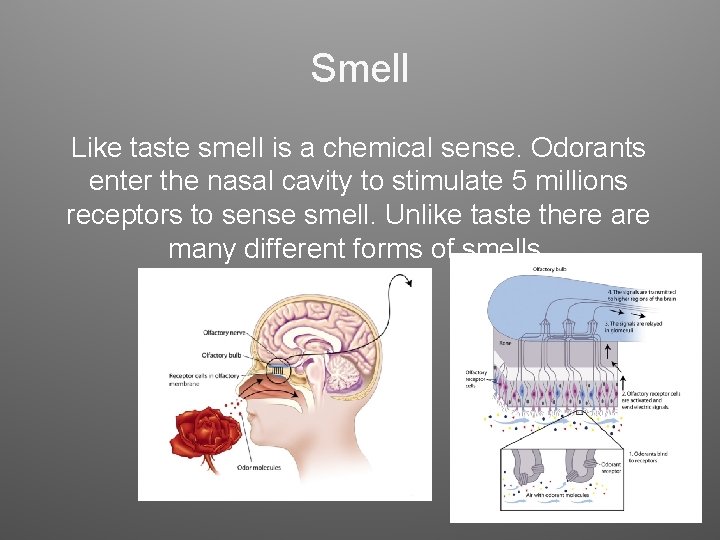
Smell Like taste smell is a chemical sense. Odorants enter the nasal cavity to stimulate 5 millions receptors to sense smell. Unlike taste there are many different forms of smells.
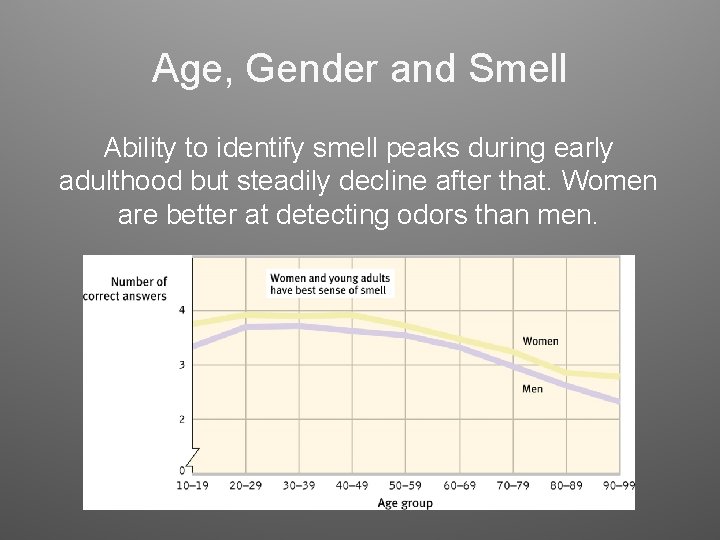
Age, Gender and Smell Ability to identify smell peaks during early adulthood but steadily decline after that. Women are better at detecting odors than men.
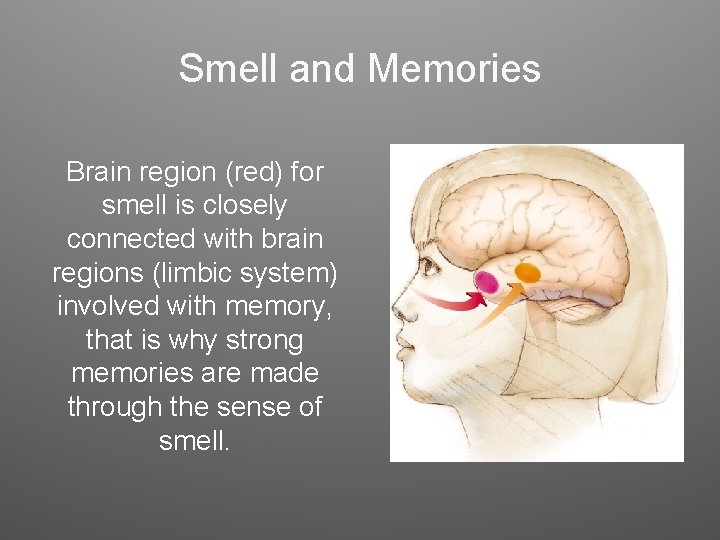
Smell and Memories Brain region (red) for smell is closely connected with brain regions (limbic system) involved with memory, that is why strong memories are made through the sense of smell.
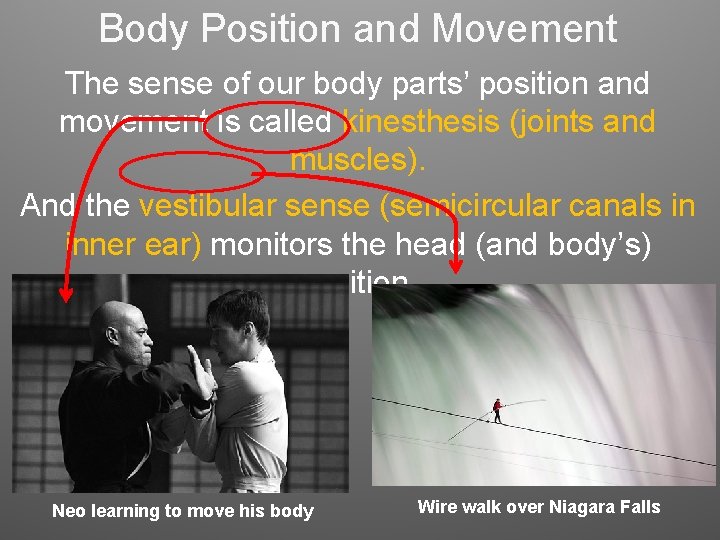
Body Position and Movement The sense of our body parts’ position and movement is called kinesthesis (joints and muscles). And the vestibular sense (semicircular canals in inner ear) monitors the head (and body’s) position. Neo learning to move his body Wire walk over Niagara Falls
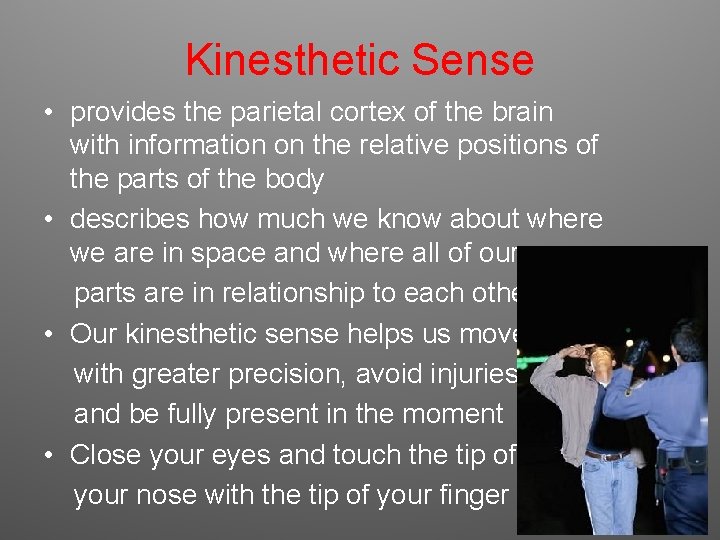
Kinesthetic Sense • provides the parietal cortex of the brain with information on the relative positions of the parts of the body • describes how much we know about where we are in space and where all of our parts are in relationship to each other • Our kinesthetic sense helps us move with greater precision, avoid injuries, and be fully present in the moment • Close your eyes and touch the tip of your nose with the tip of your finger
Vestibular Sense (equilibrium) • Monitors the position of the head in relation to the body, the sensations of body rotation and of gravitation and movement • Operates based on movement of fluid within the semi-circular canals of the inner ear • The vestibular system sends signals primarily to the neural structures that control eye movements, and to the muscles that keep a creature upright
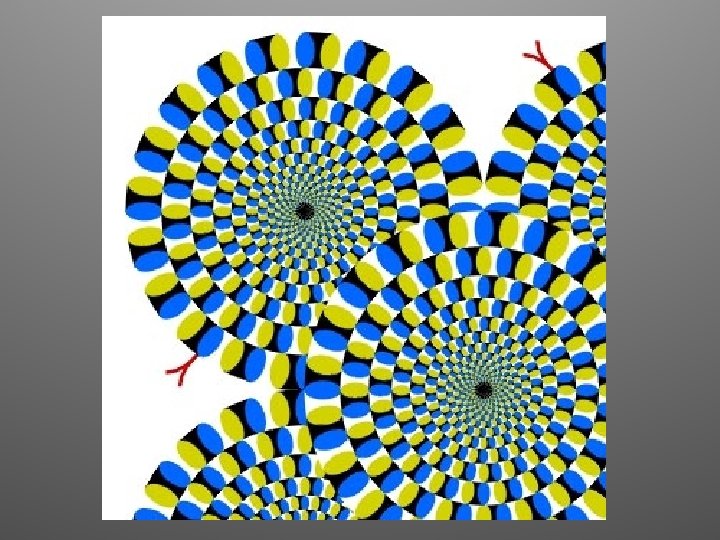
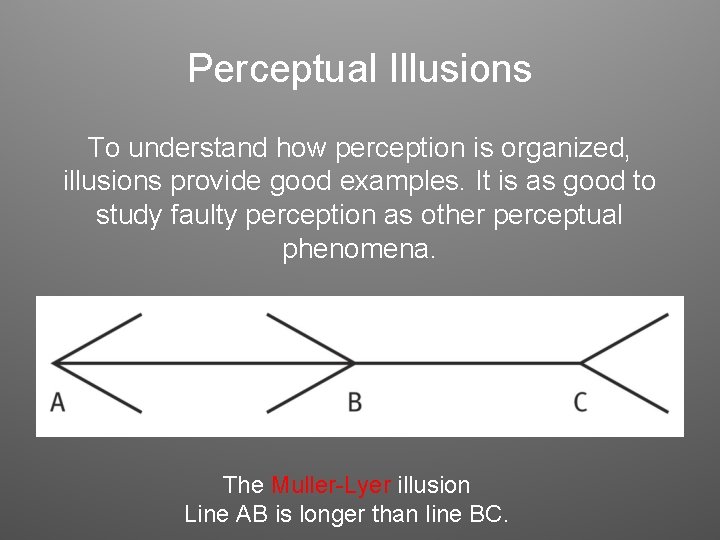
Perceptual Illusions To understand how perception is organized, illusions provide good examples. It is as good to study faulty perception as other perceptual phenomena. The Muller-Lyer illusion Line AB is longer than line BC.
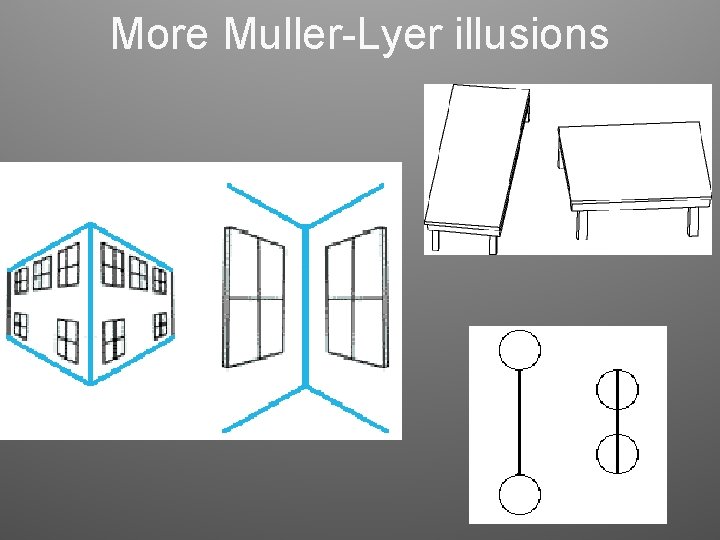
More Muller-Lyer illusions
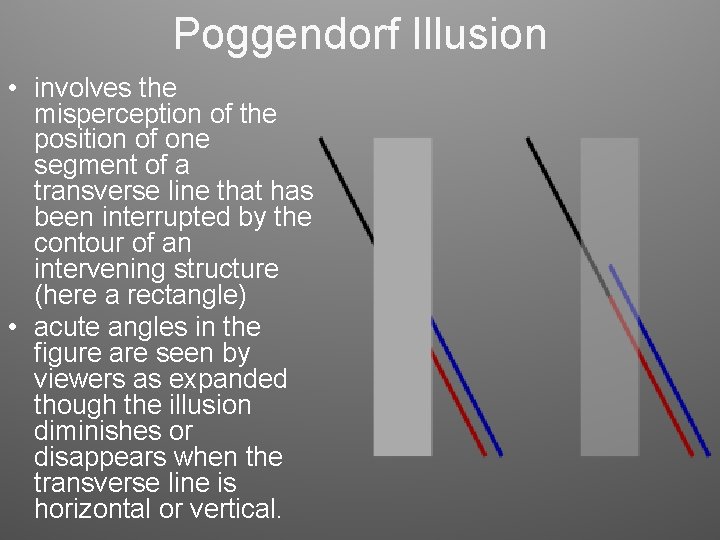
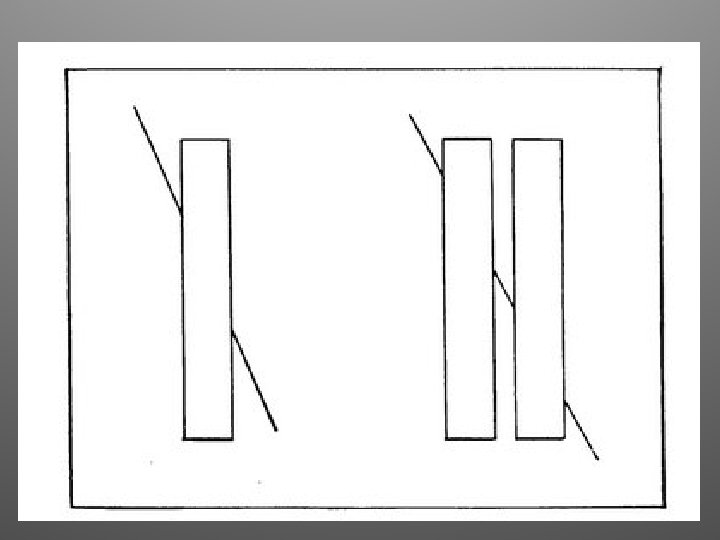
Poggendorf Illusion • involves the misperception of the position of one segment of a transverse line that has been interrupted by the contour of an intervening structure (here a rectangle) • acute angles in the figure are seen by viewers as expanded though the illusion diminishes or disappears when the transverse line is horizontal or vertical.
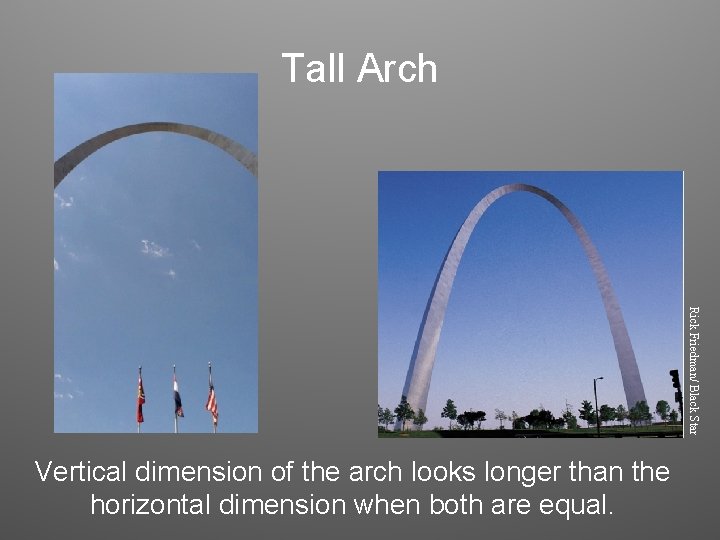
Tall Arch Rick Friedman/ Black Star Vertical dimension of the arch looks longer than the horizontal dimension when both are equal.
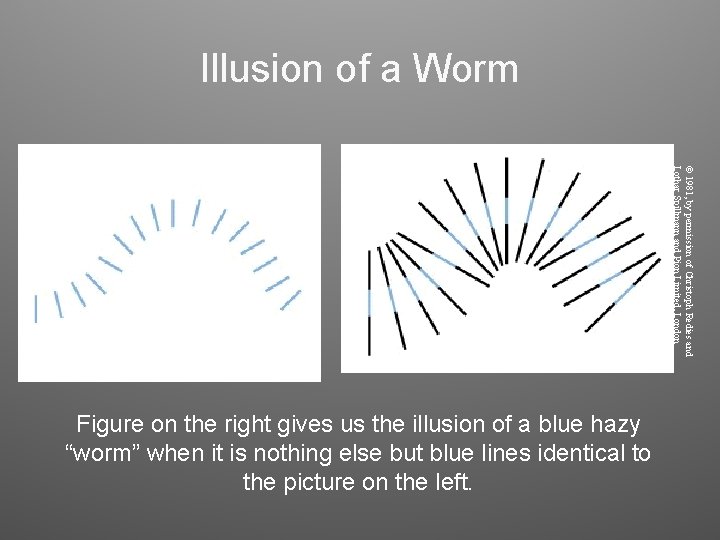
Illusion of a Worm © 1981, by permission of Christoph Redies and Lothar Spillmann and Pion Limited, London Figure on the right gives us the illusion of a blue hazy “worm” when it is nothing else but blue lines identical to the picture on the left.
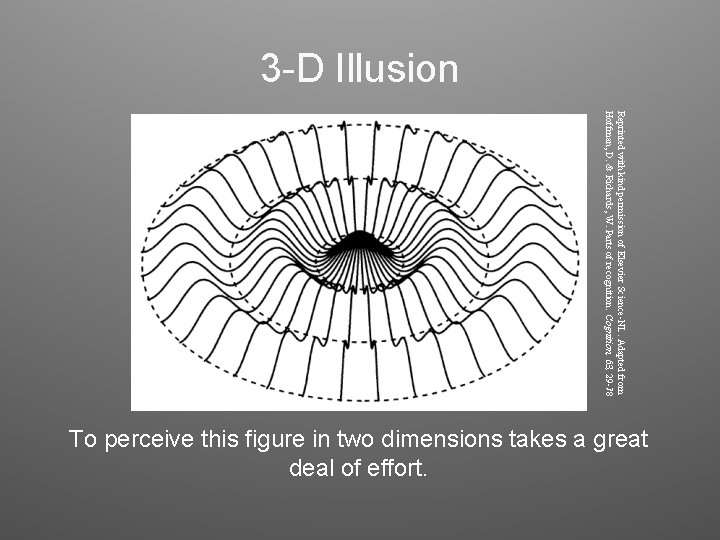
3 -D Illusion Reprinted with kind permission of Elsevier Science-NL. Adapted from Hoffman, D. & Richards, W. Parts of recognition. Cognition, 63, 29 -78 To perceive this figure in two dimensions takes a great deal of effort.
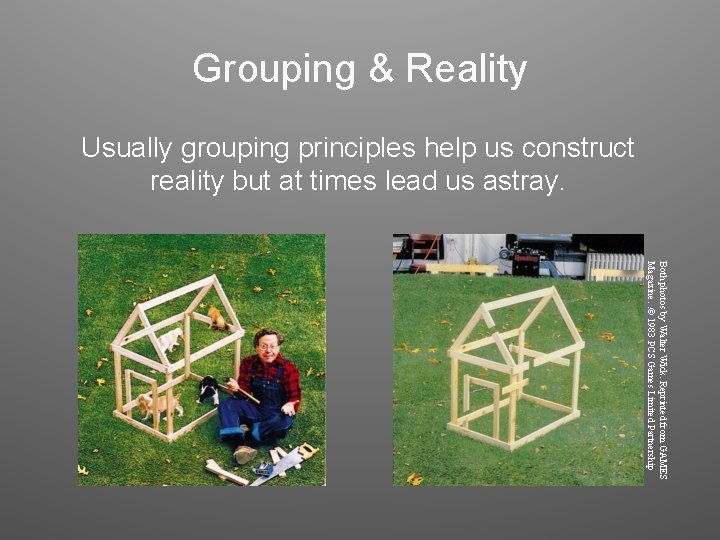
Grouping & Reality Usually grouping principles help us construct reality but at times lead us astray. Both photos by Walter Wick. Reprinted from GAMES Magazine. . © 1983 PCS Games Limited Partnership
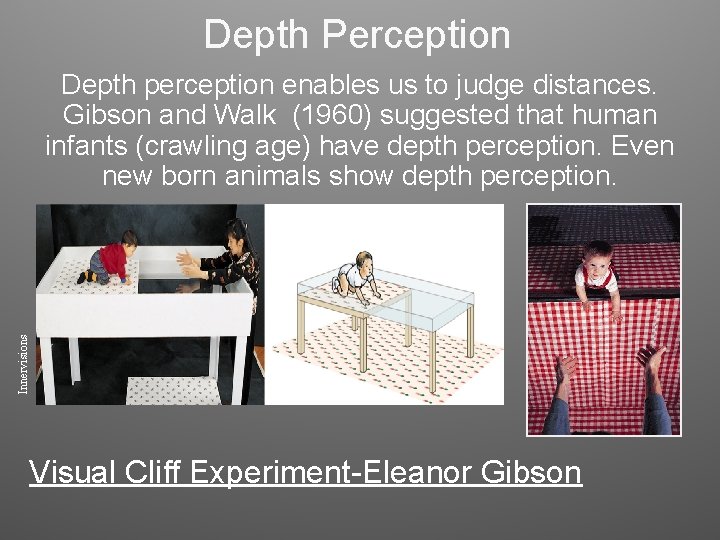
Depth Perception Innervisions Depth perception enables us to judge distances. Gibson and Walk (1960) suggested that human infants (crawling age) have depth perception. Even new born animals show depth perception. Visual Cliff Experiment-Eleanor Gibson
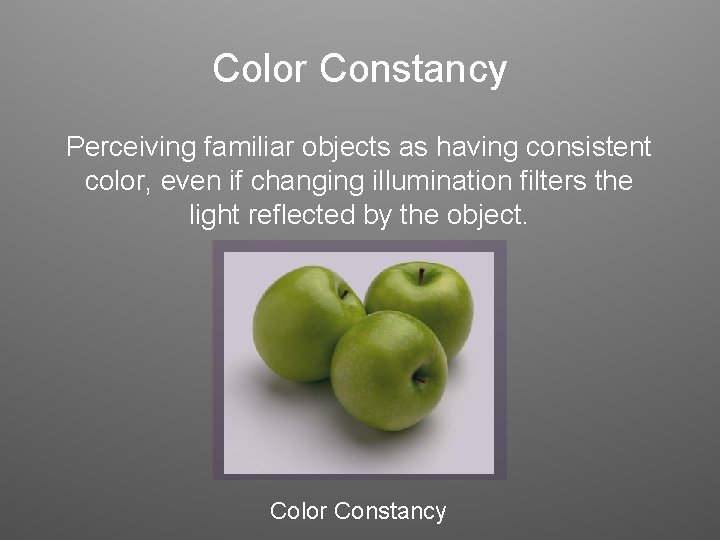
Color Constancy Perceiving familiar objects as having consistent color, even if changing illumination filters the light reflected by the object. Color Constancy