
Sensation Control Sensation Response without Nerves Cnidaria Cnidocyte








- Slides: 30
Sensation & Control
Sensation & Response without Nerves Cnidaria: Cnidocyte discharge
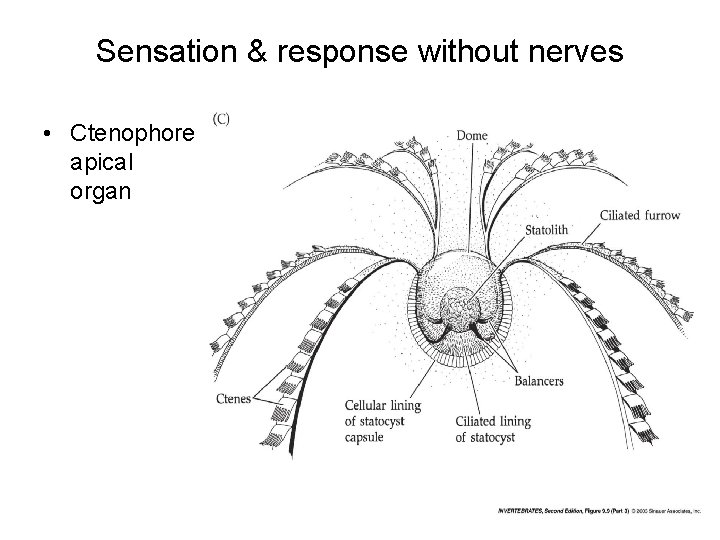
Sensation & response without nerves • Ctenophore apical organ
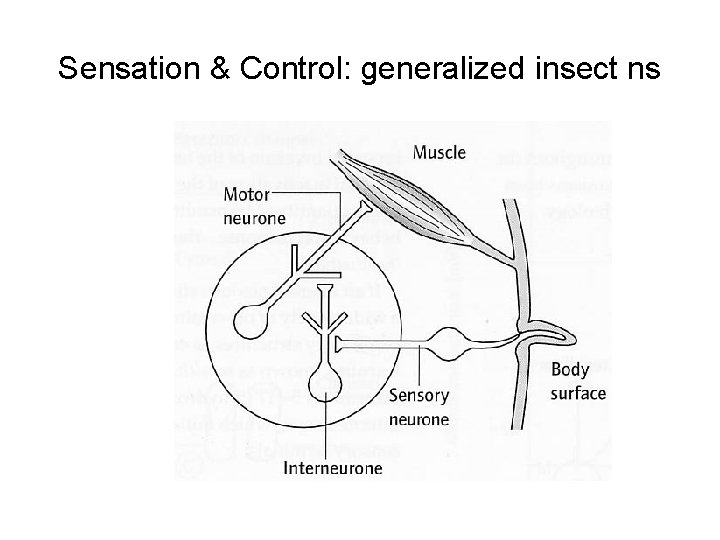
Sensation & Control: generalized insect ns
Mechanoreceptors • Insect haltere 335 strain receptors, 11 muscles – functions as a gyroscope, detecting slight changes in pitch, etc. transmitting to the brain, eyes, and some directly to wing pitch muscles
Crustacean Sensory Systems • Lobster Statocyst • Copepod median eye
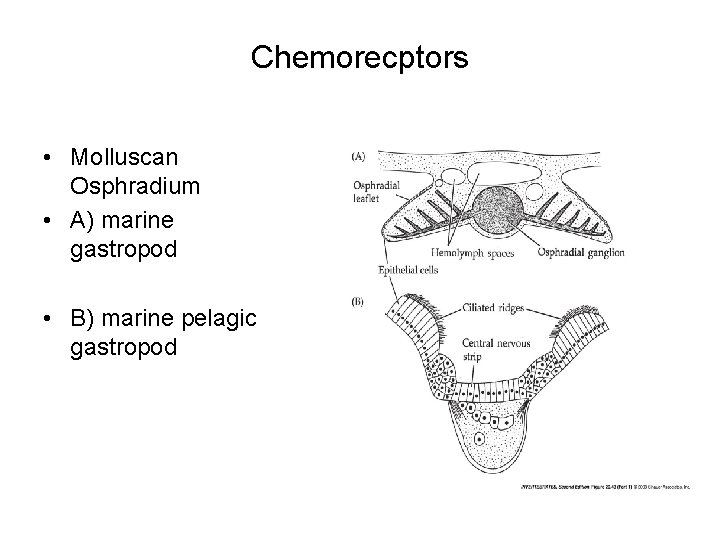
Chemorecptors • Molluscan Osphradium • A) marine gastropod • B) marine pelagic gastropod
Mixed sensory structures • Insect Sensilla
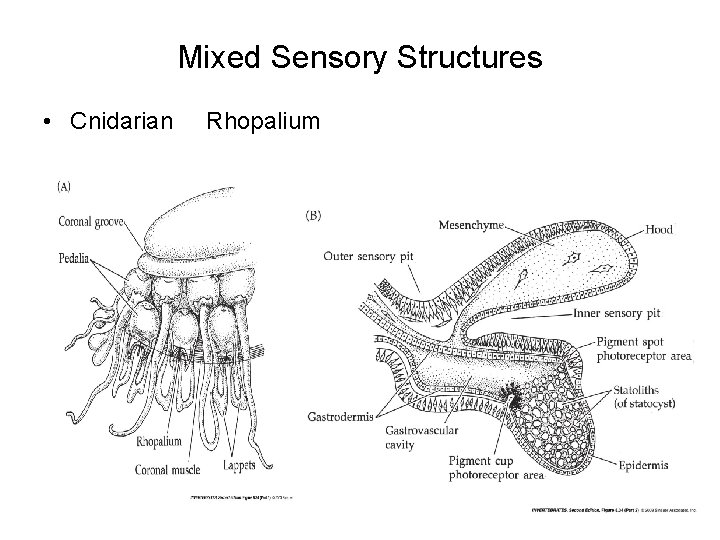
Mixed Sensory Structures • Cnidarian Rhopalium
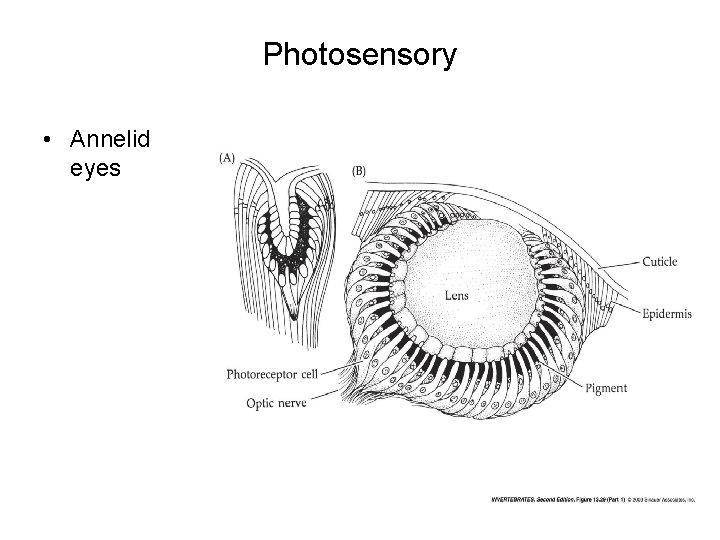
Photosensory • Annelid eyes
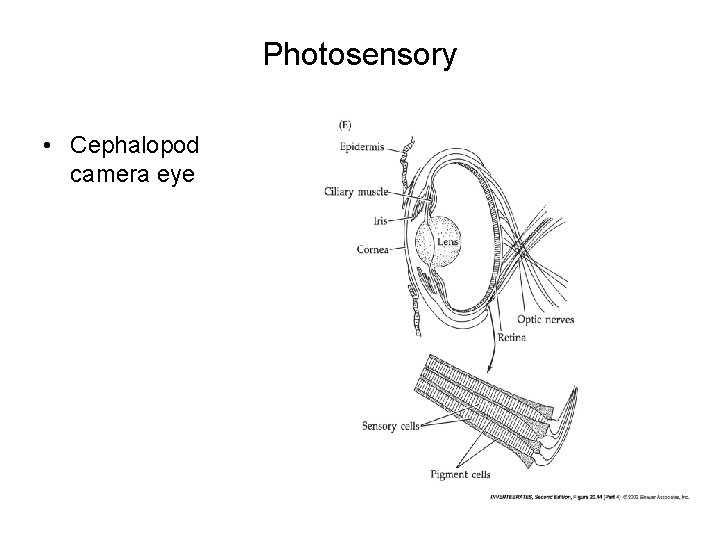
Photosensory • Cephalopod camera eye
Photosensory • Compound Eye Ommatidia dark/light adapted appositional & superpositional eyes
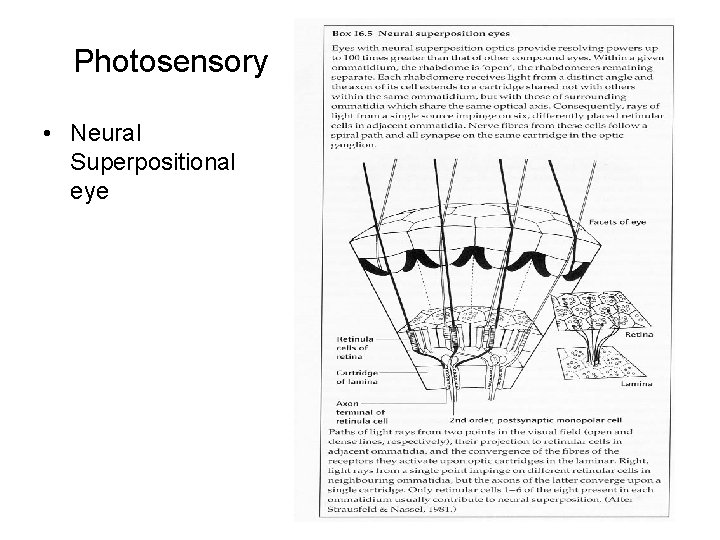
Photosensory • Neural Superpositional eye
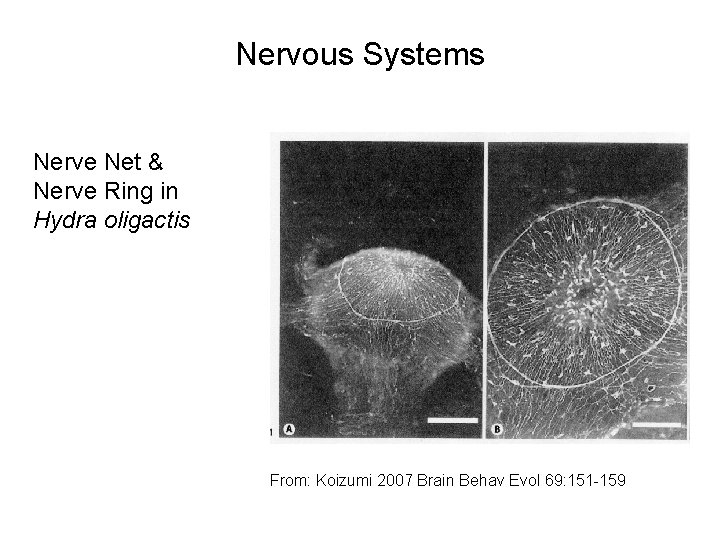
Nervous Systems Nerve Net & Nerve Ring in Hydra oligactis From: Koizumi 2007 Brain Behav Evol 69: 151 -159
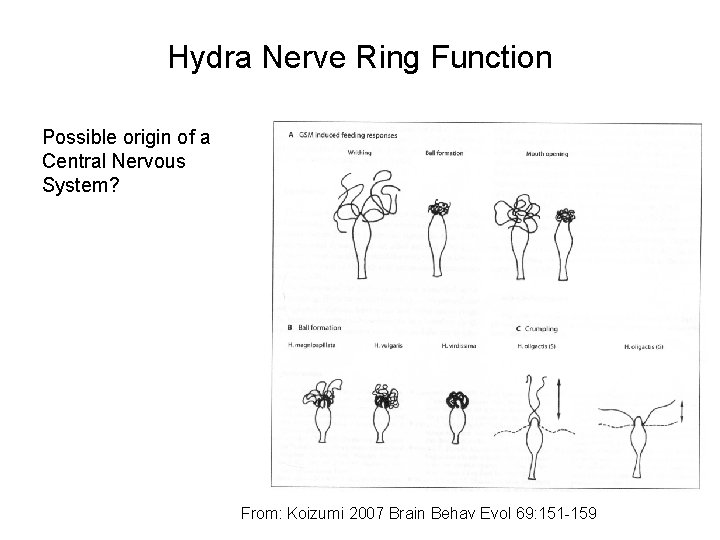
Hydra Nerve Ring Function Possible origin of a Central Nervous System? From: Koizumi 2007 Brain Behav Evol 69: 151 -159
Central Nervous Systems
Squid Giant Axons
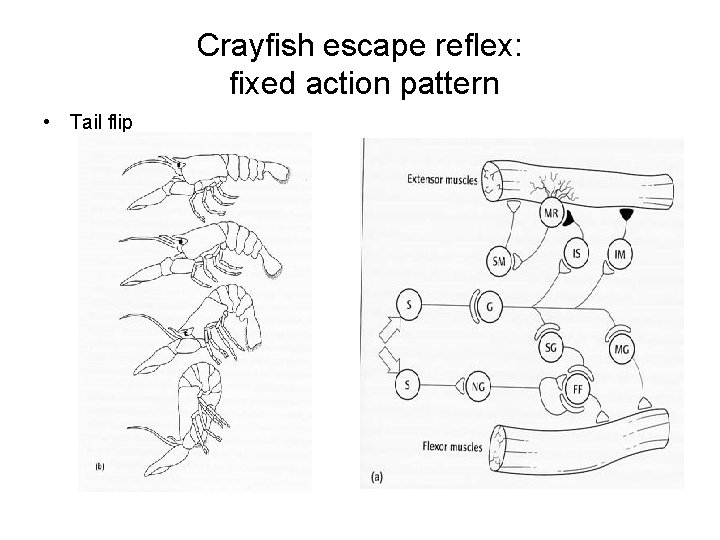
Crayfish escape reflex: fixed action pattern • Tail flip
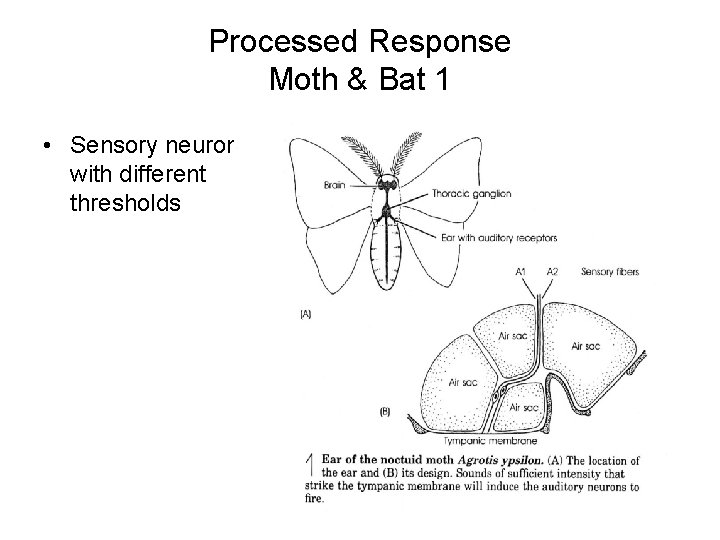
Processed Response Moth & Bat 1 • Sensory neurons with different thresholds
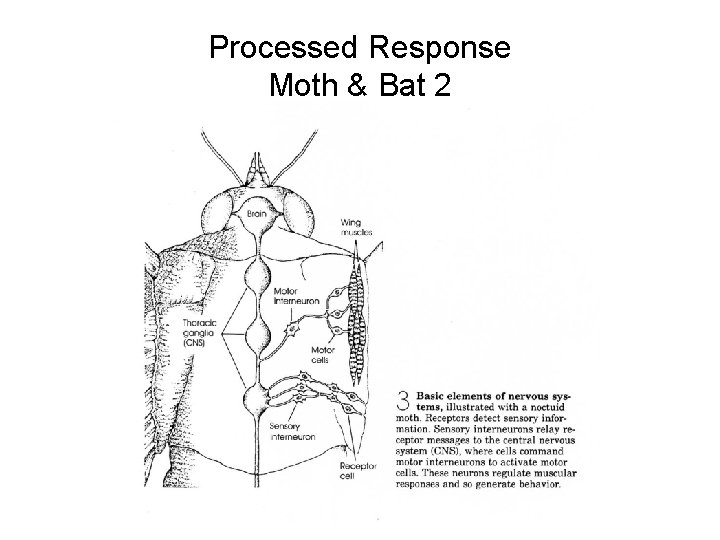
Processed Response Moth & Bat 2
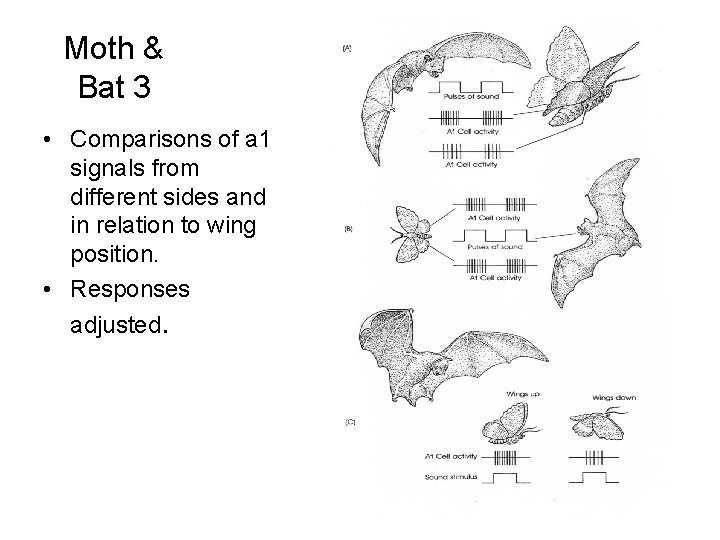
Moth & Bat 3 • Comparisons of a 1 signals from different sides and in relation to wing position. • Responses adjusted.
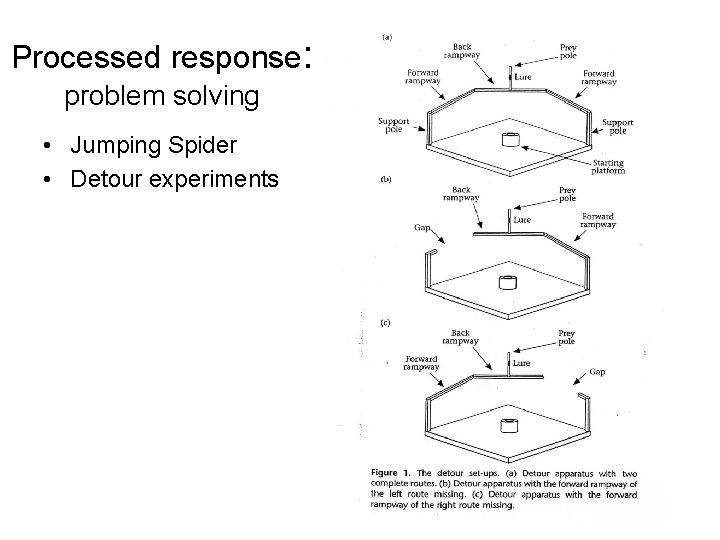
Processed response: problem solving • Jumping Spider • Detour experiments
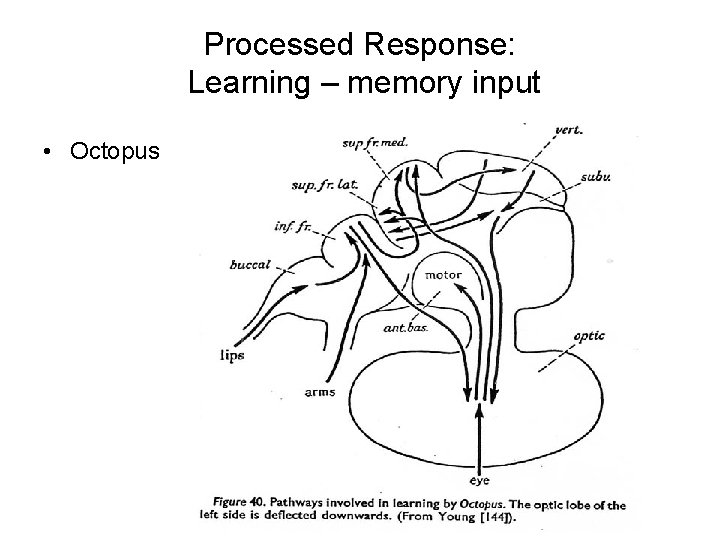
Processed Response: Learning – memory input • Octopus
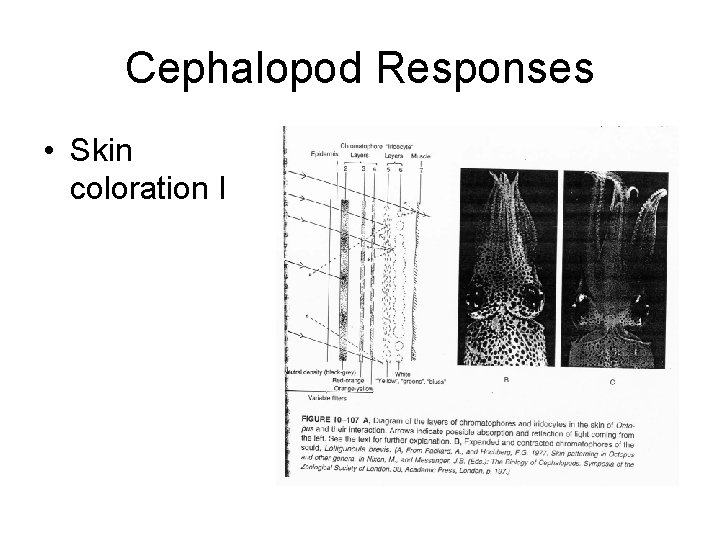
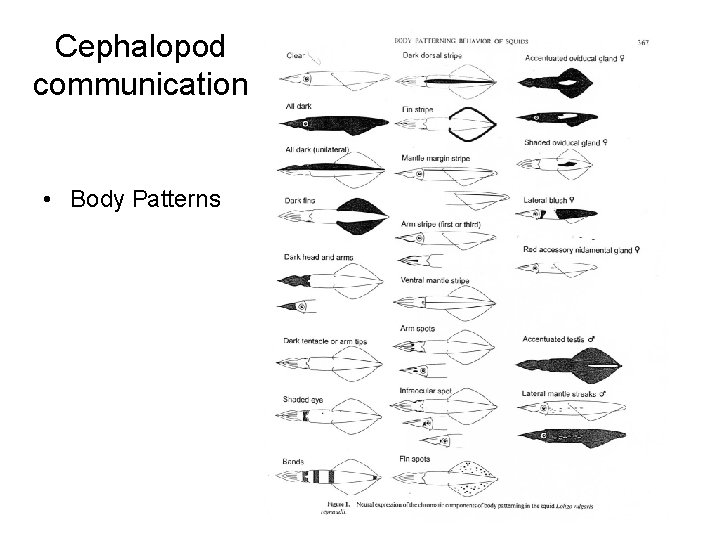
Cephalopod Responses • Skin coloration I
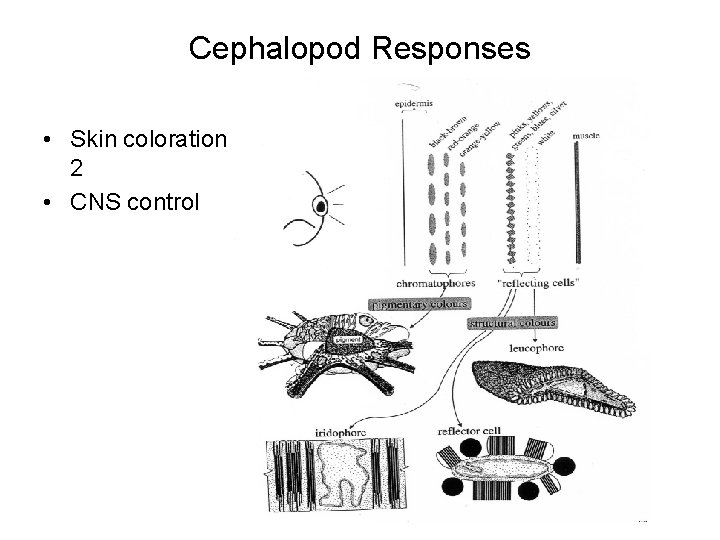
Cephalopod Responses • Skin coloration 2 • CNS control
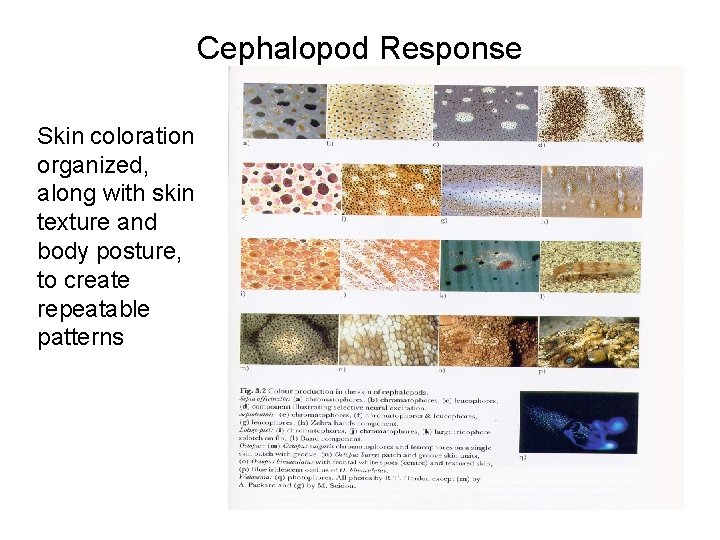
Cephalopod Response Skin coloration organized, along with skin texture and body posture, to create repeatable patterns
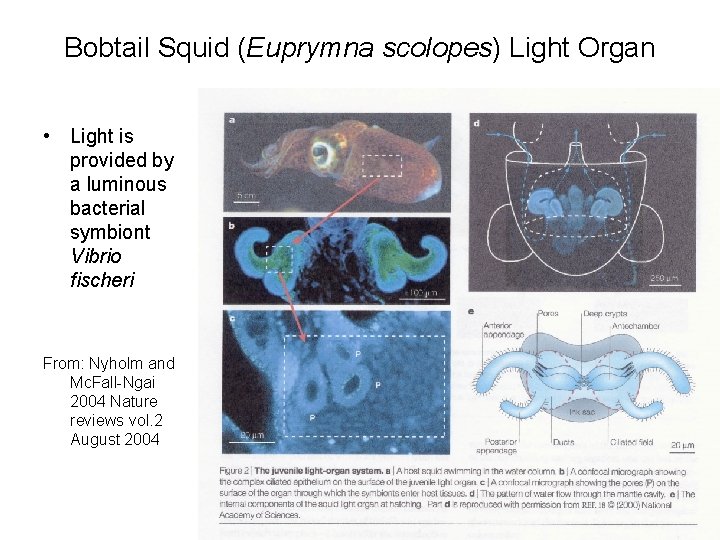
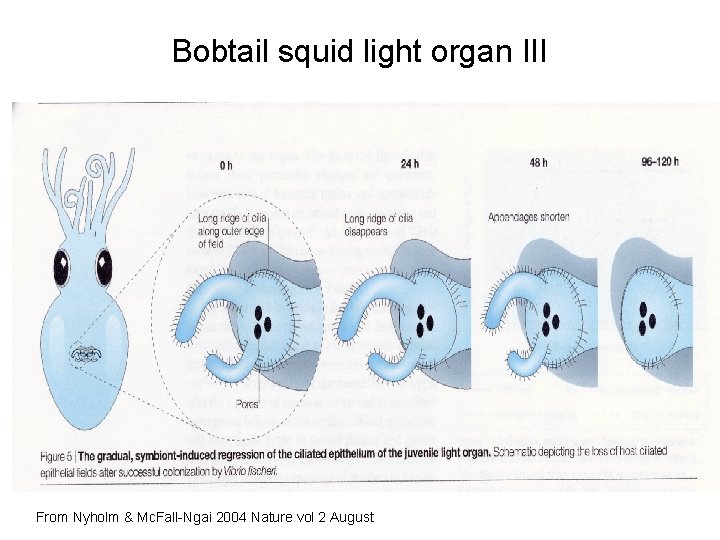
Bobtail Squid (Euprymna scolopes) Light Organ • Light is provided by a luminous bacterial symbiont Vibrio fischeri From: Nyholm and Mc. Fall-Ngai 2004 Nature reviews vol. 2 August 2004
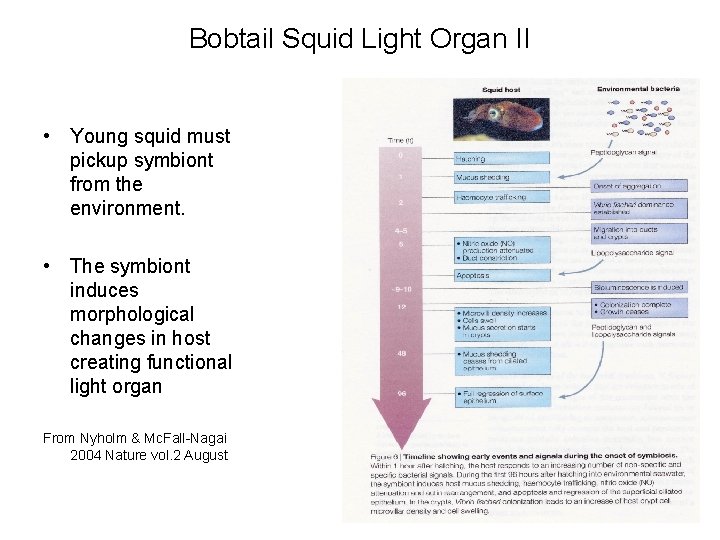
Bobtail Squid Light Organ II • Young squid must pickup symbiont from the environment. • The symbiont induces morphological changes in host creating functional light organ From Nyholm & Mc. Fall-Nagai 2004 Nature vol. 2 August
Bobtail squid light organ III From Nyholm & Mc. Fall-Ngai 2004 Nature vol 2 August
Cephalopod communication • Body Patterns