
Sensation and Perception How accurate are our senses





- Slides: 49
Sensation and Perception How accurate are our senses?
Sensation n The result of converting physical stimulation into a sensory experience “What you felt/experienced” n Subjective in nature n
Stimulus n Any aspect or change in the environment to which an organism responds n n Objective in nature Psychophysics deals/studies the relationship of sensation and stimulus
Absolute Threshold n The smallest amount of energy (stimulus) that produces a sensation at least half the time
Difference Threshold n The just noticeable difference between stimuli n Hearing tests, vision tests
Weber’s Law n n The stronger the stimulus, the larger the change required for the observer to notice Examples: baby weight, hair weight, stereo sound, dusk
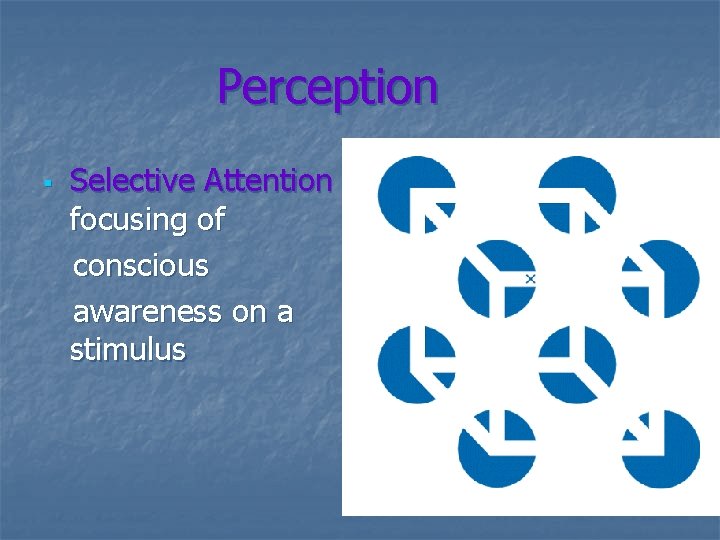
Perception § Selective Attention focusing of conscious awareness on a stimulus particular
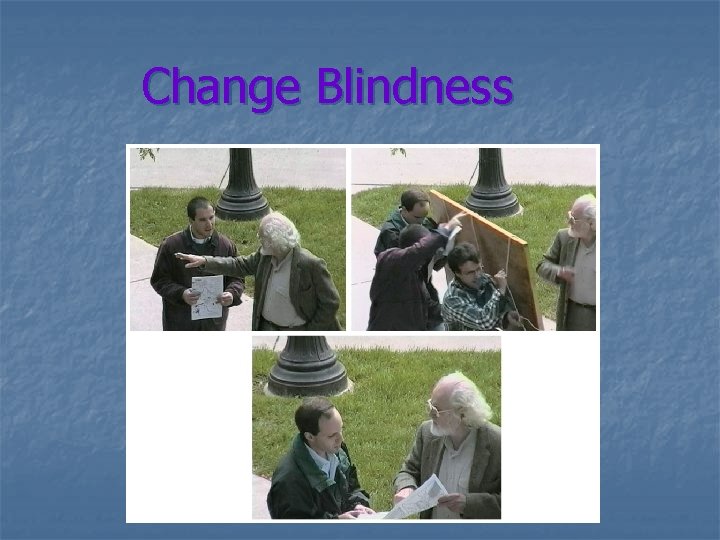
Change Blindness
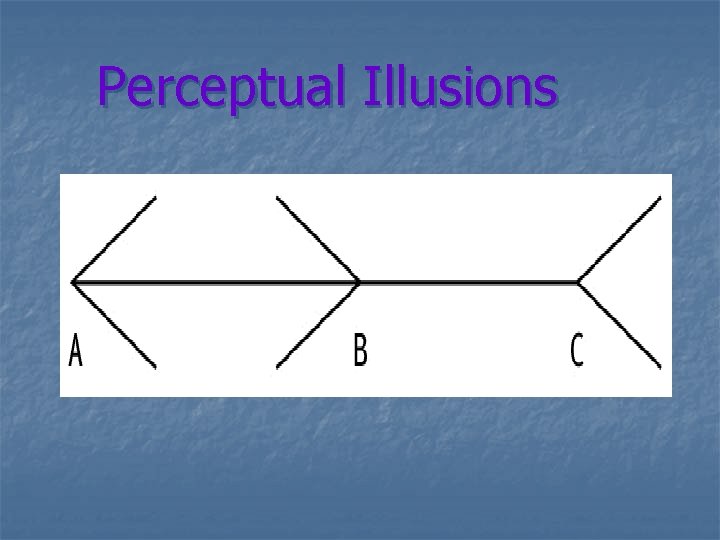
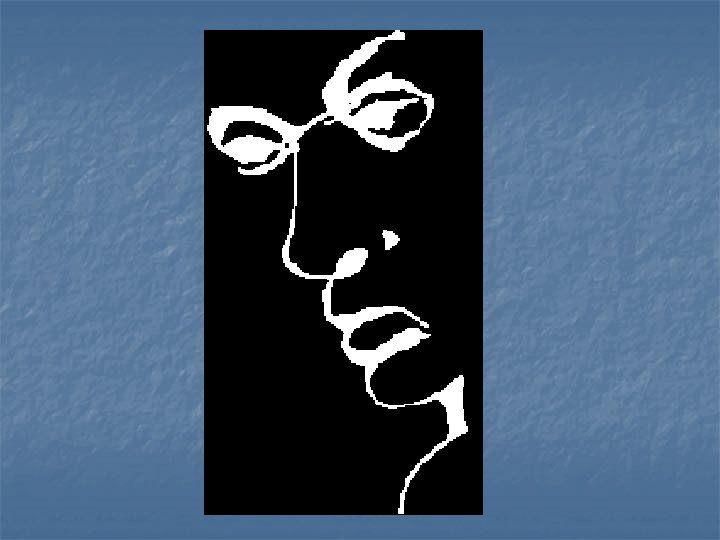
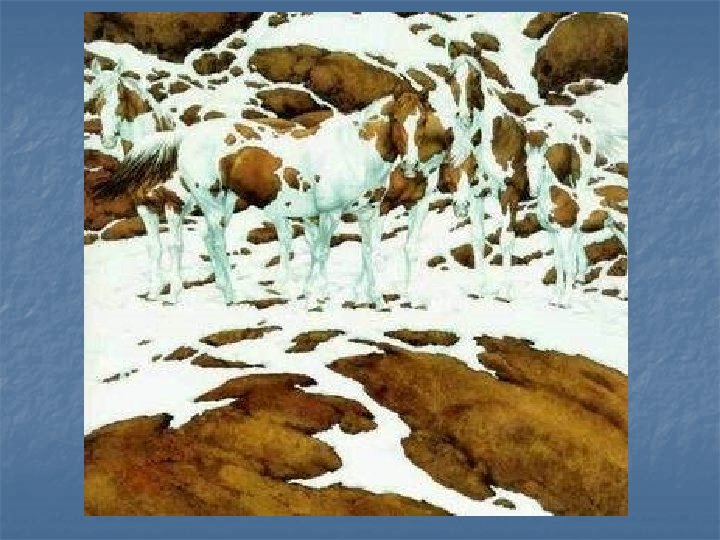
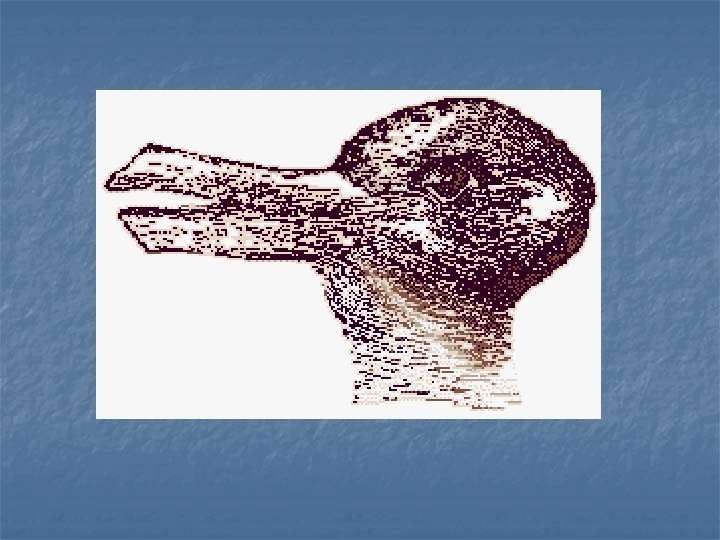
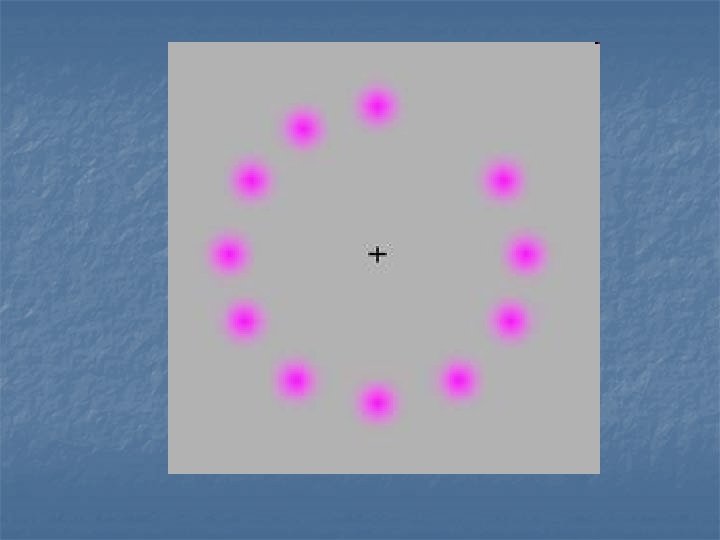
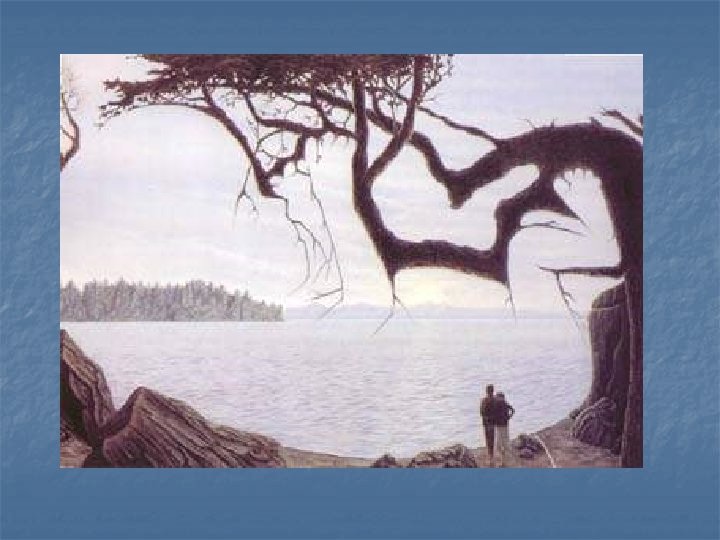
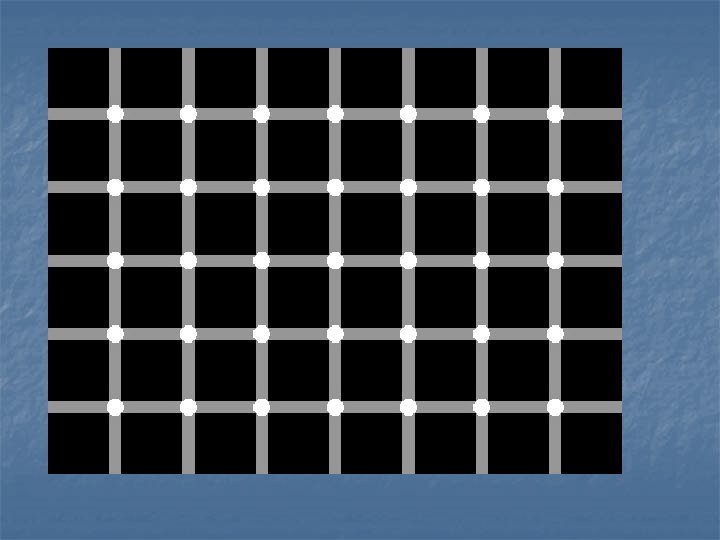
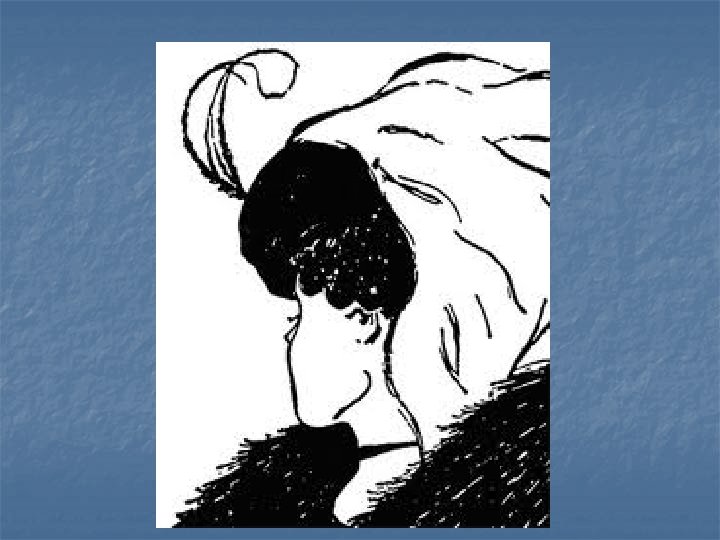
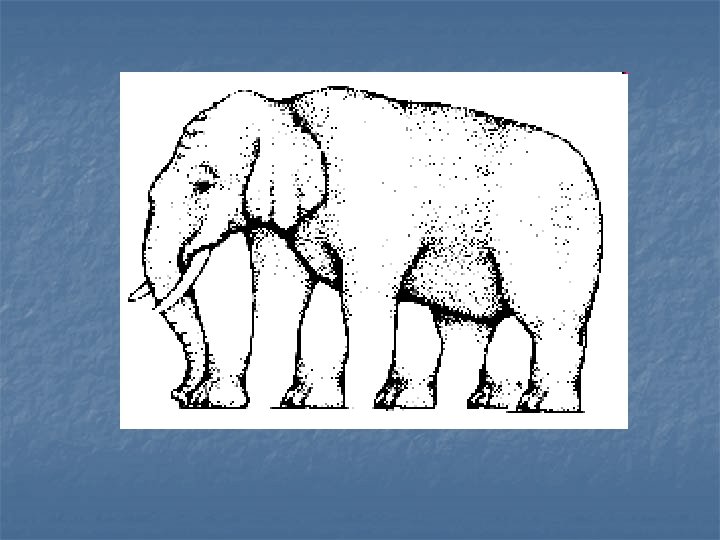
Perceptual Illusions
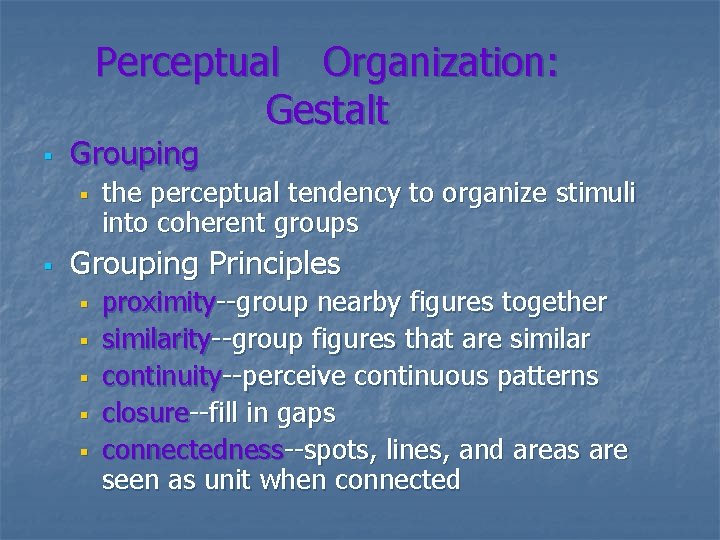
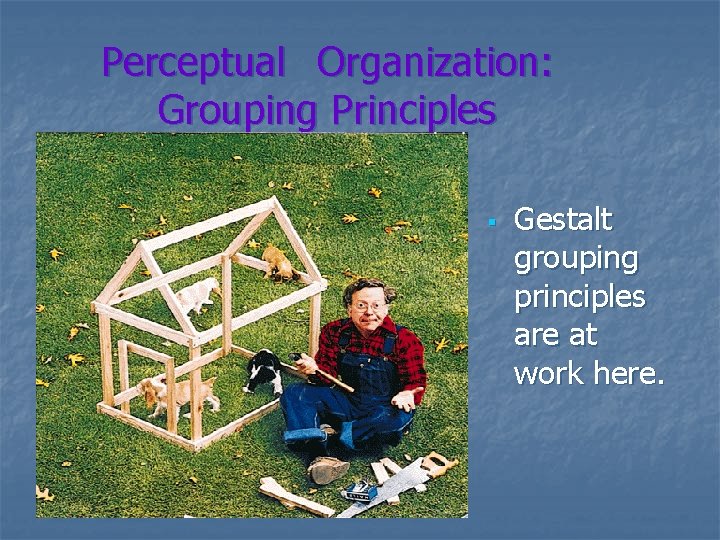
Perceptual Organization: Gestalt § Grouping § § the perceptual tendency to organize stimuli into coherent groups Grouping Principles § § § proximity--group nearby figures together similarity--group figures that are similar continuity--perceive continuous patterns closure--fill in gaps connectedness--spots, lines, and areas are seen as unit when connected
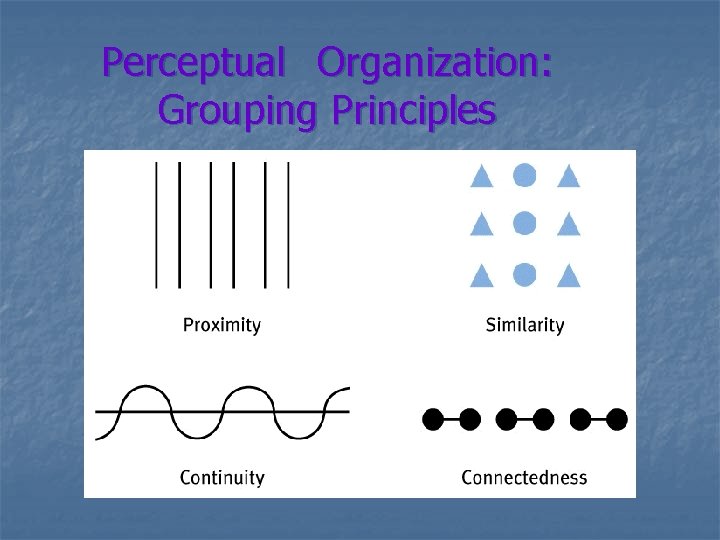
Perceptual Organization: Grouping Principles
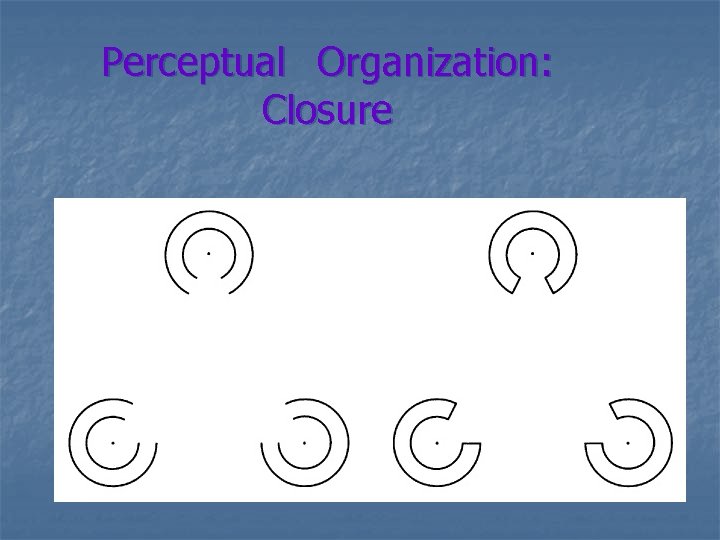
Perceptual Organization: Closure § Gestalt grouping principles are at work here.
Perceptual Organization: Grouping Principles § Gestalt grouping principles are at work here.
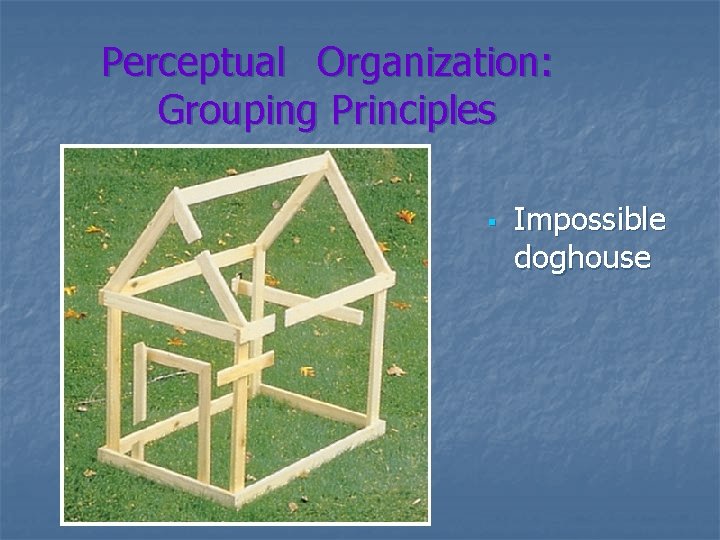
Perceptual Organization: Grouping Principles § Impossible doghouse
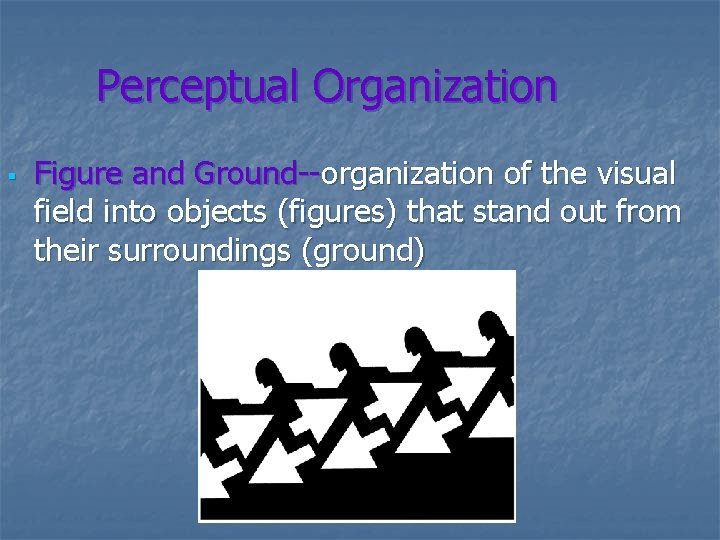
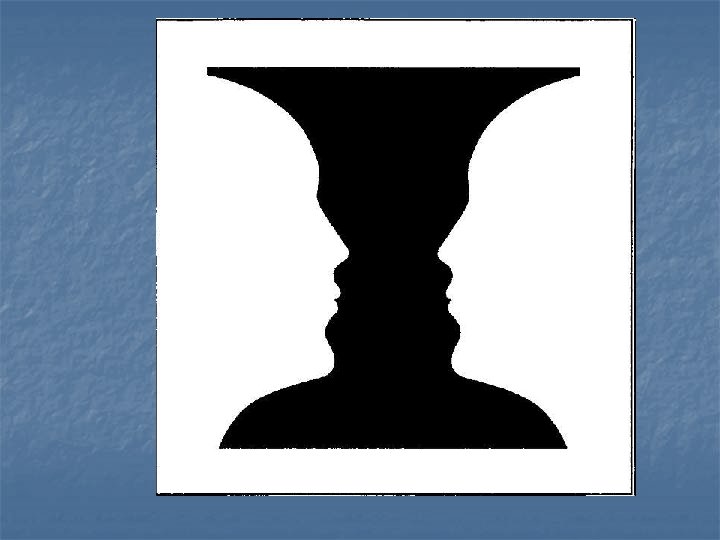
Perceptual Organization § Figure and Ground--organization of the visual field into objects (figures) that stand out from their surroundings (ground)
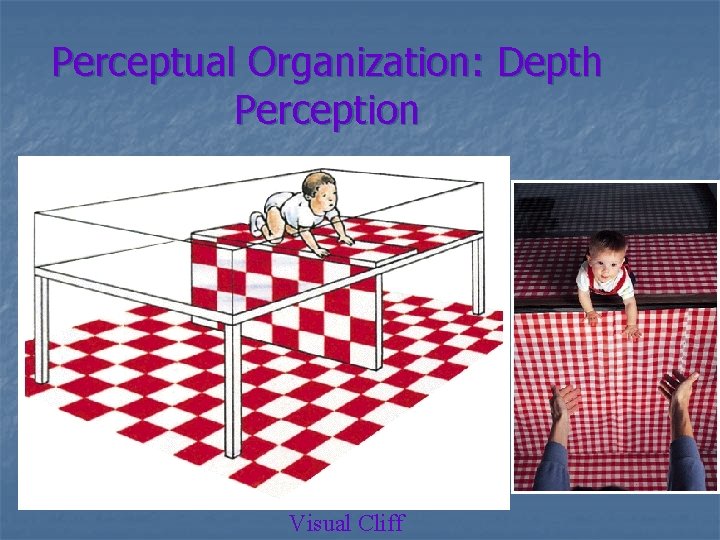
Perceptual Organization: Depth Perception Visual Cliff
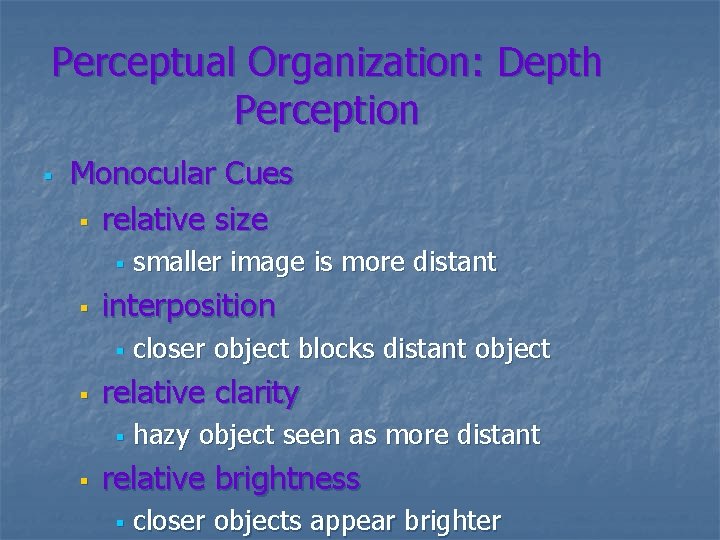
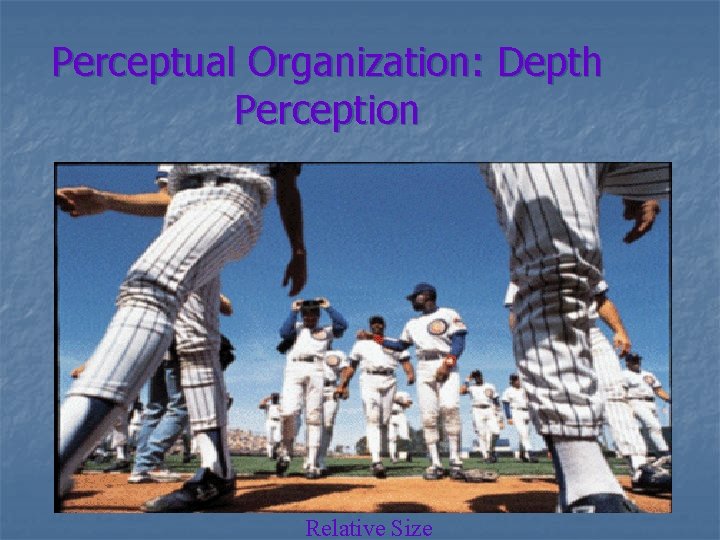
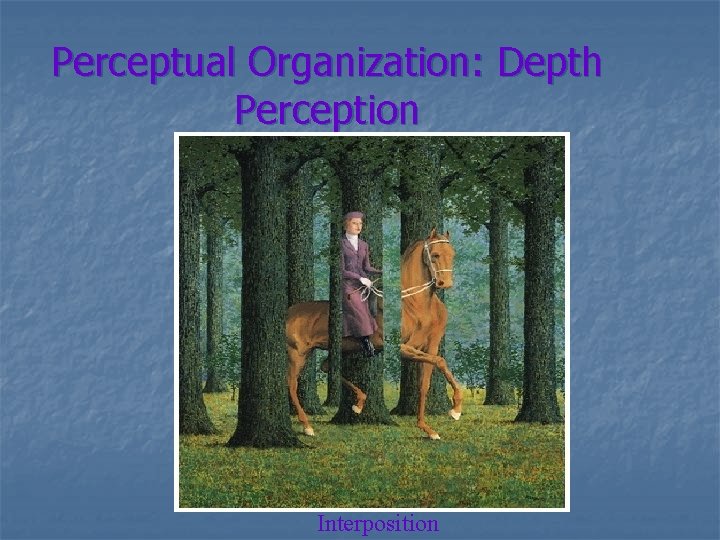
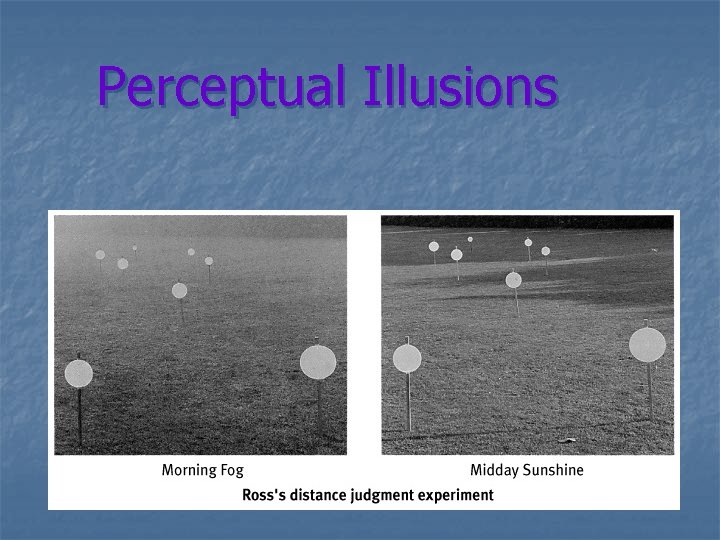
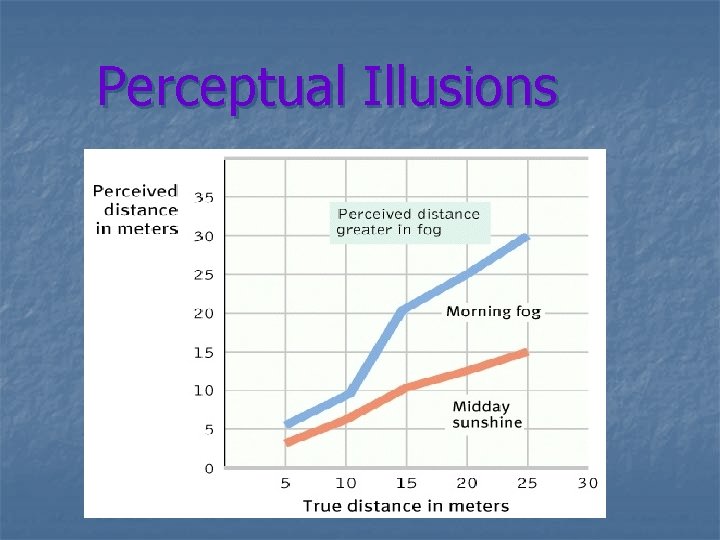
Perceptual Organization: Depth Perception § Monocular Cues § relative size § § interposition § § closer object blocks distant object relative clarity § § smaller image is more distant hazy object seen as more distant relative brightness § closer objects appear brighter
Perceptual Illusions
Perceptual Illusions
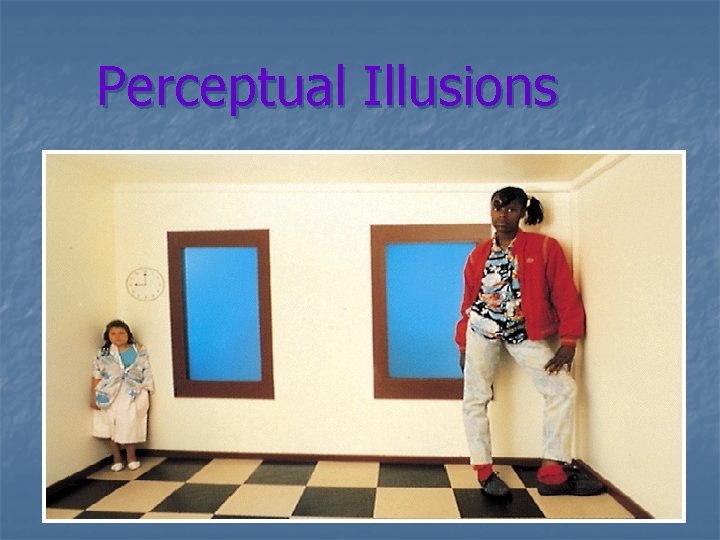
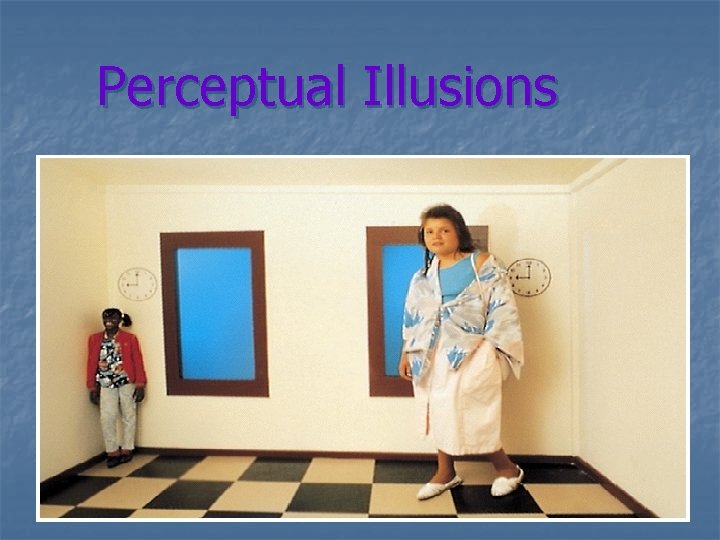
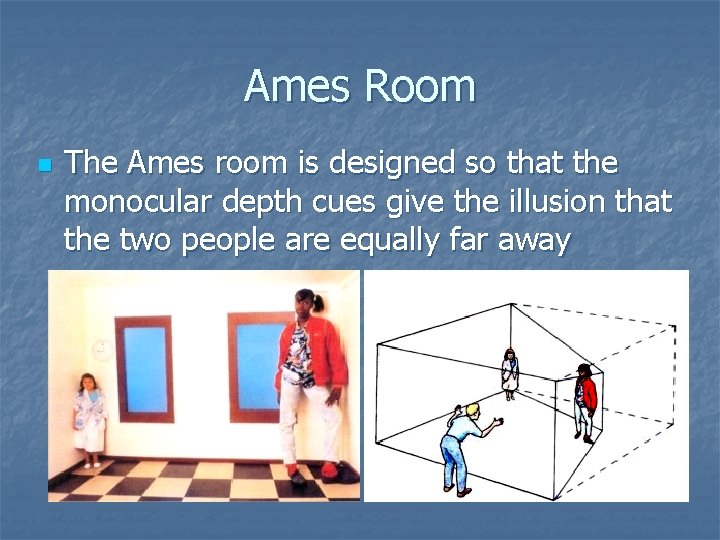
Ames Room n The Ames room is designed so that the monocular depth cues give the illusion that the two people are equally far away
Perceptual Organization: Depth Perception Relative Size
Perceptual Organization: Depth Perception Interposition
Perceptual Illusions
Perceptual Illusions
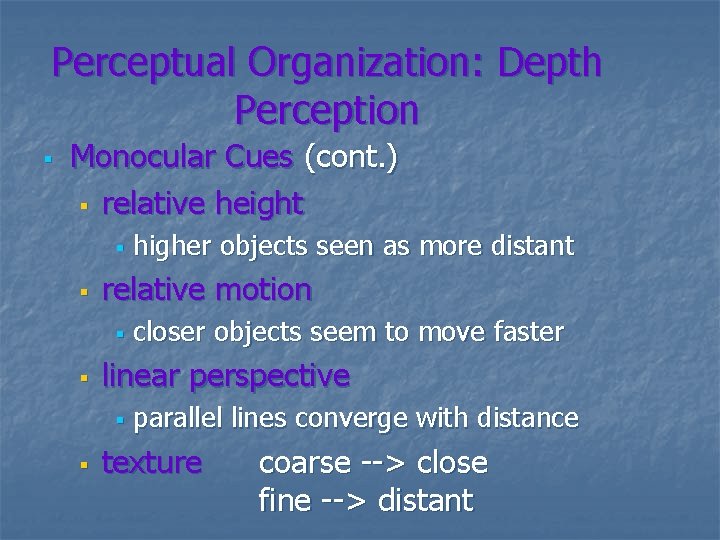
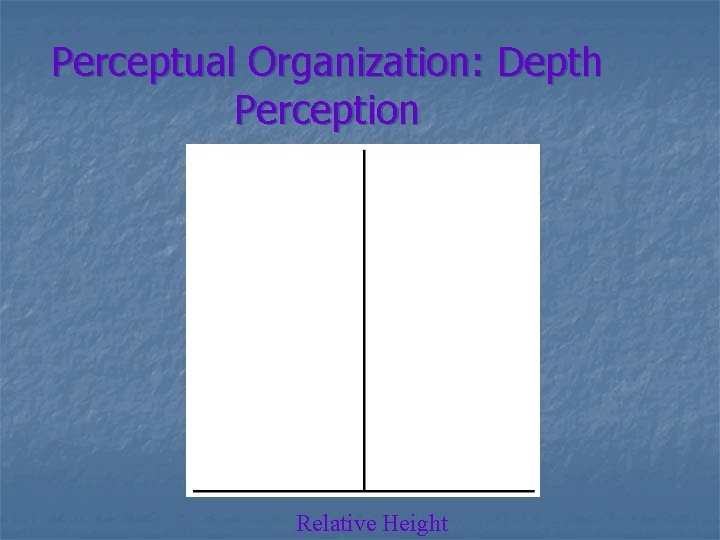
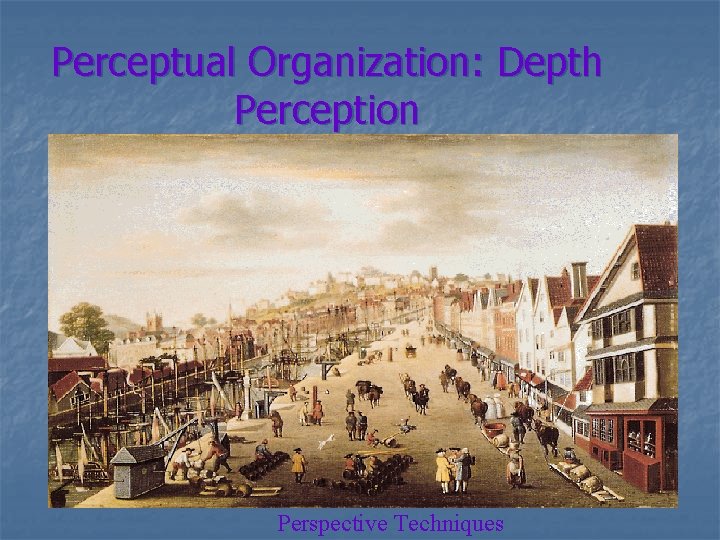
Perceptual Organization: Depth Perception § Monocular Cues (cont. ) § relative height § § relative motion § § closer objects seem to move faster linear perspective § § higher objects seen as more distant parallel lines converge with distance texture coarse --> close fine --> distant
Perceptual Organization: Depth Perception Relative Height
Perceptual Organization: Depth Perception Perspective Techniques
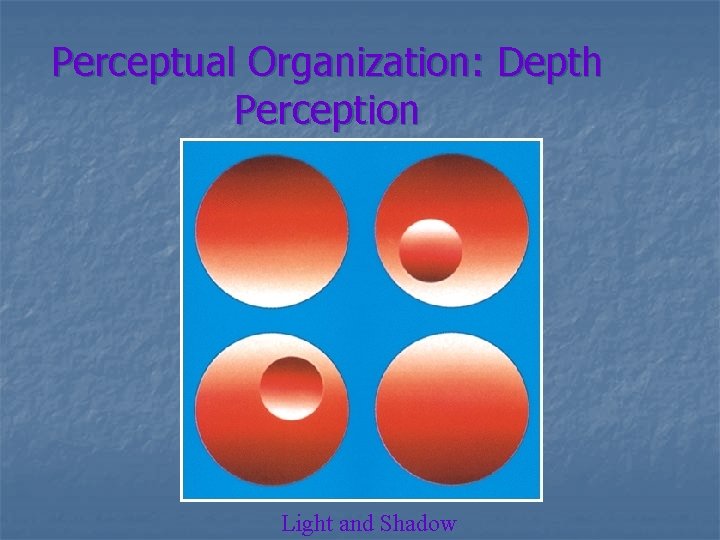
Perceptual Organization: Depth Perception Light and Shadow
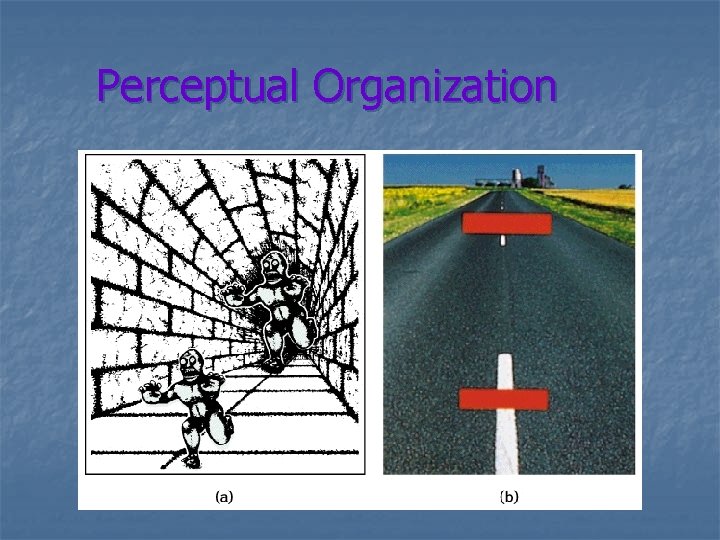
Perceptual Organization
Perceptual Interpretation § § Perceptual Adaptation § (vision) ability to adjust to an artificially displaced visual field § prism glasses Perceptual Set § a mental predisposition to perceive one thing and not another
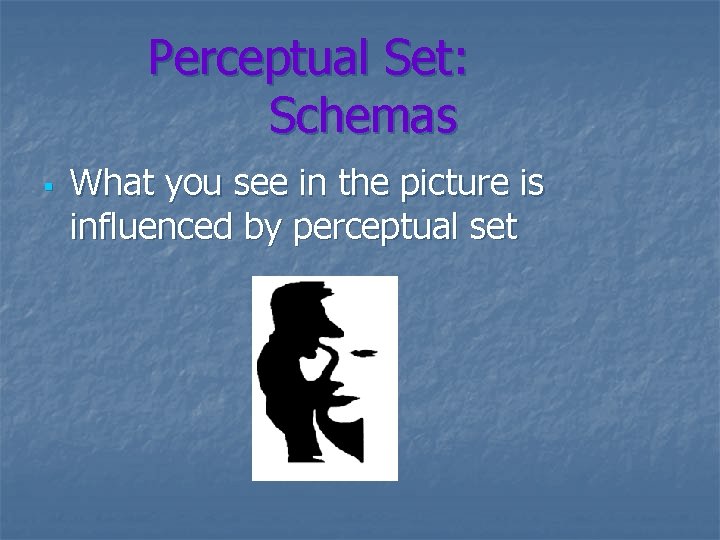
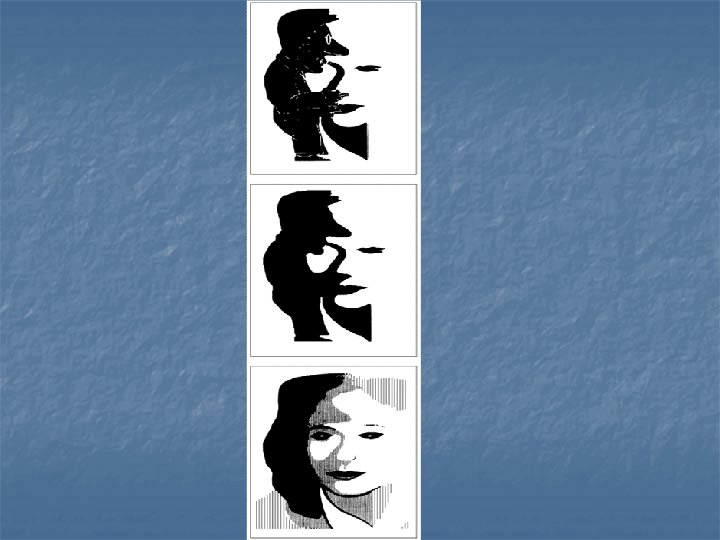
Perceptual Set: Schemas § What you see in the picture is influenced by perceptual set
Sensory Adaption n Senses have a general ability to adapt to constant levels of stimulation n n Examples: light in room, clothes, street noises, trains etc Senses are most sensitive to changes in environment / stimuli
Habituation n Loss of sensation due to unchanging magnitude of stimulation n Examples: glasses, cap, jewelry, etc.
Illusions