
Sensation a process by which our sensory receptors
Sensation § a process by which our sensory receptors and nervous system receive and represent stimulus energy § Perception § a process of organizing and interpreting sensory information, enabling us to recognize meaningful objects and events
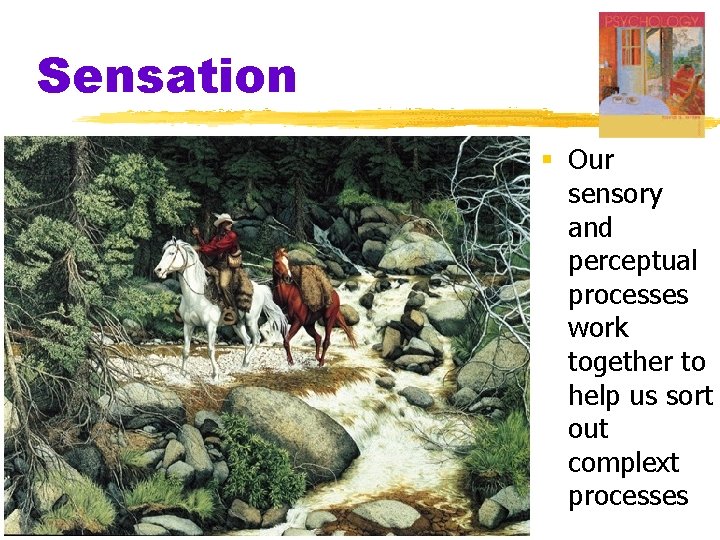
Sensation § Our sensory and perceptual processes work together to help us sort out complext processes

Sensation § Bottom-Up Processing § analysis that begins with the sense receptors and works up to the brain’s integration of sensory information § Top-Down Processing § information processing guided by higher-level mental processes § as when we construct perceptions drawing on our experience and expectations
Sensation- Basic Principles § Psychophysics § study of the relationship between physical characteristics of stimuli and our psychological experience of them § Light- brightness § Sound- volume § Pressure- weight § Taste- sweetness
Sensation- Thresholds § Absolute Threshold § minimum stimulation needed to detect a particular stimulus 50% of the time § Difference Threshold § minimum difference between two stimuli required for detection 50% of the time § just noticeable difference (JND)
Sensation- Thresholds § Signal Detection Theory § predicts how and when we detect the presence of a faint stimulus (signal) amid background stimulation (noise) § assumes that there is no single absolute threshold § detection depends partly on person’s § experience § expectations § motivation § level of fatigue
Sensation- Thresholds 100 Percentage of correct detections § Subliminal 75 50 Subliminal stimuli 25 0 Low Absolute threshold Intensity of stimulus Medium § When stimuli are below one’s absolute threshold for conscious awareness
Sensation- Thresholds § Weber’s Law- to perceive as different, two stimuli must differ by a constant minimum percentage § light intensity- 8% § weight- 2% § tone frequency- 0. 3% § Sensory adaptation- diminished sensitivity as a consequence of constant stimulation
Vision- Stabilized Images on the Retina
Vision § Transduction § conversion of one form of energy to another § in sensation, transforming of stimulus energies into neural impulses § Wavelength § the distance from the peak of one wave to the peak of the next
Vision § Hue § dimension of color determined by wavelength of light § Intensity § amount of energy in a wave determined by amplitude § brightness § loudness
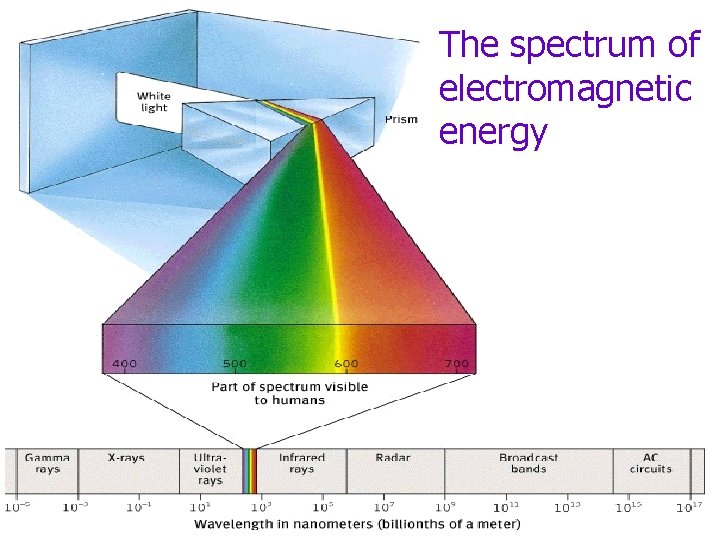
The spectrum of electromagnetic energy
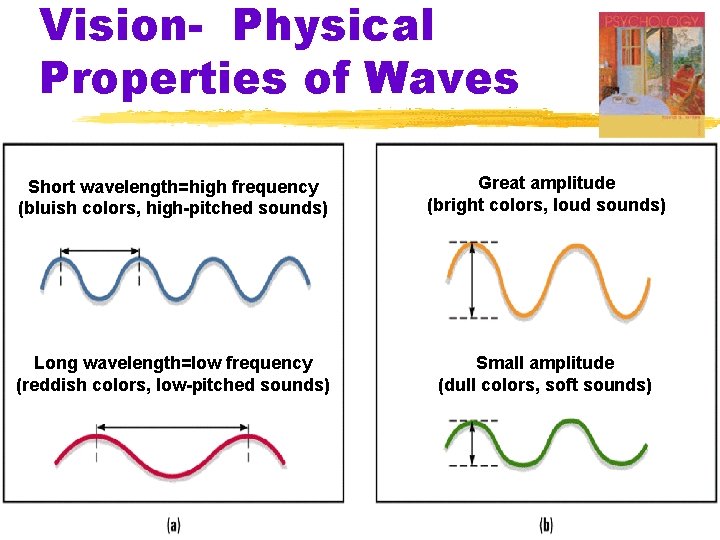
Vision- Physical Properties of Waves Short wavelength=high frequency (bluish colors, high-pitched sounds) Great amplitude (bright colors, loud sounds) Long wavelength=low frequency (reddish colors, low-pitched sounds) Small amplitude (dull colors, soft sounds)
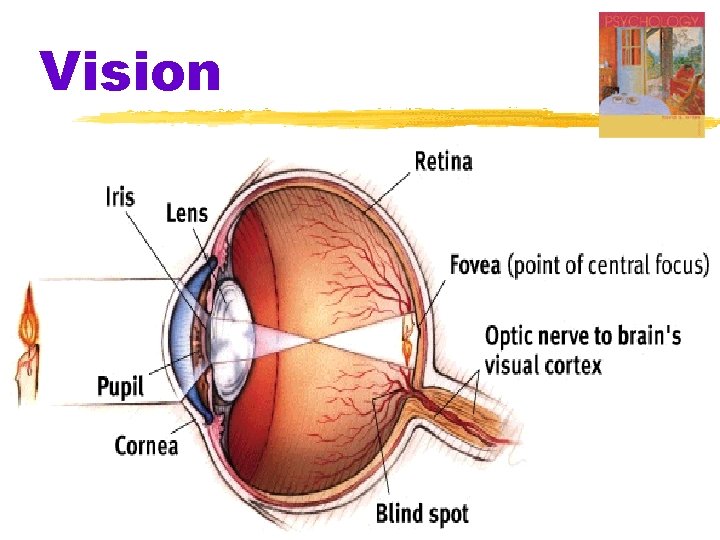
Vision § Pupil- adjustable opening in the center of the eye § Iris- a ring of muscle that forms the colored portion of the eye around the pupil and controls the size of the pupil opening § Lens- transparent structure behind pupil that changes shape to focus images on the retina
Vision
Vision § Accommodation- the process by which the eye’s lens changes shape to help focus near or far objects on the retina § Retina- the light-sensitive inner serface of the eye, containing receptor rods and cones plus layers of neurons that begin the processing of visual information
Vision § Acuity- the sharpness of vision § Nearsightedness- condition in which nearby objects are seen more clearly than distant objects because distant objects in front of retina § Farsightedness- condition in which faraway objects are seen more clearly than near objects because the image of near objects is focused behind retina
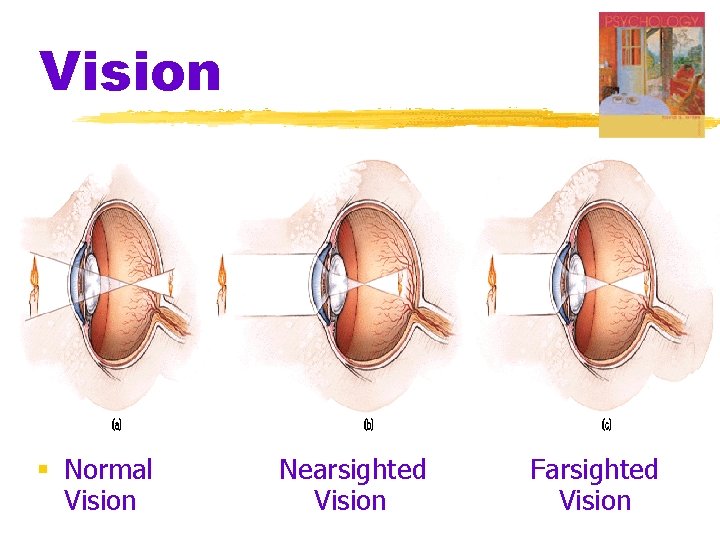
Vision § Normal Vision Nearsighted Vision Farsighted Vision
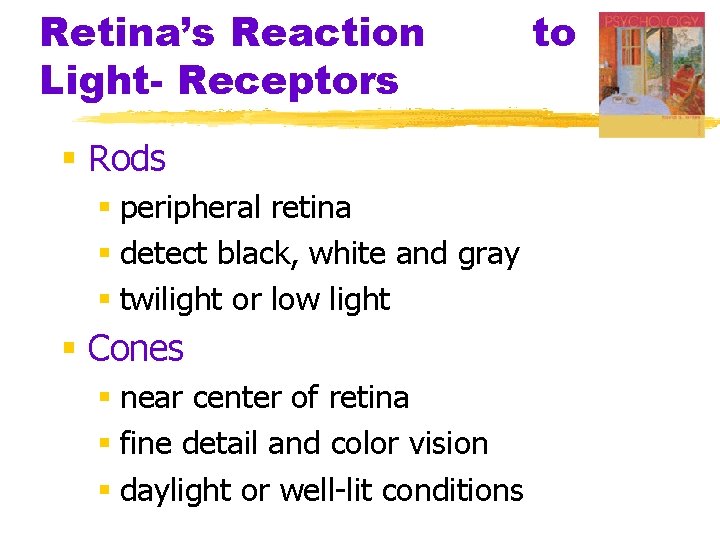
Retina’s Reaction Light- Receptors § Rods § peripheral retina § detect black, white and gray § twilight or low light § Cones § near center of retina § fine detail and color vision § daylight or well-lit conditions to
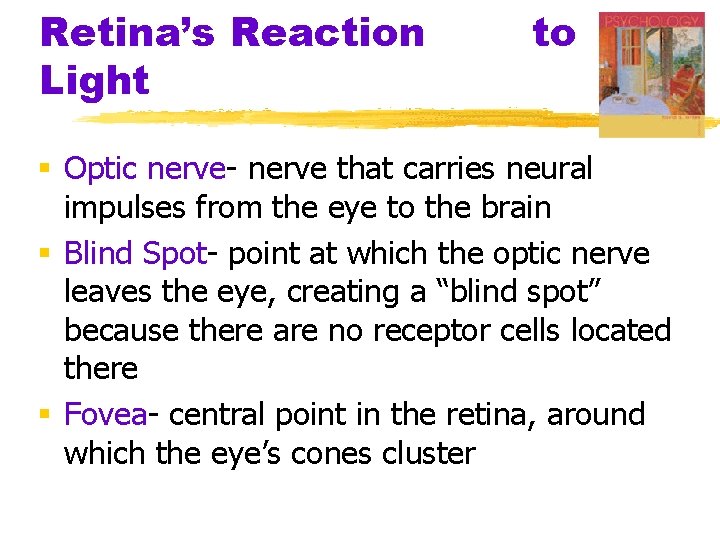
Retina’s Reaction Light to § Optic nerve- nerve that carries neural impulses from the eye to the brain § Blind Spot- point at which the optic nerve leaves the eye, creating a “blind spot” because there are no receptor cells located there § Fovea- central point in the retina, around which the eye’s cones cluster
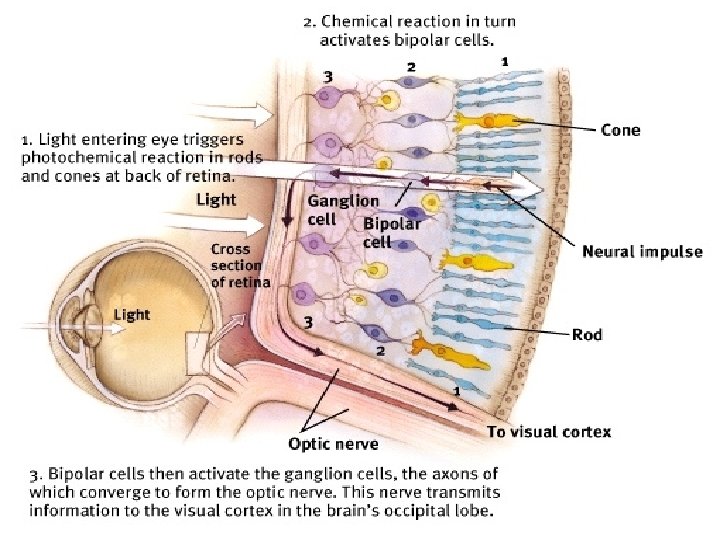
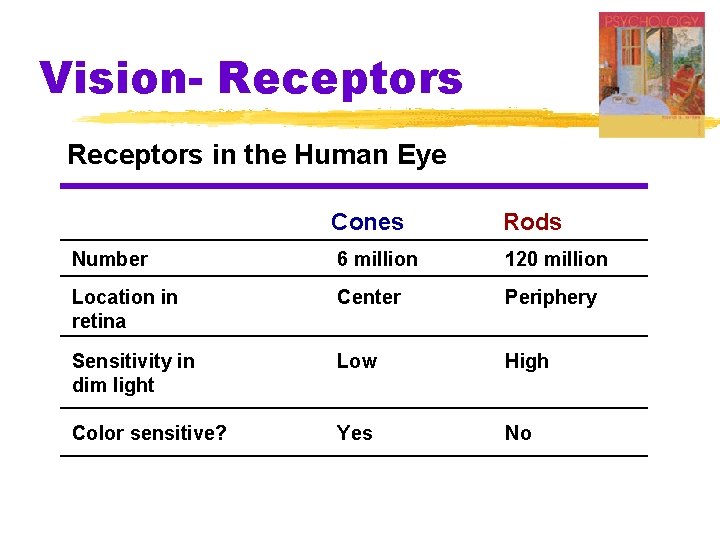
Vision- Receptors in the Human Eye Cones Rods Number 6 million 120 million Location in retina Center Periphery Sensitivity in dim light Low High Color sensitive? Yes No
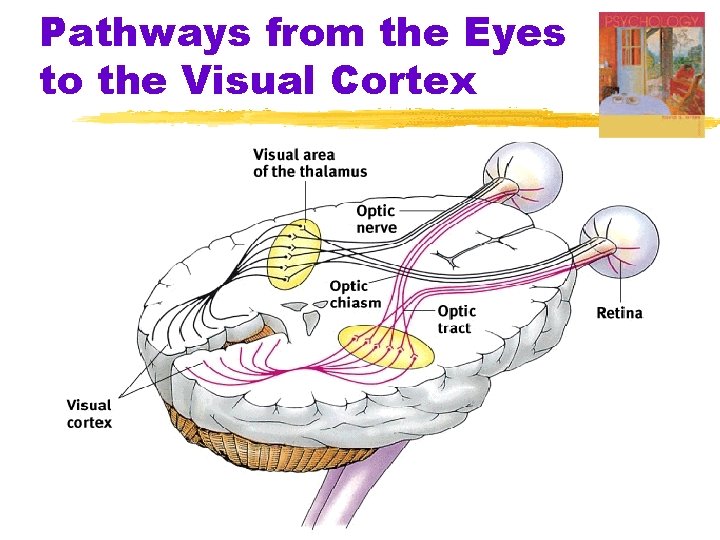
Pathways from the Eyes to the Visual Cortex
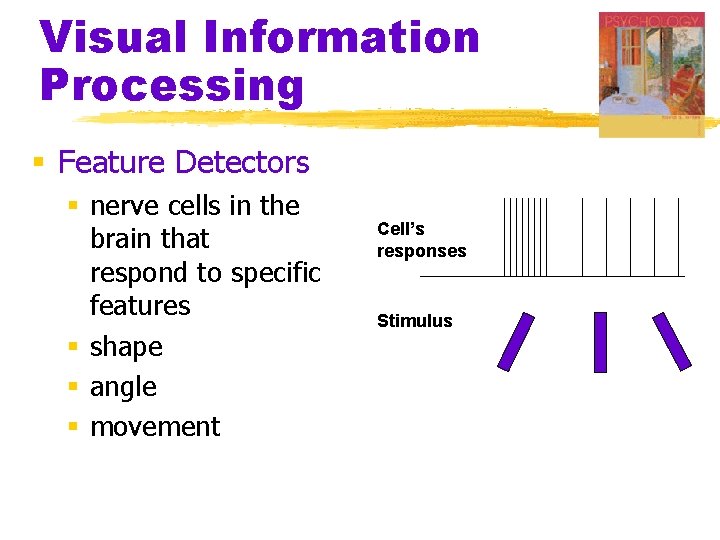
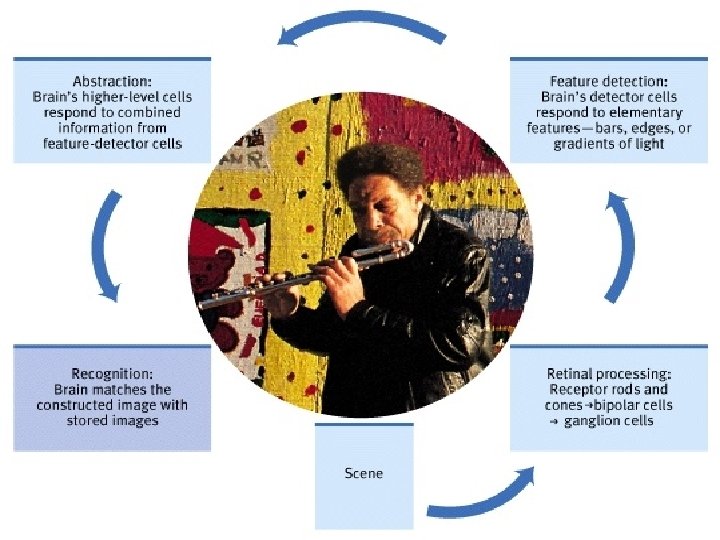
Visual Information Processing § Feature Detectors § nerve cells in the brain that respond to specific features § shape § angle § movement Cell’s responses Stimulus
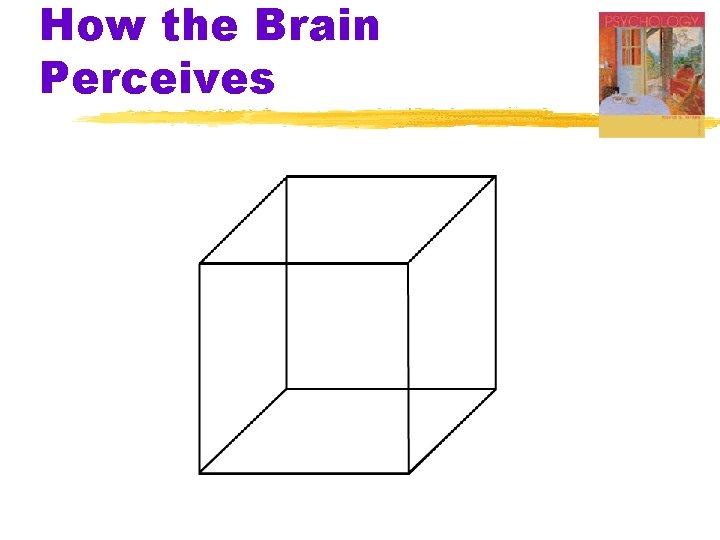
How the Brain Perceives
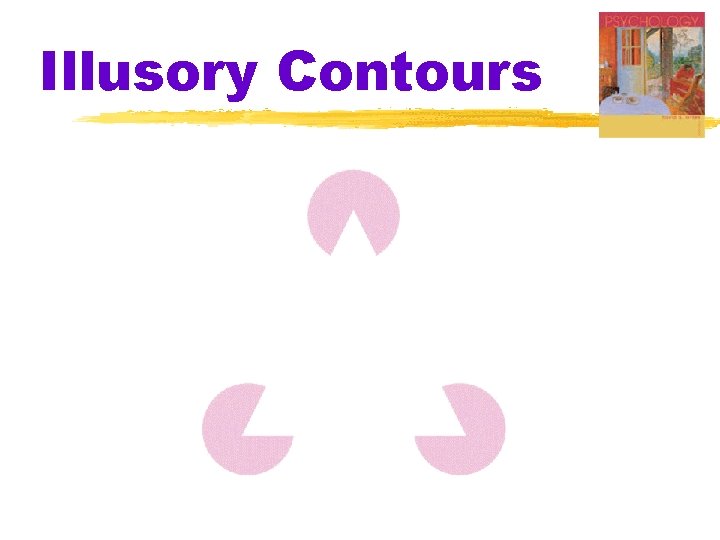
Illusory Contours
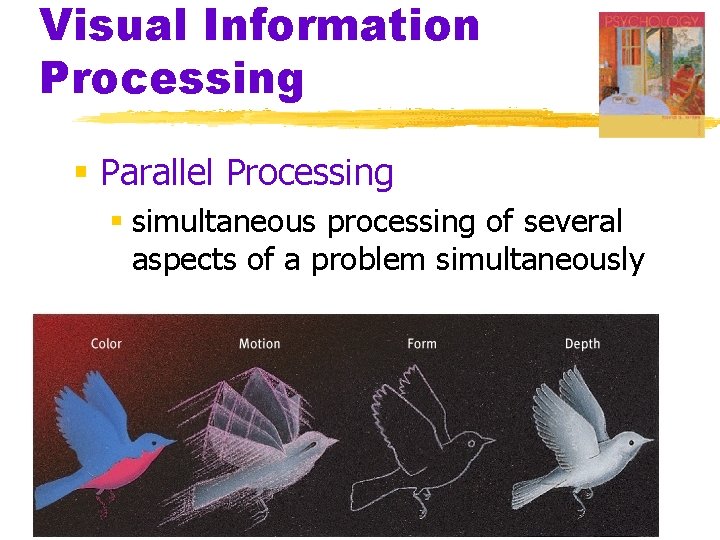
Visual Information Processing § Parallel Processing § simultaneous processing of several aspects of a problem simultaneously
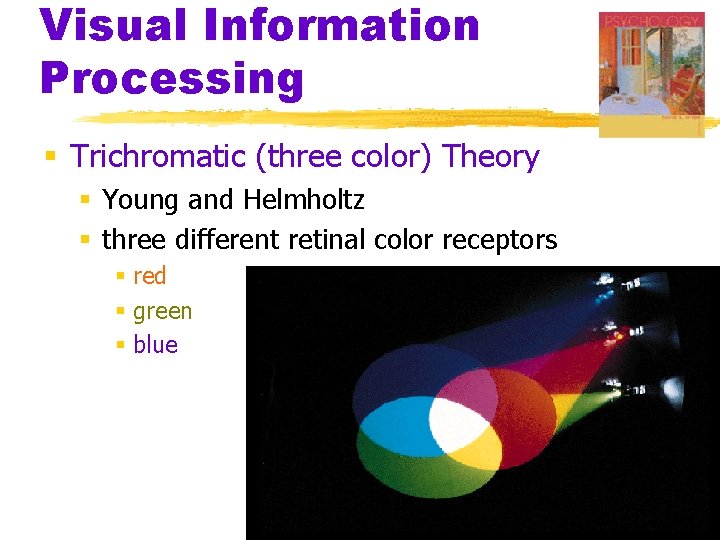
Visual Information Processing § Trichromatic (three color) Theory § Young and Helmholtz § three different retinal color receptors § red § green § blue
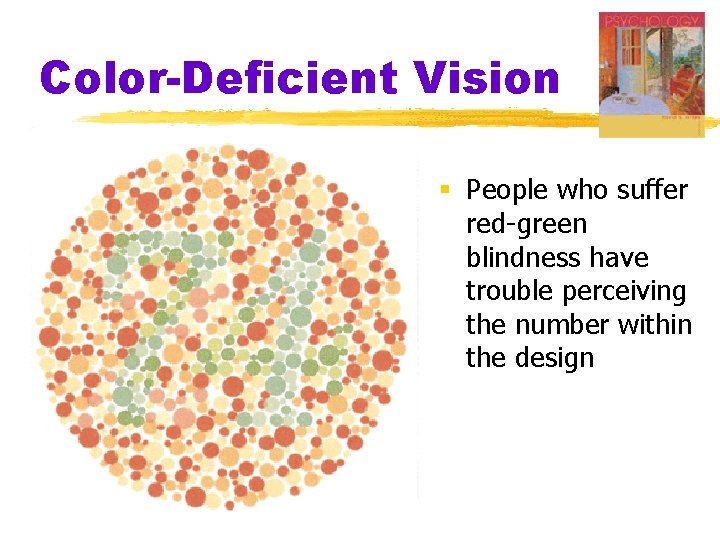
Color-Deficient Vision § People who suffer red-green blindness have trouble perceiving the number within the design
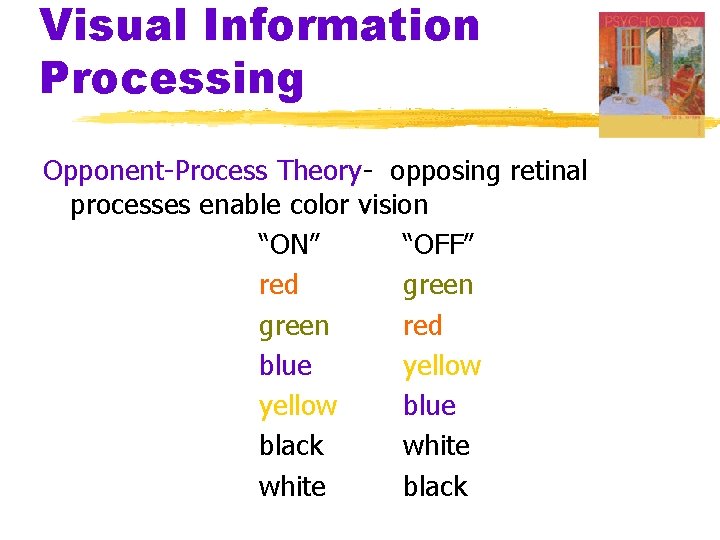
Visual Information Processing Opponent-Process Theory- opposing retinal processes enable color vision “ON” “OFF” red green red blue yellow blue black white black
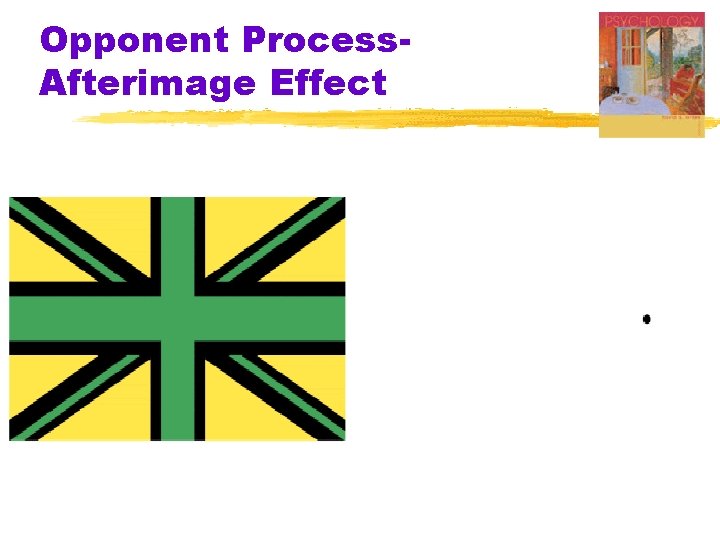
Opponent Process. Afterimage Effect
Visual Information Processing § Color Constancy § Perceiving familiar objects as having consistent color, even if changing illumination alters the wavelengths reflected by the object
Audition § the sense of hearing § Frequency § the number of complete wavelengths that pass a point in a given time § Pitch § a tone’s highness or lowness § depends on frequency
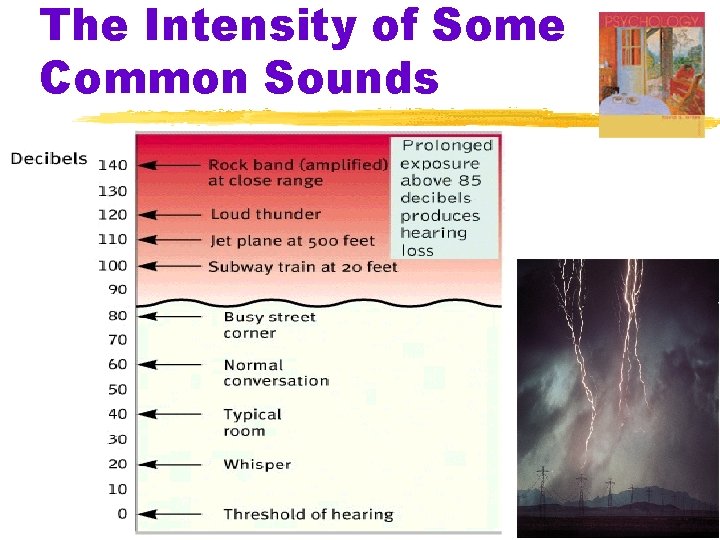
The Intensity of Some Common Sounds
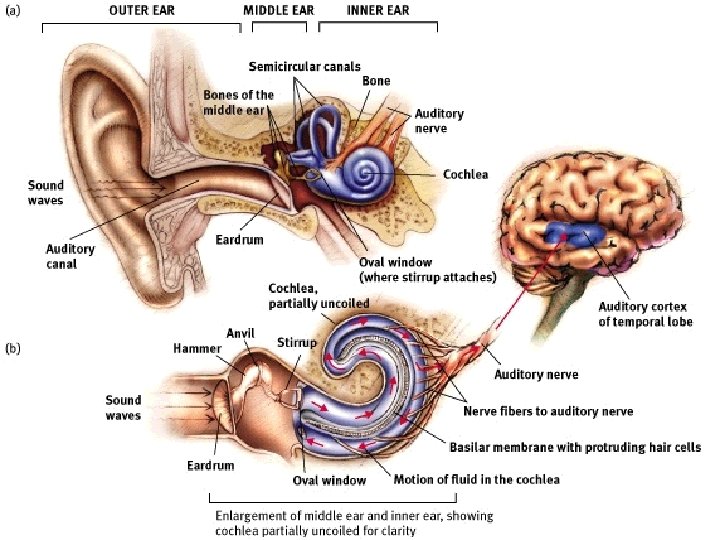
Audition- The Ear § Middle Ear § chamber between eardrum and cochlea containing three tiny bones (hammer, anvil, stirrup) that concentrate the vibrations of the eardrum on the cochlea’s oval window § Inner Ear § innermost part of the ear, containing the cochlea, semicircular canals, and vestibular sacs § Cochlea § coiled, bony, fluid-filled tube in the inner ear through which
Audition § Place Theory § theory that links the pitch we hear with the place where the cochlea’s membrane is stimulated § Frequency Theory § theory that the rate of nerve impulses traveling up the auditory nerve matches the frequency of a tone, thus enabling us to sense its pitch
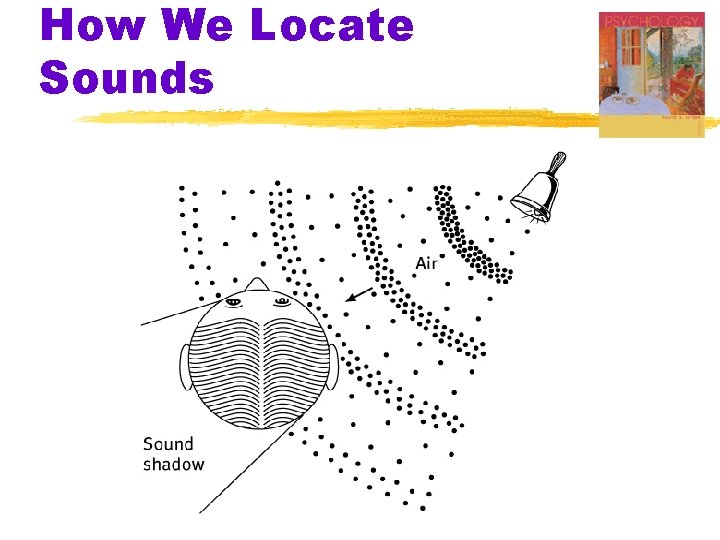
How We Locate Sounds
Audition § Conduction Hearing Loss § hearing loss caused by damage to the mechanical system that conducts sound waves to the cochlea § Nerve Hearing Loss § hearing loss caused by damage to the cochlea’s receptor cells or to the auditory nerve
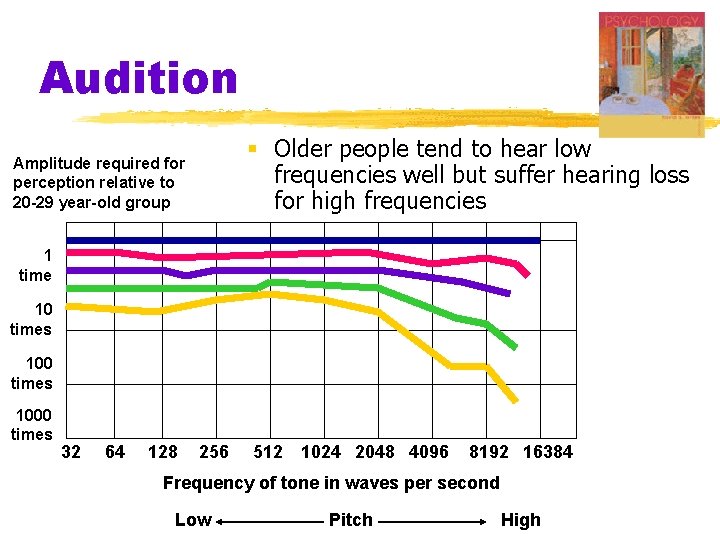
Audition § Older people tend to hear low frequencies well but suffer hearing loss for high frequencies Amplitude required for perception relative to 20 -29 year-old group 1 time 10 times 1000 times 32 64 128 256 512 1024 2048 4096 8192 16384 Frequency of tone in waves per second Low Pitch High
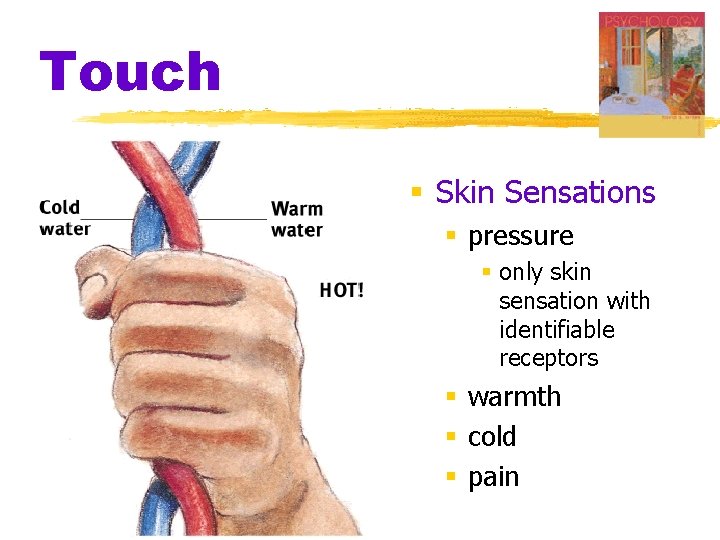
Touch § Skin Sensations § pressure § only skin sensation with identifiable receptors § warmth § cold § pain
Pain § Gate-Control Theory § theory that the spinal cord contains a neurological “gate” that blocks pain signals or allows them to pass on to the brain § “gate” opened by the activity of pain signals traveling up small nerve fibers § “gate” closed by activity in larger fibers or by information coming from the brain
Taste § Taste Sensations § § sweet sour salty bitter § Sensory Interaction § the principle that one sense may influence another § as when the smell of food influences its taste
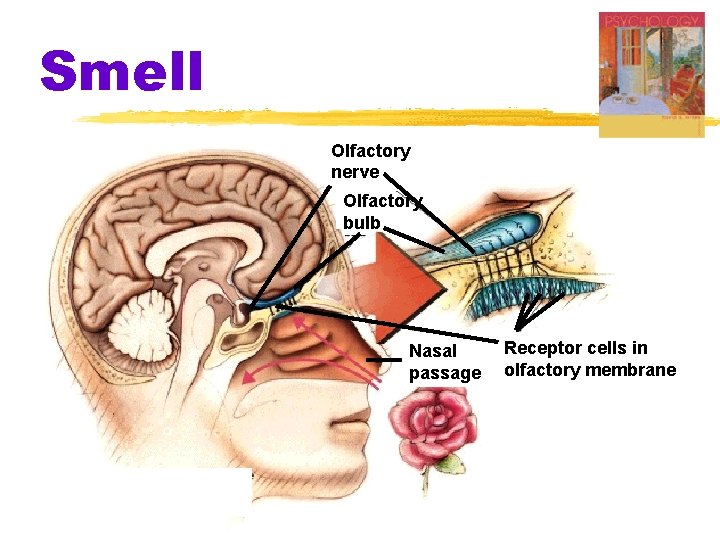
Smell Olfactory nerve Olfactory bulb Nasal passage Receptor cells in olfactory membrane
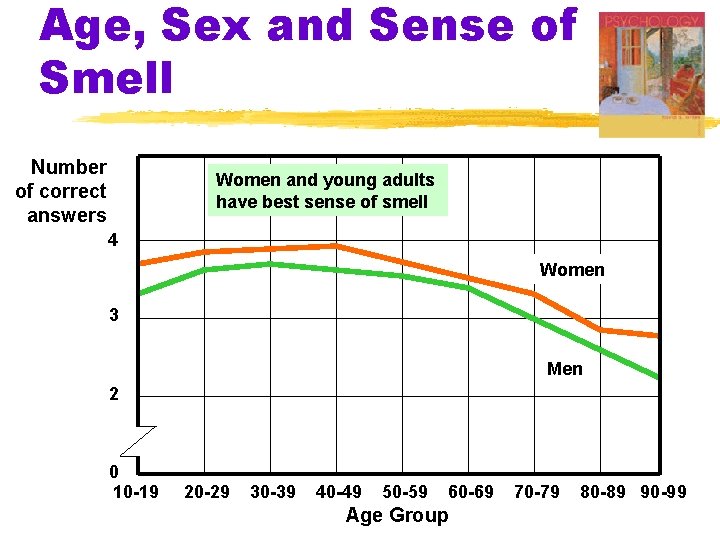
Age, Sex and Sense of Smell Number of correct answers Women and young adults have best sense of smell 4 Women 3 Men 2 0 10 -19 20 -29 30 -39 40 -49 50 -59 60 -69 Age Group 70 -79 80 -89 90 -99
Body Position and Movement § Kinesthesis § the system for sensing the position and movement of individual body parts § Vestibular Sense § the sense of body movement and position § including the sense of balance
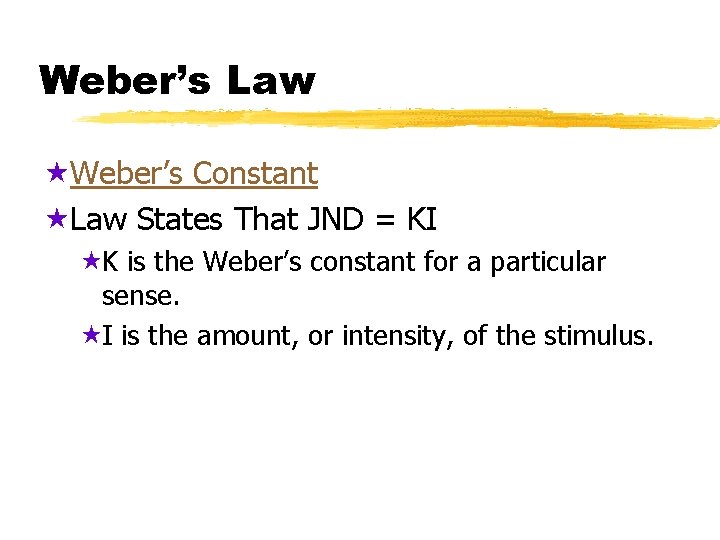
Weber’s Law «Weber’s Constant «Law States That JND = KI «K is the Weber’s constant for a particular sense. «I is the amount, or intensity, of the stimulus.
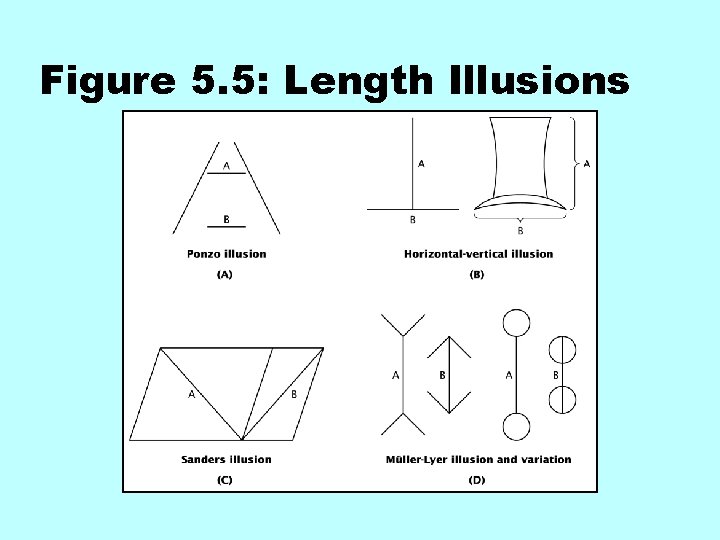
Figure 5. 5: Length Illusions
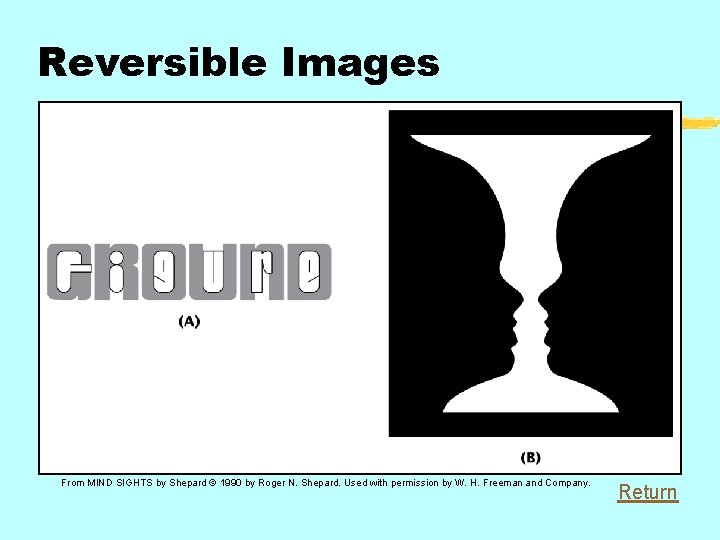
Reversible Images From MIND SIGHTS by Shepard © 1990 by Roger N. Shepard. Used with permission by W. H. Freeman and Company. Return
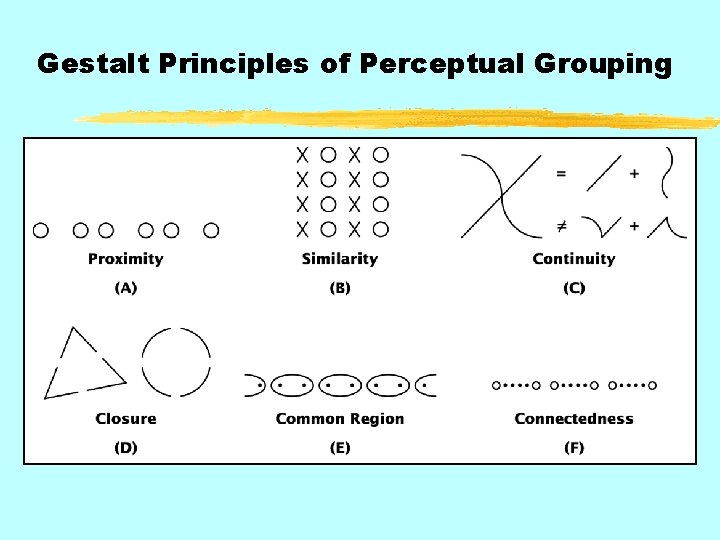
Gestalt Principles of Perceptual Grouping
Why Do These Grouping Principles Guide Perceptual Organization? z. Likelihood Principle y. Unlikely stimuli and misperceptions z. Simplicity Principle Continue
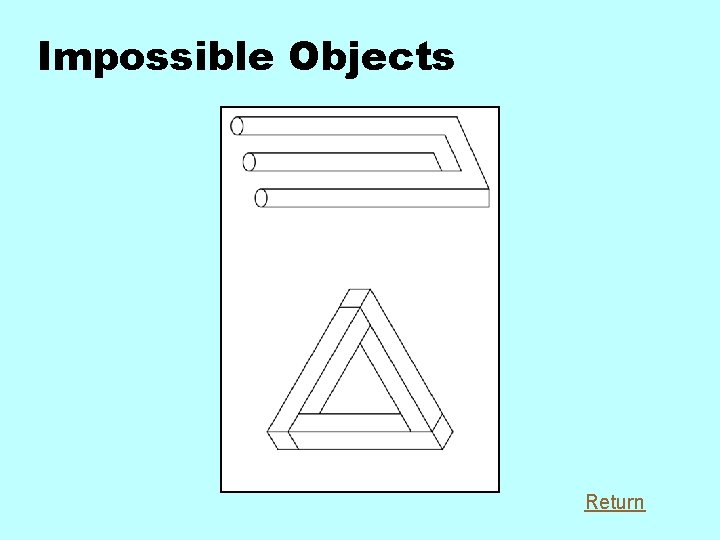
Impossible Objects Return
Perceptual Processing z. Top-Down Processing z. Bottom-Up Processing
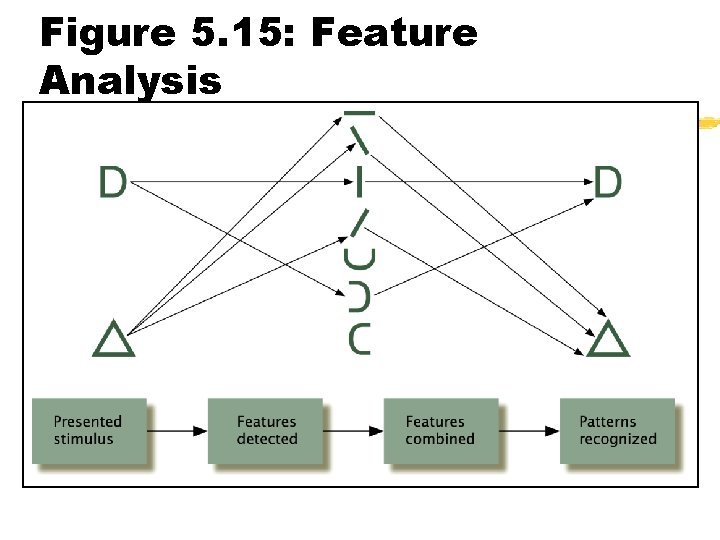
Figure 5. 15: Feature Analysis
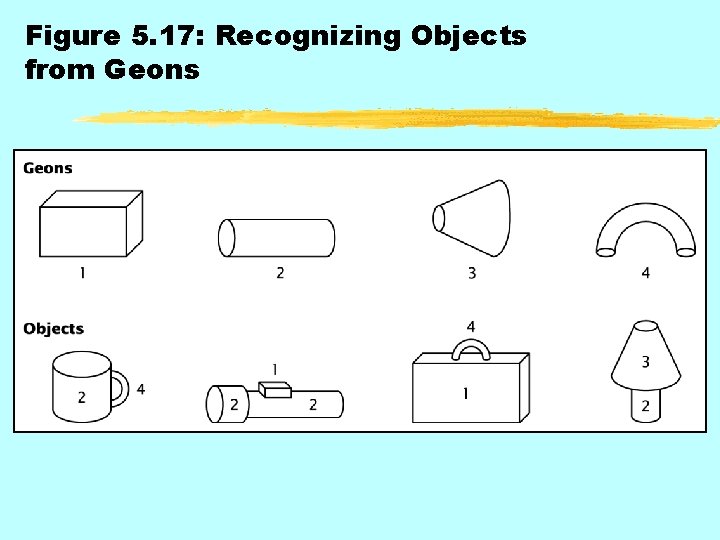
Figure 5. 17: Recognizing Objects from Geons
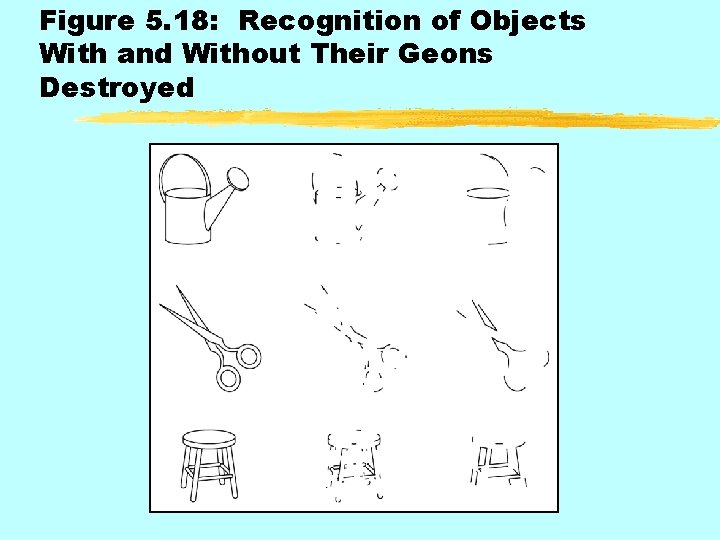
Figure 5. 18: Recognition of Objects With and Without Their Geons Destroyed
Top-Down Processing z. Use knowledge in making inferences to recognize objects, words, or melodies. z. Expectancy and context play an important role. z. Involved in a phenomenon called pareidolia.
Top-Down Processing (cont’d. ) z. Our experiences create schemas. z. Schemas can bias our perceptions by creating a perceptual set. z. Predisposition can also be shaped by the immediate context of the stimulus. z. Motivation can affect perception. z. Can even influence elements of the brain’s bottom-up processing.
Network Processing z. Object superiority effect and word superiority effect. z. Parallel Distributed Processing (PDP) Models as explanation for recognition y. Example
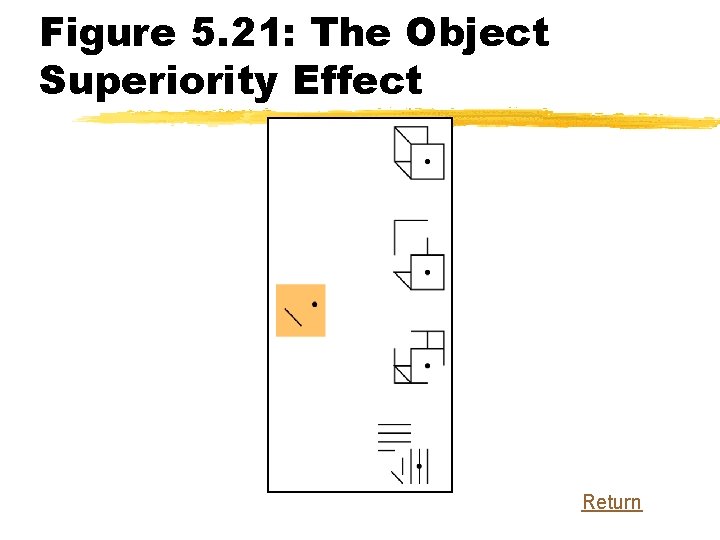
Figure 5. 21: The Object Superiority Effect Return
Linkages: Perception and Human Development z. Habituation and dishabituation used to study how infants perceive the world. z. Newborns can perceive differences among different black-and-white contrasts. y. By three months can discriminate among blue, green, yellow, and red. z. Newborns can perceive differences in the angles of lines.
Linkages: Perception and Human Development (cont’d. ) z At one month of age, infants concentrate their gaze on one part of an object. z By two months, infants systematically scan the perimeter of an object. z Infants may be innately tuned to perceive the human face.
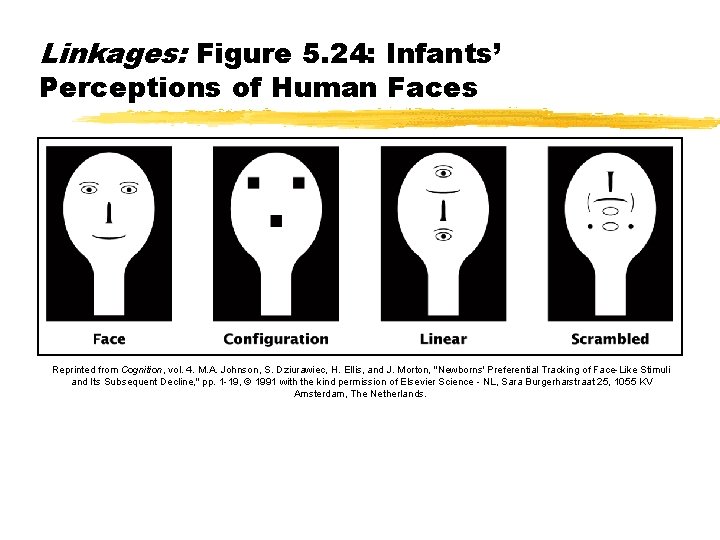
Linkages: Figure 5. 24: Infants’ Perceptions of Human Faces Reprinted from Cognition, vol. 4. M. A. Johnson, S. Dziurawiec, H. Ellis, and J. Morton, "Newborns' Preferential Tracking of Face-Like Stimuli and Its Subsequent Decline, " pp. 1 -19, © 1991 with the kind permission of Elsevier Science - NL, Sara Burgerharstraat 25, 1055 KV Amsterdam, The Netherlands.
Attention We use attention to: «Direct our sensory and perceptual systems toward certain stimuli. «Select specific information for further processing. «Allocate the mental energy required to do that processing. «Regulate the flow of resources necessary for performing a task or coordinating several tasks at once.
Characteristics of Attention «Improves Mental Processing «Takes Effort «Is Limited
Directing Attention z. Voluntary, or goal-directed attention control reflects top-down processing. z. Involuntary attention control reflects bottom-up processing.
Divided Attention z. Sometimes difficult to stop dividing attention. z. Attention is a limited resource. z. Easier to do two things at once if one task is automatic. Continue
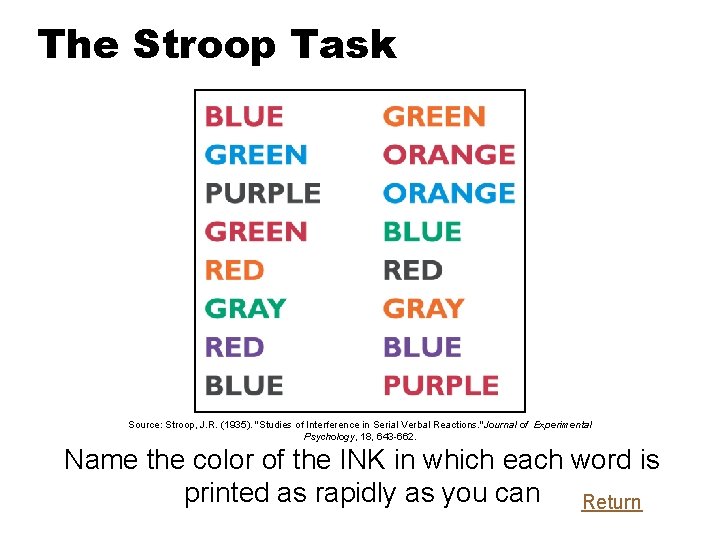
The Stroop Task Source: Stroop, J. R. (1935). "Studies of Interference in Serial Verbal Reactions. " Journal of Experimental Psychology, 18, 643 -662. Name the color of the INK in which each word is printed as rapidly as you can Return
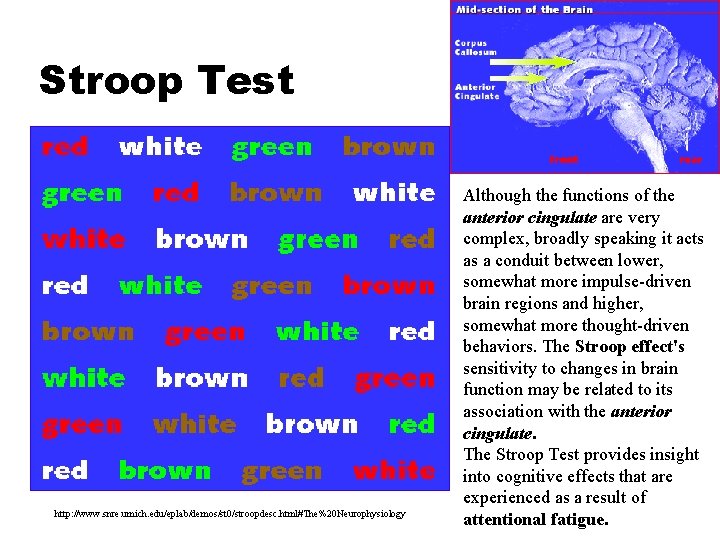
Stroop Test http: //www. snre. umich. edu/eplab/demos/st 0/stroopdesc. html#The%20 Neurophysiology Although the functions of the anterior cingulate are very complex, broadly speaking it acts as a conduit between lower, somewhat more impulse-driven brain regions and higher, somewhat more thought-driven behaviors. The Stroop effect's sensitivity to changes in brain function may be related to its association with the anterior cingulate. The Stroop Test provides insight into cognitive effects that are experienced as a result of attentional fatigue.
Attention and Automatic Processing z. Efforts to ignore certain stimuli may create negative priming. z. Parallel-processing describes ability to search for targets rapidly and automatically.
Applications of Research on Perception z. Aviation Psychology z. Human-Computer Interaction z. Traffic Safety z. Architecture and Interior Design
- Slides: 72