
Send Reforms in Birmingham Cherry Thomas Sensory Support
Send Reforms in Birmingham Cherry Thomas Sensory Support Birmingham
Our Response to the changes: An overview • • • EHC Local Offer Personalised budgets -pilots Conversion Key working Parents, Children and Young People
Conversion From the 1 st September 2014: • LA will be required to convert existing statements to EHCs by April 2018. • LA will be required to convert LSPs to EHCs by September 2016. Number of conversions in Birmingham: • 7360 statements of special educational needs • 1914 Learning Support Plans
Engaging parents/carers, children and young people ‘Practitioners ………………. need to be skilled in working with children, parents and young people helping them to make informed decisions’. ‘Children, young people and parents are provided with the information, advice and support necessary to enable them to participate in discussions and decisions about their support’
Key working - Code of practice LA must provide all parents CYP with impartial information, advice and support in relation to SEN including the statutory assessment, EHC Plans and Personal Budgets. This should include Key Working and as appropriate an independent supporter.
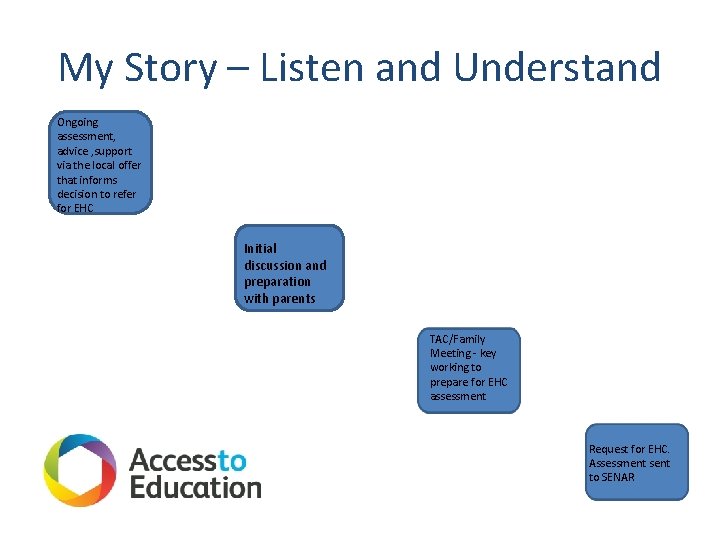
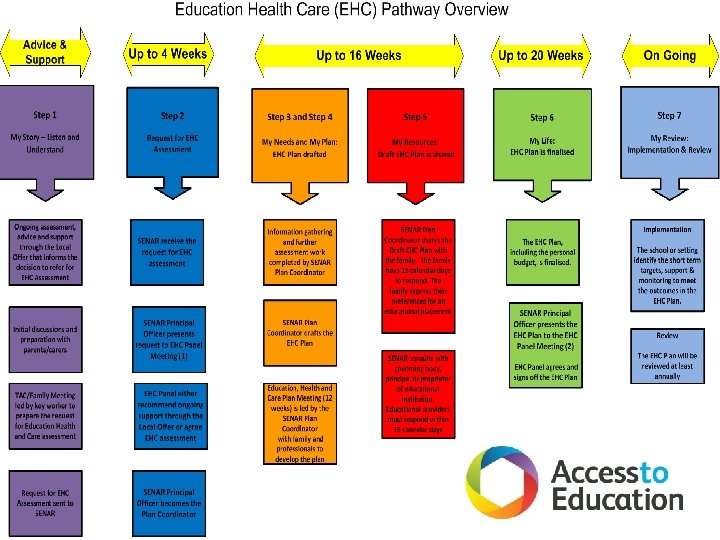
My Story – Listen and Understand Ongoing assessment, advice , support via the local offer that informs decision to refer for EHC Initial discussion and preparation with parents TAC/Family Meeting - key working to prepare for EHC assessment Request for EHC. Assessment sent to SENAR
Key Working • Parents with disabled children are likely to face higher levels of stress and they value the practical and emotional support of key working. • This can reduce this stress, help parents to navigate through the system and help them to agree the right support for their child. Support and Aspiration
What is key working? Key working is an approach that: • Builds on partnership working • Facilitates the coordination of an integrated package of solution-focused support • Is important to disabled children, young people and those with other additional needs and their families • Helps support ‘ordinary lives’ • Promotes disability equality, inclusion and antidiscrimination which are all human rights • Helps build strong and resilient families

Key working Functions Emotional and practical support • Providing emotional and practical support as part of a trusting relationship • Enabling and empowering for decision making and the use of personal budgets Coordination • Coordinating practitioners and services around the child, young person and family • Being a single point of regular and consistent contact • Facilitating multi-agency meetings Planning and assessment • Supporting and facilitating a single planning and joint assessment process • Identifying strengths and needs of family members Information and specialist support • Providing information and signposting • Advocating on a child’s, young person’s and/or family’s behalf • Facilitating clinical and social care seamlessly, integrated with specialist and universal services in an equality promoting approach
Key working in Birmingham • Early Support training for trainers • Training to SENCo networks throughout the city • Training to multi agency groups including health, Disabled Children’s Social Care and early years and education providers • Training to Access to Education SS, EPs, CAT • Training for CYPF
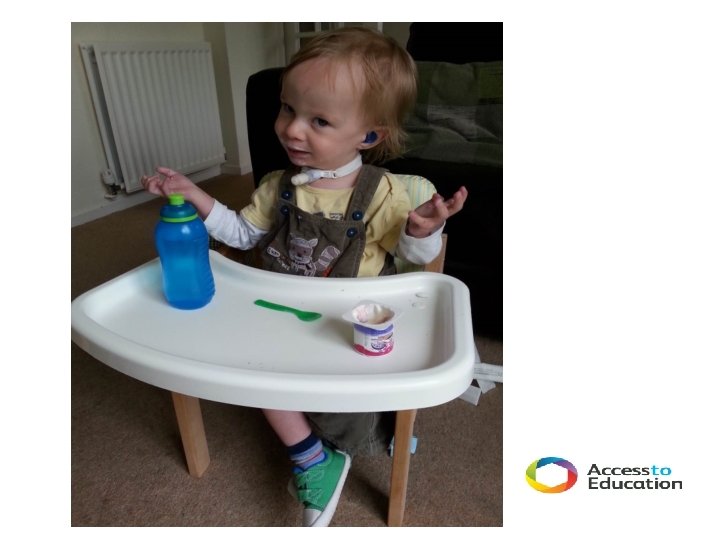
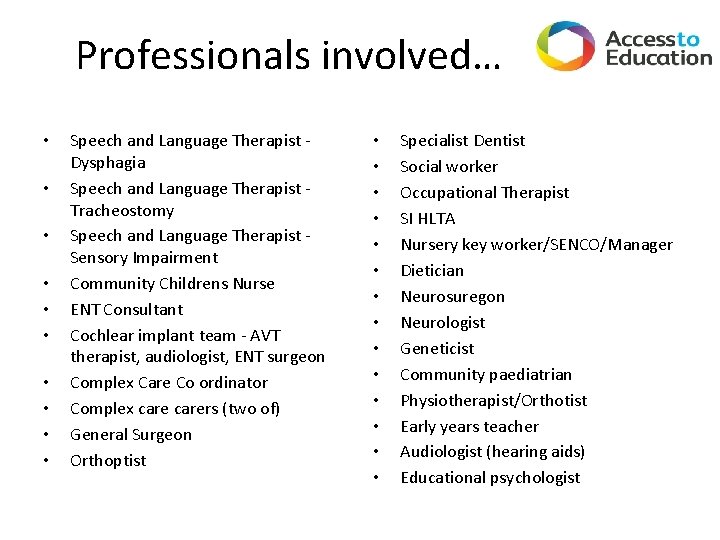
Professionals involved… • • • Speech and Language Therapist Dysphagia Speech and Language Therapist Tracheostomy Speech and Language Therapist Sensory Impairment Community Childrens Nurse ENT Consultant Cochlear implant team - AVT therapist, audiologist, ENT surgeon Complex Care Co ordinator Complex carers (two of) General Surgeon Orthoptist • • • • Specialist Dentist Social worker Occupational Therapist SI HLTA Nursery key worker/SENCO/Manager Dietician Neurosuregon Neurologist Geneticist Community paediatrian Physiotherapist/Orthotist Early years teacher Audiologist (hearing aids) Educational psychologist
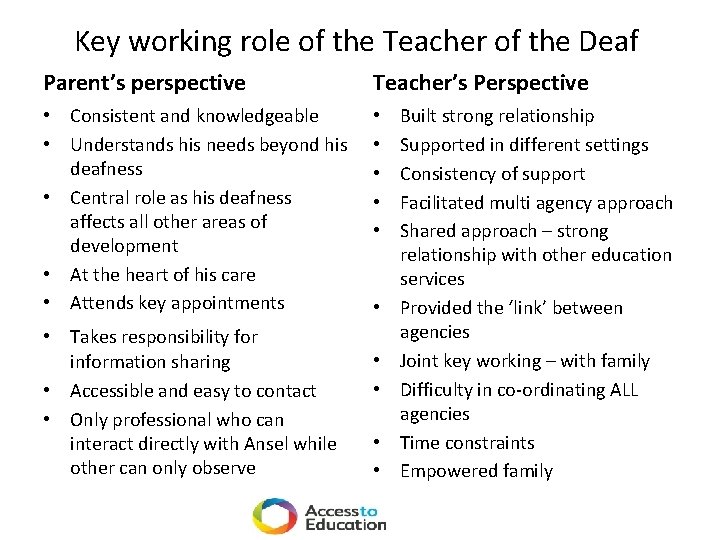
Key working role of the Teacher of the Deaf Parent’s perspective Teacher’s Perspective • Consistent and knowledgeable • Understands his needs beyond his deafness • Central role as his deafness affects all other areas of development • At the heart of his care • Attends key appointments • • • Takes responsibility for information sharing • Accessible and easy to contact • Only professional who can interact directly with Ansel while other can only observe • • • Built strong relationship Supported in different settings Consistency of support Facilitated multi agency approach Shared approach – strong relationship with other education services Provided the ‘link’ between agencies Joint key working – with family Difficulty in co-ordinating ALL agencies Time constraints Empowered family
A Parent’s Perspective
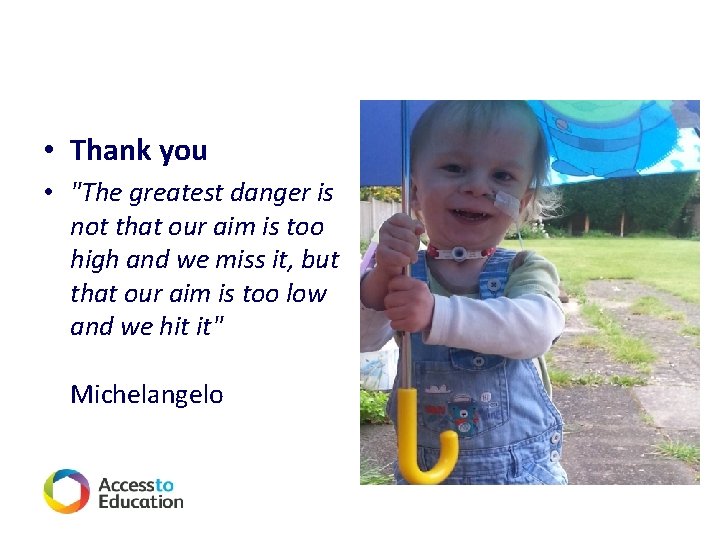
• Thank you • "The greatest danger is not that our aim is too high and we miss it, but that our aim is too low and we hit it" Michelangelo
- Slides: 18