
SEMINAR ON BUBBLE POWER THE REVOLUTIONARY NEW ENERGY
SEMINAR ON BUBBLE POWER THE REVOLUTIONARY NEW ENERGY SOURCE BY: VISHNU. S ROLL. NO. 4428 S 7. ME
INTRODUCTION n n n Sonofusion Research team from various organizations have joined forces to create acoustic fusion technology energy consortium (AFTEC) to promote the development of sonofusion. It was derived from a related phenomenon, sonoluminescence. Sonofusion involves tiny bubbles imploded by sound waves can make hydrogen nuclei fuse-and may one day become a revolutionary new energy source.
SONOLUMINESCENCE n When a gas bubble in liquid is excited by ultrasonic acoustic waves, it can emit short flashes of light suggestive of extreme temperatures inside the bubble. n These flashes of light, known as ‘sonoluminescence’, occur as the bubble implodes, or cavitates. n Chemical reactions occurs.
THE IDEA OF SONOFUSION n Technically known as acoustic inertial confinement fusion. n In this piezoelectric crystal attached to a liquid-filled flask send pressure waves through the fluid, exciting the motion of tiny gas bubbles. n High temperatures and pressure speculated at the bubble core. n This leading to conditions suitable for thermonuclear fusion.
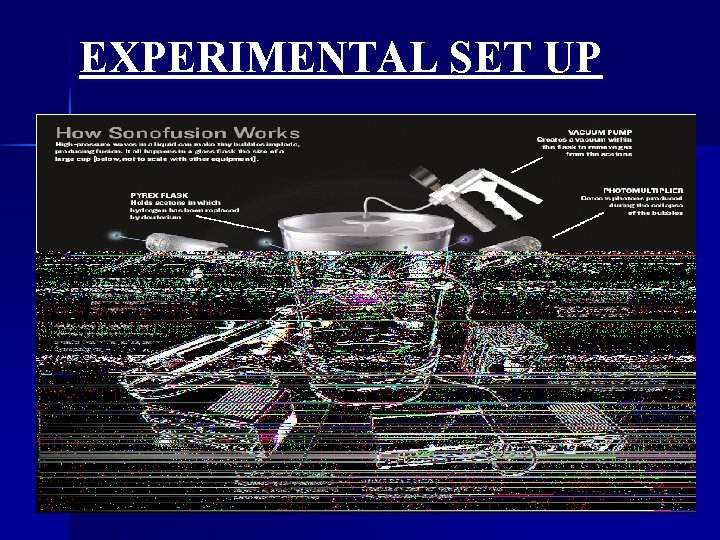
EXPERIMENTAL SET UP
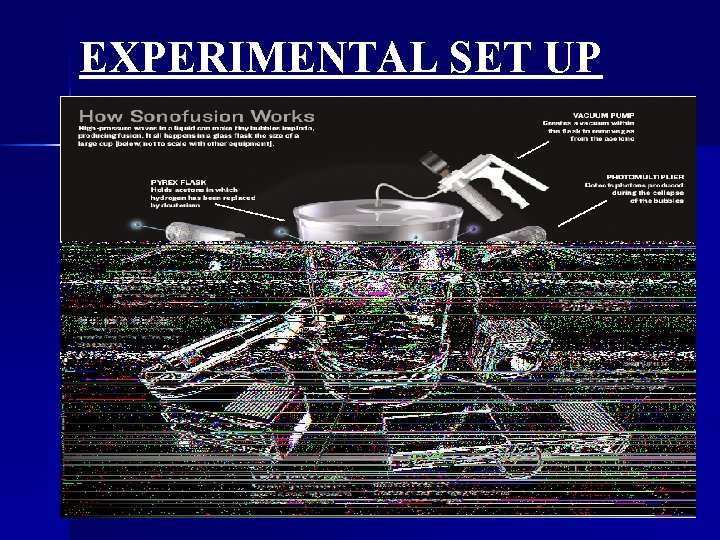
BASIC REQUIREMENTS n n n n n Pyrex flask Vacuum pump Piezoelectric crystal Wave generator Amplifier Neutron generator Neutron and gamma ray detector Photomultiplier Microphone & speaker
HOW SONOFUSION WORKS n Action of vacuum pump. n Fill the flask with deuterated acetone. n For initiation an oscillating voltage of 20 k. Hz applied to the ring. n Fire a pulsed neutron generator.
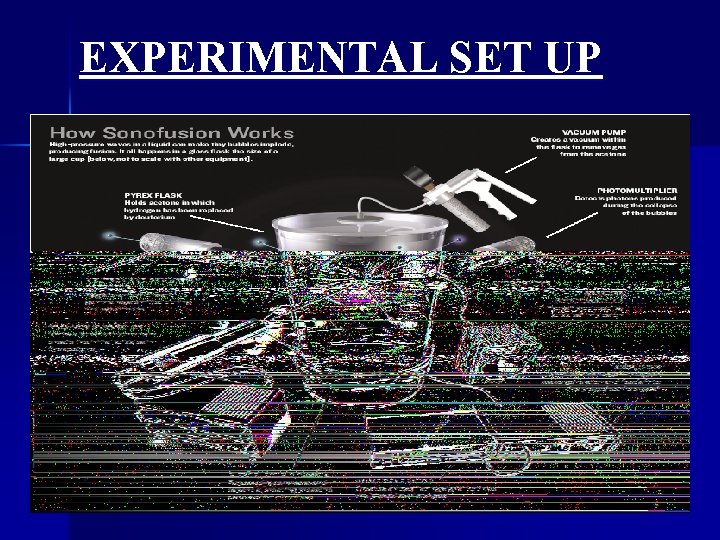
EXPERIMENTAL SET UP
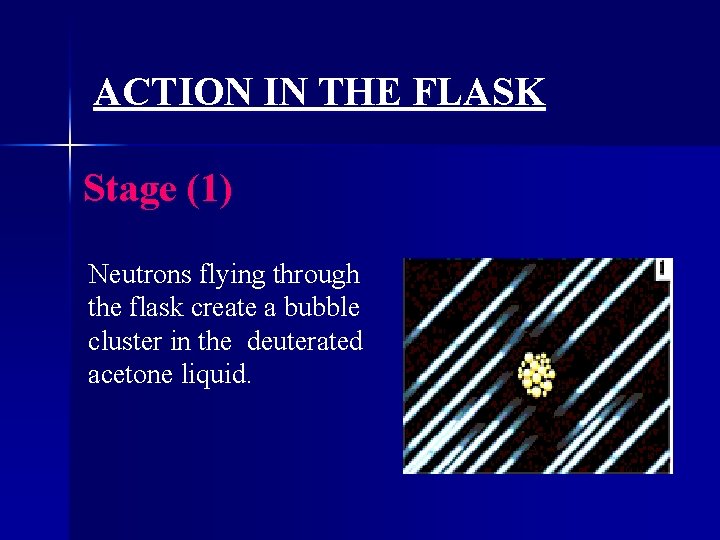
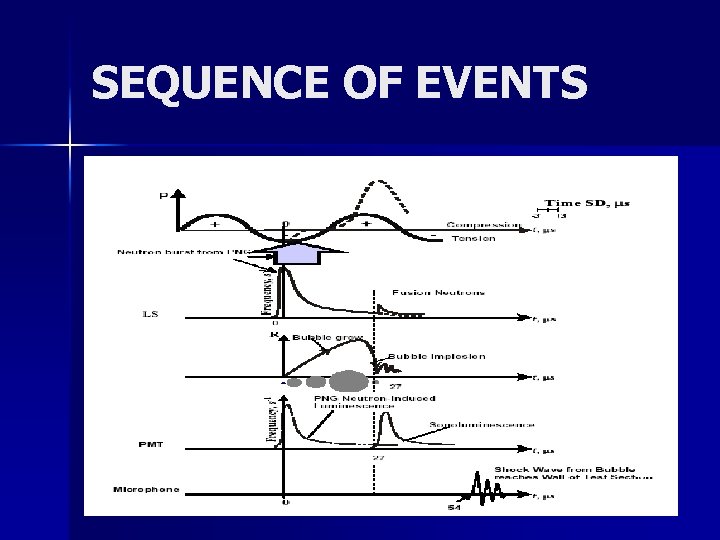
ACTION IN THE FLASK Stage (1) Neutrons flying through the flask create a bubble cluster in the deuterated acetone liquid.
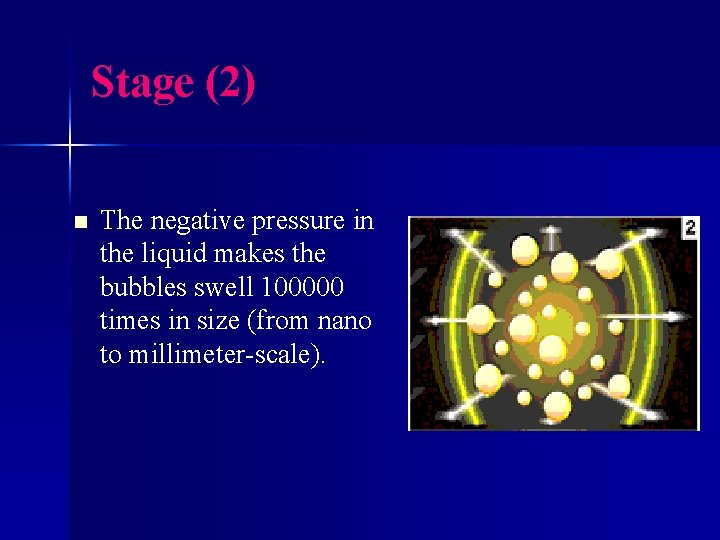
Stage (2) n The negative pressure in the liquid makes the bubbles swell 100000 times in size (from nano to millimeter-scale).
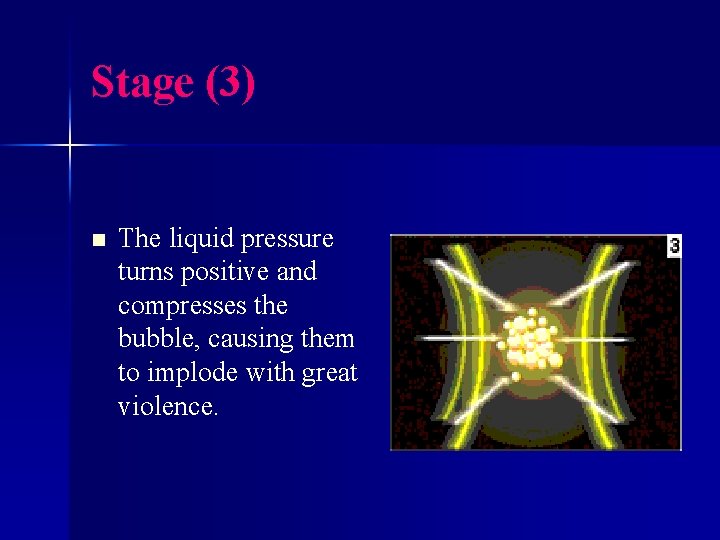
Stage (3) n The liquid pressure turns positive and compresses the bubble, causing them to implode with great violence.
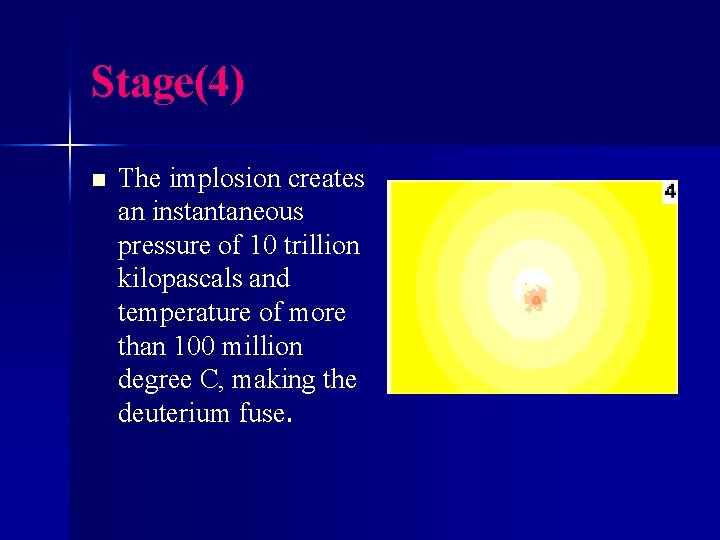
Stage(4) n The implosion creates an instantaneous pressure of 10 trillion kilopascals and temperature of more than 100 million degree C, making the deuterium fuse.
EXPERIMENTAL SET UP
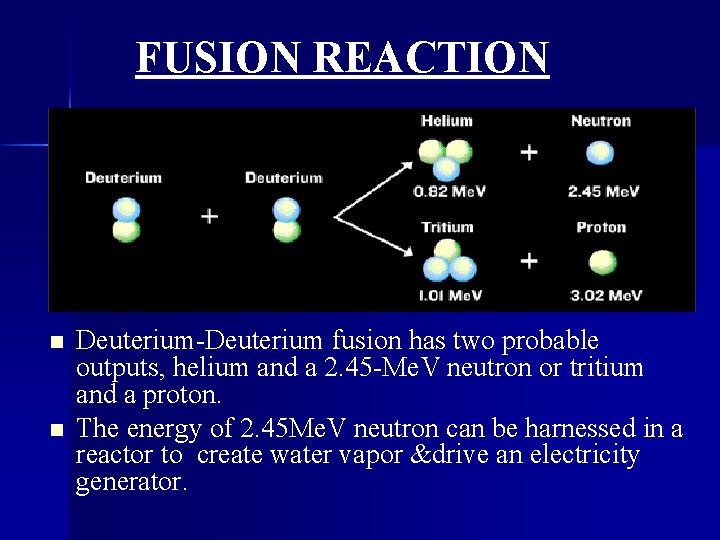
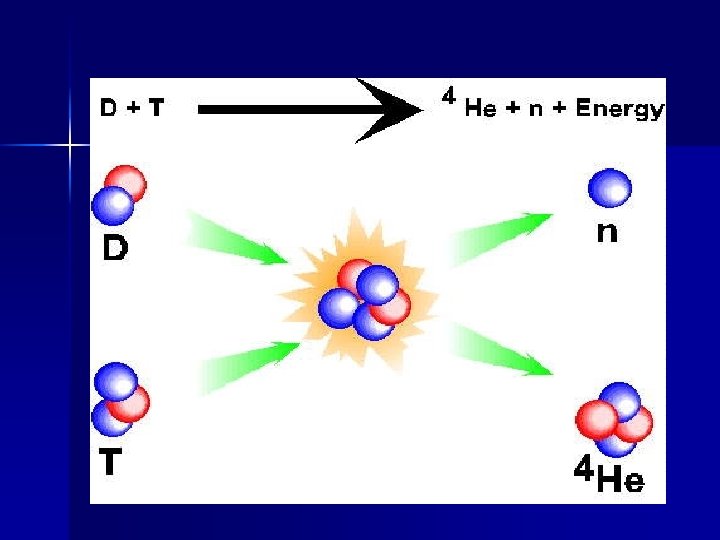
FUSION REACTION n n Deuterium-Deuterium fusion has two probable outputs, helium and a 2. 45 -Me. V neutron or tritium and a proton. The energy of 2. 45 Me. V neutron can be harnessed in a reactor to create water vapor &drive an electricity generator.
EVIDENCE TO SUPPORT TABLETOP NUCLEAR FUSION DEVICE n We gather two kinds of evidence that the deuterium is fusing. n The first is by measuring levels of another hydrogen isotope tritium n The second is neutron emissions detected by the neutron detector.
SEQUENCE OF EVENTS
OTHER APPROACHES n Mainly two types: Ø Laser beam technique. Ø Magnetic confinement fusion
ADVANTAGES n n n It is self sustaining. Easily control. Produce more energy than it consumes. Low cost. Easily available raw materials. Environmental friendly.
APPLICATIONS n The technology might one day, in theory, lead to a new source of energy. It may result in a new class of low cost energy. n Compact detectors for security applications. n To analyze molecular structure of materials. n Machines that cheaply manufacture new synthetic materials & efficiently produce tritium, which is used for medical imaging to watch dials.
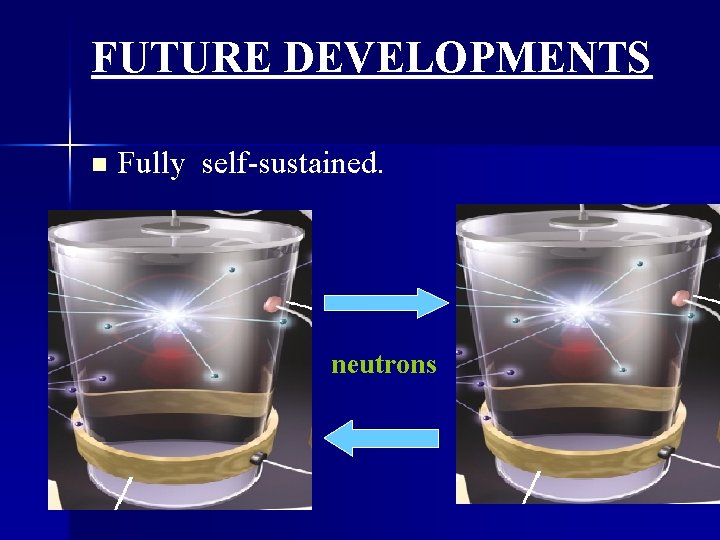
FUTURE DEVELOPMENTS n Fully self-sustained. neutrons
Contd… n To create a full-size electricity producing nuclear generator.
CONCLUSION n For more than half a century, thermonuclear fusion has held out the promise of cheap, clean and virtually limitless energy.
REFERENCE n IEEE spectrum , MAY 2005. n www. purdue. edu n www. iter. org n www. washington. edu

THANK YOU
- Slides: 25