
SEMINAR DNA Fingerprinting Definition History How it works

- Slides: 23
SEMINAR
DNA Fingerprinting § § § § Definition History How it works Different Methods of processing Application’s Draw Backs References
DEFINITION Forensic science: Intersection of Law and Science DNA fingerprinting: Analysis of an organism’s unique DNA composition as a characteristic marker. A technique used by scientists to distinguish between individuals of the same species using only samples of their DNA.
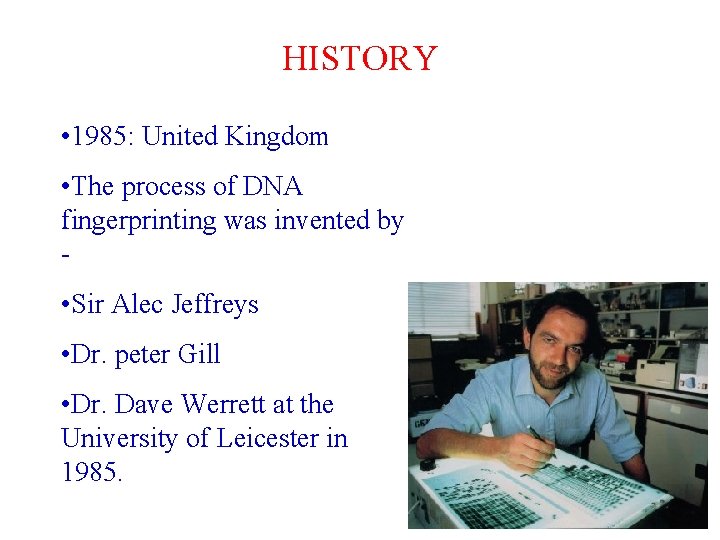
HISTORY • 1985: United Kingdom • The process of DNA fingerprinting was invented by • Sir Alec Jeffreys • Dr. peter Gill • Dr. Dave Werrett at the University of Leicester in 1985.
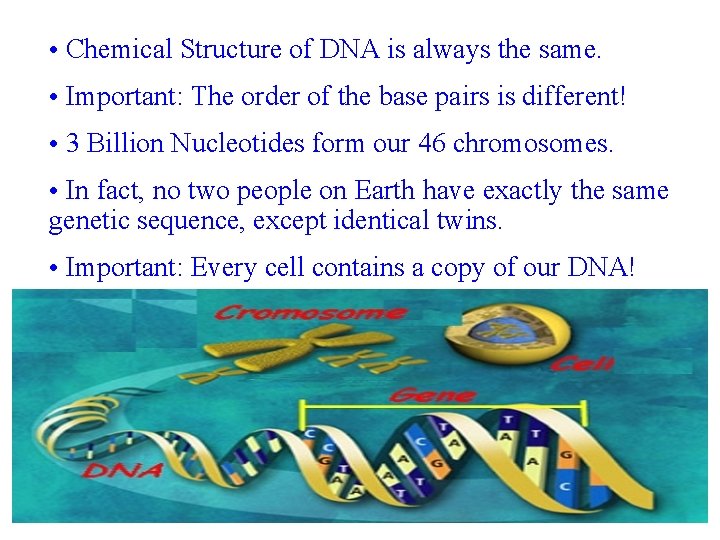
• Chemical Structure of DNA is always the same. • Important: The order of the base pairs is different! • 3 Billion Nucleotides form our 46 chromosomes. • In fact, no two people on Earth have exactly the same genetic sequence, except identical twins. • Important: Every cell contains a copy of our DNA!
How does it Work? • DNA Fingerprinting using VNTR's • VNTR(variable number of tandem repeats)- recognition that variable numbers of repeated nucleotides can be found in DNA and can be used for identification of individuals. • VNTR’s provide a scientific marker for identity. • Cut out the segment of the chromosome containing this variable number of tandem repeats (VNTR's ). • Identify the VNTR's for the DNA sequence of the repeat.
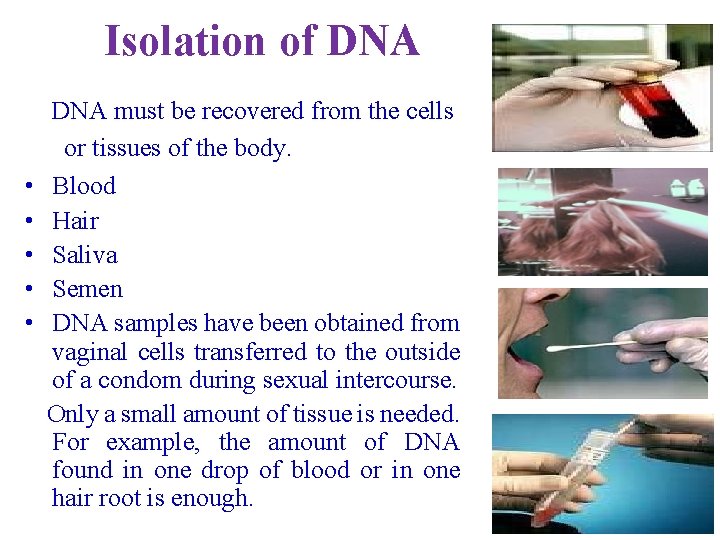
Isolation of DNA • • • DNA must be recovered from the cells or tissues of the body. Blood Hair Saliva Semen DNA samples have been obtained from vaginal cells transferred to the outside of a condom during sexual intercourse. Only a small amount of tissue is needed. For example, the amount of DNA found in one drop of blood or in one hair root is enough.
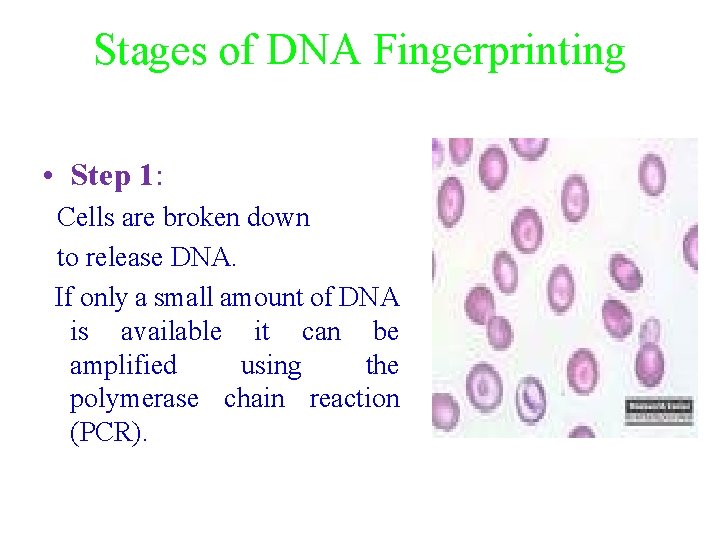
Stages of DNA Fingerprinting • Step 1: Cells are broken down to release DNA. If only a small amount of DNA is available it can be amplified using the polymerase chain reaction (PCR).
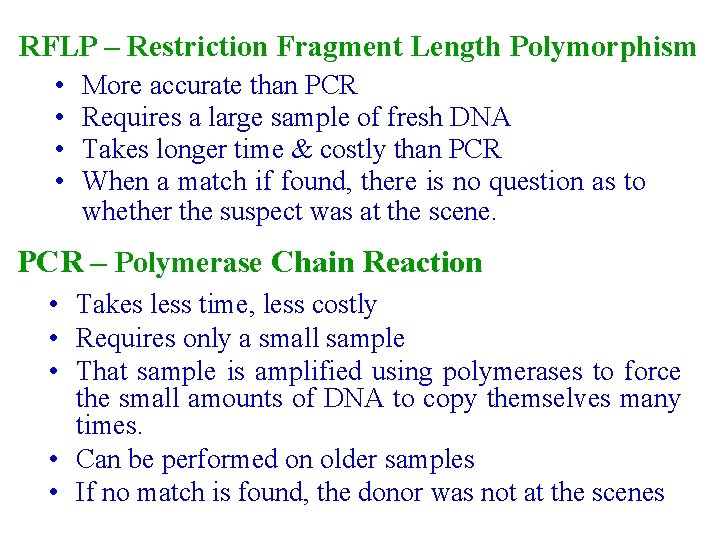
RFLP – Restriction Fragment Length Polymorphism • • More accurate than PCR Requires a large sample of fresh DNA Takes longer time & costly than PCR When a match if found, there is no question as to whether the suspect was at the scene. PCR – Polymerase Chain Reaction • Takes less time, less costly • Requires only a small sample • That sample is amplified using polymerases to force the small amounts of DNA to copy themselves many times. • Can be performed on older samples • If no match is found, the donor was not at the scenes
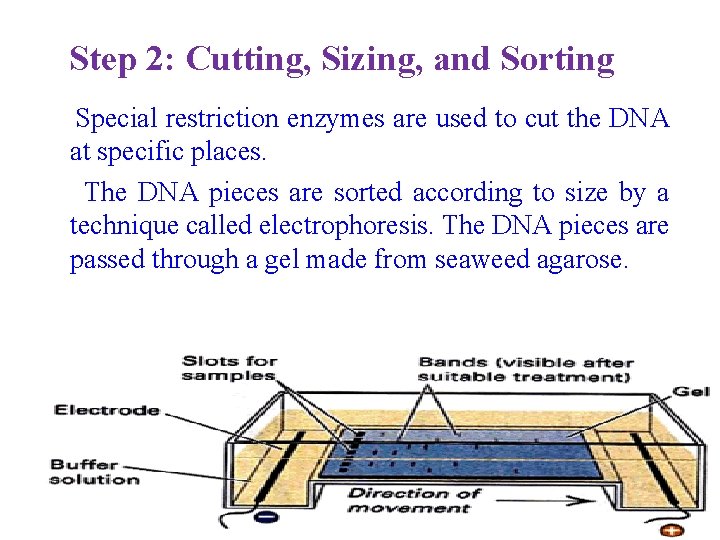
Step 2: Cutting, Sizing, and Sorting Special restriction enzymes are used to cut the DNA at specific places. The DNA pieces are sorted according to size by a technique called electrophoresis. The DNA pieces are passed through a gel made from seaweed agarose.
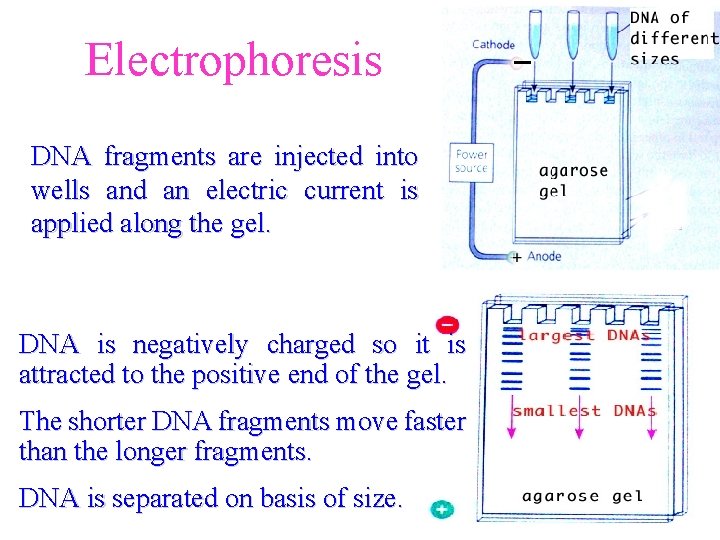
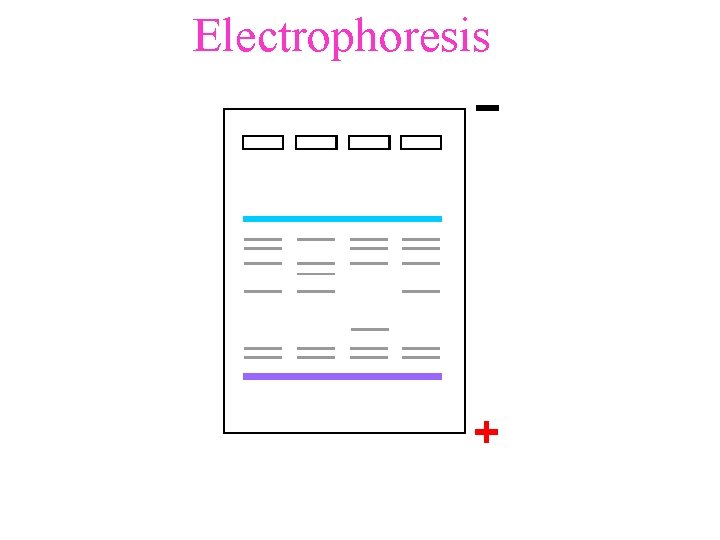
Electrophoresis DNA fragments are injected into wells and an electric current is applied along the gel. DNA is negatively charged so it is attracted to the positive end of the gel. The shorter DNA fragments move faster than the longer fragments. DNA is separated on basis of size.
Electrophoresis
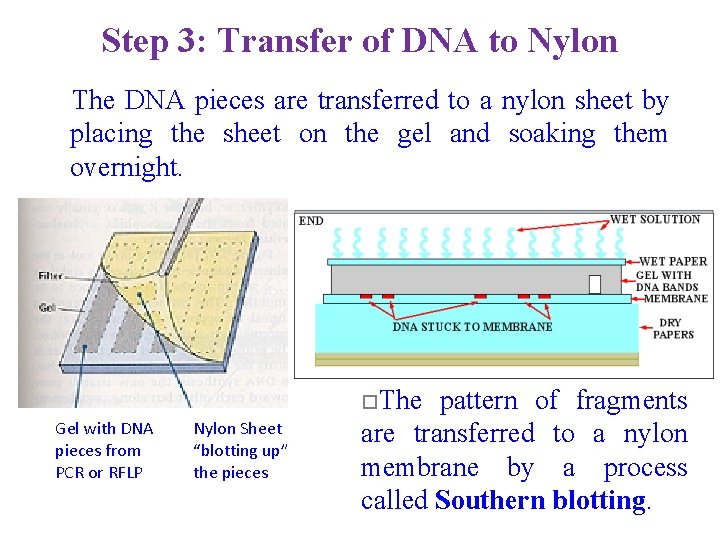
Step 3: Transfer of DNA to Nylon The DNA pieces are transferred to a nylon sheet by placing the sheet on the gel and soaking them overnight. o. The Gel with DNA pieces from PCR or RFLP Nylon Sheet “blotting up” the pieces pattern of fragments are transferred to a nylon membrane by a process called Southern blotting.
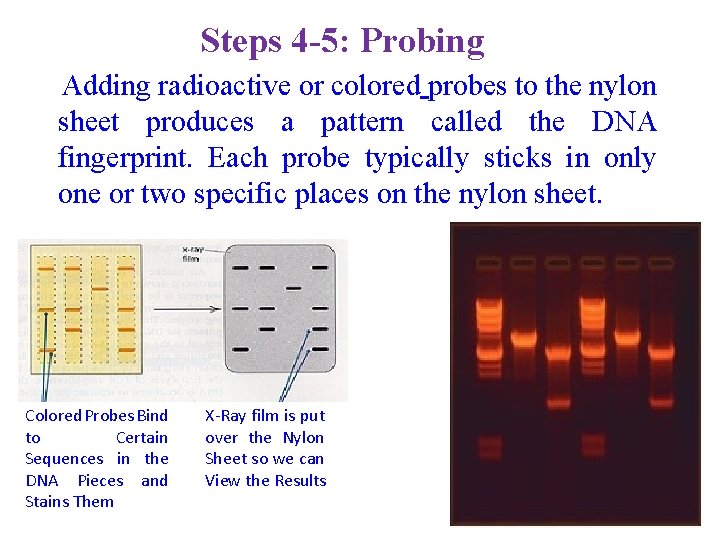
Steps 4 -5: Probing Adding radioactive or colored probes to the nylon sheet produces a pattern called the DNA fingerprint. Each probe typically sticks in only one or two specific places on the nylon sheet. Colored Probes Bind to Certain Sequences in the DNA Pieces and Stains Them X-Ray film is put over the Nylon Sheet so we can View the Results
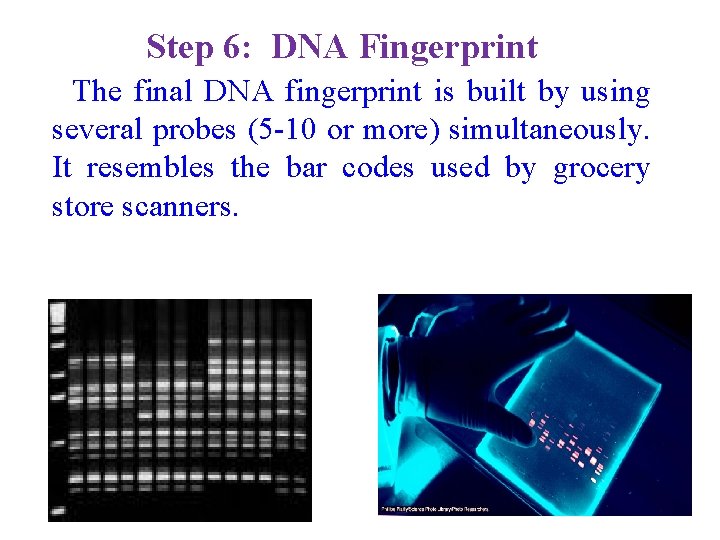
Step 6: DNA Fingerprint The final DNA fingerprint is built by using several probes (5 -10 or more) simultaneously. It resembles the bar codes used by grocery store scanners.
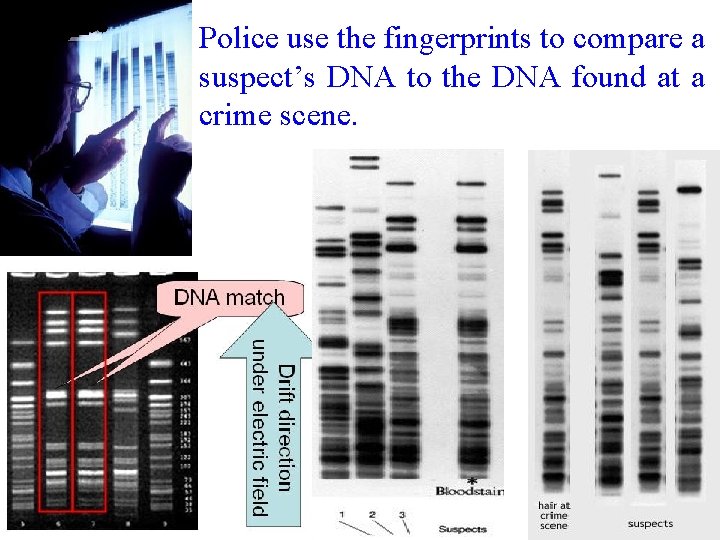
Police use the fingerprints to compare a suspect’s DNA to the DNA found at a crime scene.
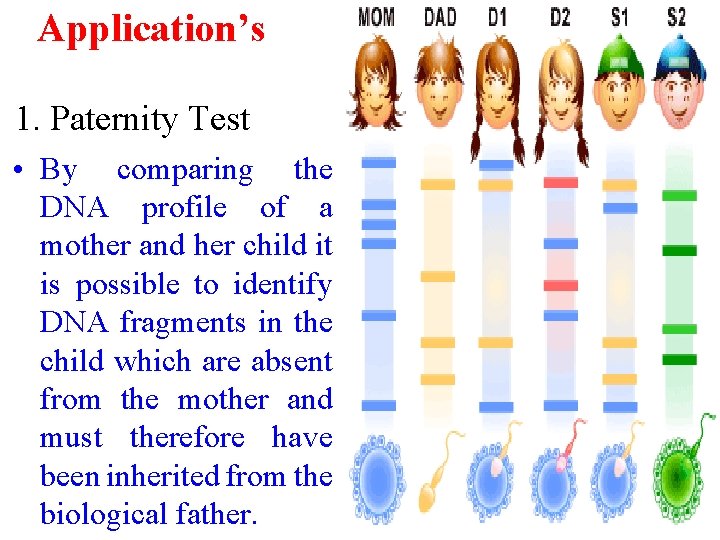
Application’s 1. Paternity Test • By comparing the DNA profile of a mother and her child it is possible to identify DNA fragments in the child which are absent from the mother and must therefore have been inherited from the biological father.
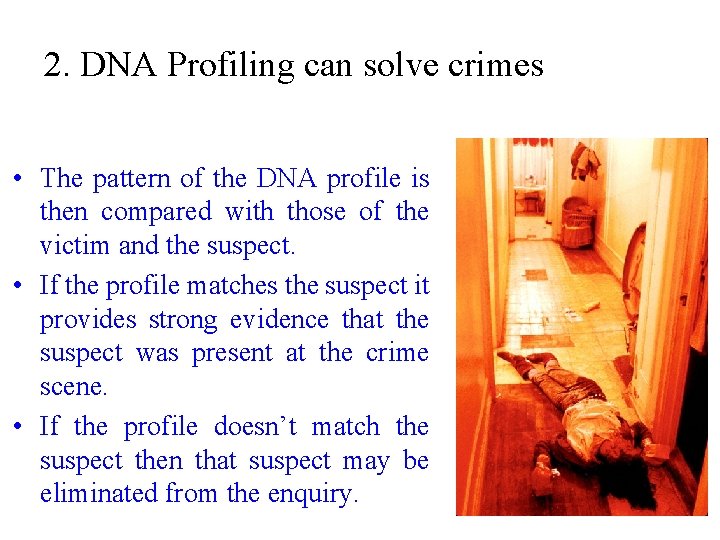
2. DNA Profiling can solve crimes • The pattern of the DNA profile is then compared with those of the victim and the suspect. • If the profile matches the suspect it provides strong evidence that the suspect was present at the crime scene. • If the profile doesn’t match the suspect then that suspect may be eliminated from the enquiry.
3. Personal Identification • The notion of using DNA fingerprints as a sort of genetic bar code to identify individuals has been discussed. 4. Diagnosis of Inherited Disorders • Diagnose inherited disorders in both prenatal and new born babies. • By studying the DNA fingerprints of relatives who have a history of some particular disorder. • Identify DNA patterns associated with the disease. • These disorders may include hemophilia, Alzheimer's, sickle cell anemia, thalassemia, and many others.
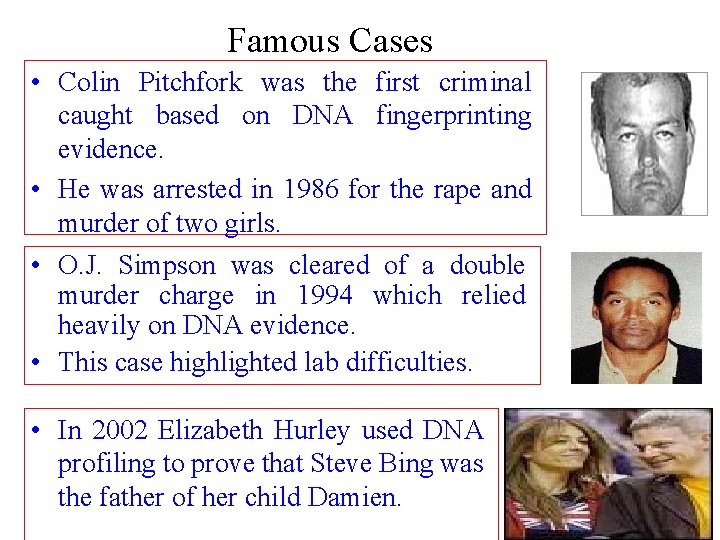
Famous Cases • Colin Pitchfork was the first criminal caught based on DNA fingerprinting evidence. • He was arrested in 1986 for the rape and murder of two girls. • O. J. Simpson was cleared of a double murder charge in 1994 which relied heavily on DNA evidence. • This case highlighted lab difficulties. • In 2002 Elizabeth Hurley used DNA profiling to prove that Steve Bing was the father of her child Damien.
Drawbacks • Collecting samples –High temperatures can degrade DNA –Bacteria –Moisture • Human Error – Sneezes, improper storage, failure to label samples • Chain of Custody –Collection of evidence must be systematically recorded and access to evidence must be controlled.
References Russel, P. J. 1998 Genetics (5 th edition). Chawla, H. S. 2005 Introduction to Plant Biotechnology(2 nd edition) Singh, B. D. 2005 Biotechnology Expanding Horizons • Lecture 7: A few famous cases involving DNA Evidence. March 2007 – http: //nitro. biosci. arizona. edu/courses/EEB 1952007/Lecture 07. html • Baden, Michael. DNA Profiling. – http: //www. kathyreichs. com/dnaprofiling. htm • http: //www. biologycorner. com/bio 4/notes/DNA_fingerprint. • http: //www. scq. ubc. ca/a-brief-tour-of-dna-fngerprinting/ • http: //evolution. berkeley. edu/evolibrary/news/060301_crime