
Semiconservative Replication Color code or highlight your notes
- Slides: 16
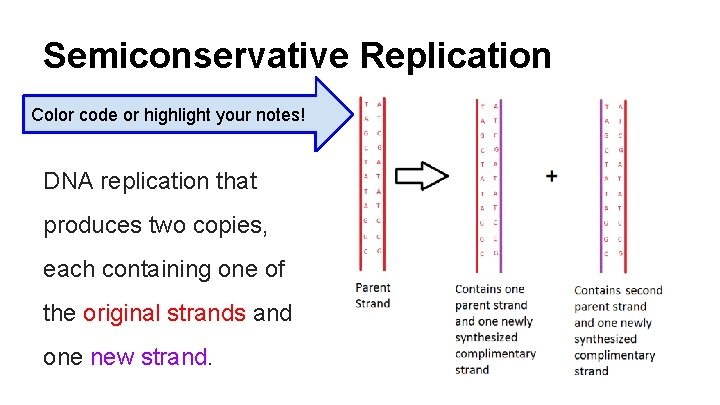
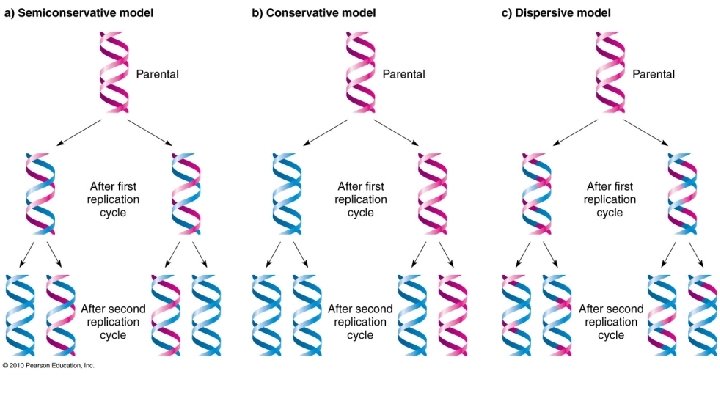
Semiconservative Replication Color code or highlight your notes! DNA replication that produces two copies, each containing one of the original strands and one new strand.
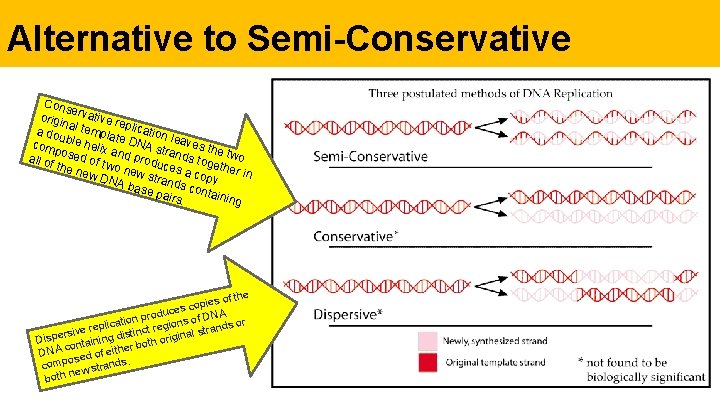
Alternative to Semi-Conservative Cons e origi rvative r nal t emp eplicatio a do late u DNA n leaves com ble helix the stra po a all of sed of t nd produ nds tog two wo et c the n ew D new str es a cop her in y a NA b ase nds cont pairs ainin. g the ies of p o c ces produ s of DNA r n o i t a o c i ion e repl istinct reg nal strands v i s r e d i orig Disp ining conta either both A N D of osed comp w strands. e both n
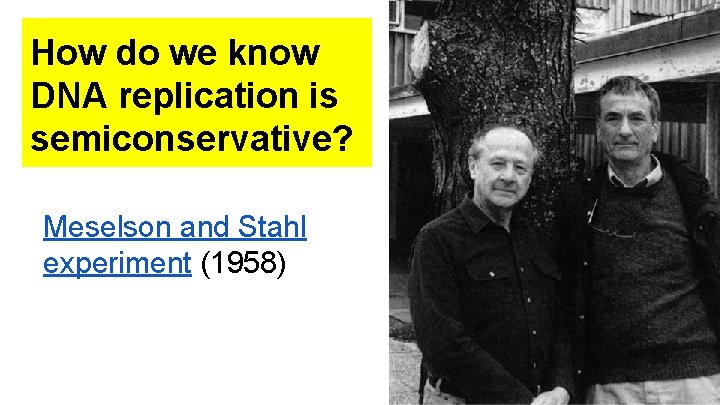
How do we know DNA replication is semiconservative? Meselson and Stahl experiment (1958)
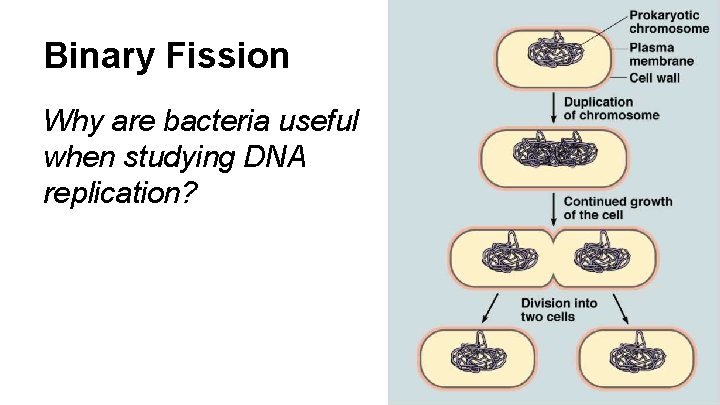
Binary Fission Why are bacteria useful when studying DNA replication?
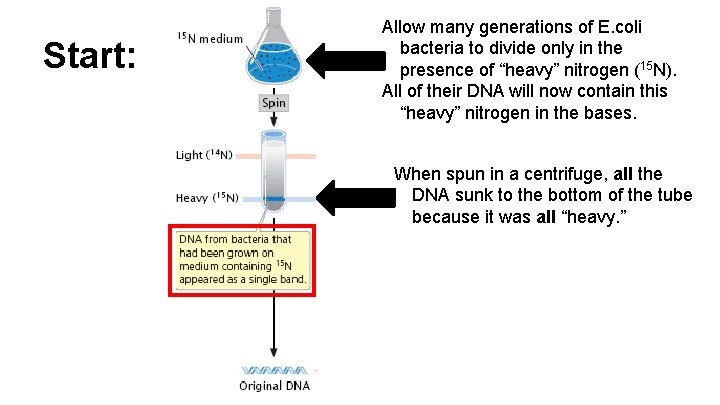
Start: Allow many generations of E. coli bacteria to divide only in the presence of “heavy” nitrogen (15 N). All of their DNA will now contain this “heavy” nitrogen in the bases. When spun in a centrifuge, all the DNA sunk to the bottom of the tube because it was all “heavy. ”
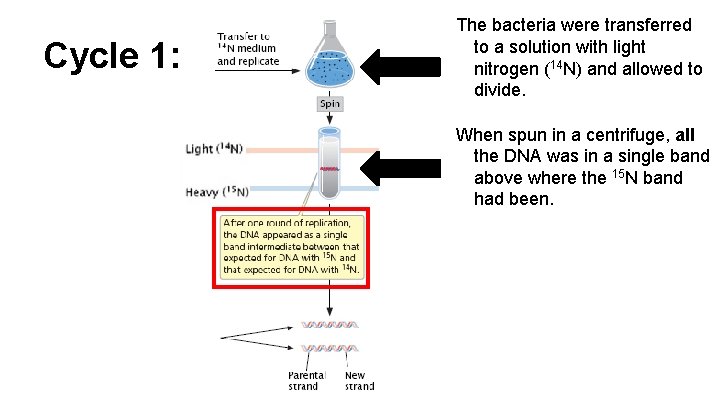
Cycle 1: The bacteria were transferred to a solution with light nitrogen (14 N) and allowed to divide. When spun in a centrifuge, all the DNA was in a single band above where the 15 N band had been.
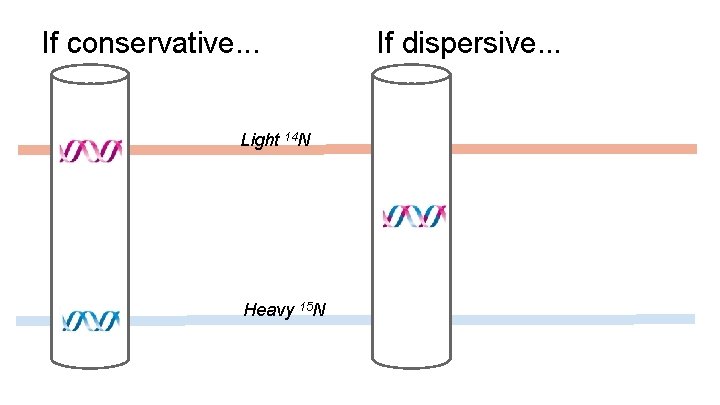
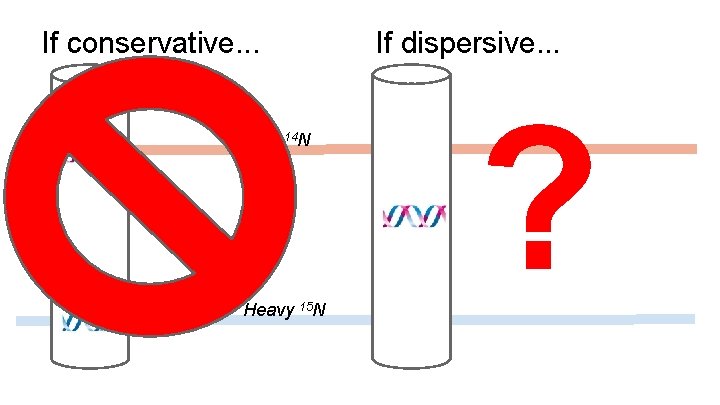
In your notes, draw what would have been seen after Cycle 1 if DNA replication was conservative or dispersive.
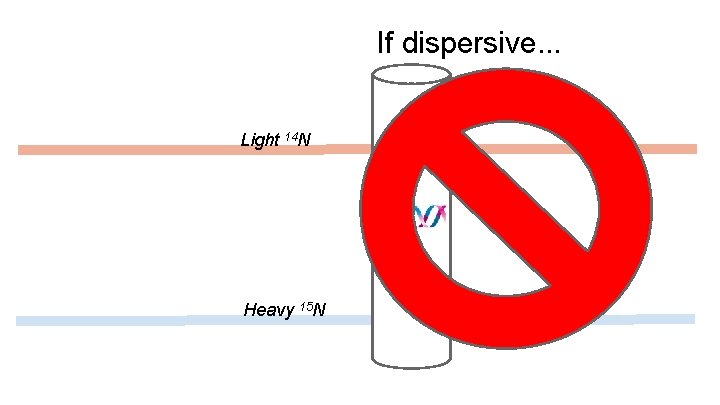
If conservative. . . Light 14 N Heavy 15 N If dispersive. . .
If conservative. . . Light 14 N Heavy 15 N If dispersive. . . ?
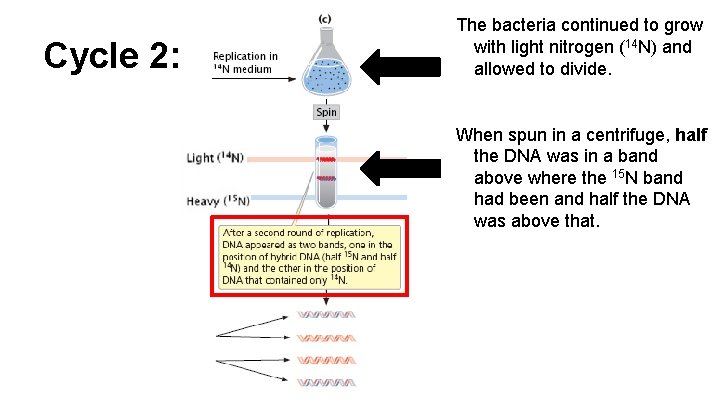
Cycle 2: The bacteria continued to grow with light nitrogen (14 N) and allowed to divide. When spun in a centrifuge, half the DNA was in a band above where the 15 N band had been and half the DNA was above that.
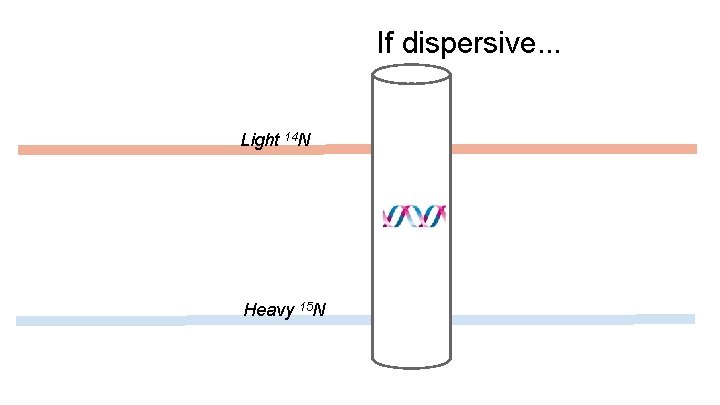
In your notes, draw what would have been seen after Cycle 2 if DNA replication was dispersive.
If dispersive. . . Light 14 N Heavy 15 N
If dispersive. . . Light 14 N Heavy 15 N
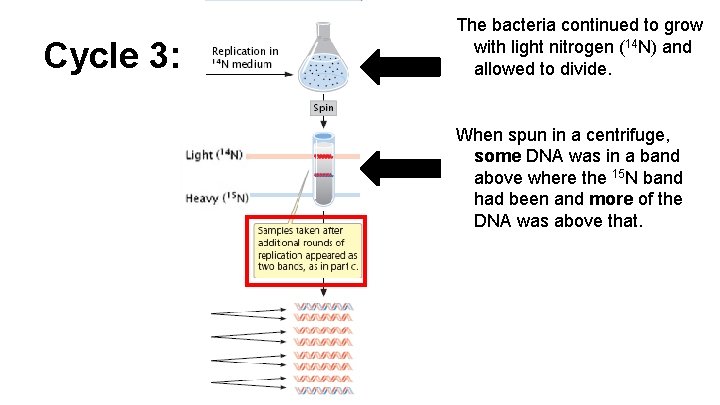
Cycle 3: The bacteria continued to grow with light nitrogen (14 N) and allowed to divide. When spun in a centrifuge, some DNA was in a band above where the 15 N band had been and more of the DNA was above that.
Statements 2. 7. U 1: define semi-conservative and complementary base pairing 2. 7. NOS: describe the experiments 2. 7. S 2: explain how the results of the experiment support DNA replication as semiconservative