
Semiconductor solutions for the next generation of energy






- Slides: 24
Semiconductor solutions for the next generation of energy harvesting systems
Introduction to Solar. Edge
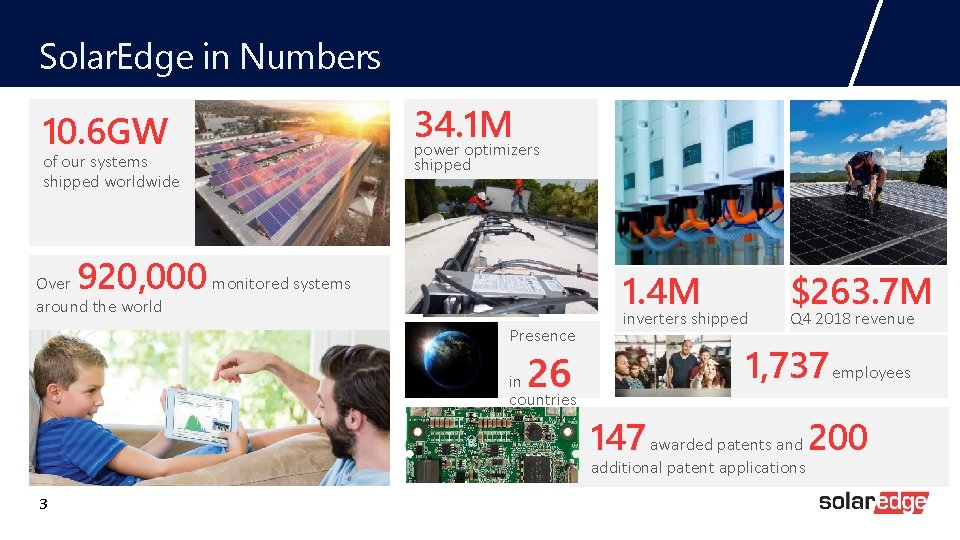
Solar. Edge in Numbers 10. 6 GW of our systems shipped worldwide 34. 1 M power optimizers shipped 920, 000 monitored systems 1. 4 M Over around the world Presence 26 in countries inverters shipped $263. 7 M Q 4 2018 revenue 1, 737 employees 147 awarded patents and 200 additional patent applications 3
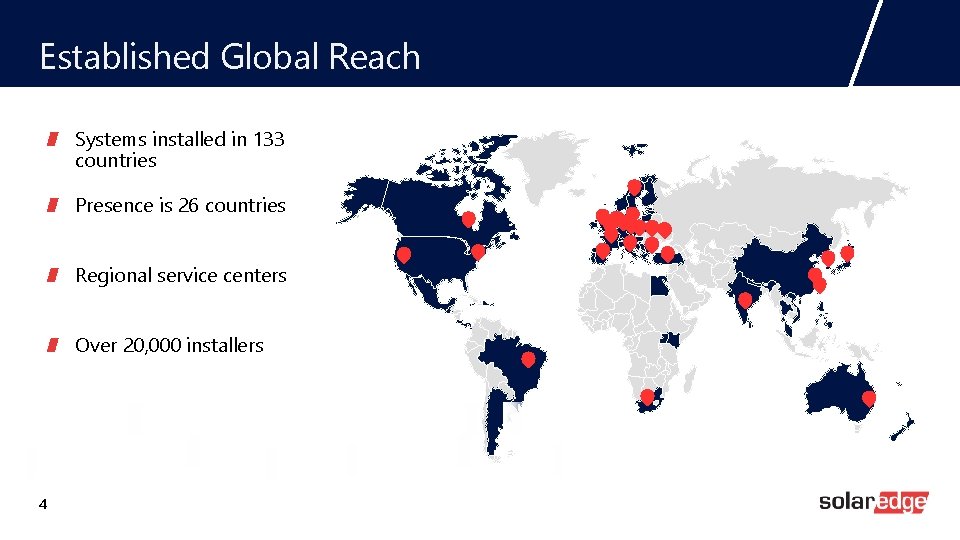
Established Global Reach Systems installed in 133 countries Presence is 26 countries Regional service centers Over 20, 000 installers 4
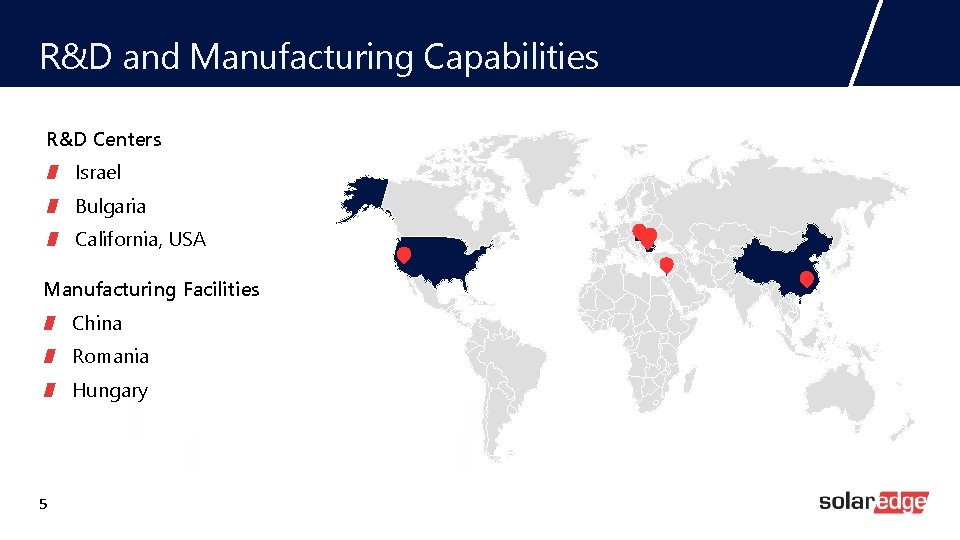
R&D and Manufacturing Capabilities R&D Centers Israel Bulgaria California, USA Manufacturing Facilities China Romania Hungary 5
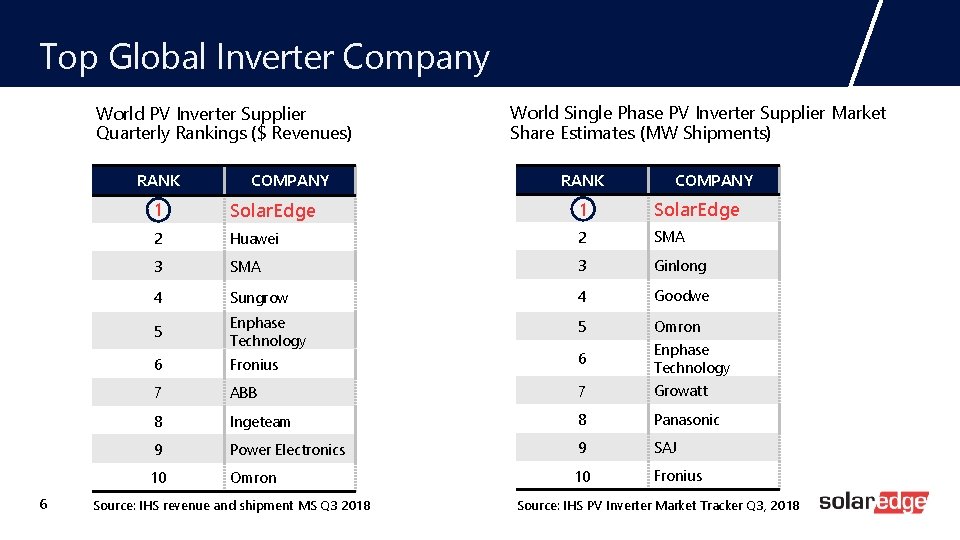
Top Global Inverter Company World PV Inverter Supplier Quarterly Rankings ($ Revenues) RANK 6 COMPANY World Single Phase PV Inverter Supplier Market Share Estimates (MW Shipments) RANK COMPANY 1 Solar. Edge 2 Huawei 2 SMA 3 Ginlong 4 Sungrow 4 Goodwe 5 Enphase Technology 5 Omron Enphase Technology 6 Fronius 6 7 ABB 7 Growatt 8 Ingeteam 8 Panasonic 9 Power Electronics 9 SAJ 10 Omron 10 Fronius Source: IHS revenue and shipment MS Q 3 2018 Source: IHS PV Inverter Market Tracker Q 3, 2018
The Solar. Edge Solution
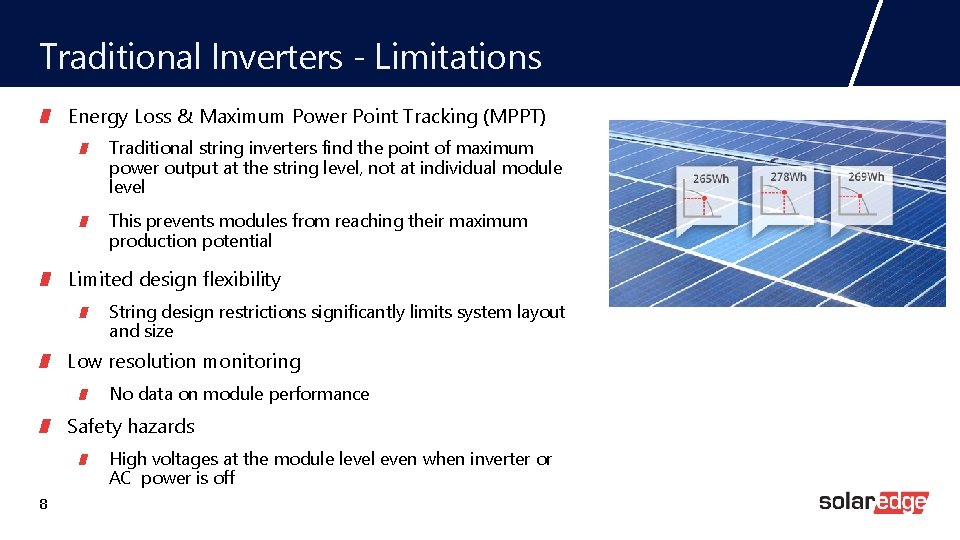
Traditional Inverters - Limitations Energy Loss & Maximum Power Point Tracking (MPPT) Traditional string inverters find the point of maximum power output at the string level, not at individual module level This prevents modules from reaching their maximum production potential Limited design flexibility String design restrictions significantly limits system layout and size Low resolution monitoring No data on module performance Safety hazards High voltages at the module level even when inverter or AC power is off 8
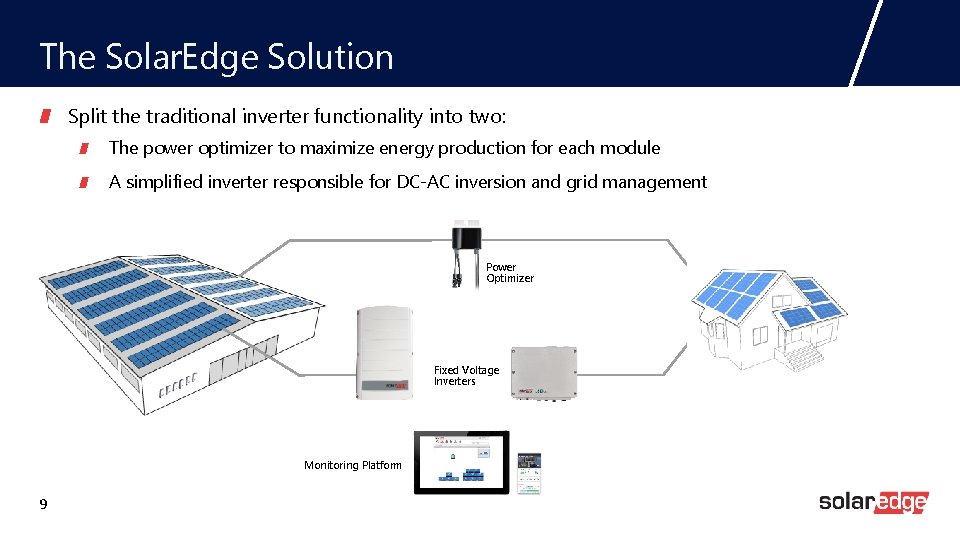
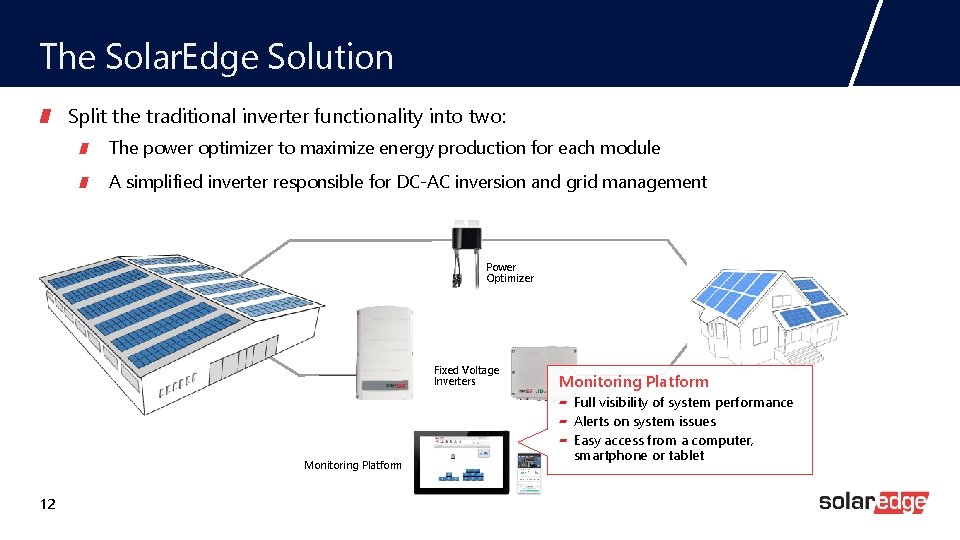
The Solar. Edge Solution Split the traditional inverter functionality into two: The power optimizer to maximize energy production for each module A simplified inverter responsible for DC-AC inversion and grid management Power Optimizer Fixed Voltage Inverters Monitoring Platform 9
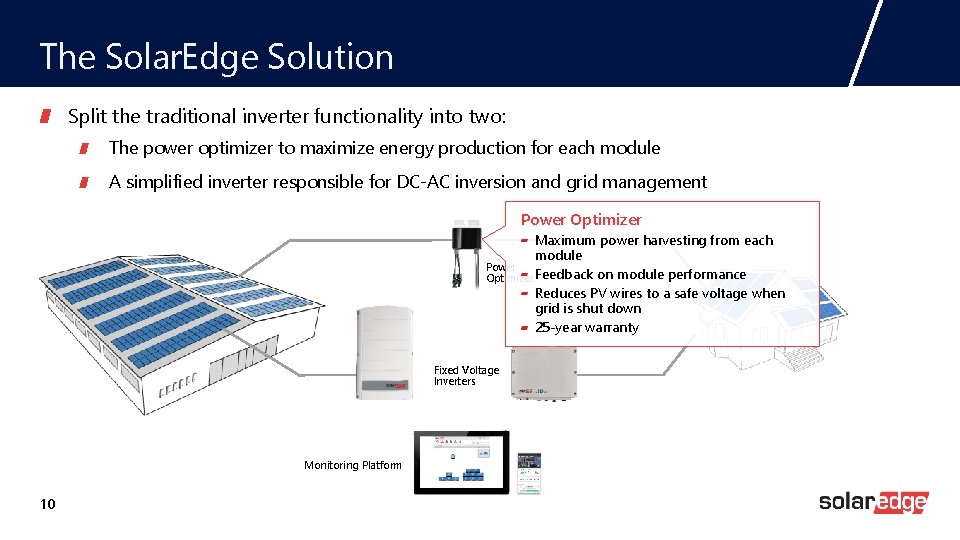
The Solar. Edge Solution Split the traditional inverter functionality into two: The power optimizer to maximize energy production for each module A simplified inverter responsible for DC-AC inversion and grid management Power Optimizer Maximum power harvesting from each module Power Optimizer Feedback on module performance Reduces PV wires to a safe voltage when grid is shut down 25 -year warranty Fixed Voltage Inverters Monitoring Platform 10
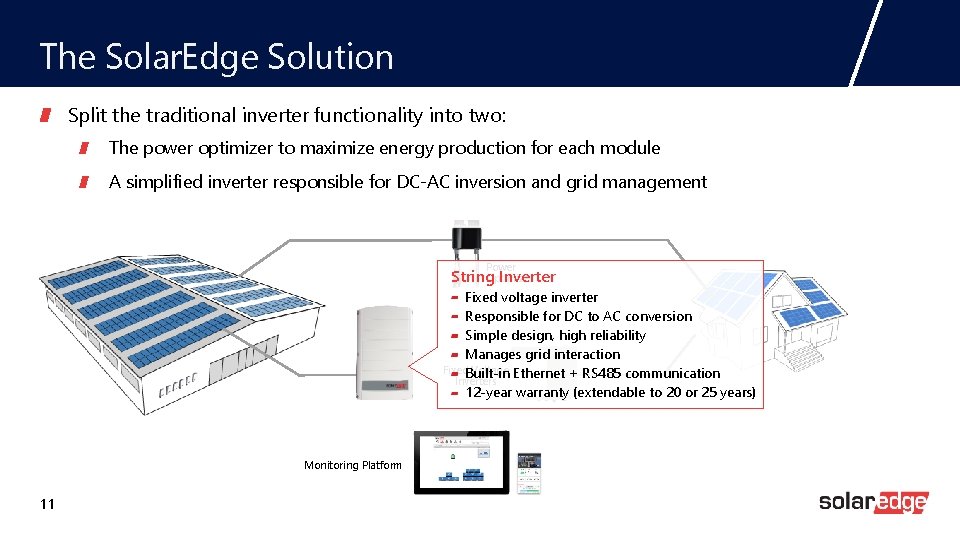
The Solar. Edge Solution Split the traditional inverter functionality into two: The power optimizer to maximize energy production for each module A simplified inverter responsible for DC-AC inversion and grid management Power Optimizer String Inverter Fixed voltage inverter Responsible for DC to AC conversion Simple design, high reliability Manages grid interaction Fixed. Built-in Voltage Ethernet + RS 485 communication Inverters 12 -year warranty (extendable to 20 or 25 years) Monitoring Platform 11
The Solar. Edge Solution Split the traditional inverter functionality into two: The power optimizer to maximize energy production for each module A simplified inverter responsible for DC-AC inversion and grid management Power Optimizer Fixed Voltage Inverters Monitoring Platform 12 Monitoring Platform Full visibility of system performance Alerts on system issues Easy access from a computer, smartphone or tablet
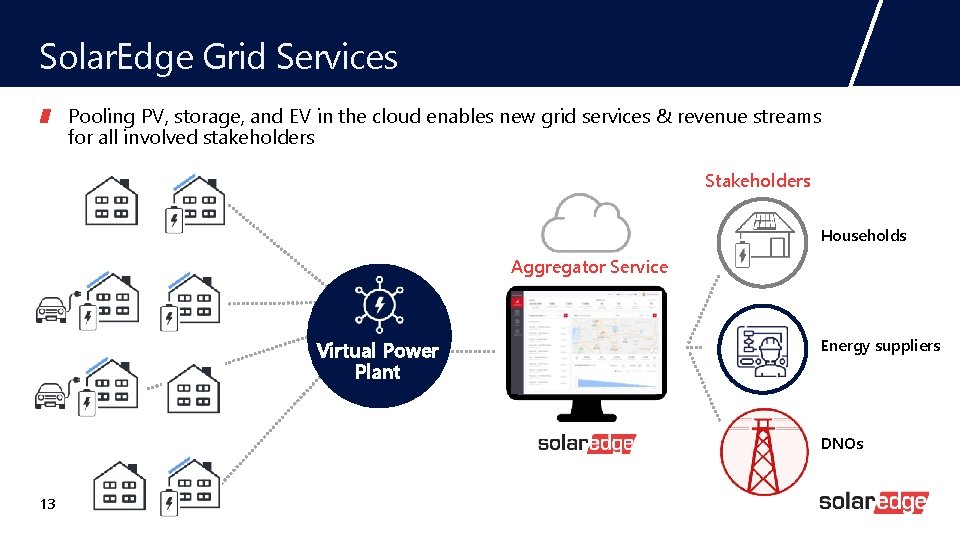
Solar. Edge Grid Services Pooling PV, storage, and EV in the cloud enables new grid services & revenue streams for all involved stakeholders Stakeholders Households Aggregator Service Virtual Power Plant Energy suppliers DNOs 13
Concept Of Operation
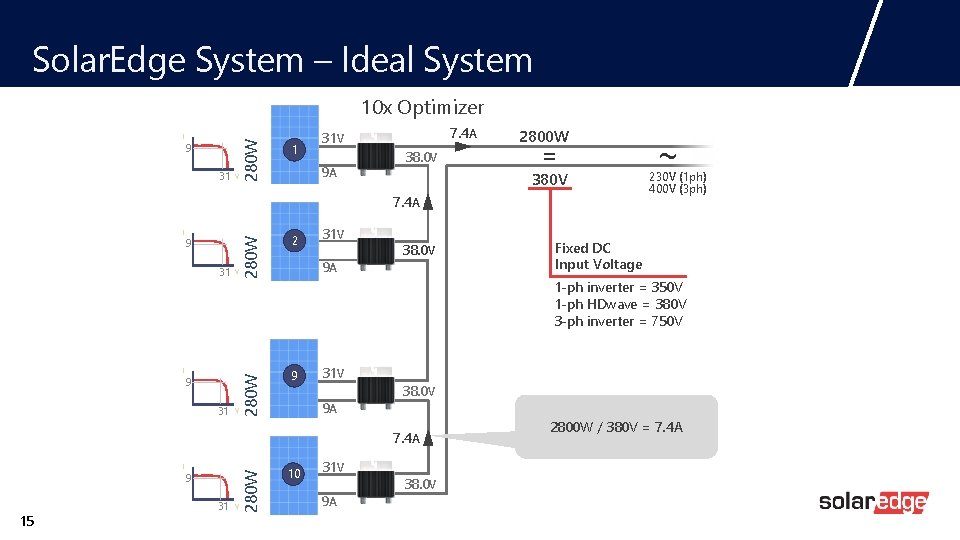
Solar. Edge System – Ideal System I 9 31 280 W 10 x Optimizer 1 9 A V 7. 4 A 31 V 38. 0 V 2800 W = 380 V 9 31 I 9 31 2 31 V 9 A V 280 W I 280 W 7. 4 A 38. 0 V 9 31 V 9 A V 31 280 W 15 9 V 230 V (1 ph) 400 V (3 ph) Fixed DC Input Voltage 1 -ph inverter = 350 V 1 -ph HDwave = 380 V 3 -ph inverter = 750 V 38. 0 V 7. 4 A I ~ 10 31 V 9 A 38. 0 V 2800 W / 380 V = 7. 4 A
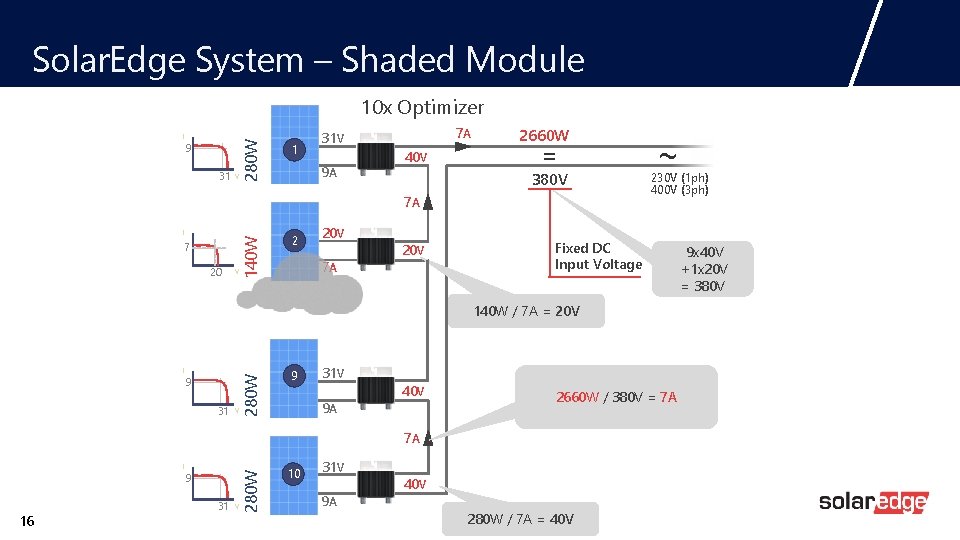
Solar. Edge System – Shaded Module I 9 31 280 W 10 x Optimizer 1 9 A V 7 A 31 V 40 V 2660 W = 380 V I 7 20 140 W 7 A 2 20 V 7 A V 20 V ~ 230 V (1 ph) 400 V (3 ph) Fixed DC Input Voltage I 9 31 280 W 140 W / 7 A = 20 V 9 31 V 9 A V 40 V 2660 W / 380 V = 7 A I 16 9 31 280 W 7 A V 10 31 V 9 A 40 V 280 W / 7 A = 40 V 9 x 40 V +1 x 20 V = 380 V
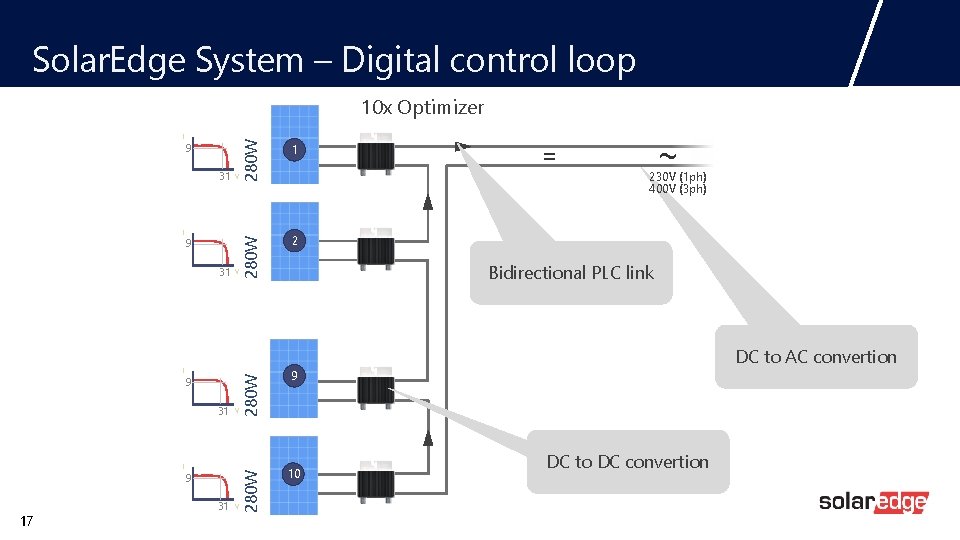
Solar. Edge System – Digital control loop I 9 31 I 17 9 31 280 W 31 1 2 V = ~ 230 V (1 ph) 400 V (3 ph) Bidirectional PLC link V 280 W 9 DC to AC convertion 9 V 280 W I 280 W 10 x Optimizer V 10 DC to DC convertion
So why does Solar. Egde need ASICs?
IP Design Challenges for Renewable Energy App. Extreme harsh environment Very high level of emission/EMI noise Very wide range of input/output signals No off-the-shelf standard analog IPs designed for renewable energy applications Digital control loop requires predicted minimum response time quality of service The system knowledge is spread over several disciplines: Power (AC and DC) Algorithms Communication (PLC & wireless) Embedded SW 19
What do we gain from in-house ASICs? The main reasons for developing in-house ASIC are: Reliability Performance IP protection Price Supply chain Time to market 20
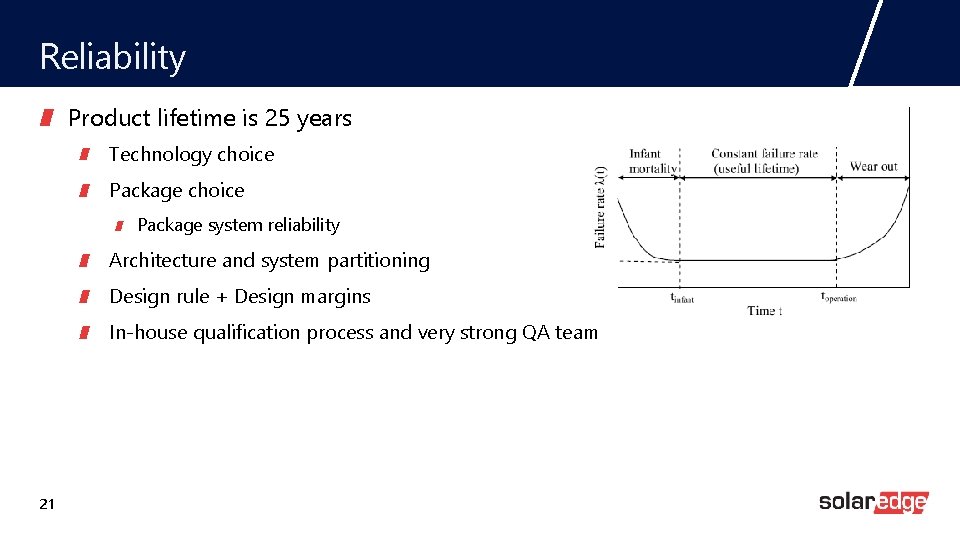
Reliability Product lifetime is 25 years Technology choice Package system reliability Architecture and system partitioning Design rule + Design margins In-house qualification process and very strong QA team 21
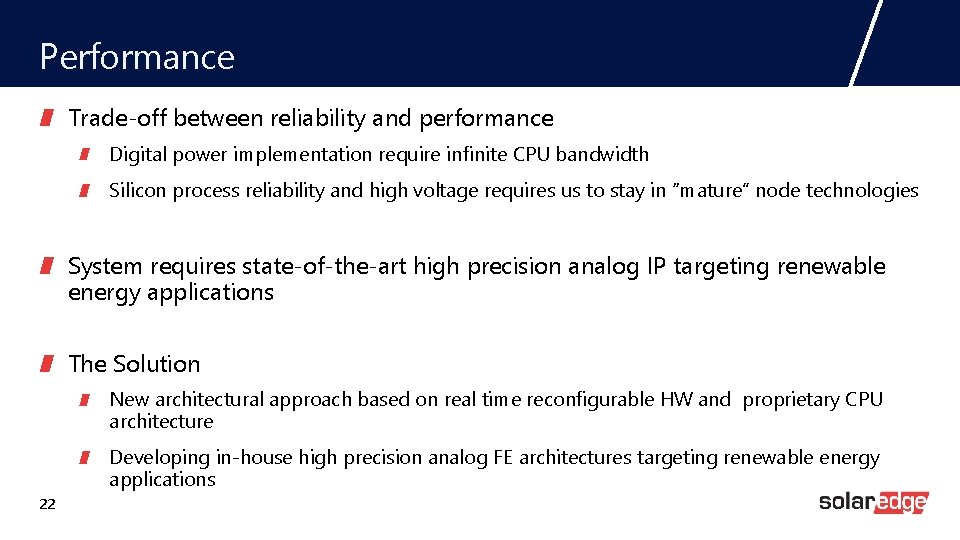
Performance Trade-off between reliability and performance Digital power implementation require infinite CPU bandwidth Silicon process reliability and high voltage requires us to stay in “mature” node technologies System requires state-of-the-art high precision analog IP targeting renewable energy applications The Solution New architectural approach based on real time reconfigurable HW and proprietary CPU architecture Developing in-house high precision analog FE architectures targeting renewable energy applications 22
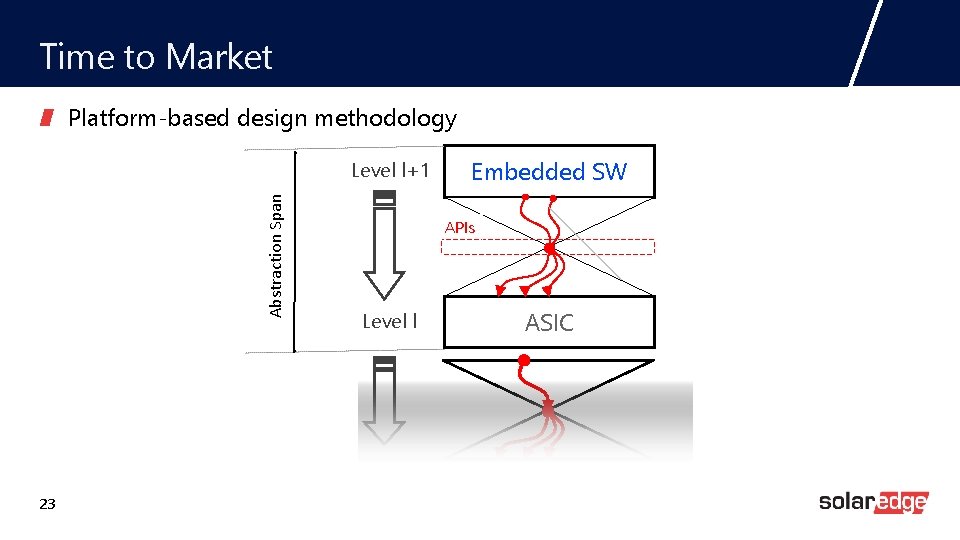
Time to Market Platform-based design methodology Abstraction Span Level l+1 23 Embedded SW APIs Level l ASIC
Thank You! Cautionary Note Regarding Market Data & Industry Forecasts This power point presentation contains market data and industry forecasts from certain thirdparty sources. This information is based on industry surveys and the preparer’s expertise in the industry and there can be no assurance that any such market data is accurate or that any such industry forecasts will be achieved. Although we have not independently verified the accuracy of such market data and industry forecasts, we believe that the market data is reliable and that the industry forecasts are reasonable. Version #: V. 1. 0 Version #: 02/2019/EN ROW