
SEMICONDUCTOR ELECTRONICS Band theory of solids situation when
SEMICONDUCTOR ELECTRONICS
Band theory of solids • situation when two hydrogen atoms are brought together. • interaction between the electrostatic fields of the atoms split each energy level into two, • gives one level slightly higher than before and another one slightly lower
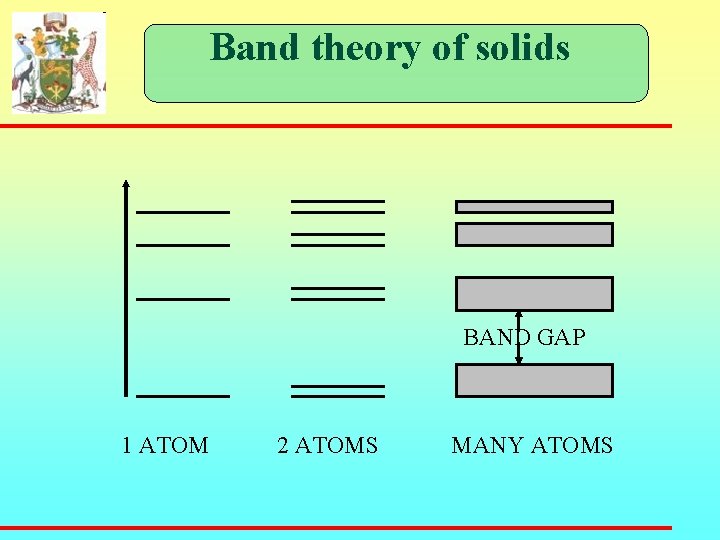
Band theory of solids BAND GAP 1 ATOM 2 ATOMS MANY ATOMS
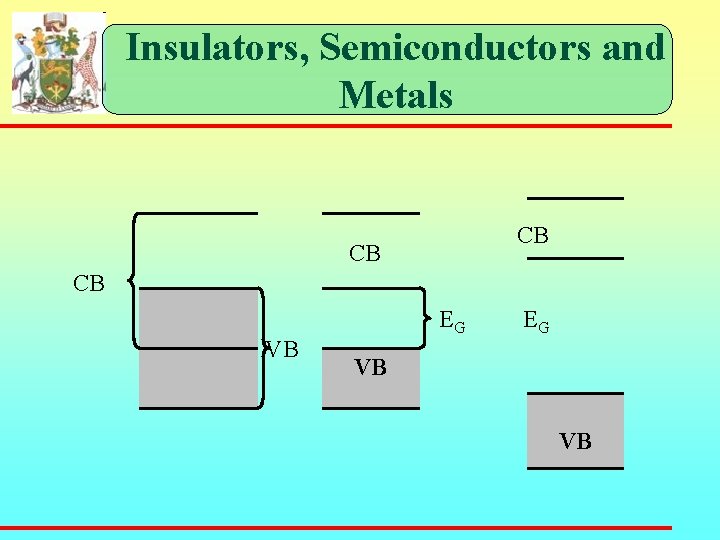
Insulators, Semiconductors and Metals CB CB CB VB EG EG VB VB
The Bond Theory • 1. Ionic bonds: electrostatic attraction between the ions. Atoms donate/accept electrons to become +vely or -vely charged ions. • 2. Covalent Bonds: Atoms joined by sharing valence electrons. • 3. Metallic bonds: exhibited by electrons with single valence electrons, e. g. Cu, Na, Ag, Au. substances find minimum energy configuration when they pool their valence electrons. The electrons are no longer tied to specific sites (atoms) but are unlocalised and are free to travel throughout the metal forming an electron cloud.
Intrinsic and Extrinsic semiconductors intrinsic (Gp 4 elements) Extrinsic (with P) Extrinsic with Al
III DIODE CIRCUITS AND CHARACTERISTICS
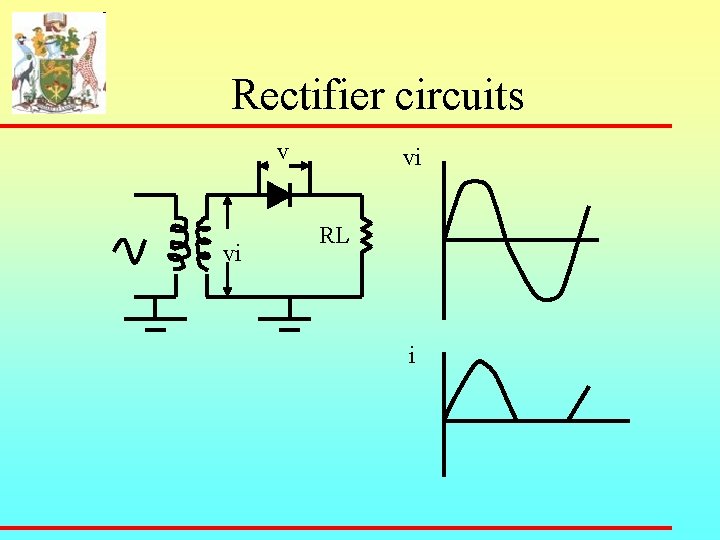
DIODE CIRCUITS AND CHARACTERISTICS • P-n junction: • 1. depletion layer established on both sides of the junction. • 2. barrier (junction) potential is developed across the junction. • 3. Formation of junction and diffusion capacitances.
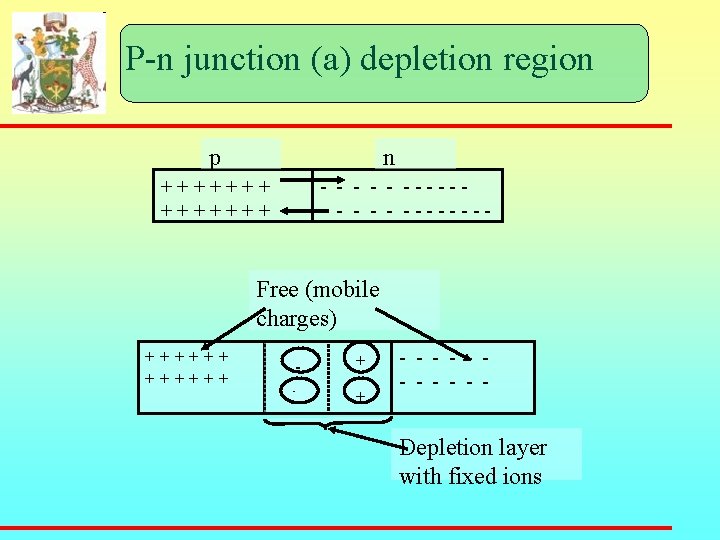
P-n junction (a) depletion region p n + + + + - - - - - - Free (mobile charges) + + + - + + - - - Depletion layer with fixed ions
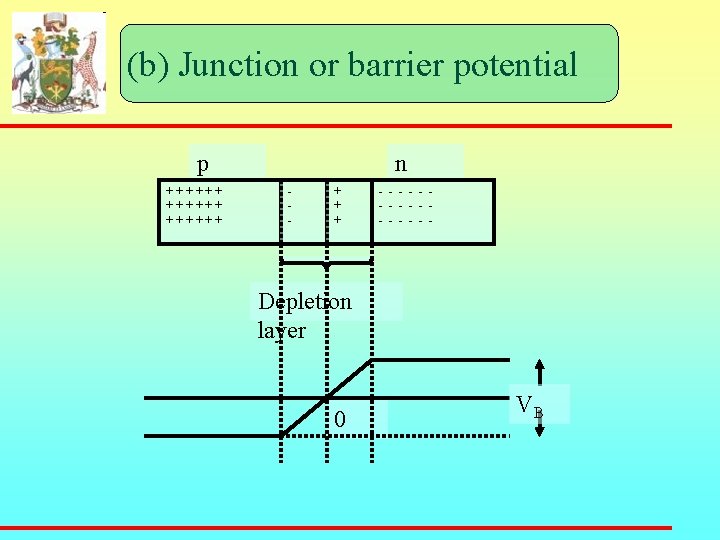
(b) Junction or barrier potential p + + + + + n - + + + - - - - Depletion layer 0 VB
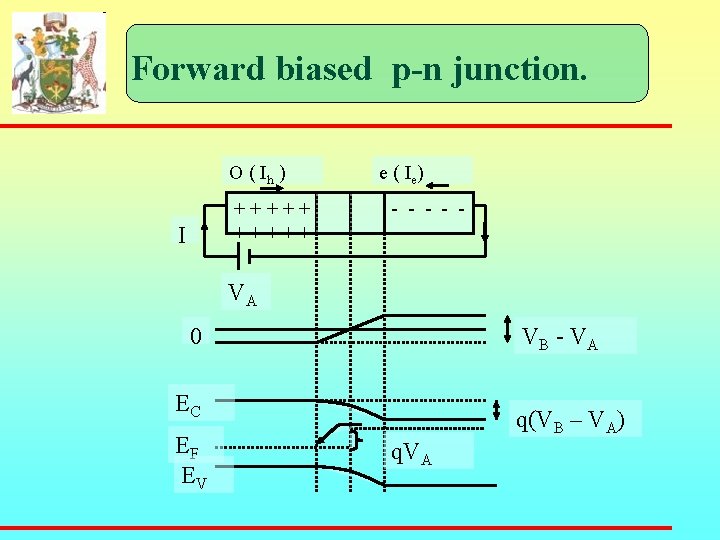
Forward biased p-n junction. O ( Ih ) + + + + + I e ( Ie) - - - - - VA 0 VB - VA EC EF EV q(VB – VA) q. VA
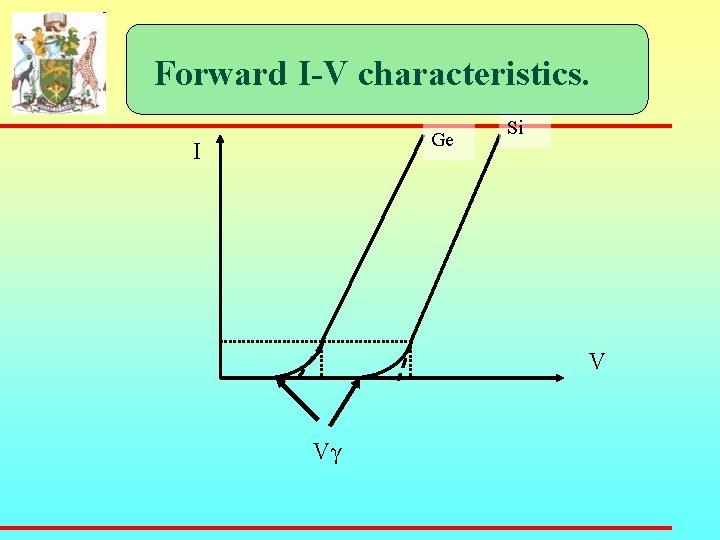
Forward I-V characteristics. Ge I Si V Vγ
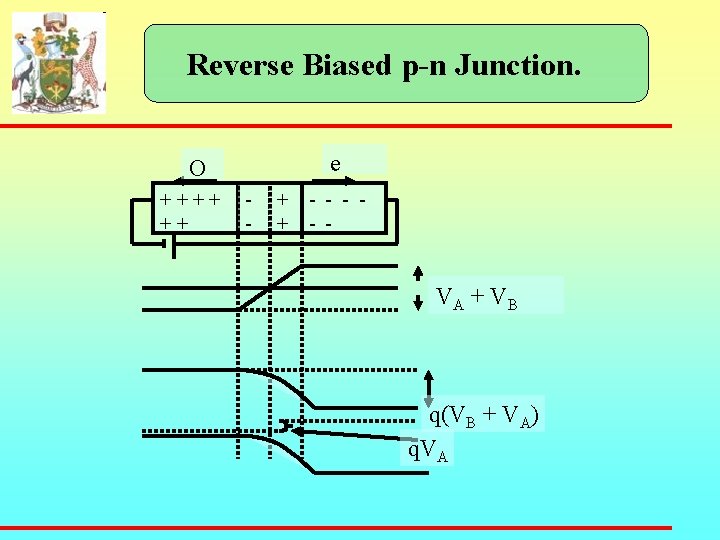
Reverse Biased p-n Junction. e O + + + - - - - VA + VB q(VB + VA) q. VA
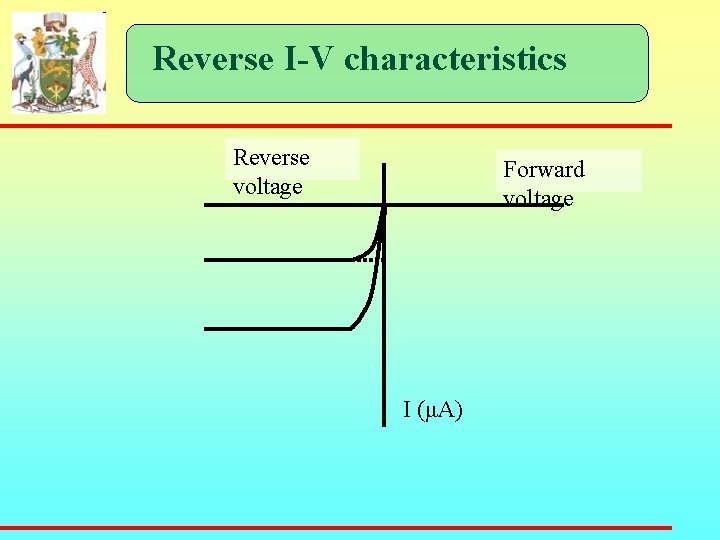
Reverse I-V characteristics Reverse voltage Forward voltage I (μA)
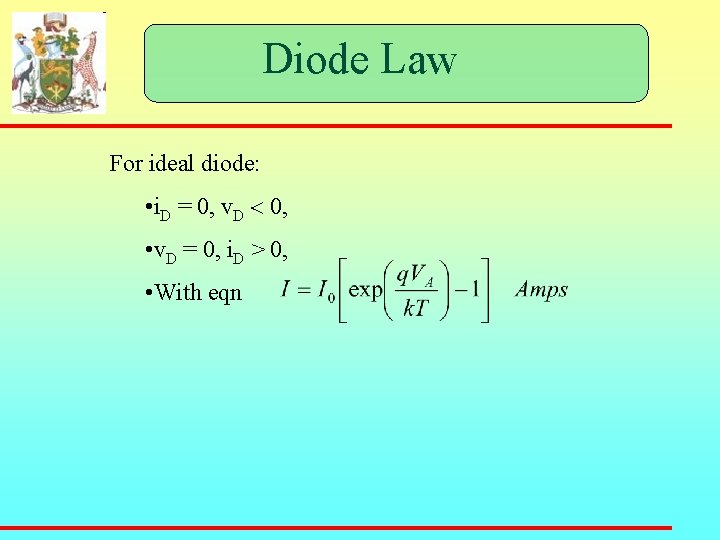
Diode Law For ideal diode: • i. D = 0, v. D 0, • v. D = 0, i. D > 0, • With eqn
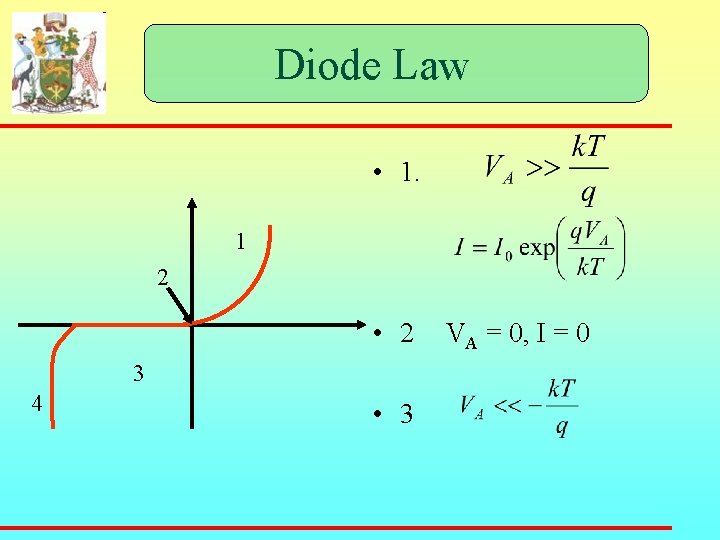
Diode Law • 1. 1 2 • 2 3 4 • 3 VA = 0, I = 0
Rectifier circuits v vi vi RL i
BIPOLAR JUNCTION TRANSISTORS
Bipolar j. transistor N P N E P P C B N N E P P C B
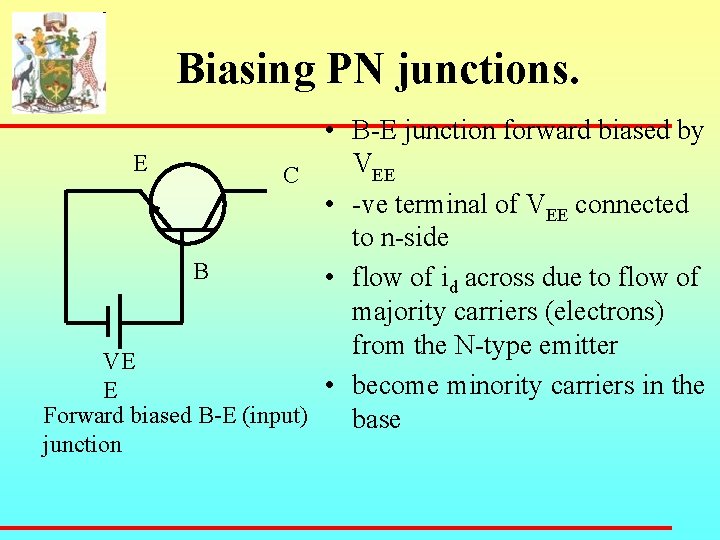
Biasing PN junctions. • B-E junction forward biased by E VEE C • -ve terminal of VEE connected to n-side B • flow of id across due to flow of majority carriers (electrons) from the N-type emitter VE • become minority carriers in the E Forward biased B-E (input) base junction
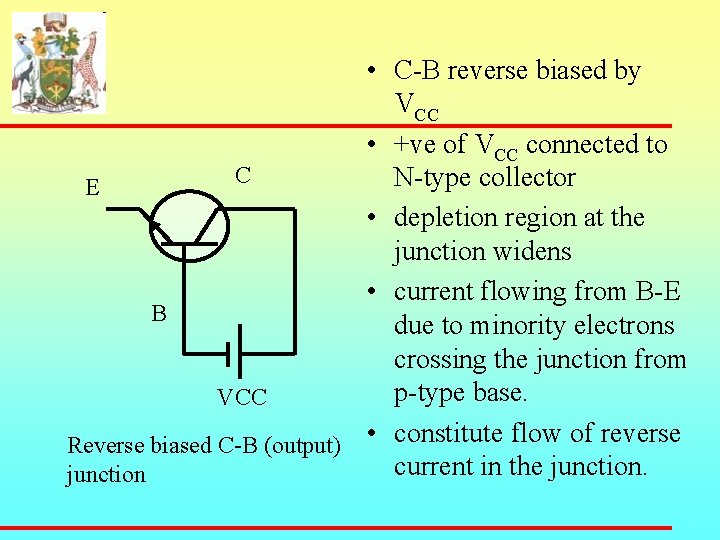
• C-B reverse biased by VCC • +ve of VCC connected to C N-type collector E • depletion region at the junction widens • current flowing from B-E B due to minority electrons crossing the junction from p-type base. VCC Reverse biased C-B (output) • constitute flow of reverse current in the junction
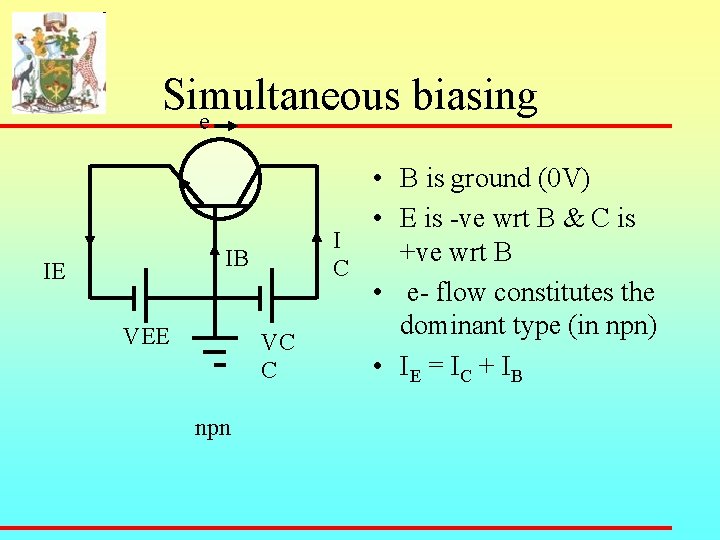
Simultaneous biasing e IB IE VEE VC C npn • B is ground (0 V) • E is -ve wrt B & C is I +ve wrt B C • e- flow constitutes the dominant type (in npn) • IE = IC + IB
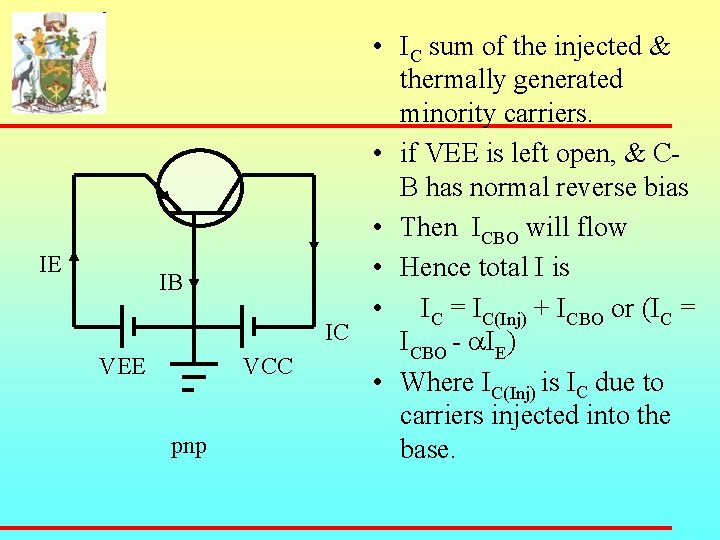
IE IB VEE VCC pnp • IC sum of the injected & thermally generated minority carriers. • if VEE is left open, & CB has normal reverse bias • Then ICBO will flow • Hence total I is • IC = IC(Inj) + ICBO or (IC = IC ICBO - IE) • Where IC(Inj) is IC due to carriers injected into the base.
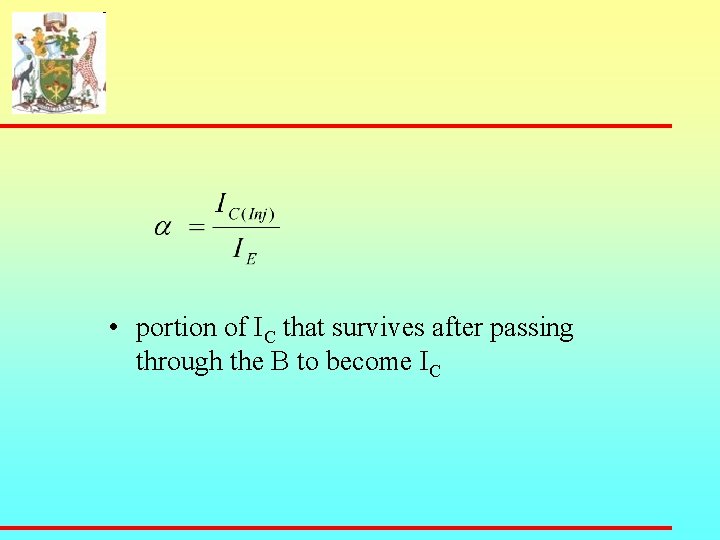
• portion of IC that survives after passing through the B to become IC
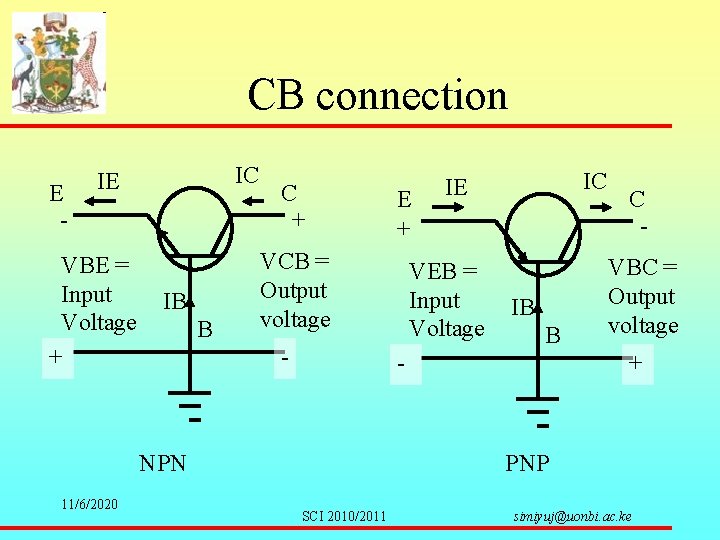
CB connection E - IC IE VBE = Input Voltage + IB B C + VCB = Output voltage - VEB = Input Voltage IB B - NPN 11/6/2020 E + IC IE C VBC = Output voltage + PNP SCI 2010/2011 simiyuj@uonbi. ac. ke
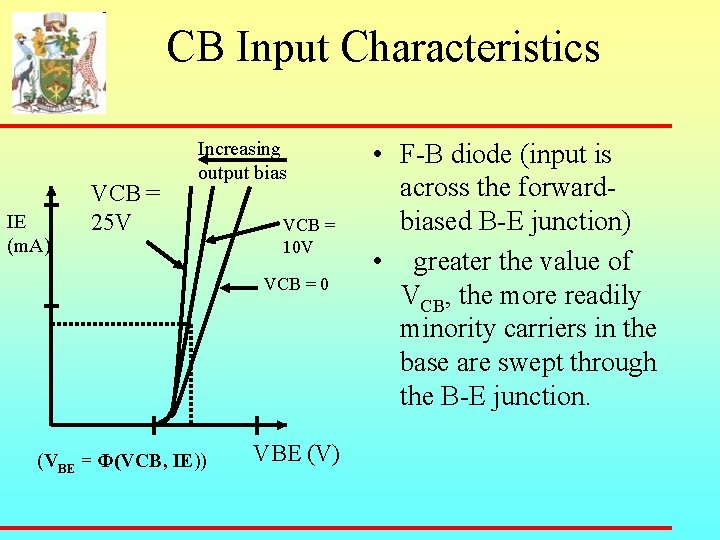
CB Input Characteristics IE (m. A) VCB = 25 V Increasing output bias VCB = 10 V VCB = 0 (VBE = Φ(VCB, IE)) VBE (V) • F-B diode (input is across the forwardbiased B-E junction) • greater the value of VCB, the more readily minority carriers in the base are swept through the B-E junction.
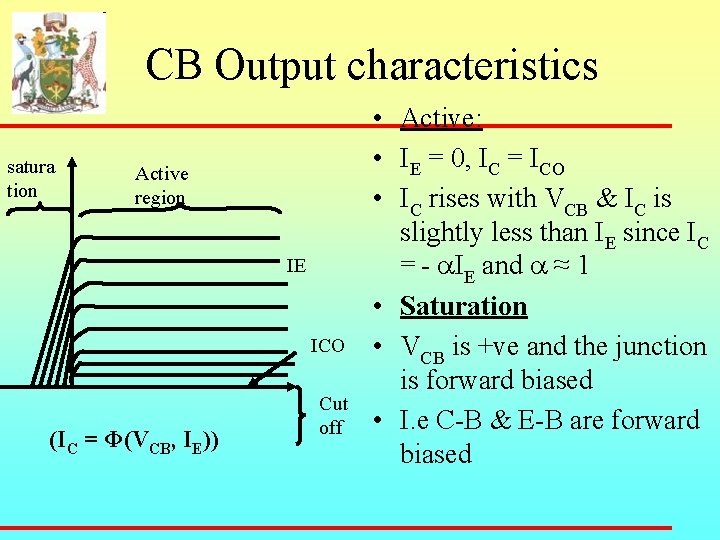
CB Output characteristics satura tion Active region IE ICO (IC = Φ(VCB, IE)) Cut off • Active: • IE = 0, IC = ICO • IC rises with VCB & IC is slightly less than IE since IC = - IE and ≈ 1 • Saturation • VCB is +ve and the junction is forward biased • I. e C-B & E-B are forward biased
- Slides: 27