
Semicolons used to connect two complete sentences to
- Slides: 7
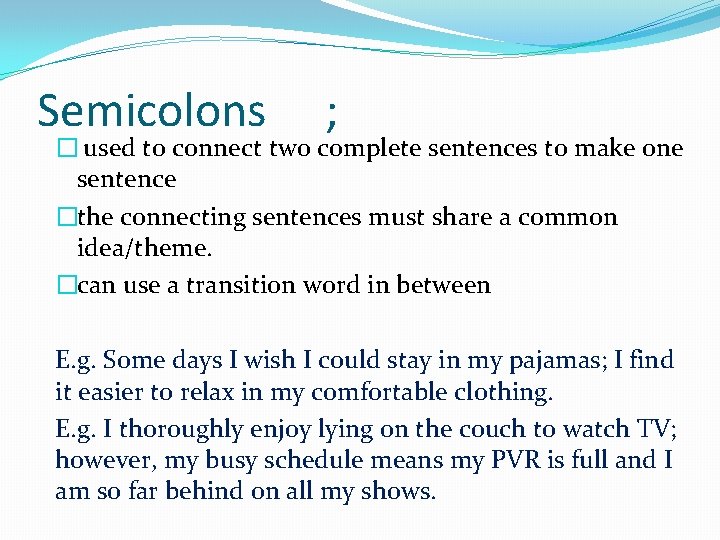
Semicolons ; � used to connect two complete sentences to make one sentence �the connecting sentences must share a common idea/theme. �can use a transition word in between E. g. Some days I wish I could stay in my pajamas; I find it easier to relax in my comfortable clothing. E. g. I thoroughly enjoy lying on the couch to watch TV; however, my busy schedule means my PVR is full and I am so far behind on all my shows.
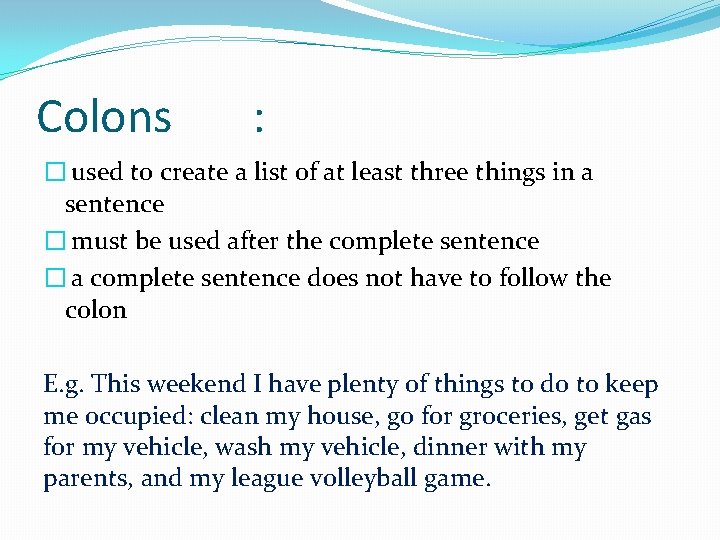
Colons : � used to create a list of at least three things in a sentence � must be used after the complete sentence � a complete sentence does not have to follow the colon E. g. This weekend I have plenty of things to do to keep me occupied: clean my house, go for groceries, get gas for my vehicle, wash my vehicle, dinner with my parents, and my league volleyball game.
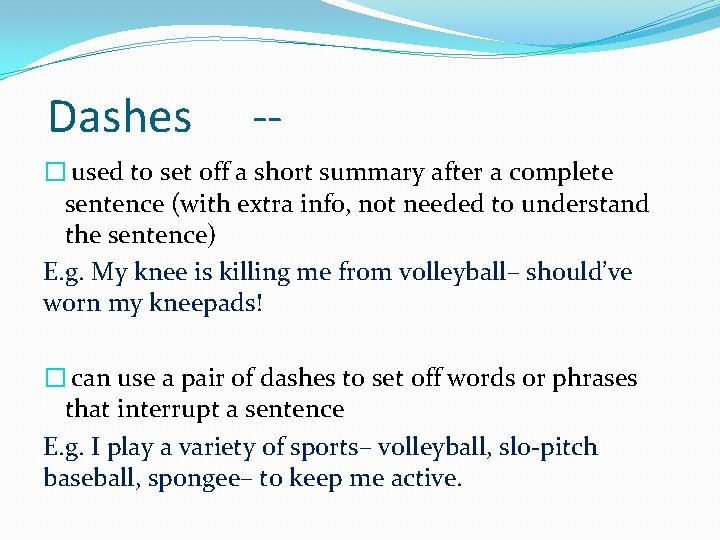
Dashes -- � used to set off a short summary after a complete sentence (with extra info, not needed to understand the sentence) E. g. My knee is killing me from volleyball– should’ve worn my kneepads! � can use a pair of dashes to set off words or phrases that interrupt a sentence E. g. I play a variety of sports– volleyball, slo-pitch baseball, spongee– to keep me active.
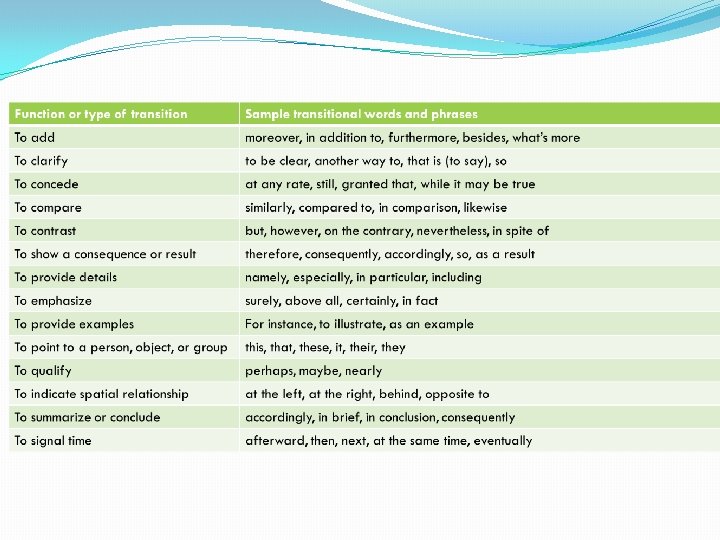
Transitions �Integrate in appropriate transitions for your paragraphs �At the beginning, middle, or end �Try to vary your use (i. e. do not just use the same one over and over again) �See next slide for examples
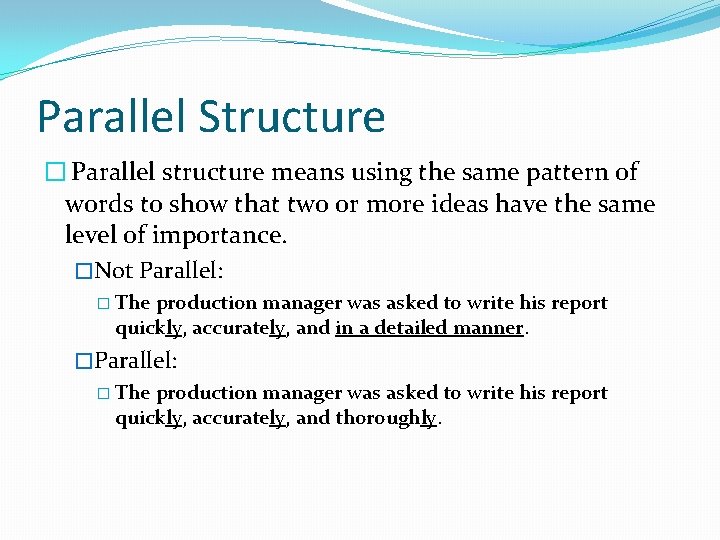
Parallel Structure � Parallel structure means using the same pattern of words to show that two or more ideas have the same level of importance. �Not Parallel: � The production manager was asked to write his report quickly, accurately, and in a detailed manner. �Parallel: � The production manager was asked to write his report quickly, accurately, and thoroughly.
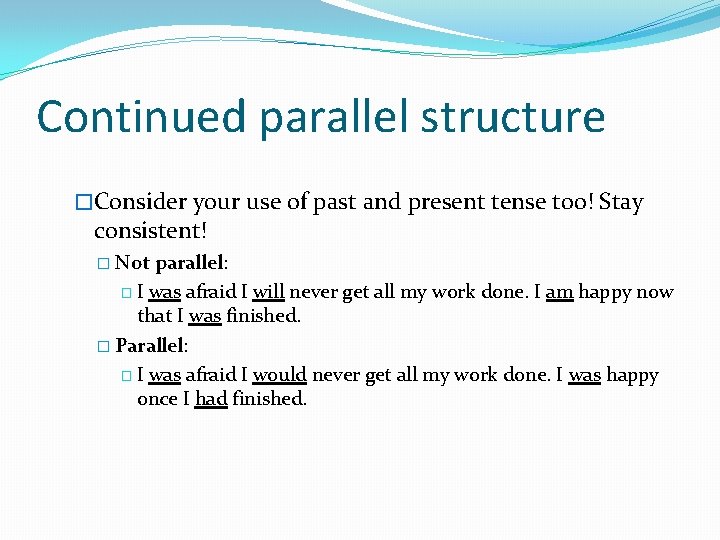
Continued parallel structure �Consider your use of past and present tense too! Stay consistent! � Not parallel: � I was afraid I will never get all my work done. I am happy now that I was finished. � Parallel: � I was afraid I would never get all my work done. I was happy once I had finished.