
Semi conductor devices Type of Semiconductors Two types


- Slides: 21
Semi conductor devices
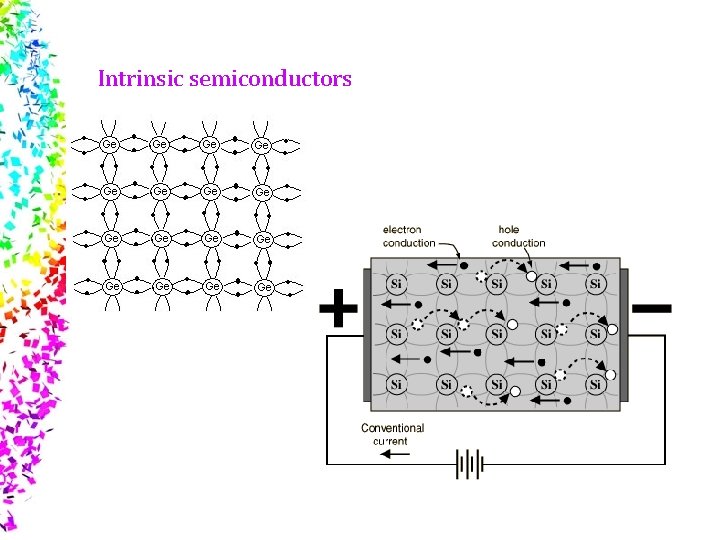
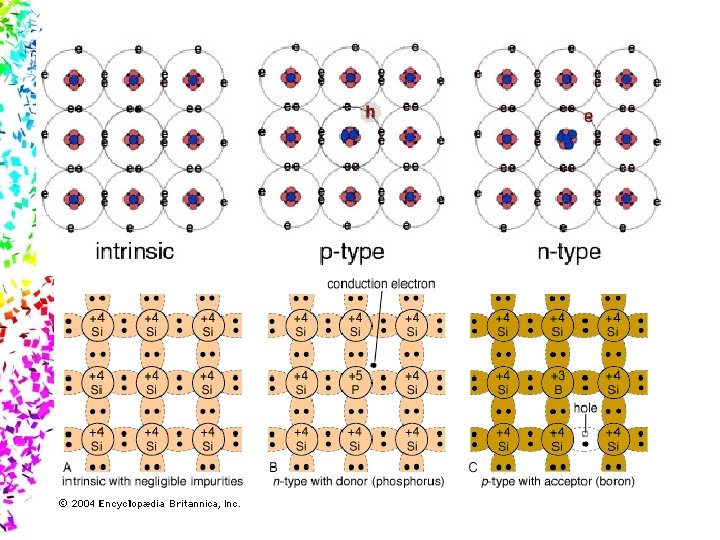
Type of Semiconductors Two types 1. Intrinsic semiconductors 2. Extrinsic semiconductors Intrinsic semiconductors A pure semiconductor which is free of every impurity e. g. - Germanium. Silicon Extrinsic semiconductors Semiconductor with a suitable impurity atoms added to it They are of two types N- type semiconductors P- type semiconductors
Intrinsic semiconductors
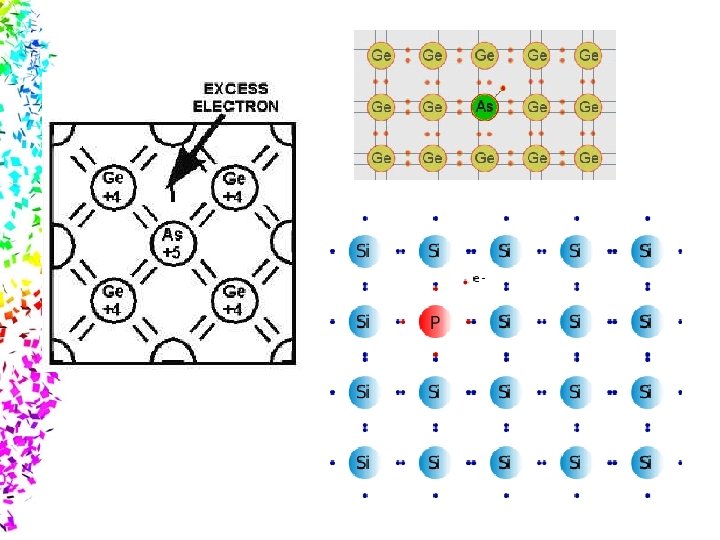
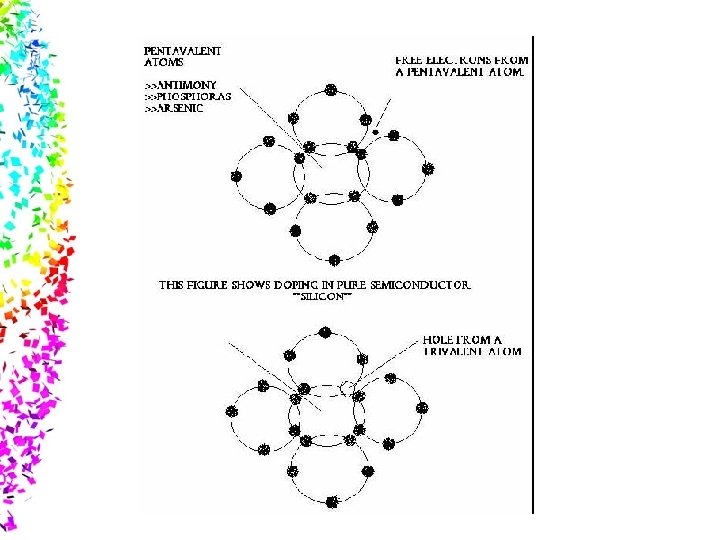
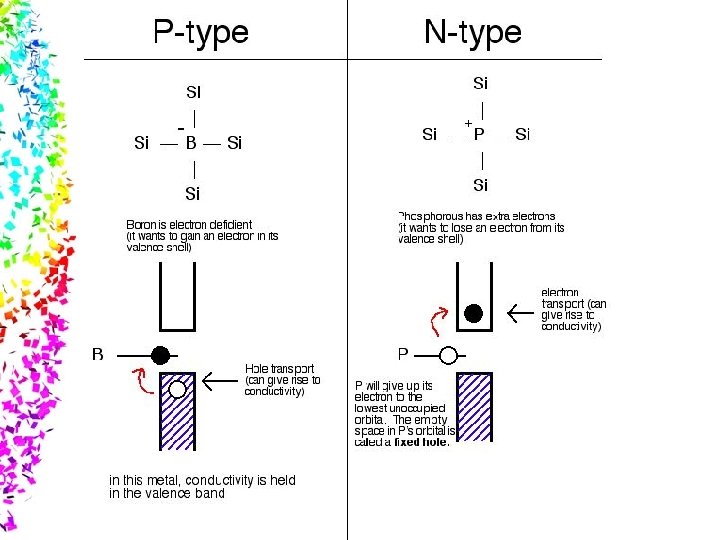
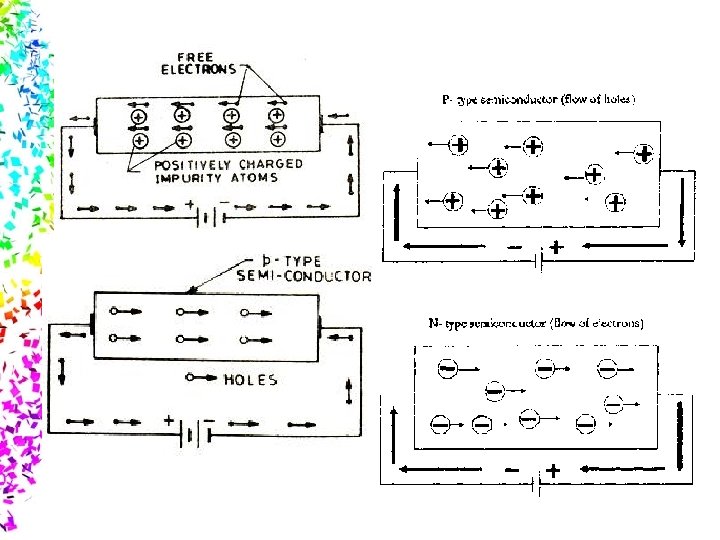
N- type of Semiconductors • When a pure semiconductor of silicon (with 4 valance electrons) is doped with a controlled amount of pentavalent atoms (with 5 valance electrons) e. g. arsenic, phosphorous • The impurity atom will replace the Si atom • They will form covalent bonds by sharing electrons • The fifth electron is very loosely bound with the parent impurity atom & is comparatively free to move • There is one free electron in the crystal structure • This type of atoms are donor atoms • Resulting semiconductor is donor type or n type semiconductor
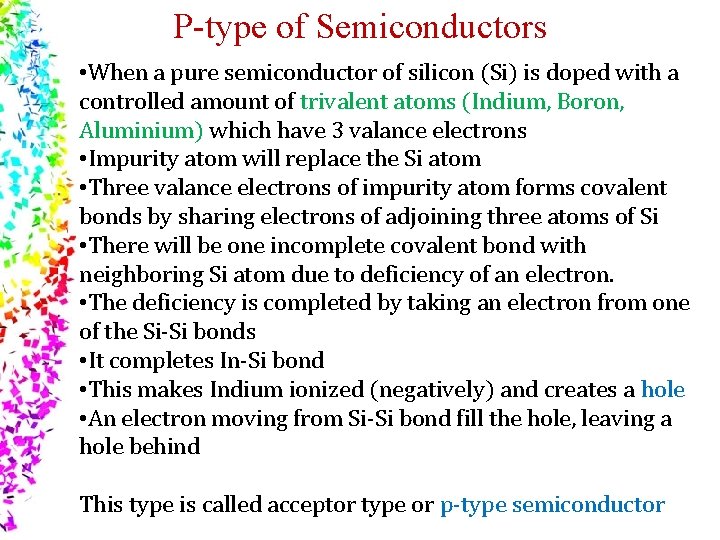
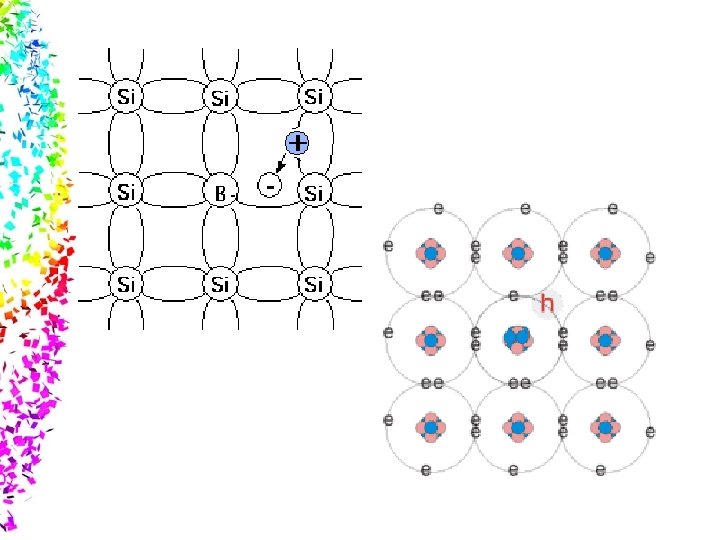
P-type of Semiconductors • When a pure semiconductor of silicon (Si) is doped with a controlled amount of trivalent atoms (Indium, Boron, Aluminium) which have 3 valance electrons • Impurity atom will replace the Si atom • Three valance electrons of impurity atom forms covalent bonds by sharing electrons of adjoining three atoms of Si • There will be one incomplete covalent bond with neighboring Si atom due to deficiency of an electron. • The deficiency is completed by taking an electron from one of the Si-Si bonds • It completes In-Si bond • This makes Indium ionized (negatively) and creates a hole • An electron moving from Si-Si bond fill the hole, leaving a hole behind This type is called acceptor type or p-type semiconductor
Semiconductors Elements whose conductivity is between conductors & insulators Elements such as Germanium, Silicon & Carbon are insulators of electricity But when impurities are added they become semiconductors Semiconductors are insulators at low temperature Resistance of semiconductors decreases when temperature increases Process of deliberate addition of impurities to a pure semiconductor to enhance conductivity is called doping
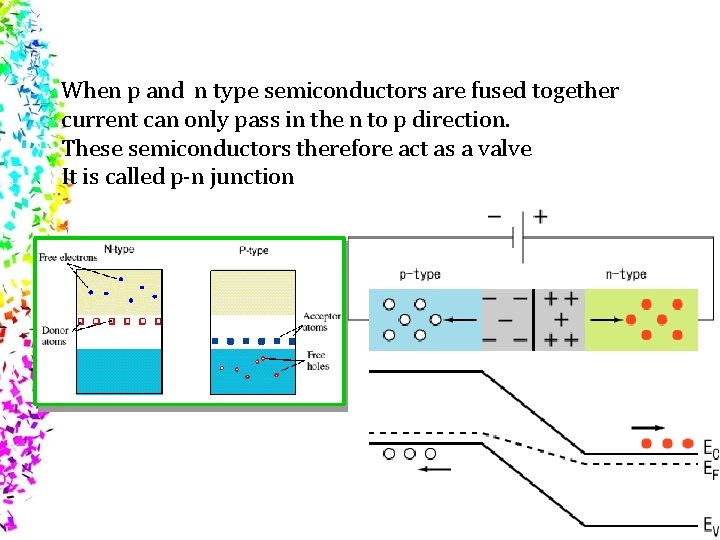
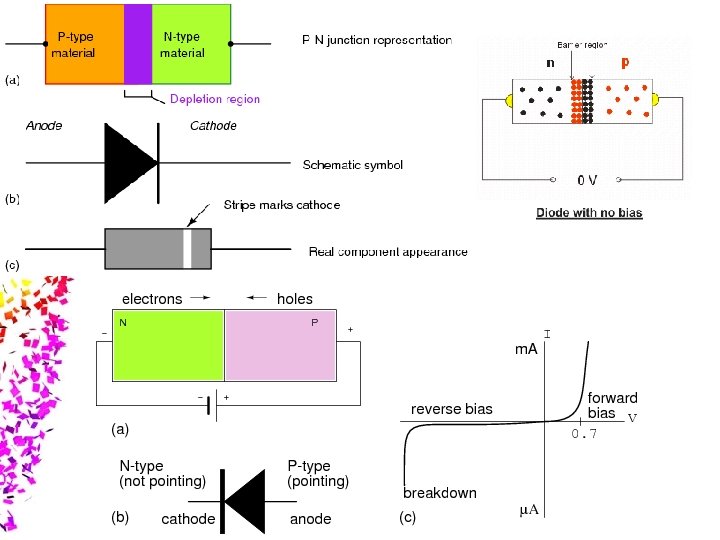
When p and n type semiconductors are fused together current can only pass in the n to p direction. These semiconductors therefore act as a valve It is called p-n junction
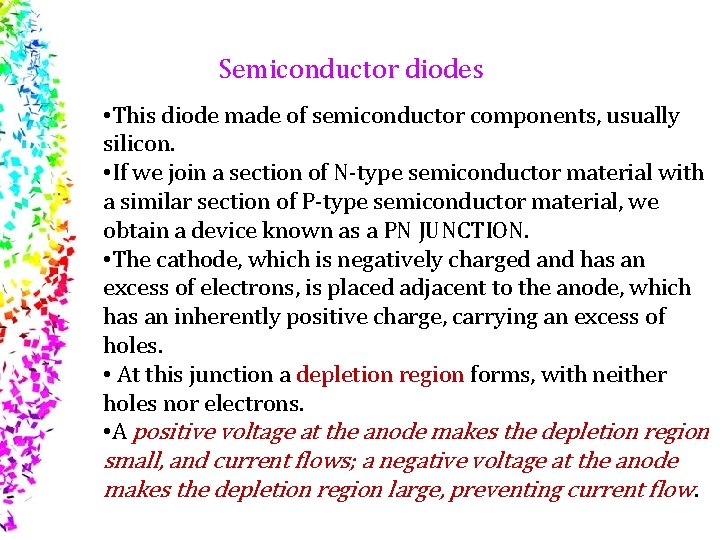
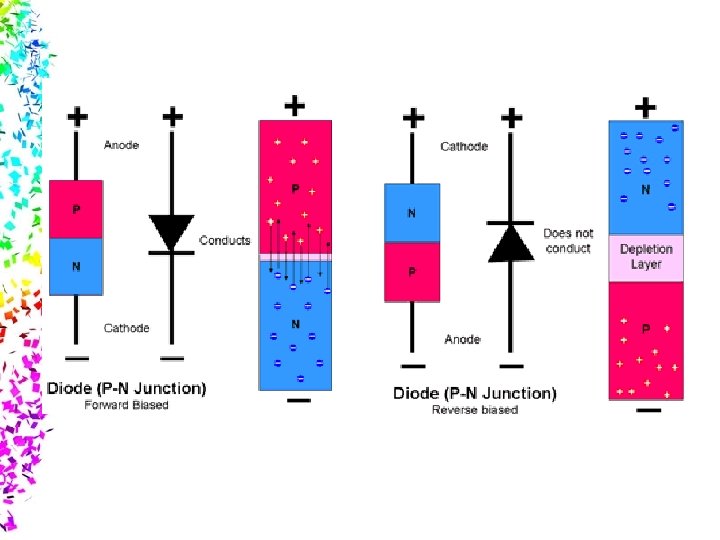
Semiconductor diodes • This diode made of semiconductor components, usually silicon. • If we join a section of N-type semiconductor material with a similar section of P-type semiconductor material, we obtain a device known as a PN JUNCTION. • The cathode, which is negatively charged and has an excess of electrons, is placed adjacent to the anode, which has an inherently positive charge, carrying an excess of holes. • At this junction a depletion region forms, with neither holes nor electrons. • A positive voltage at the anode makes the depletion region small, and current flows; a negative voltage at the anode makes the depletion region large, preventing current flow.
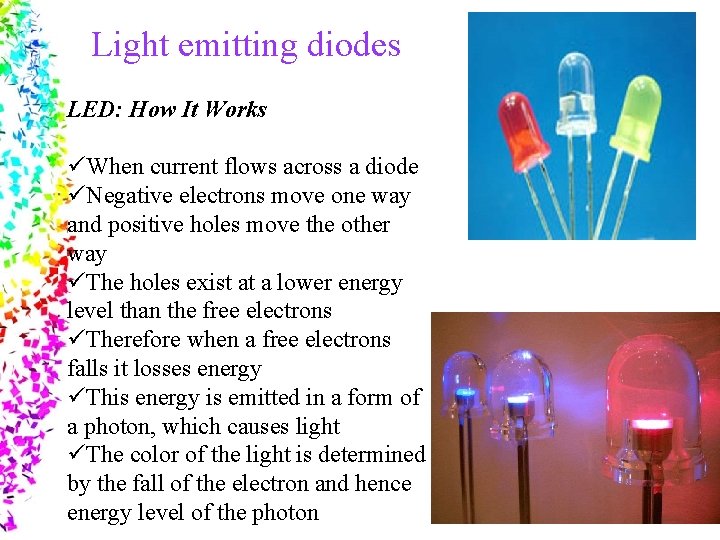
Light emitting diodes LED: How It Works üWhen current flows across a diode üNegative electrons move one way and positive holes move the other way üThe holes exist at a lower energy level than the free electrons üTherefore when a free electrons falls it losses energy üThis energy is emitted in a form of a photon, which causes light üThe color of the light is determined by the fall of the electron and hence energy level of the photon
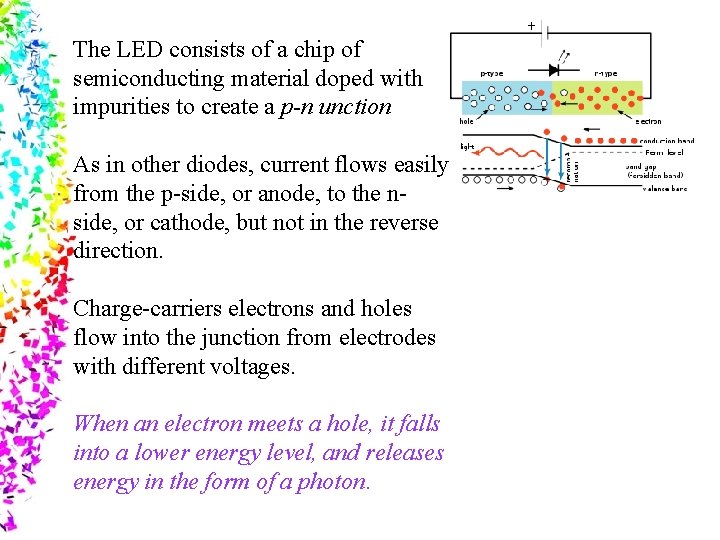
The LED consists of a chip of semiconducting material doped with impurities to create a p-n unction As in other diodes, current flows easily from the p-side, or anode, to the nside, or cathode, but not in the reverse direction. Charge-carriers electrons and holes flow into the junction from electrodes with different voltages. When an electron meets a hole, it falls into a lower energy level, and releases energy in the form of a photon.
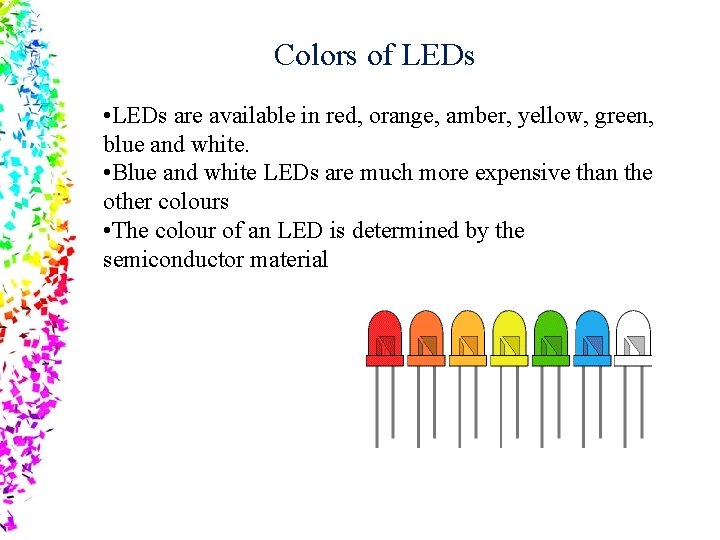
Colors of LEDs • LEDs are available in red, orange, amber, yellow, green, blue and white. • Blue and white LEDs are much more expensive than the other colours • The colour of an LED is determined by the semiconductor material
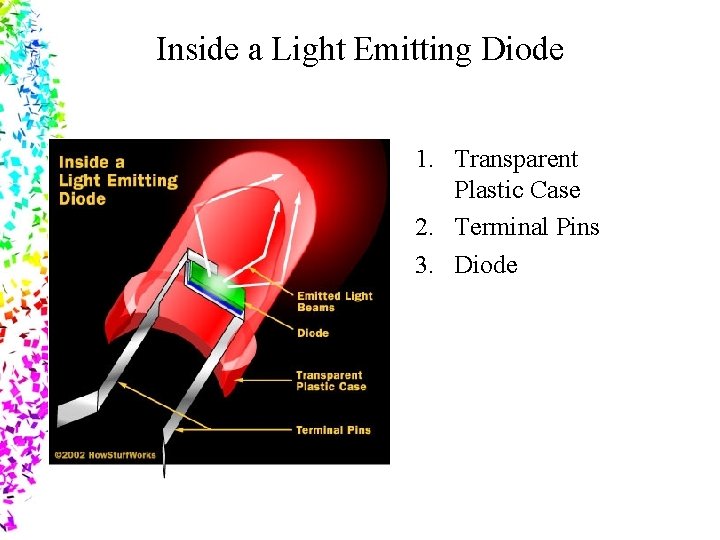
Inside a Light Emitting Diode 1. Transparent Plastic Case 2. Terminal Pins 3. Diode
Thank You. .