
Semester 2 Final Review College Chemistry SolutionsKinetics 1
![Solutions/Kinetics #3 Trial [A] [B] [C] Rate (M/s) 1 0. 05 0. 1 1.](https://slidetodoc.com/presentation_image_h2/74ccd2e8e7549e8c152bf6f386dc5ce6/image-4.jpg "Solutions/Kinetics #3 Trial [A] [B] [C] Rate (M/s) 1 0. 05 0. 1 1.")
- Slides: 22
Semester 2 Final Review College Chemistry
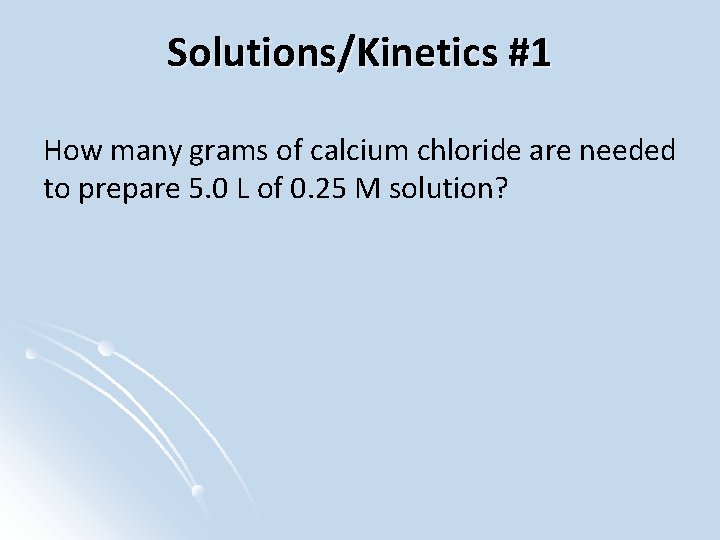
Solutions/Kinetics #1 How many grams of calcium chloride are needed to prepare 5. 0 L of 0. 25 M solution?
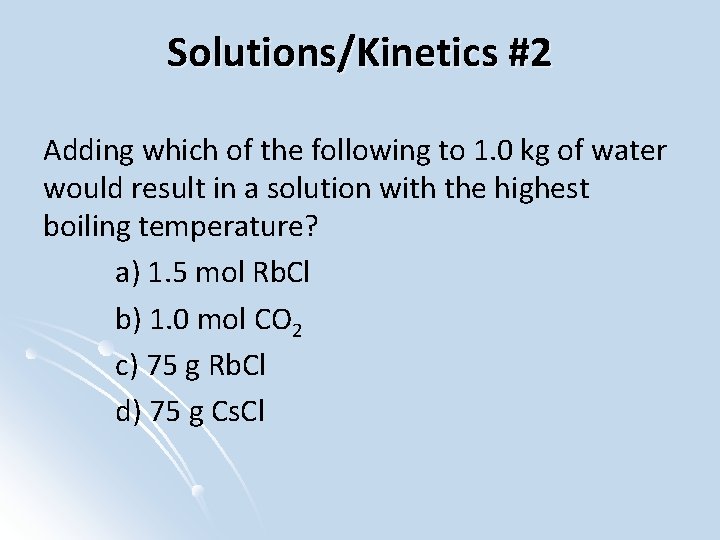
Solutions/Kinetics #2 Adding which of the following to 1. 0 kg of water would result in a solution with the highest boiling temperature? a) 1. 5 mol Rb. Cl b) 1. 0 mol CO 2 c) 75 g Rb. Cl d) 75 g Cs. Cl
Solutions/Kinetics #3 Trial [A] [B] [C] Rate (M/s) 1 0. 05 0. 1 1. 85 x 10 -5 2 0. 15 0. 1 5. 55 x 10 -5 3 4 0. 2 0. 15 0. 2 0. 1 1. 11 x 10 -4 5. 55 x 10 -5 Use the data above to determine the rate law for this reaction. Also calculate the value of the rate constant, k, and be sure to include the proper units.
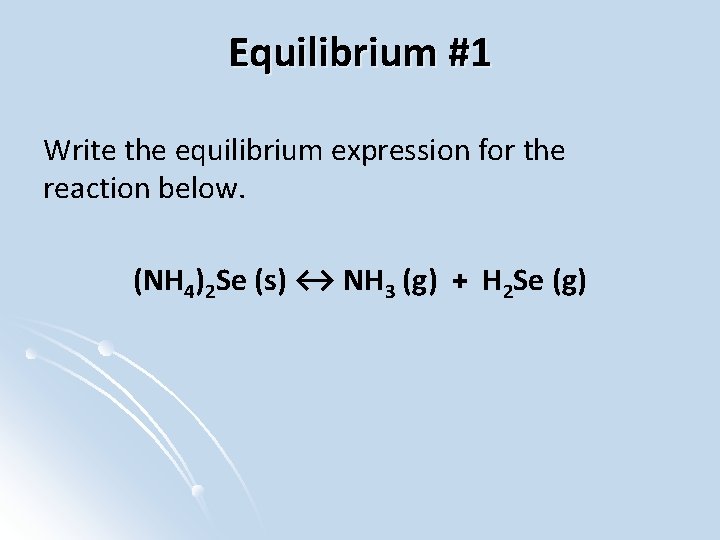
Equilibrium #1 Write the equilibrium expression for the reaction below. (NH 4)2 Se (s) ↔ NH 3 (g) + H 2 Se (g)
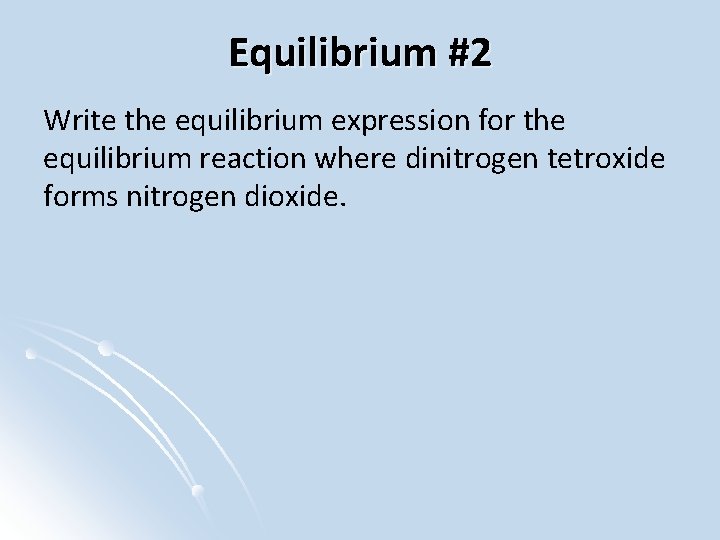
Equilibrium #2 Write the equilibrium expression for the equilibrium reaction where dinitrogen tetroxide forms nitrogen dioxide.
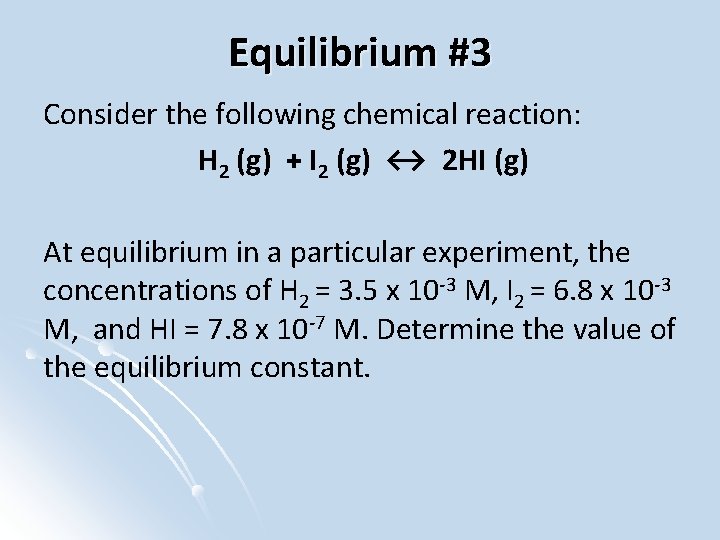
Equilibrium #3 Consider the following chemical reaction: H 2 (g) + I 2 (g) ↔ 2 HI (g) At equilibrium in a particular experiment, the concentrations of H 2 = 3. 5 x 10 -3 M, I 2 = 6. 8 x 10 -3 M, and HI = 7. 8 x 10 -7 M. Determine the value of the equilibrium constant.
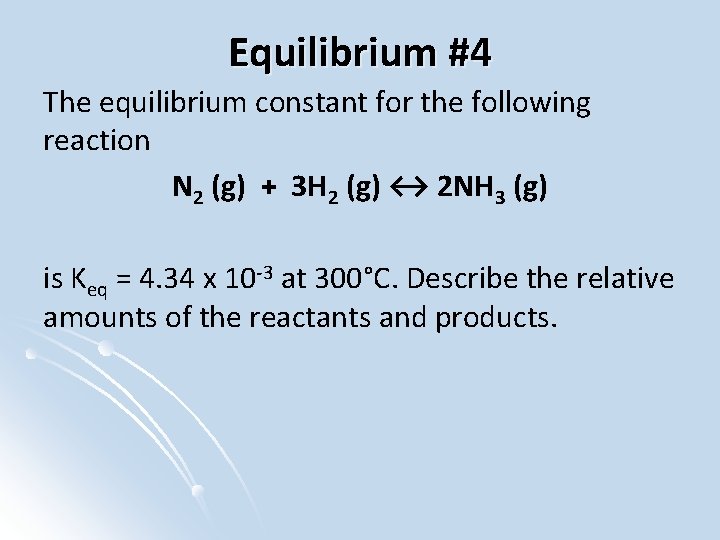
Equilibrium #4 The equilibrium constant for the following reaction N 2 (g) + 3 H 2 (g) ↔ 2 NH 3 (g) is Keq = 4. 34 x 10 -3 at 300°C. Describe the relative amounts of the reactants and products.
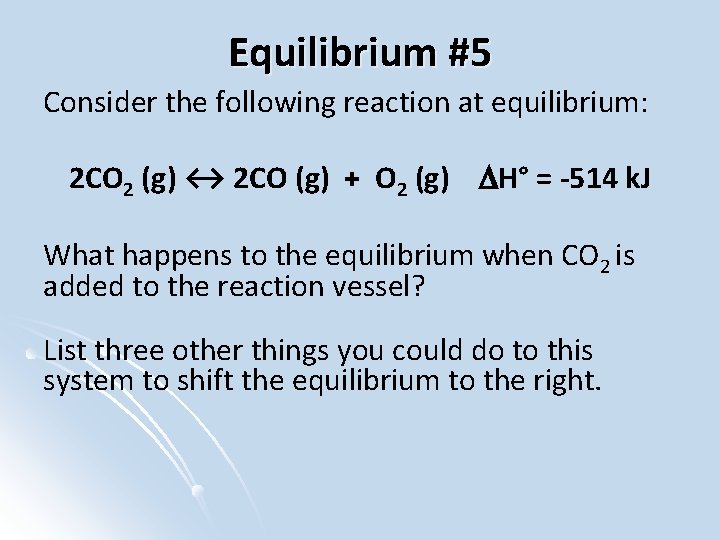
Equilibrium #5 Consider the following reaction at equilibrium: 2 CO 2 (g) ↔ 2 CO (g) + O 2 (g) DH° = -514 k. J What happens to the equilibrium when CO 2 is added to the reaction vessel? List three other things you could do to this system to shift the equilibrium to the right.
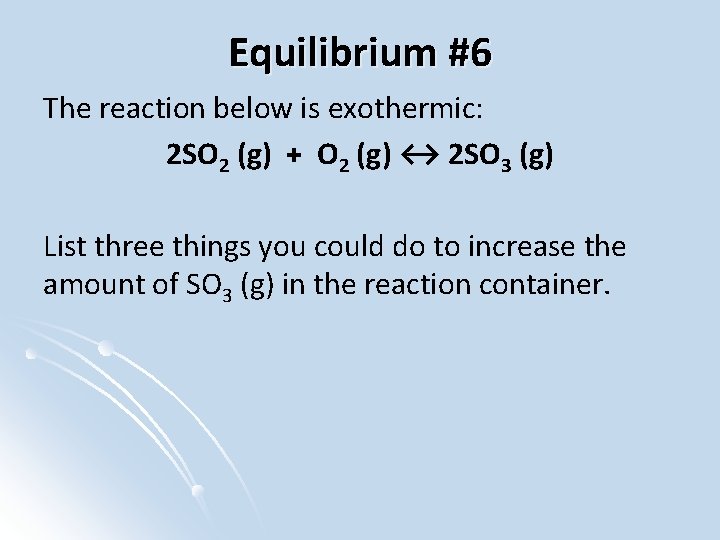
Equilibrium #6 The reaction below is exothermic: 2 SO 2 (g) + O 2 (g) ↔ 2 SO 3 (g) List three things you could do to increase the amount of SO 3 (g) in the reaction container.
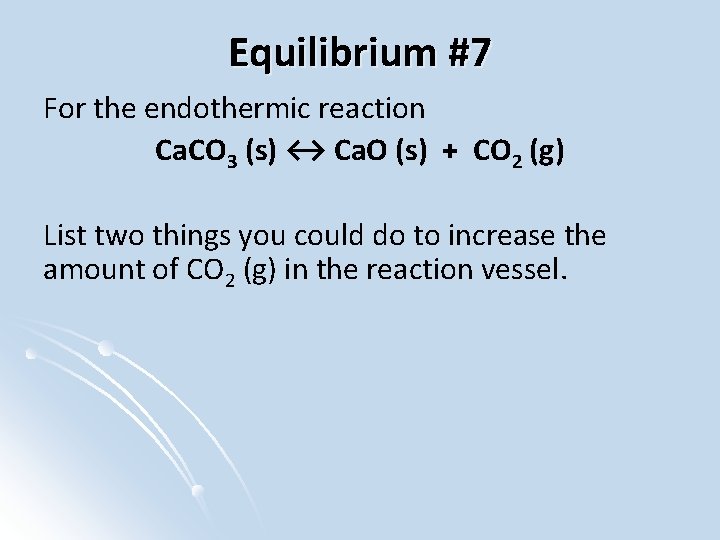
Equilibrium #7 For the endothermic reaction Ca. CO 3 (s) ↔ Ca. O (s) + CO 2 (g) List two things you could do to increase the amount of CO 2 (g) in the reaction vessel.
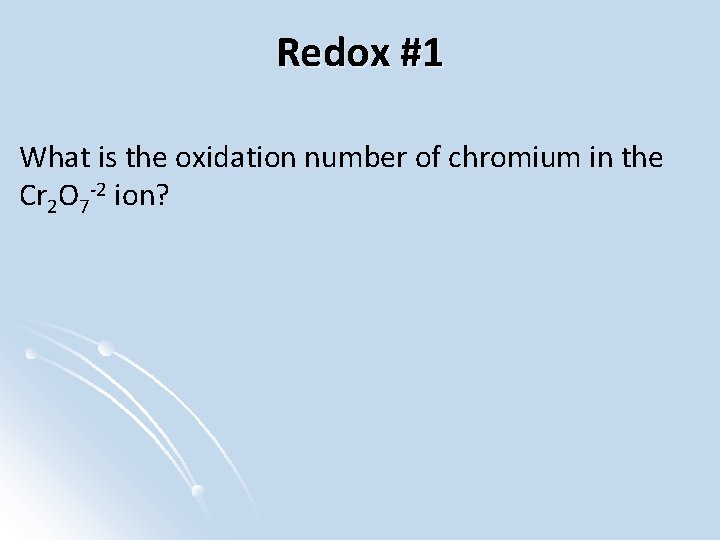
Redox #1 What is the oxidation number of chromium in the Cr 2 O 7 -2 ion?
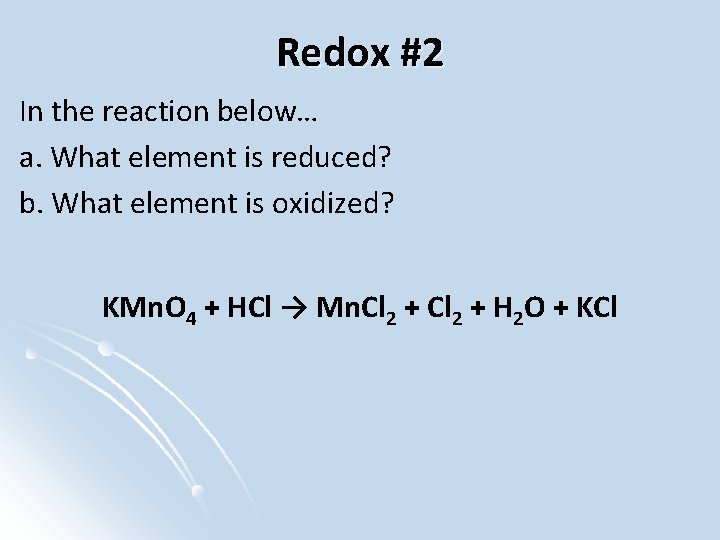
Redox #2 In the reaction below… a. What element is reduced? b. What element is oxidized? KMn. O 4 + HCl → Mn. Cl 2 + H 2 O + KCl
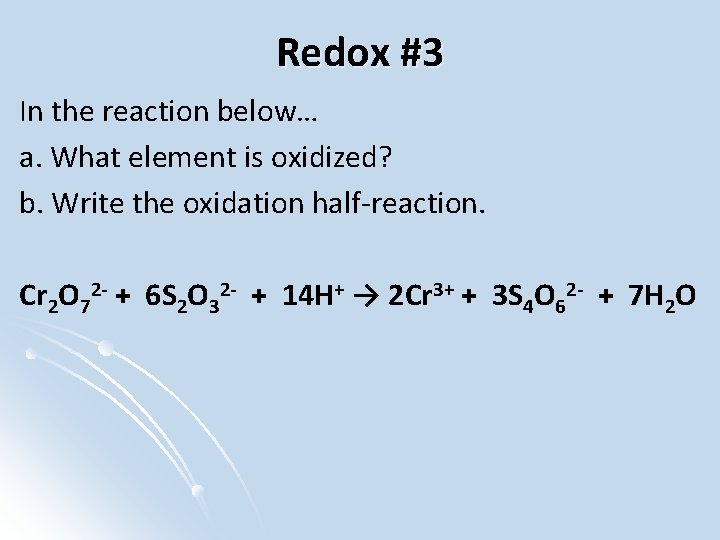
Redox #3 In the reaction below… a. What element is oxidized? b. Write the oxidation half-reaction. Cr 2 O 72 - + 6 S 2 O 32 - + 14 H+ → 2 Cr 3+ + 3 S 4 O 62 - + 7 H 2 O
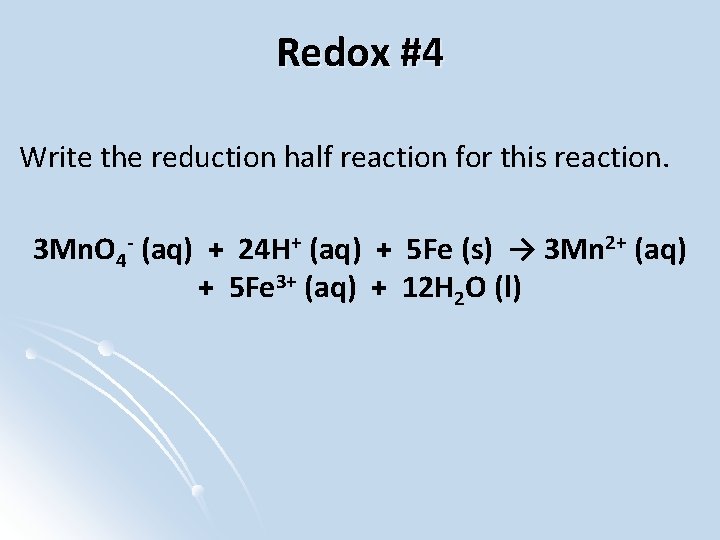
Redox #4 Write the reduction half reaction for this reaction. 3 Mn. O 4 - (aq) + 24 H+ (aq) + 5 Fe (s) → 3 Mn 2+ (aq) + 5 Fe 3+ (aq) + 12 H 2 O (l)
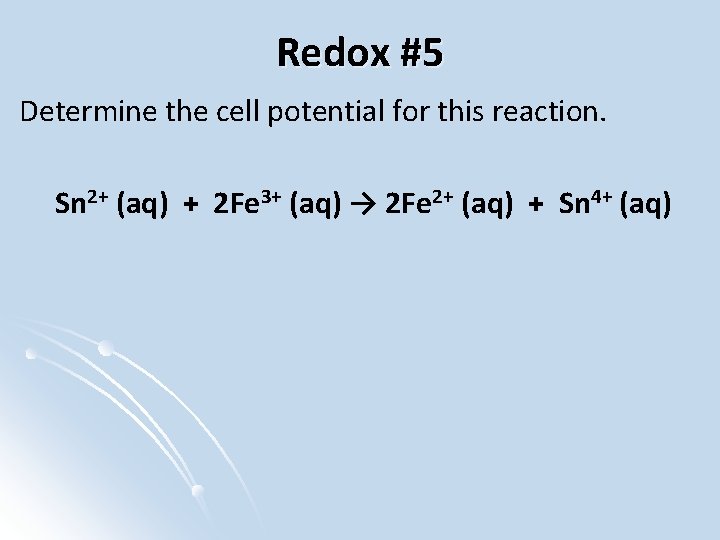
Redox #5 Determine the cell potential for this reaction. Sn 2+ (aq) + 2 Fe 3+ (aq) → 2 Fe 2+ (aq) + Sn 4+ (aq)
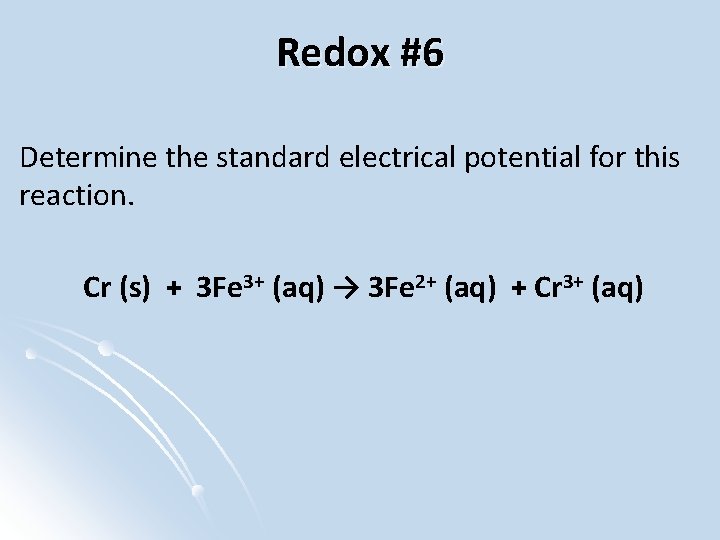
Redox #6 Determine the standard electrical potential for this reaction. Cr (s) + 3 Fe 3+ (aq) → 3 Fe 2+ (aq) + Cr 3+ (aq)
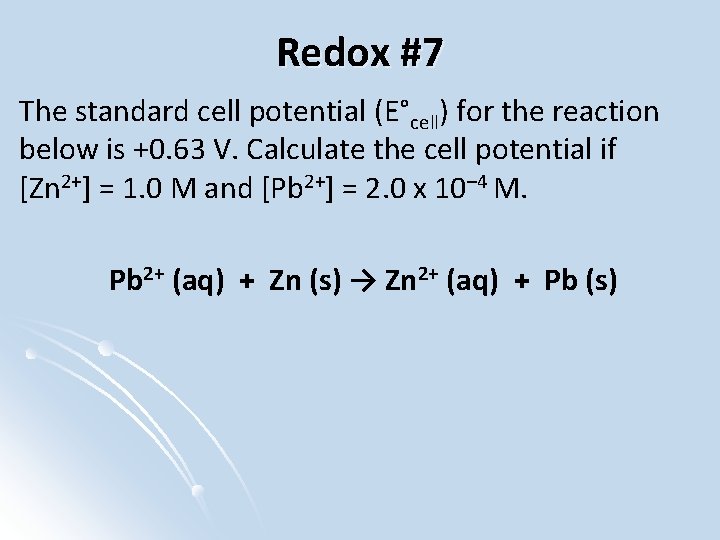
Redox #7 The standard cell potential (E°cell) for the reaction below is +0. 63 V. Calculate the cell potential if [Zn 2+] = 1. 0 M and [Pb 2+] = 2. 0 x 10– 4 M. Pb 2+ (aq) + Zn (s) → Zn 2+ (aq) + Pb (s)
Acids and Bases #1 The
Acids and Bases #2 The
Acids and Bases #3 The
Acids and Bases #4 The