
Semantic Web services selection based on context information
Semantic Web services selection based on context information Hong Qing Yu Department of Computer Science 22 th May 2007
Guideline • • Semantic Web services Context model Motivating example A modified LSP method for services selection • Worked example • Conclusion
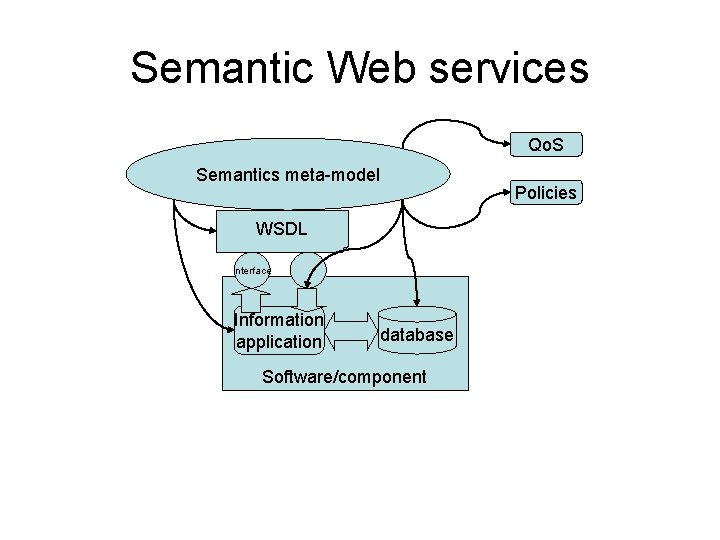
Semantic Web services Qo. S Semantics meta-model Policies WSDL interface Information application database Software/component
![Context Model [2]](http://slidetodoc.com/presentation_image_h2/5f6a3e26b7af7d6f394a72f5466539f2/image-4.jpg "Context Model [2]")
Context Model [2]
![Example for dynamic service selection [2]](http://slidetodoc.com/presentation_image_h2/5f6a3e26b7af7d6f394a72f5466539f2/image-5.jpg "Example for dynamic service selection [2]")
Example for dynamic service selection [2]
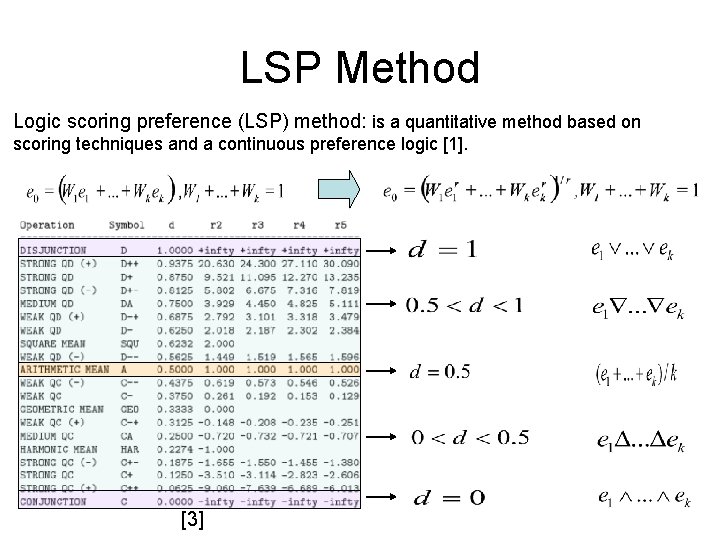
LSP Method Logic scoring preference (LSP) method: is a quantitative method based on scoring techniques and a continuous preference logic [1]. [3]

Modified LSP Method 1) The type-based LSP evaluation methods (1) Exact match (2) Set overlap (3) Level match (4) Specific value
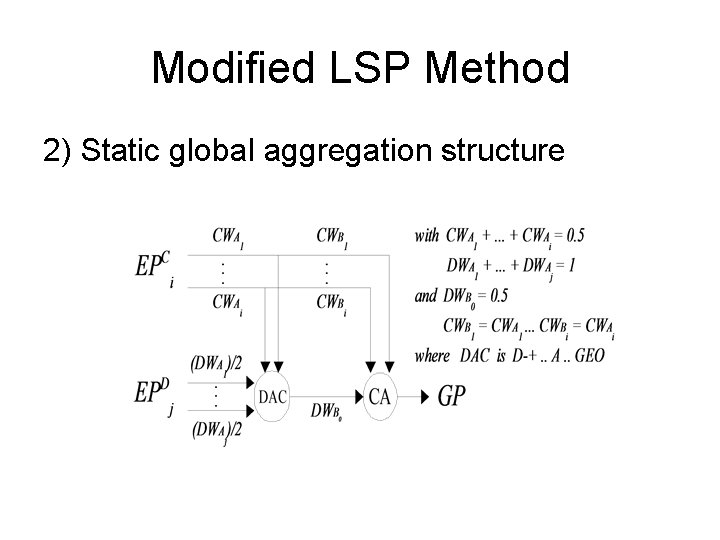
Modified LSP Method 2) Static global aggregation structure
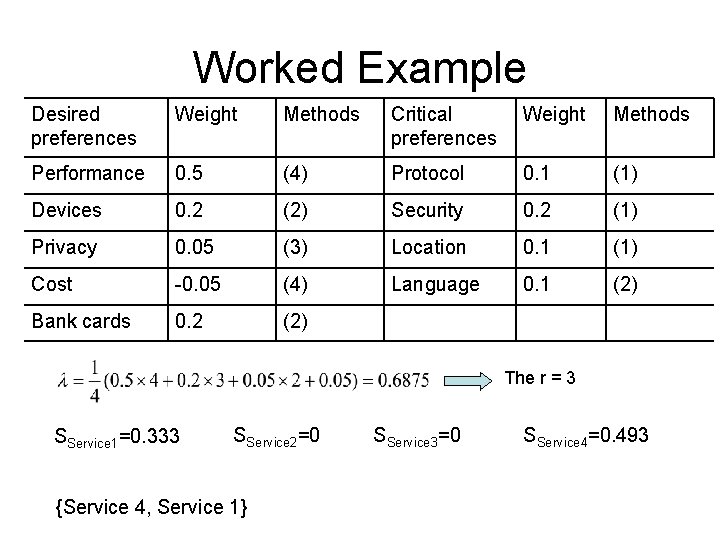
Worked Example Desired preferences Weight Methods Critical preferences Weight Methods Performance 0. 5 (4) Protocol 0. 1 (1) Devices 0. 2 (2) Security 0. 2 (1) Privacy 0. 05 (3) Location 0. 1 (1) Cost -0. 05 (4) Language 0. 1 (2) Bank cards 0. 2 (2) The r = 3 SService 1=0. 333 SService 2=0 {Service 4, Service 1} SService 3=0 SService 4=0. 493
Conclusion • • Semantic Web services Context model Motivating example A modified LSP method for services selection • Worked example
Future Work 1. Covering the definition of the meanings of weights used in this paper from the perspective of user preferences, context mining and reasoning techniques since their outcomes will be the inputs for web service evaluation and selection. 2. Refining the rules for invoking the evaluation methods 3. Context aggregation problems 4. Additionally, implementation issues of the modified LSP method, as well as related mechanisms will be addressed.
- Slides: 11