
Semantic versioning structure for IETF specs and evolving
- Slides: 18
Semantic versioning, structure for IETF specs, and evolving IETF outputs Richard Barnes, Joe Clarke, Benoît Claise OPSAWG IETF 99
Background: The IESG retreat Data Modeling-driven Management (YANG, NETCONF, RESTCONF, etc. . . ) in the Industry and the IETF. Observations and next steps for the IETF! Benoît, IESG Retreat May 19 th 2017
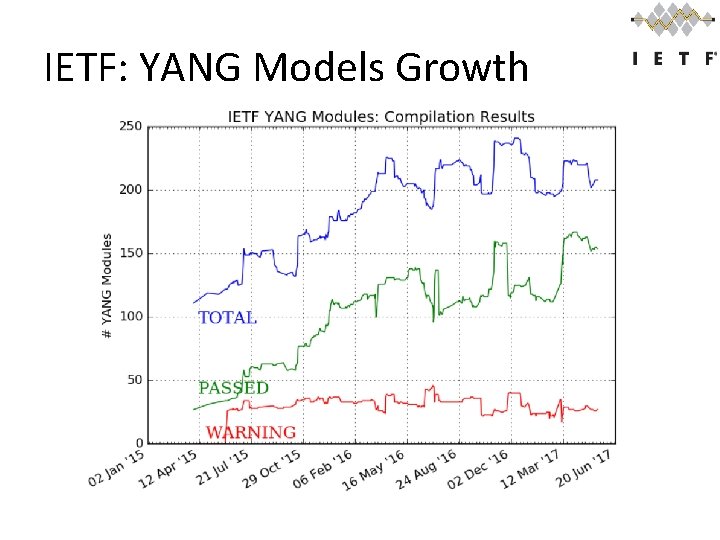
IETF: YANG Models Growth
YANG Tsunami in the Industry
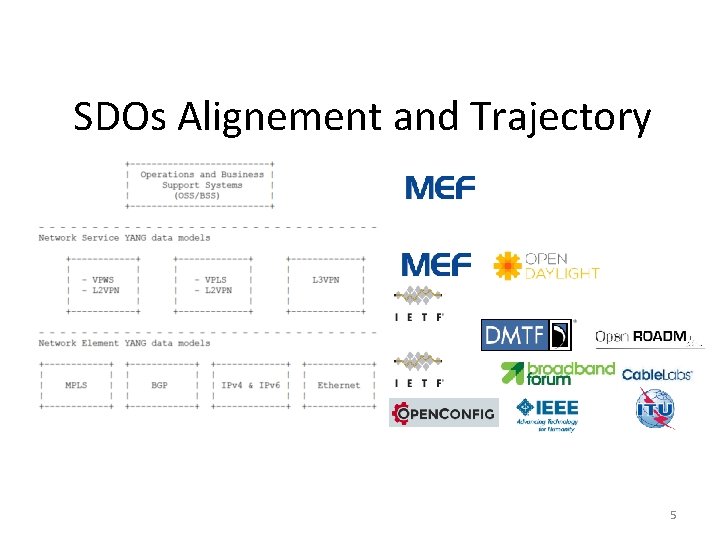
SDOs Alignement and Trajectory draft-ietf-netmod-yang-model-classification-00. txt 5
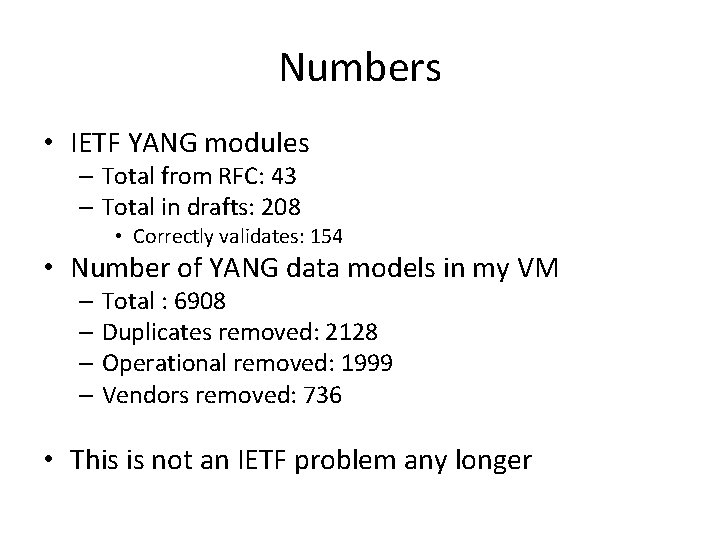
Numbers • IETF YANG modules – Total from RFC: 43 – Total in drafts: 208 • Correctly validates: 154 • Number of YANG data models in my VM – Total : 6908 – Duplicates removed: 2128 – Operational removed: 1999 – Vendors removed: 736 • This is not an IETF problem any longer
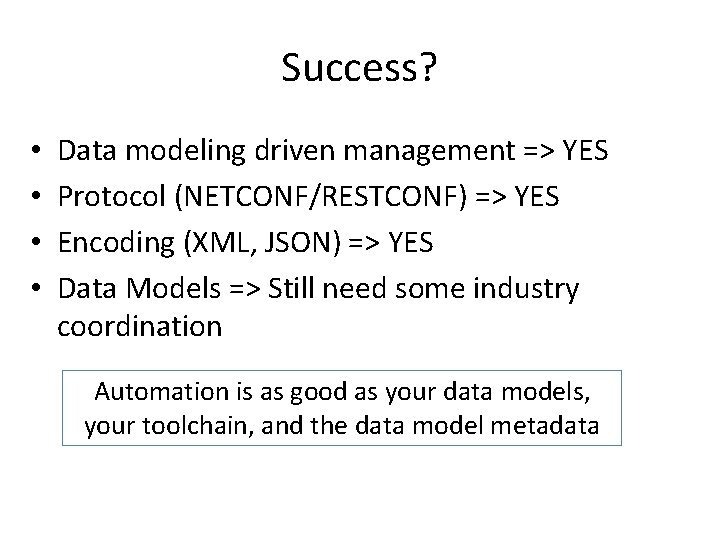
Success? • • Data modeling driven management => YES Protocol (NETCONF/RESTCONF) => YES Encoding (XML, JSON) => YES Data Models => Still need some industry coordination Automation is as good as your data models, your toolchain, and the data model metadata
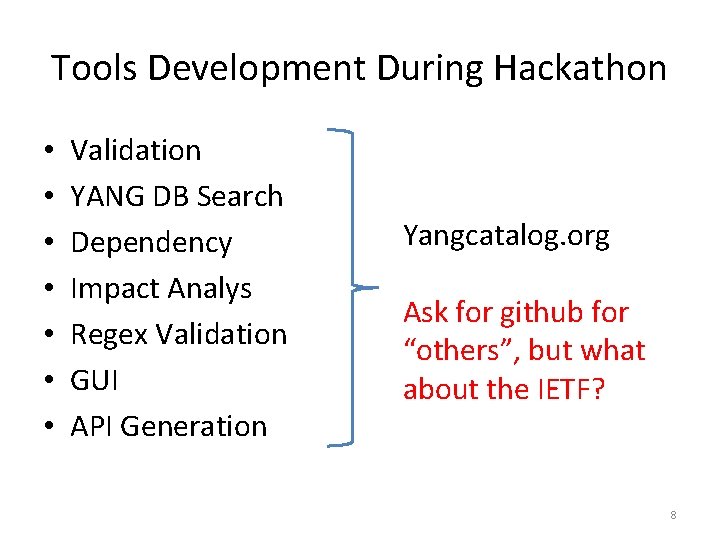
Tools Development During Hackathon • • Validation YANG DB Search Dependency Impact Analys Regex Validation GUI API Generation Yangcatalog. org Ask for github for “others”, but what about the IETF? 8
YANG Model Development in the IETF • The way we deal with YANG models in the IETF is … • Select from: – Inappropriate? – Not efficient? – Old fashion? – Stupid? Select your answer(s)
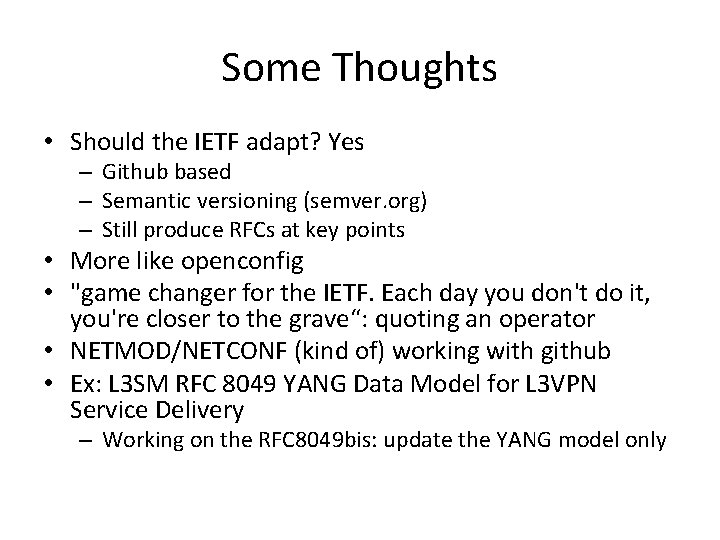
Some Thoughts • Should the IETF adapt? Yes – Github based – Semantic versioning (semver. org) – Still produce RFCs at key points • More like openconfig • "game changer for the IETF. Each day you don't do it, you're closer to the grave“: quoting an operator • NETMOD/NETCONF (kind of) working with github • Ex: L 3 SM RFC 8049 YANG Data Model for L 3 VPN Service Delivery – Working on the RFC 8049 bis: update the YANG model only
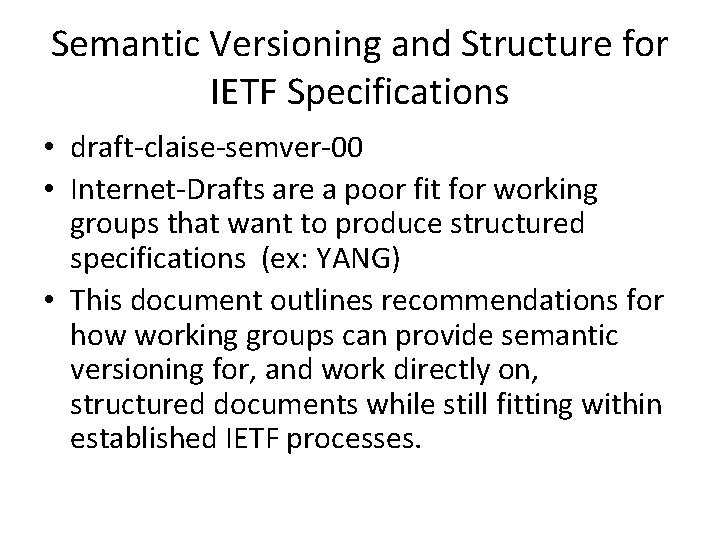
Semantic Versioning and Structure for IETF Specifications • draft-claise-semver-00 • Internet-Drafts are a poor fit for working groups that want to produce structured specifications (ex: YANG) • This document outlines recommendations for how working groups can provide semantic versioning for, and work directly on, structured documents while still fitting within established IETF processes.
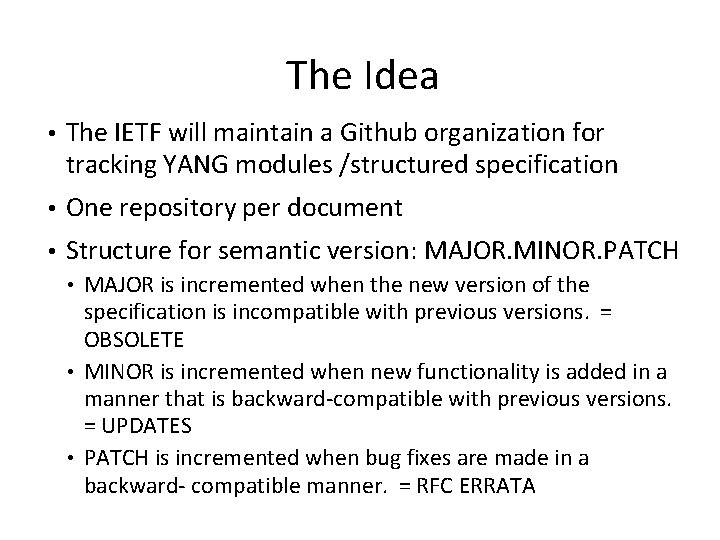
The Idea • The IETF will maintain a Github organization for tracking YANG modules /structured specification • One repository per document • Structure for semantic version: MAJOR. MINOR. PATCH MAJOR is incremented when the new version of the specification is incompatible with previous versions. = OBSOLETE • MINOR is incremented when new functionality is added in a manner that is backward-compatible with previous versions. = UPDATES • PATCH is incremented when bug fixes are made in a backward- compatible manner. = RFC ERRATA •
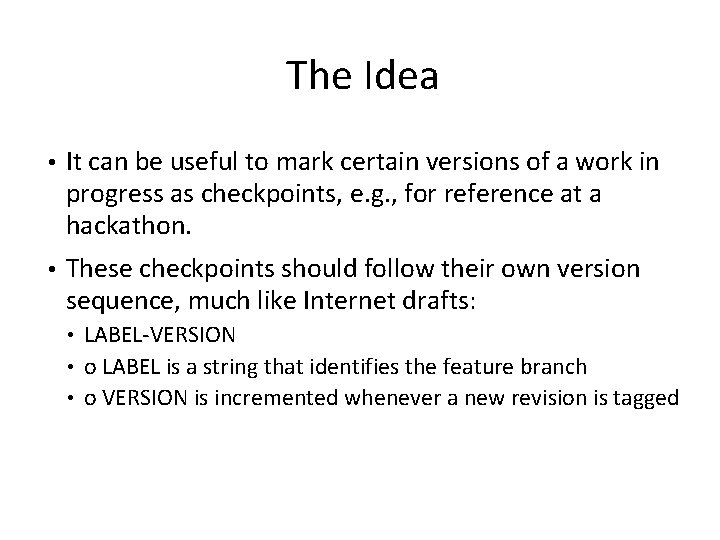
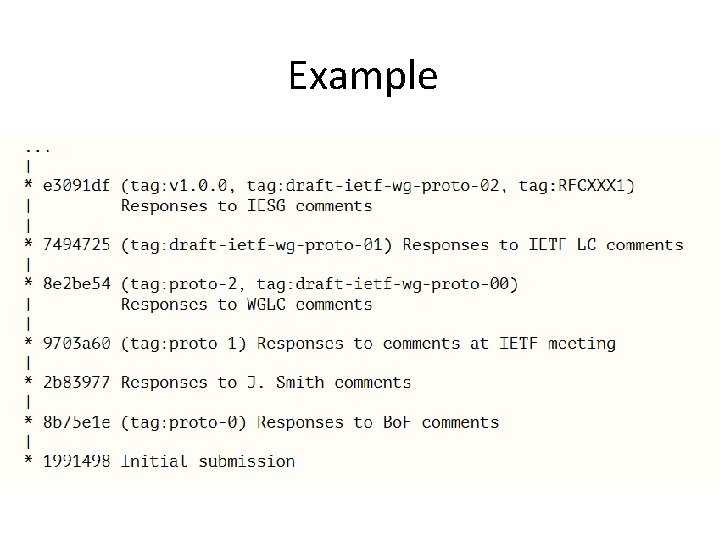
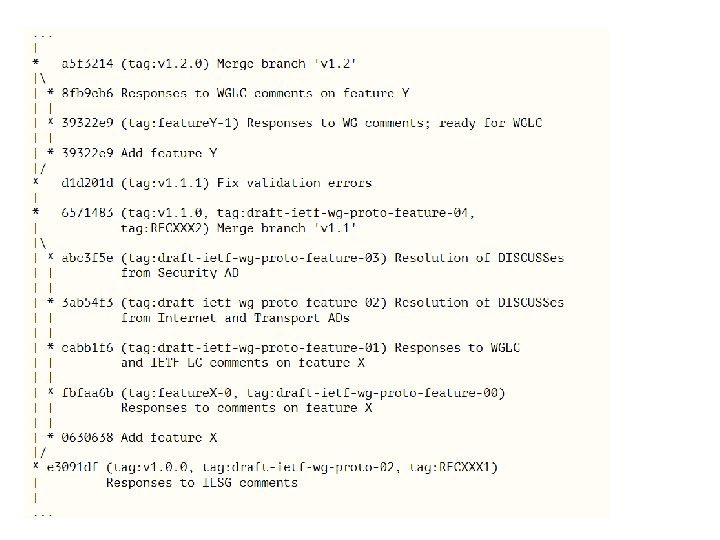
The Idea • It can be useful to mark certain versions of a work in progress as checkpoints, e. g. , for reference at a hackathon. • These checkpoints should follow their own version sequence, much like Internet drafts: LABEL-VERSION • o LABEL is a string that identifies the feature branch • o VERSION is incremented whenever a new revision is tagged •
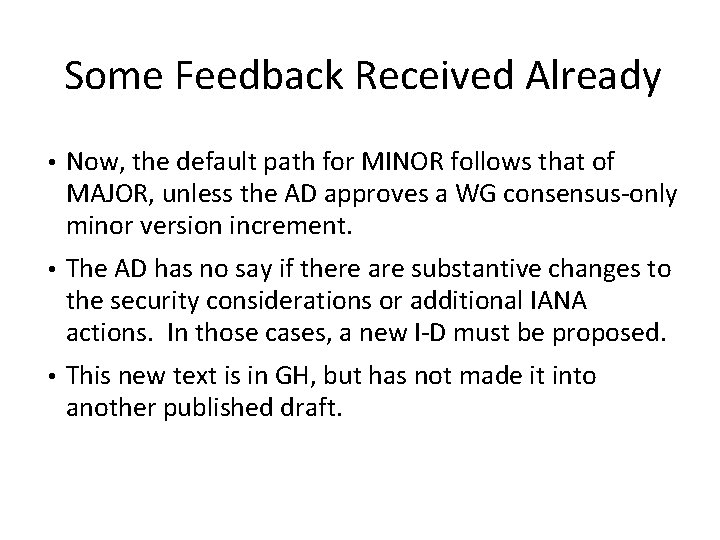
Some Feedback Received Already • Now, the default path for MINOR follows that of MAJOR, unless the AD approves a WG consensus-only minor version increment. • The AD has no say if there are substantive changes to the security considerations or additional IANA actions. In those cases, a new I-D must be proposed. • This new text is in GH, but has not made it into another published draft.
Example
Example
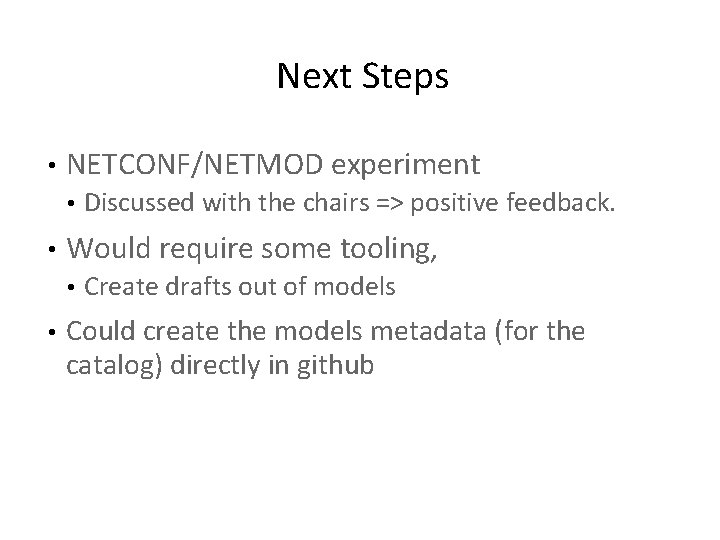
Next Steps • NETCONF/NETMOD experiment • • Would require some tooling, • • Discussed with the chairs => positive feedback. Create drafts out of models Could create the models metadata (for the catalog) directly in github
Semantic versioning, structure for IETF specs, and evolving IETF outputs Richard Barnes, Joe Clarke, Benoît Claise, IETF 99