
SEMANTIC ANALYSIS Lexical Analysis Session Outline Types of
![2) I like the `scarlet', `vermilion', and `crimson' colors. [ ]ﺃﺤﺐ ﺍﻷﺤﻤﺮ ﺍﻟﺒﺮﺗﻘﺎﻟﻲ ﻭ](https://slidetodoc.com/presentation_image_h2/a9f64828b4f446039e6c3e3931f9f2fc/image-13.jpg "2) I like the `scarlet', `vermilion', and `crimson' colors. [ ]ﺃﺤﺐ ﺍﻷﺤﻤﺮ ﺍﻟﺒﺮﺗﻘﺎﻟﻲ ﻭ")
![3) I saw someone juggle with eggs once. [ ]ﺭﺃﻴﺖ ﺃﺤﺪﻫﻢ ﻳﻘﺬﻑ ﺣﺒﺎﺕ ﺍﻟﺒﻴﺾ](https://slidetodoc.com/presentation_image_h2/a9f64828b4f446039e6c3e3931f9f2fc/image-14.jpg "3) I saw someone juggle with eggs once. [ ]ﺭﺃﻴﺖ ﺃﺤﺪﻫﻢ ﻳﻘﺬﻑ ﺣﺒﺎﺕ ﺍﻟﺒﻴﺾ")
![4) ﺍﻧﺸﻐﻠﺖ ﺑﻜﺘﺎﺑﺔ ﺍﻟﻤﻘﺎﻝ [I was busy writing the essay. ] Type of the](https://slidetodoc.com/presentation_image_h2/a9f64828b4f446039e6c3e3931f9f2fc/image-15.jpg "4) ﺍﻧﺸﻐﻠﺖ ﺑﻜﺘﺎﺑﺔ ﺍﻟﻤﻘﺎﻝ [I was busy writing the essay. ] Type of the")
![5) I saw a hound in your backyard. [. ]ﺭﺃﻴﺖ ﻛﻠﺐ ﺻﻴﺪ ﻓﻲ ﺳﺎﺣﺔ](https://slidetodoc.com/presentation_image_h2/a9f64828b4f446039e6c3e3931f9f2fc/image-16.jpg "5) I saw a hound in your backyard. [. ]ﺭﺃﻴﺖ ﻛﻠﺐ ﺻﻴﺪ ﻓﻲ ﺳﺎﺣﺔ")
![6) He plugged in the mixer. [ ]ﻭﺻﻞ ﺍﻟﺨﻼﻁ ﺑﺎﻟﻜﻬﺮﺑﺎﺀ Type of the problem:](https://slidetodoc.com/presentation_image_h2/a9f64828b4f446039e6c3e3931f9f2fc/image-17.jpg "6) He plugged in the mixer. [ ]ﻭﺻﻞ ﺍﻟﺨﻼﻁ ﺑﺎﻟﻜﻬﺮﺑﺎﺀ Type of the problem:")
- Slides: 18
SEMANTIC ANALYSIS Lexical Analysis
Session Outline ■ Types of sematic meaning – Conceptual – Collocative – Grammatical ■ Semantic fields ■ Sense relationships ■ Class exercises
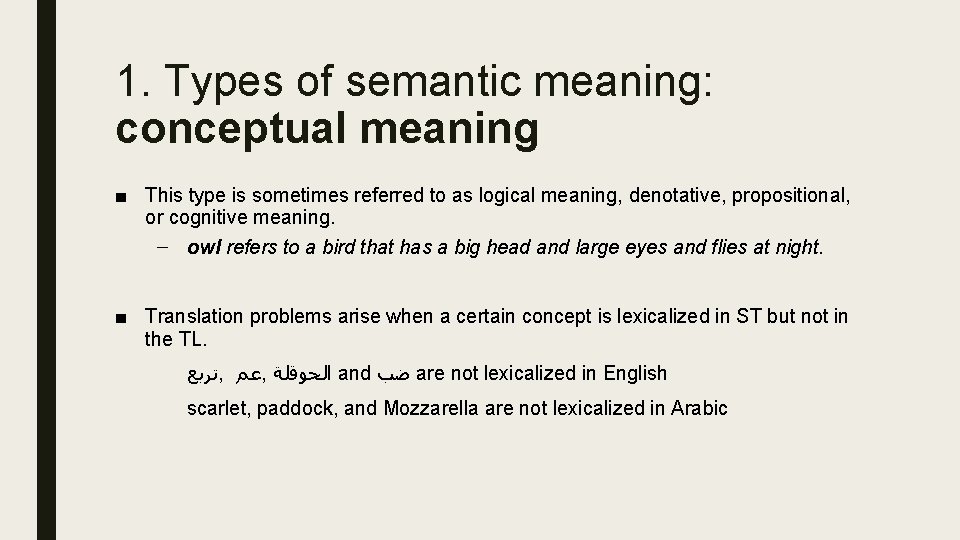
1. Types of semantic meaning: conceptual meaning ■ This type is sometimes referred to as logical meaning, denotative, propositional, or cognitive meaning. – owl refers to a bird that has a big head and large eyes and flies at night. ■ Translation problems arise when a certain concept is lexicalized in ST but not in the TL. ﺗﺮﺑﻊ , ﻋﻢ , ﺍﻟﺤﻮﻗﻠﺔ and ﺿﺐ are not lexicalized in English scarlet, paddock, and Mozzarella are not lexicalized in Arabic
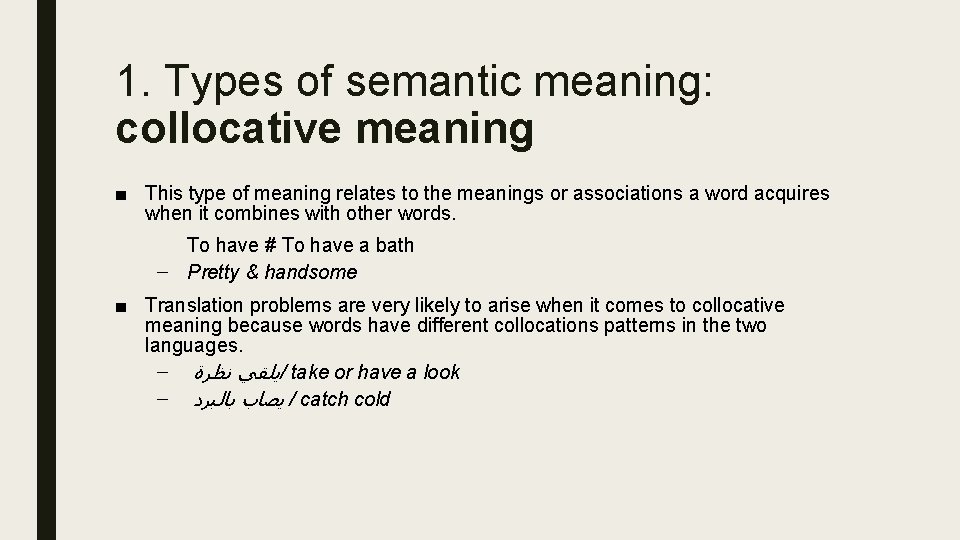
1. Types of semantic meaning: collocative meaning ■ This type of meaning relates to the meanings or associations a word acquires when it combines with other words. To have # To have a bath – Pretty & handsome ■ Translation problems are very likely to arise when it comes to collocative meaning because words have different collocations patterns in the two languages. – ﻳﻠﻘﻲ ﻧﻈﺮﺓ / take or have a look – ﻳﺼﺎﺏ ﺑﺎﻟﺒﺮﺩ / catch cold
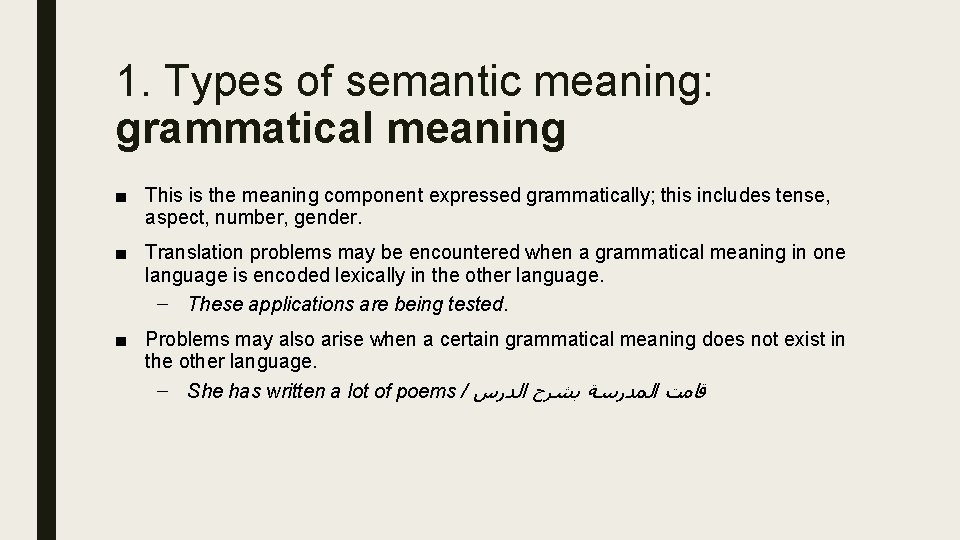
1. Types of semantic meaning: grammatical meaning ■ This is the meaning component expressed grammatically; this includes tense, aspect, number, gender. ■ Translation problems may be encountered when a grammatical meaning in one language is encoded lexically in the other language. – These applications are being tested. ■ Problems may also arise when a certain grammatical meaning does not exist in the other language. – She has written a lot of poems / ﻗﺎﻣﺖ ﺍﻟﻤﺪﺭﺳﺔ ﺑﺸﺮﺡ ﺍﻟﺪﺭﺱ
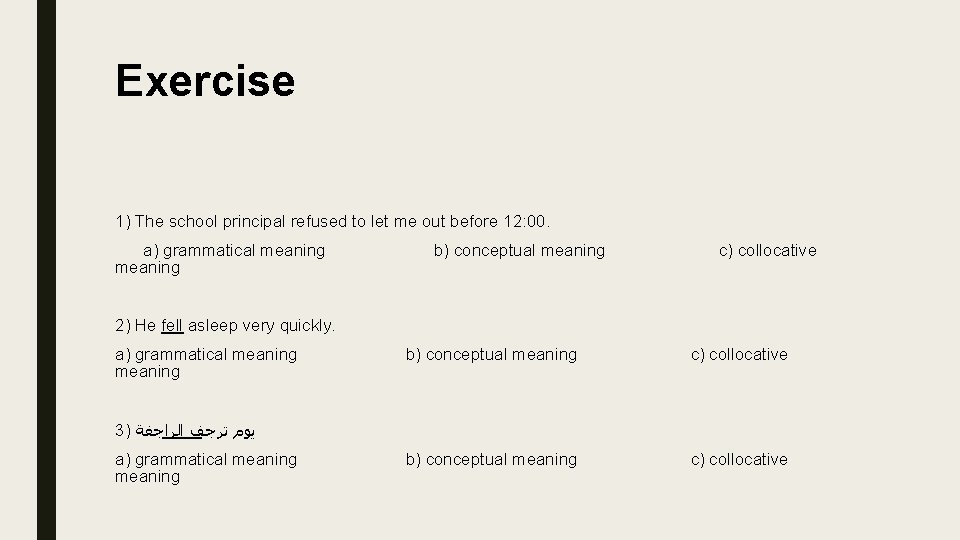
Exercise 1) The school principal refused to let me out before 12: 00. a) grammatical meaning b) conceptual meaning c) collocative 2) He fell asleep very quickly. a) grammatical meaning b) conceptual meaning c) collocative 3) ﻳﻮﻡ ﺗﺮﺟﻒ ﺍﻟﺮﺍﺟﻔﺔ a) grammatical meaning
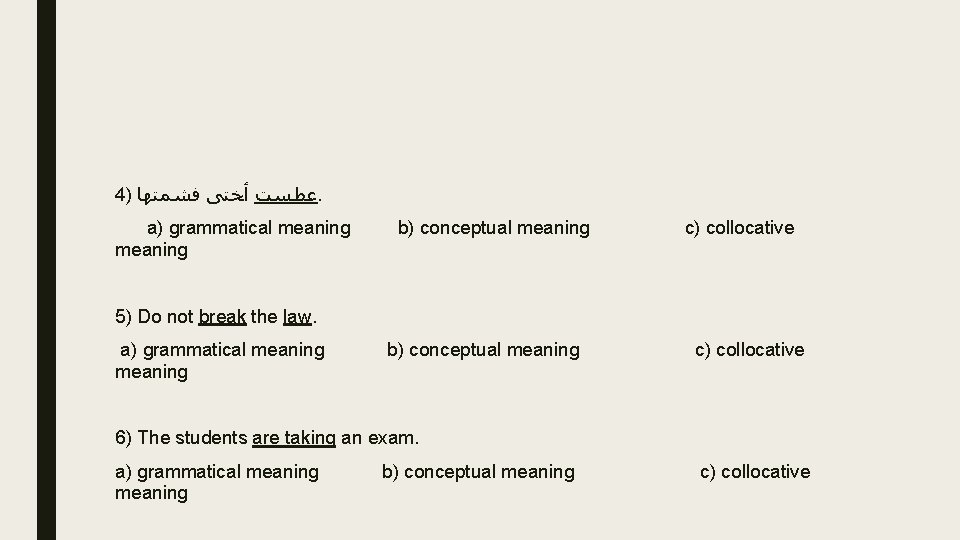
4) ﻋﻄﺴﺖ ﺃﺨﺘﻰ ﻓﺸﻤﺘﻬﺎ. a) grammatical meaning b) conceptual meaning c) collocative 5) Do not break the law. a) grammatical meaning b) conceptual meaning c) collocative 6) The students are taking an exam. a) grammatical meaning b) conceptual meaning c) collocative
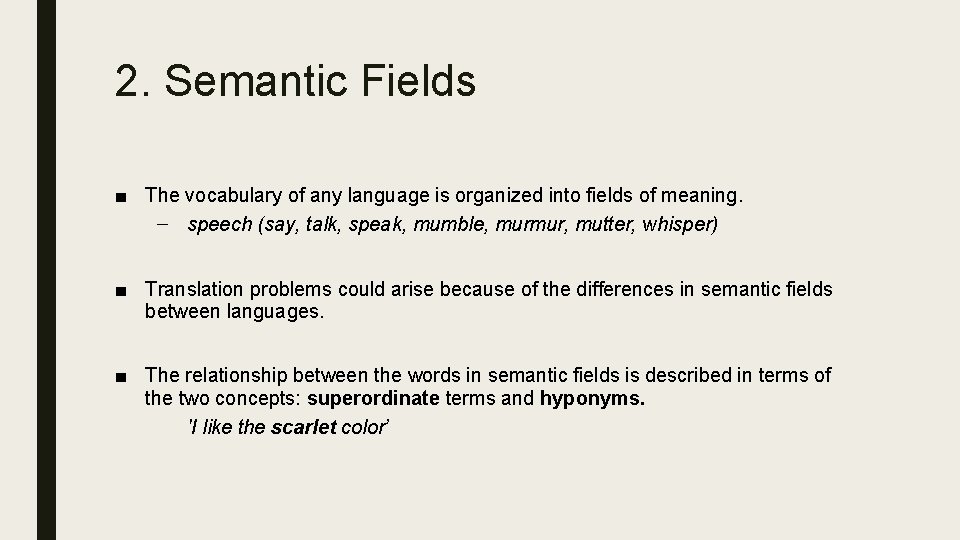
2. Semantic Fields ■ The vocabulary of any language is organized into fields of meaning. – speech (say, talk, speak, mumble, murmur, mutter, whisper) ■ Translation problems could arise because of the differences in semantic fields between languages. ■ The relationship between the words in semantic fields is described in terms of the two concepts: superordinate terms and hyponyms. 'I like the scarlet color’
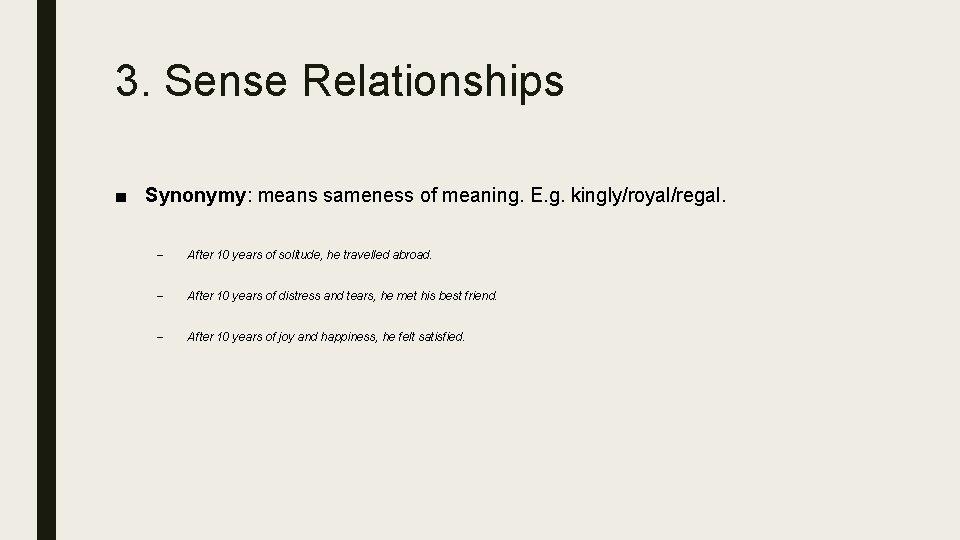
3. Sense Relationships ■ Synonymy: means sameness of meaning. E. g. kingly/royal/regal. – After 10 years of solitude, he travelled abroad. – After 10 years of distress and tears, he met his best friend. – After 10 years of joy and happiness, he felt satisfied.
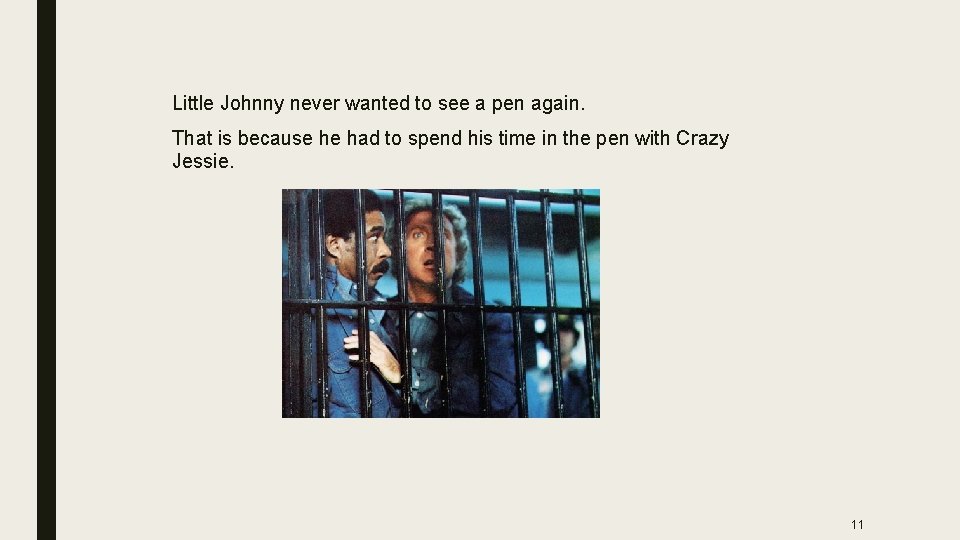
Little Johnny never wanted to see a pen again. That is because he had to spend his time in the pen with Crazy Jessie. 11
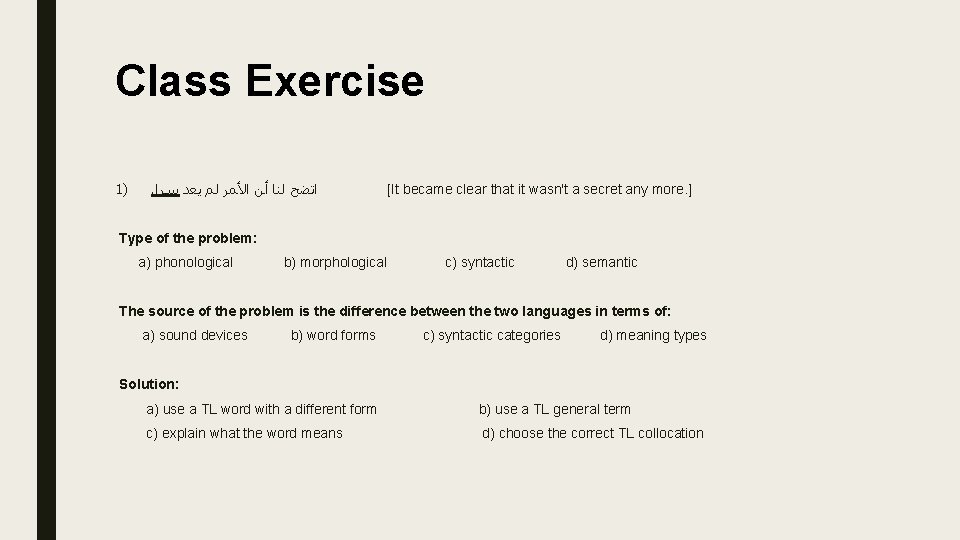
Class Exercise 1) . ﺍﺗﻀﺢ ﻟﻨﺎ ﺃﻦ ﺍﻷﻤﺮ ﻟﻢ ﻳﻌﺪ ﺳﺮﺍ [It became clear that it wasn't a secret any more. ] Type of the problem: a) phonological b) morphological c) syntactic d) semantic The source of the problem is the difference between the two languages in terms of: a) sound devices b) word forms c) syntactic categories d) meaning types Solution: a) use a TL word with a different form b) use a TL general term c) explain what the word means d) choose the correct TL collocation
2) I like the `scarlet', `vermilion', and `crimson' colors. [ ]ﺃﺤﺐ ﺍﻷﺤﻤﺮ ﺍﻟﺒﺮﺗﻘﺎﻟﻲ ﻭ ﺍﻷﺤﻤﺮ ﺍﻟﻀﺎﺭﺏ ﻟﻠﺰﺭﻗﺔ ﻭ ﺍﻷﺤﻤﺮ ﺍﻟﻘﺮﻣﺰﻱ Type of the problem: a) phonological b) morphological c) syntactic d) semantic The source of the problem is the difference between the two languages in terms of: a) sound devices b) word forms c) syntactic categories d) meaning types Solution: a) borrow the term b) use a TL general term with an adjective to specify it c) use a TL general term d) choose the correct TL collocation
3) I saw someone juggle with eggs once. [ ]ﺭﺃﻴﺖ ﺃﺤﺪﻫﻢ ﻳﻘﺬﻑ ﺣﺒﺎﺕ ﺍﻟﺒﻴﺾ ﻓﻲ ﺍﻟﻬﻮﺍﺀ ﺛﻢ ﻳﻠﺘﻘﻄﻬﺎ ﻭﺍﺣﺪﺓ ﺗﻠﻮ ﺍﻷﺨﺮﻯ Type of the problem: a) phonological b) morphological c) syntactic d) semantic The source of the problem is the difference between the two languages in terms of: a) sound devices b) word forms c) syntactic categories d) meaning types Solution: a) borrow the term and explain it b) explain what the word means c) use a TL general term d) choose the relevant TL means of expression
4) ﺍﻧﺸﻐﻠﺖ ﺑﻜﺘﺎﺑﺔ ﺍﻟﻤﻘﺎﻝ [I was busy writing the essay. ] Type of the problem: a) phonological b) morphological c) syntactic d) semantic The source of the problem is the difference between the two languages in terms of: a) sound devices b) word forms c) syntactic categories d) meaning types Solution: a) use a TL word with a different form b) use a TL general term c) explain what the word means d) choose the correct TL collocation
5) I saw a hound in your backyard. [. ]ﺭﺃﻴﺖ ﻛﻠﺐ ﺻﻴﺪ ﻓﻲ ﺳﺎﺣﺔ ﺑﻴﺘﻚ ﺍﻟﺨﻠﻔﻴﺔ Type of the problem: a) phonological b) morphological c) syntactic d) semantic The source of the problem is the difference between the two languages in terms of: a) sound devices b) word forms c) syntactic categories d) meaning types Solution: a) borrow the term b) use a TL general term with an adjective to specify it c) use a TL general term d) choose the correct TL collocation
6) He plugged in the mixer. [ ]ﻭﺻﻞ ﺍﻟﺨﻼﻁ ﺑﺎﻟﻜﻬﺮﺑﺎﺀ Type of the problem: a) phonological b) morphological c) syntactic d) semantic The source of the problem is the difference between the two languages in terms of: a) sound devices b) word forms c) syntactic categories d) meaning types Solution: a) borrow the term b) use a TL general term with an adjective to specify it c) use a TL general term d) choose the correct TL collocation
Identify the problems that may be involved in the translations of the following sentences and suggest strategies to deal with them.