
SelfStudy Modules on Tuberculosis Treatment of Latent Tuberculosis
Self-Study Modules on Tuberculosis Treatment of Latent Tuberculosis Infection and Tuberculosis Disease
Module 4: Objectives At completion of this module, learners will be able to: 1. List groups of people who should receive high priority for latent TB infection (LTBI) treatment 2. Describe treatment regimens for LTBI 3. Describe treatment regimens for TB disease 4. Describe principles of preventing drug resistance 5. Describe patient monitoring during LTBI and TB disease treatment 6. Describe TB treatment adherence strategies 7. List common adverse reactions to drugs used to treat LTBI and TB disease Module 4 – Treatment of Latent Tuberculosis Infection and Tuberculosis Disease 2

Module 4: Overview • Treatment of LTBI – Patient Medical Evaluation – LTBI Treatment Regimens – Special Considerations for LTBI Treatment • Treatment of TB Disease – TB Disease Treatment Regimens Module 4 – Treatment of Latent Tuberculosis Infection and Tuberculosis Disease 3
Module 4: Overview (cont. ) • Treatment of TB Disease (cont. ) – Special Considerations and Alternative Treatment Regimens – Treatment and Monitoring Plan and Adverse Reactions – Adherence and Evaluating Patients’ Response to Treatment – Role of Public Health Workers • Case Studies Module 4 – Treatment of Latent Tuberculosis Infection and Tuberculosis Disease 4
Treatment of Latent TB Infection (LTBI) 5
Treatment of LTBI (1) • LTBI is treated to prevent the development of TB disease • LTBI is treated with medication Module 4 – Treatment of Latent Tuberculosis Infection and Tuberculosis Disease 6
Treatment of LTBI (2) • Targeted testing should be used to identify and treat people who are: – At high risk for exposure to or infection with M. tuberculosis – At high risk for developing TB disease once infected with M. tuberculosis • People in these groups should receive high priority for LTBI treatment if they have a positive tuberculin skin test (TST) or interferongamma release assay (IGRA) Module 4 – Treatment of Latent Tuberculosis Infection and Tuberculosis Disease 7
High Priority for LTBI Treatment (1) • High-priority groups for LTBI treatment if positive IGRA or TST result of > 5 mm – Recent contacts of people with infectious TB disease – People living with HIV – People with chest x-ray findings suggestive of previous TB disease – Patients with an organ transplant – Other immunosuppressed patients Module 4 – Treatment of Latent Tuberculosis Infection and Tuberculosis Disease 8
High Priority for LTBI Treatment (2) • High-priority groups for LTBI treatment if positive IGRA or TST result of > 10 mm: – People who have come to U. S. from countries where TB is common – People who abuse drugs – People who live or work in high-risk congregate settings – People who work in mycobacteriology laboratories Module 4 – Treatment of Latent Tuberculosis Infection and Tuberculosis Disease 9
High Priority for LTBI Treatment (3) • High-priority groups for LTBI treatment if positive IGRA or TST result of > 10 mm (cont. ): – People with medical conditions that increase risk of TB disease – Children younger than 5 years of age – Infants, children, and adolescents exposed to adults in high-risk groups Module 4 – Treatment of Latent Tuberculosis Infection and Tuberculosis Disease 10
Low Priority for LTBI Treatment • Individuals without any risk factors generally should not be tested for TB infection • However, individuals with no risk factors who are tested and have a positive IGRA or TST result of > 15 mm should be evaluated for LTBI treatment Module 4 – Treatment of Latent Tuberculosis Infection and Tuberculosis Disease 11
Treatment of Latent TB Infection (LTBI) Patient Medical Evaluation 12
Patient Medical Evaluation (1) Medical evaluations should be done to: 1. Exclude possibility of TB disease 2. Determine whether patient has ever been treated for TB infection or TB disease 3. Find out if patient has any medical conditions that may complicate therapy 4. Establish and build rapport with patient Module 4 – Treatment of Latent Tuberculosis Infection and Tuberculosis Disease 13
Patient Medical Evaluation (2) 1. Exclude possibility of TB disease • Treating TB disease with LTBI treatment regimen can lead to drug resistance • Clinicians should determine if the patient has symptoms of TB disease • Clinicians should evaluate the patient with a chest x-ray • Patients with symptoms or chest x-ray findings of TB disease should be given TB disease treatment, not LTBI treatment Module 4 – Treatment of Latent Tuberculosis Infection and Tuberculosis Disease 14
Patient Medical Evaluation (3) 2. Determine whether patient has ever been treated for TB infection or TB disease • Patients who have been adequately treated should not be treated again • TST or IGRA results cannot determine if patient has received treatment for LTBI or TB disease; or if they have been reinfected after treatment Module 4 – Treatment of Latent Tuberculosis Infection and Tuberculosis Disease 15
Patient Medical Evaluation (4) 3. Find out if patient has any medical conditions that may complicate therapy or require more careful monitoring. These patients include: • People living with HIV • People with history of liver disorder or disease • People who use alcohol regularly • Women who are pregnant or just had a baby (within 3 months of delivery) • People who are taking other medications that may increase the risk of hepatitis Module 4 – Treatment of Latent Tuberculosis Infection and Tuberculosis Disease 16
Patient Medical Evaluation (5) For patients with the medical conditions listed on the previous slide, baseline laboratory liver function tests (to detect injury to liver) are recommended before starting LTBI treatment. Module 4 – Treatment of Latent Tuberculosis Infection and Tuberculosis Disease 17
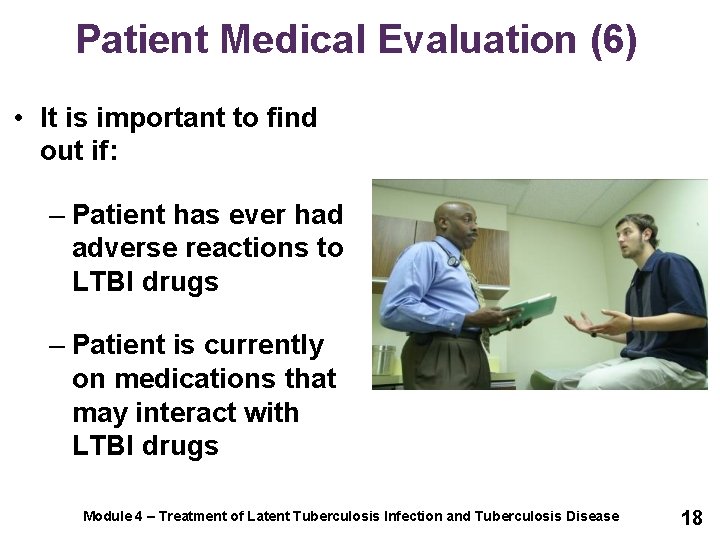
Patient Medical Evaluation (6) • It is important to find out if: – Patient has ever had adverse reactions to LTBI drugs – Patient is currently on medications that may interact with LTBI drugs Module 4 – Treatment of Latent Tuberculosis Infection and Tuberculosis Disease 18
Patient Medical Evaluation (7) 4. Establish and build rapport with patient • Health care workers (HCWs) should highlight important aspects of treatment, such as: – Benefits of treatment – Importance of adherence to treatment – Possible adverse reactions – Establishment of a follow-up plan Module 4 – Treatment of Latent Tuberculosis Infection and Tuberculosis Disease 19
Patient Medical Evaluation (8) Because of the interaction between TB and HIV, HCWs should also recommend that patients undergo HIV counseling and testing Module 4 – Treatment of Latent Tuberculosis Infection and Tuberculosis Disease 20
Treatment of Latent TB Infection (LTBI) LTBI Treatment Regimens 21
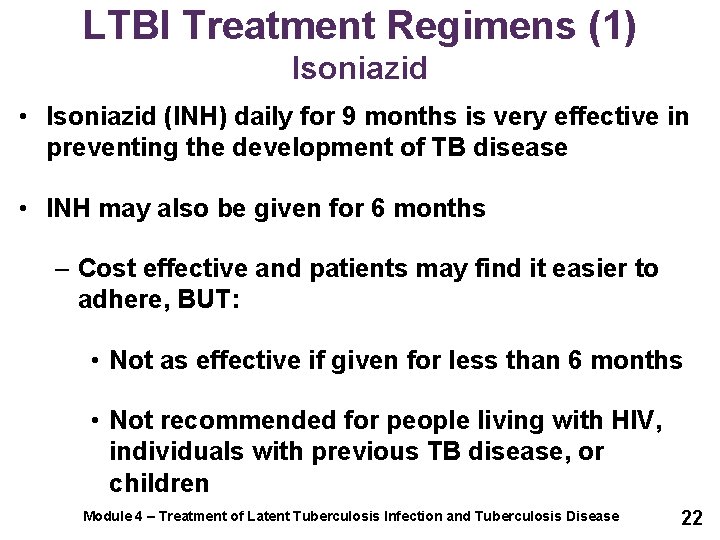
LTBI Treatment Regimens (1) Isoniazid • Isoniazid (INH) daily for 9 months is very effective in preventing the development of TB disease • INH may also be given for 6 months – Cost effective and patients may find it easier to adhere, BUT: • Not as effective if given for less than 6 months • Not recommended for people living with HIV, individuals with previous TB disease, or children Module 4 – Treatment of Latent Tuberculosis Infection and Tuberculosis Disease 22
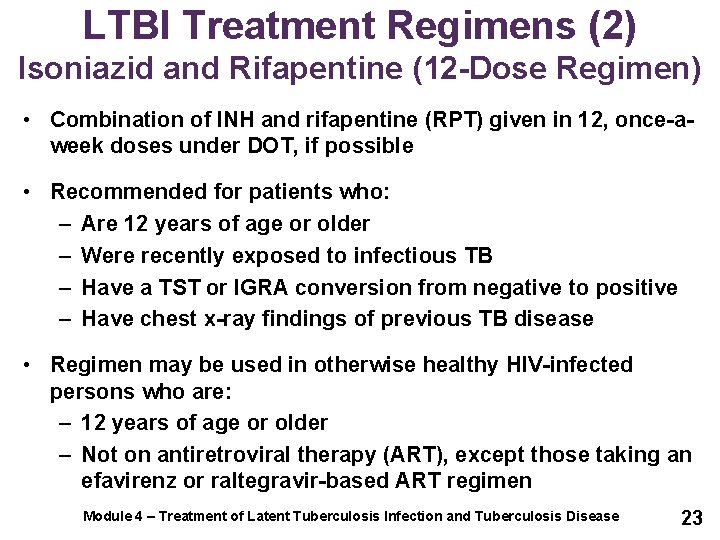
LTBI Treatment Regimens (2) Isoniazid and Rifapentine (12 -Dose Regimen) • Combination of INH and rifapentine (RPT) given in 12, once-aweek doses under DOT, if possible • Recommended for patients who: – Are 12 years of age or older – Were recently exposed to infectious TB – Have a TST or IGRA conversion from negative to positive – Have chest x-ray findings of previous TB disease • Regimen may be used in otherwise healthy HIV-infected persons who are: – 12 years of age or older – Not on antiretroviral therapy (ART), except those taking an efavirenz or raltegravir-based ART regimen Module 4 – Treatment of Latent Tuberculosis Infection and Tuberculosis Disease 23
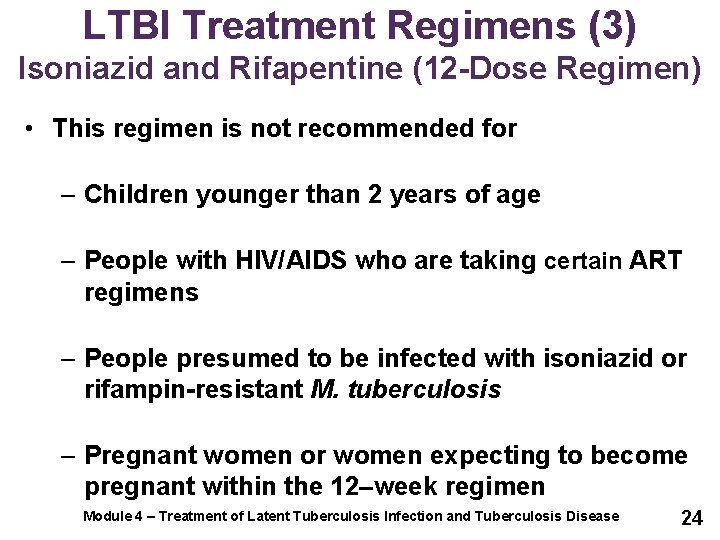
LTBI Treatment Regimens (3) Isoniazid and Rifapentine (12 -Dose Regimen) • This regimen is not recommended for – Children younger than 2 years of age – People with HIV/AIDS who are taking certain ART regimens – People presumed to be infected with isoniazid or rifampin-resistant M. tuberculosis – Pregnant women or women expecting to become pregnant within the 12–week regimen Module 4 – Treatment of Latent Tuberculosis Infection and Tuberculosis Disease 24
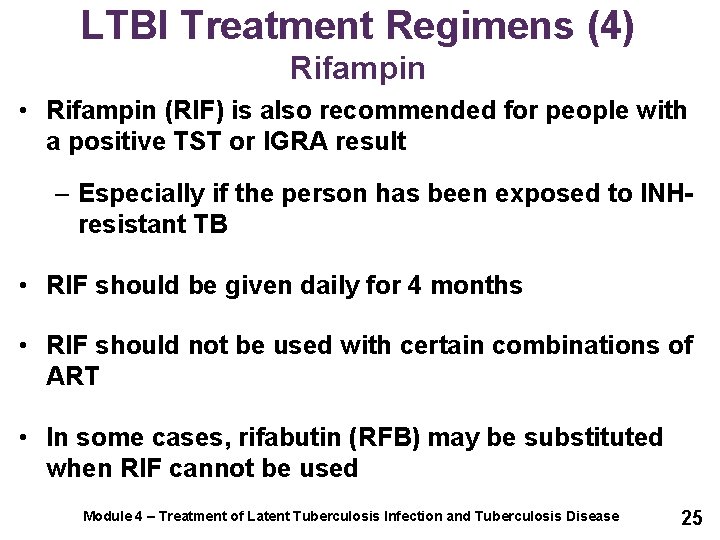
LTBI Treatment Regimens (4) Rifampin • Rifampin (RIF) is also recommended for people with a positive TST or IGRA result – Especially if the person has been exposed to INHresistant TB • RIF should be given daily for 4 months • RIF should not be used with certain combinations of ART • In some cases, rifabutin (RFB) may be substituted when RIF cannot be used Module 4 – Treatment of Latent Tuberculosis Infection and Tuberculosis Disease 25
LTBI Treatment Regimens (5) Rifampin and Pyrazinamide • CDC advises against using a combination of RIF and pyrazinamide (PZA) due to serious side effects such as: – Severe liver injury – Death Module 4 – Treatment of Latent Tuberculosis Infection and Tuberculosis Disease 26
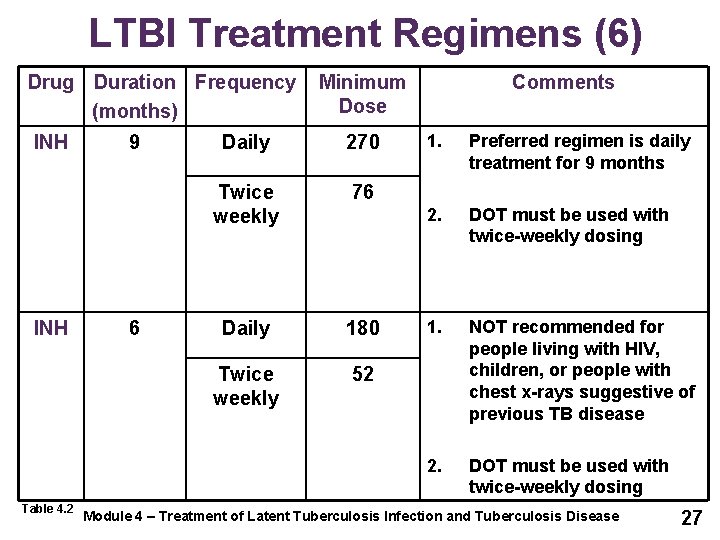
LTBI Treatment Regimens (6) Drug Duration Frequency (months) INH Table 4. 2 9 6 Minimum Dose Daily 270 Twice weekly 76 Daily 180 Twice weekly 52 Comments 1. Preferred regimen is daily treatment for 9 months 2. DOT must be used with twice-weekly dosing 1. NOT recommended for people living with HIV, children, or people with chest x-rays suggestive of previous TB disease 2. DOT must be used with twice-weekly dosing Module 4 – Treatment of Latent Tuberculosis Infection and Tuberculosis Disease 27
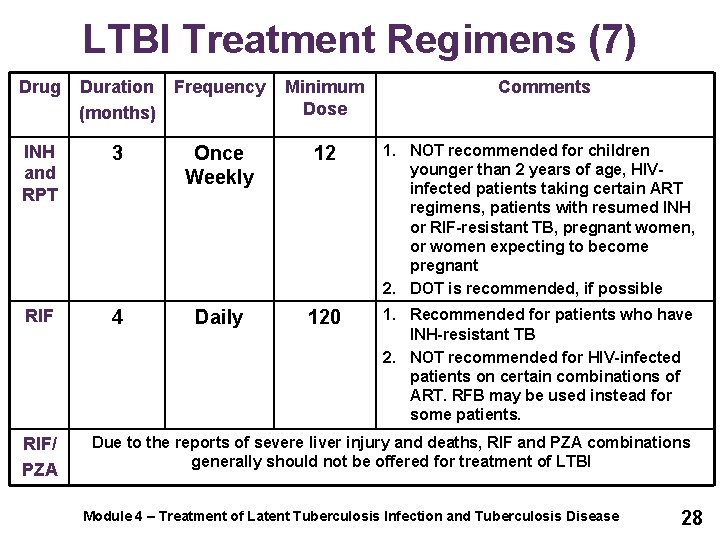
LTBI Treatment Regimens (7) Drug Duration (months) Frequency Minimum Dose Comments INH and RPT 3 Once Weekly 12 1. NOT recommended for children younger than 2 years of age, HIVinfected patients taking certain ART regimens, patients with resumed INH or RIF-resistant TB, pregnant women, or women expecting to become pregnant 2. DOT is recommended, if possible RIF 4 Daily 120 1. Recommended for patients who have INH-resistant TB 2. NOT recommended for HIV-infected patients on certain combinations of ART. RFB may be used instead for some patients. RIF/ PZA Due to the reports of severe liver injury and deaths, RIF and PZA combinations generally should not be offered for treatment of LTBI Module 4 – Treatment of Latent Tuberculosis Infection and Tuberculosis Disease 28
Treatment of LTBI Study Question 4. 1 What is the purpose of LTBI treatment? To prevent people with latent TB infection from developing TB disease. Module 4 – Treatment of Latent Tuberculosis Infection and Tuberculosis Disease 29
Treatment of LTBI Study Question 4. 2 Which groups of people should receive highpriority for LTBI treatment if they have a positive IGRA or TST result of > 5 mm? Name 5. • Recent contacts of people with infectious TB disease • People living with HIV • People with chest x-ray findings suggestive of previous TB disease • Patients with an organ transplant • Other immunosuppressed patients Module 4 – Treatment of Latent Tuberculosis Infection and Tuberculosis Disease 30
Treatment of LTBI Study Question 4. 3 Which groups of people should receive high priority for LTBI treatment if they have a positive IGRA result or a TST reaction that is > 10 mm? Name 7. • People who come to the U. S. from areas of the world where TB is common • People who abuse drugs • People who live or work in high-risk congregate settings • People who work in mycobacteriology laboratories • People with medical conditions that increase risk of TB disease • Children younger than 5 years of age • Infants, children, and adolescents exposed to adults in high-risk groups Module 4 – Treatment of Latent Tuberculosis Infection and Tuberculosis Disease 31
LTBI Treatment Regimens Study Question 4. 4 List 4 regimens that are approved for the treatment of LTBI. • Isoniazid for 9 months • Isoniazid for 6 months • Isoniazid and rifapentine for 12, onceweekly doses (12 -dose regimen) • Rifampin for 4 months Module 4 – Treatment of Latent Tuberculosis Infection and Tuberculosis Disease 32
Treatment of Latent TB Infection (LTBI) Special Considerations for LTBI Treatment 33
Special Considerations for LTBI (1) Directly Observed Therapy (DOT) • DOT is when a HCW or another designated person watches a patient swallow each dose of medication – Used to help patients adhere to treatment – Should be considered for people who are at high risk for TB or suspected to be nonadherent – Recommended for intermittent therapy Module 4 – Treatment of Latent Tuberculosis Infection and Tuberculosis Disease 34
Special Considerations for LTBI (2) Contacts • Contacts are people who have been exposed to someone with infectious TB disease • Contacts should be quickly identified, located, and assessed for LTBI and TB disease – If TST or IGRA result is positive, contacts should be given high priority for LTBI treatment (once TB disease is ruled out) – If TST or IGRA result is negative, contacts should be retested in 8 to 10 weeks Module 4 – Treatment of Latent Tuberculosis Infection and Tuberculosis Disease 35
Special Considerations for LTBI (3) Contacts • In general, contacts with positive test result and a documented history of completion of LTBI treatment do not need to be retreated • However, retreatment may be necessary for persons at high risk of: – Becoming re-infected – Progressing to TB disease Module 4 – Treatment of Latent Tuberculosis Infection and Tuberculosis Disease 36
Special Considerations for LTBI (4) Contacts at High Risk for Rapid Development of TB Disease • Some contacts may be started on LTBI treatment even if their test result is negative, and less than 8 to 10 weeks have passed since last exposure to TB; this includes: – Children younger than 5 years of age – People living with HIV • Expert consultation should be sought to determine if contacts with immunocompromised states other than HIV infection could benefit from treatment even if they have a negative TST or IGRA result Module 4 – Treatment of Latent Tuberculosis Infection and Tuberculosis Disease 37
Special Considerations for LTBI (5) Contacts at High Risk for Rapid Development of TB Disease • Once active TB disease is ruled out, contacts at high risk for TB disease should: – Start LTBI treatment – Be retested 8 to 10 weeks after last exposure to TB • If negative test result: stop LTBI treatment • If positive test result: continue LTBI treatment • Contacts living with HIV may be given full course of LTBI treatment even if their second TST or IGRA result is negative Module 4 – Treatment of Latent Tuberculosis Infection and Tuberculosis Disease 38
Special Considerations for LTBI (6) Infants and Children • Infants and children are more likely to develop life-threatening forms of TB disease • Children younger than 5 years of age who have been exposed to TB should start taking LTBI treatment even if they have a negative TST or IGRA result because they: – Are at high risk for rapidly developing TB disease – May have a false-negative TST reaction Module 4 – Treatment of Latent Tuberculosis Infection and Tuberculosis Disease 39
Special Considerations for LTBI (7) Infants and Children • Infants and children should be retested 8 to 10 weeks after last exposure • LTBI treatment can be stopped if ALL of the following conditions are met: – Child is at least 6 months of age – Second TST or IGRA is negative – Second TST or IGRA was done at least 8 weeks after child was last exposed to a person with infectious TB disease • The 12 -dose regimen is not recommended for children younger than 2 years of age Module 4 – Treatment of Latent Tuberculosis Infection and Tuberculosis Disease 40
Special Considerations for LTBI (8) Contacts of INH-Resistant TB • Contacts of patients with INH-resistant, but RIFsusceptible TB, may be treated with a 4 -month daily regimen of RIF • In some patients, rifabutin (RFB) may be substituted if RIF cannot be used Module 4 – Treatment of Latent Tuberculosis Infection and Tuberculosis Disease 41
Special Considerations for LTBI (9) Contacts of Multidrug-Resistant TB (MDR TB) • The risk for developing TB disease should be considered before recommending LTBI treatment • Contacts of patients with MDR TB – May be treated for 6 to 12 months with an alternative regimen of drugs to which the M. tuberculosis isolate is susceptible – Can be observed for signs and symptoms of TB disease without treatment • All persons with suspected MDR LTBI should be followed and observed for signs and symptoms of TB disease for 2 years, regardless of the treatment regimen Module 4 – Treatment of Latent Tuberculosis Infection and Tuberculosis Disease 42
Special Considerations for LTBI (10) Pregnant Women • For most pregnant women, LTBI treatment can be delayed until after delivery, unless they have certain risk factors • Immediate treatment should be considered if woman is living with HIV or is a recent TB contact • Preferred LTBI treatment regimen is 9 months of INH with a vitamin B 6 supplement – INH has not been shown to have harmful effects on the fetus • The 12 -dose regimen is not recommended for pregnant women or women expecting to become pregnant within the 12 -week regimen Module 4 – Treatment of Latent Tuberculosis Infection and Tuberculosis Disease 43
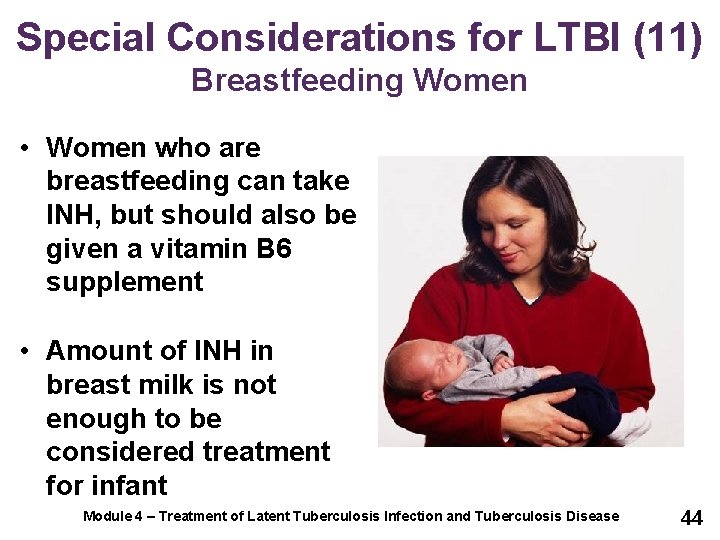
Special Considerations for LTBI (11) Breastfeeding Women • Women who are breastfeeding can take INH, but should also be given a vitamin B 6 supplement • Amount of INH in breast milk is not enough to be considered treatment for infant Module 4 – Treatment of Latent Tuberculosis Infection and Tuberculosis Disease 44
Special Considerations for LTBI (12) People Living with HIV • Individuals living with HIV should be treated with 9 -month regimen of INH • RIF should not be used for people who are taking certain combinations of ART – Dose-adjusted rifabutin (RFB) may be given • The 12 -dose regimen of INH and RPT may be used for people living with HIV who are: – 12 years of age or older – Not on ART, except those taking an efavirenz or raltegravir-based ART regimen Module 4 – Treatment of Latent Tuberculosis Infection and Tuberculosis Disease 45
LTBI Treatment Regimens Study Question 4. 5 What LTBI treatment regimen may be recommended for people with a positive TST or IGRA result who have been exposed to INH-resistant TB? Treatment with rifampin for 4 months may be recommended in this situation. Module 4 – Treatment of Latent Tuberculosis Infection and Tuberculosis Disease 46
Special Considerations for LTBI Study Question 4. 6 In what circumstances may LTBI treatment be given to people who have a negative TST or IGRA result? Some contacts may start LTBI treatment if they have a negative TST or IGRA, but less than 8 to 10 weeks have passed since last exposed to TB; these contacts include: • Children who are younger than 5 years of age • People living with HIV Module 4 – Treatment of Latent Tuberculosis Infection and Tuberculosis Disease 47
Special Considerations for LTBI Study Question 4. 7 What conditions must be met to stop LTBI treatment for children who are younger than 5 years of age and have been exposed to TB? • LTBI treatment can be stopped if ALL the following conditions are met: – Child is at least 6 months of age – Second TST or IGRA is negative – Second TST or IGRA was done 8 to 10 weeks after the child was last exposed to TB Module 4 – Treatment of Latent Tuberculosis Infection and Tuberculosis Disease 48
Special Considerations for LTBI Study Question 4. 8 When should pregnant women be treated for LTBI and for how long? • For most pregnant women with TB infection, LTBI treatment can be delayed until after delivery. If the pregnant woman is HIV-infected or a recent contact, immediate treatment should be considered. • Preferred treatment regimen for pregnant women is 9 months of INH with a vitamin B 6 supplement. Module 4 – Treatment of Latent Tuberculosis Infection and Tuberculosis Disease 49
Treatment of Latent TB Infection (LTBI) Adverse Reactions and Patient Monitoring 50
Adverse Reactions to INH (1) • About 10% to 20% of people treated with INH will have mild, abnormal liver test results during treatment – In most people, liver test results return to normal Module 4 – Treatment of Latent Tuberculosis Infection and Tuberculosis Disease 51
Adverse Reactions to INH (2) Hepatitis • A major risk of INH is hepatitis (inflammation of the liver) • Hepatitis prevents the liver from functioning normally, causing symptoms such as: – Nausea – Vomiting – Abdominal pain – Fatigue – Brown urine Module 4 – Treatment of Latent Tuberculosis Infection and Tuberculosis Disease 52
Adverse Reactions to INH (3) Hepatitis • INH can cause hepatitis in anyone; however, hepatitis occurs in less than 1% of people taking INH • Certain risk factors increase the risk of serious hepatitis, such as: – Older age – Alcoholism Module 4 – Treatment of Latent Tuberculosis Infection and Tuberculosis Disease 53
Adverse Reactions to INH (4) Peripheral Neuropathy • INH can cause peripheral neuropathy – Damage to sensory nerves of hands and feet – Symptoms include a tingling sensation, weakened sense of touch, or pain in the hands, palms, soles and feet • HIV, alcoholism, diabetes, and malnutrition increase risk for peripheral neuropathy – People with these conditions should be given vitamin B 6 Module 4 – Treatment of Latent Tuberculosis Infection and Tuberculosis Disease 54
Adverse Reactions to RIF, RPT, and RFB • Hepatitis is more likely to occur when RIF is combined with INH • Other side effects of RIF, RPT, and RFB include: – Rash – Gastrointestinal symptoms – Orange discoloration of urine, saliva, and tears – Interaction with many other drugs, such as birth control pills and implants, warfarin, some HIV drugs, and methadone – Hypersensitivity Module 4 – Treatment of Latent Tuberculosis Infection and Tuberculosis Disease 55
Adverse Reactions to RPT and RFB • RPT may cause flu-like symptoms • RFB may cause – Eye inflammation – Joint pain – Lower white blood cell count Module 4 – Treatment of Latent Tuberculosis Infection and Tuberculosis Disease 56
Adverse Reactions • Patients should be instructed to report any signs and symptoms of adverse drug reactions to their health care provider • Patients should stop taking the medication and seek medical attention immediately if symptoms of serious adverse reactions occur – – – – No appetite Nausea Vomiting Yellowish skin or eyes Fever for 3 or more days Abdominal pain Tingling in fingers and toes Brown urine Module 4 – Treatment of Latent Tuberculosis Infection and Tuberculosis Disease 57
Patient Monitoring (1) • All persons taking LTBI treatment should be educated about symptoms caused by adverse reactions • Patients need to be evaluated at least monthly during therapy for: – Adherence to prescribed regimen – Signs and symptoms of TB disease – Adverse reactions Module 4 – Treatment of Latent Tuberculosis Infection and Tuberculosis Disease 58
Patient Monitoring (2) • During each monthly evaluation, patients should be: – Asked whether they have nausea, abdominal pain, or other symptoms of adverse reactions – Examined by HCW for adverse reactions – Instructed to stop medications and contact HCWs immediately if they have signs or symptoms of hepatitis Module 4 – Treatment of Latent Tuberculosis Infection and Tuberculosis Disease 59
Patient Monitoring (3) • People at greatest risk for hepatitis should have baseline liver function tests before starting LTBI treatment and every month during therapy. This includes: – People living with HIV – People with history of liver disorder or disease – People who use alcohol regularly – Women who are pregnant or just had a baby – People taking medications that may increase risk of hepatitis Module 4 – Treatment of Latent Tuberculosis Infection and Tuberculosis Disease 60
Patient Monitoring (4) • For all patients, INH, RIF, and RPT should be stopped if liver function test results are: – 3 times higher than upper limit of the normal range and patient has symptoms OR – 5 times higher than upper limit of the normal range and patient has no symptoms Module 4 – Treatment of Latent Tuberculosis Infection and Tuberculosis Disease 61
LTBI Treatment Follow-Up • Patients should receive documentation of TST or IGRA results, treatment regimens, and treatment completion dates – Patients should present these documents any time they are required to be tested for TB infection • Patients should be re-educated about signs and symptoms of TB disease Module 4 – Treatment of Latent Tuberculosis Infection and Tuberculosis Disease 62
Medical Evaluation Study Question 4. 9 Name 4 reasons why patients should receive a medical evaluation before starting LTBI treatment. • Exclude possibility of TB disease • Determine whether they have ever been treated for TB infection or TB disease • Identify any medical conditions that may complicate therapy or require more careful monitoring • Establish and build rapport with patient Module 4 – Treatment of Latent Tuberculosis Infection and Tuberculosis Disease 63
LTBI Treatment Study Question 4. 10 Why is it important to exclude the possibility of TB disease before giving a patient LTBI treatment? Treating TB disease with LTBI treatment regimen (usually a single drug) can lead to drug resistance. Module 4 – Treatment of Latent Tuberculosis Infection and Tuberculosis Disease 64
Adverse Reactions Study Question 4. 11 What are the symptoms of hepatitis? • Nausea • Vomiting • Abdominal pain • Fatigue • Brown urine Module 4 – Treatment of Latent Tuberculosis Infection and Tuberculosis Disease 65
Adverse Reactions Study Question 4. 12 Who is at greatest risk for hepatitis? What special precautions should be taken for these patients? • People with greatest risk for hepatitis are: – People living with HIV – People with a history of liver disorder or disease – People who use alcohol regularly – Women who are pregnant or just had a baby – People who are taking other medications that may increase the risk of hepatitis • These patients should have liver function tests before starting LTBI treatment and during therapy Module 4 – Treatment of Latent Tuberculosis Infection and Tuberculosis Disease 66
Adverse Reactions Study Question 4. 13 How often should patients be evaluated for signs and symptoms of adverse reactions during LTBI treatment? All patients receiving LTBI treatment should be evaluated at least monthly during therapy. Module 4 – Treatment of Latent Tuberculosis Infection and Tuberculosis Disease 67
Treatment of TB Disease 68
Treatment of TB Disease (1) • Treating TB disease benefits both the person who has TB and the community – Patient: prevents disability and death; restores health – Community: prevents further transmission of TB • TB disease must be treated for at least 6 months; in some cases, treatment lasts longer Module 4 – Treatment of Latent Tuberculosis Infection and Tuberculosis Disease 69
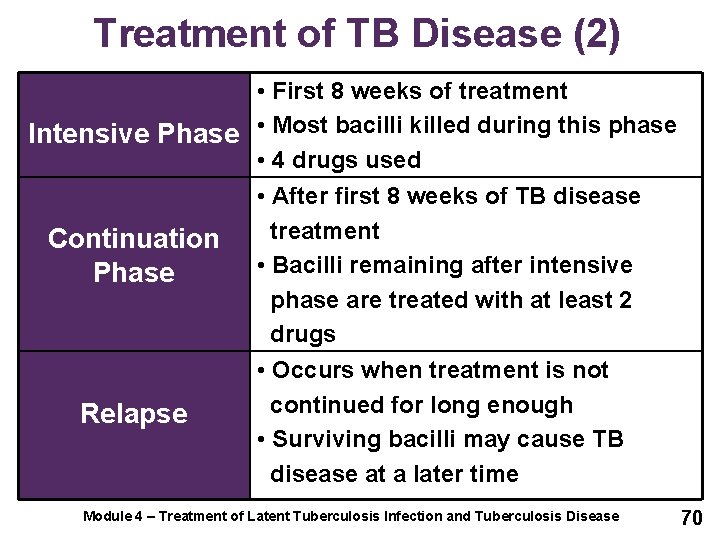
Treatment of TB Disease (2) • First 8 weeks of treatment Intensive Phase • Most bacilli killed during this phase • 4 drugs used • After first 8 weeks of TB disease Continuation treatment • Bacilli remaining after intensive Phase phase are treated with at least 2 drugs • Occurs when treatment is not continued for long enough Relapse • Surviving bacilli may cause TB disease at a later time Module 4 – Treatment of Latent Tuberculosis Infection and Tuberculosis Disease 70
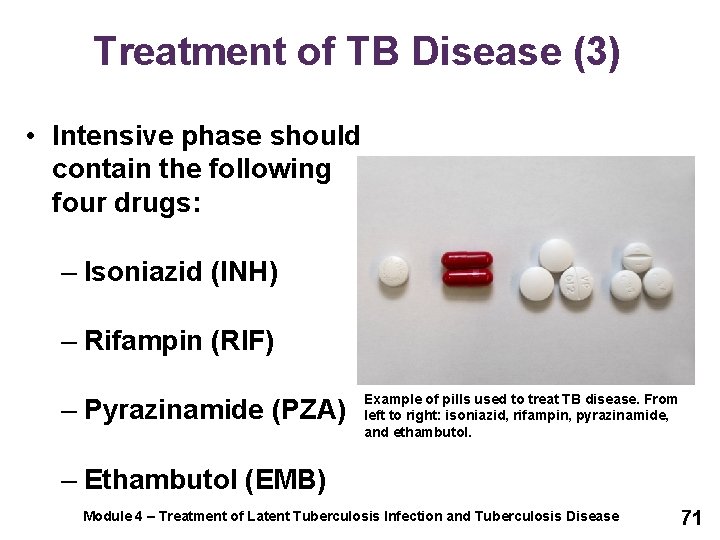
Treatment of TB Disease (3) • Intensive phase should contain the following four drugs: – Isoniazid (INH) – Rifampin (RIF) – Pyrazinamide (PZA) Example of pills used to treat TB disease. From left to right: isoniazid, rifampin, pyrazinamide, and ethambutol. – Ethambutol (EMB) Module 4 – Treatment of Latent Tuberculosis Infection and Tuberculosis Disease 71
Treatment of TB Disease (4) • Treatment must contain multiple drugs to which organisms are susceptible • Treatment with a single drug can lead to the development of drug-resistant TB Module 4 – Treatment of Latent Tuberculosis Infection and Tuberculosis Disease 72
Preventing Drug Resistance (1) • Drug resistance can develop when patients are prescribed an inappropriate regimen – TB disease must be treated with at least 2 drugs to which bacilli are susceptible – Using only one drug can create a population of tubercle bacilli resistant to that drug – Adding a single drug to failing regimen may have the same effect as only using one drug Module 4 – Treatment of Latent Tuberculosis Infection and Tuberculosis Disease 73
Preventing Drug Resistance (2) • Resistance can develop when patients do not take drugs as prescribed – Patients do not take all of their pills – Patients do not take pills as often as prescribed • When this happens, patients may expose the bacilli to a single drug Module 4 – Treatment of Latent Tuberculosis Infection and Tuberculosis Disease 74
Preventing Drug Resistance (3) • Factors that increase the chance of patient having or developing drug-resistant TB: – Patient does not take their medicine regularly and completely – Patient comes from an area of the world where drugresistant TB is common – Malabsorption of drugs – Patient is a contact to someone with drug-resistant TB – Failure to improve on drug-susceptible regimen – Patient develops TB disease again after having taken TB medicine in the past Module 4 – Treatment of Latent Tuberculosis Infection and Tuberculosis Disease 75
Treatment of TB Disease Treatment Regimens 76
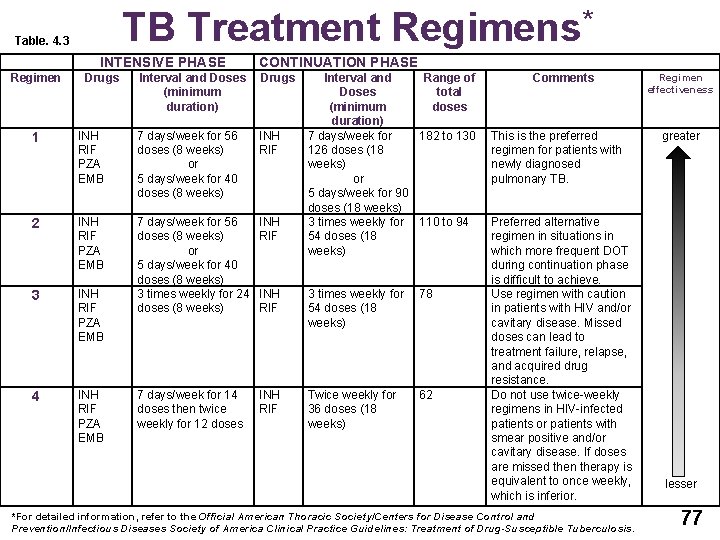
TB Treatment Regimens* Table. 4. 3 INTENSIVE PHASE Regimen Drugs CONTINUATION PHASE Interval and Doses (minimum duration) Drugs Interval and Range of Doses total (minimum doses duration) 7 days/week for 182 to 130 126 doses (18 weeks) or 5 days/week for 90 doses (18 weeks) 3 times weekly for 110 to 94 54 doses (18 weeks) 1 INH RIF PZA EMB 7 days/week for 56 doses (8 weeks) or 5 days/week for 40 doses (8 weeks) INH RIF 2 INH RIF PZA EMB INH RIF 3 INH RIF PZA EMB 7 days/week for 56 doses (8 weeks) or 5 days/week for 40 doses (8 weeks) 3 times weekly for 24 doses (8 weeks) INH RIF 3 times weekly for 54 doses (18 weeks) 78 4 INH RIF PZA EMB 7 days/week for 14 doses then twice weekly for 12 doses INH RIF Twice weekly for 36 doses (18 weeks) 62 Comments This is the preferred regimen for patients with newly diagnosed pulmonary TB. Preferred alternative regimen in situations in which more frequent DOT during continuation phase is difficult to achieve. Use regimen with caution in patients with HIV and/or cavitary disease. Missed doses can lead to treatment failure, relapse, and acquired drug resistance. Do not use twice-weekly regimens in HIV-infected patients or patients with smear positive and/or cavitary disease. If doses are missed then therapy is equivalent to once weekly, which is inferior. *For detailed information, refer to the Official American Thoracic Society/Centers for Disease Control and Module 4 – Treatment of Latent Tuberculosis Infection and Tuberculosis Disease Prevention/Infectious Diseases Society of America Clinical Practice Guidelines: Treatment of Drug-Susceptible Tuberculosis. Regimen effectiveness greater lesser 77
Treatment of TB Disease Study Question 4. 14 Why must TB disease be treated for at least 6 months? Even though most bacilli are killed in the first 8 weeks, some bacilli can survive. Therefore, treatment must continue in order to kill all remaining bacilli. Module 4 – Treatment of Latent Tuberculosis Infection and Tuberculosis Disease 78
Treatment of TB Disease Study Question 4. 15 Which 4 drugs are recommended for the intensive phase of treatment for TB disease? The intensive phase should include isoniazid, rifampin, pyrazinamide, and ethambutol. Module 4 – Treatment of Latent Tuberculosis Infection and Tuberculosis Disease 79
Treatment of TB Disease Study Question 4. 16 Why should multiple drugs be used to treat TB disease? Using only one drug can create a population of tubercle bacilli that is resistant to that drug. When multiple drugs are used together, each drug helps prevent the emergence of bacilli that are resistant to the other drugs. Module 4 – Treatment of Latent Tuberculosis Infection and Tuberculosis Disease 80
Drug Resistance Study Question 4. 17 Name 2 factors that can lead to drug resistance. Drug resistance can develop when: • Patients are prescribed an inappropriate regimen for treatment • Patients do not follow treatment regimens as prescribed Module 4 – Treatment of Latent Tuberculosis Infection and Tuberculosis Disease 81
Treatment of TB Disease Special Considerations 82
Special Considerations (1) • TB medical experts should be consulted for complicated and challenging TB treatment issues • Consultation can be provided by State TB Programs and the CDC-funded TB Regional Training and Medical Consultation Centers (RTMCCs) www. cdc. gov/TB/education/rtmc/default. htm Module 4 – Treatment of Latent Tuberculosis Infection and Tuberculosis Disease 83
Special Considerations (2) People Living with HIV • For HIV-infected TB patients receiving ART, the recommended treatment is a 6 -month daily regimen consisting of: – An intensive phase of INH, RIF, PZA, and EMB for 2 months – A continuation phase of INH and RIF for 4 months Module 4 – Treatment of Latent Tuberculosis Infection and Tuberculosis Disease 84
Special Considerations (3) People Living With HIV • ART should be initiated during TB treatment to improve treatment outcomes for TB patients living with HIV • ART should ideally be initiated – Within 2 weeks of starting TB treatment for patients with CD 4 cell counts <50/mm 3 – By 8 to 12 weeks of starting TB treatment for patients with CD 4 cell counts >50/mm 3 § For patients with TB meningitis or TB involving the central nervous system, ART should NOT be initiated during the first 8 weeks of TB treatment Module 4 – Treatment of Latent Tuberculosis Infection and Tuberculosis Disease 85
Special Considerations (4) People Living With HIV • It is important to be aware of the interaction of RIF with some ART drugs – Rifabutin has fewer drug interaction problems and may be used as a substitute for RIF for some patients • DOT should be provided for all TB patients living with HIV • For patients not receiving ART during TB treatment, it is recommended to extend treatment to 9 months Module 4 – Treatment of Latent Tuberculosis Infection and Tuberculosis Disease 86
Special Considerations (5) Pregnant Women • Treatment should begin as soon as TB disease is diagnosed • Regimen should consist of at least INH, RIF, and EMB for a minimum of 9 months • Clinicians should seek expert consultation to evaluate the risks and benefits of prescribing pyrazinamide (PZA) on a case-by-case basis • Streptomycin (SM) should NOT be used • Vitamin B 6 supplements are recommended for all pregnant women taking INH Module 4 – Treatment of Latent Tuberculosis Infection and Tuberculosis Disease 87
Special Considerations (6) Breastfeeding • Women being treated with first-line TB drugs should not be discouraged from breastfeeding – Only a small concentration of the drugs is found in breast milk – Not harmful to infant Module 4 – Treatment of Latent Tuberculosis Infection and Tuberculosis Disease 88
Special Considerations (7) Breastfeeding • Concentration of drugs in breast milk is not considered effective treatment for LTBI or TB disease for infant • Vitamin B 6 supplements are recommended for all women who are taking INH and are breastfeeding Module 4 – Treatment of Latent Tuberculosis Infection and Tuberculosis Disease 89
Special Considerations (8) Children • Children younger than 5 years of age should start TB treatment as soon as the diagnosis is suspected • Children can be treated with INH, RIF, PZA, and EMB for 2 months, followed by INH and RIF for 4 months – Children receiving EMB should be monitored for vision changes • A 3 drug regimen (INH, RIF, PZA) can be considered in the intensive phase for children who are too young to have their vision monitored, are not infected with HIV, have no prior TB treatment history, and are not at risk for having drug-resistant TB Module 4 – Treatment of Latent Tuberculosis Infection and Tuberculosis Disease 90
Special Considerations (9) People with Extrapulmonary Disease • In general, regimens used for treating pulmonary TB are also effective for treating extrapulmonary TB • 9 to 12 month regimen is recommended for TB of the meninges or central nervous system • 6 to 9 month regimen is recommended for bone and joint TB Module 4 – Treatment of Latent Tuberculosis Infection and Tuberculosis Disease 91
Treatment of TB Disease Alternative Regimens for Treating Drug-Resistant TB 92
Alternative Treatment Regimens (1) Drug-Resistant TB • Alternative regimens should be used for treating drug-resistant TB • Treatment of drug-resistant TB should always be done under the supervision of a medical expert Module 4 – Treatment of Latent Tuberculosis Infection and Tuberculosis Disease 93
Alternative Treatment Regimens (2) Drug-Resistant TB • INH-resistant TB can be treated with the following regimen: – RIF, EMB, and PZA for 6 months Module 4 – Treatment of Latent Tuberculosis Infection and Tuberculosis Disease 94
Alternative Treatment Regimens (3) MDR TB • MDR TB is resistant to INH and RIF, and is more difficult to treat than drug-susceptible TB • Drugs that can be used are less effective and are more likely to cause adverse reactions • Treatment can last 18 to 24 months after culture conversion • As a last resort, some patients undergo surgery to remove part of the disease site • Expert consultation should be sought Module 4 – Treatment of Latent Tuberculosis Infection and Tuberculosis Disease 95

Alternative Treatment Regimens (4) Extensively Drug-Resistant TB (XDR TB) • XDR TB is resistant to INH, RIF, plus any fluoroquinolone, and at least one injectable second-line drug (e. g. , amikacin, kanamycin, or capreomycin) • XDR TB patients have less effective treatment options • XDR TB is very difficult to treat • Expert consultation should be sought Module 4 – Treatment of Latent Tuberculosis Infection and Tuberculosis Disease 96
Alternative Treatment Regimens (5) XDR TB • Successful outcomes for the patient depend greatly on: – Extent of drug resistance – Severity of disease – Whether the patient’s immune system is compromised Module 4 – Treatment of Latent Tuberculosis Infection and Tuberculosis Disease 97
Special Considerations Study Question 4. 18 What treatment regimen should be used for HIV-infected TB patients? • 6 -month daily regimen consisting of an intensive phase of INH, RIF, PZA, and EMB for 2 months followed by a continuation phase of INH and RIF for 4 months • ART should ideally be initiated • Within 2 weeks of starting TB treatment for patients with CD 4 cell counts <50/mm 3 • By 8 to 12 weeks of starting TB treatment for patients with CD 4 cell counts >50/mm 3 • For patients with TB meningitis or TB involving the central nervous system, ART should NOT be initiated during the first 8 weeks of TB treatment Module 4 – Treatment of Latent Tuberculosis Infection and Tuberculosis Disease 98
Special Considerations Study Question 4. 19 In what situations should treatment for TB disease last longer than the usual course of treatment? • HIV-infected TB patients need a minimum of 6 months of treatment. If an HIV-infected patient is NOT receiving ART during TB treatment, it is recommended to prolong treatment to 9 months. • Pregnant women with TB disease should receive at least 9 months of treatment • Persons with TB disease of the meninges or central nervous system should receive a 9 to 12 -month regimen • Persons with bone or joint TB disease should receive a 6 to 9 -month regimen • Extending treatment should be considered for patients with TB disease in any site that is slow to respond • Treatment for MDR TB disease can last 18 to 24 months Module 4 – Treatment of Latent Tuberculosis Infection and Tuberculosis Disease 99
Treatment of TB Disease Treatment and Monitoring Plan and Adverse Reactions 100
Treatment and Monitoring Plan TB Disease • Every TB patient should have a specific treatment and monitoring plan developed in collaboration with local health department • Plan should include: – Description of treatment regimen – Methods of: • Monitoring for adverse reactions • Assessing and ensuring adherence to treatment • Evaluating treatment response Module 4 – Treatment of Latent Tuberculosis Infection and Tuberculosis Disease 101
Monitoring Adverse Reactions (1) TB Disease • Before starting treatment for TB disease, patients should have baseline blood and vision tests to detect problems that may complicate treatment – For example, patients who are taking ethambutol should have baseline visual acuity testing and testing of color discrimination Module 4 – Treatment of Latent Tuberculosis Infection and Tuberculosis Disease 102
Monitoring Adverse Reactions (2) TB Disease • Follow-up tests should be done periodically if: – Results of baseline tests indicate abnormalities – Patient has symptoms that may be due to adverse reactions Module 4 – Treatment of Latent Tuberculosis Infection and Tuberculosis Disease 103
Monitoring Adverse Reactions (3) TB Disease • Patients should be educated about symptoms caused by adverse reactions to drugs • Patients should be seen by clinician at least monthly during treatment and evaluated for possible adverse reactions • Public health workers who have regular contact with patients should ask about adverse reactions to treatment Module 4 – Treatment of Latent Tuberculosis Infection and Tuberculosis Disease 104
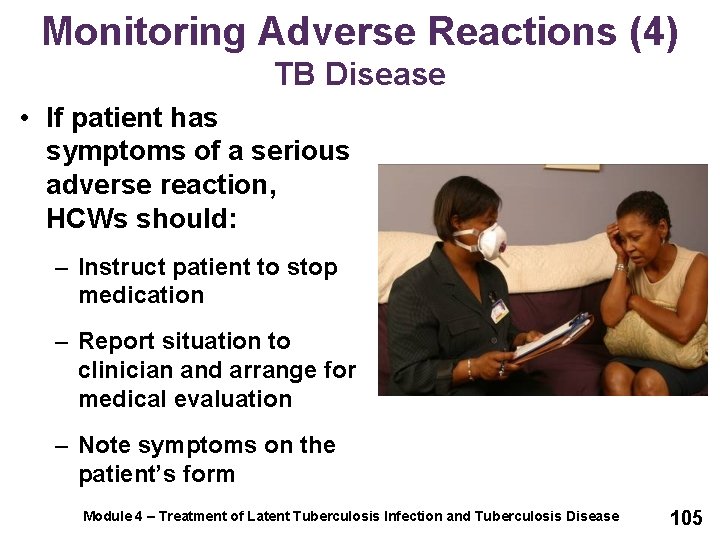
Monitoring Adverse Reactions (4) TB Disease • If patient has symptoms of a serious adverse reaction, HCWs should: – Instruct patient to stop medication – Report situation to clinician and arrange for medical evaluation – Note symptoms on the patient’s form Module 4 – Treatment of Latent Tuberculosis Infection and Tuberculosis Disease 105
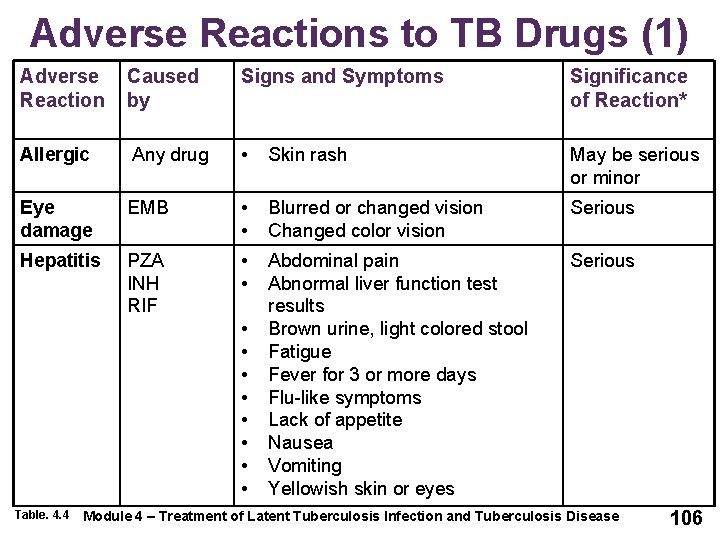
Adverse Reactions to TB Drugs (1) Adverse Reaction Caused by Signs and Symptoms Significance of Reaction* Allergic Any drug • Skin rash May be serious or minor Eye damage EMB • • Blurred or changed vision Changed color vision Serious Hepatitis PZA INH RIF • • Abdominal pain Abnormal liver function test results Brown urine, light colored stool Fatigue Fever for 3 or more days Flu-like symptoms Lack of appetite Nausea Vomiting Yellowish skin or eyes Serious • • Table. 4. 4 Module 4 – Treatment of Latent Tuberculosis Infection and Tuberculosis Disease 106
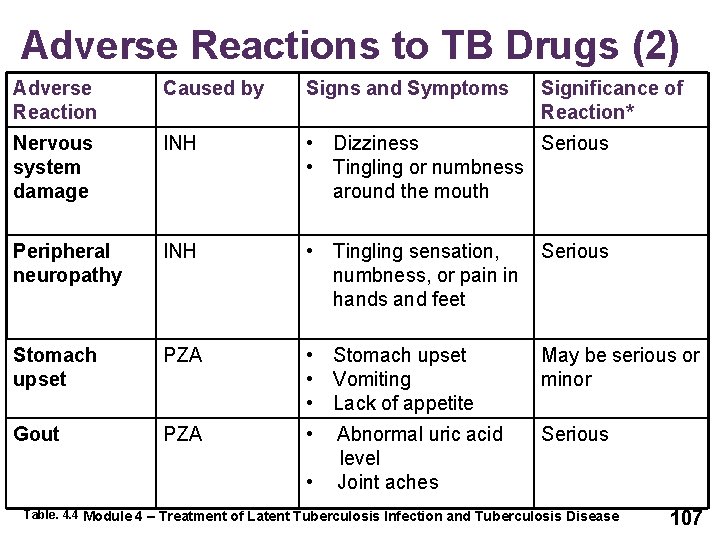
Adverse Reactions to TB Drugs (2) Adverse Reaction Caused by Signs and Symptoms Significance of Reaction* Nervous system damage INH • Dizziness Serious • Tingling or numbness around the mouth Peripheral neuropathy INH • Tingling sensation, Serious numbness, or pain in hands and feet Stomach upset PZA • Stomach upset • Vomiting • Lack of appetite May be serious or minor Gout PZA • Abnormal uric acid level • Joint aches Serious Table. 4. 4 Module 4 – Treatment of Latent Tuberculosis Infection and Tuberculosis Disease 107
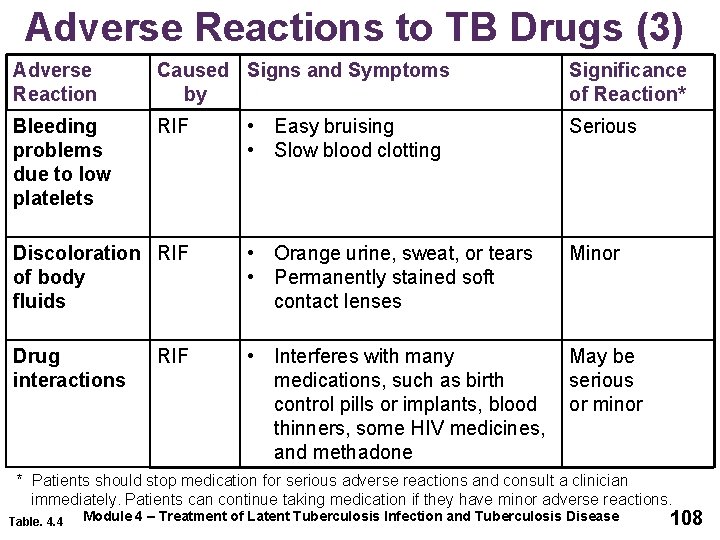
Adverse Reactions to TB Drugs (3) Adverse Reaction Caused Signs and Symptoms by Bleeding problems due to low platelets RIF Significance of Reaction* • Easy bruising • Slow blood clotting Serious Discoloration RIF of body fluids • Orange urine, sweat, or tears • Permanently stained soft contact lenses Minor Drug interactions • Interferes with many May be medications, such as birth serious control pills or implants, blood or minor thinners, some HIV medicines, and methadone RIF * Patients should stop medication for serious adverse reactions and consult a clinician immediately. Patients can continue taking medication if they have minor adverse reactions. Table. 4. 4 Module 4 – Treatment of Latent Tuberculosis Infection and Tuberculosis Disease 108
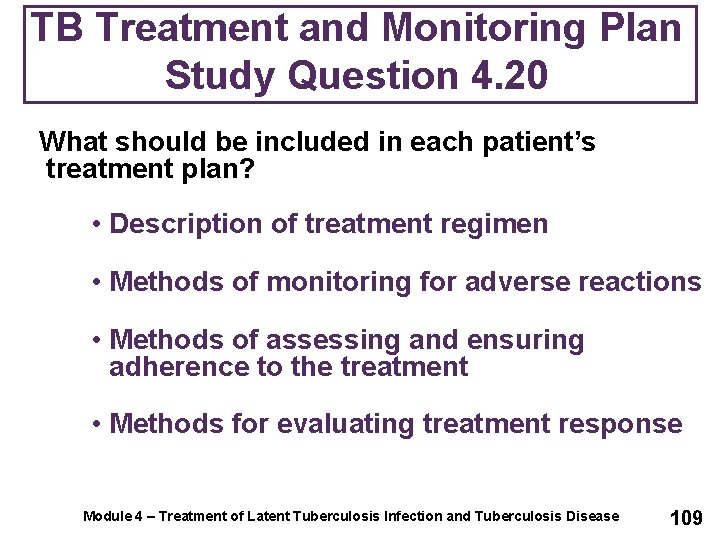
TB Treatment and Monitoring Plan Study Question 4. 20 What should be included in each patient’s treatment plan? • Description of treatment regimen • Methods of monitoring for adverse reactions • Methods of assessing and ensuring adherence to the treatment • Methods for evaluating treatment response Module 4 – Treatment of Latent Tuberculosis Infection and Tuberculosis Disease 109
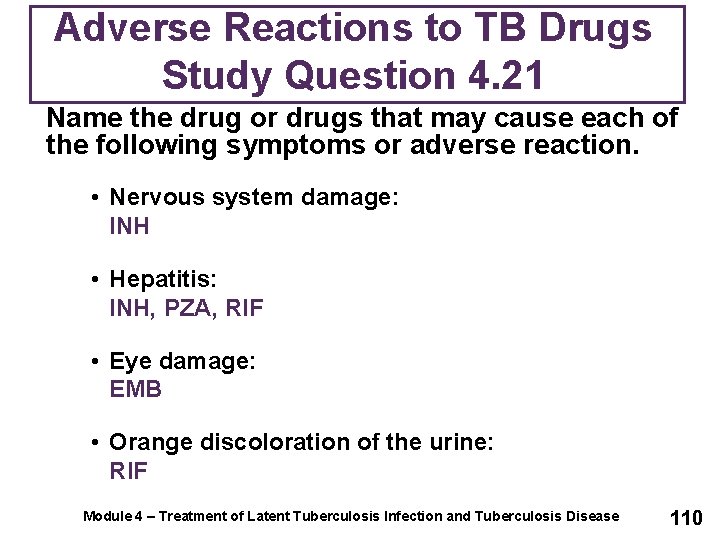
Adverse Reactions to TB Drugs Study Question 4. 21 Name the drug or drugs that may cause each of the following symptoms or adverse reaction. • Nervous system damage: INH • Hepatitis: INH, PZA, RIF • Eye damage: EMB • Orange discoloration of the urine: RIF Module 4 – Treatment of Latent Tuberculosis Infection and Tuberculosis Disease 110
TB Treatment Monitoring Study Question 4. 22 How often should patients be monitored for adverse reactions to TB drugs? All patients should be seen at least monthly during treatment and evaluated for possible adverse reactions. Also, DOT providers should ask about any adverse reactions. Module 4 – Treatment of Latent Tuberculosis Infection and Tuberculosis Disease 111
Treatment of TB Disease Adherence and Evaluating Patients’ Response to Treatment 112
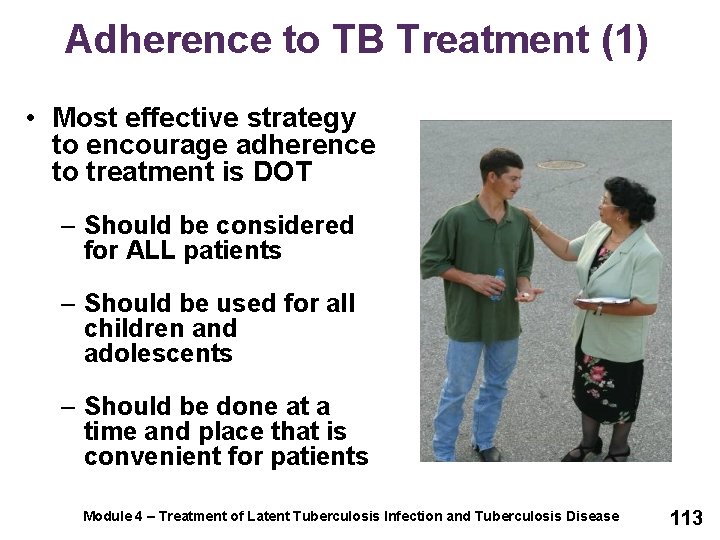
Adherence to TB Treatment (1) • Most effective strategy to encourage adherence to treatment is DOT – Should be considered for ALL patients – Should be used for all children and adolescents – Should be done at a time and place that is convenient for patients Module 4 – Treatment of Latent Tuberculosis Infection and Tuberculosis Disease 113
Adherence to TB Treatment (2) • Incentives and enablers can be used to improve patient adherence – Incentives are rewards given to patient, e. g. , gift cards – Enablers help patient receive treatment, e. g. , bus tokens Module 4 – Treatment of Latent Tuberculosis Infection and Tuberculosis Disease 114
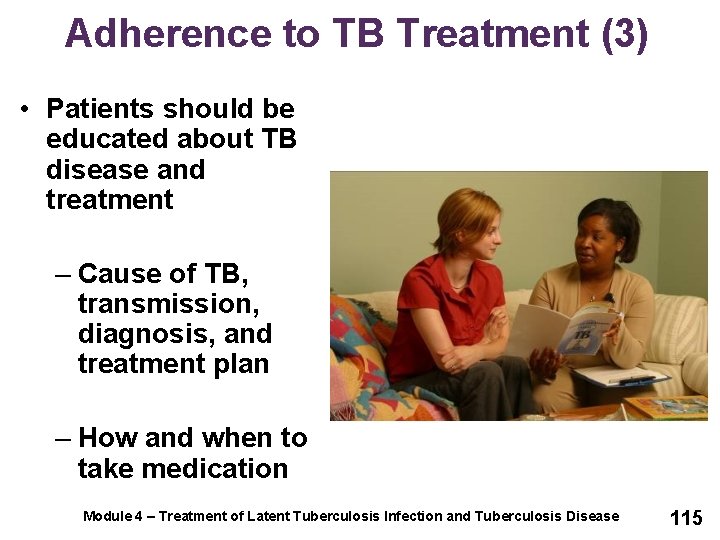
Adherence to TB Treatment (3) • Patients should be educated about TB disease and treatment – Cause of TB, transmission, diagnosis, and treatment plan – How and when to take medication Module 4 – Treatment of Latent Tuberculosis Infection and Tuberculosis Disease 115
Monitoring Patients’ Adherence to Therapy • Patients not receiving DOT should be monitored for adherence to treatment: – Check if patient is reporting to clinic as scheduled – Ask about adherence – Ask patient to bring medications to clinic and count number of pills taken – Use urine tests to detect medication in urine – Assess patient’s clinical response to treatment Module 4 – Treatment of Latent Tuberculosis Infection and Tuberculosis Disease 116
Evaluating Patients’ Response to Treatment (1) Three methods to determine whether a patient is responding to treatment: 1. Check to see if patient has TB symptoms (clinical evaluation) 2. Conduct bacteriologic examination of sputum or other specimens 3. Use chest x-rays to monitor patient’s response to treatment Module 4 – Treatment of Latent Tuberculosis Infection and Tuberculosis Disease 117
Evaluating Patients’ Response to Treatment (2) 1. Check to see if patient has TB symptoms (clinical evaluation) • TB symptoms should gradually improve and go away after starting treatment • Patients whose symptoms do not improve during the first 2 months of treatment, or whose symptoms worsen after initial improvement, should be reevaluated Module 4 – Treatment of Latent Tuberculosis Infection and Tuberculosis Disease 118
Evaluating Patients’ Response to Treatment (3) 2. Conduct bacteriologic examination of sputum or other specimens • Specimens should be examined every month until culture results have converted from positive to negative • Any patient whose culture results have not become negative after 2 months of treatment, or whose results become positive after being negative, should be reevaluated Module 4 – Treatment of Latent Tuberculosis Infection and Tuberculosis Disease 119
Evaluating Patients’ Response to Treatment (4) 3. Use chest x-rays to monitor patient’s response to treatment • Repeated x-rays are not as helpful as monthly bacteriologic and clinical evaluations • Chest x-rays taken at end of treatment can be compared to any follow-up x-rays Module 4 – Treatment of Latent Tuberculosis Infection and Tuberculosis Disease 120
Evaluating Patients’ Response to Treatment (5) • TST or IGRA cannot be used to determine whether the patient is responding to treatment • Treatment completion is defined by number of doses the patient takes within a specific time frame • Length of treatment depends on drugs used, drug susceptibility test results, and the patient’s response to therapy Module 4 – Treatment of Latent Tuberculosis Infection and Tuberculosis Disease 121
Reevaluating Patients Who Do Not Respond to Treatment (1) • Reevaluating the patient means – Obtaining a new specimen for TB culture, and (if positive) drug susceptibility testing – Assessing whether the patient has taken medication as prescribed – Reviewing symptoms – Performing a clinical examination – Repeating chest x-rays Module 4 – Treatment of Latent Tuberculosis Infection and Tuberculosis Disease 122
Reevaluating Patients Who Do Not Respond to Treatment (2) • Patients should be reevaluated if: – Symptoms do not improve in first 2 months of therapy – Symptoms worsen after improving initially – Culture results have not become negative after 2 months of treatment – Culture results become positive after being negative – Chest x-rays show worsening Module 4 – Treatment of Latent Tuberculosis Infection and Tuberculosis Disease 123
Adherence to Therapy Study Question 4. 23 Name 4 ways clinicians can assess whether a patient is adhering to treatment. • Check whether patient is reporting to clinic as scheduled • Ask patient to bring medications to each clinic visit and count the number of pills • Use urine tests to detect medication • Assess patient’s clinical response to therapy Module 4 – Treatment of Latent Tuberculosis Infection and Tuberculosis Disease 124
Adherence to Therapy Study Question 4. 24 What is the best way to ensure that a patient adheres to treatment? Directly observed therapy (DOT) Module 4 – Treatment of Latent Tuberculosis Infection and Tuberculosis Disease 125
Response to Treatment Study Question 4. 25 How can clinicians determine whether a patient is responding to treatment? • Clinical evaluations • Bacteriologic evaluations • Chest x-rays Module 4 – Treatment of Latent Tuberculosis Infection and Tuberculosis Disease 126
Reevaluating the Patient Study Question 4. 26 Under what circumstances should patients be reevaluated? • Symptoms do not improve during first 2 months of therapy • Symptoms worsen after improving initially • Culture results have not become negative after 2 months of treatment • Culture results become positive after being negative • Chest x-rays show worsening Module 4 – Treatment of Latent Tuberculosis Infection and Tuberculosis Disease 127
Reevaluating the Patient Study Question 4. 27 What does reevaluating the patient mean? Reevaluating the patient means obtaining a new specimen for TB culture, and (if positive) drug susceptibility testing, assessing whether the patient has been taking medication as prescribed, reviewing symptoms, performing a clinical evaluation, and repeating chest x-rays. Module 4 – Treatment of Latent Tuberculosis Infection and Tuberculosis Disease 128
Treatment of TB Disease Role of Public Health Workers 129
Role of Public Health Workers (1) • Successful TB treatment is the responsibility of medical providers and HCWs, not the patient • Case management can be used to ensure that patients complete TB treatment • A health department employee is assigned responsibility for the management of specific patients Module 4 – Treatment of Latent Tuberculosis Infection and Tuberculosis Disease 130
Role of Public Health Workers (2) • Provide DOT • Help monitor patients’ response to treatment • Educate patients and families about TB • Locate patients who have missed DOT visits or clinic appointments • Act as interpreters, arrange and provide transportation for patients, and refer patients to other social services • Work with private physicians to make sure TB patients complete an adequate regimen Module 4 – Treatment of Latent Tuberculosis Infection and Tuberculosis Disease 131
Role of Public Health Workers Study Question 4. 28 What is the goal of case management? To provide patient-centered care for completion of treatment and to ensure all public health activities related to stopping TB transmission are completed. Module 4 – Treatment of Latent Tuberculosis Infection and Tuberculosis Disease 132
Role of Public Health Workers Study Question 4. 29 What should a public health worker do if he or she notices that a patient has symptoms of a serious adverse reaction? • Instruct patient to stop taking medication • Report situation to clinician and arrange for a medical evaluation right away • Note symptoms on patient’s form Module 4 – Treatment of Latent Tuberculosis Infection and Tuberculosis Disease 133
Case Studies 134
Module 4: Case Study 4. 1 (1) You are sent to visit the home of a TB patient who was admitted to the hospital last week and diagnosed with infectious TB disease. Living in the home are his wife and his 1 -year -old daughter. Neither one has symptoms of TB disease. You give them both a TST and return 2 days later to read the results. You find that the wife has 14 mm of induration, but the daughter has no induration. Module 4 – Treatment of Latent Tuberculosis Infection and Tuberculosis Disease 135
Module 4: Case Study 4. 1 (2) Should either one receive further evaluation for LTBI or TB disease? Yes, both should receive further evaluation for LTBI or TB disease. Module 4 – Treatment of Latent Tuberculosis Infection and Tuberculosis Disease 136
Module 4: Case Study 4. 1 (3) Should either one start LTBI treatment? Explain. Yes, both should start LTBI treatment. The wife is a contact of someone with infectious TB disease, and she has a positive TST. Therefore, after receiving a medical evaluation (and TB disease is ruled out), she should complete an entire course of LTBI treatment, regardless of her age. Module 4 – Treatment of Latent Tuberculosis Infection and Tuberculosis Disease 137
Module 4: Case Study 4. 1 (4) Should either one start LTBI treatment? Explain. (cont. ) The daughter has a negative TST, but only one week has passed since her last TB exposure. It is possible that not enough time has passed for her to be able to react to the TST. Since it is currently impossible to tell whether she has TB infection and because she may develop TB disease very quickly after infection, she should start LTBI treatment now and be retested 8 to 10 weeks after last exposure to TB. If negative upon retest, she may stop taking medicine. If positive, she should complete the entire course of LTBI treatment (9 months for children). Module 4 – Treatment of Latent Tuberculosis Infection and Tuberculosis Disease 138
Module 4: Case Study 4. 2 (1) A 65 -year-old man is prescribed LTBI treatment with INH because he is a contact of a person with infectious TB disease and he has an induration of 20 mm to the TST. His baseline liver function tests are normal, but he drinks a six-pack of beer every day. Module 4 – Treatment of Latent Tuberculosis Infection and Tuberculosis Disease 139
Module 4: Case Study 4. 2 (2) What kind of monitoring is necessary for this patient while he is taking INH? • Although his liver function tests are normal, he is at high risk of INH-associated hepatitis because he is older and he abuses alcohol. • He should be educated about the symptoms of adverse reactions to INH and instructed to seek medical attention immediately if these symptoms occur. • He should be seen by a clinician monthly to ask about his symptoms, examine him for signs of adverse reactions, and consider performing liver function tests. Module 4 – Treatment of Latent Tuberculosis Infection and Tuberculosis Disease 140
Module 4: Case Study 4. 3 (1) An 18 -month-old girl is admitted to the hospital because of meningitis. Doctors discover that her grandmother had pulmonary TB disease and was treated with a 6 -month regimen. The medical evaluation of the child confirms the diagnosis of TB meningitis. Module 4 – Treatment of Latent Tuberculosis Infection and Tuberculosis Disease 141
Module 4: Case Study 4. 3 (2) How long should the child be treated? The child should be treated for 9 to 12 months because she has TB meningitis. Module 4 – Treatment of Latent Tuberculosis Infection and Tuberculosis Disease 142
Module 4: Case Study 4. 4 (1) You are assigned to deliver medications to TB patients as part of the DOT program where you work. When you visit Mr. Jackson’s house, you ask him how he is feeling. He tells you that he was up all night vomiting. Module 4 – Treatment of Latent Tuberculosis Infection and Tuberculosis Disease 143
Module 4: Case Study 4. 4 (2) What are the possible causes? What should you do? His vomiting may be a symptom of hepatitis (caused by INH, RIF, and PZA) or of stomach upset due to PZA. Mr. Jackson should be advised to stop his medication, and the situation should be reported to the clinician immediately. Mr. Jackson should be given a medical evaluation right away. Module 4 – Treatment of Latent Tuberculosis Infection and Tuberculosis Disease 144
Module 4: Case Study 4. 5 (1) Ms. Young, a patient who started treatment for TB disease last week, calls the TB clinic to complain that her urine has changed to an odd color. Module 4 – Treatment of Latent Tuberculosis Infection and Tuberculosis Disease 145
Module 4: Case Study 4. 5 (2) Name 2 possible causes, and explain how each would affect the color of urine. One possible cause is the discoloration of body fluids, a common side effect of RIF. This would cause Ms. Young’s urine to turn orange. This is NOT a serious condition. Another possible cause is hepatitis, which can be caused by INH, RIF, or PZA. Hepatitis, a serious condition, would cause Ms. Young’s urine to turn dark. If Ms. Young’s urine is brown, the situation should be reported to the clinician and Ms. Young should receive a medical examination right away. Module 4 – Treatment of Latent Tuberculosis Infection and Tuberculosis Disease 146
Module 4: Case Study 4. 6 (1) Mr. Vigo was diagnosed with smear-positive pulmonary TB disease in January. He was treated with INH, RIF, and PZA by his private physician. He visited his physician again in March. His drug susceptibility test results were not available at the time of this appointment. Nevertheless, the physician discontinued his prescription of PZA and gave him refills of INH and RIF. Mr. Vigo visited his physician again in April. He had a persistent cough, and his sputum smear was found to be positive. Module 4 – Treatment of Latent Tuberculosis Infection and Tuberculosis Disease 147
Module 4: Case Study 4. 6 (2) What should be done next? Mr. Vigo’s persistent cough and positive sputum smear indicate that he is not responding to therapy. The most likely explanations are: • He is not taking his medications as prescribed, • The regimen he has been prescribed is not adequate to treat his TB and he may have drug-resistant TB, or • A combination of the two factors listed above. The initial drug susceptibility test results should be located, and susceptibility tests should be repeated on a recent sputum specimen. In addition, his adherence should be evaluated, and he should be given DOT if possible. Module 4 – Treatment of Latent Tuberculosis Infection and Tuberculosis Disease 148
Module 4: Case Study 4. 7 (1) Ms. De. Vonne began treatment for pulmonary TB disease 2 months ago, at the beginning of September. You have been supervising her DOT. During the first few weeks of therapy, you noticed that Ms. De. Vonne’s symptoms were improving a little. However, at a visit in October, you see that Ms. De. Vonne is coughing up blood, and she tells you that she feels like she has a fever. Module 4 – Treatment of Latent Tuberculosis Infection and Tuberculosis Disease 149
Module 4: Case Study 4. 7 (2) What should you do? You should report her symptoms to the clinician and arrange for her to receive a medical evaluation right away. Also, you should note her symptoms on her record. Symptoms becoming worse after improving initially indicates that she is not responding to therapy. Because she is receiving DOT, she is probably taking her medications as prescribed. Therefore, the most likely explanation is that she has drug-resistant TB. Ms. De. Vonne’s initial drug susceptibility test results should be located, and drug susceptibility tests should be repeated on a recent sputum specimen. Module 4 – Treatment of Latent Tuberculosis Infection and Tuberculosis Disease 150
- Slides: 150