
SelfStudy Modules on Tuberculosis Targeted Testing and the
Self-Study Modules on Tuberculosis Targeted Testing and the Diagnosis of Latent Tuberculosis Infection and Tuberculosis Disease
Module 3: Objectives At completion of this module, learners will be able to: 1. Identify high-risk groups for targeted testing 2. Describe how to place, read, and interpret a Mantoux tuberculin skin test (TST) 3. Describe how to interpret an interferongamma release assay (IGRA) 4. Discuss considerations for using either the TST or IGRA for diagnosing latent tuberculosis infection (LTBI) 5. Describe the components of a medical evaluation for diagnosing TB disease Module 3 – Targeted Testing and the Diagnosis of Latent Tuberculosis Infection and Tuberculosis Disease 2
Module 3: Overview • Targeted Testing • Diagnosis of latent tuberculosis infection (LTBI) – TST – IGRAs – TB Testing Programs, the Booster Phenomenon, and Two-Step Testing • Diagnosis of TB Disease • Reporting TB Cases • Case Studies Module 3 – Targeted Testing and the Diagnosis of Latent Tuberculosis Infection and Tuberculosis Disease 3
Targeted Testing 4
Targeted Testing (1) • Targeted testing is a TB control strategy used to identify and treat persons: – At high risk for latent TB infection (LTBI) – At high risk for developing TB disease once infected with M. tuberculosis Module 3 – Targeted Testing and the Diagnosis of Latent Tuberculosis Infection and Tuberculosis Disease 5
Targeted Testing (2) • Identifying persons with LTBI is an important goal of TB elimination because LTBI treatment can: – Prevent the development of TB disease – Stop the further spread of TB to others Module 3 – Targeted Testing and the Diagnosis of Latent Tuberculosis Infection and Tuberculosis Disease 6
Targeted Testing (3) A Decision to Test is a Decision to Treat • TB testing activities should be done only when there is a plan for follow-up care • Health care workers (HCWs) should identify and test persons who are at high risk – People who are not at high risk generally should not be tested Module 3 – Targeted Testing and the Diagnosis of Latent Tuberculosis Infection and Tuberculosis Disease 7
Targeted Testing (4) High-Risk Groups • High-risk groups can be divided into two categories: – People who are at high risk for exposure to or infection with M. tuberculosis – People who are at high risk for developing TB disease once infected with M. tuberculosis Module 3 – Targeted Testing and the Diagnosis of Latent Tuberculosis Infection and Tuberculosis Disease 8
Targeted Testing (5) High-Risk Groups for TB Infection • Contacts of people known or suspected to have TB disease • People who have come to U. S. within 5 years from areas of the world where TB is common • People who visit areas with a high prevalence of TB disease • People who live or work in high-risk congregate settings Module 3 – Targeted Testing and the Diagnosis of Latent Tuberculosis Infection and Tuberculosis Disease 9
Targeted Testing (6) High-Risk Groups for TB Infection • HCWs who serve patients at increased risk for TB disease • Populations defined locally as having an increased incidence of LTBI or TB disease (e. g. , medically underserved, low income, or people who abuse drugs or alcohol) • Infants, children, and adolescents exposed to adults in high-risk groups Module 3 – Targeted Testing and the Diagnosis of Latent Tuberculosis Infection and Tuberculosis Disease 10
Targeted Testing (7) High-Risk Groups for TB Disease after Infection with M. tuberculosis • People living with HIV • Children younger than 5 years of age • People recently infected with M. tuberculosis (within the past 2 years) • People with a history of untreated or inadequately treated TB disease • People receiving immunosuppressive therapy Module 3 – Targeted Testing and the Diagnosis of Latent Tuberculosis Infection and Tuberculosis Disease 11
Targeted Testing (8) High-Risk Groups for TB Disease after Infection with M. tuberculosis • Persons with silicosis, diabetes mellitus, chronic renal failure, leukemia, or cancer of the head, neck, or lung • Persons who have had a gastrectomy or jejunoileal bypass • Low body weight • Cigarette smokers and persons who abuse drugs and alcohol • Persons defined locally as having an increased incidence of disease due to M. tuberculosis Module 3 – Targeted Testing and the Diagnosis of Latent Tuberculosis Infection and Tuberculosis Disease 12
Diagnosis of Latent TB Infection (LTBI) 13
Diagnosis of LTBI • Available testing methods for M. tuberculosis infection: – Mantoux tuberculin skin test (TST) – Blood tests known as interferon-gamma release assays (IGRAs): • Quanti. FERON®-TB Gold In-Tube (QFT-GIT) • T-SPOT®. TB test (T-Spot) Module 3 – Targeted Testing and the Diagnosis of Latent Tuberculosis Infection and Tuberculosis Disease 14
Diagnosis of Latent TB Infection (LTBI) Mantoux Tuberculin Skin Test Administering the Test 15

Mantoux Tuberculin Skin Test (1) • TST is administered by injection • Tuberculin is made from proteins derived from inactive tubercle bacilli • Most people who have TB infection will have a reaction at injection site Syringe being filled with 0. 1 ml of liquid tuberculin Module 3 – Targeted Testing and the Diagnosis of Latent Tuberculosis Infection and Tuberculosis Disease 16
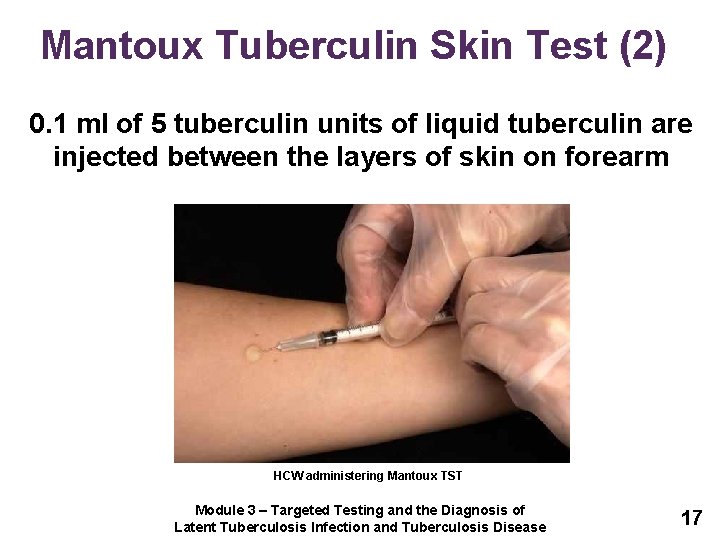
Mantoux Tuberculin Skin Test (2) 0. 1 ml of 5 tuberculin units of liquid tuberculin are injected between the layers of skin on forearm HCW administering Mantoux TST Module 3 – Targeted Testing and the Diagnosis of Latent Tuberculosis Infection and Tuberculosis Disease 17
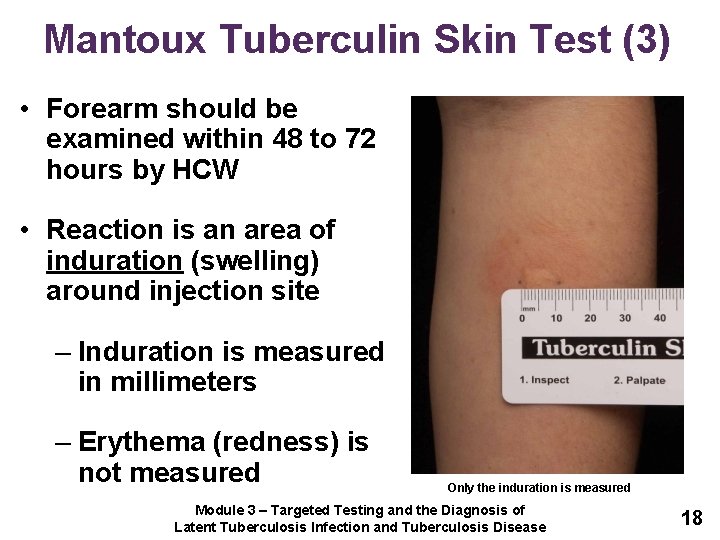
Mantoux Tuberculin Skin Test (3) • Forearm should be examined within 48 to 72 hours by HCW • Reaction is an area of induration (swelling) around injection site – Induration is measured in millimeters – Erythema (redness) is not measured Only the induration is measured Module 3 – Targeted Testing and the Diagnosis of Latent Tuberculosis Infection and Tuberculosis Disease 18
Mantoux Tuberculin Skin Test Study Question 3. 1 What is the TST used for? The TST is used to determine whether a person has TB infection. Module 3 – Targeted Testing and the Diagnosis of Latent Tuberculosis Infection and Tuberculosis Disease 19
Mantoux Tuberculin Skin Test Study Question 3. 2 How is the TST given? The TST is given by a needle and syringe to inject 0. 1 ml of 5 tuberculin units of liquid tuberculin between the layers of the skin, usually on the forearm. Module 3 – Targeted Testing and the Diagnosis of Latent Tuberculosis Infection and Tuberculosis Disease 20
Mantoux Tuberculin Skin Test Study Question 3. 3 With the TST, when is the patient’s arm examined? The patient’s arm is examined by a health care worker 48 to 72 hours after the tuberculin is injected. Module 3 – Targeted Testing and the Diagnosis of Latent Tuberculosis Infection and Tuberculosis Disease 21
Mantoux Tuberculin Skin Test Study Question 3. 4 How is the induration measured? The diameter of the indurated area is measured across the forearm; erythema (redness) around the indurated area is not measured. Module 3 – Targeted Testing and the Diagnosis of Latent Tuberculosis Infection and Tuberculosis Disease 22
Diagnosis of Latent TB Infection (LTBI) Mantoux Tuberculin Skin Test Interpreting the Reaction 23
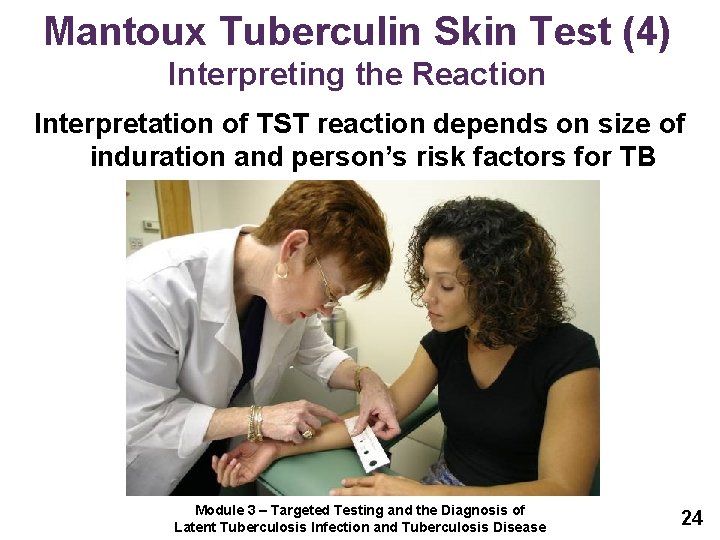
Mantoux Tuberculin Skin Test (4) Interpreting the Reaction Interpretation of TST reaction depends on size of induration and person’s risk factors for TB Module 3 – Targeted Testing and the Diagnosis of Latent Tuberculosis Infection and Tuberculosis Disease 24
Mantoux Tuberculin Skin Test (5) Interpreting the Reaction • Induration of > 5 mm is considered positive for: – People living with HIV – Recent contacts of people with infectious TB – People with chest x-ray findings suggestive of previous TB disease – People with organ transplants – Other immunosuppressed patients Module 3 – Targeted Testing and the Diagnosis of Latent Tuberculosis Infection and Tuberculosis Disease 25
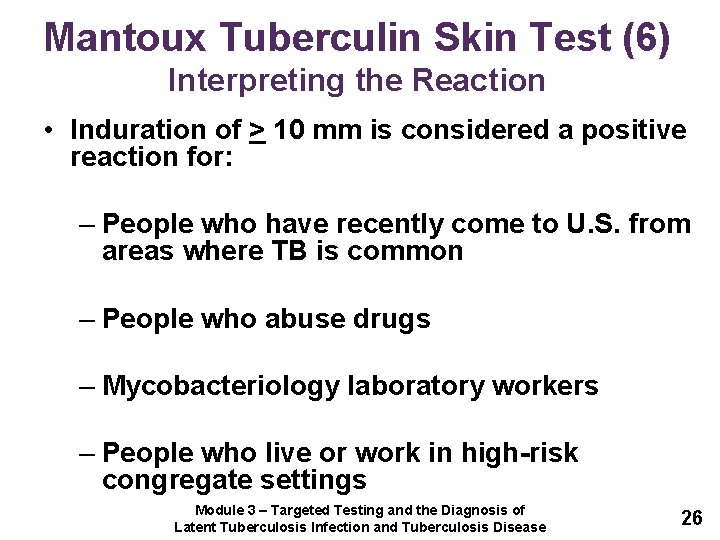
Mantoux Tuberculin Skin Test (6) Interpreting the Reaction • Induration of > 10 mm is considered a positive reaction for: – People who have recently come to U. S. from areas where TB is common – People who abuse drugs – Mycobacteriology laboratory workers – People who live or work in high-risk congregate settings Module 3 – Targeted Testing and the Diagnosis of Latent Tuberculosis Infection and Tuberculosis Disease 26
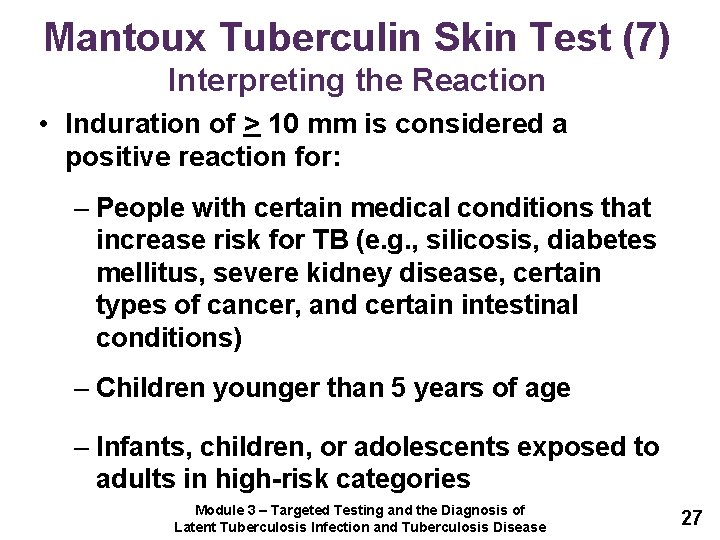
Mantoux Tuberculin Skin Test (7) Interpreting the Reaction • Induration of > 10 mm is considered a positive reaction for: – People with certain medical conditions that increase risk for TB (e. g. , silicosis, diabetes mellitus, severe kidney disease, certain types of cancer, and certain intestinal conditions) – Children younger than 5 years of age – Infants, children, or adolescents exposed to adults in high-risk categories Module 3 – Targeted Testing and the Diagnosis of Latent Tuberculosis Infection and Tuberculosis Disease 27
Mantoux Tuberculin Skin Test (8) Interpreting the Reaction • Induration of > 15 mm is considered a positive reaction for people who have no known risk factors for TB Module 3 – Targeted Testing and the Diagnosis of Latent Tuberculosis Infection and Tuberculosis Disease 28
Occupational Exposure • For people who may be exposed to TB on the job (e. g. , HCWs, staff of nursing homes or correctional facilities), interpretation of TST depends on: – The employee’s individual risk factors for TB – The risk of exposure to TB in the person’s job Module 3 – Targeted Testing and the Diagnosis of Latent Tuberculosis Infection and Tuberculosis Disease 29
Mantoux Tuberculin Skin Test Study Question 3. 5 What two factors determine the interpretation of a skin test reaction as positive or negative? What additional factor is considered for people who may be exposed to TB on the job? • Size of induration and risk factors for TB • An additional factor is the risk of exposure to TB in the person’s job Module 3 – Targeted Testing and the Diagnosis of Latent Tuberculosis Infection and Tuberculosis Disease 30
Mantoux Tuberculin Skin Test Study Question 3. 6 Name 5 groups of people for which > 5 mm of induration is considered a positive reaction? • People living with HIV • Recent contacts of people with infectious TB • People with chest x-ray findings suggestive of previous TB disease • Patients with organ transplants • Other immunosuppressed patients Module 3 – Targeted Testing and the Diagnosis of Latent Tuberculosis Infection and Tuberculosis Disease 31
Mantoux Tuberculin Skin Test Study Question 3. 7 Name seven groups of people for which > 10 mm of induration is considered a positive reaction. • People who have recently come to the U. S. (within the last 5 years) from areas where TB is common • People who abuse drugs • Mycobacteriology lab workers • People who live or work in high-risk congregate settings • People with certain medical conditions • Children younger than 5 years of age • Infants, children, and adolescents exposed to adults in highrisk categories Module 3 – Targeted Testing and the Diagnosis of Latent Tuberculosis Infection and Tuberculosis Disease 32
Mantoux Tuberculin Skin Test Study Question 3. 8 For which group of people is > 15 mm of induration considered a positive reaction? People with no risk factors for TB. Module 3 – Targeted Testing and the Diagnosis of Latent Tuberculosis Infection and Tuberculosis Disease 33
Diagnosis of Latent TB Infection (LTBI) Mantoux Tuberculin Skin Test Factors that Affect the Reaction 34
Mantoux Tuberculin Skin Test (9) False-Positive Reaction • Factors that may cause people to have a positive reaction even if they do not have TB infection: – Infection with nontuberculous mycobacteria (NTM) – BCG vaccination – Administration of incorrect antigen – Incorrect measuring or interpretation of TST reaction Module 3 – Targeted Testing and the Diagnosis of Latent Tuberculosis Infection and Tuberculosis Disease 35
Mantoux Tuberculin Skin Test (10) BCG Vaccine • People who have been vaccinated with BCG may have a false-positive TST reaction – However, there is no reliable way to distinguish a positive TST reaction caused by BCG vaccination from a reaction caused by true TB infection • Individuals should always be further evaluated if they have a positive TST reaction Module 3 – Targeted Testing and the Diagnosis of Latent Tuberculosis Infection and Tuberculosis Disease 36
Mantoux Tuberculin Skin Test (11) False-Negative Reaction • Factors that may cause false-negative reactions: – Anergy – Recent TB infection (within past 8 to 10 weeks) • It can take 2 to 8 weeks after TB infection for body’s immune system to react to tuberculin – Very young age (younger than 6 months) – Recent live-virus measles or smallpox vaccination – Incorrect method of giving the TST – Incorrect measuring or interpretation of TST reaction Module 3 – Targeted Testing and the Diagnosis of Latent Tuberculosis Infection and Tuberculosis Disease 37
Mantoux Tuberculin Skin Test (12) Anergy • Inability to react to skin tests due to weakened immune system • Anergy testing is no longer routinely recommended Module 3 – Targeted Testing and the Diagnosis of Latent Tuberculosis Infection and Tuberculosis Disease 38
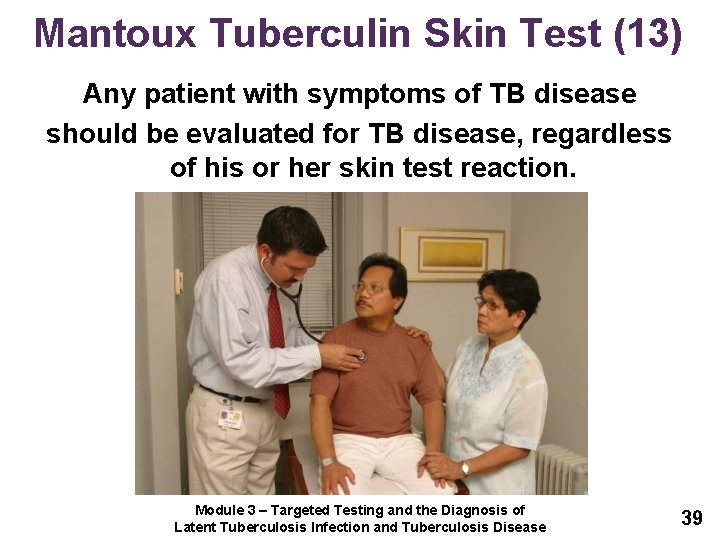
Mantoux Tuberculin Skin Test (13) Any patient with symptoms of TB disease should be evaluated for TB disease, regardless of his or her skin test reaction. Module 3 – Targeted Testing and the Diagnosis of Latent Tuberculosis Infection and Tuberculosis Disease 39
Mantoux Tuberculin Skin Test Study Question 3. 9 Name four factors that may cause false-positive reactions to the TST. • Infection with nontuberculous mycobacteria (NTM) • BCG vaccination • Administration of incorrect antigen • Incorrect measuring or interpretation of TST reaction Module 3 – Targeted Testing and the Diagnosis of Latent Tuberculosis Infection and Tuberculosis Disease 40
Mantoux Tuberculin Skin Test Study Question 3. 10 Is there a reliable way to distinguish a positive TST reaction caused by vaccination with BCG from a reaction caused by true TB infection? No. Individuals who have had the BCG vaccine should be further evaluated for LTBI or TB disease the same as if they were not vaccinated with BCG. Module 3 – Targeted Testing and the Diagnosis of Latent Tuberculosis Infection and Tuberculosis Disease 41
Mantoux Tuberculin Skin Test Study Question 3. 11 Name 6 factors that may cause false-negative reactions to the TST. • Anergy • Recent TB infection (within past 8 to 10 weeks) • Very young age (younger than 6 months) • Recent live-virus measles or smallpox vaccination • Incorrect method of giving the TST • Incorrect measuring or interpretation of TST reaction Module 3 – Targeted Testing and the Diagnosis of Latent Tuberculosis Infection and Tuberculosis Disease 42
Mantoux Tuberculin Skin Test Study Question 3. 12 What is anergy? The inability to react to skin tests because of a weakened immune system. Module 3 – Targeted Testing and the Diagnosis of Latent Tuberculosis Infection and Tuberculosis Disease 43
Mantoux Tuberculin Skin Test Study Question 3. 13 After TB germs have been transmitted to someone, how long does it take before TB infection can be detected by the TST? 2 to 8 weeks Module 3 – Targeted Testing and the Diagnosis of Latent Tuberculosis Infection and Tuberculosis Disease 44
Mantoux Tuberculin Skin Test Study Question 3. 14 What should be done if a patient has a negative TST result, but has symptoms of TB disease? Any patient with symptoms of TB disease should be evaluated for TB disease, regardless of his or her skin test reaction. Module 3 – Targeted Testing and the Diagnosis of Latent Tuberculosis Infection and Tuberculosis Disease 45
Diagnosis of Latent TB Infection (LTBI) Interferon-Gamma Release Assays (IGRAs) 46
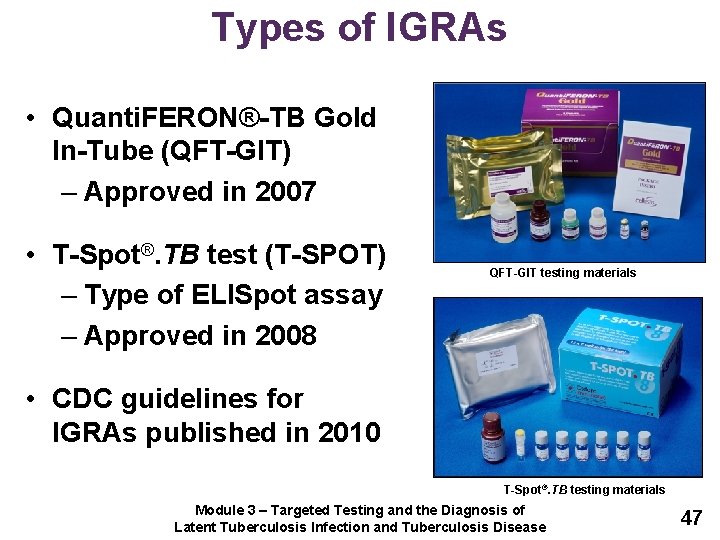
Types of IGRAs • Quanti. FERON®-TB Gold In-Tube (QFT-GIT) – Approved in 2007 • T-Spot®. TB test (T-SPOT) – Type of ELISpot assay – Approved in 2008 QFT-GIT testing materials • CDC guidelines for IGRAs published in 2010 T-Spot®. TB testing materials Module 3 – Targeted Testing and the Diagnosis of Latent Tuberculosis Infection and Tuberculosis Disease 47
IGRAs (1) • Blood tests that help diagnose M. tuberculosis infection • Measures a person’s immune reactivity to tuberculosis Module 3 – Targeted Testing and the Diagnosis of Latent Tuberculosis Infection and Tuberculosis Disease M. 48
IGRAs (2) Conducting the Test • Confirm arrangements for testing in a qualified laboratory • Arrange for delivery of the blood sample to the laboratory in the time the laboratory specifies • Draw a blood sample from the patient according to the manufacturer’s instructions • Schedule follow-up appointment for patient to receive test results • Based on test results, provide follow-up evaluation and treatment as needed Module 3 – Targeted Testing and the Diagnosis of Latent Tuberculosis Infection and Tuberculosis Disease 49
IGRAs (3) How it Works • Blood samples are mixed with antigens (protein substances that can produce an immune response) and incubated • If the person is infected with M. tuberculosis, blood cells will recognize antigens and release interferon gamma (IFN-γ) in response Module 3 – Targeted Testing and the Diagnosis of Latent Tuberculosis Infection and Tuberculosis Disease 50
IGRAs (4) Interpreting Results • QFT-GIT Results – Based on amount of IFN-γ released in response to M. tuberculosis antigens and control substances • T-Spot Results – Based on number of IFN-γ producing cells (spots) produced Module 3 – Targeted Testing and the Diagnosis of Latent Tuberculosis Infection and Tuberculosis Disease 51
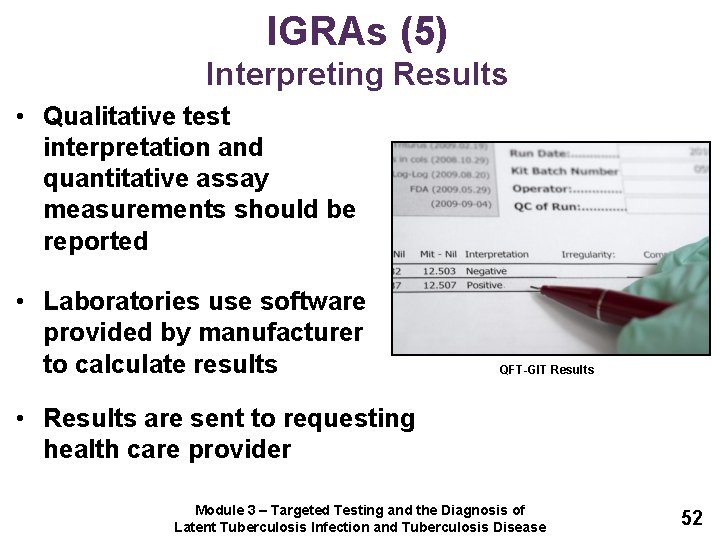
IGRAs (5) Interpreting Results • Qualitative test interpretation and quantitative assay measurements should be reported • Laboratories use software provided by manufacturer to calculate results QFT-GIT Results • Results are sent to requesting health care provider Module 3 – Targeted Testing and the Diagnosis of Latent Tuberculosis Infection and Tuberculosis Disease 52
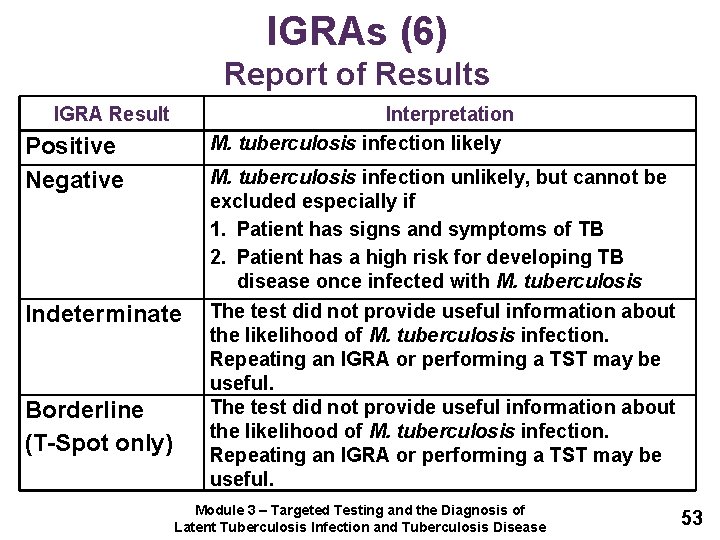
IGRAs (6) Report of Results IGRA Result Interpretation M. tuberculosis infection likely Positive Negative Indeterminate Borderline (T-Spot only) M. tuberculosis infection unlikely, but cannot be excluded especially if 1. Patient has signs and symptoms of TB 2. Patient has a high risk for developing TB disease once infected with M. tuberculosis The test did not provide useful information about the likelihood of M. tuberculosis infection. Repeating an IGRA or performing a TST may be useful. Module 3 – Targeted Testing and the Diagnosis of Latent Tuberculosis Infection and Tuberculosis Disease 53
IGRA Recommendations (1) • IGRAs are the preferred method of testing in – Groups of people who might be less likely to return for TST reading and interpretation – Persons who have received the BCG vaccine • TST is the preferred method of testing for children younger than 5 years of age Module 3 – Targeted Testing and the Diagnosis of Latent Tuberculosis Infection and Tuberculosis Disease 54
IGRA Recommendations (2) • Routine testing using both TST and IGRAs is NOT recommended • Certain situations where results from both tests may be useful: – When the initial test is negative and: • Risk for infection, progression to disease, or a poor outcome is high • There is clinical suspicion for TB disease and confirmation of M. tuberculosis infection is desired Module 3 – Targeted Testing and the Diagnosis of Latent Tuberculosis Infection and Tuberculosis Disease 55
IGRA Recommendations (3) • Certain situations where results from both tests may be useful – When the initial test is positive and: • Additional evidence of infection is required to encourage the patient’s acceptance and adherence to treatment • Person has a low risk of both infection and progression from infection to TB disease Module 3 – Targeted Testing and the Diagnosis of Latent Tuberculosis Infection and Tuberculosis Disease 56
IGRA Advantages • Requires single patient visit to conduct test • Results can be available in 24 hours • Does not cause booster phenomenon which can happen with repeat TSTs • BCG vaccination does not affect IGRA results Module 3 – Targeted Testing and the Diagnosis of Latent Tuberculosis Infection and Tuberculosis Disease 57
IGRA Disadvantages and Limitations (1) • Blood samples must be processed within 8 to 30 hours after collection • Errors in collecting or transporting blood specimens or in running and interpreting test can decrease accuracy • Limited data on its use in certain populations (e. g. , children younger than 5, persons recently infected, immunocompromised persons, and serial testing) Module 3 – Targeted Testing and the Diagnosis of Latent Tuberculosis Infection and Tuberculosis Disease 58
IGRA Disadvantages and Limitations (2) • Limited data on its use to predict who will progress to TB disease • Tests may be expensive Module 3 – Targeted Testing and the Diagnosis of Latent Tuberculosis Infection and Tuberculosis Disease 59
IGRAs Study Question 3. 15 What are the steps for conducting an IGRA? • Confirm arrangements for testing in a qualified laboratory • Arrange for delivery of the blood sample to the laboratory • Draw a blood sample from the patient according to the manufacturer’s instructions • Schedule follow-up appointment for patient to receive test results • Based on test results, provide follow-up evaluation and treatment as needed Module 3 – Targeted Testing and the Diagnosis of Latent Tuberculosis Infection and Tuberculosis Disease 60
IGRAs Study Question 3. 16 How are IGRA results interpreted? • QFT-GIT results are based on the amount of IFN-γ that is released in response to the antigens and control substances • T-Spot results are based on the number of IFN-γ producing cells (spots) produced • Both the standard qualitative test interpretation and the quantitative assay measurements should be reported Module 3 – Targeted Testing and the Diagnosis of Latent Tuberculosis Infection and Tuberculosis Disease 61
IGRAs Study Question 3. 17 How should negative IGRA results be interpreted? • If the result is negative, the patient is unlikely to have M. tuberculosis infection • Patient may not require further evaluation unless they have signs and symptoms of TB disease Module 3 – Targeted Testing and the Diagnosis of Latent Tuberculosis Infection and Tuberculosis Disease 62
IGRAs Study Question 3. 18 What are 5 advantages for using an IGRA as compared to the TST? • Requires a single patient visit • Results can be available in 24 hours • Does not cause the booster phenomenon • Laboratory test not affected by health care worker perception or bias • BCG vaccine does not affect IGRA results Module 3 – Targeted Testing and the Diagnosis of Latent Tuberculosis Infection and Tuberculosis Disease 63
Diagnosis of Latent TB Infection (LTBI) TB Testing Programs, the Booster Phenomenon, and Two-Step Testing 64
TB Testing Programs (1) • Many residential facilities, health care settings, and other settings have TB testing programs – Employees and residents are periodically given TSTs or IGRAs • Testing programs: – Identify people who have LTBI or TB disease so they can be given treatment as needed – Determine whether TB is being transmitted in facility Module 3 – Targeted Testing and the Diagnosis of Latent Tuberculosis Infection and Tuberculosis Disease 65
TB Testing Programs (2) Baseline Test • Employees or residents are given TSTs or IGRAs when they first enter facility – If person is negative, they may be retested at regular intervals thereafter Module 3 – Targeted Testing and the Diagnosis of Latent Tuberculosis Infection and Tuberculosis Disease 66
TB Testing Programs (3) Conversion • Persons whose TST or IGRA result converts from negative to positive may have been infected with M. tuberculosis – TST or IGRA conversions may indicate that TB is being transmitted in facility Module 3 – Targeted Testing and the Diagnosis of Latent Tuberculosis Infection and Tuberculosis Disease 67
Booster Phenomenon • Phenomenon in which people who are skin tested many years after they became infected with TB have: – Negative reaction to initial TST – Positive reaction to subsequent TST given up to one year later • Occurs mainly in older adults • May affect accuracy of baseline skin test • TST can boost subsequent IGRA results Module 3 – Targeted Testing and the Diagnosis of Latent Tuberculosis Infection and Tuberculosis Disease 68
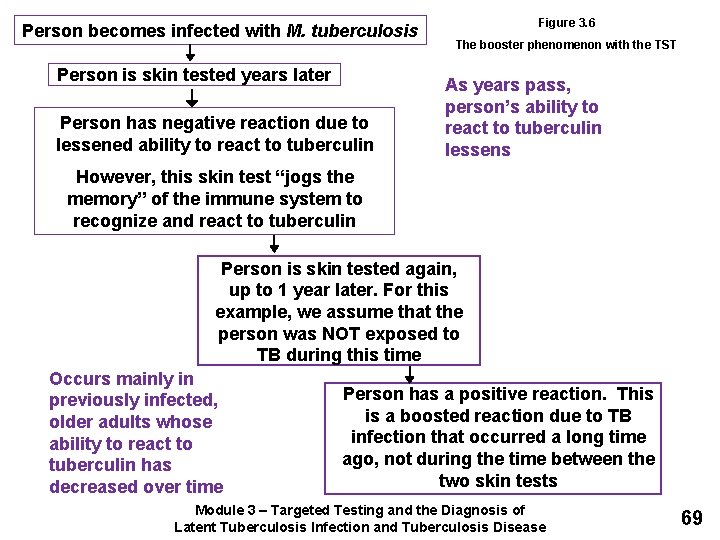
Person becomes infected with M. tuberculosis Person is skin tested years later Person has negative reaction due to lessened ability to react to tuberculin Figure 3. 6 The booster phenomenon with the TST As years pass, person’s ability to react to tuberculin lessens However, this skin test “jogs the memory” of the immune system to recognize and react to tuberculin Person is skin tested again, up to 1 year later. For this example, we assume that the person was NOT exposed to TB during this time Occurs mainly in previously infected, older adults whose ability to react to tuberculin has decreased over time Person has a positive reaction. This is a boosted reaction due to TB infection that occurred a long time ago, not during the time between the two skin tests Module 3 – Targeted Testing and the Diagnosis of Latent Tuberculosis Infection and Tuberculosis Disease 69
Two-Step Testing • Only conducted when TST is used • Distinguishes between boosted reactions and reactions caused by recent infections • Should be used for initial skin testing of persons who will be retested periodically • If person’s initial skin test is negative, they should be given a second test 1 to 3 weeks later – Second test positive: probably boosted reaction – Second test negative: considered uninfected Module 3 – Targeted Testing and the Diagnosis of Latent Tuberculosis Infection and Tuberculosis Disease 70
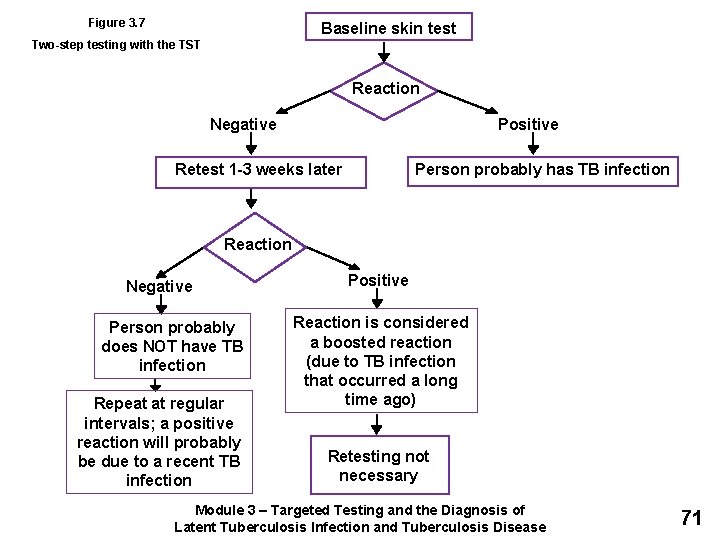
Figure 3. 7 Baseline skin test Two-step testing with the TST Reaction Negative Positive Retest 1 -3 weeks later Person probably has TB infection Reaction Negative Person probably does NOT have TB infection Repeat at regular intervals; a positive reaction will probably be due to a recent TB infection Positive Reaction is considered a boosted reaction (due to TB infection that occurred a long time ago) Retesting not necessary Module 3 – Targeted Testing and the Diagnosis of Latent Tuberculosis Infection and Tuberculosis Disease 71
Booster Phenomenon Study Question 3. 19 What is the booster phenomenon? • Phenomenon in which people who are skin tested many years after becoming infected with M. tuberculosis have a negative reaction to an initial skin test, followed by a positive reaction to a skin test given up to a year later • Occurs because the ability to react to tuberculin lessens over time in some people Module 3 – Targeted Testing and the Diagnosis of Latent Tuberculosis Infection and Tuberculosis Disease 72
Two-Step Testing Study Question 3. 20 What is the purpose of two-step testing? To distinguish between boosted reactions and reactions caused by recent infection. Module 3 – Targeted Testing and the Diagnosis of Latent Tuberculosis Infection and Tuberculosis Disease 73
Two-Step Testing Study Question 3. 21 In what type of situation is two-step testing used? It is used in many programs for skin testing employees when they start their job. Module 3 – Targeted Testing and the Diagnosis of Latent Tuberculosis Infection and Tuberculosis Disease 74
Two-Step Testing Study Question 3. 22 How is two-step testing done? If a person has a negative reaction to an initial skin test, he or she is given a second test 1 to 3 weeks later. – If reaction to second test is positive, it is considered a boosted reaction – If reaction to second test is negative, person is considered to be uninfected Module 3 – Targeted Testing and the Diagnosis of Latent Tuberculosis Infection and Tuberculosis Disease 75
Diagnosis of TB Disease 76
Medical Evaluation • Anyone with TB symptoms or positive TST or IGRA result should be medically evaluated for TB disease • Components of medical evaluation: 1. 2. 3. 4. 5. Medical history Physical examination Test for TB infection Chest x-ray Bacteriological examination Module 3 – Targeted Testing and the Diagnosis of Latent Tuberculosis Infection and Tuberculosis Disease 77
Diagnosis of TB Disease Medical Evaluation 1. Medical History 2. Physical Examination 3. Test for TB Infection 78
1. Medical History (1) • Clinicians should ask patients if they have: – Symptoms of TB disease – Been exposed to a person with infectious TB or have risk factors for exposure to TB – Any risk factors for developing TB disease – Had LTBI or TB disease before Module 3 – Targeted Testing and the Diagnosis of Latent Tuberculosis Infection and Tuberculosis Disease 79
1. Medical History (2) General Symptoms of TB Disease • Fever • Appetite loss • Chills • Fatigue • Night sweats • Malaise • Weight loss Module 3 – Targeted Testing and the Diagnosis of Latent Tuberculosis Infection and Tuberculosis Disease 80
1. Medical History (3) Symptoms of Pulmonary TB Disease • Cough lasting 3 or more weeks • Chest pain • Coughing up sputum or blood Module 3 – Targeted Testing and the Diagnosis of Latent Tuberculosis Infection and Tuberculosis Disease 81
1. Medical History (4) Symptoms of Extrapulmonary TB Disease • Symptoms of extrapulmonary TB disease depend on part of body that is affected • For example: – TB disease in spine may cause back pain – TB disease in kidneys may cause blood in urine Module 3 – Targeted Testing and the Diagnosis of Latent Tuberculosis Infection and Tuberculosis Disease 82
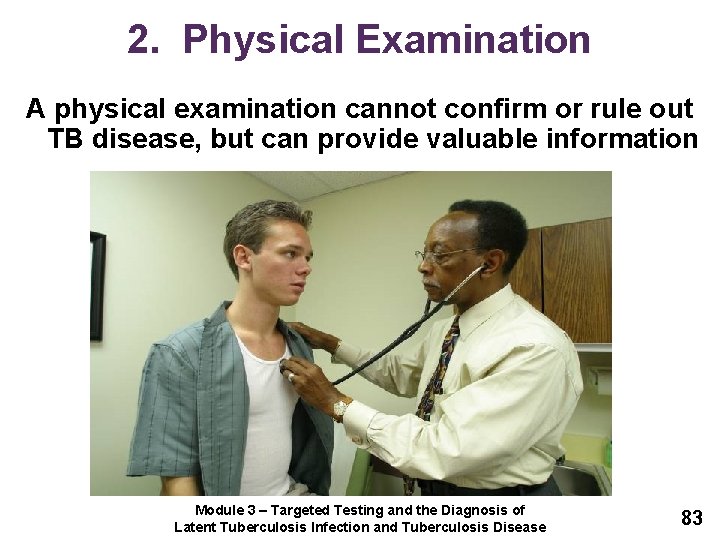
2. Physical Examination A physical examination cannot confirm or rule out TB disease, but can provide valuable information Module 3 – Targeted Testing and the Diagnosis of Latent Tuberculosis Infection and Tuberculosis Disease 83
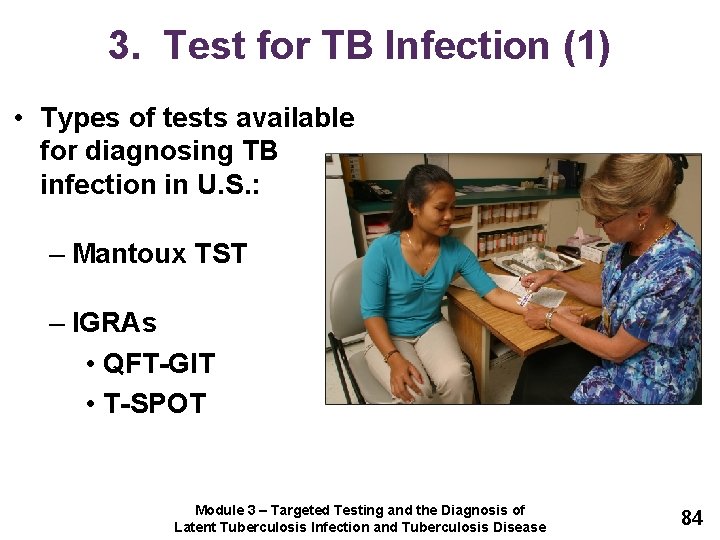
3. Test for TB Infection (1) • Types of tests available for diagnosing TB infection in U. S. : – Mantoux TST – IGRAs • QFT-GIT • T-SPOT Module 3 – Targeted Testing and the Diagnosis of Latent Tuberculosis Infection and Tuberculosis Disease 84
3. Test for TB Infection (2) • Patients with symptoms of TB disease should always be evaluated for TB disease, regardless of their TST or IGRA test result – Clinicians should not wait for TST or IGRA results before starting other diagnostic tests – TST or IGRA should be given at the same time as other steps in the diagnosis of TB disease Module 3 – Targeted Testing and the Diagnosis of Latent Tuberculosis Infection and Tuberculosis Disease 85
Diagnosis of TB Disease Study Question 3. 23 What are the 5 components for conducting a medical evaluation for diagnosing TB disease? • Medical history • Physical examination • Test for TB infection • Chest x-ray • Bacteriologic examinations Module 3 – Targeted Testing and the Diagnosis of Latent Tuberculosis Infection and Tuberculosis Disease 86
Diagnosis of TB Disease Study Question 3. 24 What parts of a patient’s medical history should lead a clinician to suspect TB? • Symptoms of TB disease • Exposure to a person who has infectious TB or has other risk factors for exposure to TB • Risk factors for developing TB disease • TB infection or TB disease in the past Module 3 – Targeted Testing and the Diagnosis of Latent Tuberculosis Infection and Tuberculosis Disease 87
Diagnosis of TB Disease Study Question 3. 25 What are the symptoms of pulmonary TB disease? What are the symptoms of extrapulmonary TB disease? • General symptoms of TB disease: Weight loss, fatigue, malaise, fever, and night sweats • Pulmonary: Coughing, pain in chest, coughing up sputum or blood • Extrapulmonary: Depends on the part of the body that is affected by the disease. For example, TB of the spine may cause pain in the back; TB of the kidney may cause blood in the urine. Module 3 – Targeted Testing and the Diagnosis of Latent Tuberculosis Infection and Tuberculosis Disease 88
Diagnosis of TB Disease Study Question 3. 26 For patients with symptoms of TB disease, should clinicians wait for TST or IGRA results before starting other diagnostic tests? No, clinicians should not wait for TST or IGRA results before starting other diagnostic tests. Module 3 – Targeted Testing and the Diagnosis of Latent Tuberculosis Infection and Tuberculosis Disease 89
Diagnosis of TB Disease Medical Evaluation 4. Chest X-Ray 90
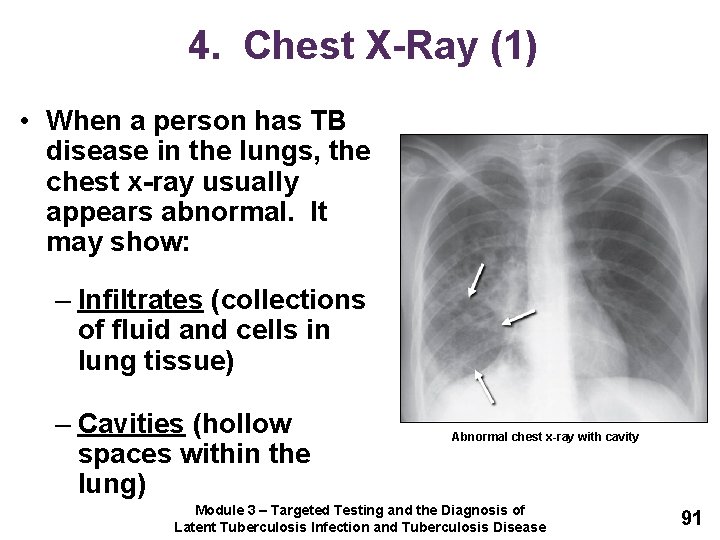
4. Chest X-Ray (1) • When a person has TB disease in the lungs, the chest x-ray usually appears abnormal. It may show: – Infiltrates (collections of fluid and cells in lung tissue) – Cavities (hollow spaces within the lung) Abnormal chest x-ray with cavity Module 3 – Targeted Testing and the Diagnosis of Latent Tuberculosis Infection and Tuberculosis Disease 91
4. Chest X-Ray (2) • Chest x-rays can: – Help rule out possibility of pulmonary TB disease in persons who have a positive TST or IGRA result – Check for lung abnormalities Module 3 – Targeted Testing and the Diagnosis of Latent Tuberculosis Infection and Tuberculosis Disease 92
4. Chest X-Ray (3) • Chest x-rays cannot confirm TB disease – Other diseases can cause lung abnormalities – Only bacteriologic culture can confirm patient has TB disease – Chest x-ray may appear unusual or even appear normal for persons living with HIV Module 3 – Targeted Testing and the Diagnosis of Latent Tuberculosis Infection and Tuberculosis Disease 93
Chest X-Ray Study Question 3. 27 Name 2 purposes of the chest x-ray. • Help rule out possibility of pulmonary TB disease in a person who has positive TST or IGRA result and no symptoms of TB • Check for lung abnormalities in people who have symptoms of TB disease Module 3 – Targeted Testing and the Diagnosis of Latent Tuberculosis Infection and Tuberculosis Disease 94
Chest X-Ray Study Question 3. 28 Can the results of a chest x-ray confirm that a person has TB disease? Why or why not? No. A variety of illnesses may produce abnormalities on chest x-ray. Only bacteriologic culture can prove whether or not a patient has TB disease. Module 3 – Targeted Testing and the Diagnosis of Latent Tuberculosis Infection and Tuberculosis Disease 95
Diagnosis of TB Disease Medical Evaluation 5. Bacteriologic Examination 96
5. Bacteriologic Examination (1) • TB bacteriologic examination is done in a laboratory that specifically deals with M. tuberculosis and other mycobacteria – Clinical specimens (e. g. , sputum, urine) are examined and cultured in laboratory Module 3 – Targeted Testing and the Diagnosis of Latent Tuberculosis Infection and Tuberculosis Disease 97
5. Bacteriologic Examination (2) • Bacteriologic examination has 5 parts – Specimen collection – Examination of acid-fast bacilli (AFB) smears – Direct identification of specimen (nucleic acid amplification) – Specimen culturing and identification – Drug susceptibility testing Module 3 – Targeted Testing and the Diagnosis of Latent Tuberculosis Infection and Tuberculosis Disease 98
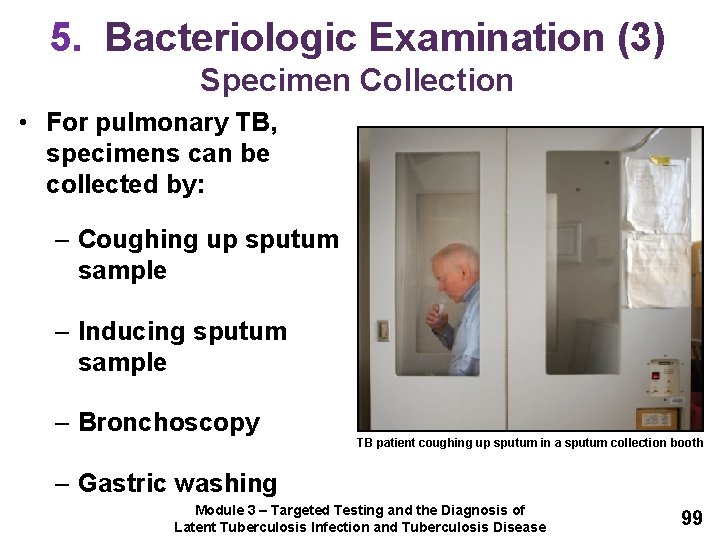
5. Bacteriologic Examination (3) Specimen Collection • For pulmonary TB, specimens can be collected by: – Coughing up sputum sample – Inducing sputum sample – Bronchoscopy TB patient coughing up sputum in a sputum collection booth – Gastric washing Module 3 – Targeted Testing and the Diagnosis of Latent Tuberculosis Infection and Tuberculosis Disease 99
5. Bacteriologic Examination (4) Sputum Sample Specimen Collection • Easiest and least expensive method is to have patient cough into sterile container • HCWs should coach and instruct patient • Should have at least 3 sputum specimens examined – Collected in 8 to 24 hour intervals – At least one early morning specimen Module 3 – Targeted Testing and the Diagnosis of Latent Tuberculosis Infection and Tuberculosis Disease 100
5. Bacteriologic Examination (5) Induced Sputum Collection • Induced sputum collection should be used if patient cannot cough up sputum on their own • Patient inhales saline mist, causing deep coughing • Specimen often clear and watery, should be labeled “induced specimen” Module 3 – Targeted Testing and the Diagnosis of Latent Tuberculosis Infection and Tuberculosis Disease 101
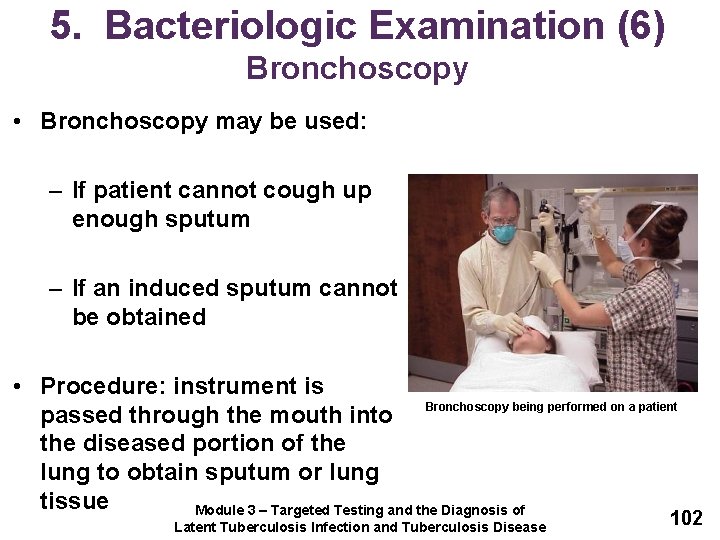
5. Bacteriologic Examination (6) Bronchoscopy • Bronchoscopy may be used: – If patient cannot cough up enough sputum – If an induced sputum cannot be obtained • Procedure: instrument is passed through the mouth into Bronchoscopy being performed on a patient the diseased portion of the lung to obtain sputum or lung tissue Module 3 – Targeted Testing and the Diagnosis of Latent Tuberculosis Infection and Tuberculosis Disease 102
5. Bacteriologic Examination (7) Gastric Washing • Usually only used if sample cannot be obtained from other procedures • Often used with children • Tube is inserted through nose and into stomach to obtain gastric secretions that may contain sputum Module 3 – Targeted Testing and the Diagnosis of Latent Tuberculosis Infection and Tuberculosis Disease 103
5. Bacteriologic Examination (8) Extrapulmonary TB • Specimens other than sputum may be obtained • Depends on part of body affected • For example: – Urine samples for TB disease of kidneys – Fluid samples from area around spine for TB meningitis Module 3 – Targeted Testing and the Diagnosis of Latent Tuberculosis Infection and Tuberculosis Disease 104
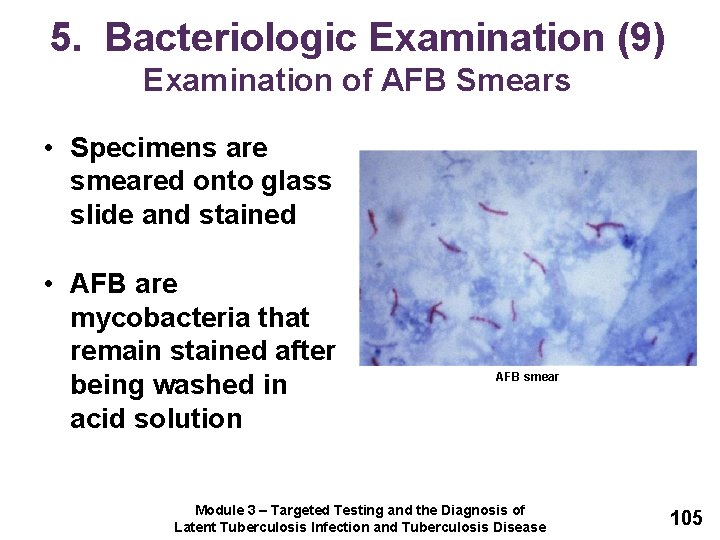
5. Bacteriologic Examination (9) Examination of AFB Smears • Specimens are smeared onto glass slide and stained • AFB are mycobacteria that remain stained after being washed in acid solution AFB smear Module 3 – Targeted Testing and the Diagnosis of Latent Tuberculosis Infection and Tuberculosis Disease 105
5. Bacteriologic Examination (10) Examination of AFB Smears • Number of AFB on smear are counted • According to number of AFB seen, smears are classified as 4+, 3+, 2+, or 1+ – For example, 4+ smear has 10 times as many AFB than 3+ smear • If very few AFB are seen, the smear is classified by the actual number of AFB seen • A negative smear does not rule out the possibility of TB Module 3 – Targeted Testing and the Diagnosis of Latent Tuberculosis Infection and Tuberculosis Disease 106
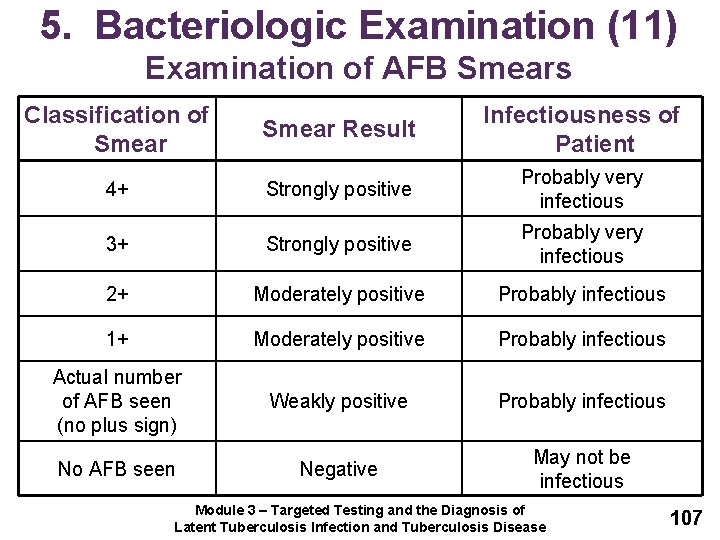
5. Bacteriologic Examination (11) Examination of AFB Smears Classification of Smear Result Infectiousness of Patient 4+ Strongly positive Probably very infectious 3+ Strongly positive Probably very infectious 2+ Moderately positive Probably infectious 1+ Moderately positive Probably infectious Actual number of AFB seen (no plus sign) Weakly positive Probably infectious No AFB seen Negative May not be infectious Module 3 – Targeted Testing and the Diagnosis of Latent Tuberculosis Infection and Tuberculosis Disease 107
Bacteriologic Examination Study Questions 3. 29 What are the 4 ways to collect sputum specimens? Indicate which procedure is the least expensive and easiest to perform. • Patient simply coughs up sputum and the sputum is collected in a sterile container. This is the least expensive and easiest procedure. • Induced sputum • Bronchoscopy • Gastric washing Module 3 – Targeted Testing and the Diagnosis of Latent Tuberculosis Infection and Tuberculosis Disease 108
Bacteriologic Examination Study Question 3. 30 What do laboratory personnel look for in a smear? Acid-fast bacilli (AFB) Module 3 – Targeted Testing and the Diagnosis of Latent Tuberculosis Infection and Tuberculosis Disease 109
Bacteriologic Examination Study Question 3. 31 What does a positive smear indicate about a patient’s infectiousness? Patients who have many tubercle bacilli seen in their sputum have a positive smear. Patients who have positive smears are considered infectious because they can cough many tubercle bacilli into the air. Module 3 – Targeted Testing and the Diagnosis of Latent Tuberculosis Infection and Tuberculosis Disease 110
Diagnosis of TB Disease Medical Evaluation 5. Bacteriologic Examination (continued) 111
5. Bacteriologic Examination (12) Nucleic Acid Amplification Tests (NAA) • NAA tests directly identify M. tuberculosis from sputum specimens by: – Amplifying (copying) DNA and RNA segments • Can help guide clinician’s decision for patient therapy and isolation • Does not replace need for AFB smear, culture, or clinical judgment Module 3 – Targeted Testing and the Diagnosis of Latent Tuberculosis Infection and Tuberculosis Disease 112
5. Bacteriologic Examination (13) Nucleic Acid Amplification Tests (NAA) • If NAA test and AFB smears are positive: – Patient is presumed to have TB and should begin treatment • If NAA test is negative and AFB smears are positive: – Patient may have nontuberculous mycobacteria infection (NTM) Module 3 – Targeted Testing and the Diagnosis of Latent Tuberculosis Infection and Tuberculosis Disease 113
5. Bacteriologic Examination (14) Xpert MTB/RIF Assay • Xpert MTB/RIF assay is a NAA test that simultaneously detects Mycobacterium tuberculosis complex (MTBC) and resistance to rifampin • To conduct this test, a sputum sample is mixed with the reagent that is provided with the assay • A cartridge containing the mixture is placed in the Gene. Xpert machine • Results are available in less than 2 hours Module 3 – Targeted Testing and the Diagnosis of Latent Tuberculosis Infection and Tuberculosis Disease 114
5. Bacteriologic Examination (15) Xpert MTB/RIF Assay • Results that are positive for MTBC and for rifampin resistance indicate that the bacteria have a high probability of resistance to rifampin – Should be confirmed by additional rapid testing • If rifampin resistance is confirmed, rapid molecular testing for drug resistance to both first-line and second-line drugs should be performed so an effective treatment regimen can be selected Module 3 – Targeted Testing and the Diagnosis of Latent Tuberculosis Infection and Tuberculosis Disease 115
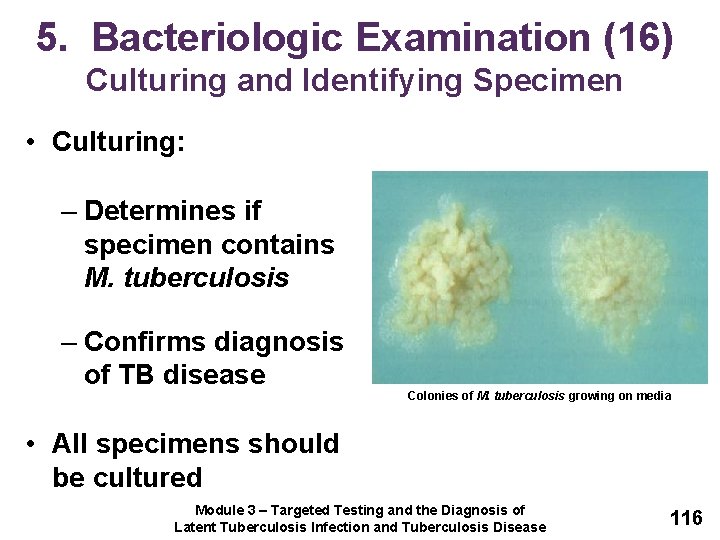
5. Bacteriologic Examination (16) Culturing and Identifying Specimen • Culturing: – Determines if specimen contains M. tuberculosis – Confirms diagnosis of TB disease Colonies of M. tuberculosis growing on media • All specimens should be cultured Module 3 – Targeted Testing and the Diagnosis of Latent Tuberculosis Infection and Tuberculosis Disease 116
5. Bacteriologic Examination (17) Culturing and Identifying Specimen • Step 1: Detect growth of mycobacteria – Solid media: 3 to 6 weeks – Liquid media: 4 to 14 days • Step 2: Identify organism that has grown – Nucleic acid probes: 2 to 4 hours Module 3 – Targeted Testing and the Diagnosis of Latent Tuberculosis Infection and Tuberculosis Disease 117
5. Bacteriologic Examination (18) Culturing and Identifying Specimen • Positive culture: M. tuberculosis identified in patient’s culture – Called M. tuberculosis isolate – Confirms diagnosis of TB disease Module 3 – Targeted Testing and the Diagnosis of Latent Tuberculosis Infection and Tuberculosis Disease 118
5. Bacteriologic Examination (19) Culturing and Identifying Specimen • Negative culture: M. tuberculosis NOT identified in patient’s culture – Does not rule out TB disease – Some patients with negative cultures are diagnosed with TB based on signs and symptoms Module 3 – Targeted Testing and the Diagnosis of Latent Tuberculosis Infection and Tuberculosis Disease 119
5. Bacteriologic Examination (20) Culturing and Identifying Specimen • Bacteriological examinations are important for assessing infectiousness and response to treatment • Specimens should be obtained monthly until 2 consecutive cultures are negative • Culture conversion is the most important objective measure of response to treatment Module 3 – Targeted Testing and the Diagnosis of Latent Tuberculosis Infection and Tuberculosis Disease 120
5. Bacteriologic Examination (21) Drug Susceptibility Testing • Conducted when patient is first found to have positive culture for TB • Determines which drugs kill tubercle bacilli • Tubercle bacilli killed by a particular drug are susceptible to that drug • Tubercle bacilli that grow in presence of a particular drug are resistant to that drug Module 3 – Targeted Testing and the Diagnosis of Latent Tuberculosis Infection and Tuberculosis Disease 121
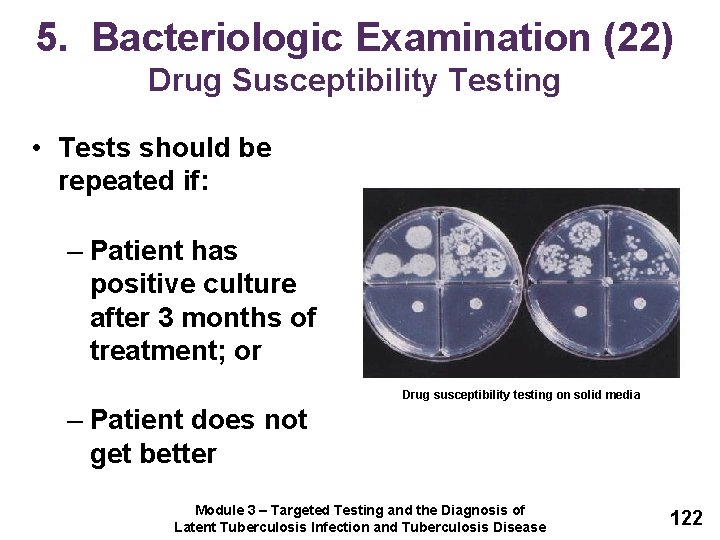
5. Bacteriologic Examination (22) Drug Susceptibility Testing • Tests should be repeated if: – Patient has positive culture after 3 months of treatment; or Drug susceptibility testing on solid media – Patient does not get better Module 3 – Targeted Testing and the Diagnosis of Latent Tuberculosis Infection and Tuberculosis Disease 122
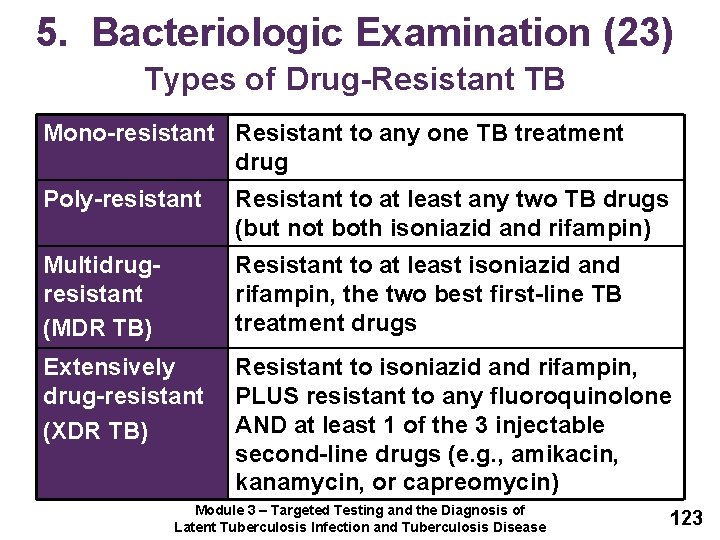
5. Bacteriologic Examination (23) Types of Drug-Resistant TB Mono-resistant Resistant to any one TB treatment drug Poly-resistant Resistant to at least any two TB drugs (but not both isoniazid and rifampin) Multidrugresistant (MDR TB) Resistant to at least isoniazid and rifampin, the two best first-line TB treatment drugs Extensively drug-resistant (XDR TB) Resistant to isoniazid and rifampin, PLUS resistant to any fluoroquinolone AND at least 1 of the 3 injectable second-line drugs (e. g. , amikacin, kanamycin, or capreomycin) Module 3 – Targeted Testing and the Diagnosis of Latent Tuberculosis Infection and Tuberculosis Disease 123
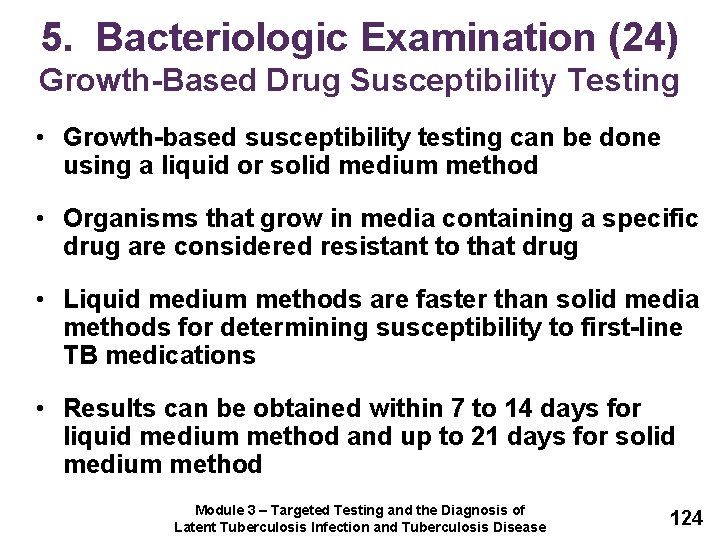
5. Bacteriologic Examination (24) Growth-Based Drug Susceptibility Testing • Growth-based susceptibility testing can be done using a liquid or solid medium method • Organisms that grow in media containing a specific drug are considered resistant to that drug • Liquid medium methods are faster than solid media methods for determining susceptibility to first-line TB medications • Results can be obtained within 7 to 14 days for liquid medium method and up to 21 days for solid medium method Module 3 – Targeted Testing and the Diagnosis of Latent Tuberculosis Infection and Tuberculosis Disease 124
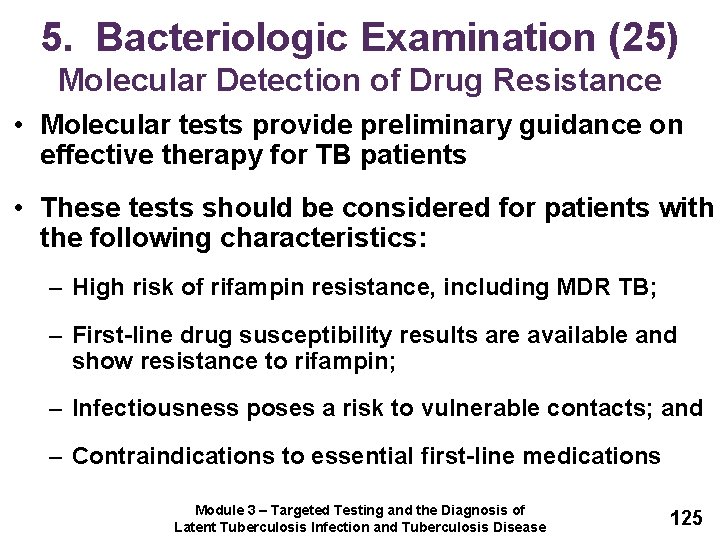
5. Bacteriologic Examination (25) Molecular Detection of Drug Resistance • Molecular tests provide preliminary guidance on effective therapy for TB patients • These tests should be considered for patients with the following characteristics: – High risk of rifampin resistance, including MDR TB; – First-line drug susceptibility results are available and show resistance to rifampin; – Infectiousness poses a risk to vulnerable contacts; and – Contraindications to essential first-line medications Module 3 – Targeted Testing and the Diagnosis of Latent Tuberculosis Infection and Tuberculosis Disease 125
Culture Specimen Study Question 3. 32 Why is it necessary to culture a specimen? It is necessary to culture a specimen to determine whether the specimen contains M. tuberculosis and to confirm diagnosis of TB disease. Additionally, culture is needed for genotyping and for performing drug susceptibility testing. Module 3 – Targeted Testing and the Diagnosis of Latent Tuberculosis Infection and Tuberculosis Disease 126
Culture Specimen Study Question 3. 33 What does a positive culture for M. tuberculosis mean? How is this important for the TB diagnosis? It means that M. tuberculosis has been identified in a patient’s culture. A positive culture for M. tuberculosis confirms the diagnosis of TB disease. Module 3 – Targeted Testing and the Diagnosis of Latent Tuberculosis Infection and Tuberculosis Disease 127
Drug Susceptibility Study Question 3. 34 Why are drug susceptibility tests done? To determine which drugs will kill the tubercle bacilli that are causing disease in a particular patient. Test results can help clinicians choose the appropriate drugs for each patient. Module 3 – Targeted Testing and the Diagnosis of Latent Tuberculosis Infection and Tuberculosis Disease 128
Drug Susceptibility Study Question 3. 35 How often should drug susceptibility tests be done? • Should be done when the patient is first found to have a positive culture for M. tuberculosis • Tests should be repeated if a patient has a positive culture for M. tuberculosis after 3 months of treatment or if a patient is not getting better Module 3 – Targeted Testing and the Diagnosis of Latent Tuberculosis Infection and Tuberculosis Disease 129
Reporting TB Cases 130
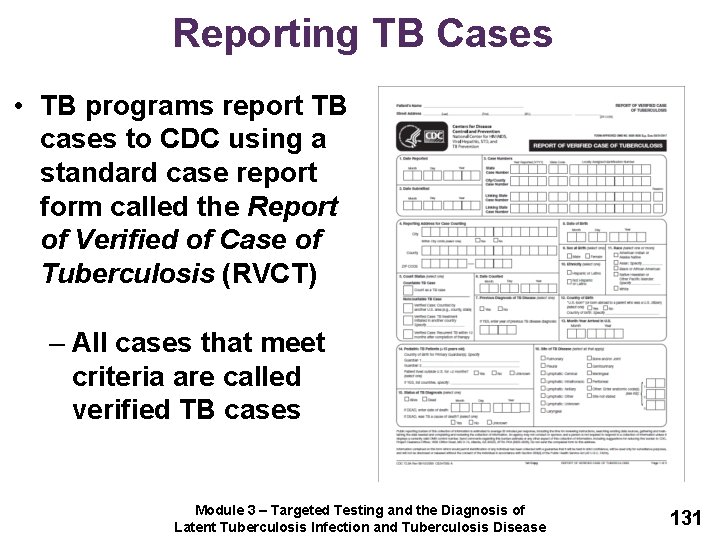
Reporting TB Cases • TB programs report TB cases to CDC using a standard case report form called the Report of Verified of Case of Tuberculosis (RVCT) – All cases that meet criteria are called verified TB cases Module 3 – Targeted Testing and the Diagnosis of Latent Tuberculosis Infection and Tuberculosis Disease 131
Criteria for Reporting TB Cases (1) Cases that meet one of these four sets of criteria are counted as verified TB cases: 1. Patient has positive culture for M. tuberculosis 2. Patient has positive NAA test for M. tuberculosis • NAA test must be accompanied by culture for mycobacteria species Module 3 – Targeted Testing and the Diagnosis of Latent Tuberculosis Infection and Tuberculosis Disease 132
Criteria for Reporting TB Cases (2) 3. Patient has positive AFB smear, but culture has not been obtained or is falsely negative or contaminated 4. In the absence of laboratory confirmation, patient meets all of the following criteria: • • Positive TST or IGRA, Other signs and symptoms of TB disease, Treatment with 2 or more TB drugs, and A completed diagnostic evaluation. Module 3 – Targeted Testing and the Diagnosis of Latent Tuberculosis Infection and Tuberculosis Disease 133
Criteria for Reporting TB Cases (3) • Cases that do not meet any of these sets of criteria may be counted as a verified TB case if health care provider has reported the case and decided to treat the patient for TB disease Module 3 – Targeted Testing and the Diagnosis of Latent Tuberculosis Infection and Tuberculosis Disease 134
Case Studies 135
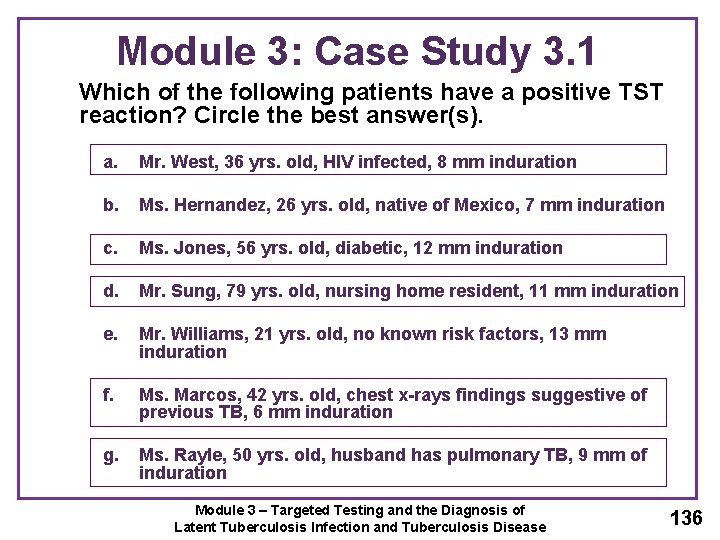
Module 3: Case Study 3. 1 Which of the following patients have a positive TST reaction? Circle the best answer(s). a. Mr. West, 36 yrs. old, HIV infected, 8 mm induration b. Ms. Hernandez, 26 yrs. old, native of Mexico, 7 mm induration c. Ms. Jones, 56 yrs. old, diabetic, 12 mm induration d. Mr. Sung, 79 yrs. old, nursing home resident, 11 mm induration e. Mr. Williams, 21 yrs. old, no known risk factors, 13 mm induration f. Ms. Marcos, 42 yrs. old, chest x-rays findings suggestive of previous TB, 6 mm induration g. Ms. Rayle, 50 yrs. old, husband has pulmonary TB, 9 mm of induration Module 3 – Targeted Testing and the Diagnosis of Latent Tuberculosis Infection and Tuberculosis Disease 136
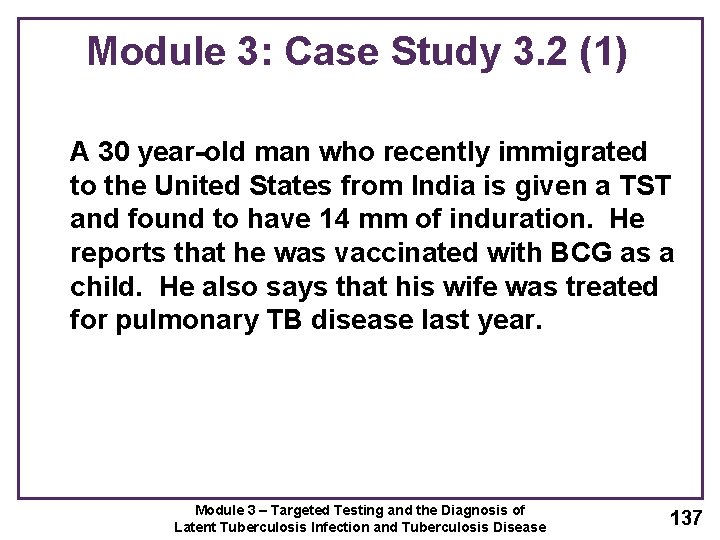
Module 3: Case Study 3. 2 (1) A 30 year-old man who recently immigrated to the United States from India is given a TST and found to have 14 mm of induration. He reports that he was vaccinated with BCG as a child. He also says that his wife was treated for pulmonary TB disease last year. Module 3 – Targeted Testing and the Diagnosis of Latent Tuberculosis Infection and Tuberculosis Disease 137
Module 3: Case Study 3. 2 (2) How should this man’s results be interpreted? • Positive reaction to TST • Should be further evaluated for LTBI or TB disease What factors make it more likely that this man’s positive reaction is due to TB infection? • From area of the world where TB is common • Wife had pulmonary TB Module 3 – Targeted Testing and the Diagnosis of Latent Tuberculosis Infection and Tuberculosis Disease 138
Module 3: Case Study 3. 3 (1) Mr. Bell comes to the TB clinic for a TST. He believes that he has been exposed to TB, and he knows he is at high risk for TB because he is HIV infected. He is given a TST, and his reaction is read 48 hours later as 0 mm of induration. Module 3 – Targeted Testing and the Diagnosis of Latent Tuberculosis Infection and Tuberculosis Disease 139
Module 3: Case Study 3. 3 (2) What are 3 ways to interpret this result? • May not have TB infection • May be anergic • It may be less than 8 to 10 weeks since he was exposed to TB Module 3 – Targeted Testing and the Diagnosis of Latent Tuberculosis Infection and Tuberculosis Disease 140
Module 3: Case Study 3. 4 (1) Ms. Wilson is a 60 -year-old nurse. When she started a job at the local hospital, she was given a TST, her first test in 25 years. Her reaction was read 48 hours later as 0 mm induration. Six months later, she was retested as part of the TB testing program in the unit where she works. Her skin test reaction was read 48 hours later as 11 mm of induration. Module 3 – Targeted Testing and the Diagnosis of Latent Tuberculosis Infection and Tuberculosis Disease 141
Module 3: Case Study 3. 4 (2) What are 2 ways to interpret this result? • She was exposed to TB sometime in the 6 months between her first and second skin tests • She had a boosted reaction Module 3 – Targeted Testing and the Diagnosis of Latent Tuberculosis Infection and Tuberculosis Disease 142
Module 3: Case Study 3. 5 (1) Mr. Lee has a cough and other symptoms of TB disease, and he is evaluated with a chest x-ray. However, he is unable to cough up any sputum on his own for the bacteriologic examination. Module 3 – Targeted Testing and the Diagnosis of Latent Tuberculosis Infection and Tuberculosis Disease 143
Module 3: Case Study 3. 5 (2) What should be done? Since he is unable to cough up sputum, other techniques can be used to obtain sputum. First, clinicians can try to obtain an induced sputum sample. If they cannot obtain the sample, a bronchoscopy or gastric washing may be done. Module 3 – Targeted Testing and the Diagnosis of Latent Tuberculosis Infection and Tuberculosis Disease 144
Module 3: Case Study 3. 6 (1) Ms. Thompson gave three sputum specimens, which were sent to the laboratory for smear examination and culture. The smear results were reported as 4+, 3+, and 4+. Module 3 – Targeted Testing and the Diagnosis of Latent Tuberculosis Infection and Tuberculosis Disease 145
Module 3: Case Study 3. 6 (2) What do these results tell you about Ms. Thompson’s diagnosis and her infectiousness? • Results show that Ms. Thompson’s sputum specimens contain many acid-fast bacilli • Clinicians should suspect that she has TB disease and should consider her infectious since her smears are positive • It is possible that the AFB are mycobacteria other than tubercle bacilli • Diagnosis cannot be confirmed until culture results are available Module 3 – Targeted Testing and the Diagnosis of Latent Tuberculosis Infection and Tuberculosis Disease 146
Module 3: Case Study 3. 7 (1) Mr. Sagoo has symptoms of TB disease and a cavity on his chest x-ray, but all of his sputum smears are negative for acid-fast bacilli. Module 3 – Targeted Testing and the Diagnosis of Latent Tuberculosis Infection and Tuberculosis Disease 147
Module 3: Case Study 3. 7 (2) Does this rule out the diagnosis of pulmonary TB disease? No Why or why not? M. tuberculosis may grow in the cultures even though there were no acid fast bacilli on the smear. Mr. Sagoo’s symptoms and his abnormal chest x-ray suggest that he has pulmonary TB disease. Module 3 – Targeted Testing and the Diagnosis of Latent Tuberculosis Infection and Tuberculosis Disease 148
Module 3: Case Study 3. 8 (1) In the public health clinic, you see a patient, Ms. Sanchez, who complains of weight loss, fever, and a cough of 4 weeks duration. When questioned, she reports that she has been treated for TB disease in the past and that she occasionally injects heroin. Module 3 – Targeted Testing and the Diagnosis of Latent Tuberculosis Infection and Tuberculosis Disease 149
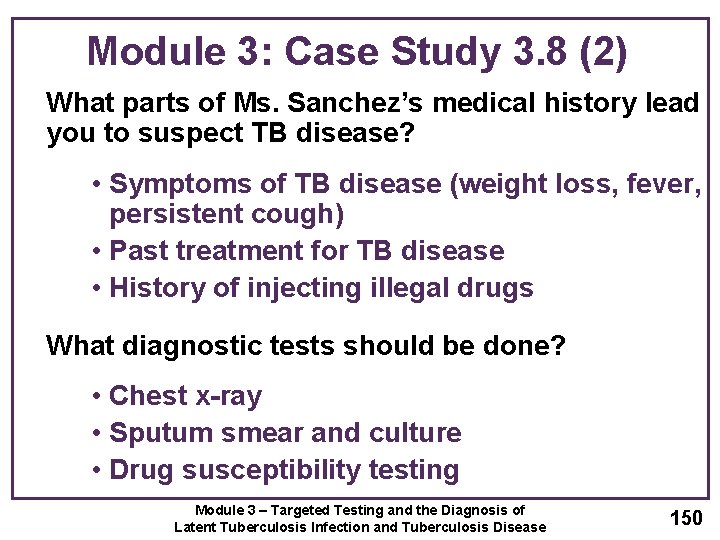
Module 3: Case Study 3. 8 (2) What parts of Ms. Sanchez’s medical history lead you to suspect TB disease? • Symptoms of TB disease (weight loss, fever, persistent cough) • Past treatment for TB disease • History of injecting illegal drugs What diagnostic tests should be done? • Chest x-ray • Sputum smear and culture • Drug susceptibility testing Module 3 – Targeted Testing and the Diagnosis of Latent Tuberculosis Infection and Tuberculosis Disease 150
- Slides: 150