
SelfRegulation core elemets Psychology 415 Social Basis of
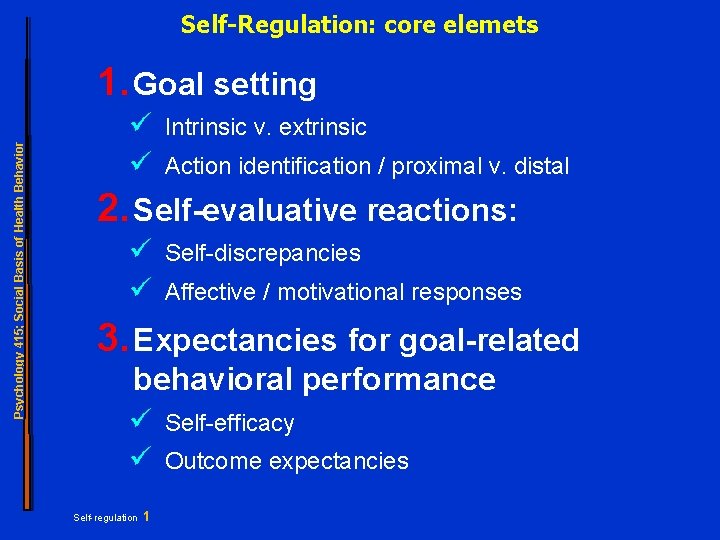
Self-Regulation: core elemets Psychology 415; Social Basis of Health Behavior 1. Goal setting ü Intrinsic v. extrinsic ü Action identification / proximal v. distal 2. Self-evaluative reactions: ü Self-discrepancies ü Affective / motivational responses 3. Expectancies for goal-related behavioral performance ü Self-efficacy ü Outcome expectancies Self-regulation 1
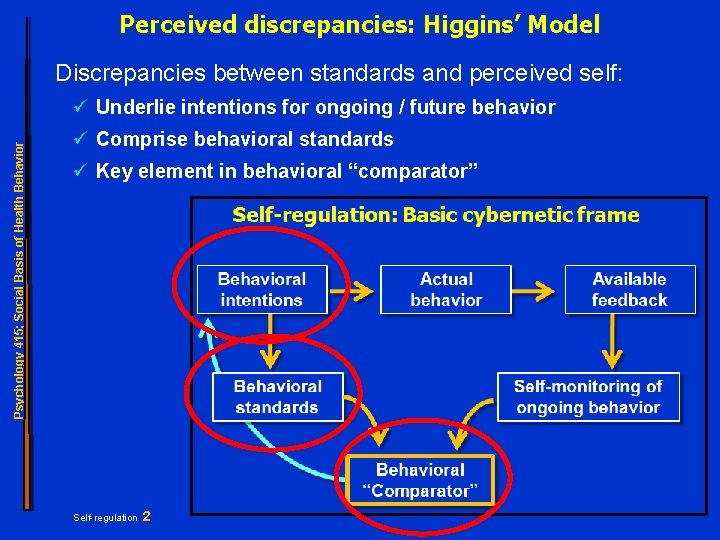
Perceived discrepancies: Higgins’ Model Discrepancies between standards and perceived self: Psychology 415; Social Basis of Health Behavior ü Underlie intentions for ongoing / future behavior ü Comprise behavioral standards ü Key element in behavioral “comparator” Self-regulation 2

Psychology 415; Social Basis of Health Behavior Higgins’ model of self-discrepancy Core assumptions Ought Possible Selves Actual Ideal Self - guide Extrinsic motivation Self concept Self - guide Intrinsic motivation § Self-focused attention § Multiple sources of discrepancies § Specific discrepancies specific affective & behavioral outcomes. § Construct availability; stable schema, individual differences § Construct accessibility: situational access to construct; transient affective state § “Rational operator” § Action identification theory § Range 3 of high low level action identification Self-regulation
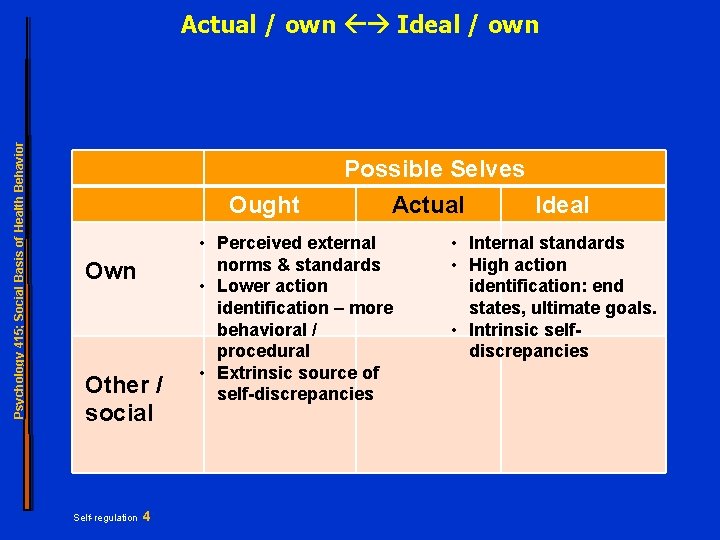
Psychology 415; Social Basis of Health Behavior Actual / own Ideal / own Ought Own Other / social Self-regulation 4 Possible Selves Actual Ideal • Perceived external norms & standards • Lower action identification – more behavioral / procedural • Extrinsic source of self-discrepancies • Internal standards • High action identification: end states, ultimate goals. • Intrinsic selfdiscrepancies
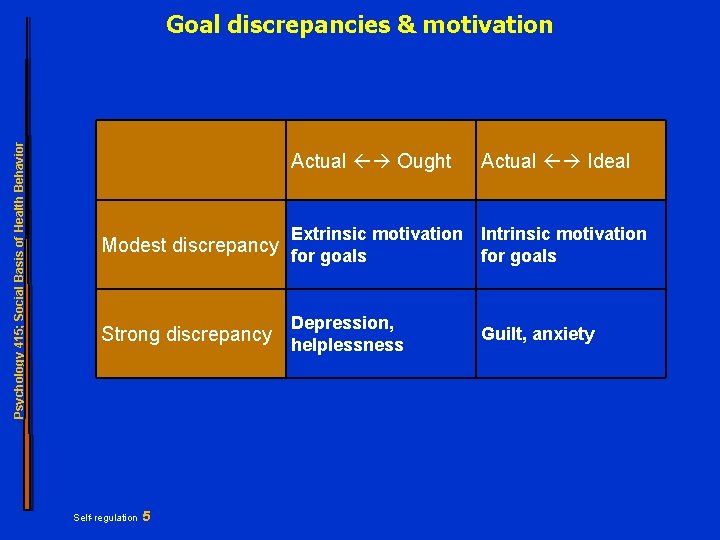
Psychology 415; Social Basis of Health Behavior Goal discrepancies & motivation Actual Ought Actual Ideal Modest discrepancy Extrinsic motivation for goals Intrinsic motivation for goals Strong discrepancy Depression, helplessness Guilt, anxiety Self-regulation 5
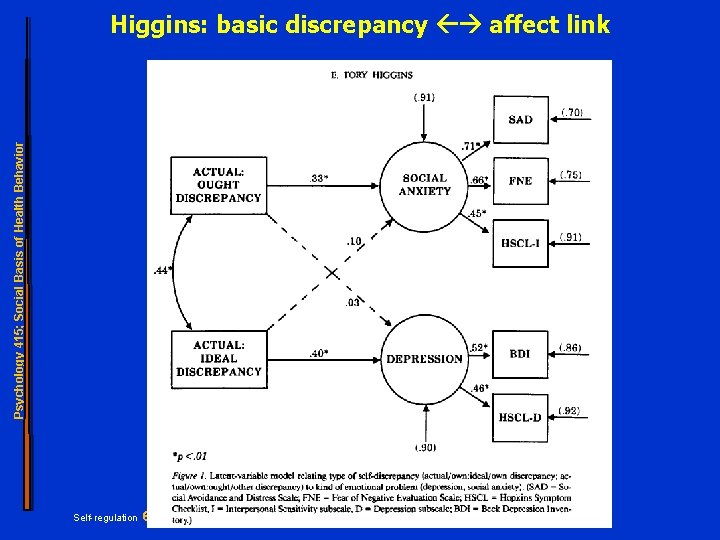
Psychology 415; Social Basis of Health Behavior Higgins: basic discrepancy affect link Self-regulation 6
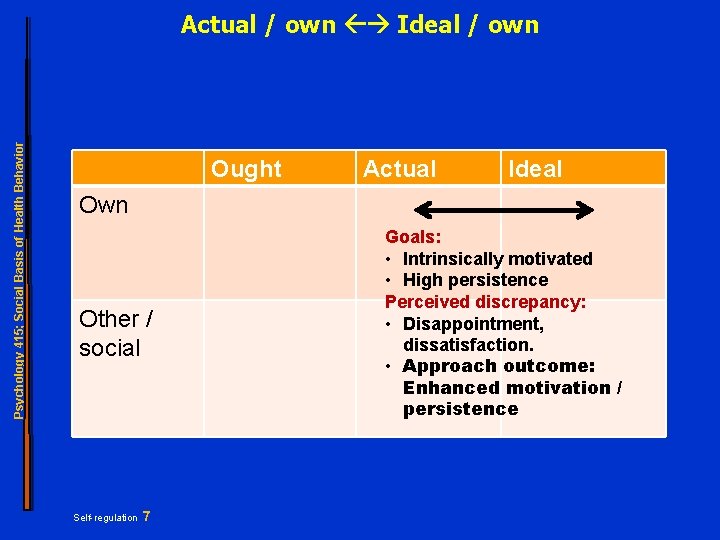
Psychology 415; Social Basis of Health Behavior Actual / own Ideal / own Ought Actual Ideal Own Other / social Self-regulation 7 Goals: • Intrinsically motivated • High persistence Perceived discrepancy: • Disappointment, dissatisfaction. • Approach outcome: Enhanced motivation / persistence
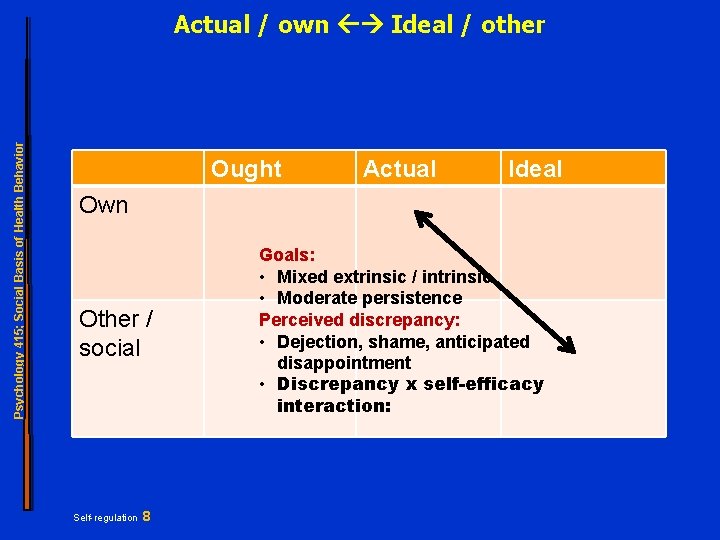
Psychology 415; Social Basis of Health Behavior Actual / own Ideal / other Ought Actual Ideal Own Other / social Self-regulation 8 Goals: • Mixed extrinsic / intrinsic • Moderate persistence Perceived discrepancy: • Dejection, shame, anticipated disappointment • Discrepancy x self-efficacy interaction:
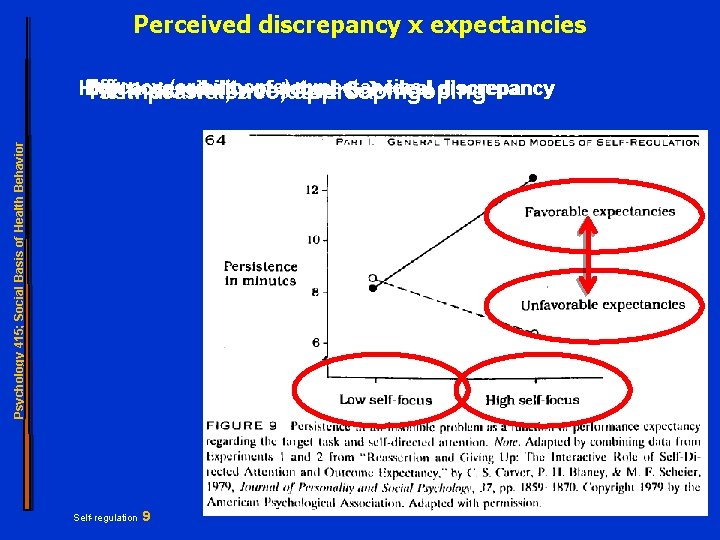
Perceived discrepancy x expectancies Psychology 415; Social Basis of Health Behavior Efficacy (or outcome) expectancies High Low accessibility of actual ideal discrepancy Task Withdrawal, persistence, avoidant approach coping Self-regulation 9
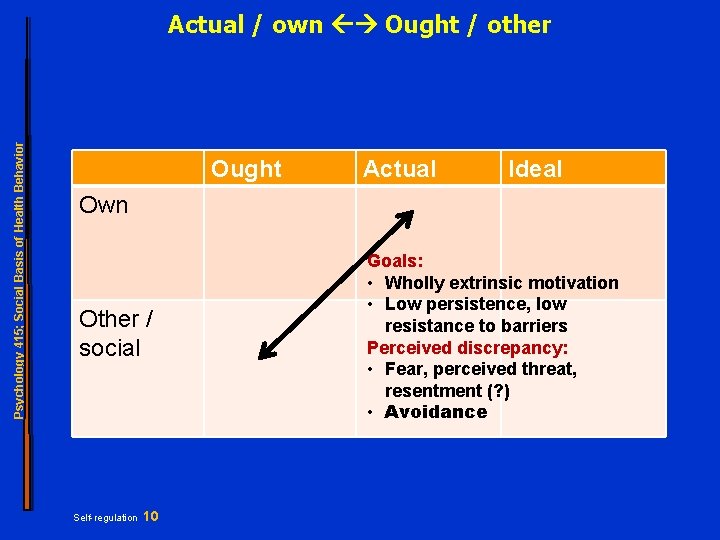
Psychology 415; Social Basis of Health Behavior Actual / own Ought / other Ought Actual Ideal Own Other / social Self-regulation 10 Goals: • Wholly extrinsic motivation • Low persistence, low resistance to barriers Perceived discrepancy: • Fear, perceived threat, resentment (? ) • Avoidance
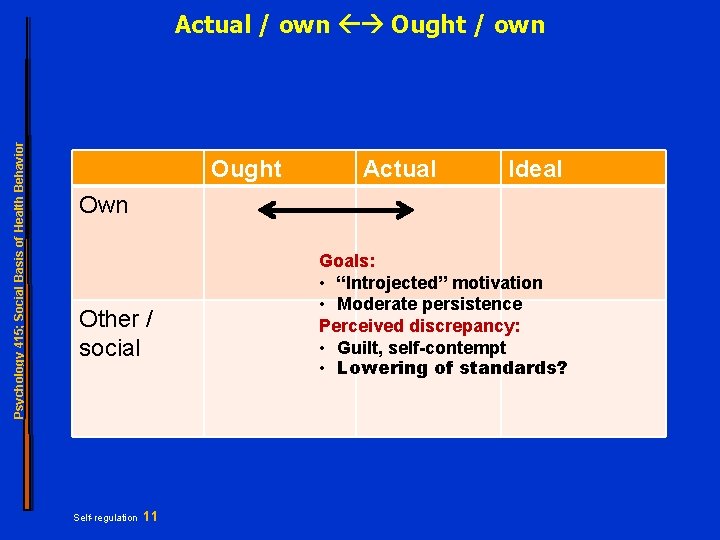
Psychology 415; Social Basis of Health Behavior Actual / own Ought / own Ought Actual Ideal Own Other / social Self-regulation 11 Goals: • “Introjected” motivation • Moderate persistence Perceived discrepancy: • Guilt, self-contempt • Lowering of standards?
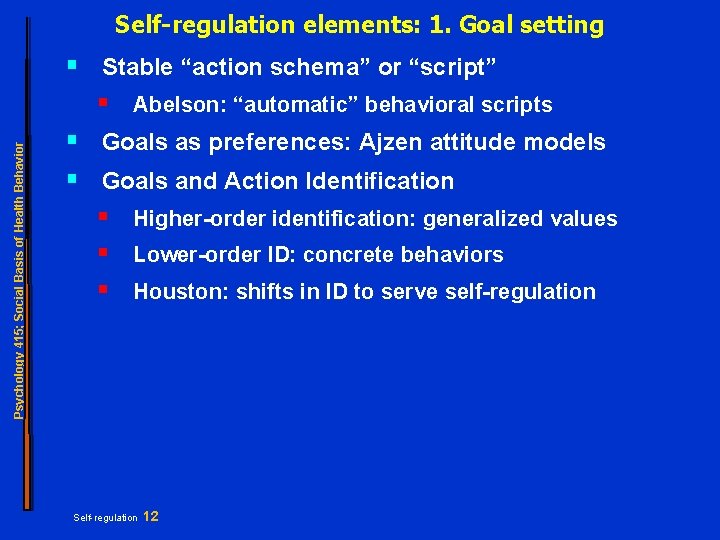
Self-regulation elements: 1. Goal setting § Stable “action schema” or “script” Psychology 415; Social Basis of Health Behavior § Abelson: “automatic” behavioral scripts § Goals as preferences: Ajzen attitude models § Goals and Action Identification § Higher-order identification: generalized values § Lower-order ID: concrete behaviors § Houston: shifts in ID to serve self-regulation Self-regulation 12
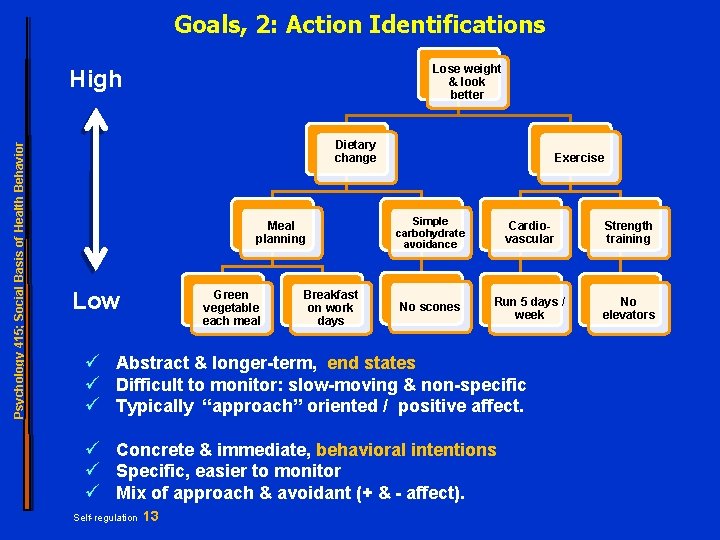
Goals, 2: Action Identifications Lose weight & look better Psychology 415; Social Basis of Health Behavior High Dietary change Meal planning Low Green vegetable each meal Breakfast on work days Exercise Simple carbohydrate avoidance Cardiovascular Strength training No scones Run 5 days / week No elevators ü Abstract & longer-term, end states ü Difficult to monitor: slow-moving & non-specific ü Typically “approach” oriented / positive affect. ü Concrete & immediate, behavioral intentions ü Specific, easier to monitor ü Mix of approach & avoidant (+ & - affect). Self-regulation 13
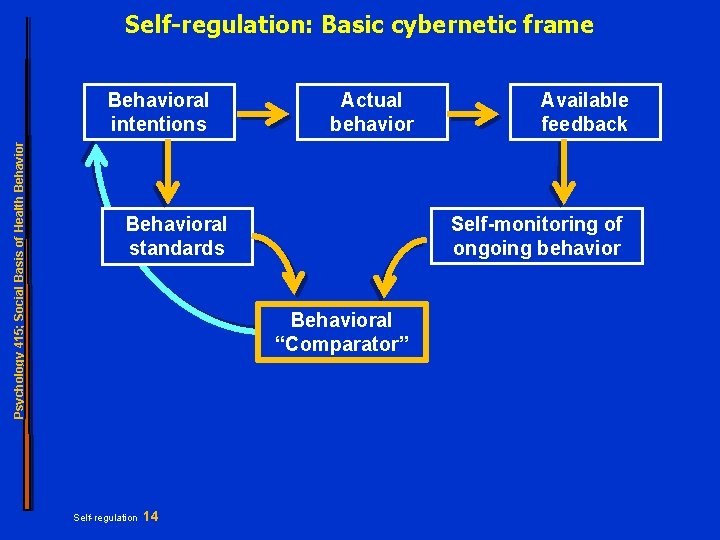
Self-regulation: Basic cybernetic frame Psychology 415; Social Basis of Health Behavioral intentions Actual behavior Behavioral standards Self-monitoring of ongoing behavior Behavioral “Comparator” Self-regulation 14 Available feedback
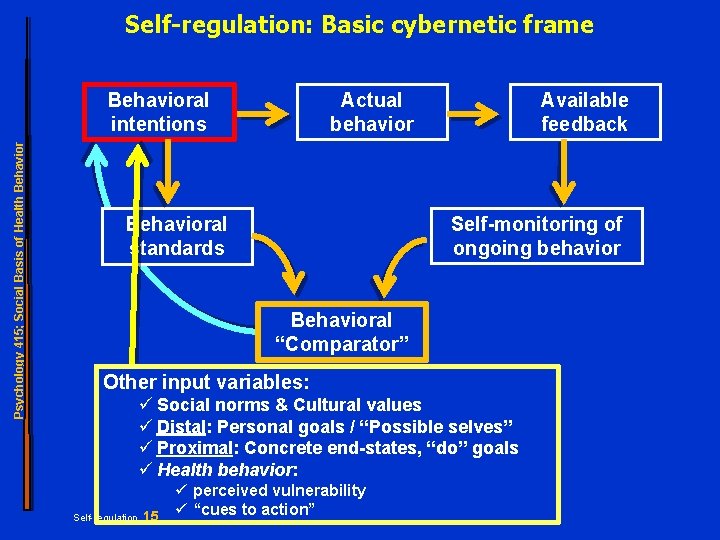
Self-regulation: Basic cybernetic frame Psychology 415; Social Basis of Health Behavioral intentions Actual behavior Behavioral standards Available feedback Self-monitoring of ongoing behavior Behavioral “Comparator” Other input variables: ü Social norms & Cultural values ü Distal: Personal goals / “Possible selves” ü Proximal: Concrete end-states, “do” goals ü Health behavior: Self-regulation 15 ü perceived vulnerability ü “cues to action”
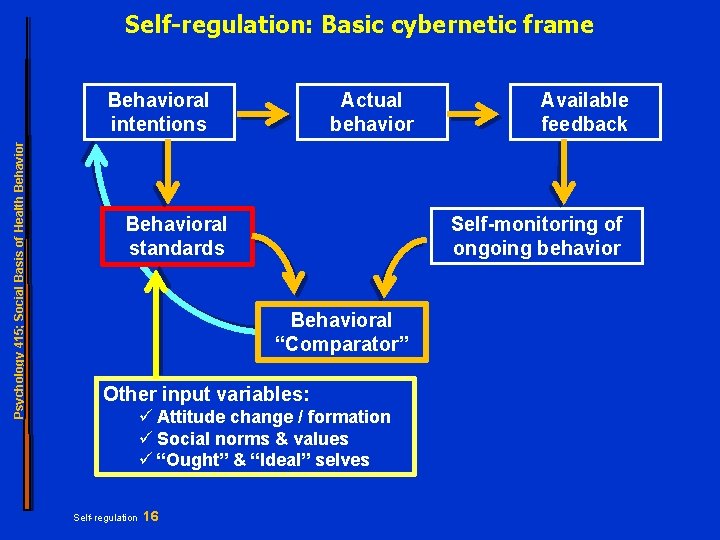
Self-regulation: Basic cybernetic frame Psychology 415; Social Basis of Health Behavioral intentions Actual behavior Behavioral standards Self-monitoring of ongoing behavior Behavioral “Comparator” Other input variables: ü Attitude change / formation ü Social norms & values ü “Ought” & “Ideal” selves Self-regulation 16 Available feedback
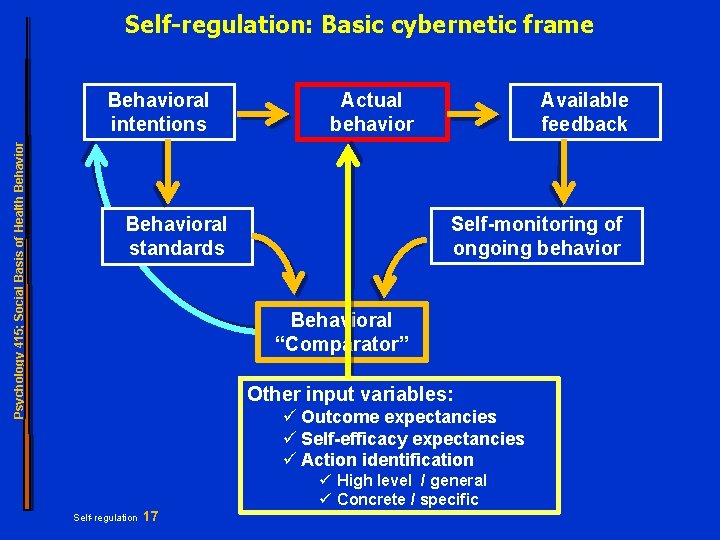
Self-regulation: Basic cybernetic frame Psychology 415; Social Basis of Health Behavioral intentions Actual behavior Behavioral standards Available feedback Self-monitoring of ongoing behavior Behavioral “Comparator” Other input variables: ü Outcome expectancies ü Self-efficacy expectancies ü Action identification Self-regulation 17 ü High level / general ü Concrete / specific
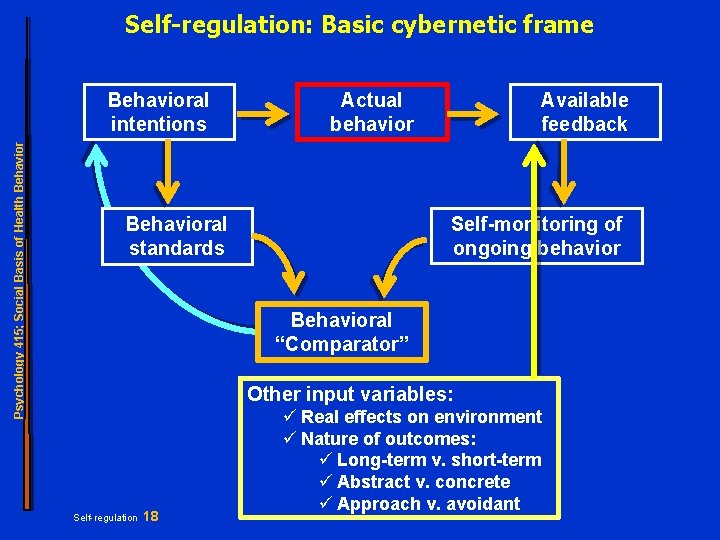
Self-regulation: Basic cybernetic frame Psychology 415; Social Basis of Health Behavioral intentions Actual behavior Behavioral standards Available feedback Self-monitoring of ongoing behavior Behavioral “Comparator” Other input variables: Self-regulation 18 ü Real effects on environment ü Nature of outcomes: ü Long-term v. short-term ü Abstract v. concrete ü Approach v. avoidant
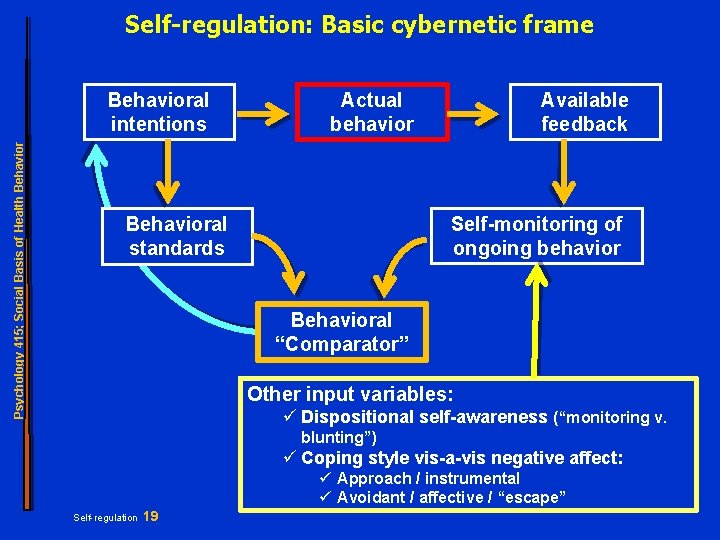
Self-regulation: Basic cybernetic frame Psychology 415; Social Basis of Health Behavioral intentions Actual behavior Behavioral standards Available feedback Self-monitoring of ongoing behavior Behavioral “Comparator” Other input variables: ü Dispositional self-awareness (“monitoring v. blunting”) ü Coping style vis-a-vis negative affect: ü Approach / instrumental ü Avoidant / affective / “escape” Self-regulation 19
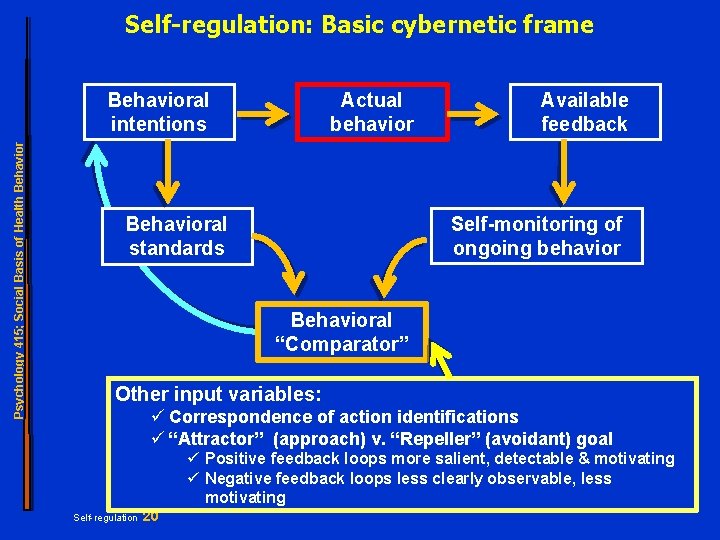
Self-regulation: Basic cybernetic frame Psychology 415; Social Basis of Health Behavioral intentions Actual behavior Behavioral standards Available feedback Self-monitoring of ongoing behavior Behavioral “Comparator” Other input variables: ü Correspondence of action identifications ü “Attractor” (approach) v. “Repeller” (avoidant) goal ü Positive feedback loops more salient, detectable & motivating ü Negative feedback loops less clearly observable, less motivating Self-regulation 20
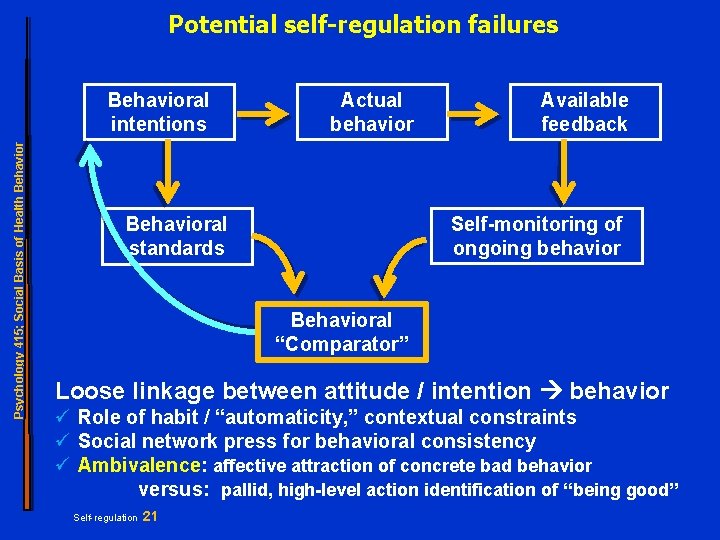
Potential self-regulation failures Psychology 415; Social Basis of Health Behavioral intentions Actual behavior Behavioral standards Available feedback Self-monitoring of ongoing behavior Behavioral “Comparator” Loose linkage between attitude / intention behavior ü Role of habit / “automaticity, ” contextual constraints ü Social network press for behavioral consistency ü Ambivalence: affective attraction of concrete bad behavior versus: pallid, high-level action identification of “being good” Self-regulation 21
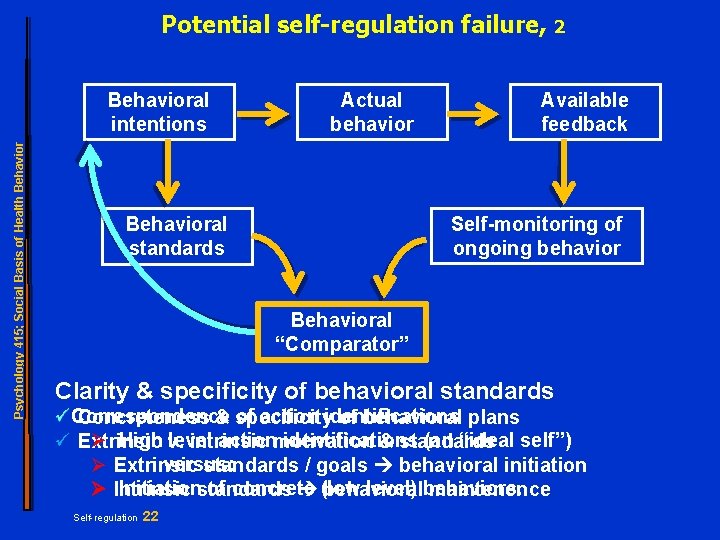
Potential self-regulation failure, Psychology 415; Social Basis of Health Behavioral intentions Actual behavior Behavioral standards 2 Available feedback Self-monitoring of ongoing behavior Behavioral “Comparator” Clarity & specificity of behavioral standards üCorrespondence of action identifications Concreteness & specificity of behavioral plans Ø High v. level actionmotivation identifications (an “ideal self”) ü Extrinsic intrinsic & standards versus: Ø Extrinsic standards / goals behavioral initiation Ø Intrinsic Initiationstandards of concrete level) behaviors. (low behavioral maintenence Self-regulation 22
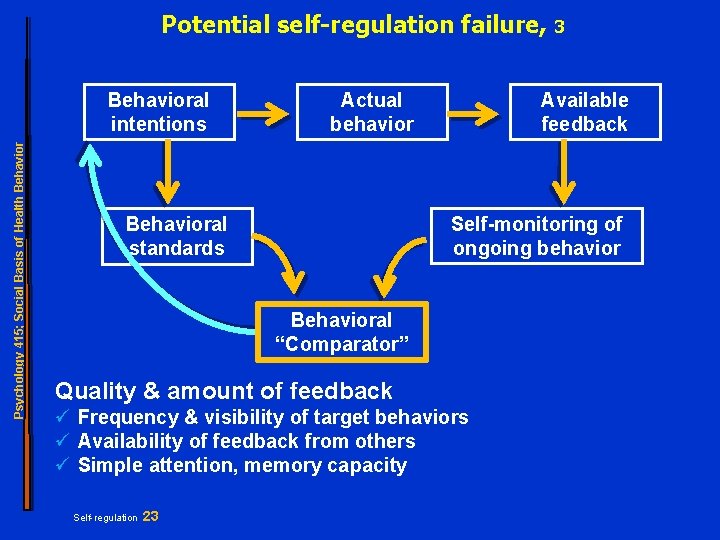
Potential self-regulation failure, Psychology 415; Social Basis of Health Behavioral intentions Actual behavior Behavioral standards Available feedback Self-monitoring of ongoing behavior Behavioral “Comparator” Quality & amount of feedback ü Frequency & visibility of target behaviors ü Availability of feedback from others ü Simple attention, memory capacity Self-regulation 23 3
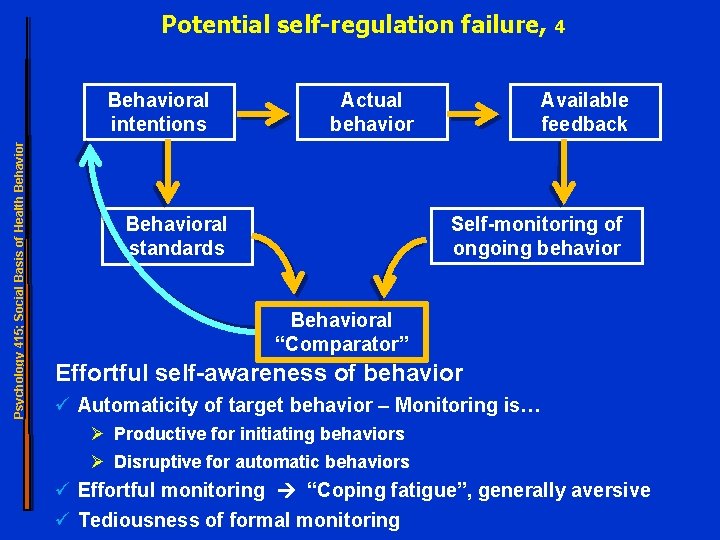
Potential self-regulation failure, Psychology 415; Social Basis of Health Behavioral intentions Actual behavior Behavioral standards 4 Available feedback Self-monitoring of ongoing behavior Behavioral “Comparator” Effortful self-awareness of behavior ü Automaticity of target behavior – Monitoring is… Ø Productive for initiating behaviors Ø Disruptive for automatic behaviors ü Effortful monitoring “Coping fatigue”, generally aversive 24 ü Self-regulation Tediousness of formal monitoring
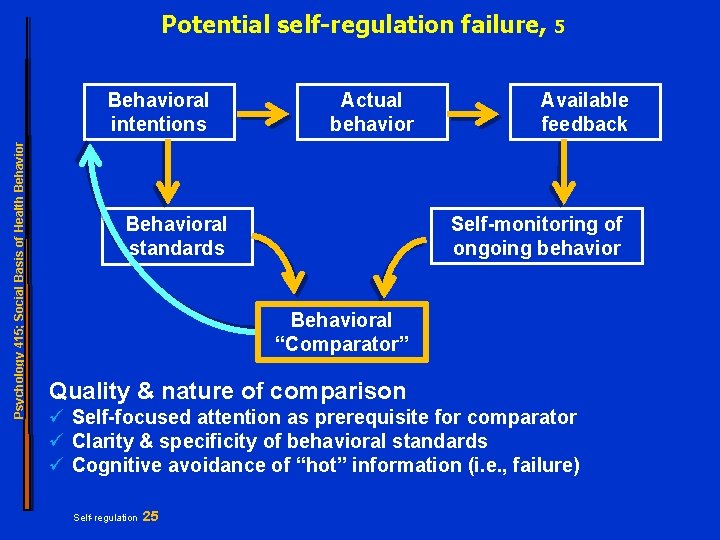
Potential self-regulation failure, Psychology 415; Social Basis of Health Behavioral intentions Actual behavior Behavioral standards 5 Available feedback Self-monitoring of ongoing behavior Behavioral “Comparator” Quality & nature of comparison ü Self-focused attention as prerequisite for comparator ü Clarity & specificity of behavioral standards ü Cognitive avoidance of “hot” information (i. e. , failure) Self-regulation 25
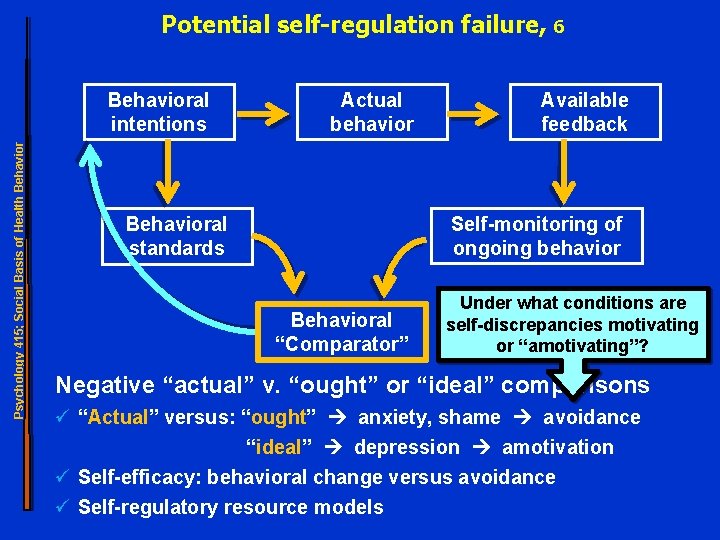
Potential self-regulation failure, Psychology 415; Social Basis of Health Behavioral intentions Actual behavior Behavioral standards 6 Available feedback Self-monitoring of ongoing behavior Behavioral “Comparator” Under what conditions are self-discrepancies motivating or “amotivating”? Negative “actual” v. “ought” or “ideal” comparisons ü “Actual” versus: “ought” anxiety, shame avoidance “ideal” depression amotivation ü Self-efficacy: behavioral change versus avoidance ü Self-regulation Self-regulatory resource models 26
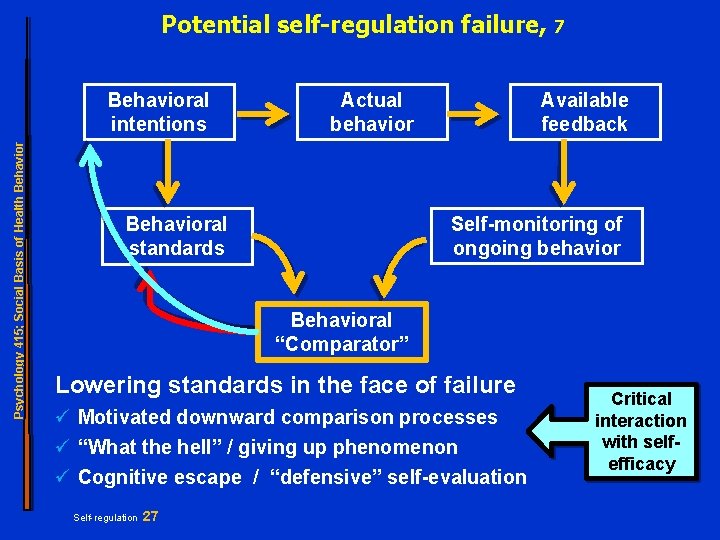
Potential self-regulation failure, Psychology 415; Social Basis of Health Behavioral intentions Actual behavior Behavioral standards 7 Available feedback Self-monitoring of ongoing behavior Behavioral “Comparator” Lowering standards in the face of failure ü Motivated downward comparison processes ü “What the hell” / giving up phenomenon ü Cognitive escape / “defensive” self-evaluation Self-regulation 27 Critical interaction with selfefficacy
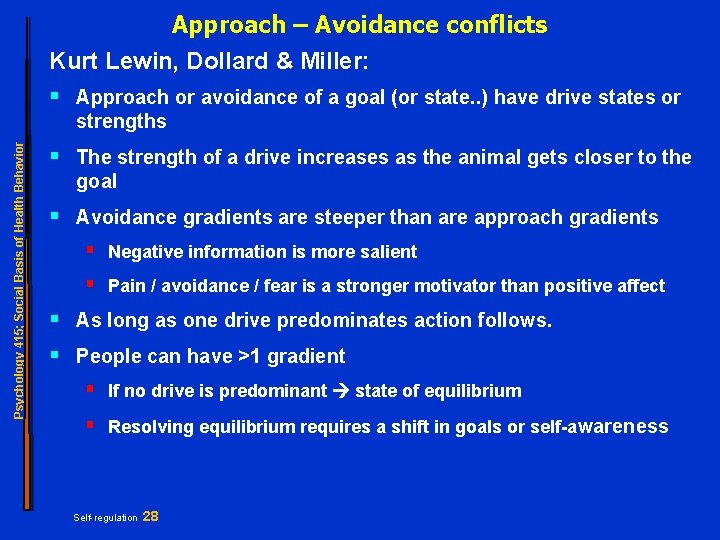
Approach – Avoidance conflicts Kurt Lewin, Dollard & Miller: § Approach or avoidance of a goal (or state. . ) have drive states or Psychology 415; Social Basis of Health Behavior strengths § The strength of a drive increases as the animal gets closer to the goal § Avoidance gradients are steeper than are approach gradients § Negative information is more salient § Pain / avoidance / fear is a stronger motivator than positive affect § As long as one drive predominates action follows. § People can have >1 gradient § If no drive is predominant state of equilibrium § Resolving equilibrium requires a shift in goals or self-awareness Self-regulation 28
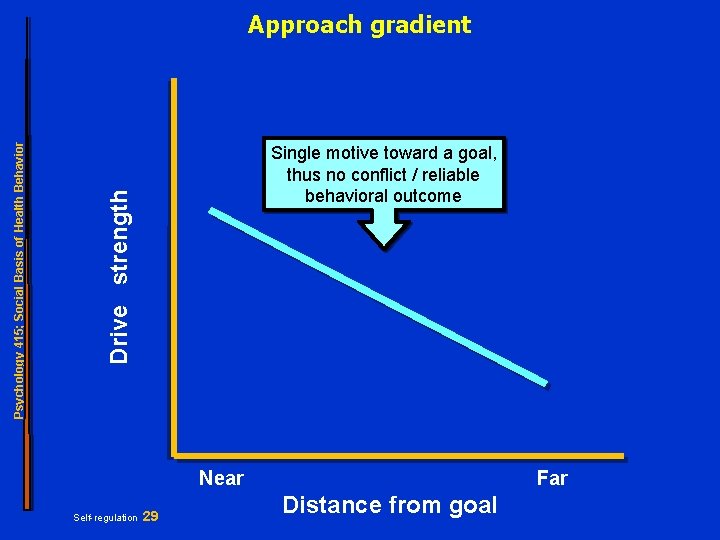
Single motive toward a goal, thus no conflict / reliable behavioral outcome Drive strength Psychology 415; Social Basis of Health Behavior Approach gradient Near Self-regulation 29 Far Distance from goal
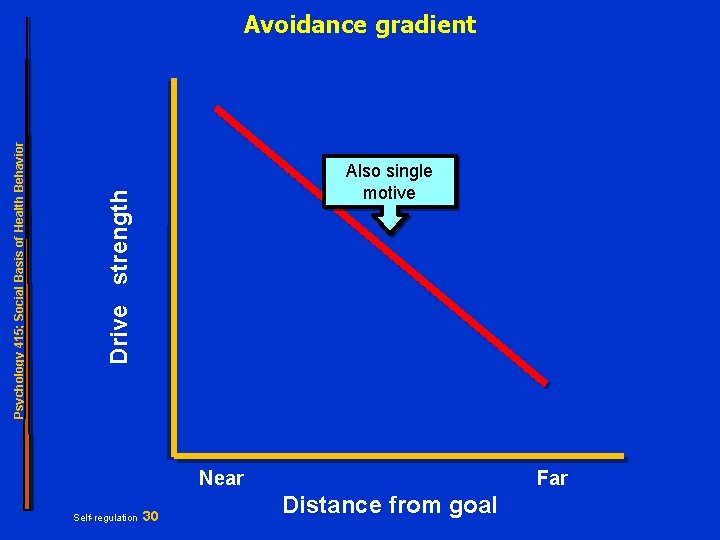
Also single motive Drive strength Psychology 415; Social Basis of Health Behavior Avoidance gradient Near Self-regulation 30 Far Distance from goal
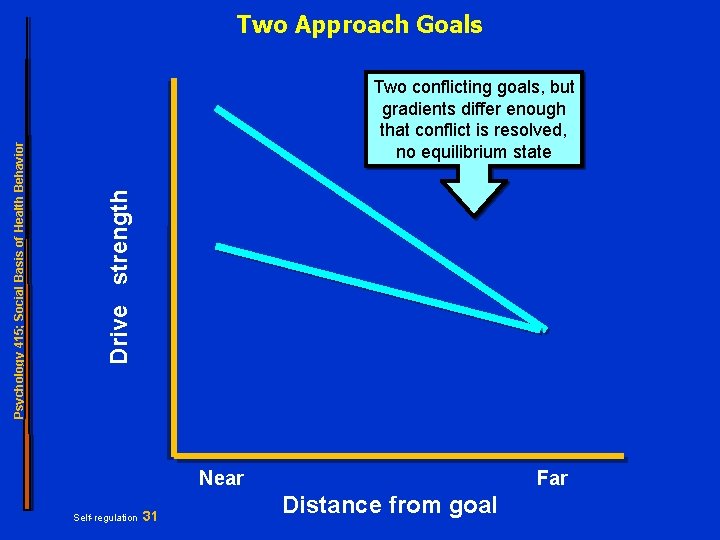
Two conflicting goals, but gradients differ enough that conflict is resolved, no equilibrium state Drive strength Psychology 415; Social Basis of Health Behavior Two Approach Goals Near Self-regulation 31 Far Distance from goal
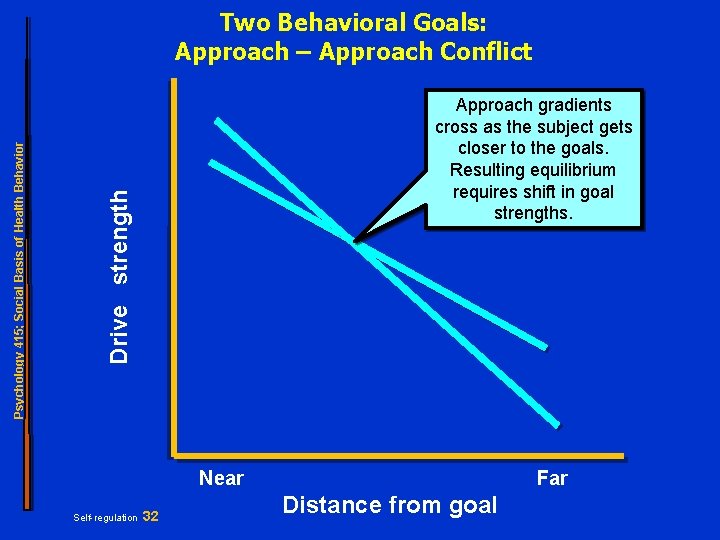
Approach gradients cross as the subject gets closer to the goals. Resulting equilibrium requires shift in goal strengths. Drive strength Psychology 415; Social Basis of Health Behavior Two Behavioral Goals: Approach – Approach Conflict Near Self-regulation 32 Far Distance from goal
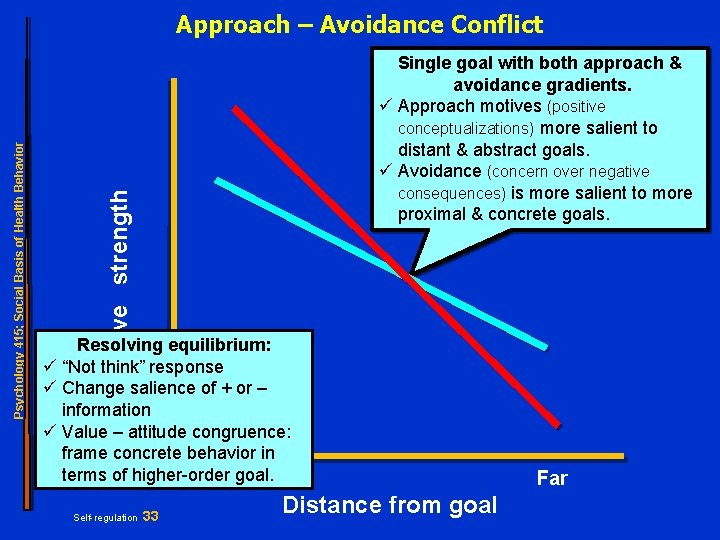
Single goal with both approach & avoidance gradients. ü Approach motives (positive conceptualizations) more salient to distant & abstract goals. ü Avoidance (concern over negative consequences) is more salient to more proximal & concrete goals. Drive strength Psychology 415; Social Basis of Health Behavior Approach – Avoidance Conflict Resolving equilibrium: ü “Not think” response ü Change salience of + or – information ü Value – attitude congruence: frame concrete behavior in terms of higher-order Neargoal. Self-regulation 33 Distance from goal Far
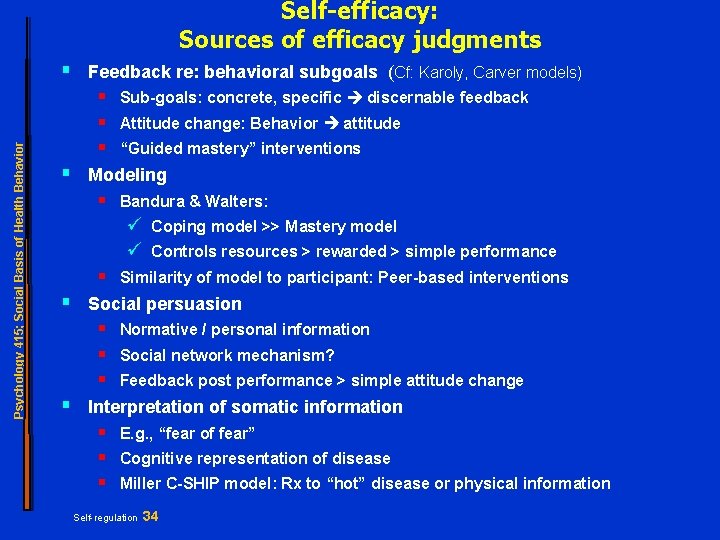
Self-efficacy: Sources of efficacy judgments Psychology 415; Social Basis of Health Behavior § Feedback re: behavioral subgoals (Cf: Karoly, Carver models) § Sub-goals: concrete, specific discernable feedback § Attitude change: Behavior attitude § “Guided mastery” interventions § Modeling § Bandura & Walters: ü Coping model >> Mastery model ü Controls resources > rewarded > simple performance § Similarity of model to participant: Peer-based interventions § Social persuasion § Normative / personal information § Social network mechanism? § Feedback post performance > simple attitude change § Interpretation of somatic information § E. g. , “fear of fear” § Cognitive representation of disease § Miller C-SHIP model: Rx to “hot” disease or physical information Self-regulation 34
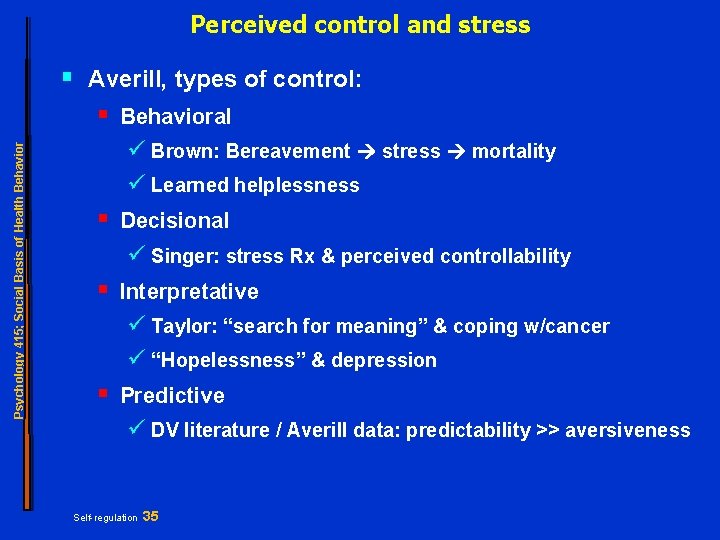
Perceived control and stress § Averill, types of control: Psychology 415; Social Basis of Health Behavior § Behavioral ü Brown: Bereavement stress mortality ü Learned helplessness § Decisional ü Singer: stress Rx & perceived controllability § Interpretative ü Taylor: “search for meaning” & coping w/cancer ü “Hopelessness” & depression § Predictive ü DV literature / Averill data: predictability >> aversiveness Self-regulation 35
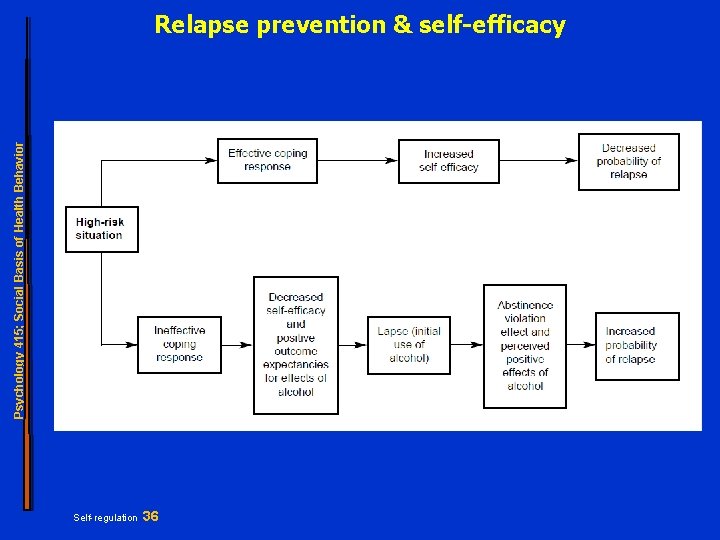
Psychology 415; Social Basis of Health Behavior Relapse prevention & self-efficacy Self-regulation 36
- Slides: 36