
SelfReflective Practice SelfCare Techniques Supporting Families of the

- Slides: 28
Self-Reflective Practice & Self-Care Techniques Supporting Families of the Opioid Epidemic
Putting Your Oxygen Mask on First: Trauma Informed Care for the Provider Presented By: Ashleigh Mc. Kinsey, MS Tracie Murphy, BA, LSW Burlington United Methodist Family Services, Grafton, WV
Presenter Information Ashleigh Blair, MS is a program coordinator for the WV IMPACT program who specializes in clinical health coaching. She holds a Master’s degree in Health Promotion from the University of Delaware. Tracie Murphy, BA, LSW is a supervisor and Designated Care Coordinator with Right From the Start, The HAPI Project, and WV IMPACT at Burlington United Methodist Family Services. She has been in the field of family and children’s services for over 27 years.
Disclosure � Nothing at this time
Learning Objectives � At the end of this session, the participant will reflect on personal experiences with at least one child in their care � At the end of this session, the participant will discuss at least one new strategy for self-reflection to apply in a challenging situation
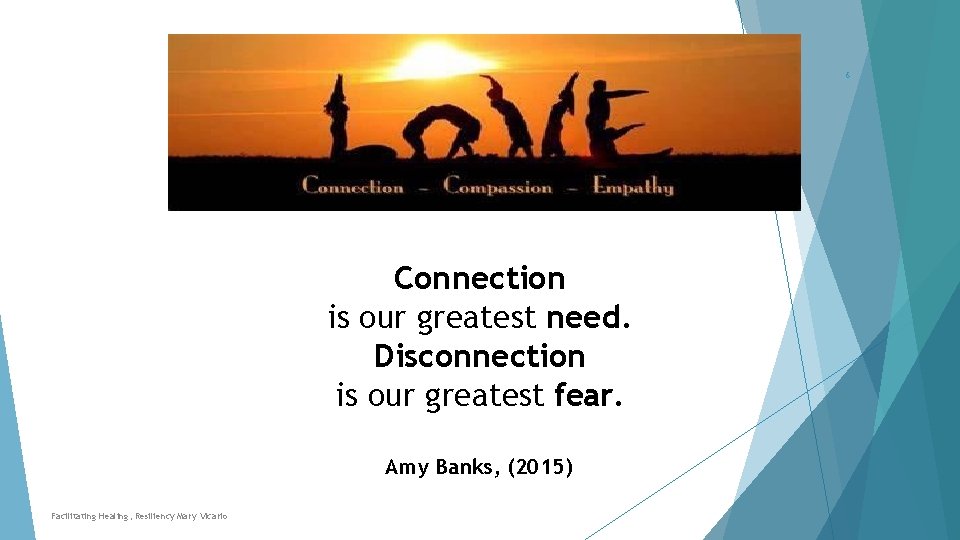
6 Connection is our greatest need. Disconnection is our greatest fear. Amy Banks, (2015) Facilitating Healing, Resiliency Mary Vicario
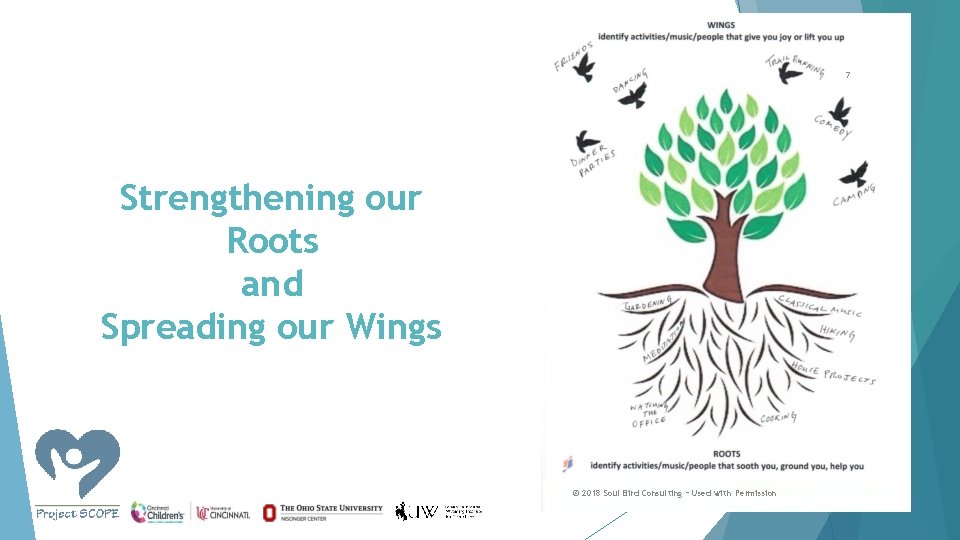
7 Strengthening our Roots and Spreading our Wings © 2018 Soul Bird Consulting – Used with Permission
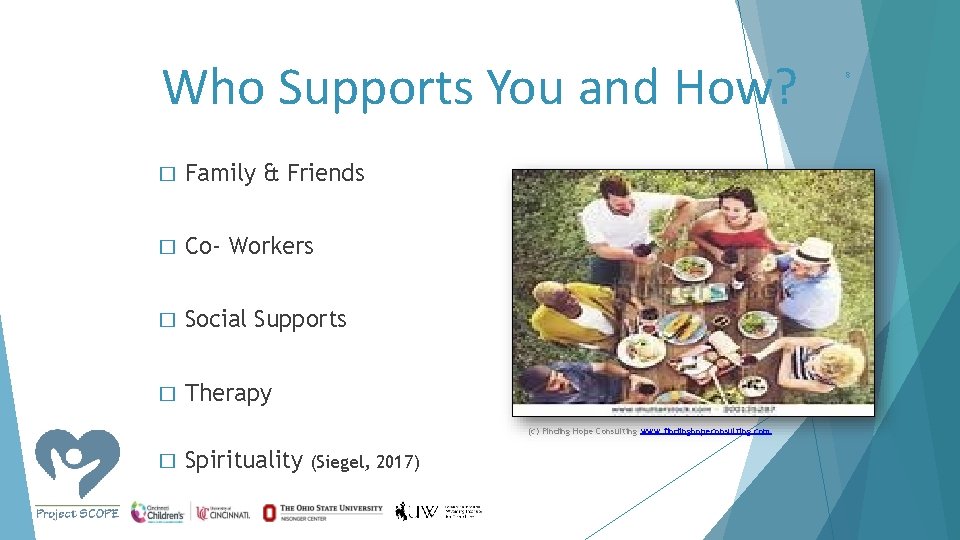
Who Supports You and How? � Family & Friends � Co- Workers � Social Supports � Therapy (c) Finding Hope Consulting www. findinghopeconsulting. com � Spirituality (Siegel, 2017) 8
Growth, Attachment & Brain Development ALL BEHAVIOR IS PURPOSEFUL ~ SIGMUND FREUD I AM THE ME YOU HAVE GIVEN ME ~ LON KRINER AS THE BRAIN IS FORMING, IT IS WAITING FOR THE WORLD TO TELL IT HOW TO STRUCTURE ITSELF. ~ DAN SIEGEL (2012)
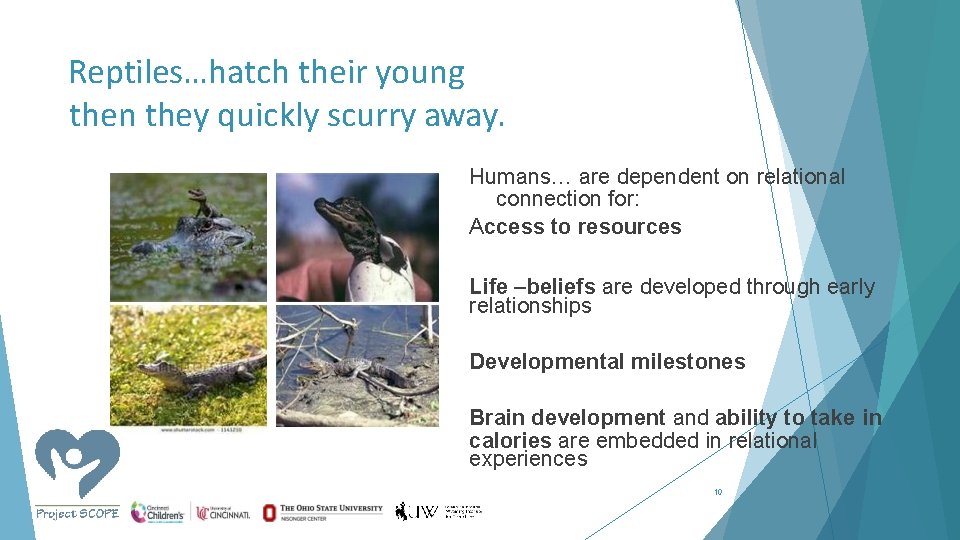
Reptiles…hatch their young then they quickly scurry away. Humans… are dependent on relational connection for: Access to resources Life –beliefs are developed through early relationships Developmental milestones Brain development and ability to take in calories are embedded in relational experiences 10
11 What Makes Me, Me? Interactions to Enhance Felt Safety, Attachment and Regulation (FAR) In Children and in Those Who Care for Them (c) Finding Hope Consulting www. findinghopeconsulting. com
Moving from Trauma Informed Care to Trauma Responsive Care SWITCHING THE QUESTION FROM: WHAT’S WRONG WITH YOU…TO… WHAT HAPPENED TO YOU? WHAT DID YOU DO TO SURVIVE?
Mirror Neurons 13 “We are exquisitely social creatures. Our survival depends on understanding the actions, intentions and emotions of others. Mirror neurons allow us to grasp the minds of others not through reasoning but through direct stimulation. By feeling, not thinking. ” Rizzolatti, G. , Singigaglia, C. (2006).
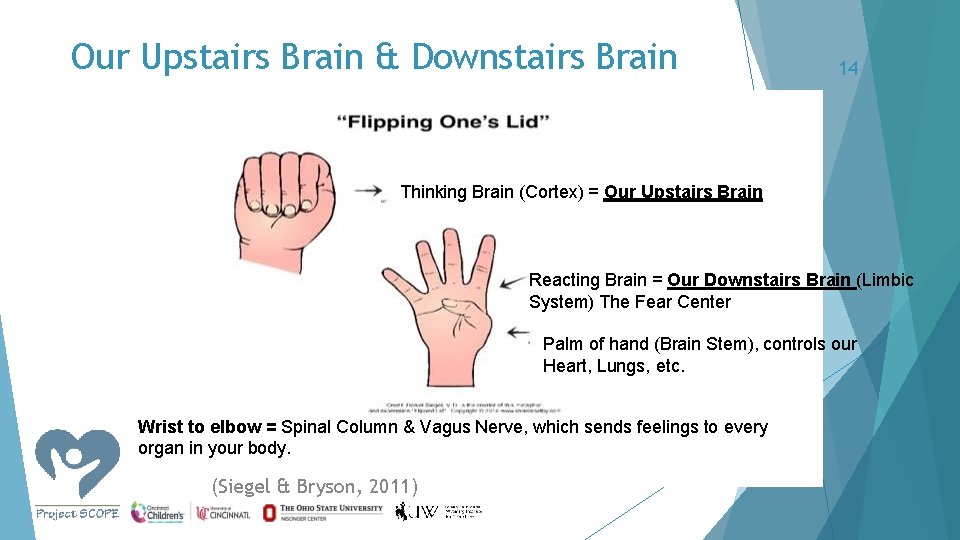
Our Upstairs Brain & Downstairs Brain 14 Thinking Brain (Cortex) = Our Upstairs Brain Reacting Brain = Our Downstairs Brain (Limbic System) The Fear Center Palm of hand (Brain Stem), controls our Heart, Lungs, etc. Wrist to elbow = Spinal Column & Vagus Nerve, which sends feelings to every organ in your body. (Siegel & Bryson, 2011)
Keeping Your Lid On Self-Care at Your Fingertips 15 Red Card: Things I can do in the moment like: � Wiggle my toes left and right in your shoes. � Remember the voice of a safe, calming person from anytime in your life. � Focus on your breath � Imagine breathing out the stress and breathing in the calm. (c) Finding Hope Consulting www. findinghopeconsulting. com
Keeping Your Lid On Self-Care at Your Fingertips Orange Card: Things I can do with a 5 minute break: � Pray or Meditate � Run your wrists under warm water � Breathe � Stretch � List your gratitudes � Watch a funny video � Listen to a favorite song & sing along (c) Finding Hope Consulting www. findinghopeconsulting. com 17
18
Keeping Your Lid On Self-Care at Your Fingertips Yellow Card: Things I can do on a lunch break: � Talk with a supportive friend or family member � Go for a short walk � Eat mindfully � Get something worth eating mindfully � Read a book you enjoy � Listen to some calming music (c) Finding Hope Consulting www. findinghopeconsulting. com 19
Keeping Your Lid On Self-Care at Your Fingertips 20 Your Favorite Color Card: Things I can do on my day off: � Spend time with a supportive friend or family member � Go for a hike or yoga or dancing � Plan a special outing � Reach out to an old friend � Read a book you enjoy � Go to a concert or a movie (c) Finding Hope Consulting www. findinghopeconsulting. com
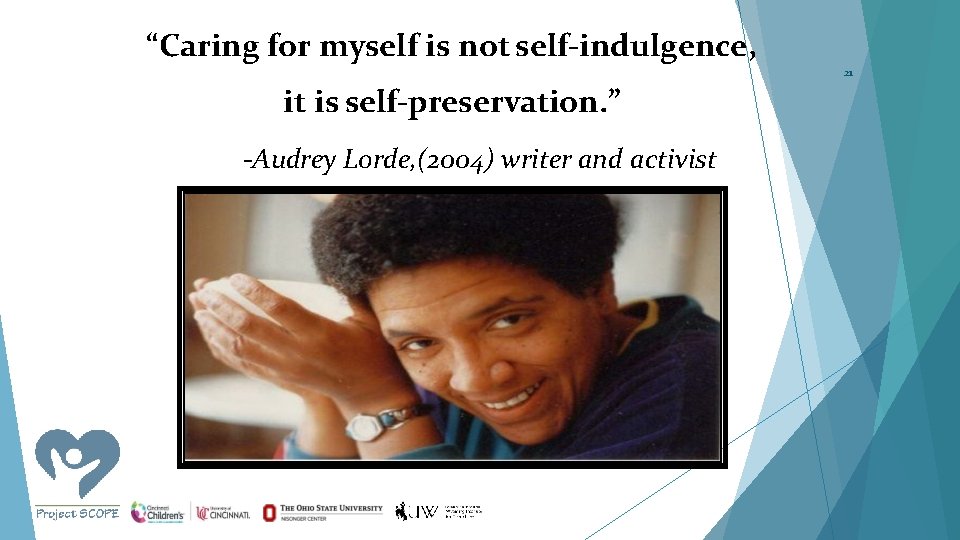
“Caring for myself is not self-indulgence, 21 it is self-preservation. ” -Audrey Lorde, (2004) writer and activist
CASE STUDY
Case Study #1 Melissa is a 36 -year old mother who was a child of the opioid epidemic. Her father and brother suffer from substance use disorder. Melissa, who graduated college with a Bachelors degree in social work, currently works for a home visitation program as a Designated Care Coordinator. She has a history of anxiety and depression and currently takes 40 mg of Zoloft and attends individual therapy as needed. She is currently working from home due to high cases of COVID-19 in her area. Melissa is having an especially hard time adjusting to the everchanging program in order to adapt to circumstances of the pandemic. Melissa reports that she often thinks of quitting her job to go back into poverty because she knew how to “work” the system.
Case Study #1 Develop. an in-depth self-care plan for Melissa
Case Study #2 Melissa also has 3 children (ages 12, 11, and 7) that are home doing virtual school while she is trying to conduct her virtual home visits. She reports that she sometimes feels like an “awful” mom because she can’t juggle everything she has going on between balancing work and home life. She is noticing that her relationships with her children are suffering due to the pandemic. The 7 -year-old has gained 30 lbs. during the pandemic because of a lack of physical activity. The 11 -year-old struggles with ADHD and having additional anxiety and depression due to the pandemic. He often calls home from school and request that she pick him up. Her 12 -year-old daughter, who usually does well in school, is also struggling with anxiety and has had to be enrolled in virtual school full-time because she is so overwhelmed with the inconsistency of being in and out of school on a daily basis.
Case Study #2 Create a list of resources (names and phone number) that would be available to Melissa’s children.
References � Banks, A. (2015). Wired to connect: The surprising link between brain science and Strong, healthy � � � � � relationships. New York: Penguin Group. Cozolino, L. (2006). The neuroscience of human relationships: Attachment and the developing social brain. New York, NY: Norton. Frewen, P. & Lanius, Ruth (2015). Healing the traumatized self: Consciousness Neuroscience Treatment. New York, NY. W. W. Norton & Company, Inc. Lorde, A. (2004). Conversations with Audrey Lorde. Jackson, MS: University of Mississippi Press Porges, S. W. , (2011). The Polyvagal theory: Neurophysiological foundations of emotions, attachment, communication, self-regulation. New York, NY: W. W. Norton & Company, Inc. Rizzolatti, G. , Singigaglia, C. (2006). Mirrors in the brain: How our minds share actions and emotions. New York, NY: Oxford University Press. Siegel, D. , & Payne-Bryson, T. (2011). The whole-brain child: 12 revolutionary strategies to nurture your child’s developing mind. New York: Delacorte Press. Siegel, D. J. , & Hartzell, M. (2003 & 2014). Parenting from the inside out. New York, NY: Penguin Group, Inc. Siegel, D. , (2017). Mind: A Journey to the Heart of Being Human. New York: NY. Norton and Company. Siegel, D. J. (2012). The developing mind: How relationships and the brain interact to shape who we are. Second Edition. New York, NY: W. W. Guilford Press.
Acknowledgements � Special thanks to the Administration on Intellectual and Developmental Disabilities (AIDD), Administration on Disabilities (AOD), Administration for Community Living (ACL) and the U. S. Department of Health and Human Services (HHS) whose dedication to addressing the opioid epidemic funded Project SCOPE: Supporting Children of the Opioid Epidemic. � Extended thanks to The Ohio State University Nisonger Center, the University of Cincinnati Center for Excellence in Developmental Disabilities, and the Wyoming Institute for Disabilities (WIND) at Wyoming University for their contributions to this presentation.