
SelfEvaluation of ITE Numeracy University of Strathclyde June

- Slides: 7
Self-Evaluation of ITE Numeracy University of Strathclyde June Pisaneschi Jackie Marshall 08/10/19
SCDE Attainment Challenge Research Project Ed. D study (J Pisaneschi) • Rationale • Background in maths • Contexts & experiences in ITE and beyond – supporting meaningful learning? • Developing understanding of inclusive approaches • Do our teachings have a lasting impact? • Iterative longitudinal qualitative study over three years
Attainment Challenge Research Project: Building the profiles • In school, had very low confidence as a learner. “I’m not maths minded”. • Always in the lowest maths group. “ I didn’t have the brains”. • Sat Standard Grade Maths but made no attempt to engage with the questions – left an empty page. • Guidance teacher said “you’ll never be a teacher” because of your grades. “You’ll never go to uni”. • “I felt like I was thick and worthless” • “When I’m taking a maths lesson, I’ll need to be more prepared than others. () I don’t want the children to have the fears that I had of maths”.
BA 4 Module – Developing Understanding of Inclusive Practice in Numeracy (Numeracy Clinic) Module Leader – Professor Sue Ellis How it works • Students work in teams of three or four. Each team has just one pupil. Each team member provides a one-to-one, tailored, 30 -minute lesson at a regular time each week. • The pupil gets 3 or 4 lessons per week, on different days of the week - one from each team member. • Team members share their observations across the ‘ 3 Domains’, communicating to the group after each session - identifying progress and priorities for the next session. • The clinic principle is that people learn by “doing”. Students learn to make decisions based on the best available evidence and an emerging knowledge-base.
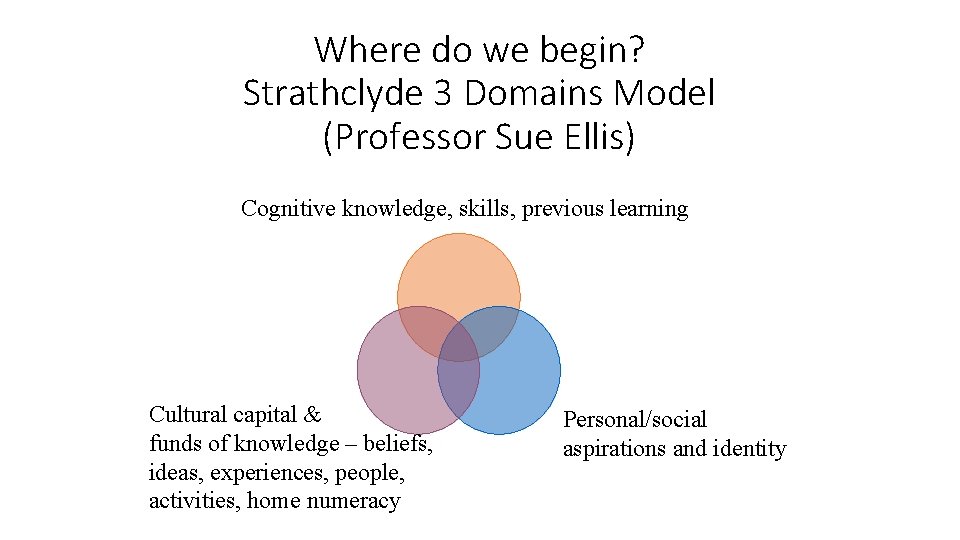
Where do we begin? Strathclyde 3 Domains Model (Professor Sue Ellis) Cognitive knowledge, skills, previous learning Cultural capital & funds of knowledge – beliefs, ideas, experiences, people, activities, home numeracy Personal/social aspirations and identity
BA 4 Developing Understanding of Inclusive Practice in Numeracy Learning Opportunities & Benefits • Collaboration amongst peers; group discussion and problematizing children’s needs • Examining inclusive approaches for classroom teaching • Professional noticing & responsive teaching • Self-evaluation and reflection based on assessment of progress and peer feedback • Using academic reading to inform practice
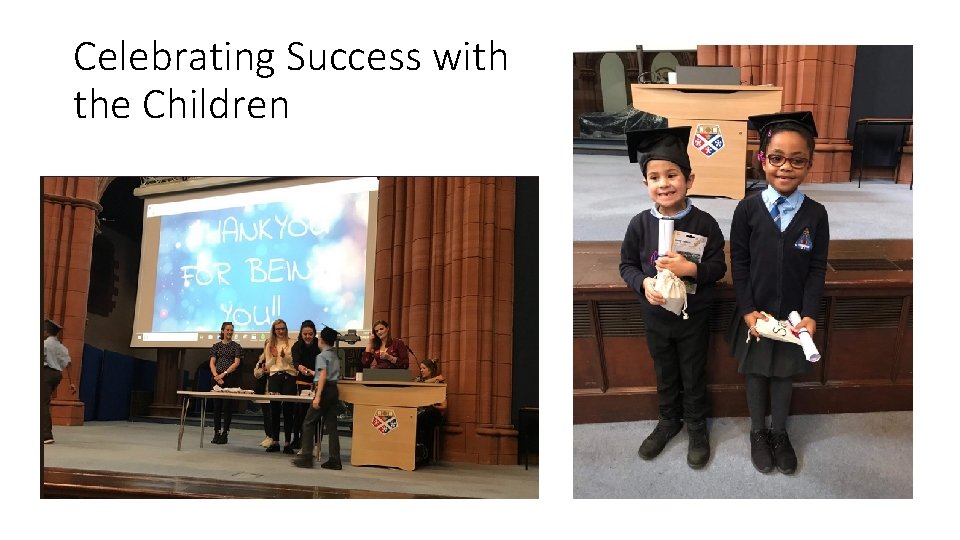
Celebrating Success with the Children